This guide covers a quiet day trip to the boathouse village of Ine on the Tango coast of northern Kyoto Prefecture, drawing on published guidebooks and the visitor information of the bay cruise and the roadside station for bus fares, boat tickets and opening hours.
Funaya: Boathouses Built Over the Water
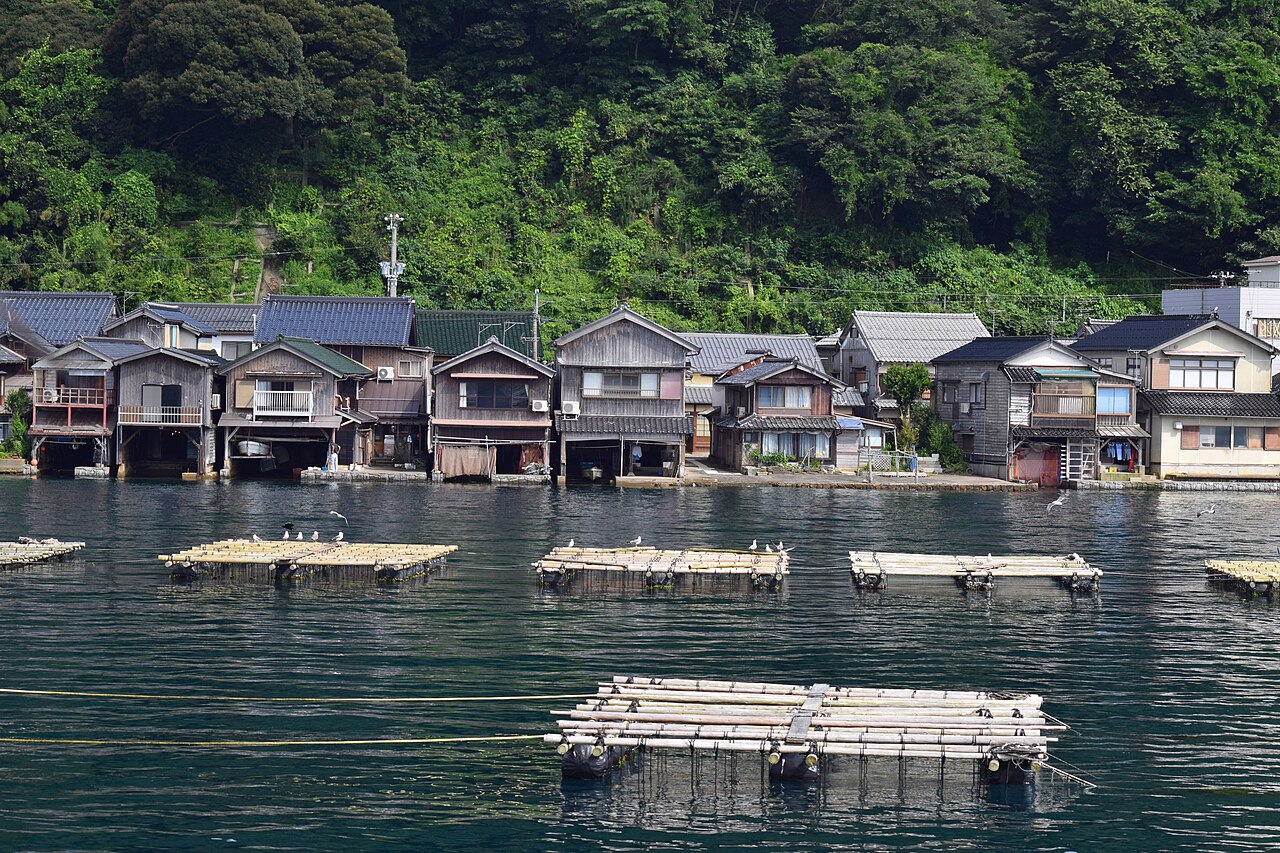
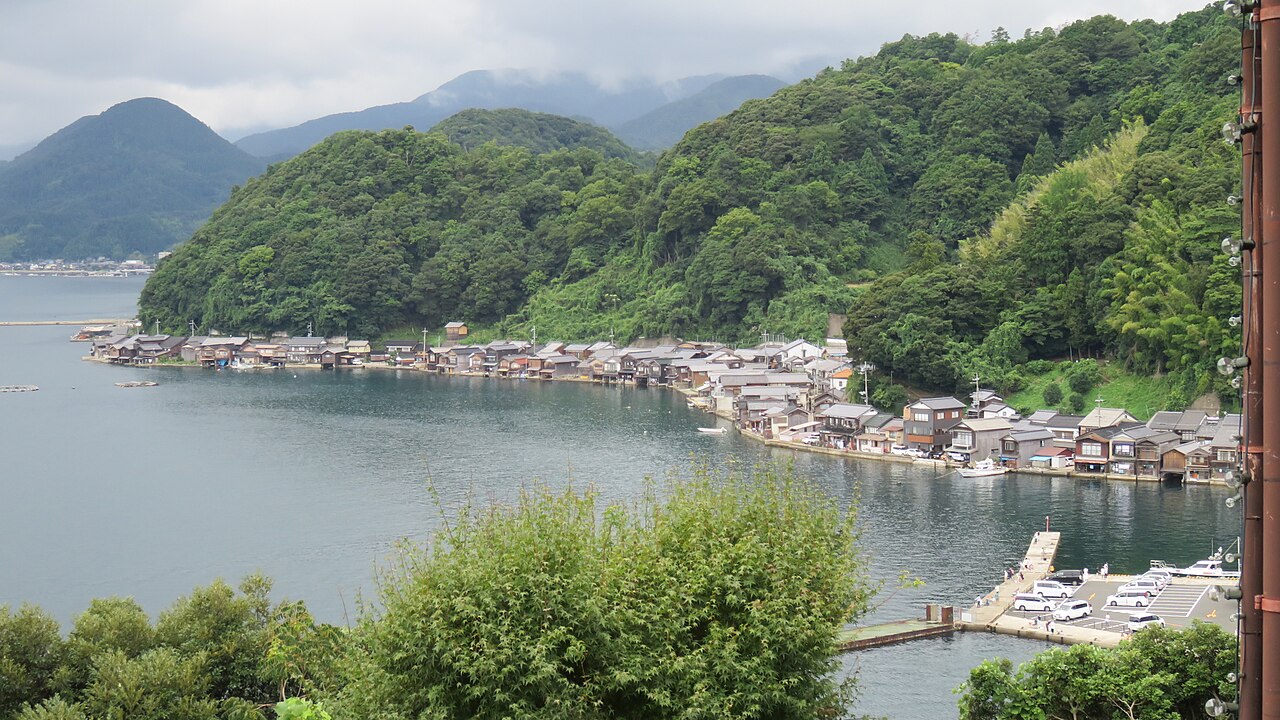
Ine sits on a bay sheltered on three sides by hills and an island, and that calm water is what let the village build its houses at the waterline. Each funaya began as a boat shed: the ground floor is a garage for the family boat, the floor above is living space, and some now take guests as inns.
What you see from the shore road is a double row: boat garages standing in the water on the sea side, main houses and storehouses lined up against the hill behind them. Guidebooks describe around two hundred and thirty funaya running for roughly five kilometres along the bay, and at high tide they look as if they are floating.
The boathouse district is free to walk through with no ticket, and it begins a few steps from the Ine bus stop. It was the first fishing village in Japan to be chosen as a national preservation district for groups of traditional buildings, and that floating skyline has also served as a location for television dramas.
Getting to Ine: Bus Fares and the Walk From the Stop
Without a car, the way in is the Tango Kairiku Kotsu local bus, which runs up the coast from Miyazu Station and Amanohashidate Station to the Ine bus stop. The one-way fare is four hundred yen from either station. From Amanohashidate, that price comes from the route crossing two fare zones; times are in the table below.
| Leg | Detail |
|---|---|
| One-way bus fare from Miyazu Station or Amanohashidate Station | four hundred yen |
| Miyazu Station to the Ine bus stop | about seventy-two minutes on the bus |
| Amanohashidate Station to the Ine bus stop | about fifty-nine minutes on the bus |
| Ine bus stop to Funaya Biyori | about an eight-minute walk |
Drivers should count on about a thirty-minute drive from the Yosa-Amanohashidate Interchange to the Ine Bay cruise pier. On the bus, the same four hundred yen also covers the ride from Amanohashidate Station to the Ine-wan Meguri (Hide) stop, where the boat leaves. Guidebooks name the stop in front of Ine post office as the nearest for the town.
From the Ine bus stop it is about an eight-minute walk to Funaya Biyori, the visitor centre on the waterfront, and the boathouse district itself begins almost at the stop. Allow the full day: with the ride from Amanohashidate approaching an hour each way, a late start leaves little time for the boat and the village.
Seeing the Funaya From the Water: The Ine Bay Cruise
The row of boathouses reads best from the water, and the Ine Bay sightseeing boat is the simplest way to get that angle. It leaves from Hide Station on the bay, with the first departure at nine in the morning and the last at four in the afternoon, so a loop fits between a morning bus and a late-afternoon return.
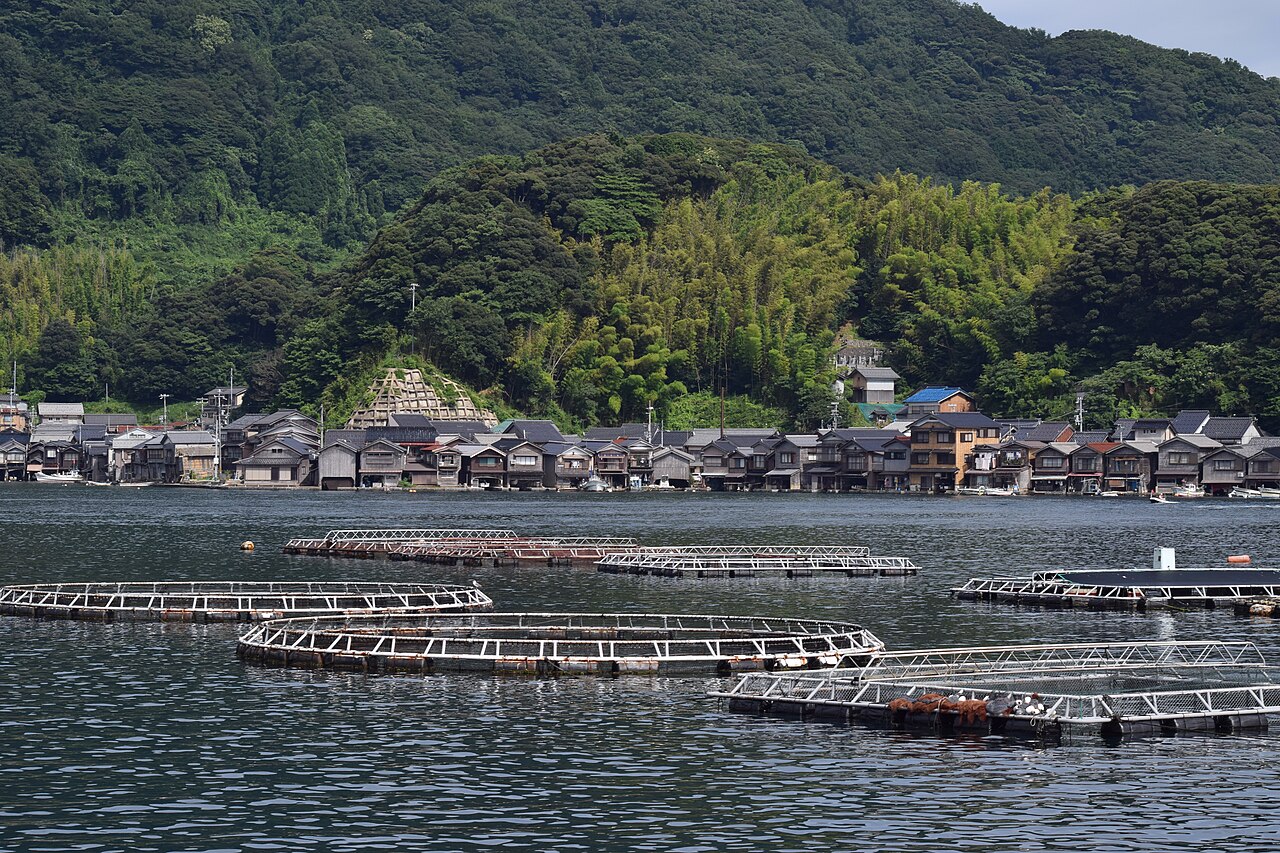
On board, feeding the gulls that follow the boat is part of the experience, and guidebooks add that, with luck, dolphins occasionally come close to the boat. Fares, the combined ticket that pairs the cruise with Amanohashidate, and parking at the pier are set out in the table below.
| Item | Detail |
|---|---|
| Adult fare (junior high school age and above) | twelve hundred yen |
| Child fare (elementary school age) | six hundred yen |
| Ine-Kasamatsu combined ticket (bay cruise, Amanohashidate cable car or lift, and the bus up to Nariai-ji temple) | eighteen hundred yen; children half price |
| Parking at Hide Station, car or motorcycle | five hundred yen |
| Parking at Hide Station, coach or microbus | one thousand yen |
| Departures | first at nine in the morning, last at four in the afternoon |
If the timetable does not line up, or you would rather have the day arranged for you, tours and activities covering Ine and the Amanohashidate area can be booked ahead. The combined ticket is worth a look if you also plan to see Amanohashidate, since it folds the cable car and the temple bus into one price.
Where to stay
Disclosure: This post may contain affiliate links. If you book through them, we may earn a commission at no extra cost to you.
Walking the Village: Funaya Biyori and Urashima Shrine
Start at Funaya Biyori, the waterfront visitor centre a short walk from the bus stop, and use the coin lockers at the tourist information office to shed your bag before the lanes. The boathouses and the terraced rice fields are working homes and farmland, not a museum, so keep noise down and be discreet with the camera near doorways.
Urashima Shrine, elsewhere in Ine town, is held by local tradition to be the setting of Japan's oldest Urashima Taro tale. As the story goes, a turtle of five colours became a beautiful woman and led Urashimako to the mountain of the immortals; the shrine is said to date from the ninth century, in honour of the Urashima clan.
The shrine keeps a picture scroll of the legend and a treasure box with a tortoiseshell pattern, so there is something to see beyond the story. About seven minutes' walk to the south-west, guidebooks describe a viewing park for the Nunobiki waterfall, Kyoto Prefecture's tallest, which only runs when water is plentiful.
The View From Above: Michinoeki Funaya-no-Sato Ine
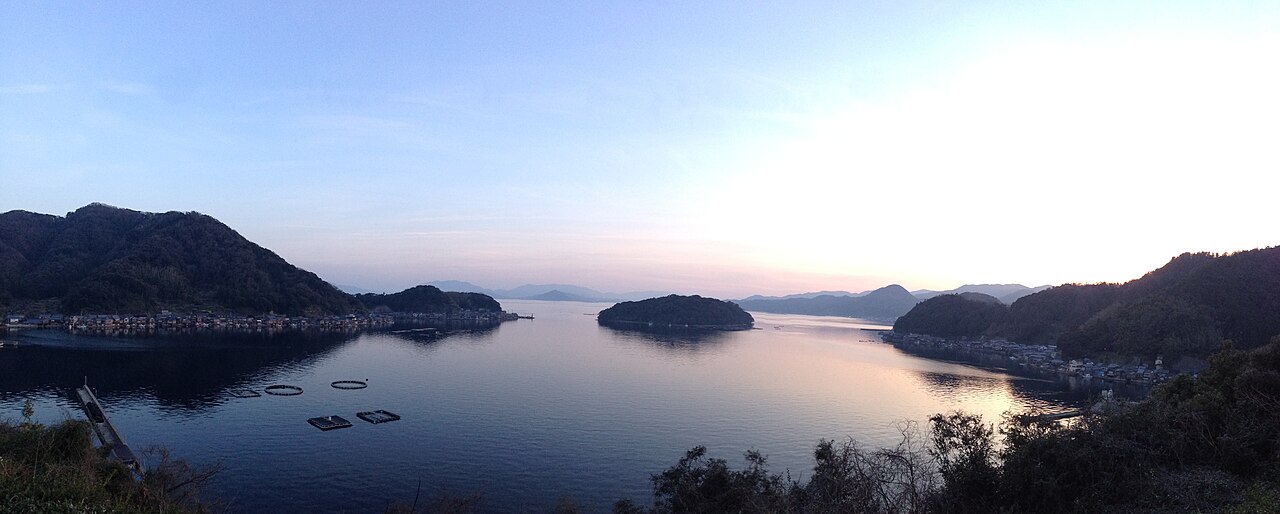
For a view that takes in the whole bay at once, head to Michinoeki Funaya-no-Sato Ine, the roadside station that stands along Ine Bay with the boathouse streetscape spread around it. Few roadside stations in Japan have a setting like this, and the outlook over the funaya is reason enough to stop. Hours and closing days are below.
- Open from nine in the morning to five in the afternoon.
- Closed on Tuesdays as a general rule, and for a short break in the year-end and New Year period, from the twenty-eighth of December to the third of January.
- Restrooms, the car park and the public telephone are available twenty-four hours a day.
- By car, it is about a forty-minute drive from Tango Railway's Amanohashidate Station.
For drivers it is a natural first or last stop, since the car park is there whatever time you arrive. Otherwise it works as the closing stop of the day: take in the boathouse skyline from here, then pick up something to eat or take home from the restaurants and shops inside. Timetables change, so check official information before visiting.
What to Eat in Ine: Heshiko and Local Specialties
Ine's signature food is heshiko, mackerel or sardine packed in rice bran and salt and left to ferment for months. It is a Tango speciality, handed down with Ine at its centre. The taste is deeper than fresh mackerel, with a pronounced saltiness and a character of its own, which suits it to rice or sake.
The pickling starts in autumn and winter, and the fish is ready after six months to a year, which gives heshiko a season of its own. It was once made in nearly every household; today the bulk of what you can buy comes from the fisheries cooperative or local seafood companies.
Ine is a fishing town known for its winter yellowtail, and the sushi restaurant inside Funaya Biyori serves fish landed in the bay that same day, with winter-only Ine buri dishes as its popular draw. For souvenirs, guidebooks single out heshiko, mirin-dried horse mackerel and local sake. The roadside station's restaurants use the morning's catch; their hours are below.
| Restaurant or shop at the roadside station | Hours | Closed |
|---|---|---|
| Lounge FUNAYA | nine in the morning to five in the afternoon | Thursdays and Fridays |
| Restaurant Funaya | ten in the morning to five in the afternoon, last order at four | Tuesdays |
| Ine-ura Fishery | nine in the morning to five in the afternoon | year-end and New Year holidays |
| Shokujidokoro Aburaya | eleven in the morning to five in the afternoon | Wednesdays |
Match the closing days to your travel day before you count on lunch here, since the station and its tenants do not all shut on the same day. Whatever the day, the boathouses can be walked past at any time, and a pack of heshiko will travel home in your bag more easily than the view will.