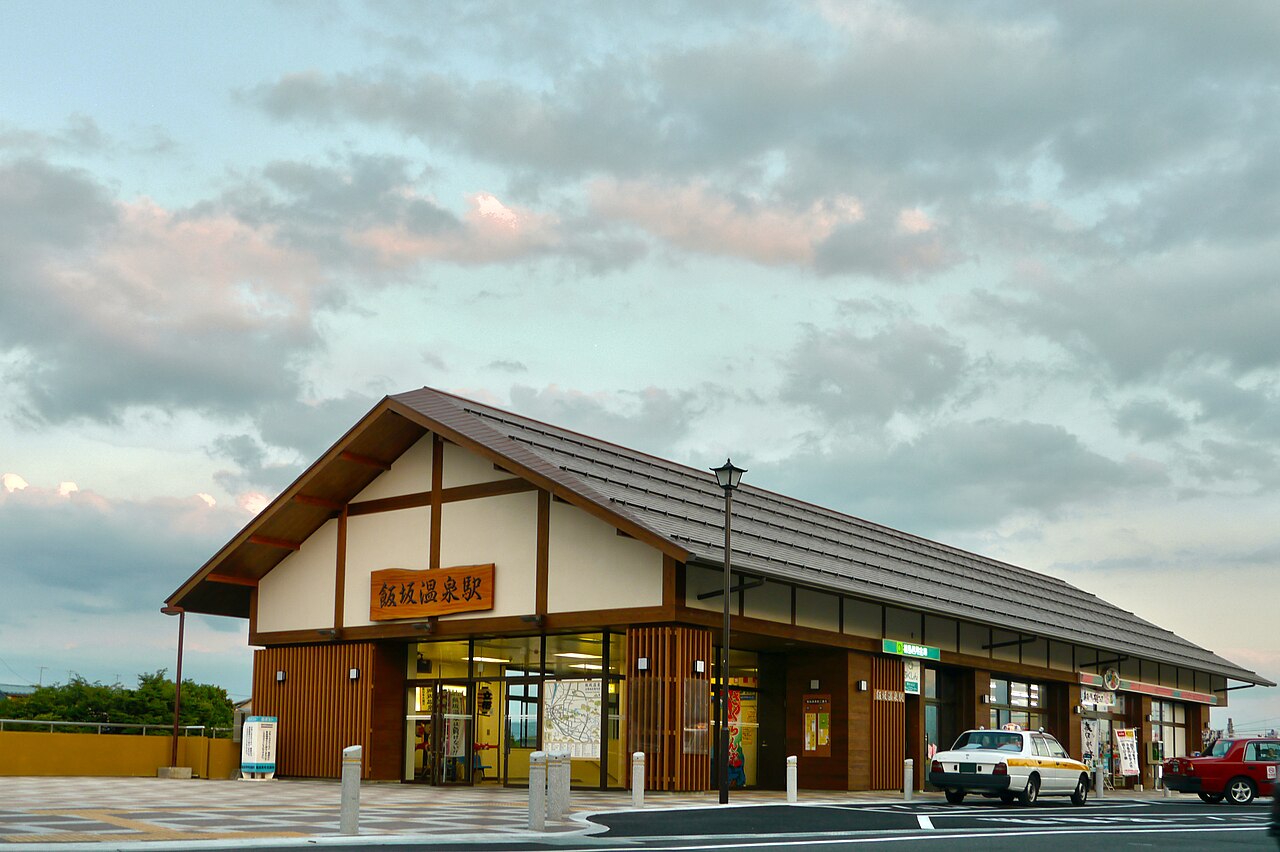
Iizaka Onsen is a spa town that never needed to reinvent itself. A short local line runs north from Fukushima city and ends beside the Surikami River, in a knot of lanes built around public bathhouses. The pleasures here are plain and old: a hot soak, a walk along the water, a bridge, a temple. Everything sits close together, and the whole day works without a car.
Why Iizaka stays quiet
The town sits on high, dry ground above the Surikami River, with hills rising to the northwest and farmland spreading away to the southeast. Travel writers have praised it for the clean air and the way a walk through its streets leaves you refreshed, and that still describes the place. The river below is swift and clear, and it draws the eye from almost anywhere in town.
What keeps Iizaka quiet is its rhythm. The bathhouses are neighbourhood fixtures rather than attractions: small buildings on ordinary corners, each with its own regulars, its own temperament, and its own rest day. Visitors who arrive expecting a polished resort will not find one. Visitors who like towns that simply carry on will feel at home within the first lane.
Getting there from Fukushima
- From JR Fukushima Station, the Fukushima Kōtsū Iizaka Line brings you to Iizaka-Onsen Station in about 25 minutes.
- The spa town lies roughly eight kilometres northwest of central Fukushima, so even a late start leaves a full day.
- The terminus sits at the edge of the old town; from there the lanes, the river, and the bathhouses are all within an easy walk.
The public bathhouses, one by one
This is the heart of the day. Each bathhouse keeps its own schedule, and the rest days differ from one house to the next — that difference is exactly what makes a several-bath day possible if you plan the order first.
- Sabako-yu (鯖湖湯) — Adults pay 400 yen and children 200 yen. It is closed on Mondays and otherwise open from 6:00 to 21:00, with last entry at 20:40.
- Dōsen-no-yu (導専の湯) — Adults pay 400 yen and children 200 yen. It is closed on Fridays and otherwise open from 6:00 to 21:00, with last entry at 20:40.
- Harai-yu (波来湯) — Adults pay 500 yen and children 250 yen. It is closed on Tuesdays and otherwise open from 6:00 to 21:00, with last entry at 20:40.
- Daimon-no-yu (大門の湯) — Adults pay 400 yen and children 200 yen. It is closed on Thursdays; on Monday, Wednesday, and Friday it is open from 6:00 to 13:00, with last entry at 12:40. On Tuesday, Saturday, and Sunday it is open from 13:00 to 21:00, with last entry at 20:40.
- Yahata-no-yu (八幡の湯) — Adults pay 400 yen and children 200 yen. It is closed on Tuesdays; on Thursday, Saturday, and Sunday it is open from 6:00 to 13:00, with last entry at 12:40. On Monday, Wednesday, and Friday it is open from 13:00 to 21:00, with last entry at 20:40.
- Tokuna-yu (十綱湯) — Adults pay 400 yen and children 200 yen.
- Senki-no-yu (仙気の湯) — Adults pay 400 yen and children 200 yen.
Ryokan baths that admit day visitors
If you would rather soak somewhere with a front desk and a quieter tub, several inns let day visitors in for a fee.
- Tsutaya Ryokan — Adults pay 500 yen. Children pay 300 yen. Day bathing runs from 10:00 to 20:00.
- Hiranoya Ryokan — Adults pay 400 yen. Day visitors can bathe from 15:00 to 18:00.
- Eiraku — Adults pay 500 yen. Baths run from 9:00 to 14:00, and it is closed on Tuesdays and Wednesdays.
- Fukuzumi Ryokan — Adults pay 600 yen. Children pay 400 yen. Day bathing runs from 11:00 to 20:00.
- Horieya Ryokan — Adults pay 500 yen. Children pay 200 yen.
Where to stay
Places to stay near Iizaka Onsen →
Disclosure: This post may contain affiliate links. If you book through them, we may earn a commission at no extra cost to you.
What the old guidebooks describe
A Meiji-era guide to the town walked its readers through Iizaka in loving detail, and much of what it recorded is still legible on the ground.
The guide counted eight public bathhouses in and around the town, each a tub cut into the rock, finished in stone and timber, and roofed against rain and snow. Sabako-yu already stood on its street in the Yuzawa quarter, the tub sunk so far below the road that the writer compared looking in to peering down a great dug well. Harai-yu sat then, as it does now, at the foot of the rocks beside the river, and the guide says its name — "the bath the waves come to" — was earned from that spot.
The Totsuna Bridge was a suspension span in those days, paid for by townspeople on both banks. On summer days you could watch fish moving in the Surikami from the railing, and the bridge after dark was counted the coolest spot in town. It joined Iizaka to the Yuno spa quarter on the far bank, and bathers crossed freely between the two.
The town proper divided into twelve named quarters, and its inns — forty to fifty of them — were noted as clean and well fitted out. Bathing was communal in the fullest sense: the guide records men and women, dozens at a time, sharing the water, while some inns kept indoor baths of their own for guests who preferred them.
The seasons got their own chapter: plum, peach, and cherry following one another through spring; summers by the river cool enough, the writer claims, to sleep without a mosquito net, with river frogs singing from the banks; winters that froze the spray along the gorge into shapes he likened to dragons' heads.
Iō-ji and the Satō brothers
A short trip out of the spa town stands Iō-ji, a temple founded in the eight-hundreds and bound tightly to the Satō family, who once governed this part of the old Shinobu district. It is the family temple of the brothers Tsugunobu and Tadanobu, retainers of Minamoto no Yoshitsune, and the guide describes towering cedars standing before the gate as if to mark the weight of that history.
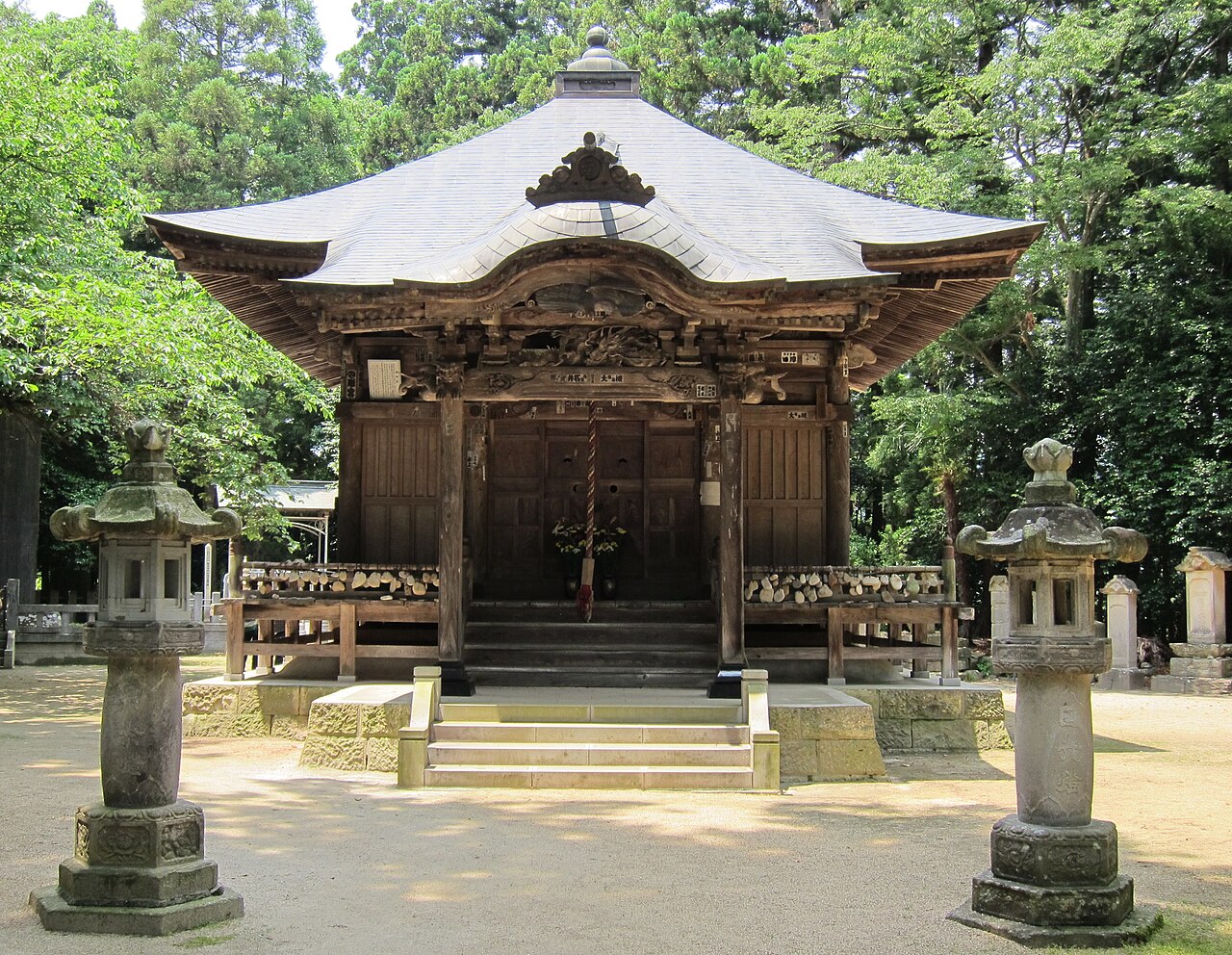
In the sixteen-eighties the poet Matsuo Bashō came this way and left a verse for the brothers, urging that a pilgrim's chest and a sword be set out with paper banners for the May display — a poem that still frames how visitors read the place. The temple's principal images are Dainichi and Yakushi, and its treasure hall, the Rurikōden, shows relics tied to the Satō family, among them a wooden saddle.
A day that fits together
- Begin with an early soak at Sabako-yu, before the town is fully awake.
- Walk the lanes along the Surikami River and cross the Totsuna Bridge for the view over the gorge.
- Take a midday bath at one of the ryokan that admit day visitors, or settle into lunch in the old quarters.
- Give the afternoon to Iō-ji, its cedars, and its treasure hall.
- End with one more bathhouse — a different one from the morning — before the ride back to Fukushima.
Stay the night in Iizaka
If you would rather not race the last ride back to Fukushima, staying the night in Iizaka lets the evening baths and the morning baths belong to the same visit.
Compare places to stay in Iizaka Onsen
Disclosure: This site may earn a commission if you book through the link above, at no extra cost to you.
Before you go
- Every bathhouse keeps its own rest day, and the rest days rotate through the week — decide which two or three baths you want and check their days before you set the order.
- Two of the bathhouses swap their morning and afternoon sessions by day of the week, so a missed morning at one is not a missed day.
- Spring blossom and autumn colour are the celebrated seasons here, but the baths themselves are the constant; the town rewards whichever month you arrive.