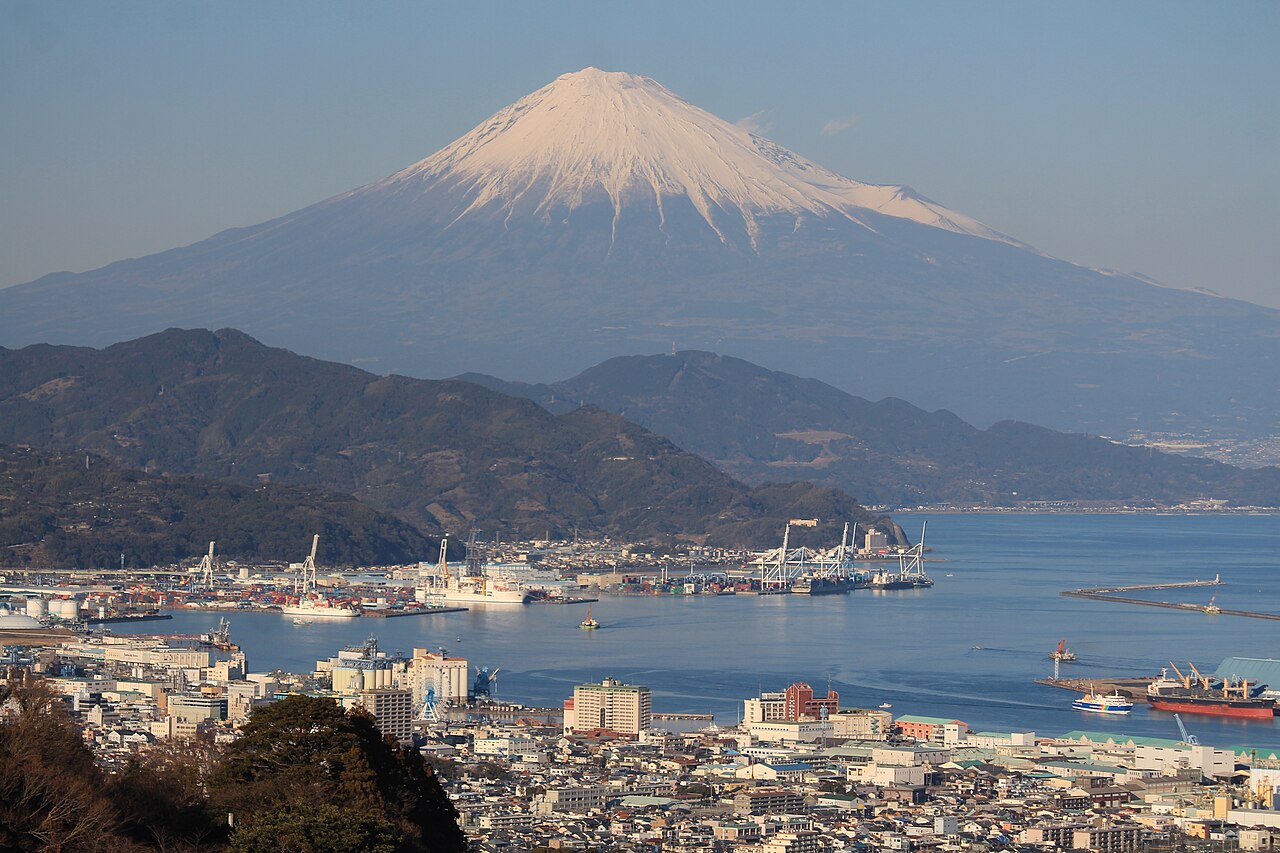
Walking the outdoor corridor at Nihondaira Yume Terrace gives a view of Mount Fuji, Suruga Bay and Miho no Matsubara. From the same hilltop, a ropeway crosses to Kunozan Toshogu, whose shrine buildings are designated a National Treasure. Below the shrine, strawberries grow against stone walls on a coast that faces Suruga Bay. Tea-flavored taiyaki, a bell charm and a berry picked fresh are among the things to try along the way.
Nihondaira Yume Terrace: A Hilltop Corridor, Matcha and Taiyaki
Nihondaira Yume Terrace is a hilltop lookout with an outdoor corridor, an exhibition floor, a lounge and an observation floor.
Walking a lap of the outdoor corridor gives a panorama with nothing in the way: Mount Fuji, Suruga Bay, Miho no Matsubara, the Izu Peninsula and the Shizuoka cityscape. Inside, the exhibition area presents the formation of Nihondaira's terrain with projection mapping. Kengo Kuma's architecture office designed the building with plentiful prefectural timber.
Standing on the summit also connects the view to a name and a title. Nihondaira is said to have received its name because Yamato Takeru climbed to the summit of this mountain and looked out in every direction. The hilltop is certified as a Japan Night View Heritage site.
Ordering at the tea room at Yume Terrace brings Shizuoka City-grown matcha offered with sweets. A tea stand in the garden market mainly handles Japanese black tea made by Shimizu tea farmers, and its black tea soft-serve and drinks are available as takeout. A shop inside the hilltop building sells tea taiyaki, with dough kneaded with a specially ordered Shizuoka City tea and baked until fragrant. The result is crisp on the outside and mildly sweet inside.
Crossing to Kunozan: The Ropeway and the Stone Steps
Kunozan Toshogu can be reached by ropeway from the hilltop or on foot up the stone steps from the foot of the mountain.
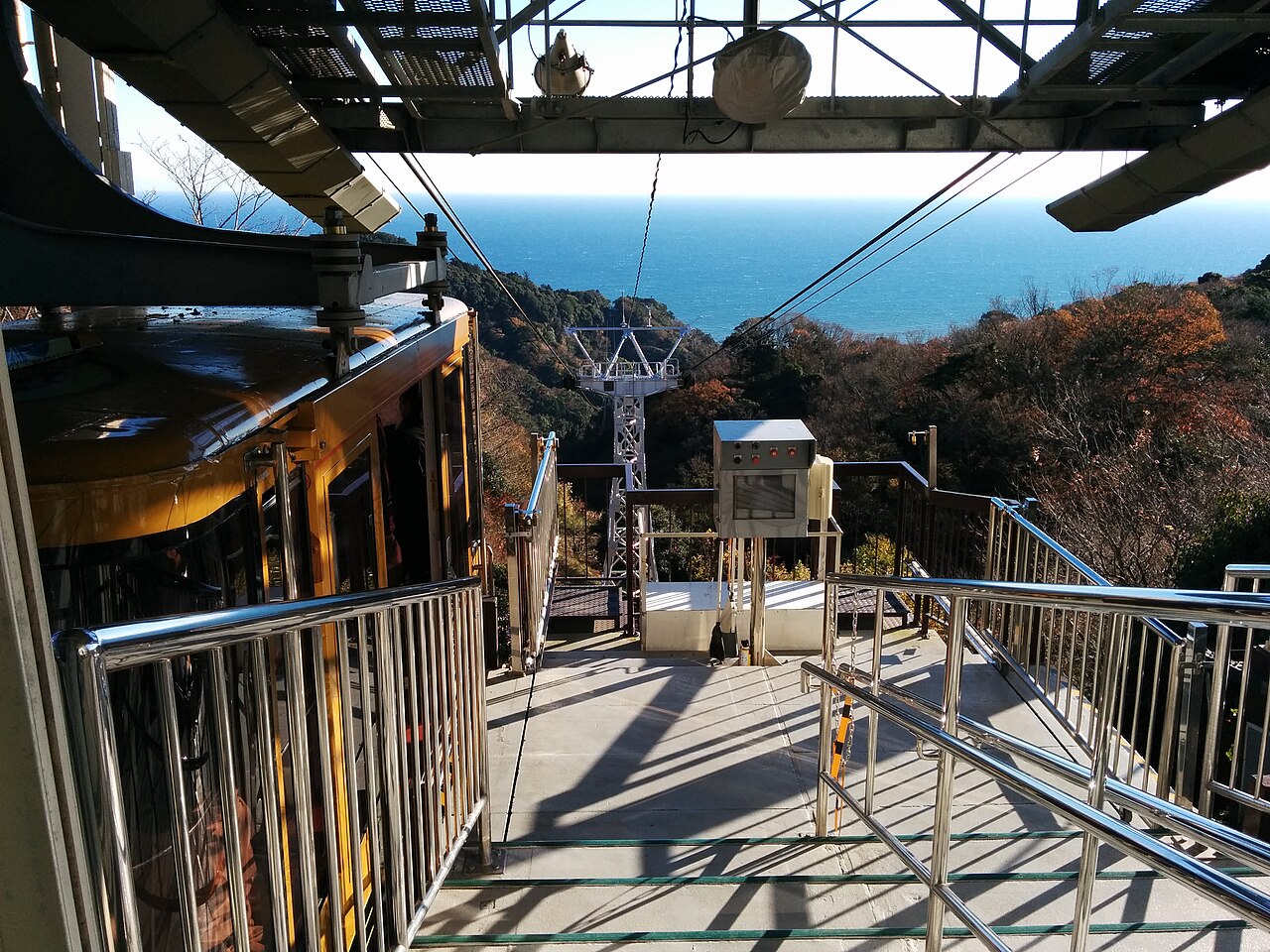
Crossing by ropeway from Nihondaira and climbing the approach from the foot of Kunozan are both ways to worship at Kunozan Toshogu. From the gondola, visitors can view the valley, which changes with the seasons, and the Izu Peninsula and Omaezaki in the distance across Suruga Bay. In autumn, the leaves of the valley can be seen from the ropeway.
Climbing from below begins at the stone torii at the foot of the mountain. The approach runs from the torii to the front of the main hall in turns, and the Kuno plum grove is on the left side a little way up. Ichi-no-mon, the gate at the top of the turning stairs, has a view of Suruga Bay, the Izu Peninsula and Omaezaki. In the leaf season, the walking route shows the green Suruga Bay together with the colored trees.
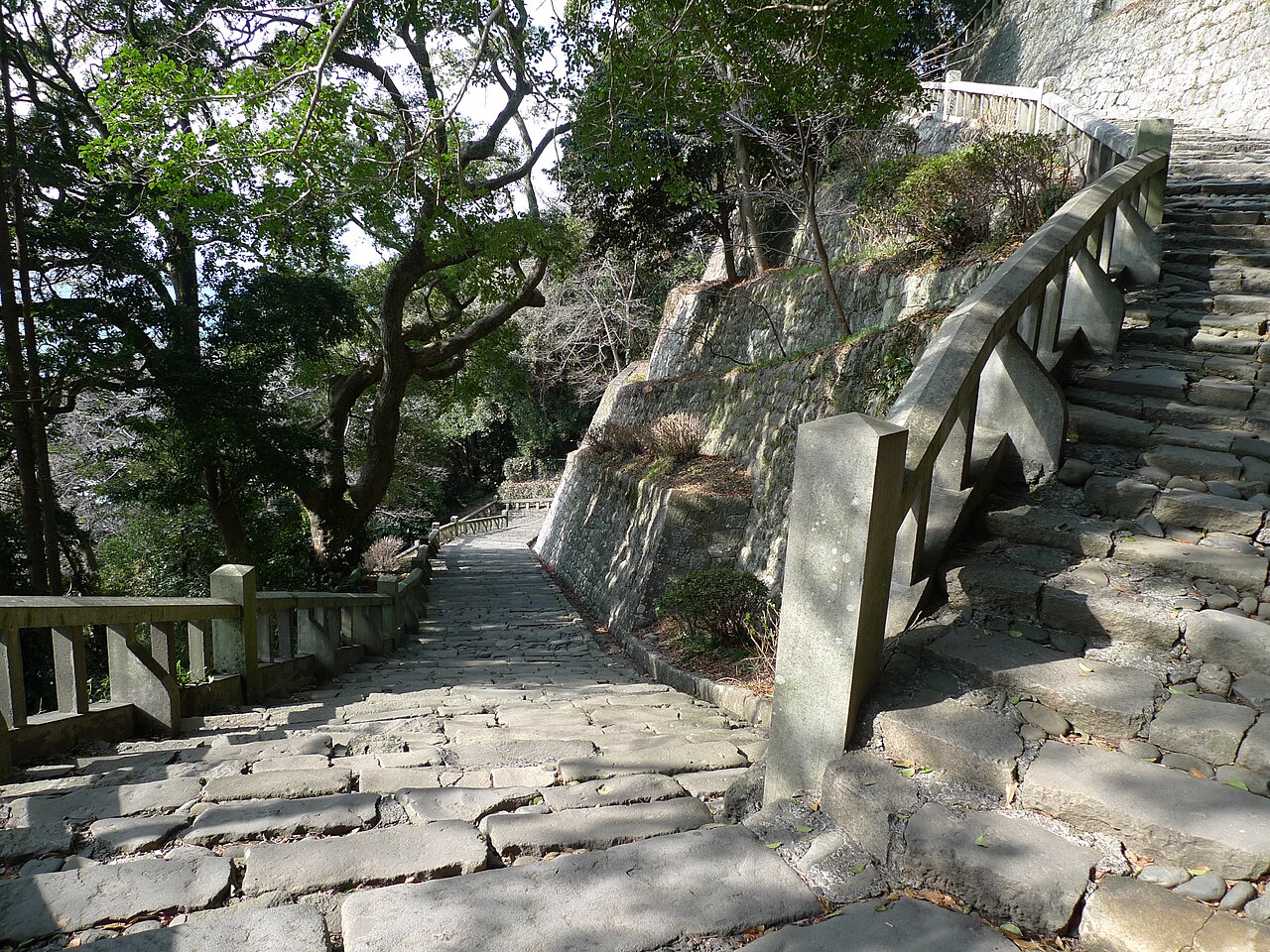
Choosing between the routes depends partly on who is travelling. The way to the main hall consists of stone steps alone, and wheelchairs and strollers cannot be used. While the ropeway is suspended for equipment work, the stone steps from the foot of Kunozan still lead to the shrine as usual.
Visiting in summer changes what the mountain offers. After the rainy season ends, the sound of cicadas starts to be heard from the forest of Kunozan. Suruga Bay spreads out below and shines blue, and the forest surrounding the shrine grounds is full of green.
Kunozan Toshogu: Shrine Buildings, Bows and Charms
Kunozan Toshogu has a vermilion gate, a gabled gate, a worship hall and a museum, visited in a suggested order.
Passing the shrine office reception brings a large vermilion-lacquered gate into view. The Kunozan Toshogu shrine buildings were founded as a mausoleum enshrining Tokugawa Ieyasu. The characters on the Romon are calligraphy by Emperor Go-Mizunoo, and the stable houses a wooden horse said to be the work of Hidari Jingoro. The Karamon, the gate in front of the worship hall, has a gabled, copper-tiled, black-lacquered roof, and a white plum grows under it.
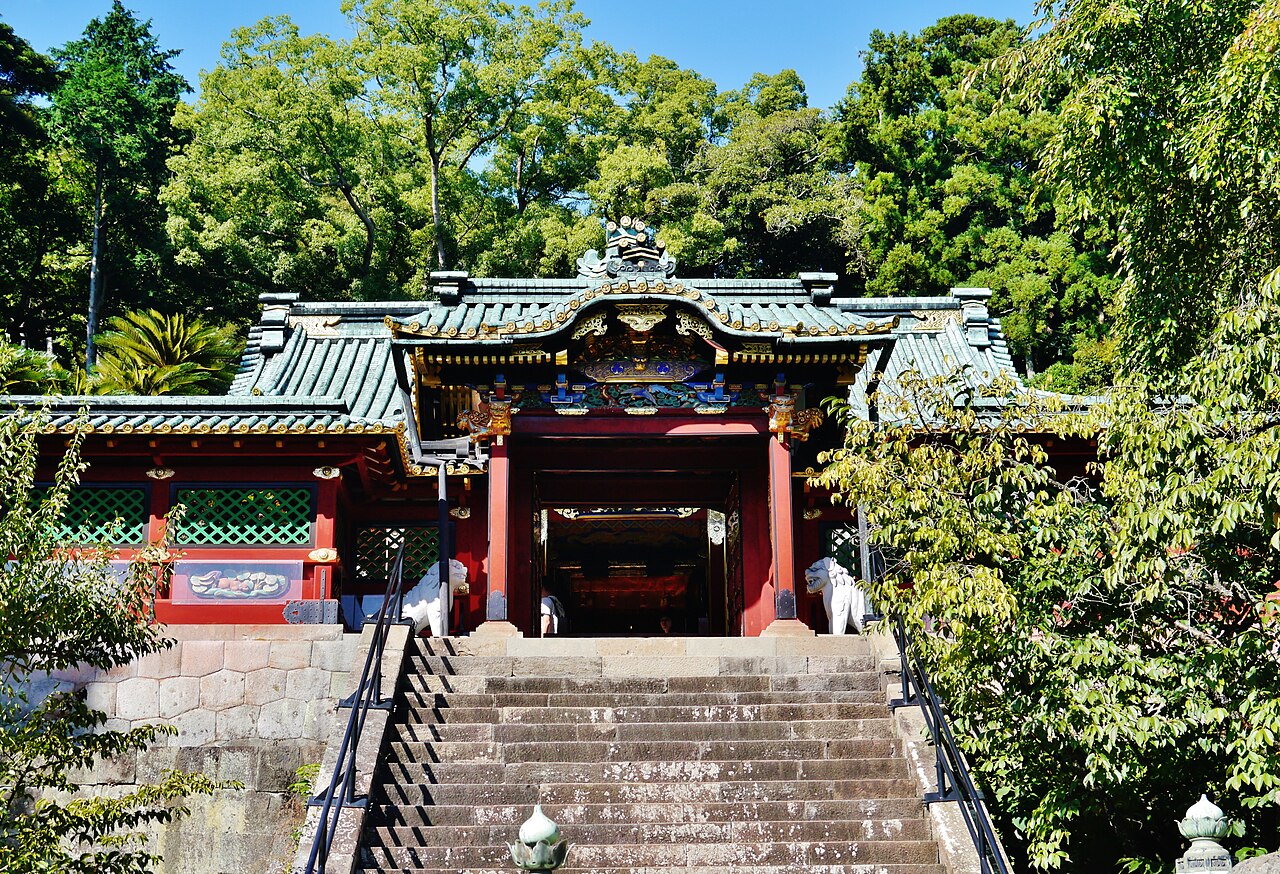
Following the suggested order of worship means going to the main hall, then the Shinbyo tomb, and finally the museum. A hand-washing pavilion is on the left side of the approach after passing through the Romon. Visitors are asked to take off their hats on entering the precinct and to walk at the edge of the approach, because the centre is regarded as the path of the deity.
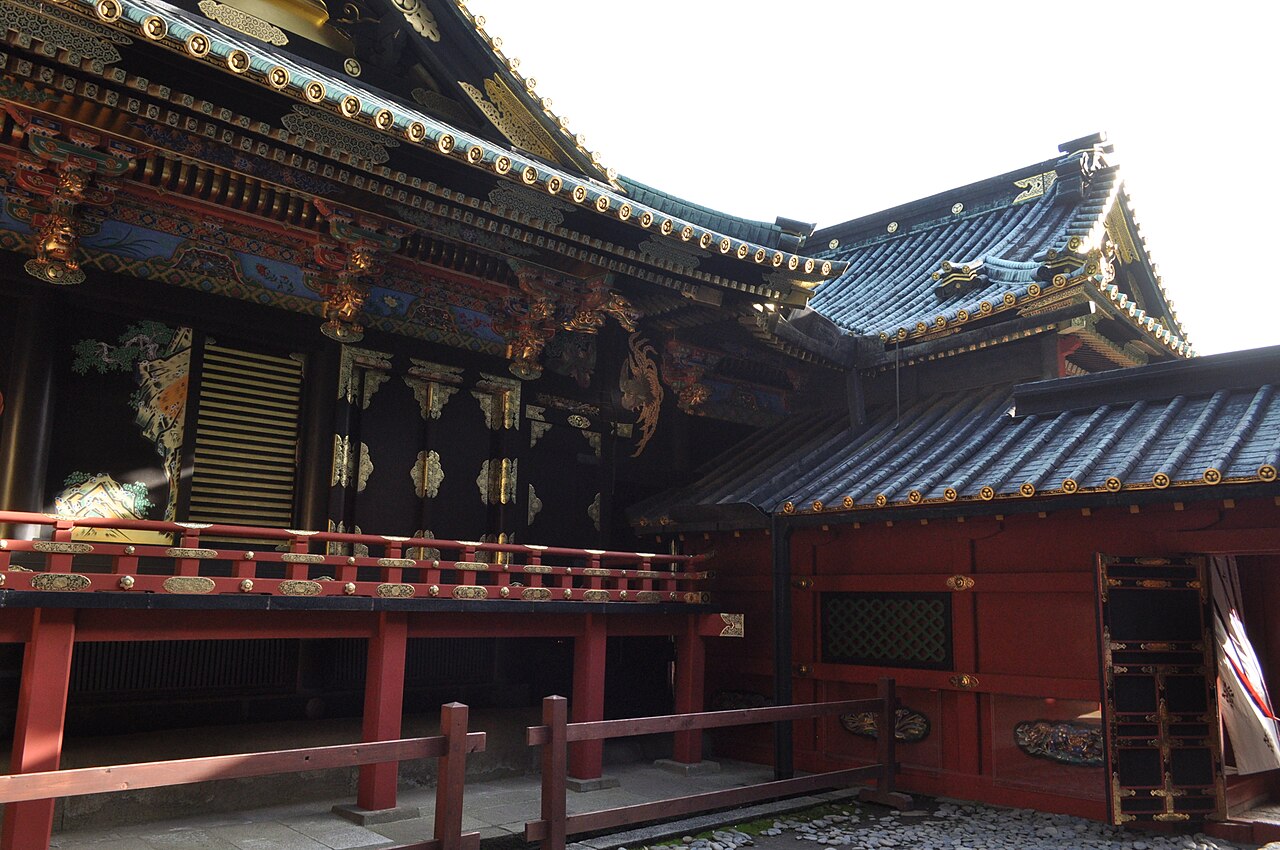
Worshipping in front of the worship hall follows the shrine's manner of a pair of deep bows, a pair of claps and a single closing bow. The back is kept flat and the waist bent deeply for the opening bows. The hands are opened to about shoulder width for the claps, and a last deep bow is made at the end.
The bell charm's sound is described as opening up luck, and its design carries the hollyhock crest, the family crest of Tokugawa Ieyasu. Another charm makes a sound of water. The cover of the shrine's goshuin book is embroidered with the shrine building, the stone steps, Suruga Bay and the stone-wall strawberry of Kuno.
Ending at the museum completes the suggested order. Its exhibition rooms display items related to Tokugawa Ieyasu, mainly everyday items he used in his Sunpu life, with a Western clock among them. The armour collection holds the armour of every Tokugawa shogun, and Ieyasu's standard was a gold fan.
Stone-Wall Strawberries at the Foot of Kunozan
Kuno Ichigo Kaigan-dori is the strawberry coast below Kunozan, where berries are grown by stone-wall cultivation overlooking Suruga Bay.
Visitors to Kuno Ichigo Kaigan-dori find the fruit commonly called stone-wall strawberries. Sunlight and light reflected from the sea warm the wall, and the stored heat acts as heating through the night. The wall also keeps the fruit from touching the soil. On that stored heat, berries with a concentrated aroma grow sweet even in midwinter.
Tasting the fruit here mostly means tasting Akihime, the representative variety born on this coast. Akihime has an elongated shape, large berries, low acidity and plenty of sugar, with soft, melting flesh. The variety is delicate and does not travel well over long distances, so its fully ripe taste is said to be a local taste. Freshly picked strawberries have a juicy sweetness that fills the mouth, and in the plastic-covered greenhouses the afternoon rise in temperature leaves the strawberries slightly warm.
Picking strawberries is available at many farms from around December to around May in a typical year. Choosing a berry comes down to color, and the ones to target are fully red up to the edge of the calyx. A calyx that is curled back indicates a fully ripe strawberry. To stay overnight in the area, compare places to stay in Shizuoka.
Getting to Nihondaira: Ropeway, Hours and Fees
New to rural buses and one-man trains? See how to ride them, step by step.
Details below follow the official guides.
| Item | Details |
|---|---|
| Ropeway fares | adults seven hundred yen one way; round trip one thousand two hundred fifty yen; credit cards, QR payment and electronic money accepted |
| Ropeway hours | first departure at nine-ten in the morning from Nihondaira Station, last departure at five in the afternoon from Kunozan Station; the ride takes about five minutes |
| Ropeway suspension | December first to twenty-first, twenty twenty-six, for equipment work; the shrine museum is closed on the same days |
| Kunozan Toshogu | nine in the morning to five in the afternoon, no closing days; shrine buildings seven hundred yen, museum six hundred, combined one thousand two hundred |
| Yume Terrace admission | adults and high school students one hundred yen; junior high students and children fifty yen; Saturdays nine in the morning to nine in the evening |
| Yume Terrace closing days | second Tuesday of every month and December twenty-sixth to thirty-first; in December the outdoor corridor stays open on closing days |
| Bus and walk | route bus from JR Shizuoka Station to the last stop, Nihondaira Ropeway, adults seven hundred ten yen; three minutes on foot from Yume Terrace |
For the pine grove and the beach across the bay, see Miho no Matsubara.
Thinking of staying overnight?
Compare places to stay near Shizuoka, Shizuoka, Japan →
Disclosure: This post may contain affiliate links. If you book through them, we may earn a commission at no extra cost to you.