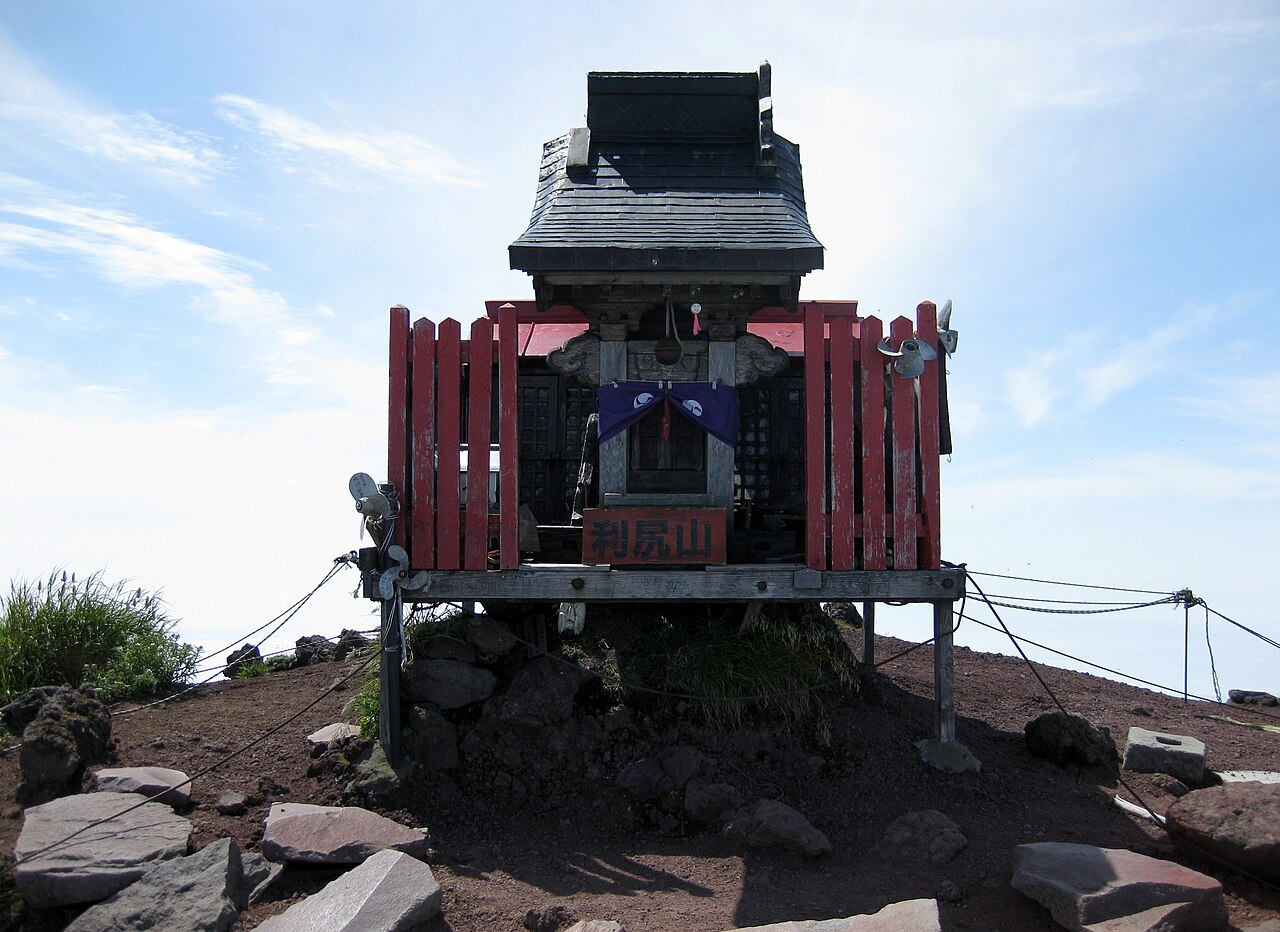
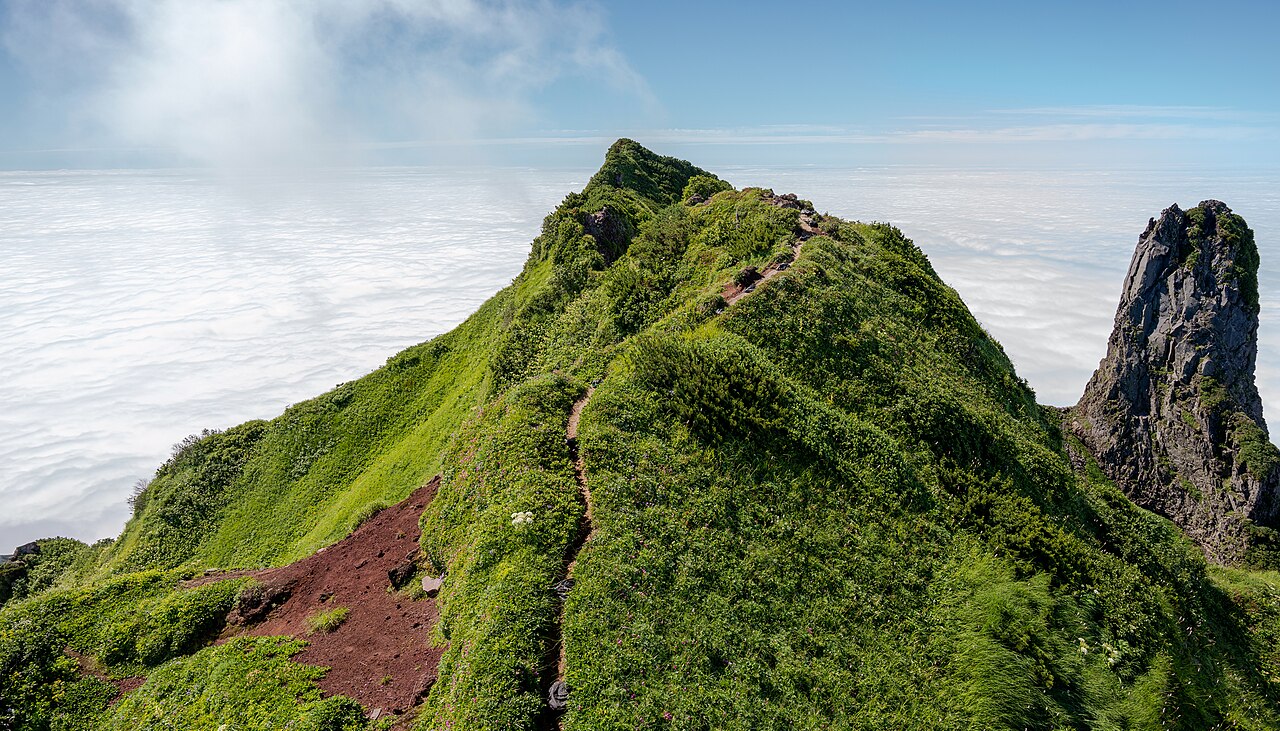
The Mount Rishiri hike is a full-day climb with two courses up the mountain, Oshidomari and Kutsugata. A shrine stands at the summit, and with good visibility there is a big panorama. Carrying a portable toilet and submitting a climbing plan are part of climbing this mountain, so preparation begins before the trailhead.
On the Oshidomari course, the ascent takes six hours and the descent takes four hours. On the Kutsugata course, the ascent also takes six hours and the descent four hours. With a one-hour rest on the summit included, the Oshidomari course needs eleven hours even on a fine day. The Kutsugata course is for use after the snow melts, from July onward. A local campaign asks hikers to carry a portable toilet when entering the mountain. One portable toilet set, a case and a toilet, costs four hundred fifty yen. Six portable toilet booths are installed around the mountain. Hikers submit a climbing plan, and the forms are kept at the police box and at accommodations. A climber in trouble who needs rescue is told to call one-one-zero first. If rescue is needed after an injury, hikers contact the local police box or the Rishiri Fuji Town Office.
From the Ezo spruce forest to the summit shrine
On the Oshidomari course, the climb begins in the forest. From the Hokuroku campground trailhead, the first stretch of about one hour twenty minutes passes through a forest of large Ezo spruce and Todo fir trees.
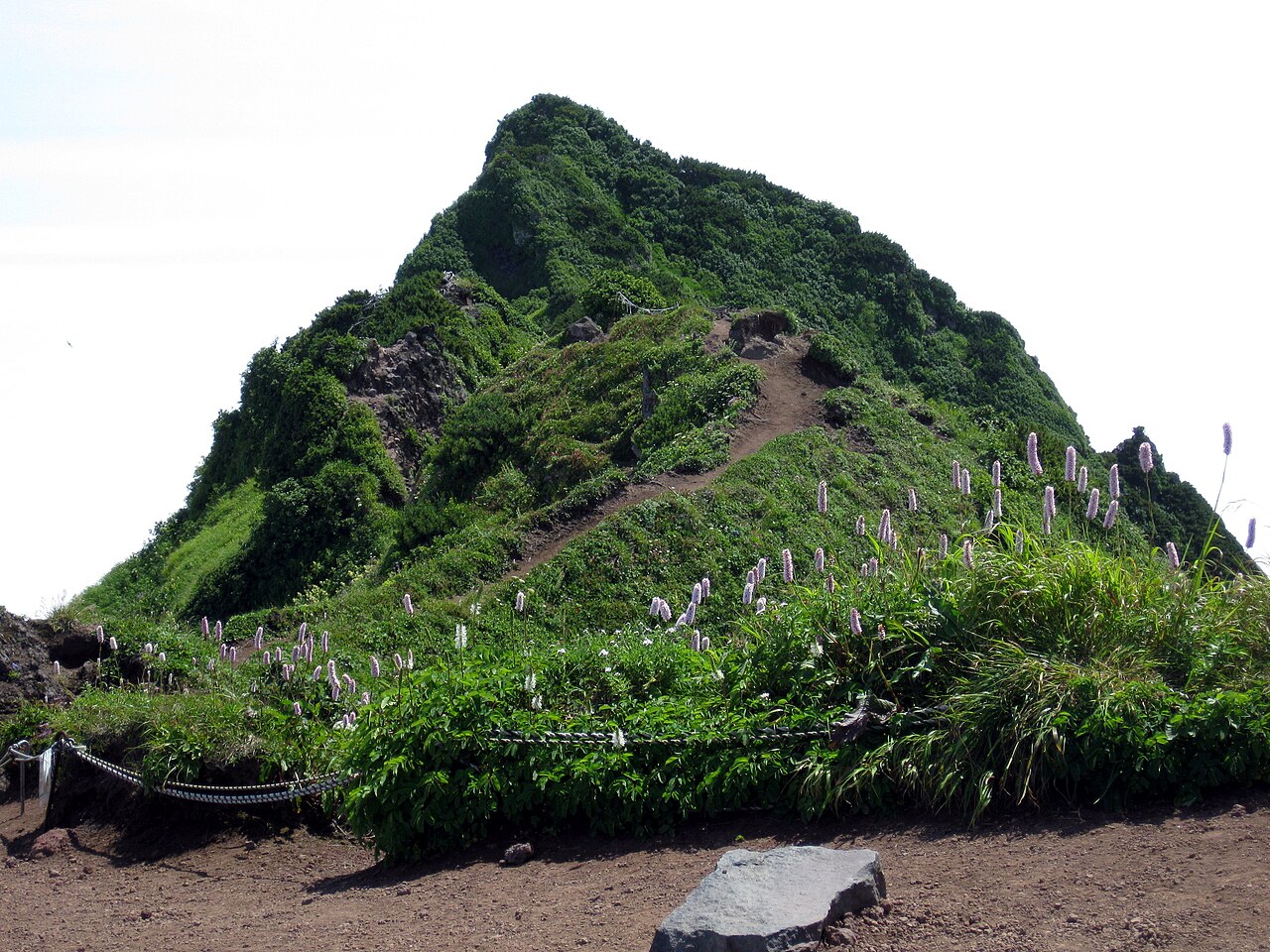
From the ninth stage, the Oshidomari course takes about one hour ten minutes to the summit. Above that point, the footing is poor, and the slope and fatigue call for particular caution. This is the part of the climb to take slowly, placing each step with care, and it pays to reach it with energy still in hand.
At the top, a shrine stands at the summit, and visitors take commemorative photos there. The shrine gives the long climb a clear end point.
Two courses: Oshidomari and Kutsugata
Both courses climb Mount Rishiri, and they differ in the height gained and in what the trail asks of the hiker.
- Oshidomari course. The elevation gain on the Oshidomari course is 1,490 meters. It begins with the forest section described above.
- Kutsugata course. The elevation gain on the Kutsugata course is 1,280 meters. On the Kutsugata course, the sixth stage is reached about one hour from the trailhead. The Kutsugata course has a difficult section where accidents are frequent and caution is needed.
Settle on a course before the climb. The collection box, the booths and the turn-back check described below all depend on which course is chosen.
Compare options
See partner pricing and availability →
Disclosure: This post may contain affiliate links. If you book through them, we may earn a commission at no extra cost to you.
Portable toilets: where to get one, where to use it, where to leave it
Carrying a portable toilet is part of climbing this mountain, and it works in a plain order: get one before the climb, use it in a booth on the way, and carry it down. Portable toilets can be bought at inns and similar places. The portable toilet booths have no toilet paper, so paper goes into the pack together with the set.
Partway along the trail there are dedicated booths for using a portable toilet, and at the trailheads there are collection booths for used ones. The Oshidomari course has portable toilet booths at the six-and-a-half stage, the hut and the ninth stage. The Kutsugata course has portable toilet booths at the hut and the eight-and-a-half stage.
Climbers are asked to take used portable toilets back out rather than leave them in the toilet booth, and to put them in the collection boxes at each trailhead. On the Oshidomari course, the collection box is at the trailhead in front of the Hokuroku campground. On the Kutsugata course, the collection box is at the trailhead at the fifth stage.
Climbers are also asked to put caps on the tips of their trekking poles to reduce soil erosion on the trail.
Weather and safety on the mountain
The weather decides how far a day on Mount Rishiri goes. On the Oshidomari course, the sixth stage is the place to judge the wind: if it is so strong there that a rain jacket cannot be put on, that is the point to turn back.
Rain is the other thing to watch. The Oshidomari course, the Kutsugata course and the Himenuma Ponyama trail each have several dry stream crossings, and these cannot be crossed when the water rises after heavy rain. A climbing-restraint request may also be issued depending on weather conditions, so it is worth checking for one before setting out.
The huts on the Oshidomari and Kutsugata courses are limited to emergencies, and hikers are asked not to plan to stay overnight in one. These emergency huts have no resident warden and no facilities or supplies such as toilets or water. Winter is a different undertaking. Hikers going out for winter climbing are advised to bring avalanche gear: a beacon, a snow shovel and a probe.
Before you go
Climbers are asked to bring a portable toilet. For the island itself, see the Rishiri Island guide. If you also want a meal on the island, see the Rishiri ramen guide. If you are also heading to Rebun Island, see the Rebun Island guide. If you are also planning time in Wakkanai, see the Wakkanai guide. If you want a base on the island, you can browse places to stay on Rishiri Island. Check official information before visiting.