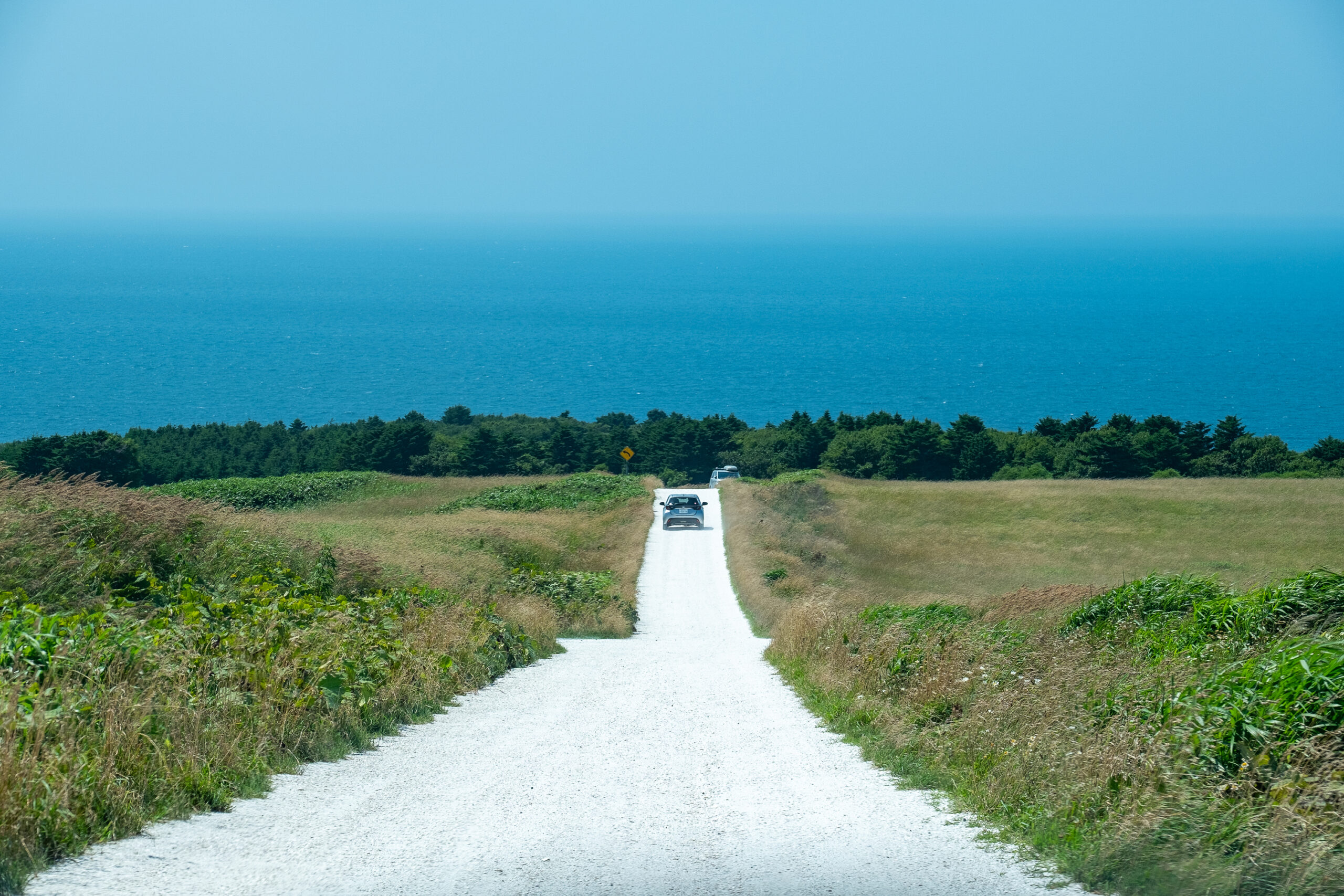
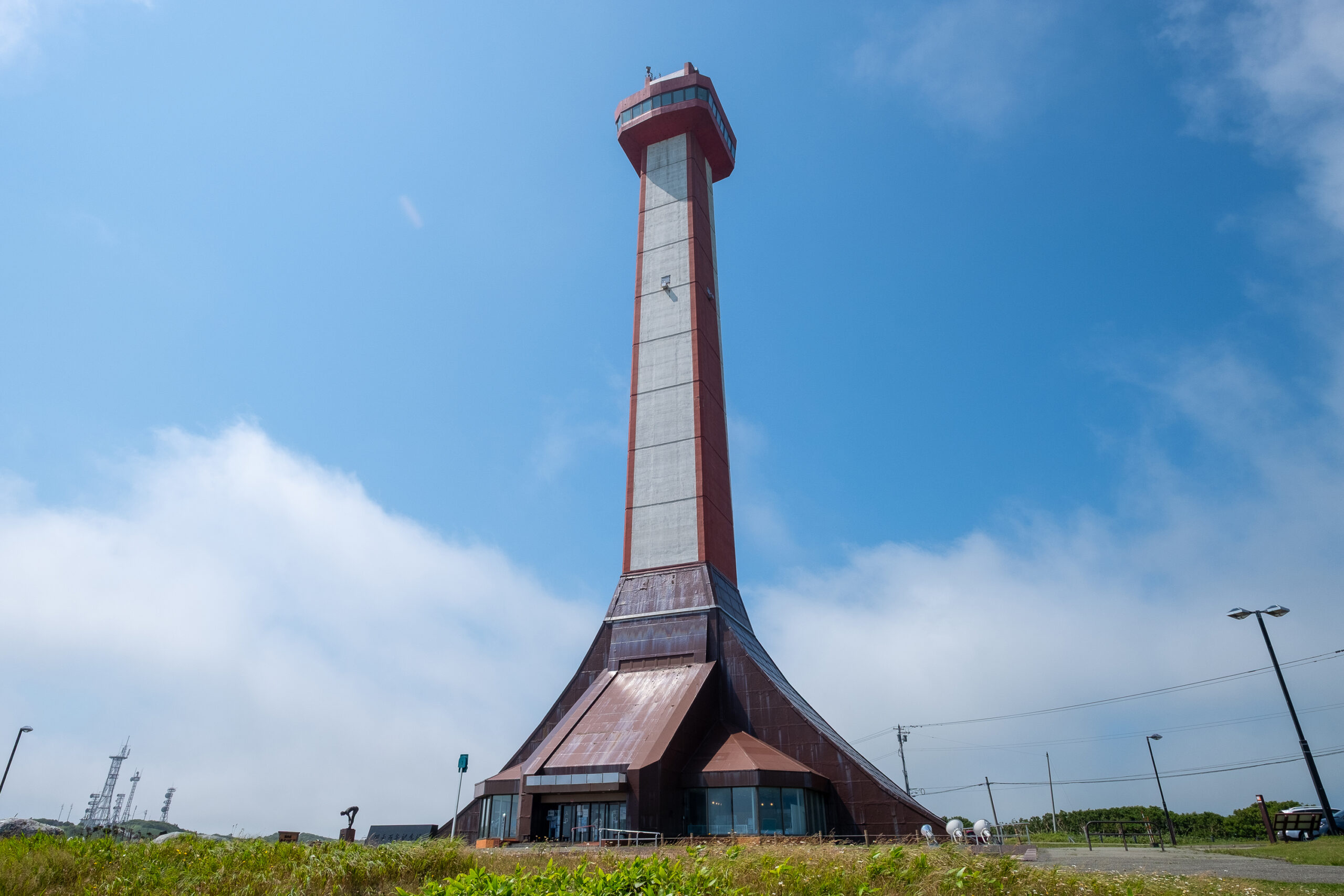
In Wakkanai, walking the scallop-shell white road on the Soya Hills Course produces a crunching sound underfoot. From the tip of Cape Noshappu, Mt. Rishiri and the shadow of Rebun Island can be seen ahead. The Centennial Memorial Tower has a glass-walled observation deck with views to Rishiri and Rebun in the west and Sakhalin across the Soya Strait to the north. At the table, chaamen is eaten by adding vinegar to taste and mixing the ankake sauce into the noodles.
The scallop-shell road across the hills, the cape-tip view at Noshappu and the tower's glass-walled observation deck each look out over the sea toward the islands, so a visit to the city can be built around these three viewpoints.
Cape Soya and the Soya Hills: Drift Ice, a Whale Spout and the Scallop-Shell White Road
Cape Soya has a standing statue of an explorer who once crossed to Karafuto, facing the sea beside the monument. The facility at the cape has a below-freezing environment that visitors can go into all year round, and real drift ice carried in during winter is displayed indoors. The Teppen Dome is a two-level waterfront facility where, when waves exceed a certain height, seawater sprays up from the wave-warning device like a whale spout that visitors can see and hear.
The Soya Hills are characterized by periglacial terrain formed by repeated freezing and thawing of the ground. Their ridgeline, designated a Hokkaido Heritage, draws gentle wave-like curves. The scallop-shell white road runs straight through the hills toward the Sea of Okhotsk. From the hills, Mt. Rishiri in the distance and a panorama of that sea are visible.
The ice facility at Cape Soya is an indoor stop, while the white road is walked outdoors across the hills, so the pair gives Wakkanai visitors one stop inside and one on foot.
The North Breakwater Dome, the Shiosai Promenade and the Centennial Memorial Tower
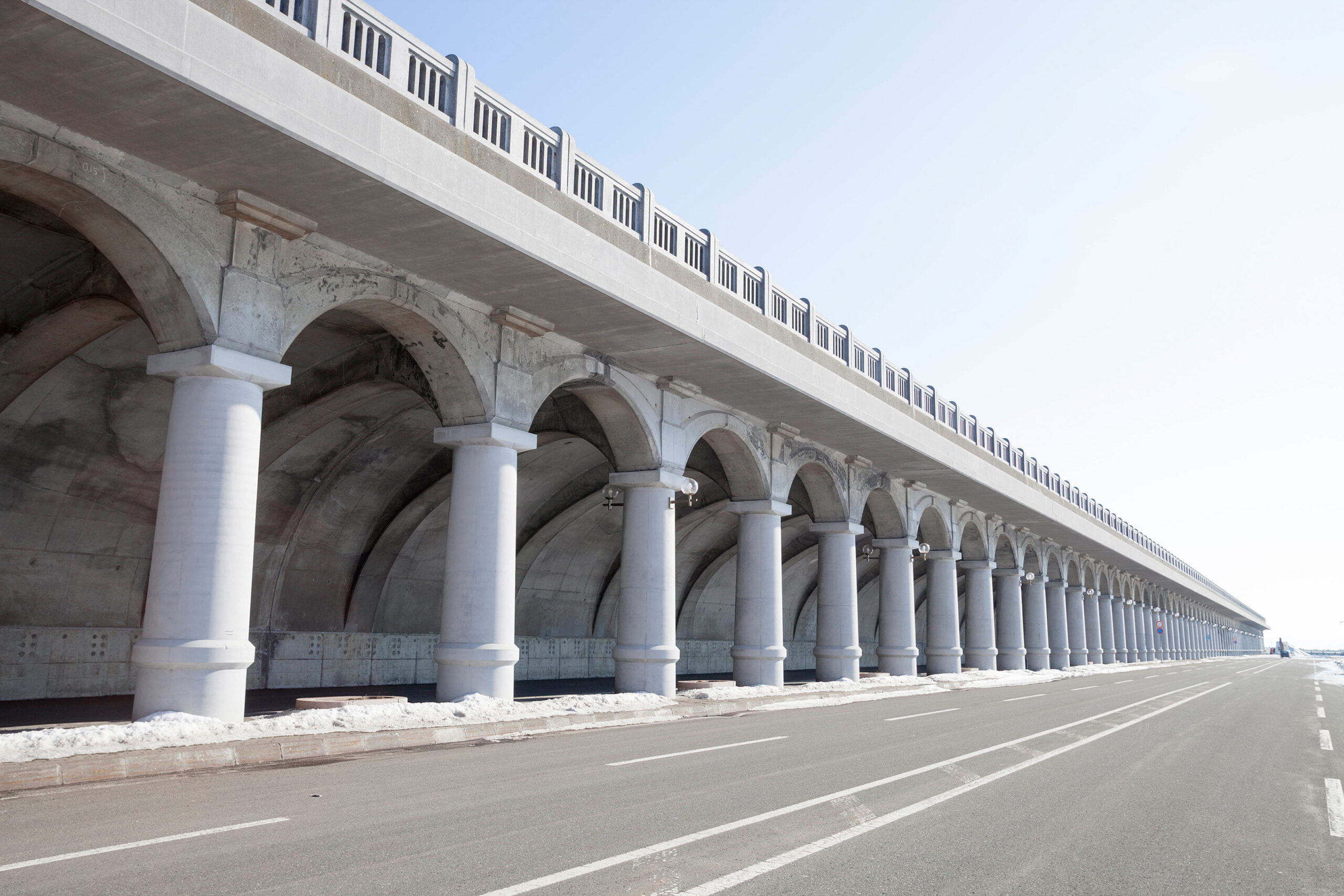
The Shiosai Promenade is a seaside walkway leading to the North Breakwater Dome, which is called a symbol of Wakkanai. Its path is paved with mosaic tiles based on the hamanasu motif, the city's flower. The sea spreads right beside the promenade, with the sound of waves hitting the quay wall and a sea breeze carrying the scent of the tide. The dome itself was built over five years.
Kita no Sakuramori Park reuses the set of a film shot in Wakkanai as a film materials exhibition facility. The exhibition holds materials used in the film and scenes of the shoot, and has an AR setup for taking a two-shot photo with the film's star. Within the city, filming also took place at the Soya Hills and at the North Breakwater Dome.
The Centennial Memorial Tower stands on the hills of Wakkanai Park. The park was registered as a Japan Night View Heritage site in two thousand eighteen. A museum on the first and second floors of the tower lets visitors learn about the history of the area. The Bungei no Komichi is a walking path set with verse monuments carrying haiku, tanka and senryu submitted by citizens of the city.
The Shiosai Promenade runs beside the sea to the dome, while the memorial tower stands up on the hills of the park, so one stop is at the waterline and the other is on high ground.
Cape Noshappu, the Cold Current Aquarium and the Onsen Dome
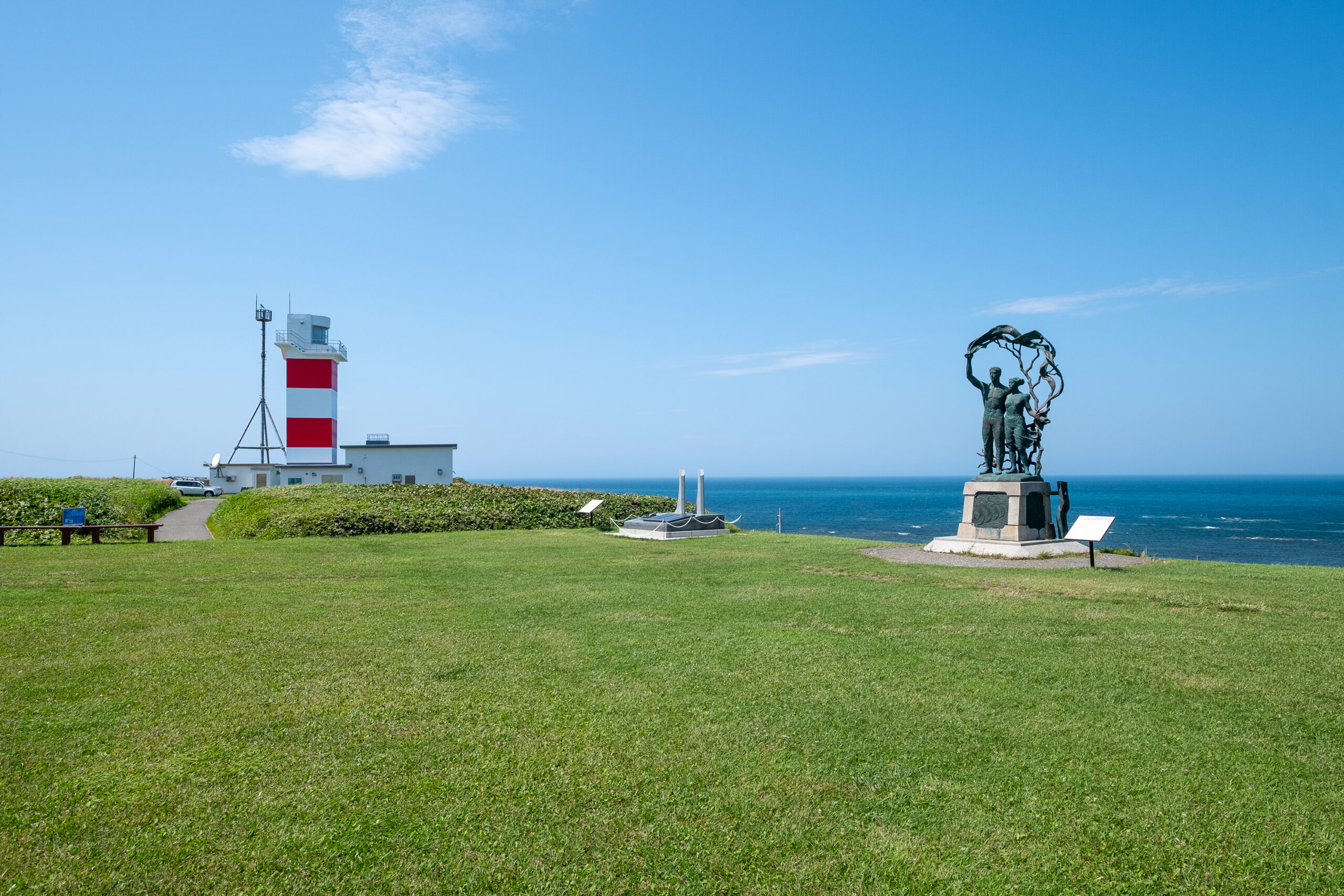
Cape Noshappu fills with the scent of the shore on summer early mornings, when fishermen may be seen harvesting Rishiri kelp in the traditional way. The Noshappu lighthouse has a red-and-white two-tone color scheme. The name Noshappu is said to have two meanings in Ainu: a place where the cape juts out like a chin, or a place where waves break.
The Noshappu Cold Current Aquarium holds a spotted seal show outdoors. In winter, Humboldt penguins can be seen walking on snow. The aquarium keeps and exhibits mainly northern-type animals. The Wakkanai Youth Science Museum, adjacent to the aquarium, exhibits many Antarctic research materials tied to the city, including a sled dog sled actually used in Antarctic research and materials related to the Karafuto dogs Taro and Jiro.
Wakkanai Onsen Dome is a day-trip-only hot spring facing the city's west coast. Its bath is boat-shaped and themed on a harbour town. Ten types of baths are on offer, including a lying bath and a jet-massage bath.
Which stop pairs with the aquarium? The science museum is the building next to it, while the hot spring on the west coast is a bath stop of its own.
Wakkanai Chaamen, Octopus Shabu-Shabu and Soya Kuroushi
Chaamen is made by lightly browning boiled Chinese noodles in an oiled wok and topping them with an ankake sauce containing seafood, pork and vegetables. It is an ankake yakisoba-style dish rather than a fried-rice-and-ramen combination. Many restaurants in Wakkanai serve it as a local dish with seafood and vegetables in plenty of thick sauce. Octopus shabu-shabu is also served at many restaurants in the city.
Soya Kuroushi can be eaten as steak. Cattle produced at the ranch are shipped under that name, which is also a Wakkanai brand. Visitors can see the cattle grazing from late May to around late October.
If the plan is one dish that restaurants across the city serve, chaamen fits; if the interest is the cattle seen at pasture, Soya Kuroushi steak is the matching plate.
One Day Around Wakkanai: From the Bus Terminal to Cape Soya, Noshappu and the Hot Spring
A trip from the Wakkanai Station bus terminal to Cape Soya takes about fifty minutes. At the cape, the below-freezing facility can be entered all year round. By car, the Soya Hills are about ten minutes from Cape Soya, and the periglacial terrain of the hills is where the white road is walked.
For Noshappu, a city line bus runs every fifteen to twenty minutes from the Wakkanai Station bus terminal. By bus, the aquarium is about ten minutes from Wakkanai Station, and the Wakkanai Youth Science Museum is the adjacent building, so the outdoor spotted seal show and the Antarctic exhibits form one stop. Wakkanai Onsen Dome, the hot spring on the west coast, is about twelve minutes by car from Wakkanai Station. The order here is a sequence to choose from rather than a fixed schedule.
With Cape Soya on one leg and Noshappu on another, the city works as a base for both. Listings of places to stay in Wakkanai show the options for a night there.
Getting to Wakkanai
New to rural buses and one-man trains? See how to ride them, step by step.
| Route | Details |
|---|---|
| Soya Bus from the Wakkanai Station bus terminal to the Soya Misaki bus stop (Cape Soya) | About fifty minutes one way and about one hour back; one-way fare one thousand six hundred yen; child and disabled-person fare eight hundred yen; commemorative round-trip ticket two thousand eight hundred eighty yen at the station terminal counter |
| City line bus from the Wakkanai Station bus terminal to Noshappu | Runs every fifteen to twenty minutes; two hundred fifty yen for one section |
| Wakkanai Station to the aquarium and to Wakkanai Onsen Dome | Aquarium: about ten minutes by bus; also about ten minutes by car; Wakkanai Onsen Dome: about twelve minutes by car |
| From Haneda Airport | About two hours twenty-five minutes to the Wakkanai Station bus terminal by the ANA flight plus the airport connecting bus route |
Hours and Fees
| Item | Details |
|---|---|
| Noshappu Cold Current Aquarium (as listed) | Closed from April first to twenty-eighth and in December and January (maintenance closure); combined ticket with the Wakkanai Youth Science Museum: five hundred yen for high school students and older; one hundred yen for elementary and junior high school students, free for preschool children |
| Wakkanai Onsen Dome | Nine forty-five in the morning to ten o'clock at night, last admission nine thirty at night; adult six hundred yen; child three hundred yen and infant one hundred yen |
| Regular sightseeing bus, two thousand twenty-six operating period (as listed by the operator) | May third to May fifth and May twentieth to September thirtieth |
| Regular sightseeing bus courses (as listed by the operator) | Course A: departs the Wakkanai Station bus terminal at eight o'clock and arrives back at eleven fifty, May third to May fifth and May twentieth to September thirtieth; course B: departs at two o'clock in the afternoon and arrives at six fifteen, May third to May fifth and May twentieth to August thirty-first |
| Wakkanai Station bus terminal counter | Six o'clock in the morning to five o'clock in the afternoon, and nine thirty to eleven at night (the latter only for one service) |
| Sightseeing bus reservations and payment | Reservations for each course are taken from two months before the day of use; tickets are paid at the counter by cash or PayPay only, credit cards not accepted |
Fees and hours were checked against official sources on 21 November 2026.
Thinking of staying overnight?
Compare places to stay near Wakkanai, Hokkaido, Japan →
Disclosure: This post may contain affiliate links. If you book through them, we may earn a commission at no extra cost to you.