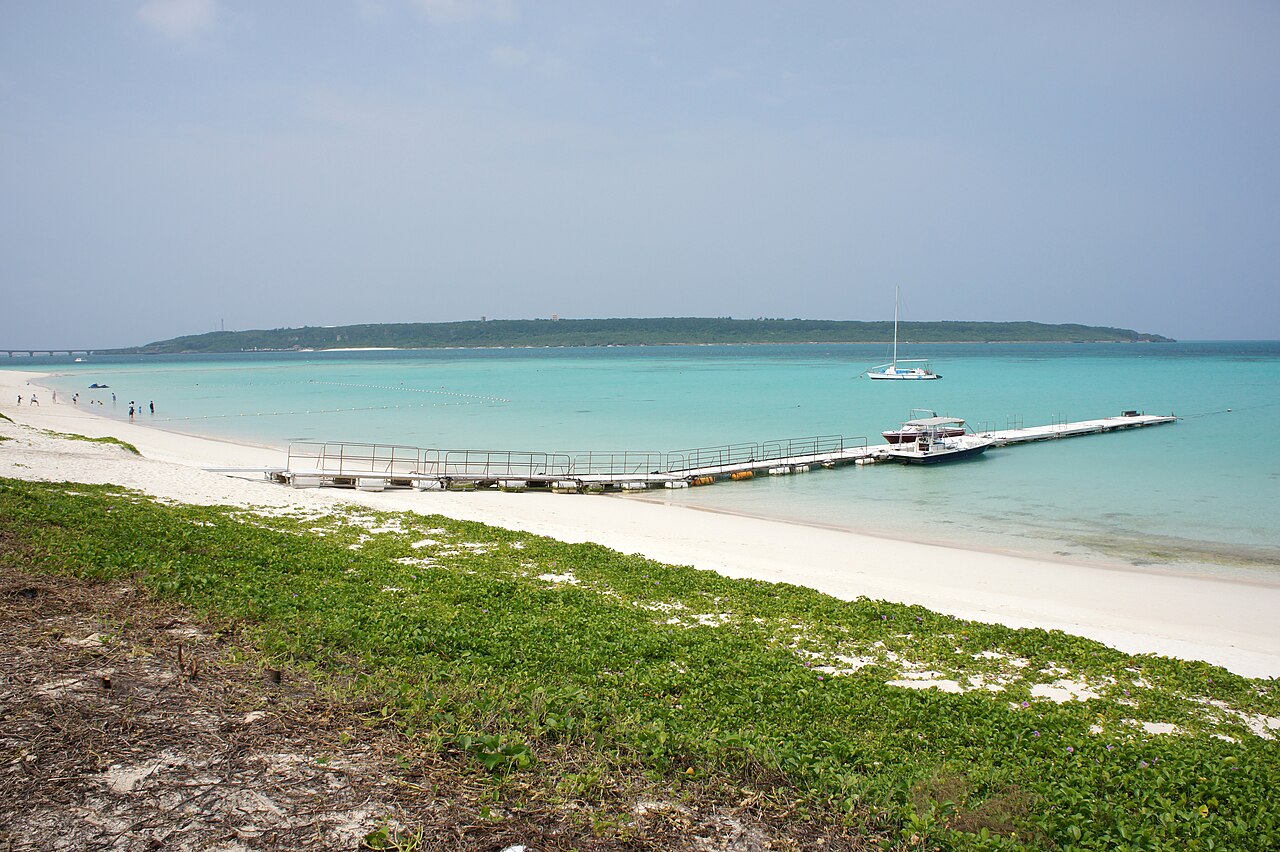
Maehama Beach on Miyako Island has white sand that stretches on without a break. Higashi-Hennazaki, a cape on Miyakojima, looks out over the East China Sea to the north and the Pacific Ocean to the south. At Miyakojima Marine Park, colorful tropical fish can be seen from an underwater observation facility. The two ponds of Tori-ike are joined underwater into one and connect to the outer sea.
Miyakojima suits travelers who pair the white sand of Maehama Beach with the cape where two seas can be seen together, and who add the underwater observation windows at Miyakojima Marine Park for the fish.
Maehama Beach, Sunayama Beach and Yoshino Coast: White Sand, Reefs and Coral
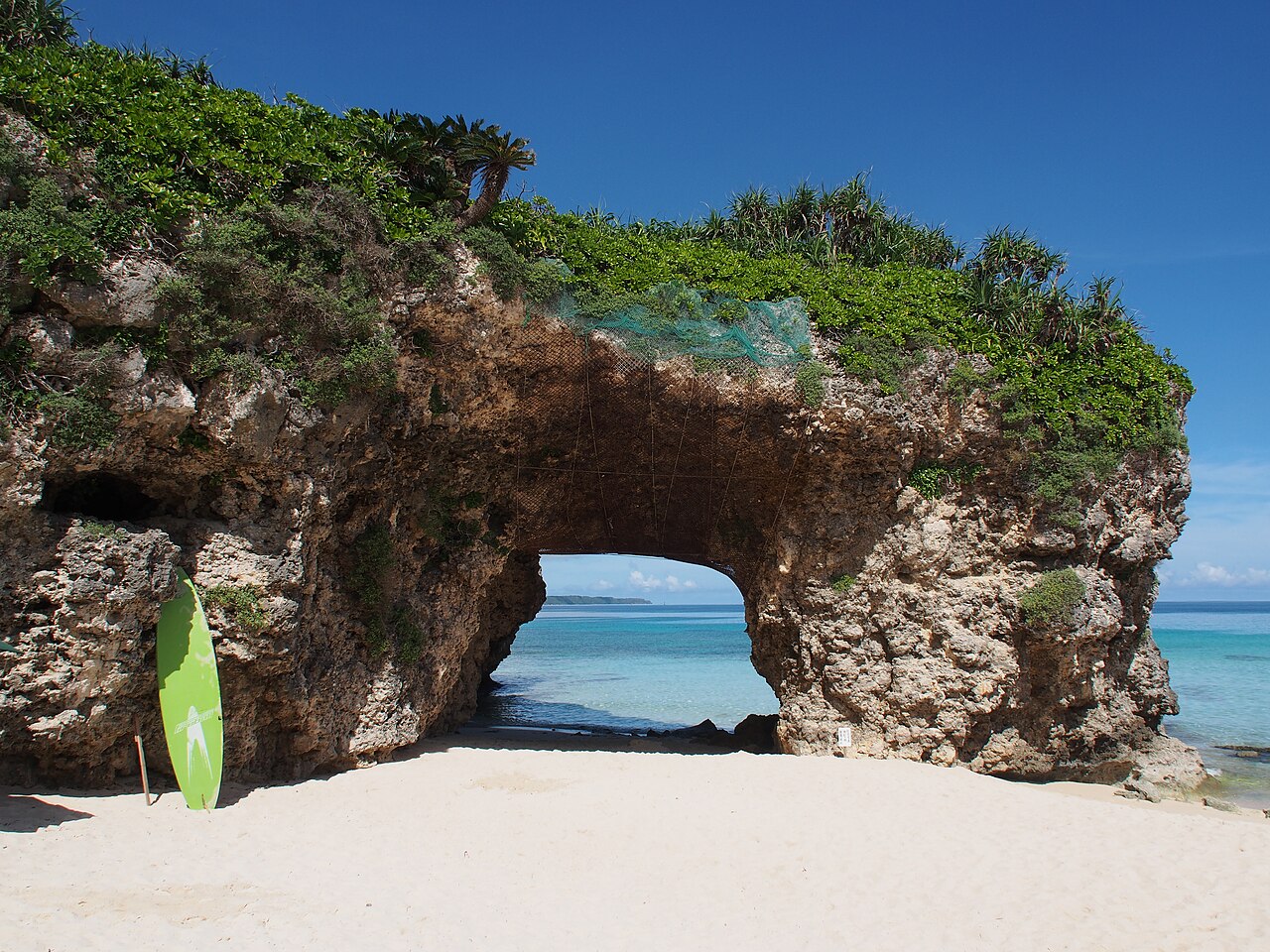
Sunayama Beach on Miyakojima is a white sand beach, and visitors reach the sand by crossing over a sand dune first.
Maehama Beach faces Kurima island, which stays in view directly in front of the white sand that stretches on continuously.
Yoshino Coast has corals and fish in many colors, and they spread out from a point near the water's edge.
Toguchi no Hama is a bow-shaped beach on the south side of Irabu Island, curving gently, with fine-grained sand of pure white. From the front of the beach, Miyakojima and Kurima island are both in view.
Sawada no Hama has fish weirs on its west side, where they were used for a traditional fishing method. At low tide the water goes out far, and reefs spread across the shallows.
Choose Maehama Beach for white sand with Kurima island in view, Yoshino Coast for corals and fish near the water's edge, and Sunayama Beach for the crossing over a sand dune. Toguchi no Hama and Sawada no Hama are the ones to add for a bow-shaped curve of white sand and for reefs at low tide.
Higashi-Hennazaki, Nishi-Hennazaki and Ikema Ohashi: Two Seas, a Western Cape and a Bridge
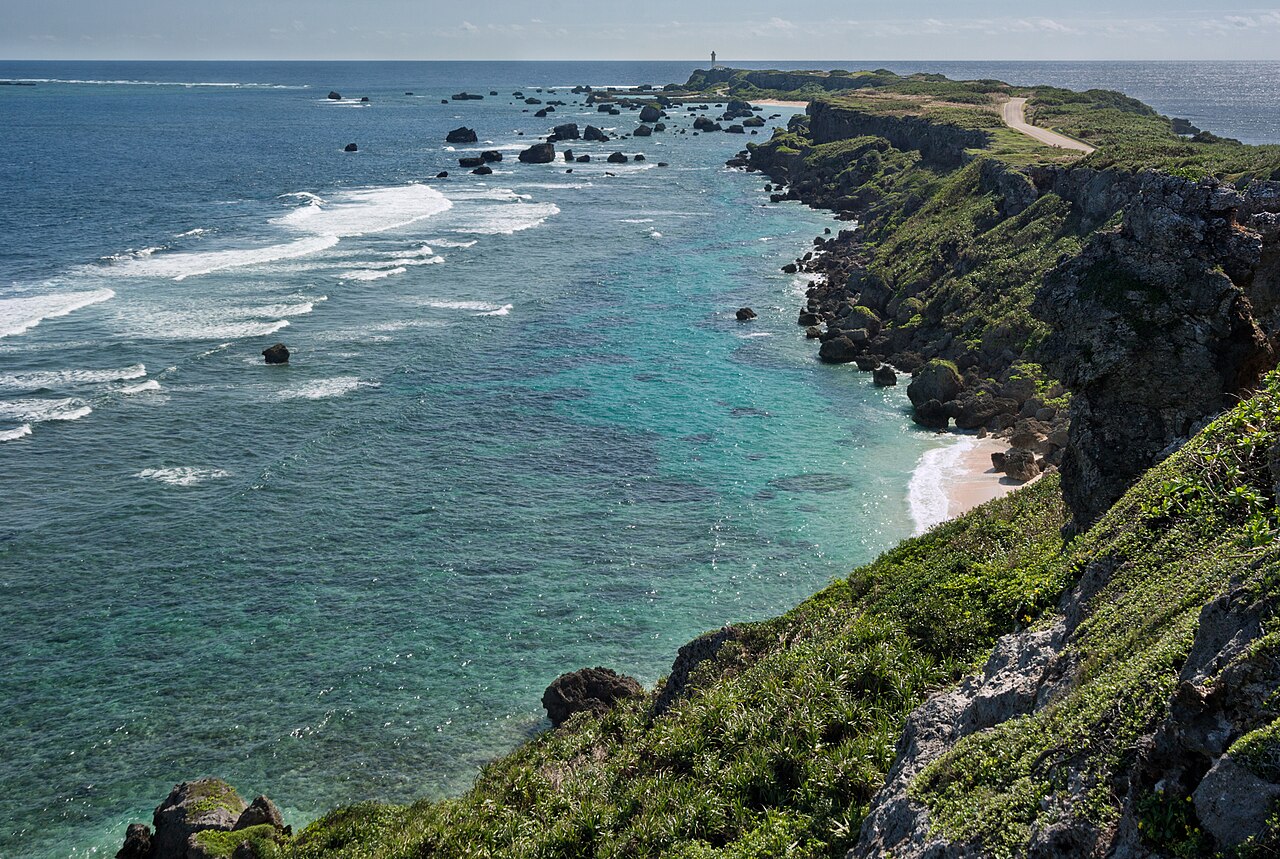
Higashi-Hennazaki is the cape that forms the easternmost point of Miyakojima. Waves surge against the cliffs there. A maintained walking path runs on the cape, and various flowers bloom around it season by season.
Nishi-Hennazaki is both the westernmost and the northernmost point of the main island of Miyako. Irabu Island, Ikema Island and the Ikema Ohashi bridge can be seen from the cape. Wind power turbines stand in a row there as part of the Enetopia initiative.
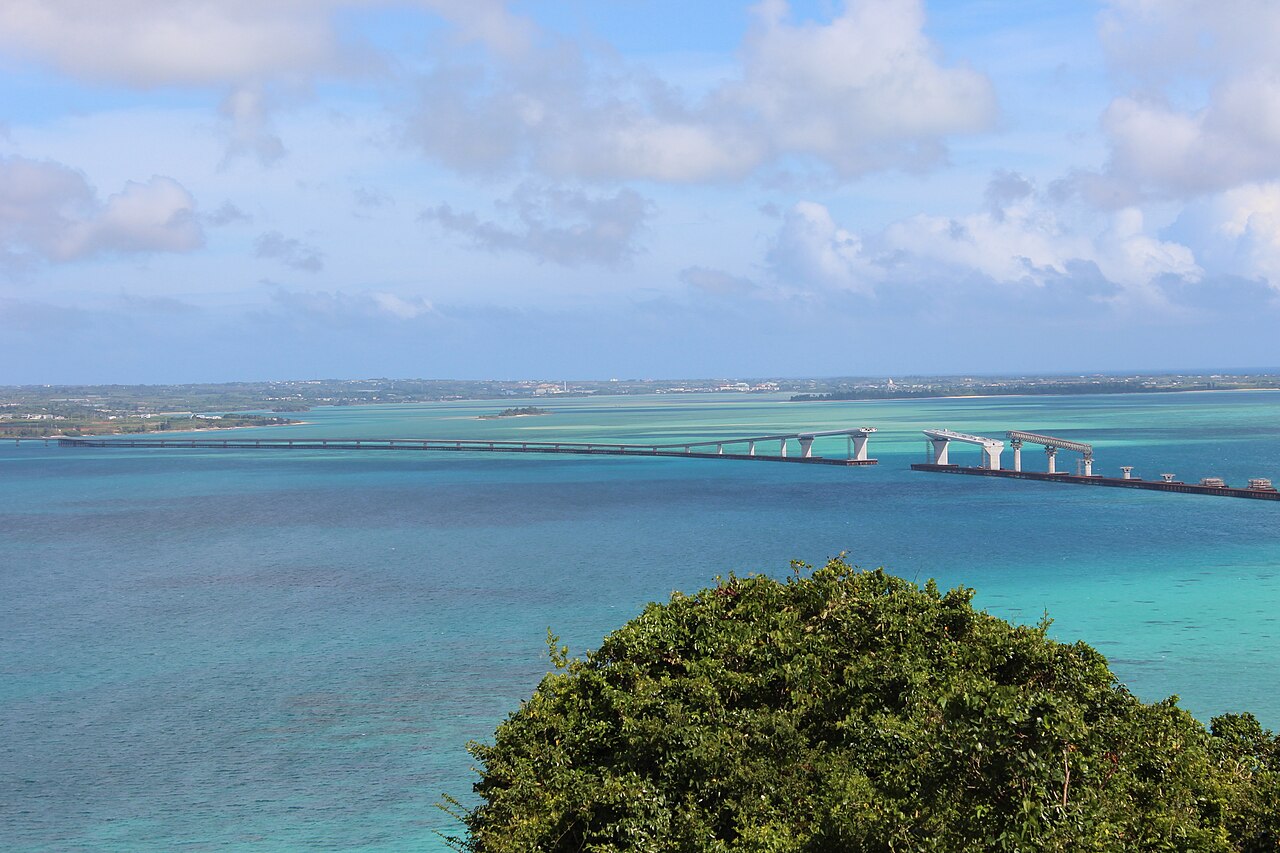
Ikema Ohashi is a bridge to a remote island, and it connects the main island of Miyako with Ikema Island.
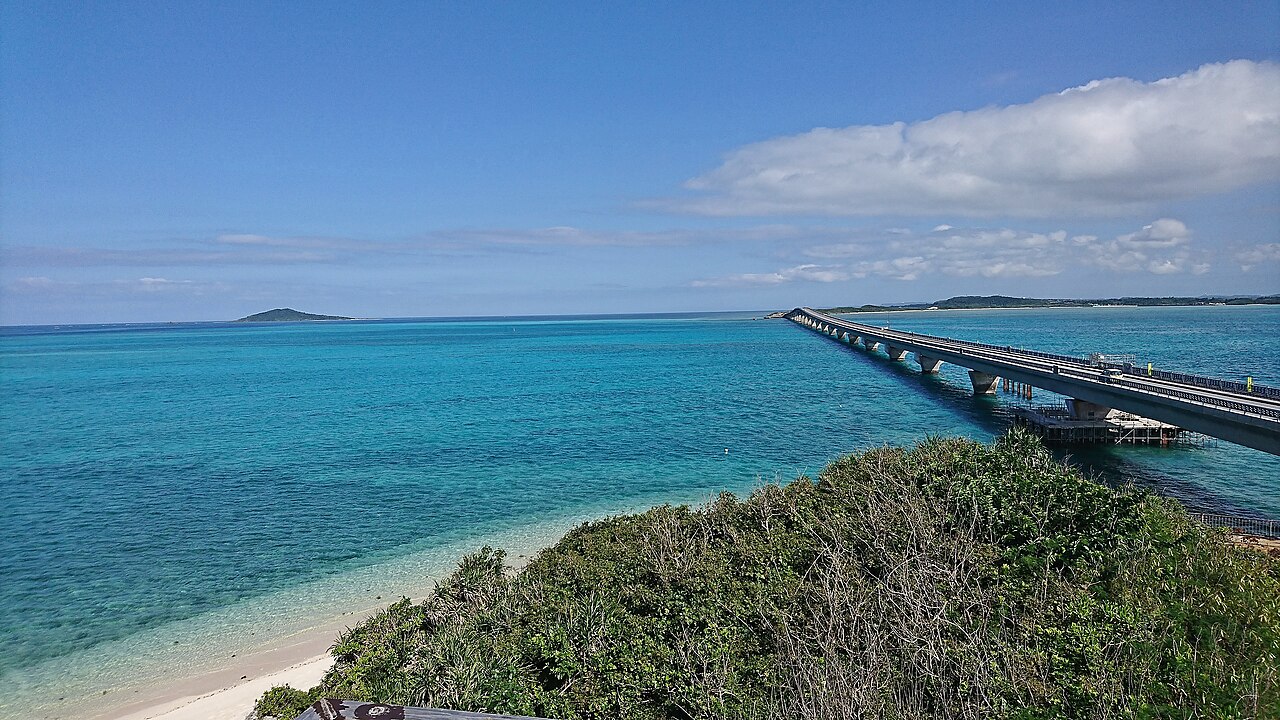
Ryugujo Observatory is an observation tower modeled on the Dragon Palace, and it stands on a hill on Kurima island. From the tower, Maehama Beach and its continuous white sand can be seen on the opposite shore, along with Irabu Island.
Travelers who want two seas from one cape can pick Higashi-Hennazaki. Nishi-Hennazaki is the choice for a view of Irabu Island, Ikema Island and Ikema Ohashi, and Ryugujo Observatory for a look across at Maehama Beach on Miyakojima.
Miyakojima Marine Park, Tori-ike and Shimajiri Mangrove Forest: Fish Windows, Twin Ponds and Mangroves
Miyakojima Marine Park has an underwater observation facility whose windows are made of twenty-four acrylic panels, and part of the outer sea can be seen through them. Octopuses and sea snakes can be seen there along with colorful tropical fish.
Tori-ike consists of two ponds, one large and one small. The two are joined underwater into one and connect to the outer sea. Tori-ike is designated as a prefectural natural monument and has a mermaid legend.
Shimajiri Mangrove Forest lies in an inlet on Miyakojima, and five kinds of mangrove can be seen there in one place.
Miyakojima Marine Park is the place to go for fish seen through windows, Tori-ike for two ponds joined underwater, and Shimajiri Mangrove Forest for five kinds of mangrove.
Yukishio Steak, Miyako Soba and a Salt Cafe: Island Beef, Noodles and Tropical Fruit
Yukishio Steak buys Miyako beef one whole animal at a time and serves the cut recommended that day as steak. Island vegetables and seafood are grilled on an iron griddle in front of the guest. They are eaten with the yukishio salt that the chef recommends.
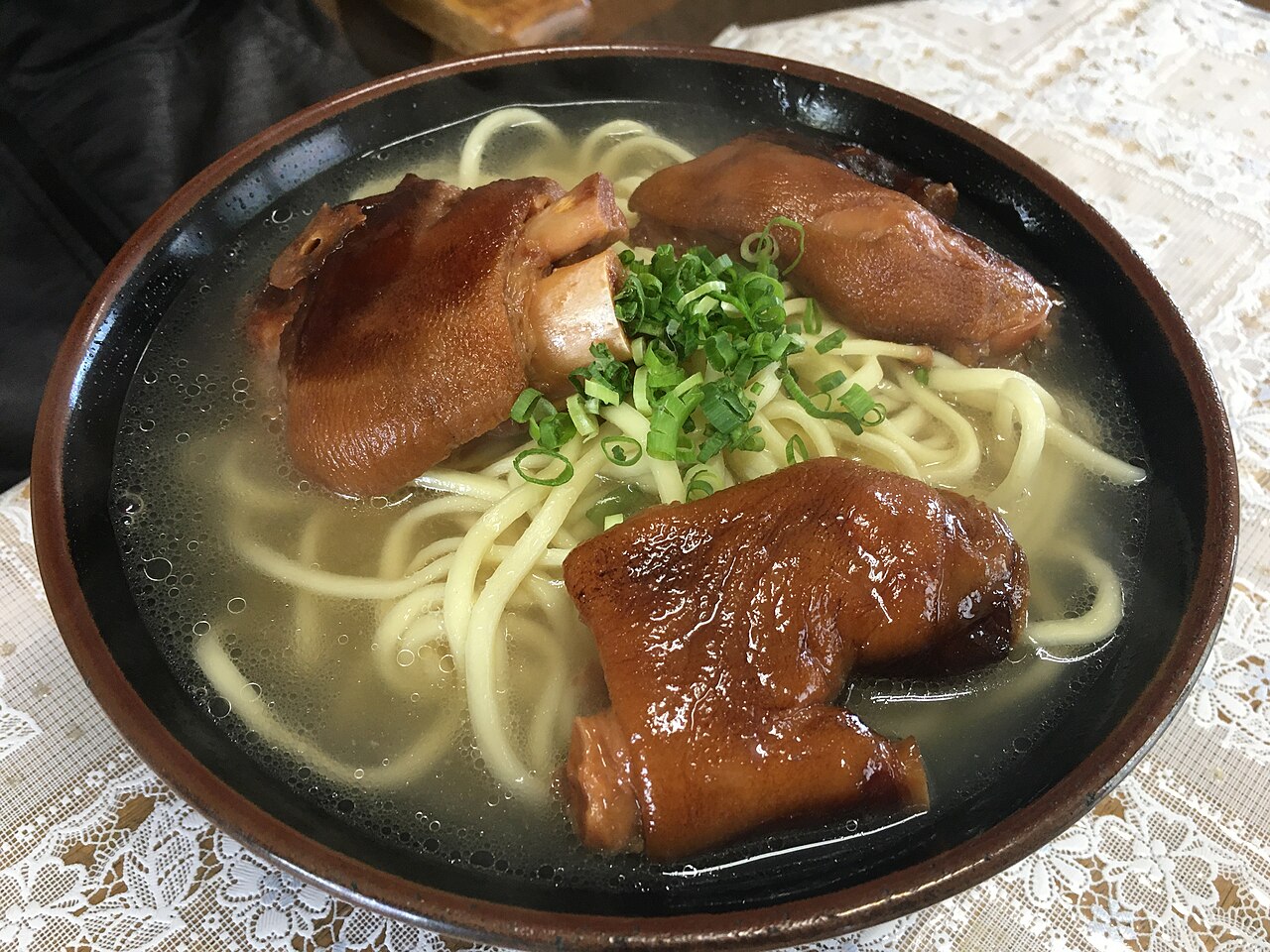
Miyako soba has thin noodles that are not curly. Traditionally, ingredients such as sanmainiku pork and kamaboko were hidden under the noodles.
The Yukishio Museum on Miyakojima has a cafe, and the cafe menu there includes yukishio soft-serve ice cream and yukishio latte.
Pair the day's cut of Miyako beef at Yukishio Steak with Miyako soba, and add the yukishio soft-serve ice cream at the Yukishio Museum cafe. Fruit is another thread on Miyakojima: island bananas are small, with strong sweetness and strong aroma, and dragon fruit has two kinds of flesh, red and white.
Pantu and Kuicha: Masked Visiting Gods and Group Dances
Kuicha is a group dance handed down in various parts of Miyakojima. At the Kuicha Festival, held once a year, songs and dances from various areas can be seen.
Pantu are masked visiting gods, covered in mud and wearing the vine shiinokikazura over the whole body. They visit the settlement wearing vines smeared with mud from a sacred well. Tourists who join are asked to refrain from actions that interfere with the ritual. Pantu of Miyakojima was registered as UNESCO Intangible Cultural Heritage together with nine other traditional events.
Those who want songs and dances from various areas can pick the Kuicha Festival, and Pantu is a ritual to watch without interfering.
One Day Around Miyakojima, in Order of the Hours
The listed times of four places on Miyakojima line up in this order from morning to evening.
- The Yukishio Museum guide is scheduled for ten in the morning, eleven in the morning, two in the afternoon, three in the afternoon and four in the afternoon. Each guide session takes about ten to fifteen minutes.
- Yukishio Steak is open from eleven in the morning to two in the afternoon.
- Miyakojima Marine Park comes after Yukishio Steak in this order, for the tropical fish, octopuses and sea snakes seen through its underwater observation windows.
- Koja Soba lists business hours from eleven in the morning to eight in the evening.
Yukishio Steak is open again from five to ten in the evening. The list sets out an order only and does not mean that all four fit into one day.
Getting to Miyakojima
New to rural buses and one-man trains? See how to ride them, step by step.
| Route | Item | Detail |
|---|---|---|
| Plane | Naha to Miyako | about forty-five minutes |
| Plane | Ishigaki to Miyako; Tokyo to Miyako | about thirty minutes; about three hours |
| Plane | Skymark, Tokyo to Shimojishima Airport | about two hours and forty minutes |
| Bus | Miyako Shimojishima Airport Liner, adult fare | eight hundred yen; children from three years old to elementary school pay half; cash, credit card and barcode payment are accepted |
If you would rather go with a guide, tours that start from Miyakojima are listed on a booking site.
Hours and Fees
| Place | Item | Time or fee |
|---|---|---|
| Miyakojima Marine Park | Underwater observation facility only | high school students eight hundred yen; elementary and junior high school students five hundred yen; children under six free |
| Yukishio Museum | Guide times | ten in the morning, eleven in the morning, two in the afternoon, three in the afternoon and four in the afternoon; about ten to fifteen minutes each |
| Yukishio Steak | Hours | eleven in the morning to two in the afternoon and five to ten in the evening; price guide ten thousand yen |
| Koja Soba | Hours | eleven in the morning to eight in the evening |
Fees and hours were checked against official sources on 20 November 2026.
Compare options
See partner pricing and availability →
Disclosure: This post may contain affiliate links. If you book through them, we may earn a commission at no extra cost to you.