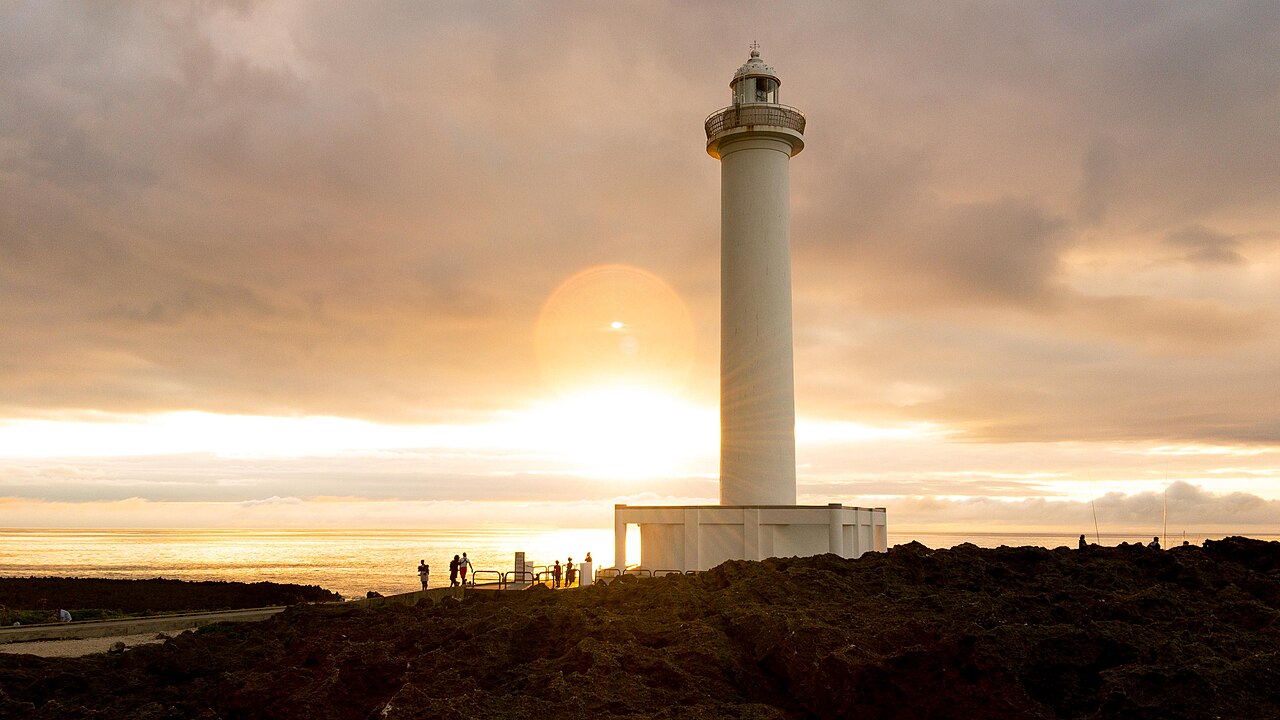
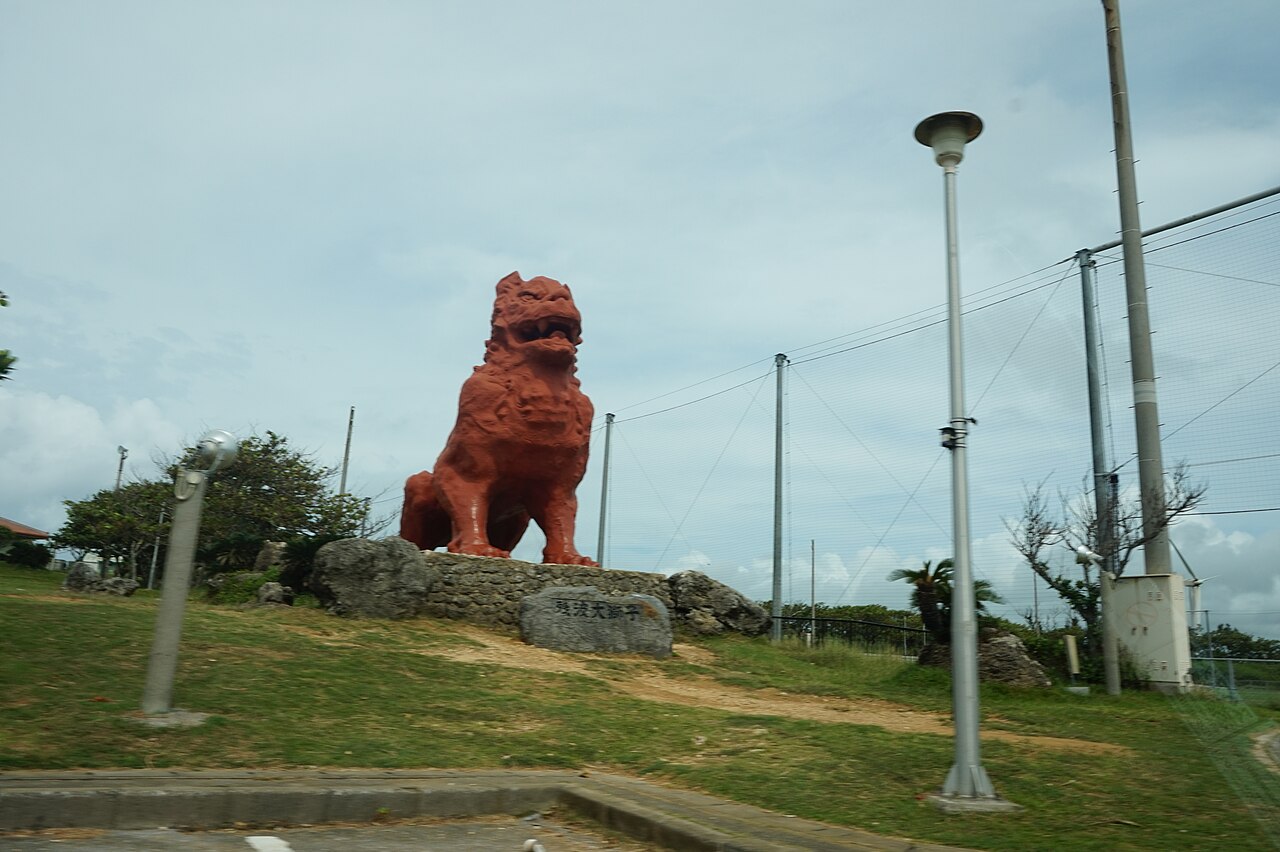
Climbing the lighthouse at Cape Zanpa shows Aguni, Tonaki and Kume islands when the weather is clear. A giant shisa statue marks the park plaza, where play equipment, a mini zoo, a restaurant and barbecue facilities gather. Barbecue staff handle the grill setup and the food preparation for guests. A picture-book cafe with a view over the sea holds many books about the sea.
Climbing the Cape Lighthouse and Walking the Coastal Promenade
The lighthouse, its plant promenade and the raised coral reef coast make up the main walk at Cape Zanpa.
Climbing the lighthouse is the natural start of a visit to the cape. From the lighthouse, Aguni Island, Tonaki Island and Kume Island, among others, come into sight when the weather is clear. It is a visitor lighthouse, so going up belongs to the visit itself rather than being a look from the ground. In other weather the islands may not show, and the promenade below then carries more of the walk.
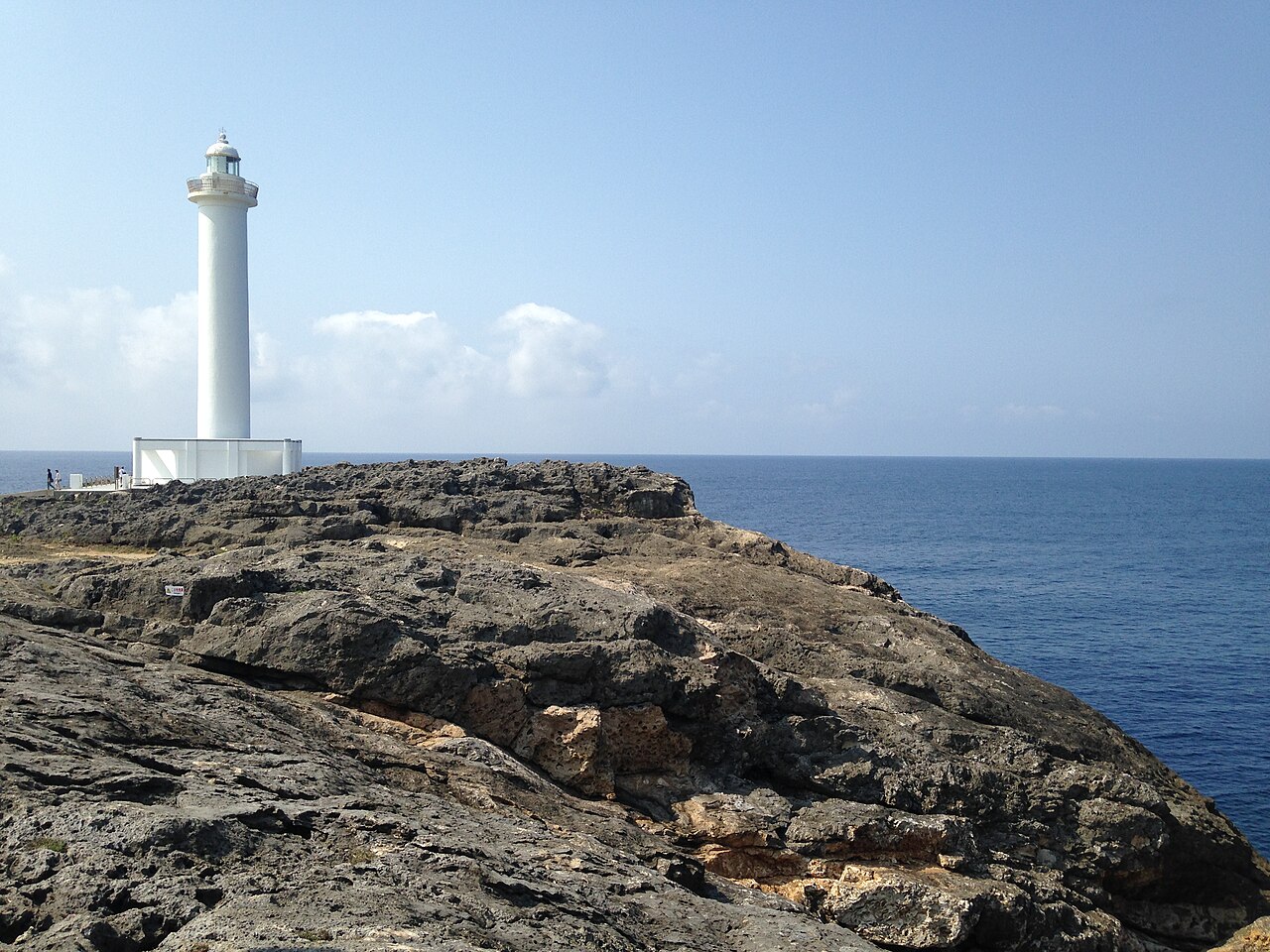
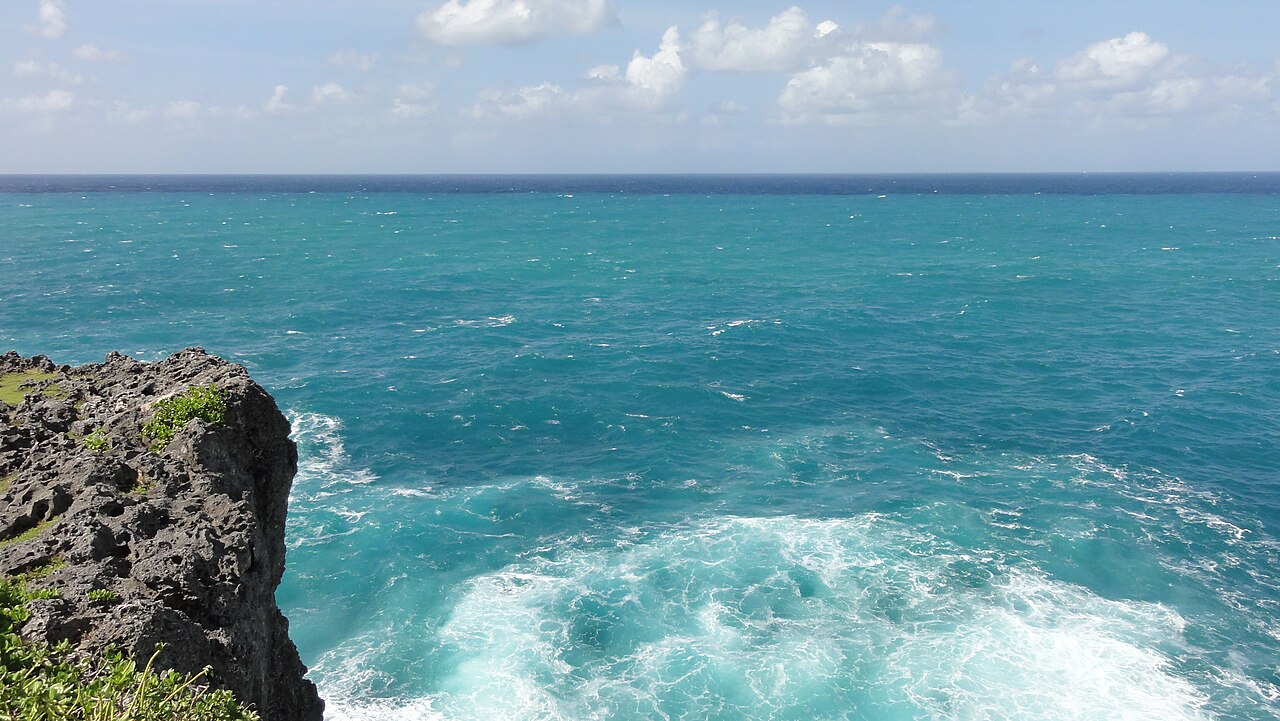
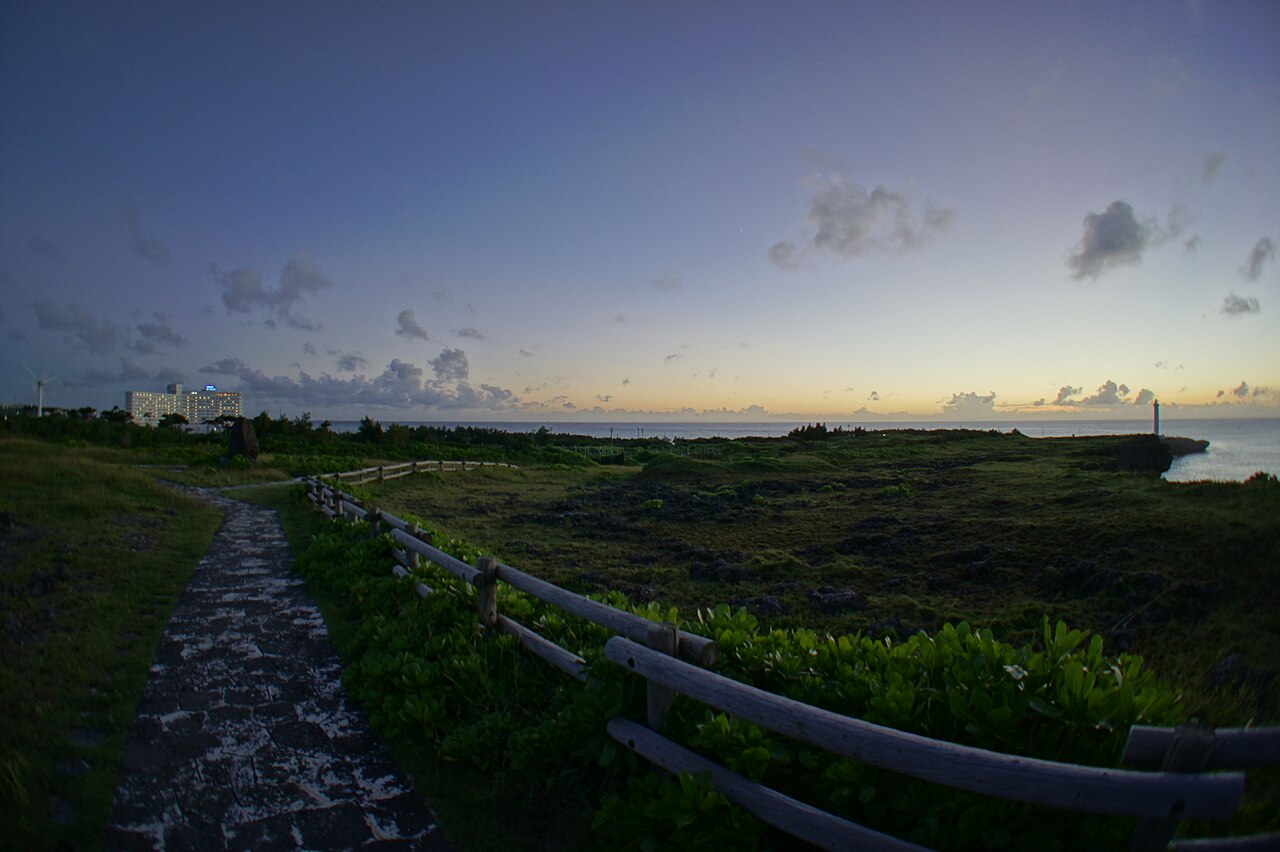
Walking the promenade in the surrounding park turns attention from the horizon to the plants of the shore. The path was laid out for observing coastal plants, such as the groves of adan and kusabetora. The white Zanpa Cape Lighthouse stands at the tip of the cape, which gives the route a fixed end to aim for. Beside it, raised coral reef forms a rock face that continues along the coastline of the cape.
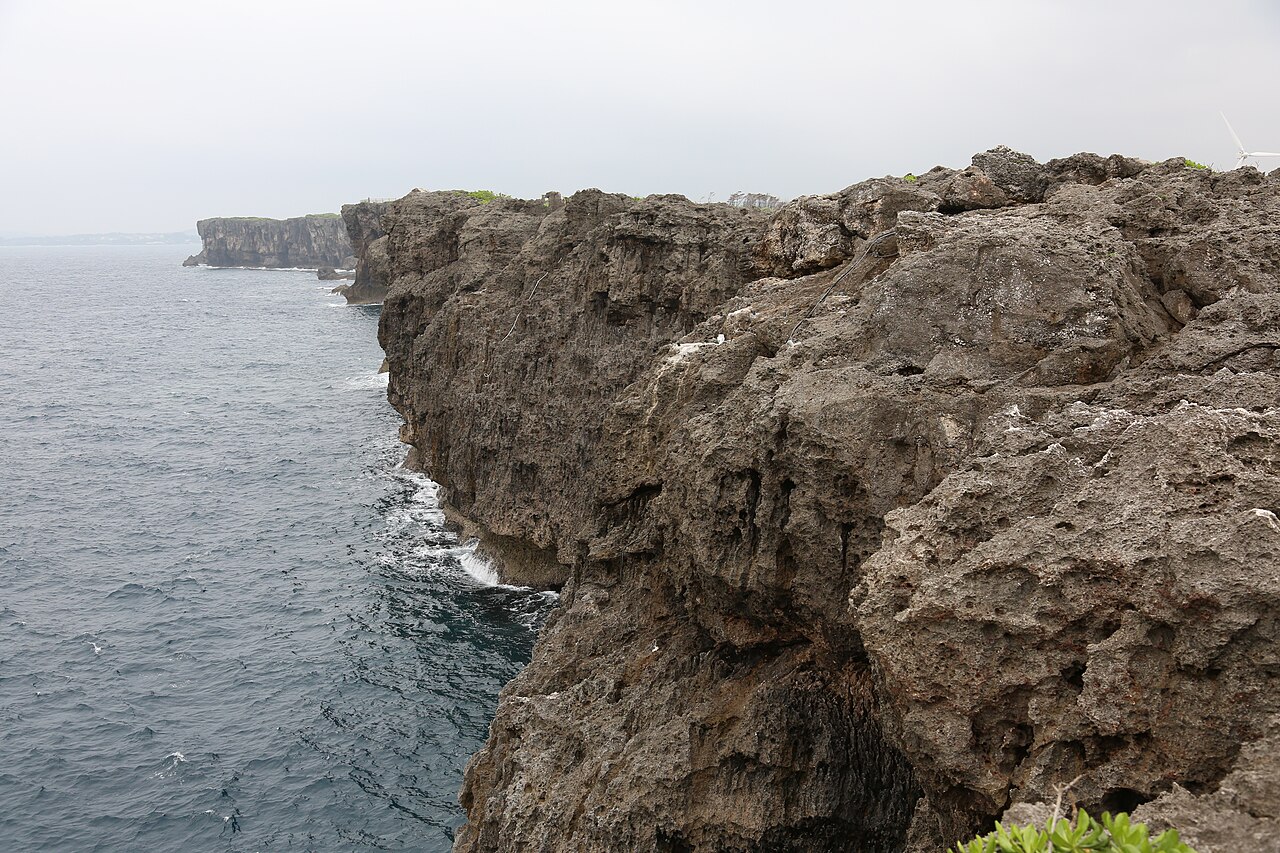
Looking for the small prayer shrines called uganju gives the walk another thread to follow. These shrines are scattered across the cape, and people from the area offer prayers at them. They are places of prayer in use today, so treating them as such suits a visit better than treating them as exhibits. At night the lighthouse beam extends through the darkness, although the lighthouse cannot be climbed at night.
Choosing between the lighthouse and the promenade is rarely needed, because both belong to the same stretch of the cape. With limited time, start with the lighthouse, since the island view depends on the weather. The plant promenade and the uganju do not depend on the sky in the same way, so they fit whatever part of the visit is left.
Meeting the Giant Shisa and Playing in the Cape Park
The Zanpa Daishishi, a play area with a cushion floor for the youngest children and a sea-view picture-book cafe suit a family stop.
Meeting the Zanpa Daishishi comes before anything else in the park, because the statue marks the plaza called Zanpa Misaki Ikoi no Hiroba. The shisa faces straight toward the Chinese mainland. It was built to hand down to later generations the culture that Yomitan Village gained from its exchange with China in the Ryukyu Kingdom era. A statue of Taiki points toward Fujian Province in China as well; Taiki was a chieftain of Yomitan Village who brought Chinese cultural items to the Ryukyu Kingdom through a formal route.
Playing on the equipment at Ikoi no Hiroba is the part of the stop that children steer. The combination play equipment joins slides, a climbing wall, a net bridge and balance steps, and the kids area has swings too. A space set aside for infants has a floor of soft cushion material, and its rest space has shade. The kids area is adjacent to the park barbecue area, so children can play while the barbecue is in progress.
Reading at the picture-book cafe tatunootosigo changes the pace after the playground. The cafe looks over the sea, has a sofa and holds many picture books on the theme of the sea. Among them is SHARKS, a pop-up book in which prehistoric sea creatures rise from the pages. The food menu lists mango curry, chicken curry and a soup set, and the kids' menu offers a mild curry containing mango for children.
Zanpa Beach: Marine Activities and a Summer Shop
Zanpa Beach offers sea activities, with a shop at the beach from April to October.
Walking onto Zanpa Beach brings white sand and a sea of high transparency. The beach is run by the village and lies on the west coast of Yomitan Village. Marine leisure activities and sea swimming are offered at the beach, which makes it the waterside part of a Cape Zanpa day. Check what is running at the time of the visit before building a day around the water.
Eating at the beach depends on the season. In summer, from April to October, a shop at the beach sells soft drinks, cold beer and light meals such as Okinawa soba. Outside those months, plan a meal around the picture-book cafe or the barbecue instead. A visit from November to March falls outside the shop season, so the meal is worth settling before heading to the sand.
Watching for the sunset is tied to the shape of the village coast. In Yomitan Village, much of the coastline has no reclamation or seawalls and remains a natural shoreline. A sunset comes into view from the sandy beaches of the village. Keeping the later part of the day for the shore fits a visit built around that view.
A Staff-Prepared Barbecue at Zanpa Resort
The red-tile pavilions and a barbecue that staff prepare and tidy away cover a meal at the cape park.
Arriving for the barbecue takes little preparation, because Zanpa Resort supplies everything from the equipment to the ingredients. Staff set up the grill and prepare the food, and they handle the clean-up as well, so guests are not asked to tidy up afterwards. Small groups are accepted too, so the barbecue is not limited to large parties. The site is made up of pavilions with Okinawan red-tile roofs, arranged in a circle around a plaza at their center.
Choosing a course decides what goes on the grill. The courses list beef, pork and chicken thigh with yakisoba and grilled vegetables, plus wieners in a basic course and shrimp, a frankfurter or beef fillet in others, and they come with all-you-can-drink. The vegetables may change depending on the season. Set plans pair a course with all-you-can-drink, or all-you-can-drink with a single barbecue item, so a lighter appetite has a choice too. For an overnight visit, see places to stay near Cape Zanpa.
Getting to Cape Zanpa, Lighthouse Admission and Bus Notes
New to rural buses and one-man trains? See how to ride them, step by step.
The table below gathers the access and admission details for the cape.
| Item | Details |
|---|---|
| Lighthouse admission | adult three hundred yen; junior high school students and older pay the adult rate |
| By car | from Naha Airport about one hour by expressway or about seventy minutes by general road |
| By route bus | lines twenty-eight and twenty-nine from Naha Bus Terminal to Yomitan Bus Terminal, about seventy-five minutes |
| From Yomitan Bus Terminal | about twenty-five minutes on foot; about five minutes by taxi to Zanpa Beach |
| By airport limousine bus | about ninety minutes from the airport to Zanpa Beach; the Grand Mercure Okinawa Cape Zanpa Resort stop is about five minutes on foot from the beach |
| Other drives | Shuri Castle Park about seventy-five minutes; Churaumi Aquarium about ninety-five minutes |
| Lighthouse at night | cannot be climbed at night |
For another Okinawa coast, see Kouri Island and its bridge. For a city day out, see the Naha Makishi and Tsuboya day trip.
Thinking of staying overnight?
Compare places to stay near Yomitan, Okinawa, Japan →
Disclosure: This post may contain affiliate links. If you book through them, we may earn a commission at no extra cost to you.