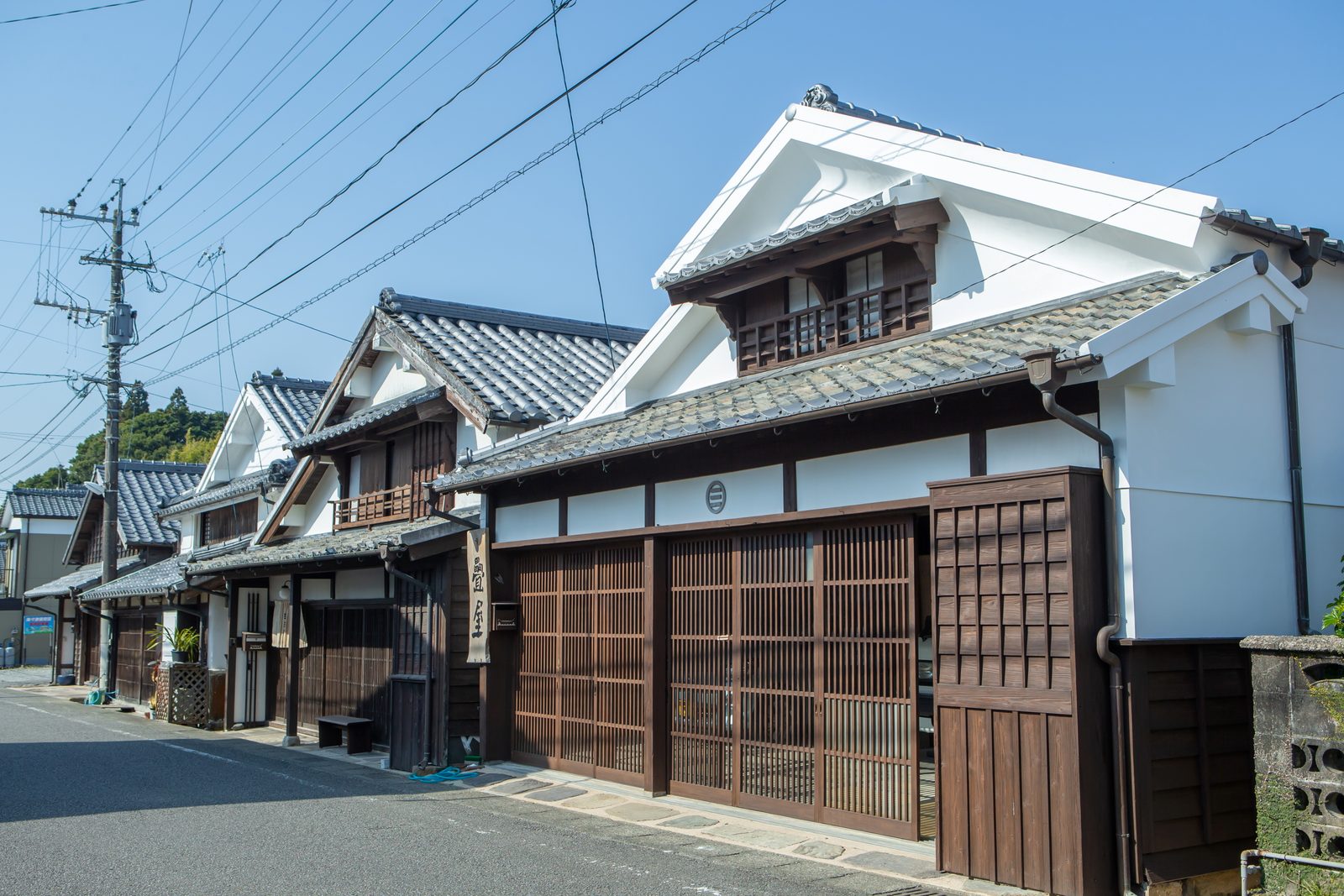
Mimitsu preserves a scenic townscape of white-walled storehouses and stone-paved lanes. The town flourished as a port of the Takanabe Akizuki domain, and the traces of its row of shipping wholesalers remain strongly in its streets. The area is selected as a nationally designated Important Preservation District for Groups of Traditional Buildings.
Merchant Houses, Stone Lanes and the Port Town Museums
The designation covers the Tatenui district. Along its street you see the traces of the late Edo to Meiji period, when shipping wholesalers lined the road, and those traces remain strongly in the row of houses.
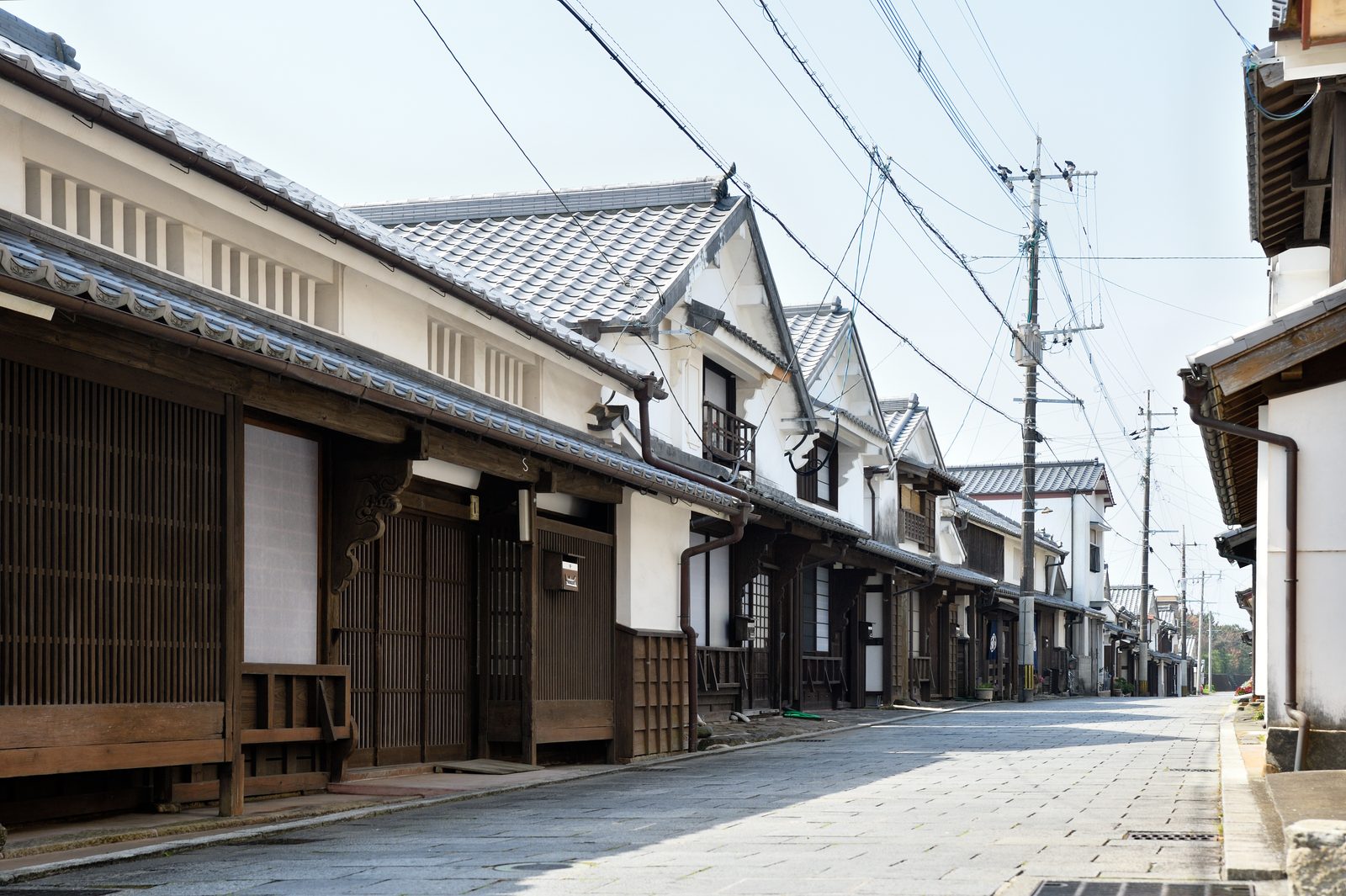
Inside the district stands the Hyuga City History and Folk Museum, a restored version of a former shipping wholesaler whose building was donated to the city. It holds the folk tools used at that wholesaler's house together with materials collected from within Hyuga City.
Mimitsu-ken is a Meiji-era merchant house, repaired and restored as a traditional building that visitors can view. The Mimitsu Machinami Center, standing near the entrance of the preservation district, is the former Fujiya house, likewise repaired and restored.
Tateiwa Shrine and the Emperor Jimmu Tradition
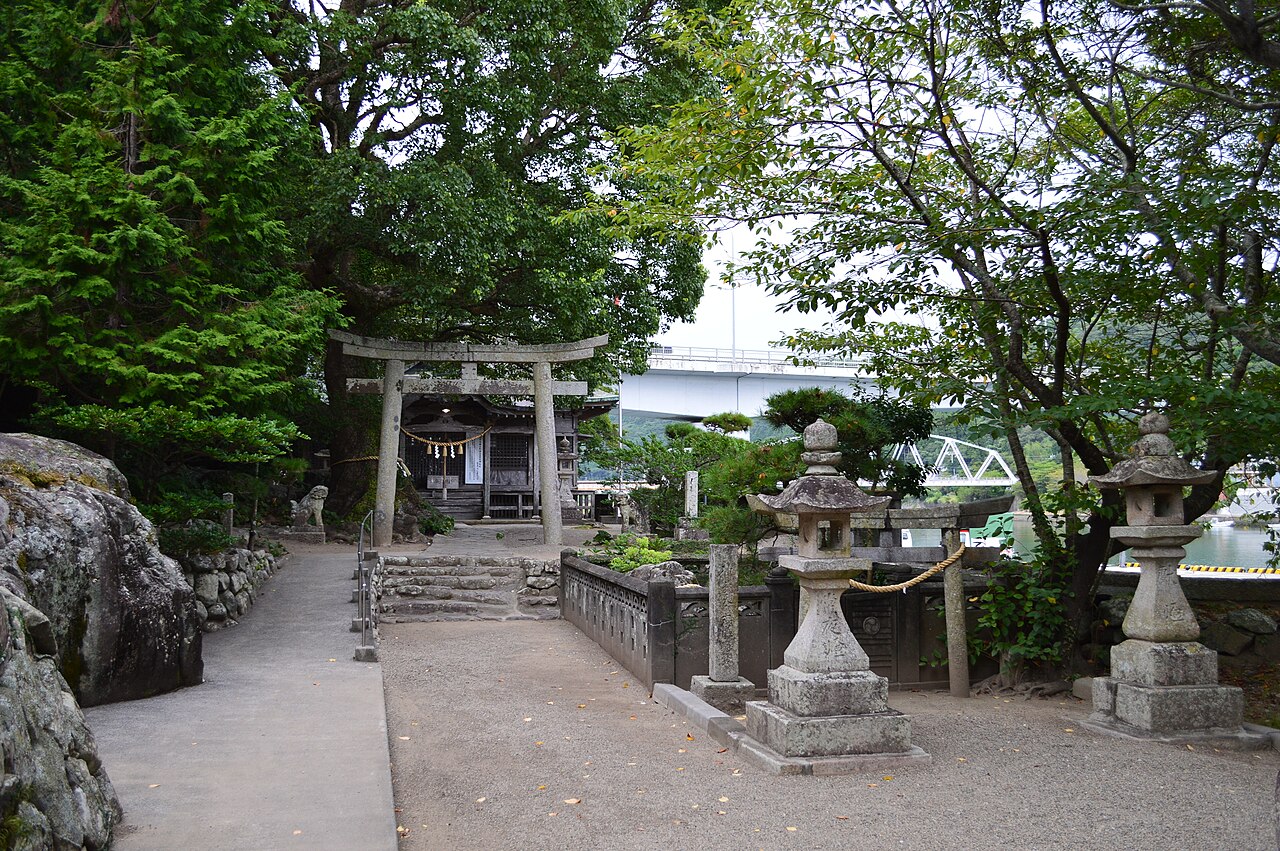
Tateiwa Shrine stands in Mimitsu, which is said to be the place from which Emperor Jimmu set sail on his eastern expedition. Tradition dates the shrine's founding to the reign of Emperor Keikō, after Emperor Jimmu, the first emperor, is said to have prayed at this spot for victory in battle and safety at sea.
The precinct enshrines a large rock that Emperor Jimmu is said to have sat on. You can see a small red torii in the hollow of a camphor tree said to be three hundred to four hundred years old, and behind the main hall rises the columnar-jointed rock from which the shrine takes its name.
The area is regarded as the birthplace of the navy, in the sense that Emperor Jimmu is said to have formed his army there, and a monument stands to mark it.
The Okiyo Legend and Ofunade Dumplings
Mimitsu is a setting of Hyuga mythology, with its tradition that Emperor Jimmu, who later became the first emperor, set sail eastward from this port. Kogu Shrine is said to be where he lived until that departure, and at Tsuno Shrine he is said to have prayed for peace of the land, calm seas and good fortune in war.
In the legend, the party was preparing to depart at Mimitsu when the departure was suddenly moved earlier, to dawn on the first day of the eighth lunar month. The villagers, the legend goes, made hastily prepared dumplings as a farewell gift and saw the party off, waking one another with the cry 'Oki yo, oki yo'.
The Okiyo Festival keeps the same cry: from about four-thirty the children go around the neighbourhood houses carrying bamboo branches, knocking on each door and calling 'Oki yo, oki yo'. Ofunade dango, the local specialty, can be bought at the Mimitsu Machinami Center.
The Coastal Promenade and Kashima Shrine
The Mimitsu coastal promenade lies at the southern end of the Nippo Coast Quasi-National Park. The promenade stretches three point two kilometres from Kanegahama. Kanegahama itself draws surfers and bodyboarders from Kyushu and from all over the country for its powerful waves.
Along the promenade you see a blowhole where spray rises, and a spot where pufferfish come to spawn around July each year. You reach the Kashima shrine from a beach facing the Hyuga-nada sea by passing through rugged huge rocks, and it sits quietly there.
Many stones with wishes written on them lie around the shrine building. The path to the shrine entrance is a slope with gravel, and the shrine itself is reached via stairs or steep slopes.
Omi Shrine and Cape Umagase Elsewhere in Hyuga
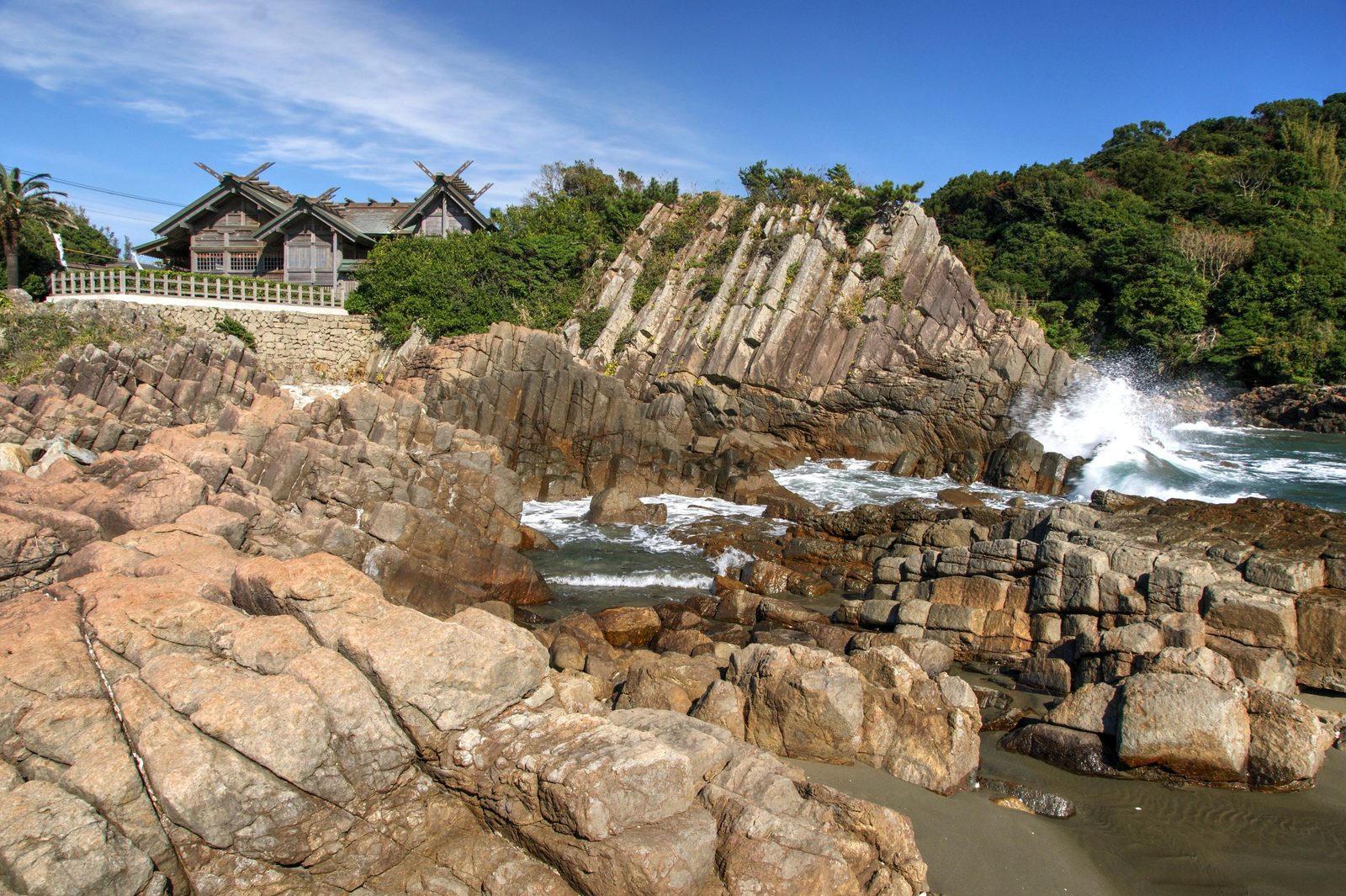
Omi Shrine, elsewhere in Hyuga, is an old shrine built on columnar rock overlooking the sea at the base of Cape Hyuga. Its grounds hold a group of stones mentioned in the national anthem and a cave in their east where, looking from the back toward the entrance, a silhouette of a rising dragon is said to appear.
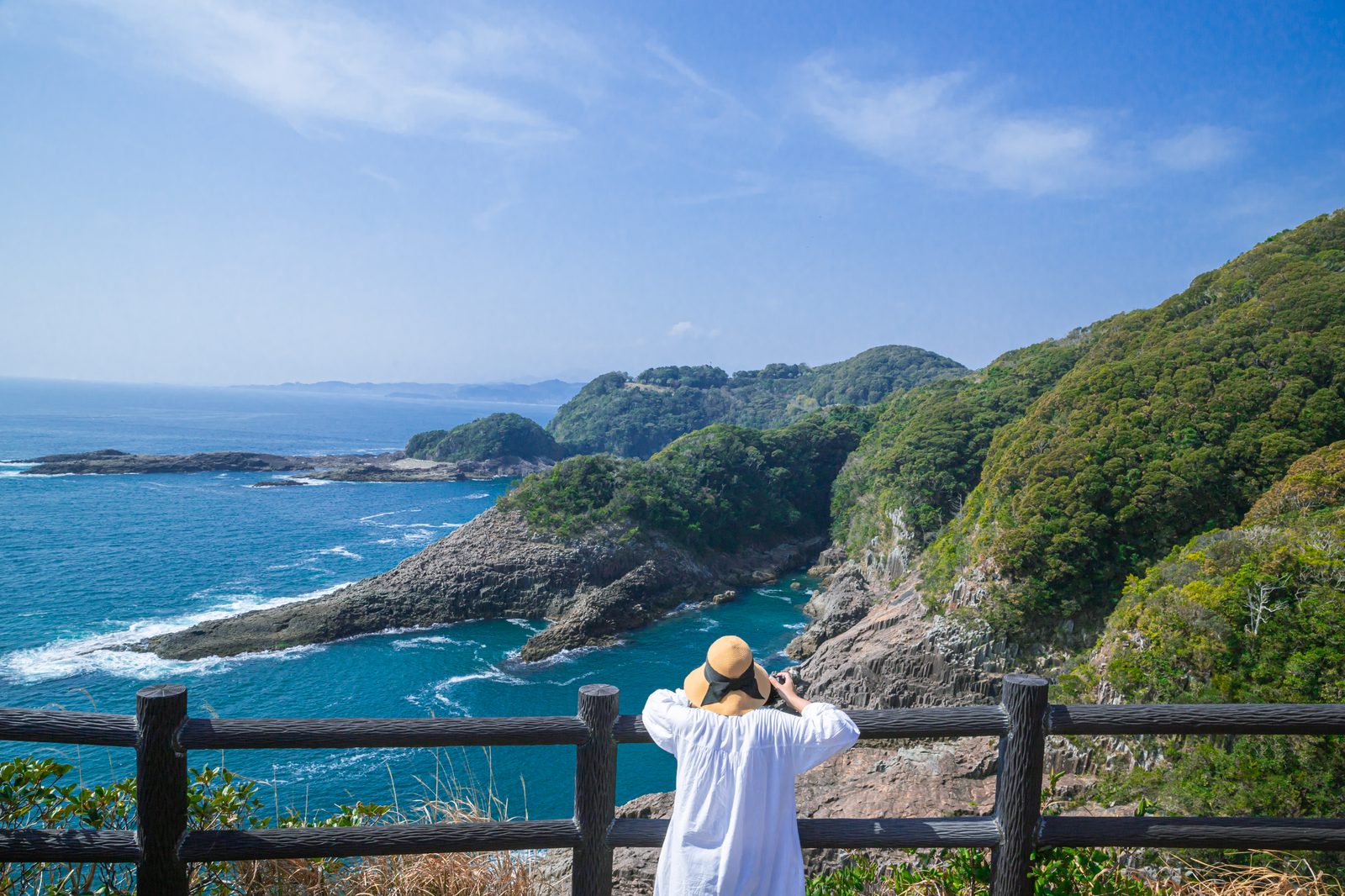
Cape Hyuga is a ria coast about five kilometres long, and Cape Umagase is said to take its name from the shape of the whole cape seen from the sea, resembling a horse's back. A roadside station in Hyuga sells fresh fruit and processed products of hebesu, a Hyuga-specific citrus with thin skin and few seeds, eaten flesh and skin alike.
Getting to Mimitsu
New to rural buses and one-man trains? See how to ride them, step by step.
| From | How | Time or fare |
|---|---|---|
| JR Miyazaki Station | Limited Express Nichirin or Hyuga to JR Hyuga-shi Station | about 45 minutes |
| Hyuga City Station | Nanbu Purattto Bus to Mimitsu Station | 300 yen for adults |
| Hyuga City Station | By car to Mimitsu | about 20 minutes |
| JR Mimitsu Station | By car to the Mimitsu area | about 5 minutes |
The Limited Express covers the leg from JR Miyazaki Station to JR Hyuga-shi Station, and from Hyuga City Station the drive to Mimitsu takes about twenty minutes.
Hours and Fees
| What | Hours or fee | Note |
|---|---|---|
| Hyuga City History and Folk Museum admission | 220 yen for adults; 110 yen for elementary, junior high and high school students | |
| Mimitsu-ken, Hyuga City History and Folk Museum and Mimitsu Machinami Center | 9:00–16:30 | Listed hours |
Fees and hours were checked against official sources between 5 October 2026 and 9 November 2026.
The Hyuga City History and Folk Museum charges admission, and Mimitsu-ken, the museum and the Mimitsu Machinami Center keep the same listed hours.
If you want more than a single day in Hyuga, browse places to stay in Hyuga before you plan the trip.
Thinking of staying overnight?
Compare places to stay near Hyuga, Miyazaki, Japan →
Disclosure: This post may contain affiliate links. If you book through them, we may earn a commission at no extra cost to you.