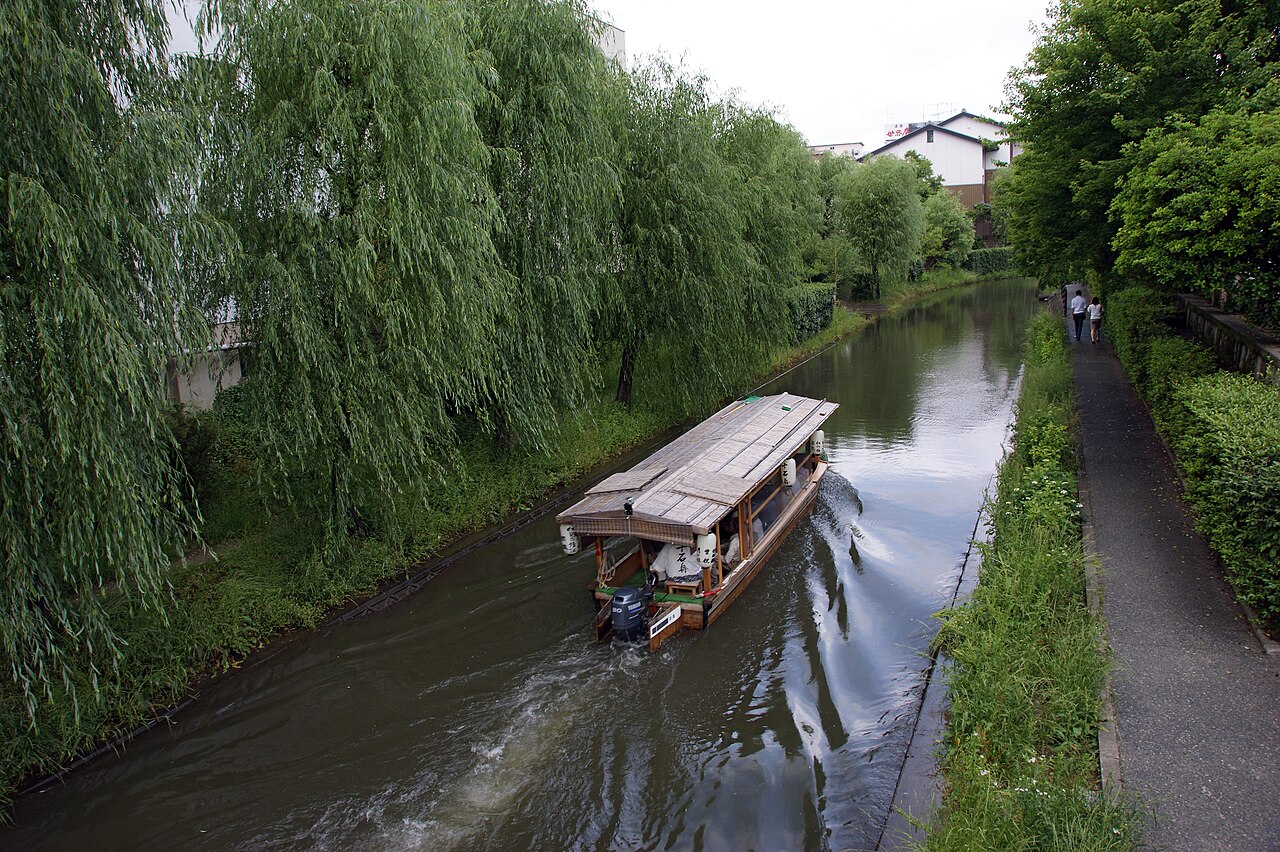
Fushimi is the sake-brewing quarter of Kyoto, and the place to start is on the water, aboard a roofed Jikkoku-bune moving along a canal where willows are reflected against the sake breweries. On land the town rewards slow walking: a sake museum whose visit ends with a tasting and a logo ochoko cup, a former boat inn kept as an inn and a historic-site museum, and an alley where eight eateries take orders from a single seat. Sake is the thread, from brewing water poured as cold-brew coffee to the boats that once carried sake and rice between Fushimi and Osaka.
Willows and Sake Breweries from a Canal Boat
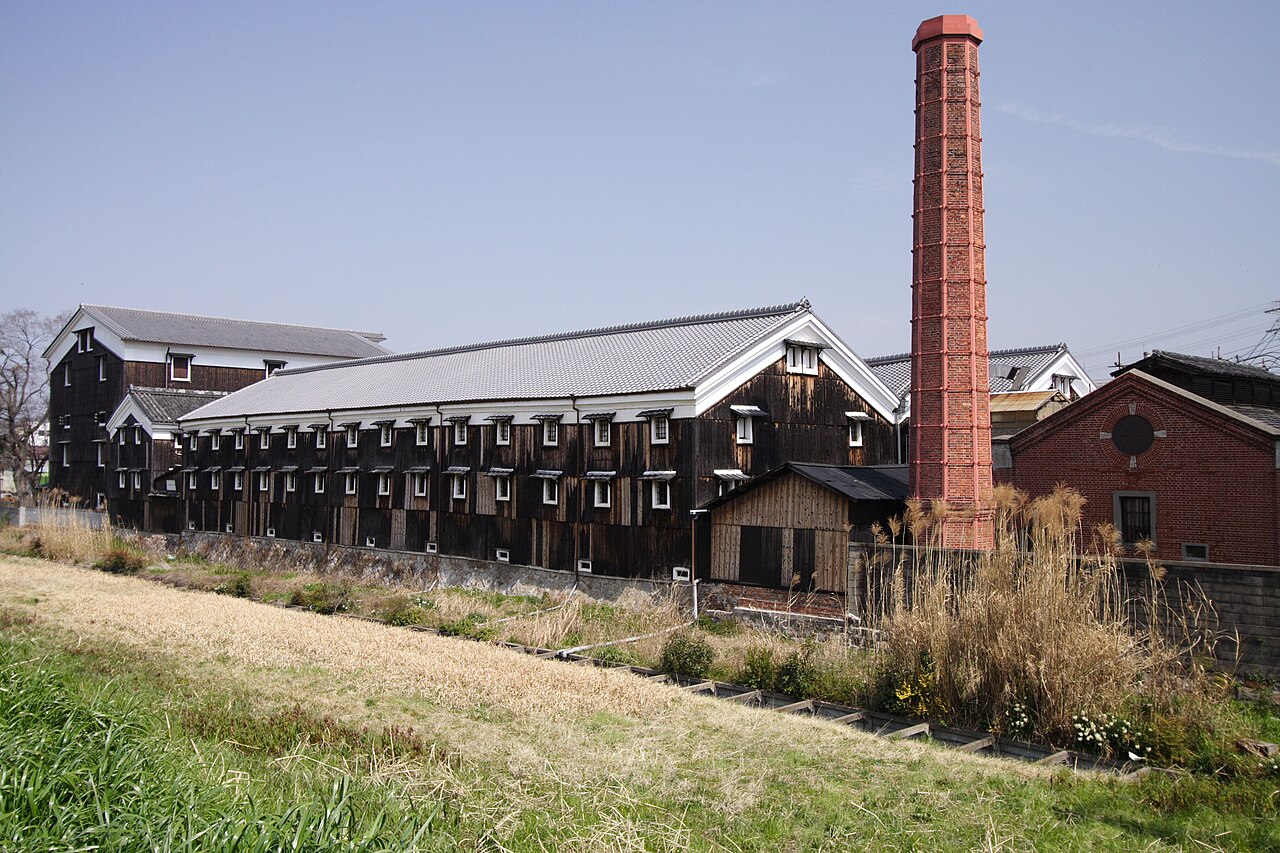
Jikkoku-bune passengers ride a replica of the boat that carried sake, rice and people on the Yodo River in the Edo period, now built in the style of a roofed yakata-bune and sliding along a canal where willows are reflected against the sake breweries. Those earlier boats worked between Fushimi and Osaka with sake and rice, and the breweries still standing along the water are the backdrop of the ride.
The boat leaves from and returns to the foot of Benten Bridge, just south of the Gekkeikan Okura Memorial Museum. The canal is a branch of the Uji River and flows into it and on to the Yodo River, the same waterways the cargo boats once followed.
On a day of light rain the sound of it reaches the boat as it moves, and it suits the slow pace of the canal. If the museum is on your list, treat the boat as the first half of the same stop: ride out and back, then walk in for the exhibits and the tasting.
Misu Lock Gate and the River Port
Misu Lock Gate stands where the Uji River meets the canal, and the gate that once adjusted the water level so boats could pass is where Jikkoku-bune passengers now step off to see that mechanism explained in the Misu Lock Museum. The ride from behind the Gekkeikan Okura Memorial Museum turns here, with a walk into Fushimi Minato Plaza before reboarding.
Fushimi Port was developed as a river port by Toyotomi Hideyoshi for the construction of Fushimi Castle, and Fushimi Minato Park and Fushimi Minato Plaza are where you stretch your legs between boats. Kyoto Prefecture still manages it as a local port that takes in the Uji River and the branch canal.
The park has a walking loop and a lawn plaza where you can sit down for lunch. A stone monument along the branch channel honours Suminokura Ryoi, whose family controlled the Takase boats for generations. Step off rather than stay aboard: the water-level difference the museum explains is why the gate exists.
Teradaya, the Inn Where Ryoma Escaped
Teradaya began as a boat inn and is still an inn as well as a historic-site museum, and the building standing there today was rebuilt after fire destroyed it in the Battle of Toba-Fushimi.
Nine Satsuma loyalists were killed here on the order of Shimazu Hisamitsu in what is remembered as the Teradaya incident, and the rebuilt house marks the spot. Sakamoto Ryoma was later attacked here by men of the shogunate and narrowly escaped, and that escape is the story attached to the house that stands here now.
Walk on past Teradaya and a bronze statue of Ryoma and his wife Oryo stands on the left in Fushimi Minato Park. A walking route here follows Fushimi's history as a port town from Edo-period water transport onward; see the statue first, then step back to Teradaya for the inn and museum. Those who would rather not return to central Kyoto after the statue and the rebuilt inn can look at places to stay in Fushimi.
Two Sake Houses: the Museum and the Old Head Office
Gekkeikan Okura Memorial Museum visitors see records from the company's founding and brewing tools handed down since the Edo period, then close with a tasting, including sake made for the museum alone, and a logo ochoko cup to take home. The tasting is three kinds from about ten, for visitors aged twenty and over.
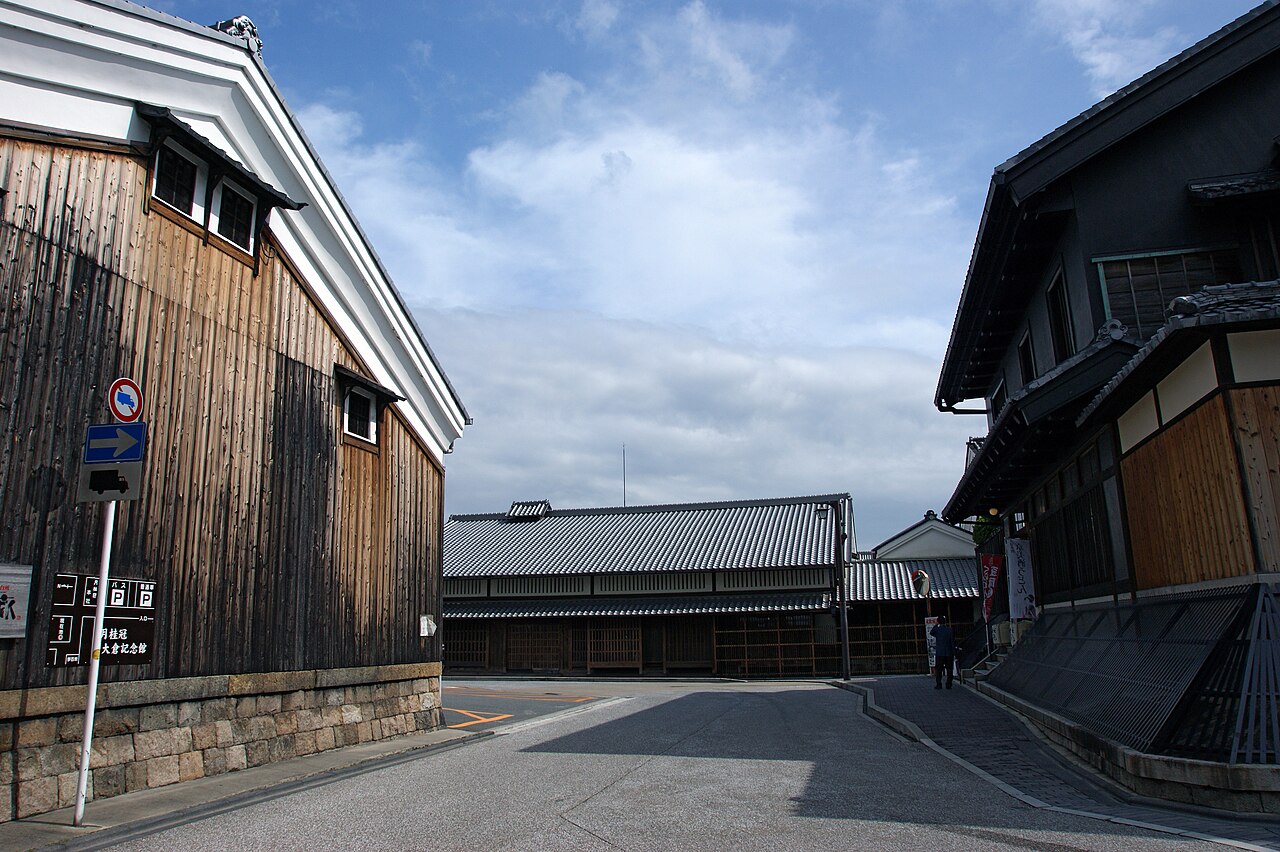
A separate brewery visit adds old brewing tools, bottle-filling of sake brewed there, and three kinds of genshu kept for that visit.
Fushimi Yumehyakushu occupies the renovated former head office of Gekkeikan, and in its cafe the staggered shelves, transom panels and inner courtyard garden frame a sake tasting set or a cold-brew coffee made with the brewing water. The shop stocks about eighty brands from seventeen Fushimi breweries, and the staff choose for you by taste and purpose. Souvenirs run to sake manju and sake lees financiers, and a kikizake session pours a rotating lineup from seventeen breweries. Take the museum first and the old head office second: the tasting teaches you what to look for, and the shop has about eighty answers.
Gokonomiya Water and the Alley of Eight Eateries
Gokonomiya Shrine is the place tied to Fushimi's groundwater, and a walking route on the history of sake brewing starts here rather than with a tasting, so the water comes before the sake. Other routes link the shrine with Fushimi Yumehyakushu and with the castle and the samurai residence ruins.
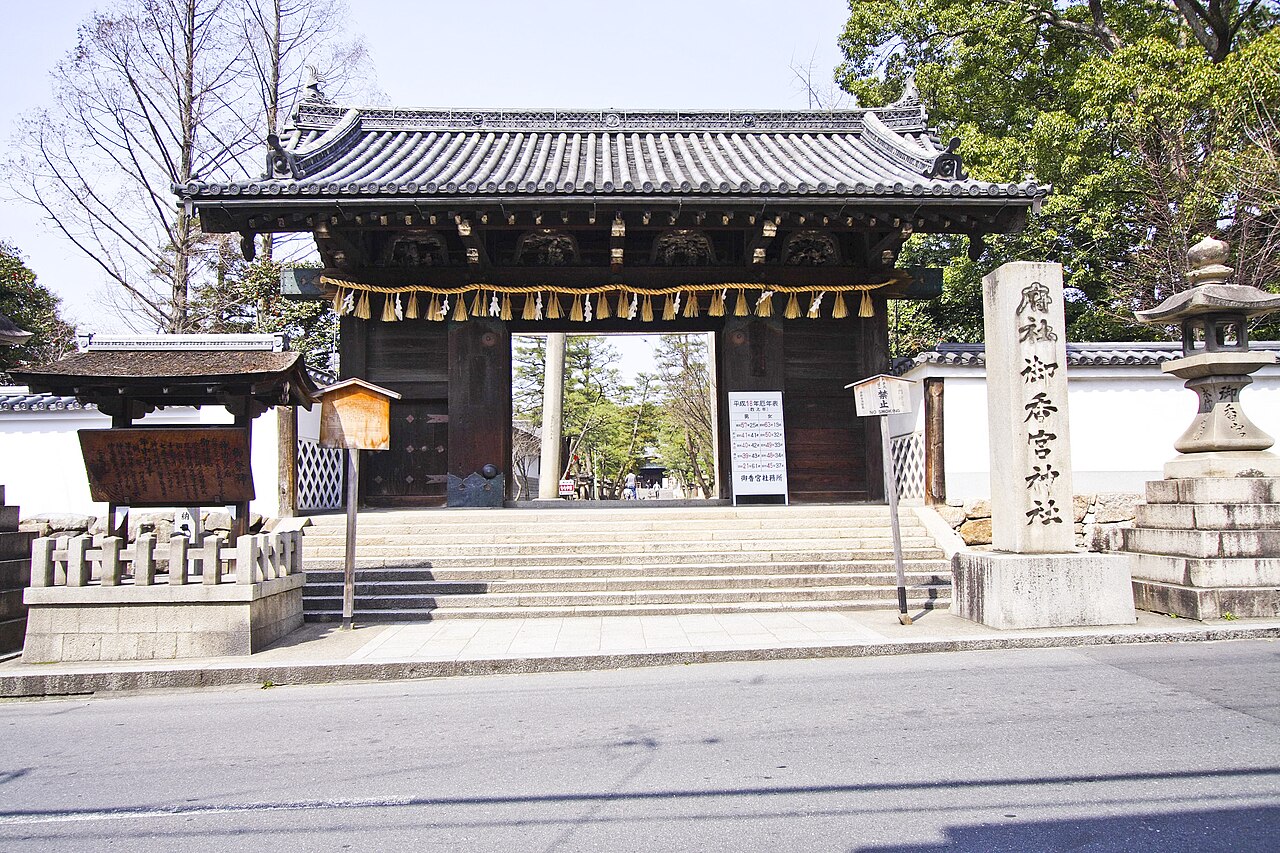
Clear water runs through the town, in the Uji River and the waterways, the same thread as the cold-brew coffee made with brewing water at Fushimi Yumehyakushu. Then the water turns into sake: at a sake-tasting alley you can try sake from the eighteen breweries that belong to the Fushimi brewers' association.
The alley gathers eight eateries so that the shops seem to line a lane, and from a single seat you order off any of their menus. One plate to look for is the house-smoked assortment of five kinds, which pairs with the tasting from the eighteen breweries. Follow the water in that order, shrine first and then the alley.
Otesuji, Nayamachi and the Solar Arcade
Fushimi Otesuji shopping street took shape as the road to the Otemon, the front gate of Toyotomi Hideyoshi's Fushimi Castle, and today's covered walk along it runs under a solar arcade that powers its own lighting and mechanical clock. Two temples, Honkyoji and Daikoji, sit inside the shopping street itself.
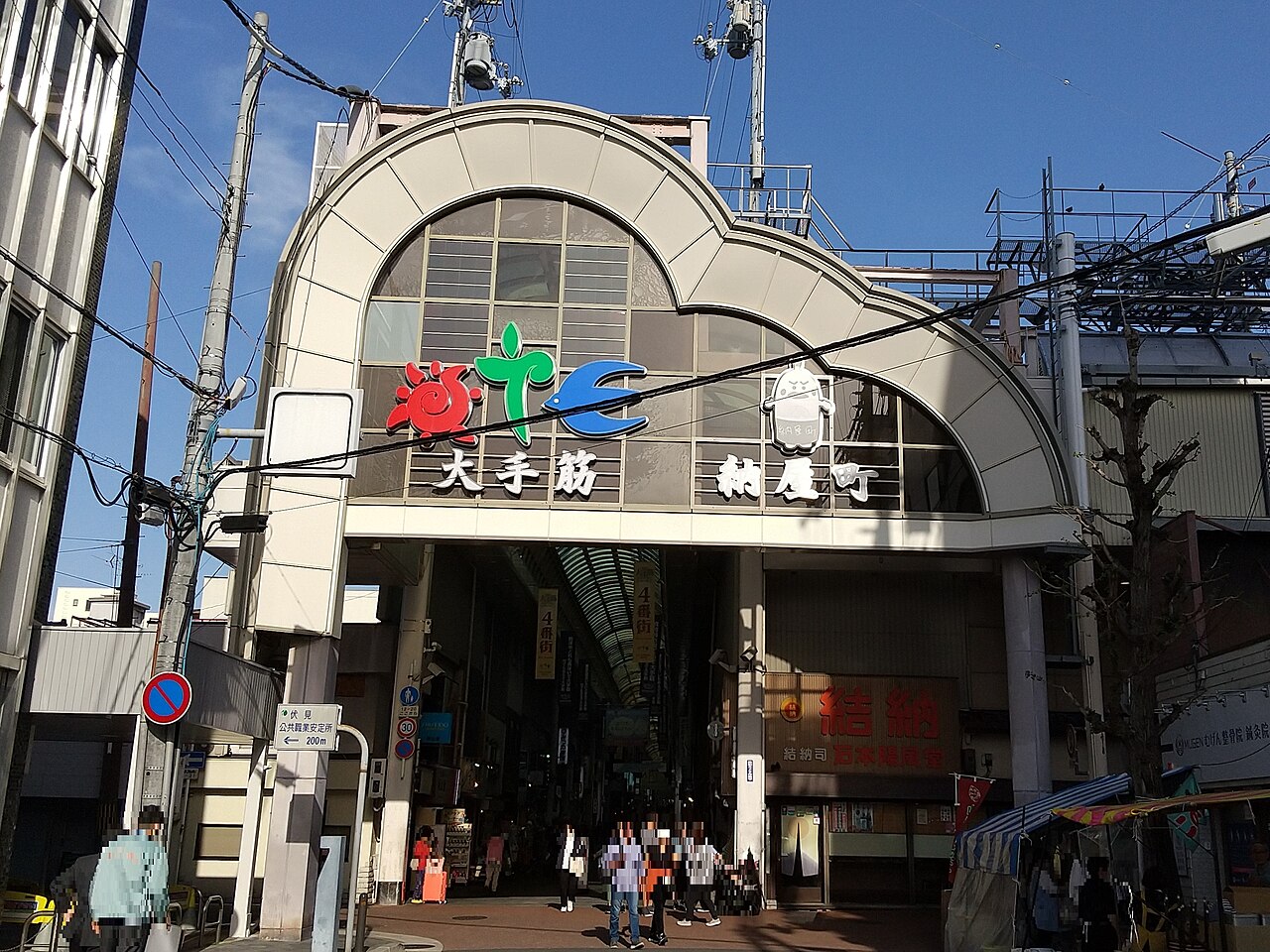
Otesuji is one of several shopping streets here, and a sake-history walking route threads the street under the Kintetsu viaduct, Otesuji and Nayamachi in turn. Along Otesuji, sake shops pour tastings and tea shops handle Uji tea, so the arcade doubles as a sampling walk. Nayamachi shopping street has an arcade of its own, so the covered walking does not end with Otesuji.
The street began as a row of shops under 'suzuran' lamps, and lighting is still part of its character, now run from the solar roof with the clock. Walk it with the sake shops in mind rather than the clock: a tasting at one of them is the simple way to test what the museum taught you.
Getting to Fushimi
| Leg | How | Time and estimate |
|---|---|---|
| Kyoto Station to the Fushimi area | Shortest connection | About 10 minutes |
| Chushojima Station (Keihan Main Line) to the museum and to Fushimi Minato Park | On foot | About 5 minutes each |
| Fushimi-Momoyama Station (Keihan Main Line) or Momoyama-goryomae Station (Kintetsu Kyoto Line) to the museum | On foot | About 10 minutes from either |
| Fushimi-Momoyama Station to Gokonomiya Shrine; Momoyama-goryomae Station to Fushimi Otesuji shopping street | On foot | About 5 minutes each (northeast to the shrine) |
| Momoyama Station (JR Nara Line) to the museum | On foot | About 18 minutes |
New to rural buses and one-man trains? See how to ride them, step by step.
Hours and Fees
| Place | What | Hours or fee |
|---|---|---|
| Gekkeikan Okura Memorial Museum | Admission | 600 yen for ages 20 and over (with a souvenir and sake tasting); 100 yen for ages 13 to 19 (with a souvenir) |
| Gekkeikan Okura Memorial Museum | Hours | 9:30 to 16:30, with reception until 16:00 |
| Jikkoku-bune boat | Fare | 1,900 yen for adults (junior high school students and older); 900 yen for children (elementary school students and younger) |
| Jikkoku-bune boat | Sailing times | 10:00 to 16:20, with the last departure at 15:40 from November 25 to December 6 |
| Jikkoku-bune boat | Season and days | Runs from March 20 to December 6 this season; no sailings on Mondays except holidays, but Mondays in April, May, October and November are sailing days |
| Fushimi Yumehyakushu | Hours and closing day | 10:30 to 17:00; closed Mondays except public holidays |
Payment at the Gekkeikan Okura Memorial Museum is cashless, and cash cannot be used. The round trip on the boat takes about fifty minutes.
Where to stay
Places to stay near Fushimi, Kyoto, Japan →
Disclosure: This post may contain affiliate links. If you book through them, we may earn a commission at no extra cost to you.