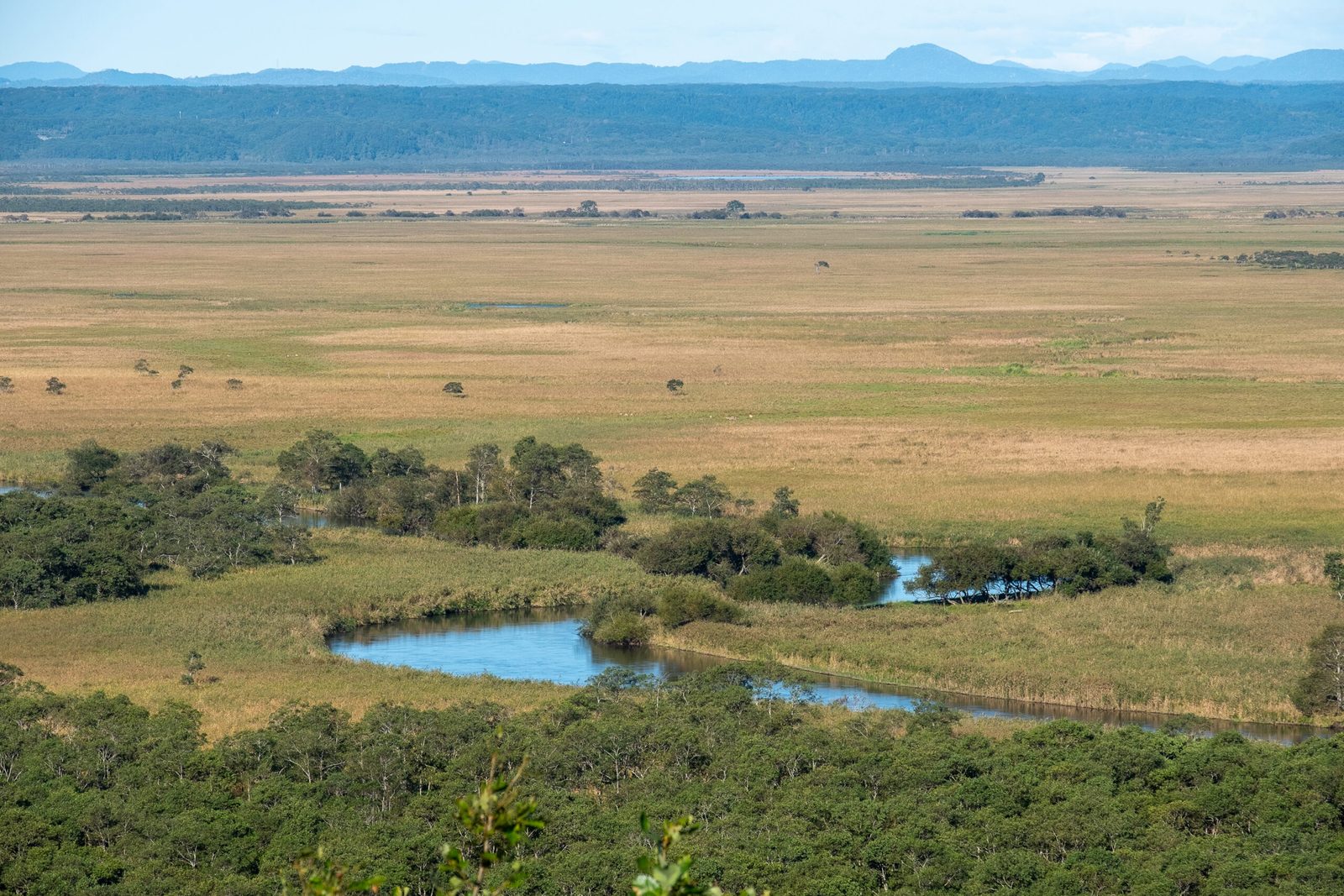
Kushiro Marsh has a low boardwalk that visitors walk at the height of the wetland itself. Red-crowned cranes can be found in Tsurui village in any season. In Kushiro itself, the town is wrapped in orange and pink colors when the sun sets. At Washo Market, a bowl called kattedon is made by walking through the market with rice in hand and picking only the ingredients that appeal.
The boardwalks of Kushiro Marsh pair with the cranes of Tsurui village on the wetland side, while the kattedon bowls and the sunset belong to the harbor town of Kushiro.
Kushiro Marsh on Foot: the Marsh Observatory, Boardwalks and a Canoe on the Kushiro River
The Kushiro City Marsh Observatory was built in the image of a wetland plant. Inside, visitors can see how the marsh vegetation formed. The restaurant in the building serves lunch made with local products.
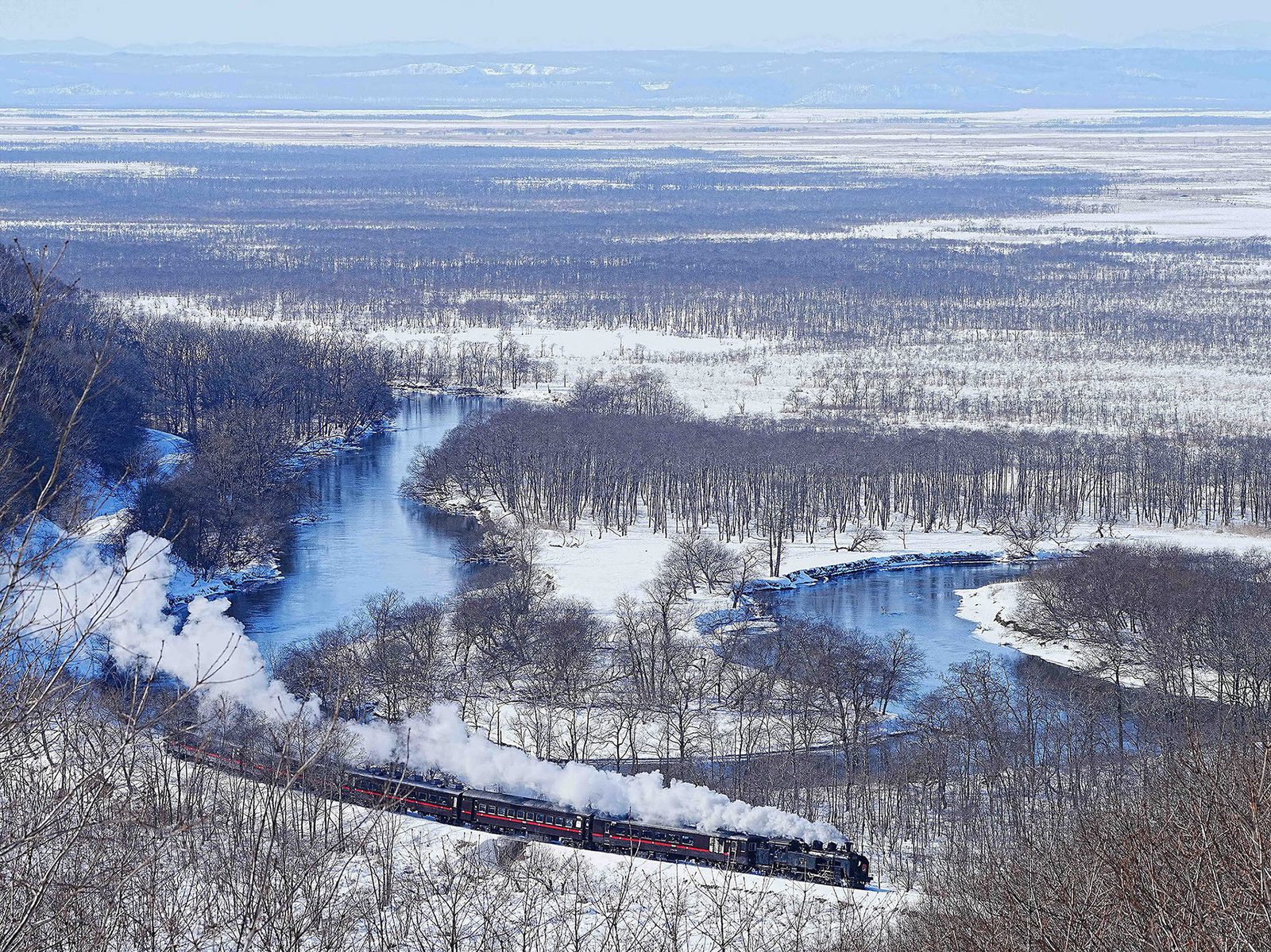
The Satellite Observatory lies at the end of a path through a forest, at the midpoint of the boardwalk next to the larger building. It gives a view of the whole wetland. The section leading there is cleared of snow in winter and can be walked.
The Onnenai boardwalk lets visitors walk through the wetland at the same eye level as the animals.
The boardwalk on the west side of Kushiro Marsh runs as three courses of different lengths. Seasonal plants line the boards, and fireflies may be seen in the evening and at night in mid to late June.
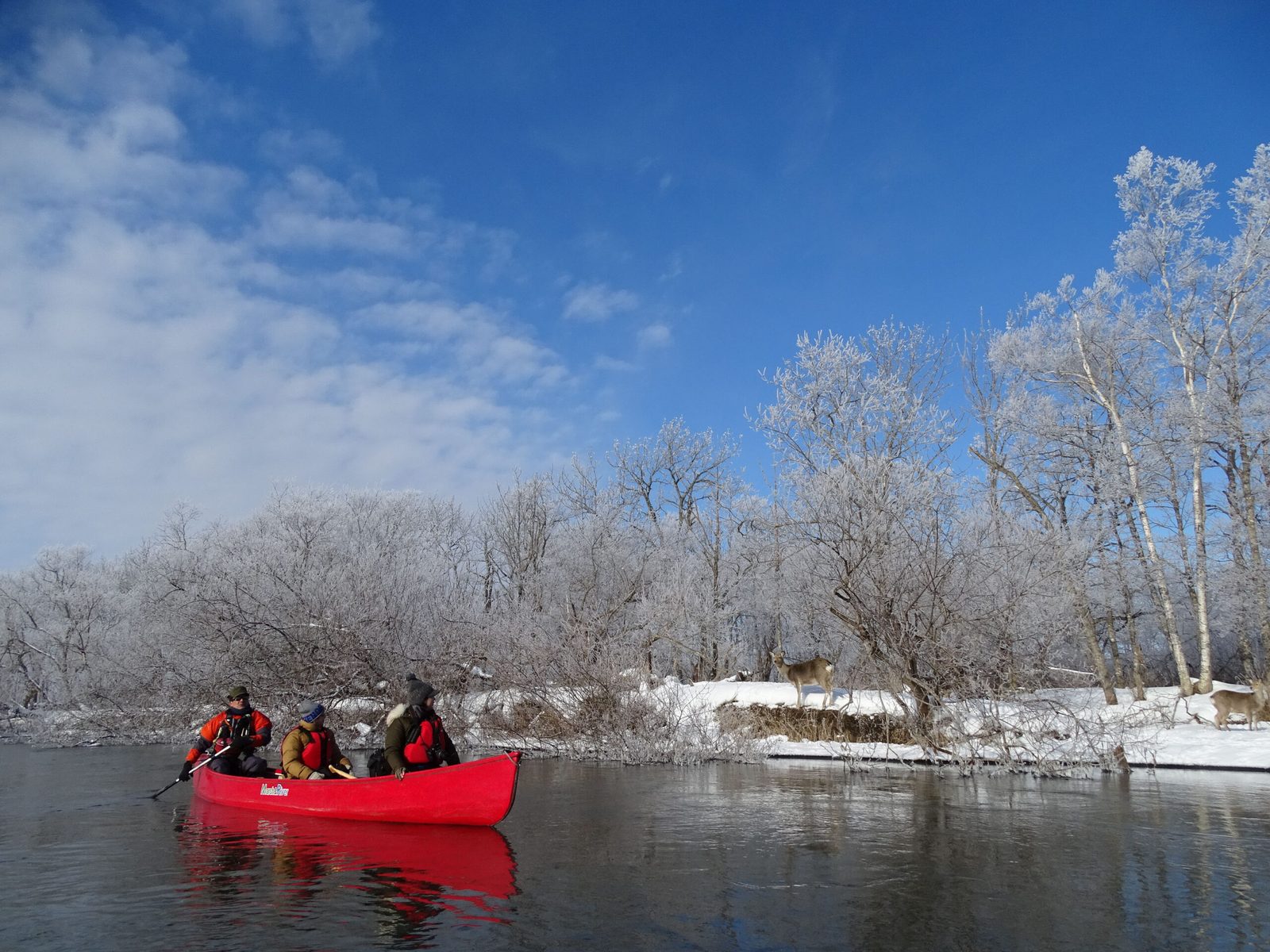
The Kushiro River canoe trip shows the inner wetland that cannot be reached on foot or by car. Wild animals including red-crowned cranes may sometimes be seen on the water, and nesting cranes may be seen.
If snow is on the ground, the forest path to the smaller observatory is the place to begin, because that stretch is cleared for winter walking.
Tsurui and the Red-Crowned Cranes: Winter Feeding Grounds, River Mist and Canoes
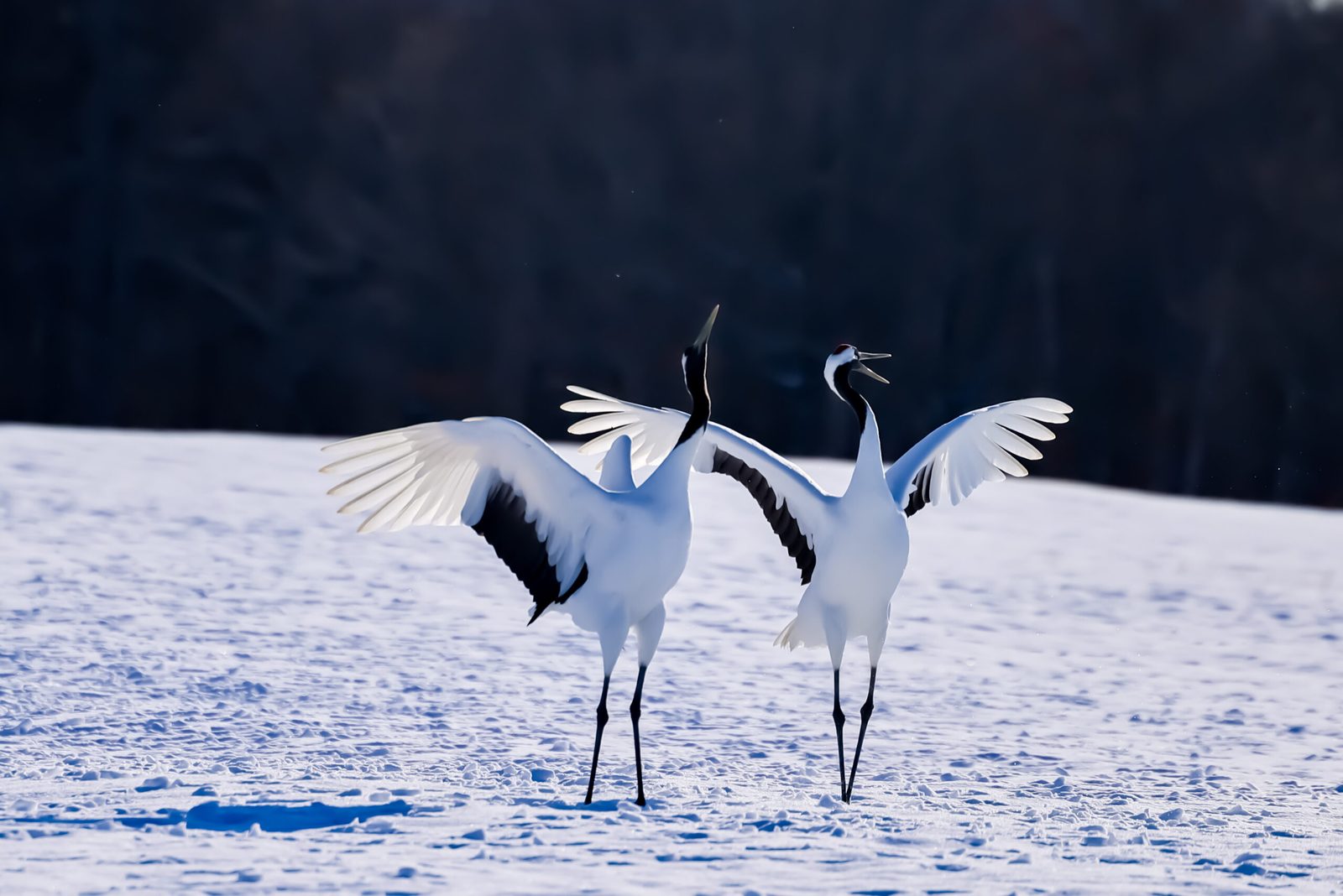
Tsurui village is home to red-crowned cranes throughout the year. In winter, tancho cranes that live deep in the marsh in summer appear at feeding grounds near human settlements.
Kearashi, a river mist, forms on cold mornings in Tsurui, when the river water is warmer than the air.
Kushiro Shitsugen National Park is entered on horseback from Tsurui, on horse trekking with Hokkaido native horses called dosanko. The special protection zone of the park cannot be entered without a guide who has obtained entry permission.
Tsurui's star-sky canoe is a trip on which the Milky Way and stars are reflected on the water surface.
Winter comes first in Tsurui, since the cranes at the feeding grounds and the kearashi on the river both belong to the cold season. From March onward, the red-crowned cranes enter the period of returning to their territories.
Kushiro in Winter: Hasu-ba Ice, Sunset and Snowy Streets
Hasu-ba ice, thin ice shaped like lotus leaves, can be seen from mid-January to February, mainly in the early morning when weather conditions are suitable. In midwinter the Kushiro River fills with it.
Kushiro's sunset is counted together with Manila Bay and Bali as one of the world's three great sunsets. Orange and pink colors wrap the town as the sun goes down.
Yonemachi is said to be the birthplace of Kushiro city. From the park in Yonemachi, visitors can see the Kushiro townscape spreading along the harbor, and from the lighthouse-shaped observation deck they can see mountains in the distance on clear days.
Kushiro city centre has days with snowfall on its coast, but little snow accumulates there. Snow melted during the day freezes at night in winter, and road surfaces can become icy.
On some days the lotus-leaf ice remains until evening, so the ice and the sunset can be seen together instead of on separate outings.
Eating in Kushiro: Kattedon at Washo Market, Robata and Almond au Lait
Washo Market sells seafood caught off Kushiro and agricultural products. Visitors walk through the market with rice in hand, pick only the ingredients they like and put them on the rice to make kattedon. The amount of rice, the toppings and how much of each goes on the bowl are the visitor's choice, and the ingredients vary from shop to shop.
Kattedon, as the story goes, began with riders on touring trips who reached Kushiro with little money, when a side-dish shop sold them only rice and retailed seafood to them.
Robata-style seafood is said to have originated in Kushiro. Tsubu, or whelk, can be eaten at robata and various other restaurants in the city, and Toudai-tsubu and suna-tsubu are served in the shell, steamed in sake, at izakaya and robata restaurants.
Kushiro-style sanma is eaten in season as sashimi with chopped ginger and green onion. In December, mennme often appears as simmered or grilled fish on limited-time izakaya menus.
Almond au lait is on the menu at most cafés in Kushiro.
What is there to eat at Washo Market for someone who does not like raw food? A grilled fish set meal is available at a restaurant inside the market.
Kushiro Through the Seasons: Cherry Blossoms, a Cool Summer and a Golden Marsh
Harutori Park is where about nine hundred and fifty Ezo yamazakura trees bloom. The cherry blossoms in Kushiro come out in the first week of May.
Kushiro Marsh gradually turns into a golden grassland in autumn.
Kushiro city centre stays cool in summer and has no rainy season, and the temperature changes gradually from spring to summer.
Taken together, the blossoms of Harutori Park and the cool summer both point to the city, and autumn points to the marsh.
One Winter Day in Kushiro, from Hasu-ba Ice to the Sunset
A winter day in Kushiro can begin beside the river, where Hasu-ba ice appears mainly in the early morning when the weather conditions are suitable. Washo Market follows, with a kattedon bowl put together topping by topping.
The Kushiro City Marsh Observatory and the Satellite Observatory come next. The exhibits cover the making of the marsh, and the cleared winter path leads on to the view over the wetland.
Yonemachi ends the day, with the Kushiro townscape spreading along the harbor below its park and the town taking on its sunset colors. On days when the lotus-leaf ice lasts until evening, the ice is still there when the sun sets. Any of the four stops can be kept for another day.
Rooms in Kushiro city are listed on a booking site: places to stay in Kushiro. Guided options under Kushiro are listed on a tour site: tours listed for Kushiro.
Getting to Kushiro
New to rural buses and one-man trains? See how to ride them, step by step.
| From | To | How | Time and fare |
|---|---|---|---|
| Sapporo Station | Kushiro Station | JR limited express | about four hours |
| Abashiri Station | Kushiro Station | JR Senmo Main Line | about three hours and thirty minutes |
| Tanchō Kushiro Airport | Kushiro Station | Akan Bus | about forty-five minutes, nine hundred and fifty yen |
| Kushiro City | Tsurui village | car | about fifty minutes |
Hours and Fees
| Item | Details | Notes |
|---|---|---|
| Shitsugen 55 pass | one thousand and thirty yen for five facilities, including the Kushiro City Marsh Observatory | the adult admission fees for the five facilities total two thousand five hundred yen |
| Guided tour of the Kushiro City Marsh Observatory | five thousand yen for one adult, four thousand yen per person from two adults, three thousand seven hundred yen for a child | |
| Length of the guided tour | one hour and thirty minutes | runs from the first of June to the thirty-first of October |
| Akan Bus Tsurui line | six services per day | five on Saturdays and Sundays |
| JR Hokkaido Senmo Main Line | about five to six services per day |
Fees and hours were checked against official sources on 21 November 2026.
Thinking of staying overnight?
Compare places to stay near Kushiro →
Disclosure: This post may contain affiliate links. If you book through them, we may earn a commission at no extra cost to you.