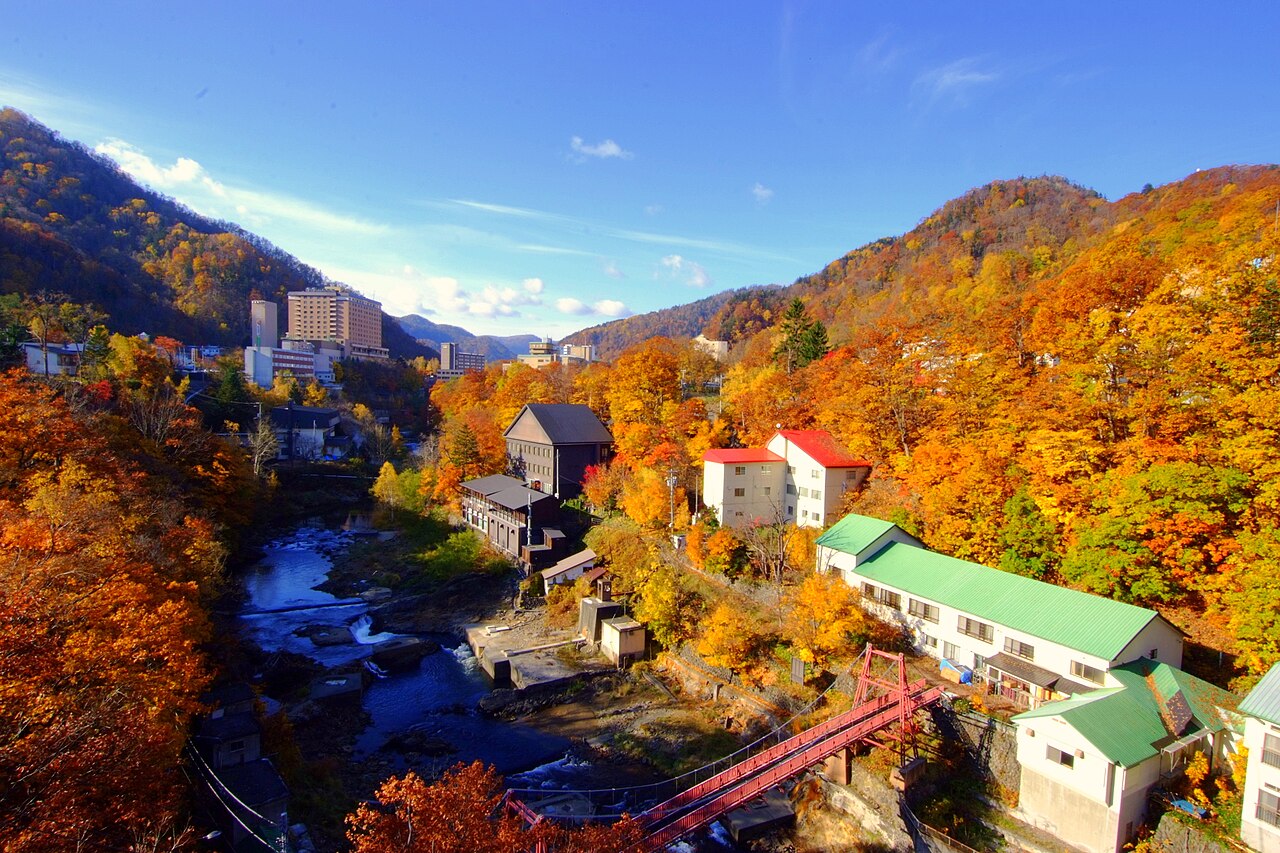
Stepping onto the red Futami Suspension Bridge, visitors look at two rock mountains at the Kappa-buchi pool before a nature trail leads upstream along the Toyohira river. Onsen water is part of the walk, from a footbath with a view of the river to a hand bath where water flows out of a kappa statue's mouth. Sound takes a turn too, from a thin waterfall in Futami Park to water striking stone at Yu no Taki. The colder months add a snow sauna and snowshoe routes, dated in the table below.
Crossing Futami Suspension Bridge and Following the Toyohira River Trail
The nature trail from Futami Park follows the Toyohira river past the Kappa-buchi pool to a rock pool at its end.
Crossing Futami Suspension Bridge gives a view of two rock mountains and the Kappa-buchi pool. Futami Park, where the statue of Kappa Daio stands, is the starting point of the nature trail, and the bridge leads onto it. A sheer rock wall forms the left bank, with the rock outcrops on the right.
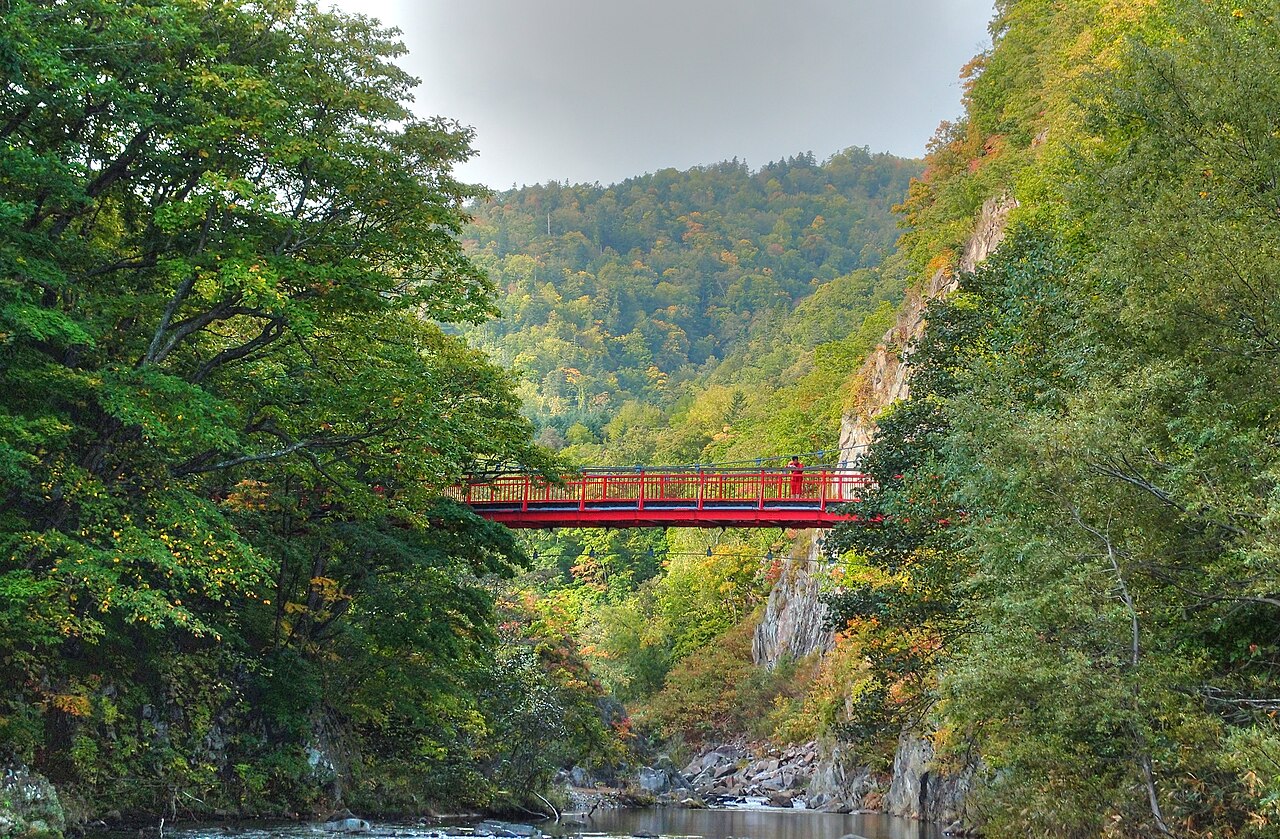
Following the trail upstream, walkers pass a park at the Kappa-buchi pool, where the clear Toyohira river washes a rock wall of quartz porphyry. Birds sing, fish leap, animals walk and wildflowers sway in the river breeze. At the trail's end sits a rust-red rock pool, where the sound of the rapids and the rustling of the forest are described as not loud.
Listening in Futami Park changes with the months: Ezo-haruzemi cicadas start calling in May, and Minmin cicadas then call from summer to autumn. A thin, thread-like waterfall inside the park keeps its water clear even after rain, and its sound cuts into the call of the Minmin cicadas. At the rust-red rock pool the river strikes the rock wall and turns at a right angle toward the hot-spring town.
Warming Up at the Foot Baths, the Hand Bath and the Hot Spring Egg Basin
Jozankei offers its onsen water in forms beyond the inn bath: foot baths, a hand bath and a basin for onsen eggs.
Soaking feet at the semi-outdoor footbath in the Futami area comes with a view of the Toyohira river, and the bath is usable on rainy and snowy days. Sitting at the octagonal footbath along the national road, a bather sees the face of the person opposite and tries an omikuji vending machine while soaking. Salt from the onsen water adheres to the skin after bathing and warms the body from its core.
Pouring water onto the dish of the kappa statue in the hand bath makes water flow out of the kappa's mouth. The hand bath is fed with source water. It is said that a wish comes true for those who clean their hands with that water, face the direction of Kappa Daio in Futami Park and recite the mantra.
Making onsen eggs happens at Jozankei Gensen Park, where high-temperature source water is poured into a basin. The park also has a foot bath among greenery, fed with fresh source water drawn from the riverbed. One model course adds freshly baked pizza and bread at a hotel bakery cafe, and a bath before sleeping in the lukewarm tub of an inn's inner bath.
Climbing Yukemuri-zaka, Then Listening to Yu no Taki and Visiting the Shrine Cave
Yukemuri-zaka, Yu no Taki, Jozankei Shrine and Iwato Kannon-do add a slope, a water sound and a hand-dug cave to the town walk.
Climbing Yukemuri-zaka takes walkers up a slope in the hot-spring town. Coming back down the slope, steam from the onsen water becomes visible on the right-hand side. Yu no Taki stands along the main street of the town.
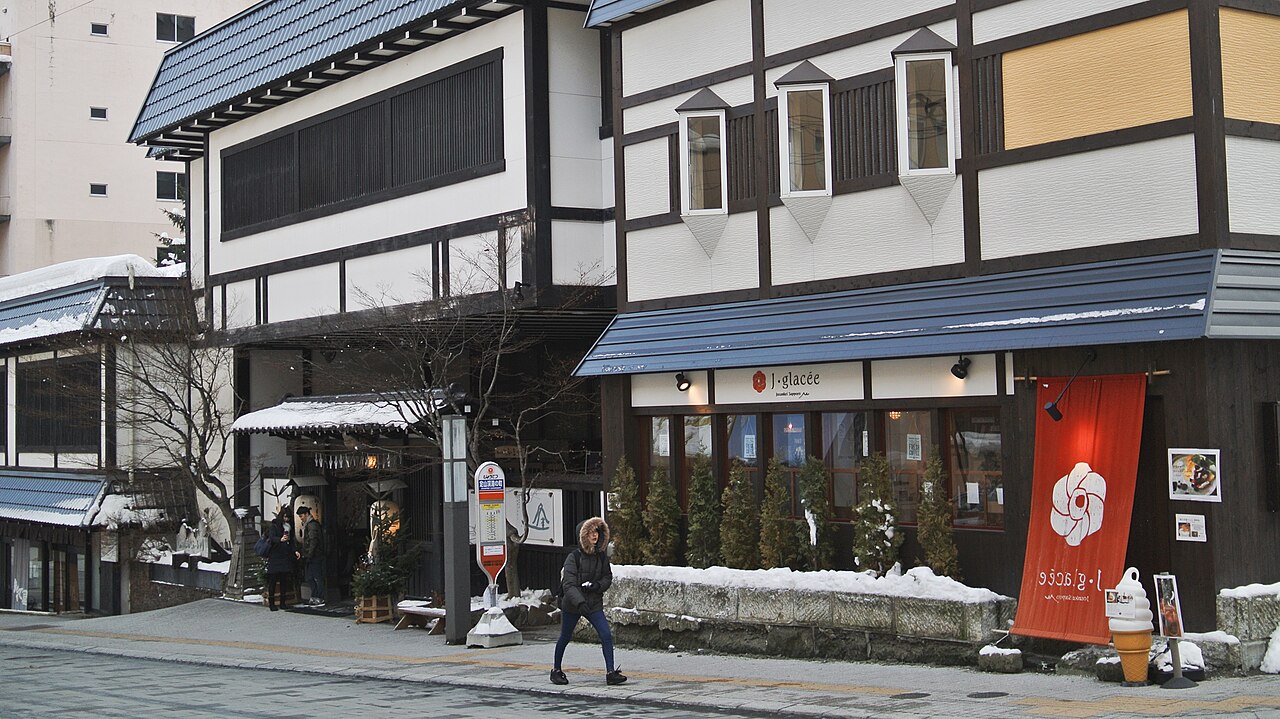
Listening is the reason to pause at Yu no Taki. The feature was renovated with natural stone, and the sound of the water dropping onto the stone became sharper. At night it is lit up.
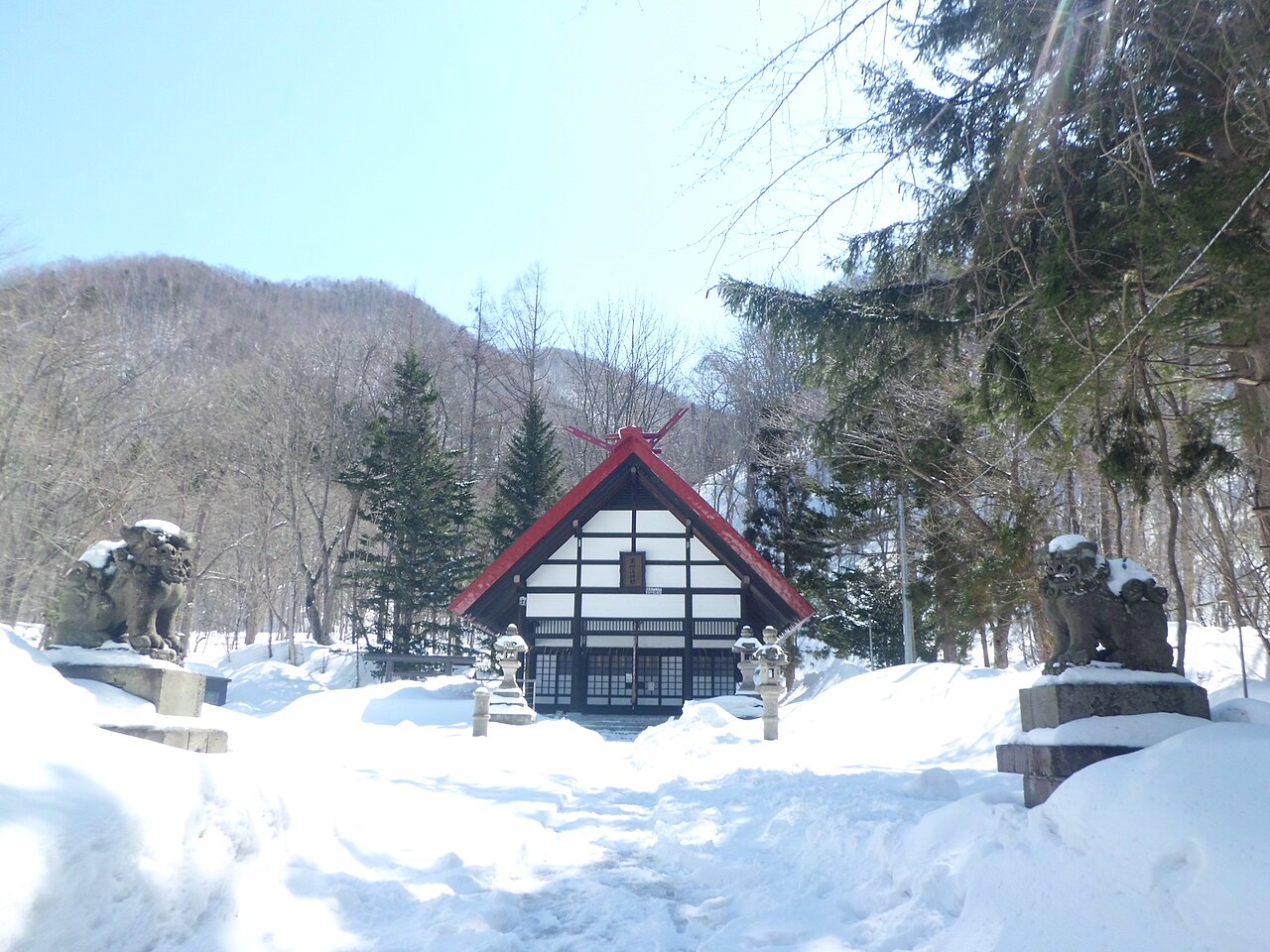
Visiting Jozankei Shrine means going up to a hill in green surroundings that overlooks Jozankei Onsen. Along the approach, Ezo-engosaku flowers bloom in spring, and the grounds are a leaf-colour spot later in the year. The shrine was founded by settlers, and the Yuhidake trailhead lies behind its precincts.
Stepping into Iwato Kannon-do, visitors find red lanterns dedicated by geisha who worked in Jozankei lining the ceiling. A cave runs from beside the altar and remains as it was hand-dug. The cave holds a full set of the forms of Kannon.
Standing at Momiji Bridge, the Dam Museum and the Shiraito Falls
Momiji Bridge, the Jozankei Dam museum and Nishiki Bridge show the rivers away from the hot-spring street.
Standing on Momiji Bridge puts visitors over a strong current, where water breaks against rocks and cold air is present all year. The bridge is on the road to the park downstream of Jozankei Dam. Animals such as Ezo deer and foxes are often seen around it.
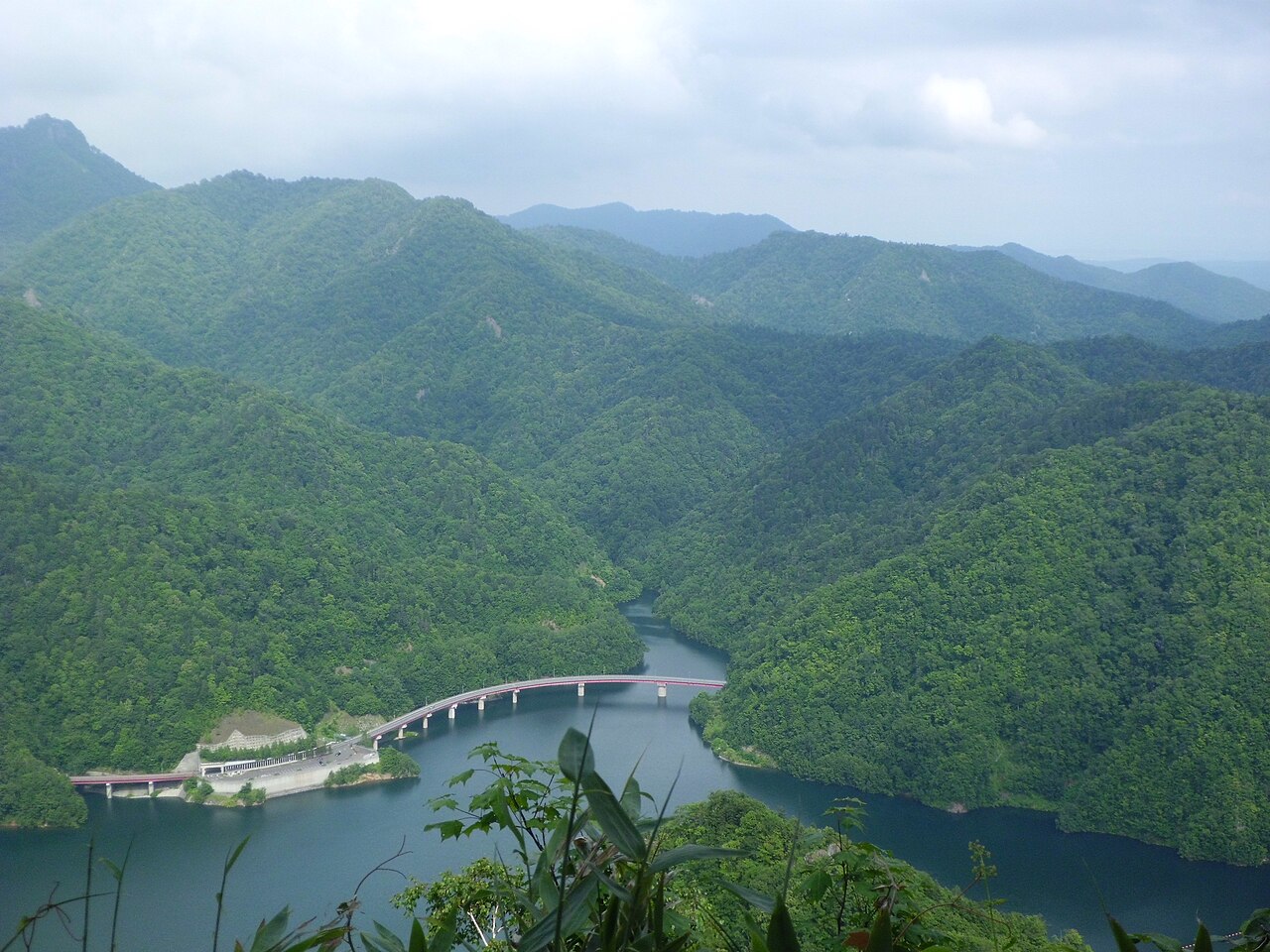
Climbing to the dam crest from the downstream park and lookout gives a view of Lake Sapporo, the reservoir of Jozankei Dam. Turning a hand-operated generator at the dam museum shows the amount of power generated. Another bridge on the same road spans a deep valley, where the flow appears white when the snow begins to melt.
Walking onto the pedestrian bridge at Nishiki Bridge brings a deep pool of the Toyohira river into view. In autumn, trees extending from both banks redden and are reflected on the water surface. The river flow is gentle in this area, and pleasure boats once floated at this spot. Shiraito Falls is a small waterfall that changes its appearance with the seasons.
Trying Snow Sauna, Snowshoes and Snow Hiking in Winter
The snow months change what Jozankei offers, with a snow sauna, snowshoe walks, snow hiking and the next Yukitoro event.
Trying the snow-view sauna belongs to a set period, listed from early December to late March. In a snowy landscape, bathers leave a tent sauna, dive into soft fluffy snow instead of a cold-water bath, and take outdoor air bathing there. A riverbank tent sauna followed by a jump into the cold river appears on a page marked as available year-round.
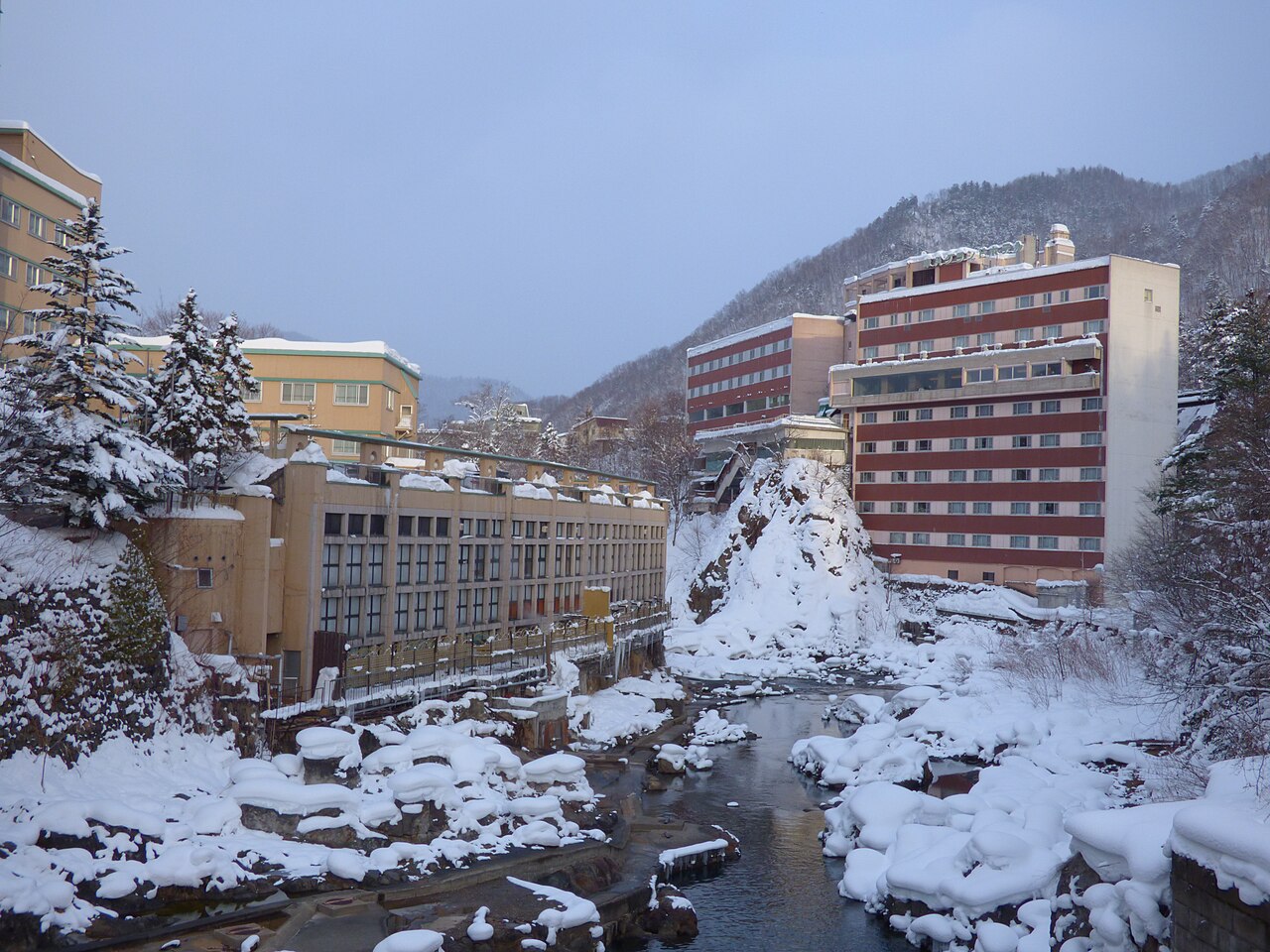
Setting out on a snowshoe walk starts with borrowing snowshoes and poles and hearing a guide explain their use. Past Futami Suspension Bridge the route reaches the Kappa-buchi pool, where a snow mushroom sits on a rock above the river. Walkers see footprints of wild animals such as deer and foxes, slide down on their bottoms and jump into soft snow.
Walking, climbing and sliding on short skis is the idea of the Jozankei snow hike, done in the walker's own shoes on dedicated skis. Beginners walk through a snow-covered forest, stepping on the snow. A new Yukitoro event is scheduled for the coming season, and from January it will no longer use snow candles.
Getting to Jozankei, Fares and Winter Dates
New to rural buses and one-man trains? See how to ride them, step by step.
| Route or activity | Details |
|---|---|
| Car from Sapporo | fifty minutes |
| Kappa Liner direct bus from Sapporo Station | about sixty minutes |
| Namboku Subway Line from Sapporo Station to Makomanai Station | about eighteen minutes |
| Jotetsu route bus from Makomanai Station to Jozankei Onsen | about forty-seven minutes |
| Jozankei Onsen Liner from New Chitose Airport | three thousand five hundred yen per adult; December nineteenth, twenty twenty-six to February twenty-first, twenty twenty-seven |
| Snow-view sauna | listed from early December to late March |
| New Yukitoro event | January twentieth, twenty twenty-seven to February twenty-eighth, twenty twenty-seven |
Rooms in Sapporo, which includes the Jozankei area, are listed in places to stay in Sapporo.
Thinking of staying overnight?
Compare places to stay near Jozankei, Sapporo, Hokkaido, Japan →
Disclosure: This post may contain affiliate links. If you book through them, we may earn a commission at no extra cost to you.