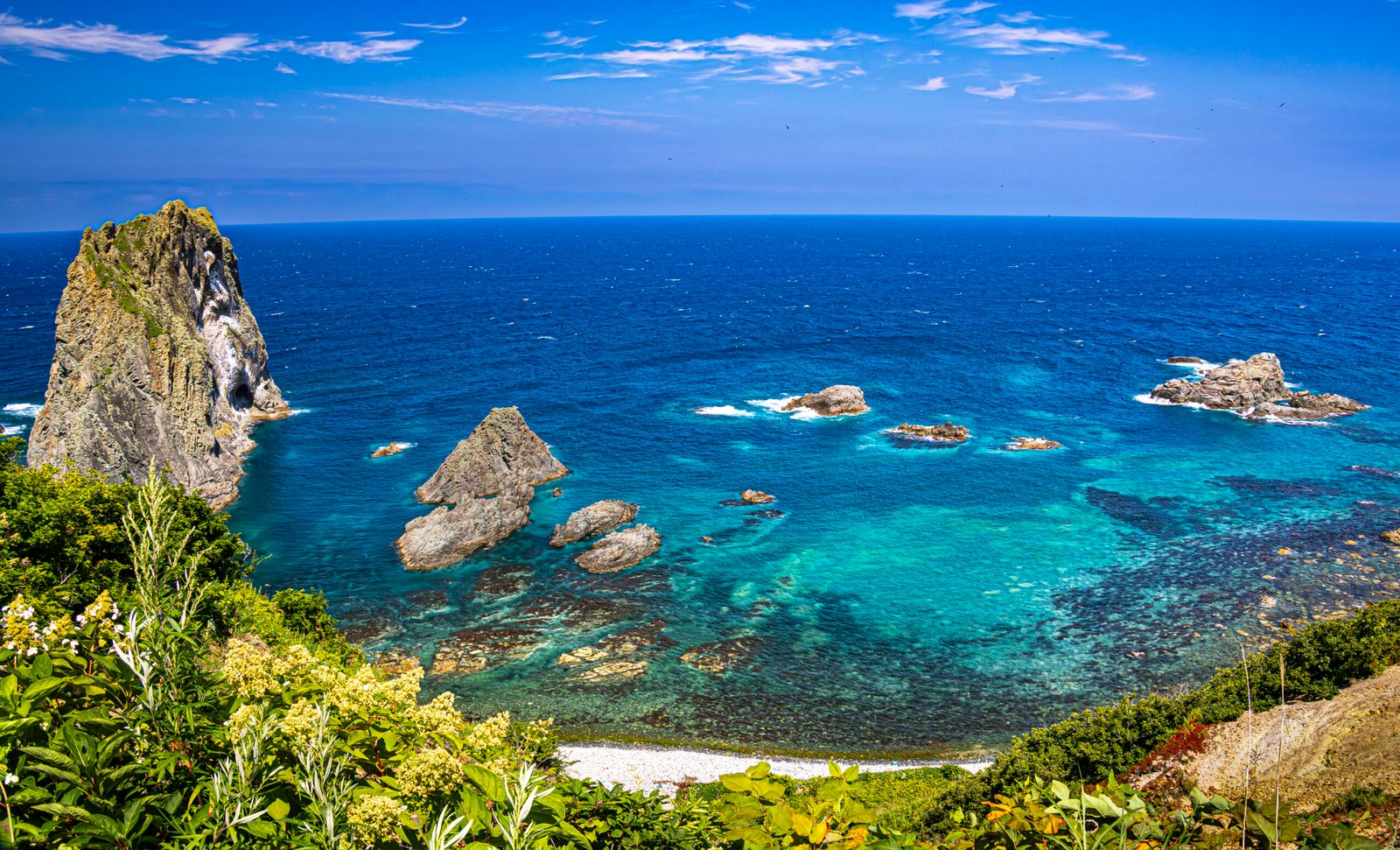
Bamboo grass grows thickly underfoot on the path toward the tip of Cape Kamui, a sea breeze brushes the face, and the Sea of Japan lies on both sides of the trail. At Shimamui Coast, a foot tunnel dug into the rock wall leads to an overlook where rock on the seabed can be seen. Shakotan suits travelers who want a cape walk, coastal overlooks and seafood bowls on a single peninsula, and Cape Kamui became a women-prohibited area after ships carrying women were said to capsize near it.
The walking trail from the Women-Prohibited Gate to the cape tip is closed because of construction, and during the closure visitors can still walk the trail beside the parking lot and view Cape Kamui and Kamui Rock from the observation plaza. At Shimamui Coast, the trail that leads down from the overlook to the shore is closed for restoration work, and the shore cannot be reached. Boat trips and urchin bowls are seasonal, and the table at the end lists the months.
Walking the Ridge Path at Cape Kamui Toward the Lighthouse
Charenka-no-komichi is the trail for walkers who want sea to left and right on the way toward the Cape Kamui lighthouse.
Walking up from the parking area, visitors climb a gentle slope to the Women-Prohibited Gate, the cape entrance. Going up a few stairs from the gate brings them to an observation deck. The gate may be shut when the wind is strong, and its times may change with rain.
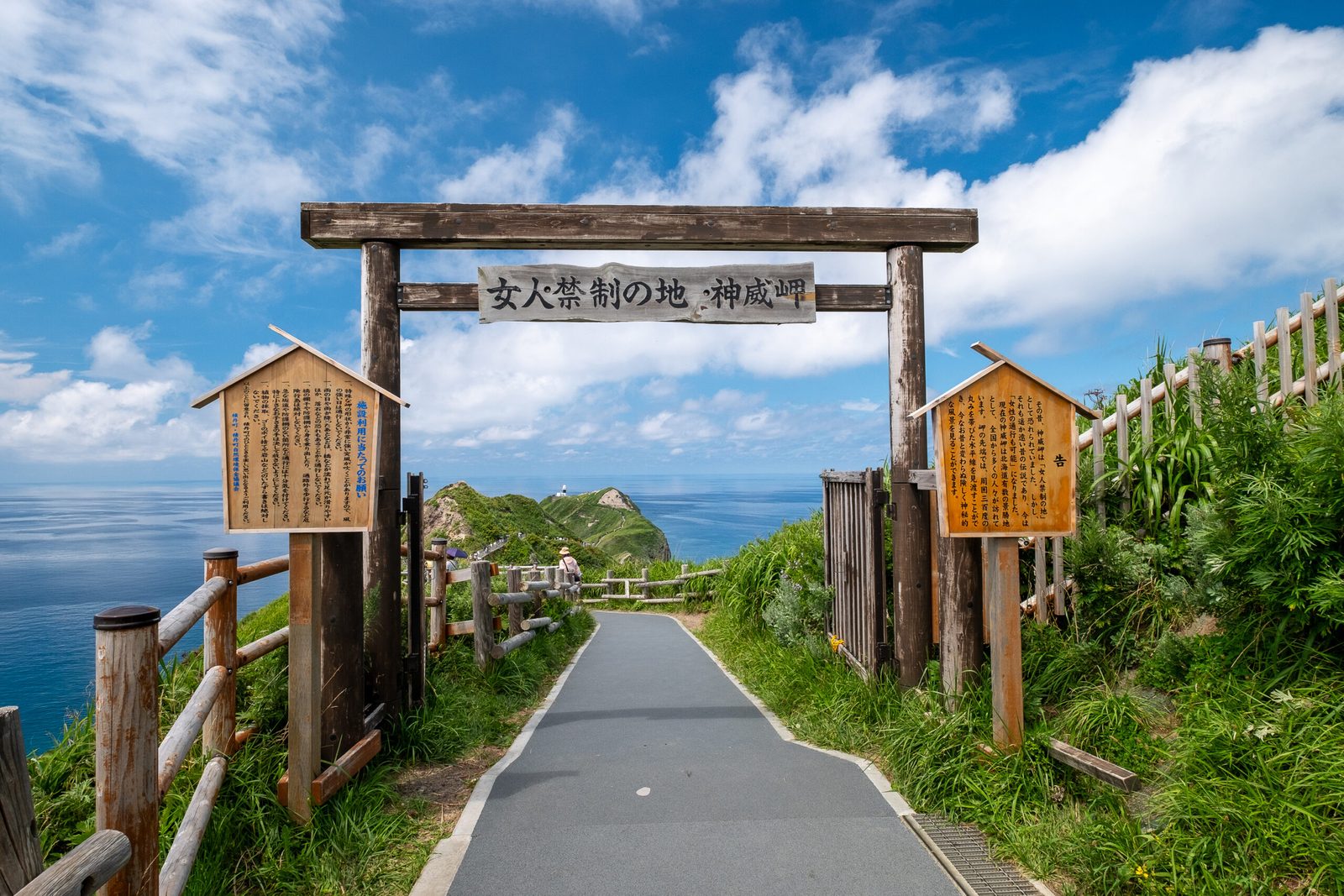
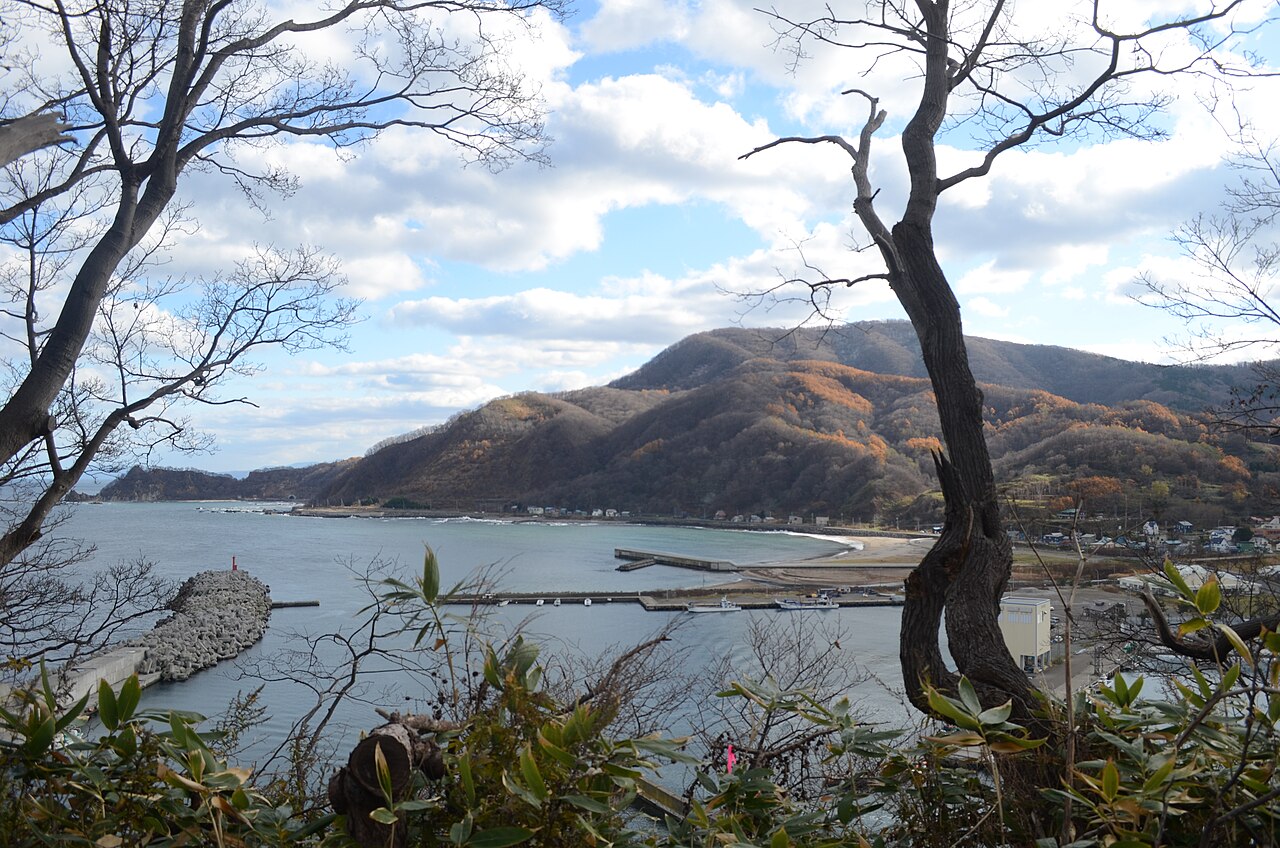
Following the trail called Charenka-no-komichi from the gate, walkers head toward the lighthouse. The Sea of Japan is in view on both sides of the trail. The route has some ups and downs on the way out.
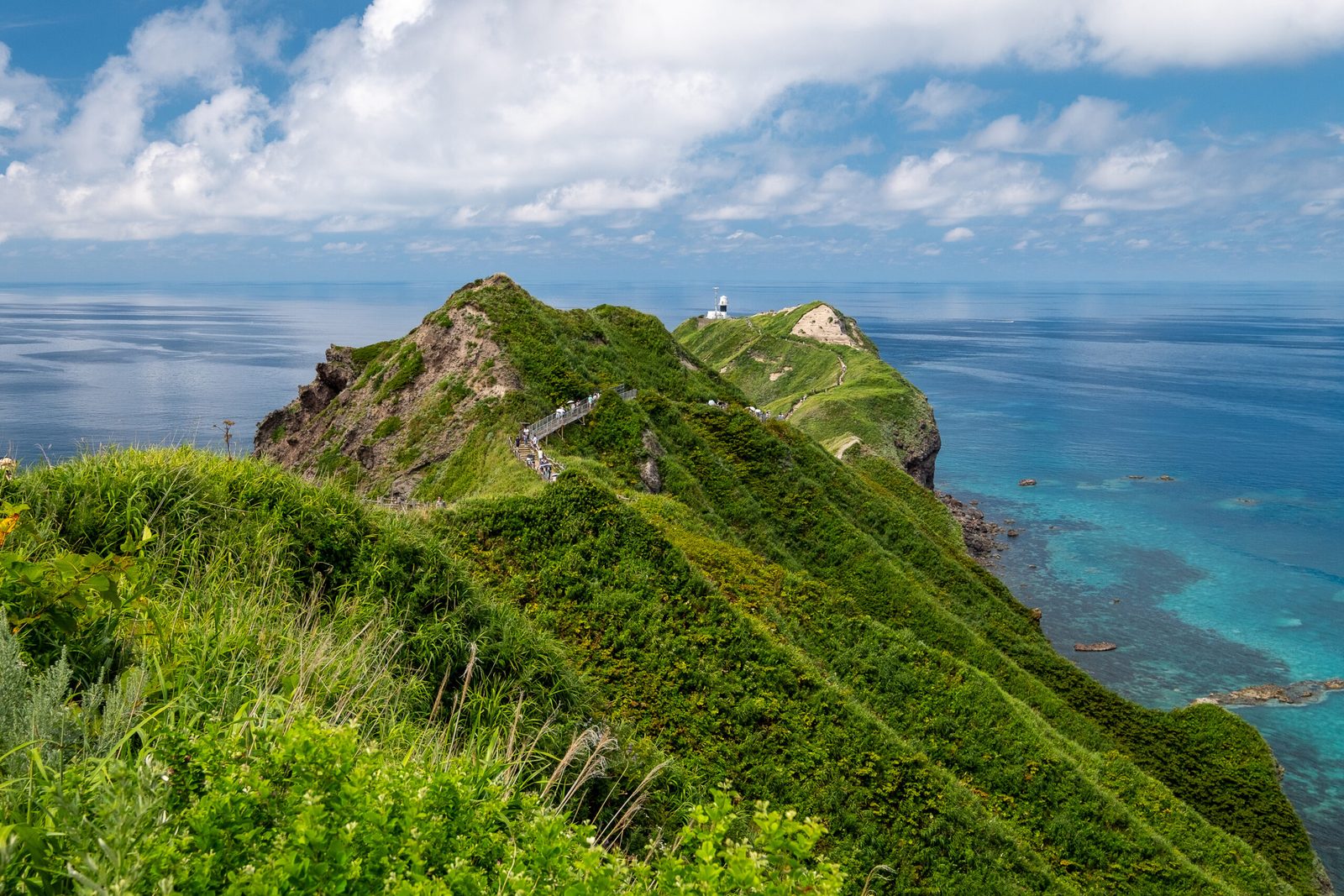
Reaching the far end, walkers see Kamui Rock up close from the viewpoint. The sound of waves alone echoes in the quiet, and the horizon appears rounded. On windy days white spray hits the rock surface, with a scent of the sea tide. On sunny days the water shows layers of blue, from deep indigo to emerald green.
Climbing to the upper floor of Kamui Banya, the shop in the nature park, visitors find an exhibition room. The fixed lens formerly used at the Cape Kamui lighthouse was made in France. The women-prohibited rule on the cape continued until the early Meiji era.
Short Walks to the Shimamui Coast and Cape Ogon Overlooks
Shimamui Coast suits visitors who want a short walk from their car through a rock-wall tunnel to an overlook.
Walking from the parking lot, visitors reach the Shimamui Coast observation deck on foot. The route passes through a tunnel dug into the rock wall and kept for walkers. From the deck, rock on the seabed can be seen.
Stopping at the deck is the limit of this visit, because the trail down to the water is under restoration work. Following the nature trail from here leads to a rock that looks like a woman standing and facing the sea beyond. Some parts of that trail, such as stairs, are damaged, and a further section is not passable.
Following the promenade built from the end of Mikuni Port out to sea, walkers head for the observation deck at Cape Ogon. Several entrances lead onto the walking trail. The cape juts out into the sea from beyond the port.
Seeing the Shakotan Coast from a Boat
The choice on the water is between a glass-bottom boat from Mikuni Port, a cruise that views Cape Kamui from the sea, and the Shakotan Wasen Cruise in a Japanese-style boat.
Boarding the glass-bottom boat, passengers follow a route that runs from Mikuni Port past Cape Ogon and islands offshore. The boat operates daily in its season, from spring into autumn. Cape Ogon on this route is the same cape that the promenade reaches on foot.
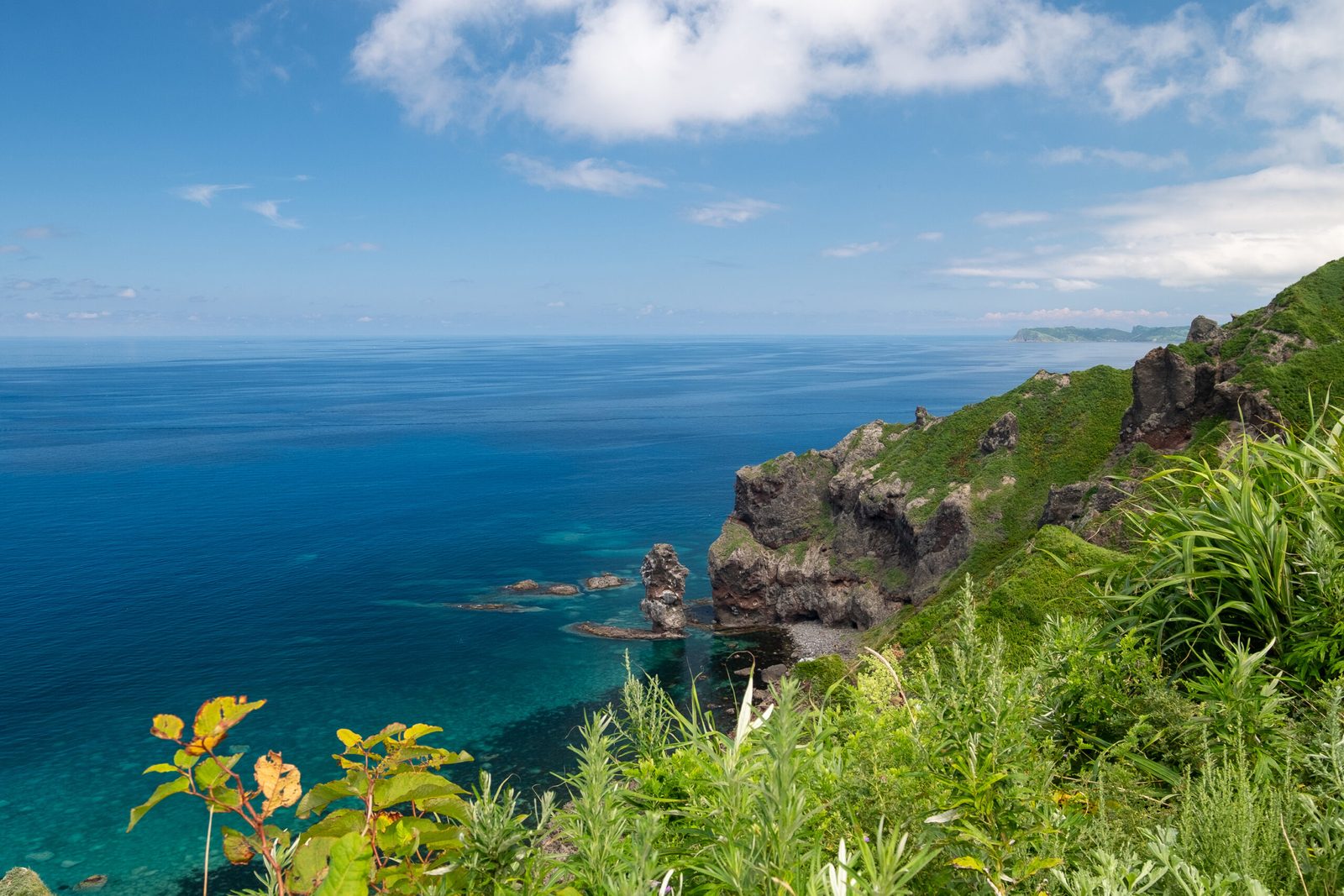
Joining the cruise that departs from a fishing port, passengers circle a standing rock, Cape Kamui and Kamui Rock. The cape, designated a Hokkaido Heritage site, is viewed from the sea on this trip. Payment is made at boarding in cash, and the cruise is listed for May to October.
Riding the Shakotan Wasen Cruise, passengers travel in a Japanese-style boat. It is cooler on the boat than on land, and bringing a jacket is recommended. Cruise courses may be changed or suspended depending on weather and wave conditions.
Eating Sea Urchin Bowls and Fresh Seafood on the Peninsula
Sea urchin bowls belong to summer, while Kaisenajidokoro Shinsei lists a different specialty for spring, summer and autumn.
Ordering a bowl in season means choosing among kinds of urchin. Bowls are served with the red type, the white type, or a mix of both. Natural urchin on the Shakotan Peninsula is in season from June to August. The pale-yellow type is the main kind in Shakotan, where good-quality kelp, its staple food, grows abundantly.
Choosing a shop changes what arrives on the rice. Oshokujidokoro Uroko heaps urchin caught by the owner on rice, with no radish or perilla on top. Oshokujidokoro Nakamuraya makes its special bowl with ezobafun and murasaki urchin during the urchin fishing period, and the number served each day is limited. Kamui Banya offers its Shakotan bowl in the same months.
Reserving at Shokudo Ushio brings a complimentary dish. Shokudo Ushio serves natural urchin sourced directly from fishermen during the urchin period, with squid, shrimp, whelk and abalone also on the menu. Hamazushi serves fresh urchin on a sieve in summer. Kaisenajidokoro Shinsei serves rockfish in spring and tuna in autumn.
Stopping for Blue Soft Cream, Sweets and a Hot Spring Bath
After the walk, the way back passes a mint-flavored soft cream at Kamui Banya and a bathhouse with a sauna.
Stopping at Kamui Banya next to the cape car park, visitors buy soft cream and souvenirs. The soft cream has a faint mint flavor. It was previously sold at Cape Kamui alone and can now also be eaten at the sightseeing center market.
Buying sweets at that market starts with a bite-sized brown-sugar steamed bun. Its skin is moist and chewy, and the smooth red bean filling is lightly sweetened. The bun is sold in packs at the sightseeing center counter. The market also sells black garlic made with spring water from Mt. Shakotan and glass floats formerly used in cod fishing.
Soaking at the hot spring follows the cape walk for those who want warm water. The bathing facilities include an outdoor bath, a high-temperature bath and a medium-temperature bath. A bubble bath, a cold-water bath and a sauna are also part of the facilities.
Getting to Shakotan, Gate Hours and Seasons
New to rural buses and one-man trains? See how to ride them, step by step.
Rooms near the cape are listed in places to stay around Shakotan. The table lists gate times, seasons and the Otaru route.
| Item | Details (as listed) |
|---|---|
| Cape Kamui gate | November eight to four thirty, last entry three thirty; December to March ten to three; times vary by season, rain or wind |
| Cape Kamui walk | About seven hundred seventy metres to the tip; round trip about forty minutes; no passage beyond the gate during construction |
| Shimamui Coast | Observation deck five minutes on foot from the lot; parking free of charge; shore trail under restoration |
| Boat seasons | Glass-bottom boat daily from late April to October; Kamui cruise May to October; courses may change or stop with weather and waves |
| Urchin and shop seasons | Urchin bowls June to August; Kamui Banya open every day April to October, with a break November to March |
| Otaru bus | Seventy-five minutes from JR Otaru Station to Mikuni by Hokkaido Chuo Bus; some town trips need phone booking by five the day before |
Thinking of staying overnight?
Compare places to stay near Shakotan, Hokkaido, Japan →
Disclosure: This post may contain affiliate links. If you book through them, we may earn a commission at no extra cost to you.