This guide covers a half day to a full day in Kuroishi, a small town in Aomori Prefecture, built around the covered wooden arcades of Nakamachi Street and stretched, if you have the time, to the Tsugaru Kokeshi Museum and the hot-spring village of Nuruyu, all by public transport and on foot.
Getting to Kuroishi
Kuroishi is an easy hop from Hirosaki, and both public transport routes into town begin at JR Hirosaki. One is the little Konan Railway, which ends a short walk from the arcades; the other is a road service that carries on into the middle of the arcade street itself. Either way, a morning start leaves you the whole day.
- By Konan Railway: JR Hirosaki to Kuroishi Station takes thirty minutes on the train.
- Railway fare: the one-way regular fare from Kuroishi Station to Hirosaki is four hundred and seventy yen.
- By Konan Bus: JR Hirosaki to Tsugaru Komise Station, the product hall standing on the arcade street, takes about fifty minutes by bus.
- On foot: Konan Railway Kuroishi Station to Nakamachi Komise Street is about ten minutes' walk.
The railway is the simpler choice if you like to arrive on your own feet: from Kuroishi Station it is about ten minutes' walk to the arcades, and the walk itself is a gentle introduction to the town. The bus suits anyone who would rather step straight out onto the street after about fifty minutes in a seat.
Walking the Komise arcades
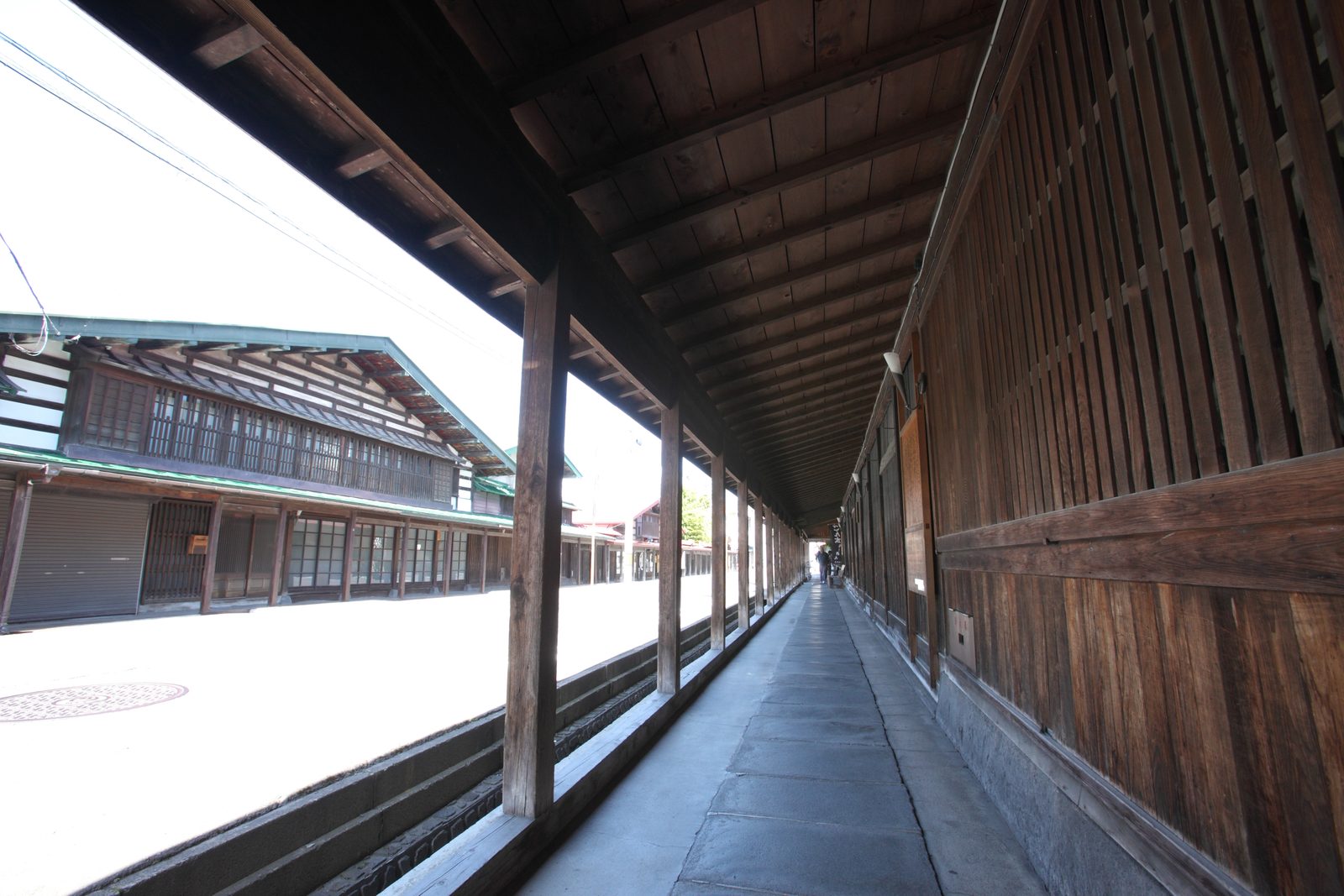
Komise are the covered walkways that run along the front of the merchant houses on Nakamachi Street. A row of timber posts holds up a deep wooden eave, a flagstone path runs beneath it, and the light drops to a soft dusk under the roof while the street outside stays bright. A lone figure far along it gives the scale.
The arcades exist so that shoppers could pass the whole street under a roof whatever the weather, snow included, and they still do that job. On the far side of the road another wooden house shows the same arrangement, a long lower gallery with an upper storey of latticed windows above it, and hardly anyone crossing between them.
Partway along the arcades stands the Tsugaru Komise product hall, where you can browse what the town makes and sit for a moment out of the weather. It is also where the road service from Hirosaki sets you down, so it makes a sensible first or last stop on the street.
- Tsugaru Komise Station hours: open from half past eight in the morning to a quarter past five in the afternoon.
Old Meiji-era records describe the town as standing on high, dry ground where the last spurs of the Hakkoda mountains reach the Tsugaru plain, and say that from the window of a railway carriage a traveller could pick out its white-walled houses and tiled roofs. Look for the same roofs from the carriage window as you come in.
The domain town behind the arcades
Why does a town keep a street like this? One answer is that Kuroishi was more than a village. The old records describe it as a branch domain of the Tsugaru lords, a junior house with its own castle, and note that in the Meiji era the castle site could be found on the south side of the railway stop.
That helps explain the scale of Nakamachi Street: a domain seat needed merchants, and merchants built to last. The other half of the story is Kuroishi Shrine, which the old records place in the Ichinomachi district of the town and list among the prefectural shrines of the Meiji period.
The same records say the shrine was founded in the late eighteen-seventies to enshrine the spirit of Tsugaru Nobufusa, the first lord of the Kuroishi domain, as its principal deity. That is the background to the street: a town that remembered its lord, with merchants who kept their arcades in good repair.
Where to stay
Places to stay near Kuroishi →
Disclosure: This post may contain affiliate links. If you book through them, we may earn a commission at no extra cost to you.
Kokeshi at the Tsugaru Kokeshi Museum
Kokeshi, the turned and painted wooden dolls of northern Japan, have their own museum in Kuroishi, and it stands not on the arcade street but out towards Nuruyu, on the hot-spring side of town. That makes it the natural halfway point if you plan to end the day in the baths.
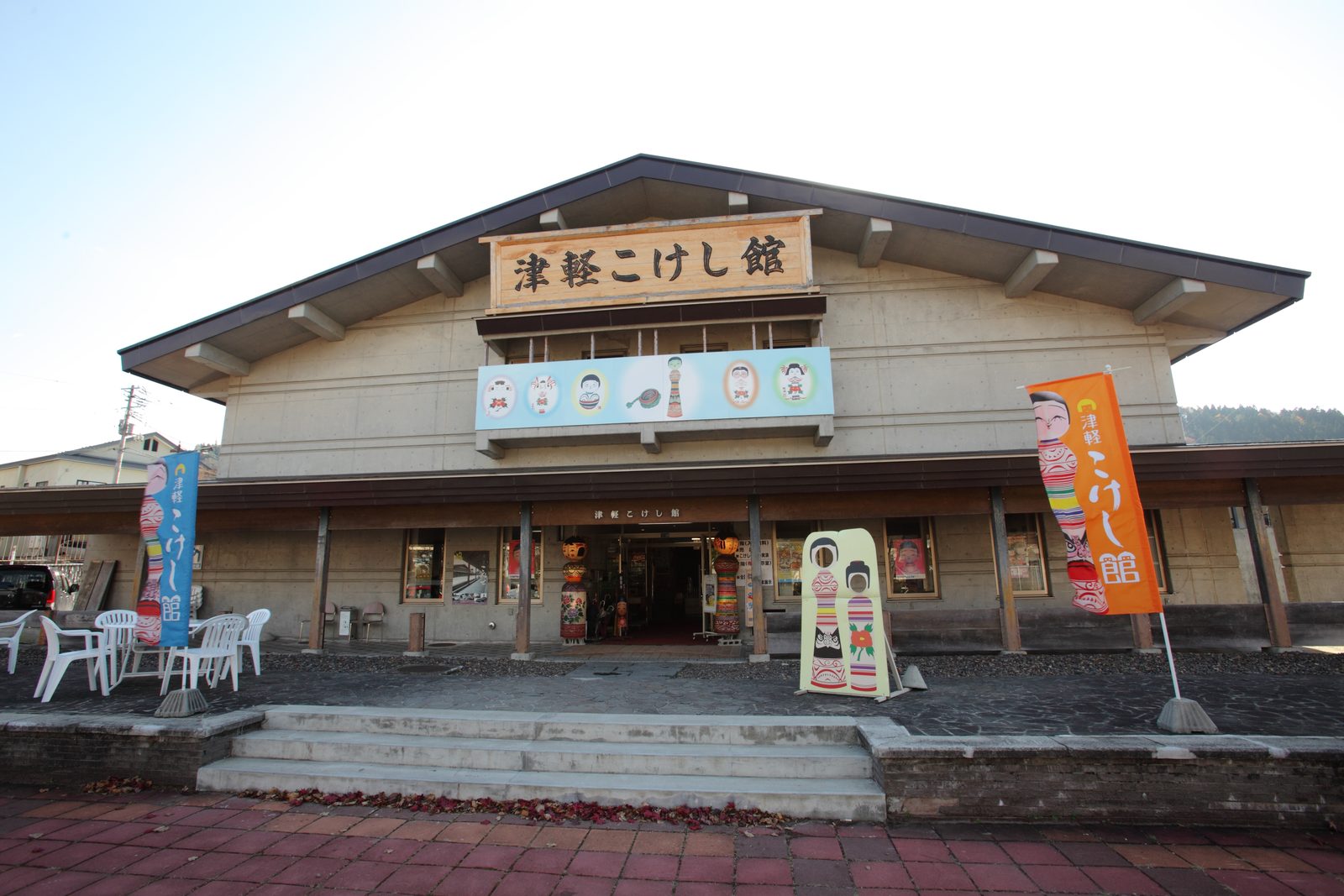
The building is low and broad, with concrete walls under a wide timber-framed gable and a carved wooden sign hung beneath the ridge. Tall orange and blue banners flank the entrance, and a pair of kokeshi-shaped cutouts wait on the paving for anyone who wants to put their face where the doll's should be.
| What | When or how much |
|---|---|
| Admission, adults | three hundred and thirty yen |
| Admission, high school students | two hundred and seventy yen |
| Admission, elementary and junior high students | one hundred and sixty yen |
| Opening hours | nine in the morning to five in the afternoon |
| Closed | the twenty-ninth of December to the third of January |
Plan the museum for the middle of the day, since it opens at nine in the morning and shuts at five in the afternoon, and give the year-end closure a wide berth if you travel over the holidays. At three hundred and thirty yen for adults, the admission fee is modest enough that even a short visit is worth it.
Out to Nuruyu Onsen
Nuruyu is the hot-spring village on the same side of town as the museum, and the old records set it on the mountain stream of the Asaseishi River in the old Minami-Tsugaru district. The same records give it an older name, written with the characters for crane and spring, and a story to go with it.
According to that old record, the spring was found by someone who watched a crane with an injured leg soak in the hot water, recover, and fly away, and the name is said to come from that. Treat it as a tale rather than a fact, but it explains the cranes you will see painted at the bathhouse door.
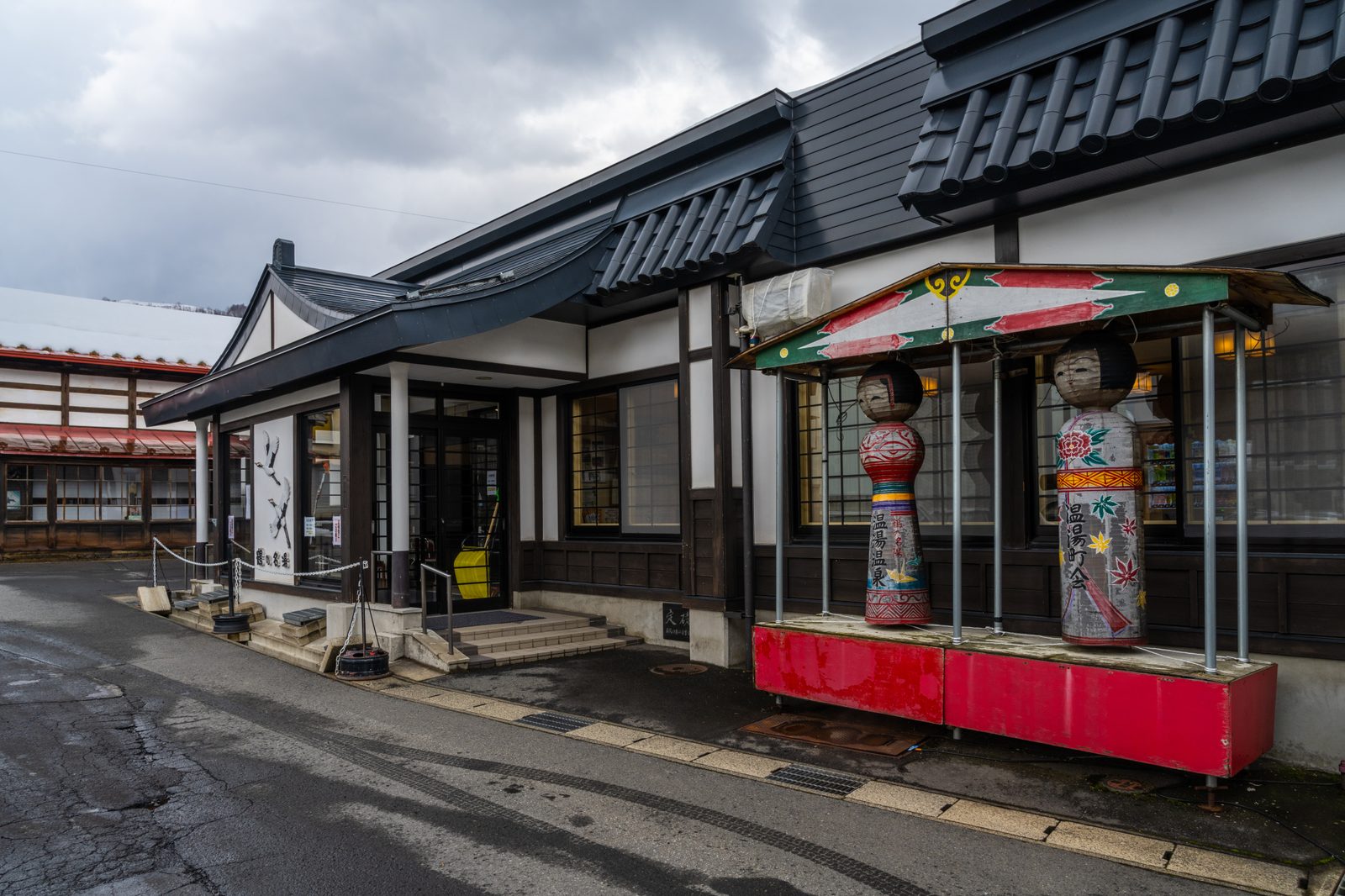
The public bathhouse is a long building with a dark tiled roof, white walls banded in dark timber, and a glass-doored entrance a few steps up from the road. Beside it, under a small painted canopy on a red base, stand two tall kokeshi painted with flowers and stripes, and behind everything the hills are white with snow.
There is one fixed point to plan around in the village, the Matsunoyu Koryukan, a community hall with published times listed below. The bathhouse itself keeps its own timetable, so allow some slack in the afternoon rather than counting on a soak at an exact time.
- Matsunoyu Koryukan hours: open from half past nine in the morning to six in the evening.
Riding the Konan Line back
The Konan Railway is the easy way home, and it is also the easy way to stretch the day: rather than ride straight through, get off at one of the smaller halts, walk for a while, and pick up a later run. The one-way fares from Kuroishi are low enough to make that habit painless.
- Kuroishi Station to Hiraka Station: four hundred yen one way.
- Kuroishi Station to Onoe Koko-mae Station: three hundred and thirty yen one way.
- Kuroishi Station to Niisato Station: four hundred and forty yen one way.
- JR Hirosaki to Tsugaru Komise Station: about thirty minutes by Konan Railway, so plan on the same for the return.
Before you settle on the last ride back, it is worth knowing that Kuroishi is a reasonable place to spend the night, especially if the afternoon at Nuruyu has run long. Compare places to stay in Kuroishi while you are still on the arcade street, where you can sit down and think.
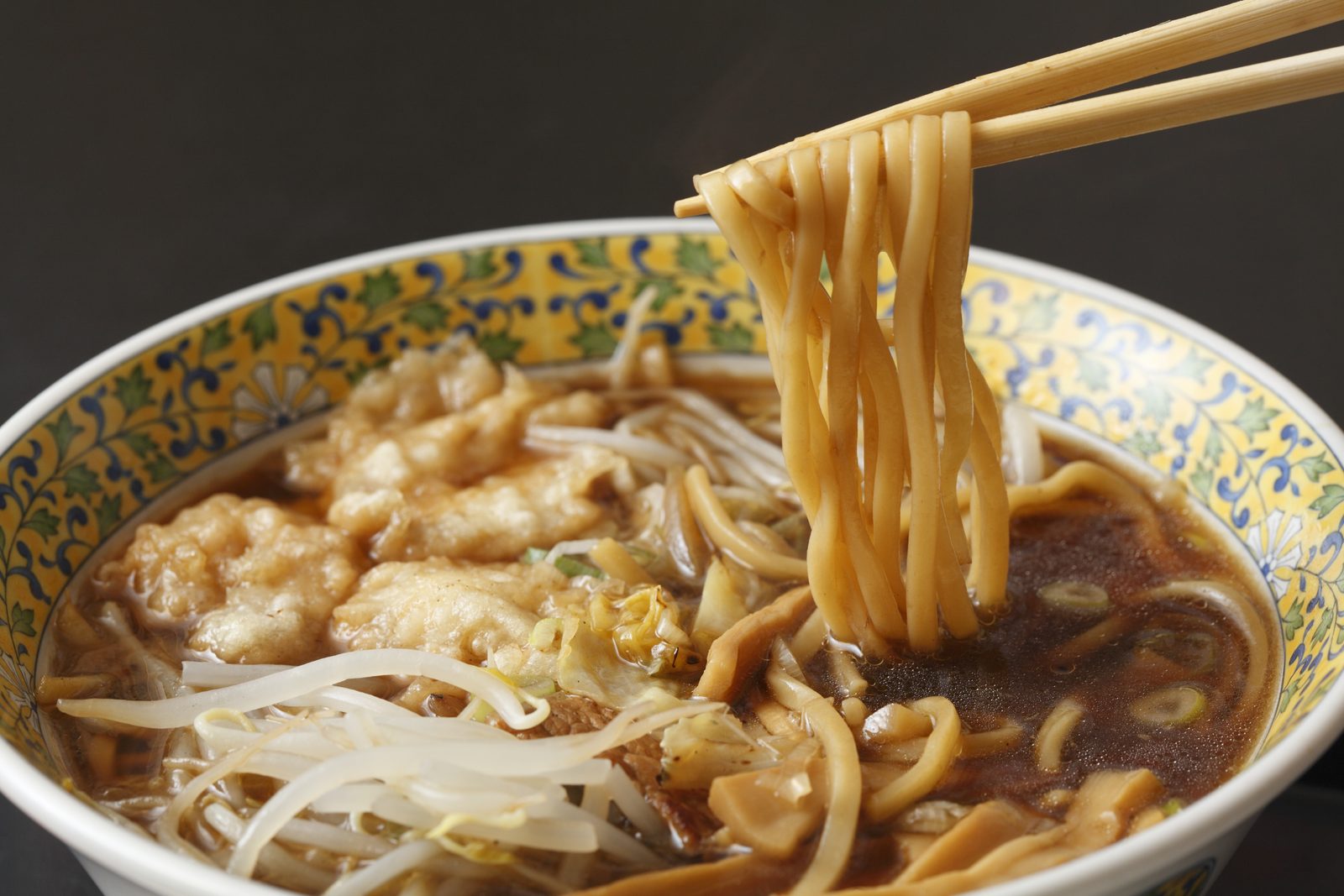
Whatever you decide, leave room for one bowl before the ride. Kuroishi tsuyu yakisoba is the town's own noodle dish: thick, flat noodles served not dry but in a dark soy broth, topped with bean sprouts and scraps of tempura batter that soften as you eat. Ask for it by name and let the town do the rest.