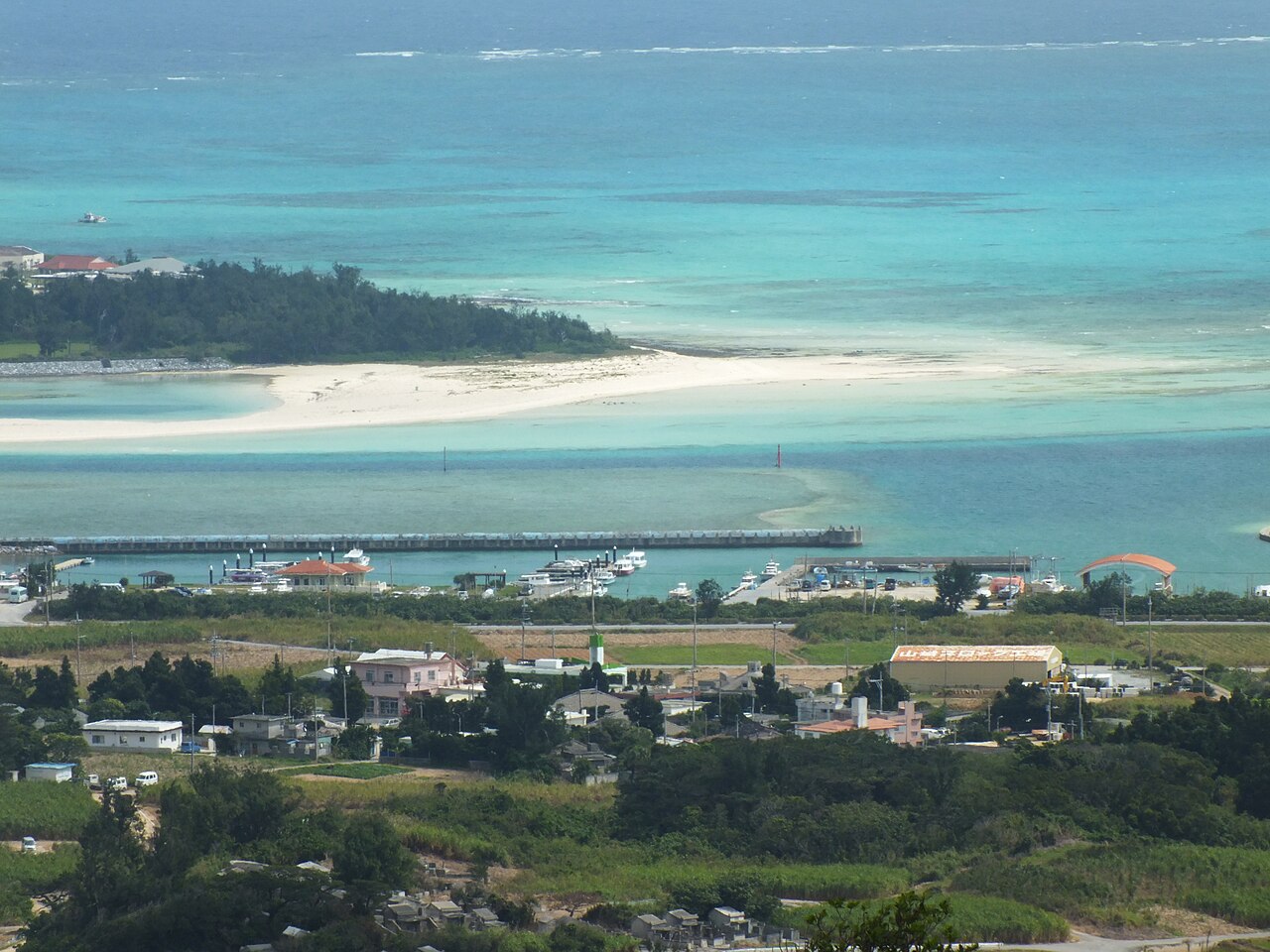
Kumejima is an island in Okinawa where a white sandbar lies in an emerald green sea and a shore of pentagonal and hexagonal boulders is laid out like a turtle shell. A weaving hall inland sounds with the katan, katan of a loom. On the table is a prawn soba whose kuruma-ebi head and shell are fried slowly at low heat into a paste.
The White Sandbar of Hate no Hama
Hate no Hama is three sandbars, Meene-hama, Nakano-hama and Oku no Hama, in an emerald green sea edged with white sand. Visitors swim and snorkel here, and coral colonies with colourful fish lie in the sandy ground around the bars. The coral and fish make the sandbar a place to swim as well as to look at.
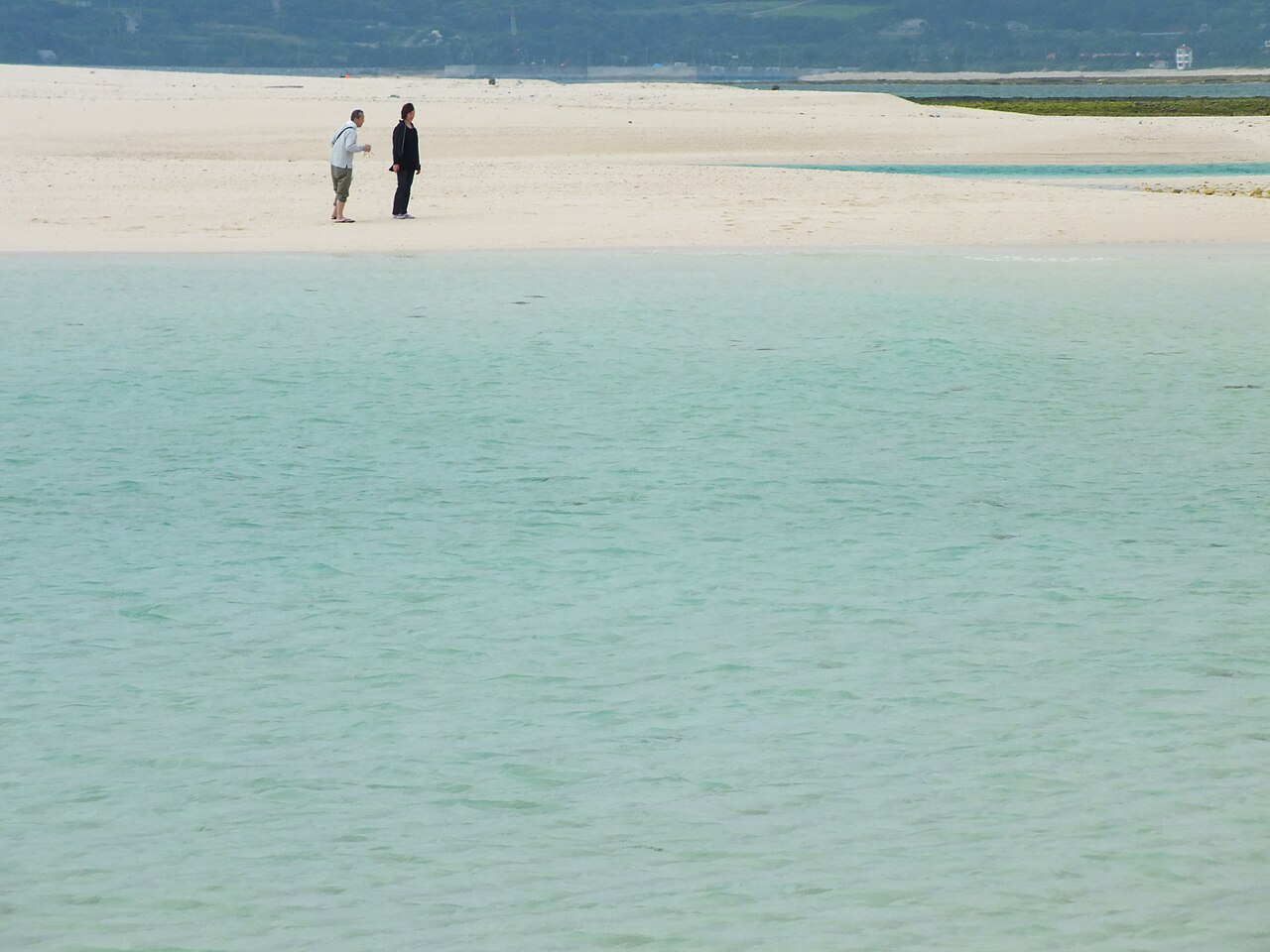
The white sand of the southeast coast is coral sand, and Hate no Hama is the sandbar off that coast. For someone who would rather stay dry, the bar can be looked down on from Hiyajo Banta; for someone who wants a day in the water, it deserves the better part of that day.
Lookouts and a Sunrise Stone
Stand at the Hiyajo Banta lookout and the horizon looks round. Banta means a rock face in the Okinawan dialect, and the lookout sits on top of one high above the sea, with Hate no Hama and the Kerama Islands in one view below.
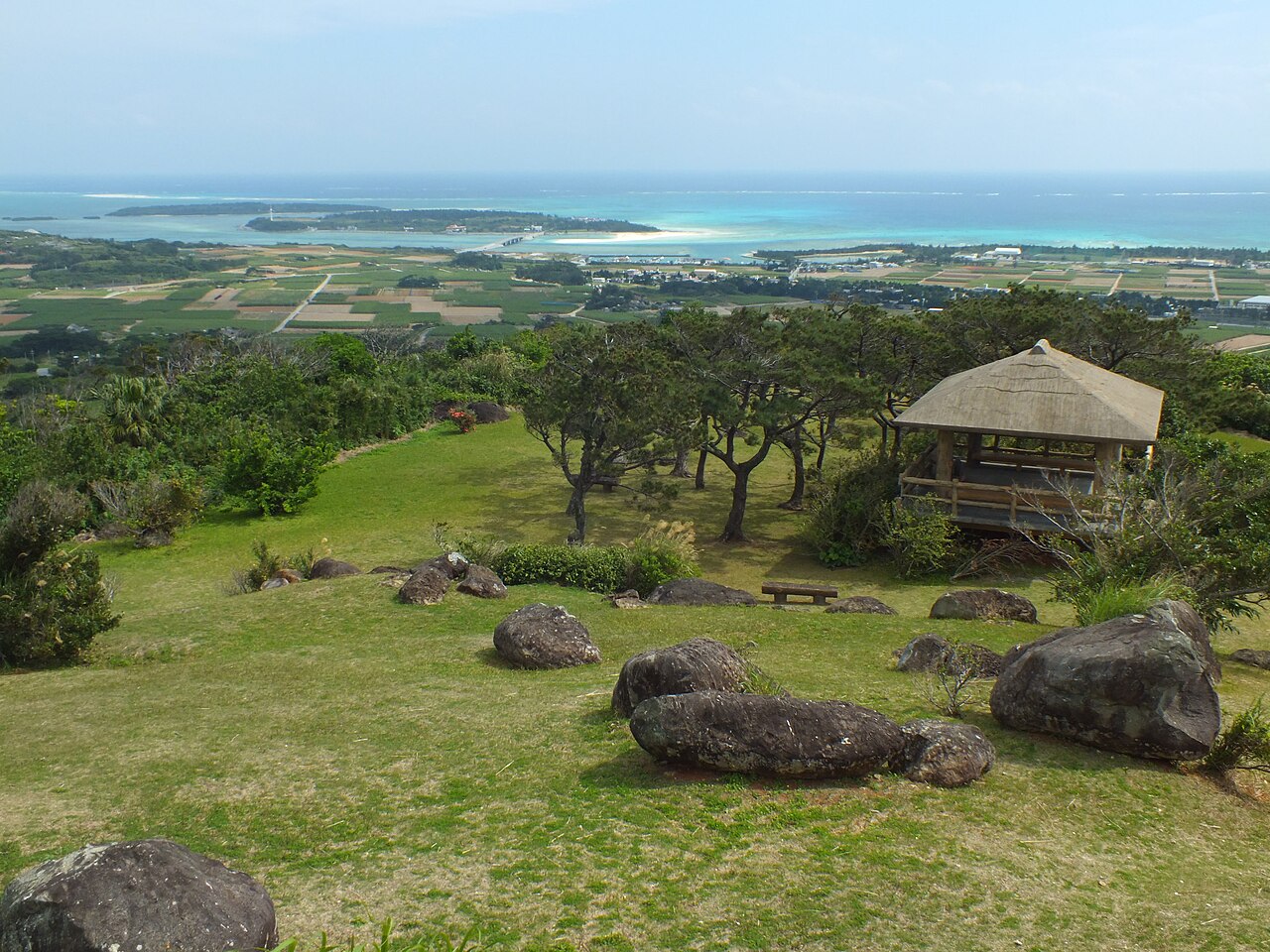
The Utida stone is a round boulder in a pine grove at the eastern edge of a village; a man of old is said to have watched the sunrise from it about five hundred years ago, and the neighbouring islands he faced still line the horizon to the east.
Tatami-ishi, Ohjima and the Old Shoreline
Walk the shore of Tatami-ishi and the ground is pentagonal and hexagonal boulders, each about one to one and a half metres across, fitted together like a turtle shell. The sea here is soda-coloured, and so is the water beside the shore of Ohjima. It is a shore for looking down as much as out.
The bridge to Ohjima, in use since nineteen eighty-three, is a viewpoint in itself: from the deck the gradation of the sea around the beach is vivid, and boats pass beneath. Near the bridge a beach appears when the tide is out.
At low tide a large limestone rock can be seen on the reef flat in front of Shimizu primary school. Its lower notch marks today's sea level, and the notch about one and eight-tenths metres higher was cut about four thousand two hundred years ago, in the Jomon period, so the dry reef flat shows an old waterline standing above the present one.
Mifuga, Tachijami and the Walking Paths
Walk south along the road and at one point Gushikawa castle ruins and Mifuga come into view together. According to a tradition, women who wish for children receive a blessing by praying at Mifuga, whose name means woman rock in the Okinawan dialect, and the rock is reached over rugged ground, so footwear needs care. A hidden waterfall lies close by, and a rainbow sometimes forms on it.
The path down to Tachijami runs through a tunnel of trees, and where it ends a huge strange rock, Tachijami, stands. The ruins of Uegusuku Castle sit on the summit of Mount Uegusuku, about three hundred and ten metres above the sea, and a look back on the way down takes in those ruins high above.
An easier walk with the sea breeze follows the coast between Mifuga and the airport, past Kumejima lighthouse and rustic fields. At the site of the island's five-branch pine, Kumejima fireflies are seen dancing in early May. The islet facing Kanegusuku port is called Garasa mountain because flocks of crows once roosted there at dusk, the shape you see across the water from the port.
Beaches at Sunset
Eef Beach has fine white sand about two kilometres long, with marine sports on offer in summer. The water is shallow and the look of the beach changes with the tide, so check the tide times before choosing to wade or to walk. The sea breeze and the sound of waves are there either way.
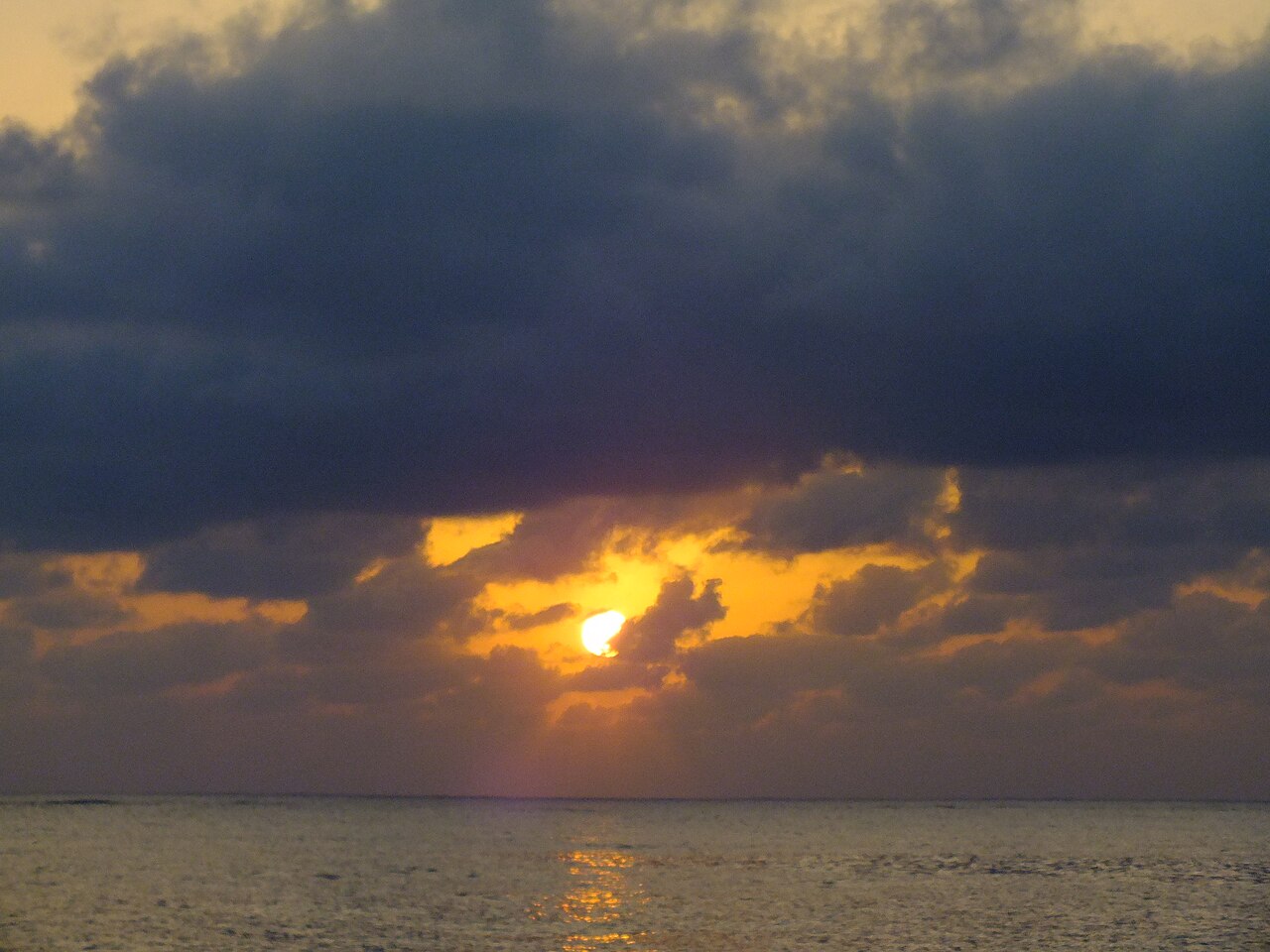
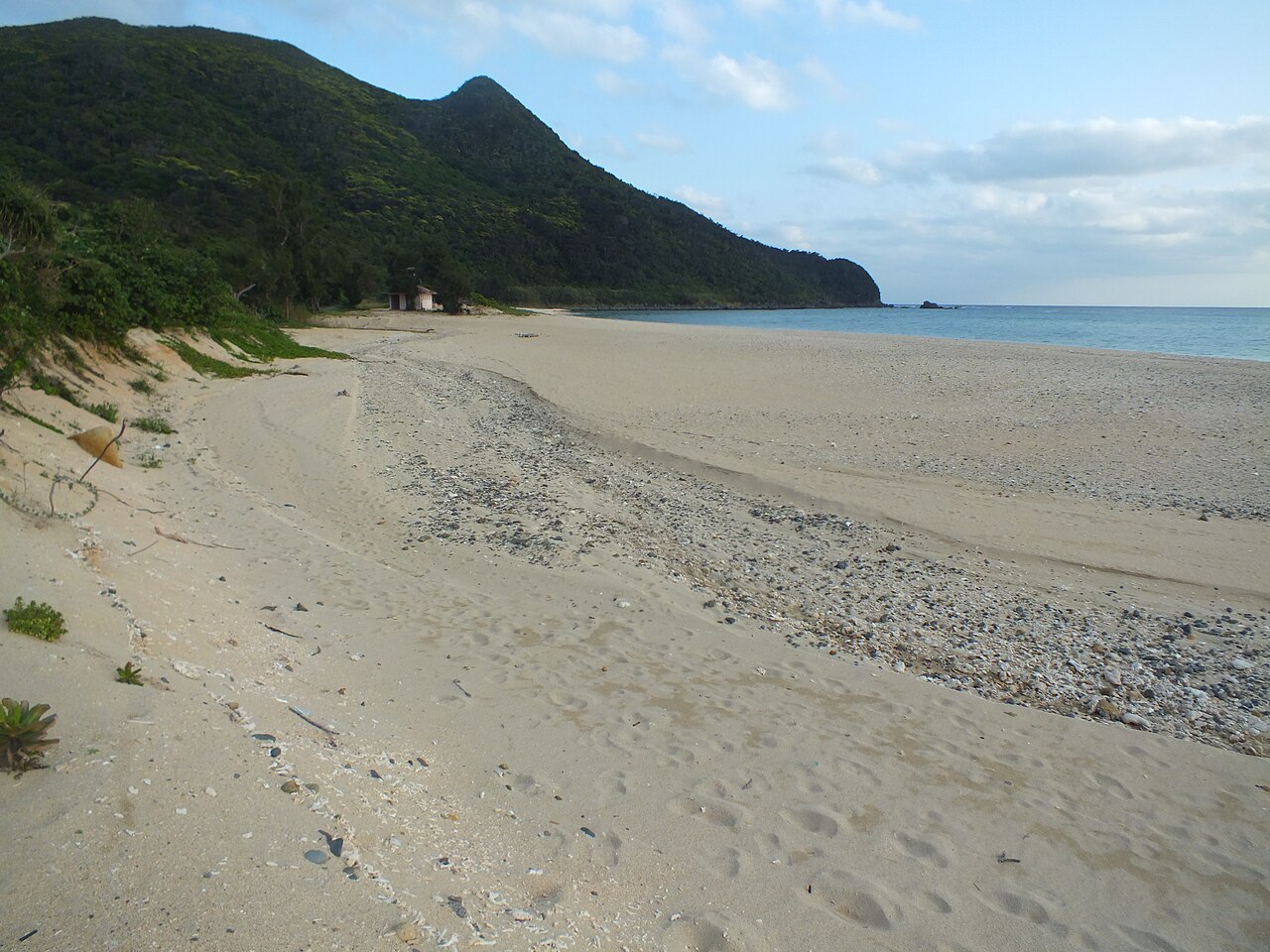
Ara-hama is a quiet beach ringed by mountains, with the feel of a private shore. A sunset dyed orange is one of the island's scenes, and at Shinri-hama, with the right timing, a plane can be watched lifting off against it. Humpback whales, whale sharks, dolphins and manta rays can be seen in the waters near Kumejima.
The southwest coast is a gentle dune coast, and along the northwest a coral reef forms an inner sea around the island. Staying over means being here when the sunset turns orange rather than leaving before it, with a quiet beach such as Ara-hama to end the day; see places to stay in Kumejima if that evening is part of the plan.
Kumejima Tsumugi, Woven by Hand
In the tsumugi hall the loom goes katan, katan as the weaver works. A shop inside sells small goods made from Kumejima tsumugi. The cloth is said to have begun in the latter half of the fifteenth century, when a man of old learned sericulture from China and spread it, and the weave heard today is still dyed with plants and mud, spun from real silk and worked by hand with a hand-thrown shuttle.
The cloth on those looms holds national designation as an important intangible cultural property. February the sixth is Kumejima Tsumugi Day, and the Kumejima Tsumugi Cooperative holds a fair every year to coincide with it, so an early-February visit puts the fair alongside the looms you hear in the hall.
Prawns, Soba and Island Tables
Order the kuruma-ebi soba and the prawn on it is freshly moulted and soft, so the head and shell can be eaten. Raised in wide ponds in a warm climate from seedlings born of deep ocean water, that same island prawn arrives in the bowl with head and shell fried slowly in low-temperature oil into a paste.
The shima-miso moyashi soba comes heaped with stir-fried bean sprouts, in a soup of Kumejima red chicken, bonito and kelp rounded out with miso. The garlic shrimp pairs Kumejima kuruma-ebi with Hawaiian cooking, the prawn cutlet curry piles tiger-prawn cutlet onto curry under sea grapes, and the seafood bowl joins the morning's seafood with raw tuna from Kumejima.
At a steak house the cattle are raised on entirely Kumejima-grown grass and fed malt lees from the island's craft brewery, Tumugi. Garden Kitchen Gusuku, the one restaurant in the north, serves Kumejima soba, as does the Yamazato Yuntaku market alongside island products. Verde makes gelato from seasonal Kumejima ingredients, and a cafe at the airport does a cold seasonal smoothie of island flavours.
Getting to Kumejima
| Leg | How | Time and estimate |
|---|---|---|
| Naha to Kumejima | Flight | About 30 minutes; 6 to 7 flights a day |
| Naha Tomari port to Kumejima Kanegusuku port | Ferry, direct or via Tonaki | 3 hours direct, 3 hours 30 minutes via Tonaki |
| Ferry frequency | Naha and Kumejima | 1 to 2 trips a day |
| Ferry adult fare | Naha and Kumejima | 3,450 yen and 6,560 yen listed, tax included; a round-trip price is marked on the listing |
| Ferry child fare | Naha and Kumejima | 1,730 yen and 3,460 yen listed |
| Rental car | Desk at the airport | 8:30-18:30; no regular closing day |
| East coast to Hate no Hama | Boat | Offshore from the east coast; 20 to 30 minutes by boat |
New to rural buses and one-man trains? See how to ride them, step by step.
Hours and Fees
| Place | What | Hours or fee |
|---|---|---|
| Tsumugi hall | Hours | 9:00-17:00; last reception 16:30 |
| Tsumugi hall | Exhibit admission | 200 yen for adults; 100 yen for children |
| Tsumugi hall | Experience programs | 2,800 to 10,500 yen per person |
| Firefly society | Business hours | 9:30-17:00 |
| Prawn cutlet curry cafe | Hours | 10:30-16:00 (last order 15:30) |
| Seafood bowl market stall | Seafood bowl | 600 yen including tax |
| Kaikichi | Lunch, dinner and closing day | Lunch 11:30-14:00; dinner 17:00-22:00; closed on Tuesdays, which may change |
| Steak house | Hours and closing days | 11:00-14:00; closed on Sunday, Monday and Tuesday |
Where to stay
Places to stay near Kumejima, Okinawa, Japan →
Disclosure: This post may contain affiliate links. If you book through them, we may earn a commission at no extra cost to you.