This article covers the monorail ride from Naha Airport to Shuri, the story of Shuri as the royal capital of the Ryukyu Kingdom, the gates and walls of Shuri Castle Park, the sacred groves around the castle, the Kinjocho stone-paved lane, and the royal mausoleum of Tamaudun together with the Shikinaen garden.
Reaching Shuri on the Yui Rail Monorail
Shuri sits on high ground east of central Naha, and for most travelers the simplest way in is the Yui Rail monorail. From Naha Airport Station the ride to Shuri Station takes about twenty-seven minutes, so the old royal capital can be reached without changing vehicles even on the afternoon you land in Okinawa.
The main sights can be strung together on foot in a walk that starts at the top of the hill and works its way down. The order below follows the slope from the castle gates to the lane and the royal tombs, with the garden kept for last:
- Board the Yui Rail monorail at Naha Airport Station and ride to Shuri Station, a journey of about twenty-seven minutes.
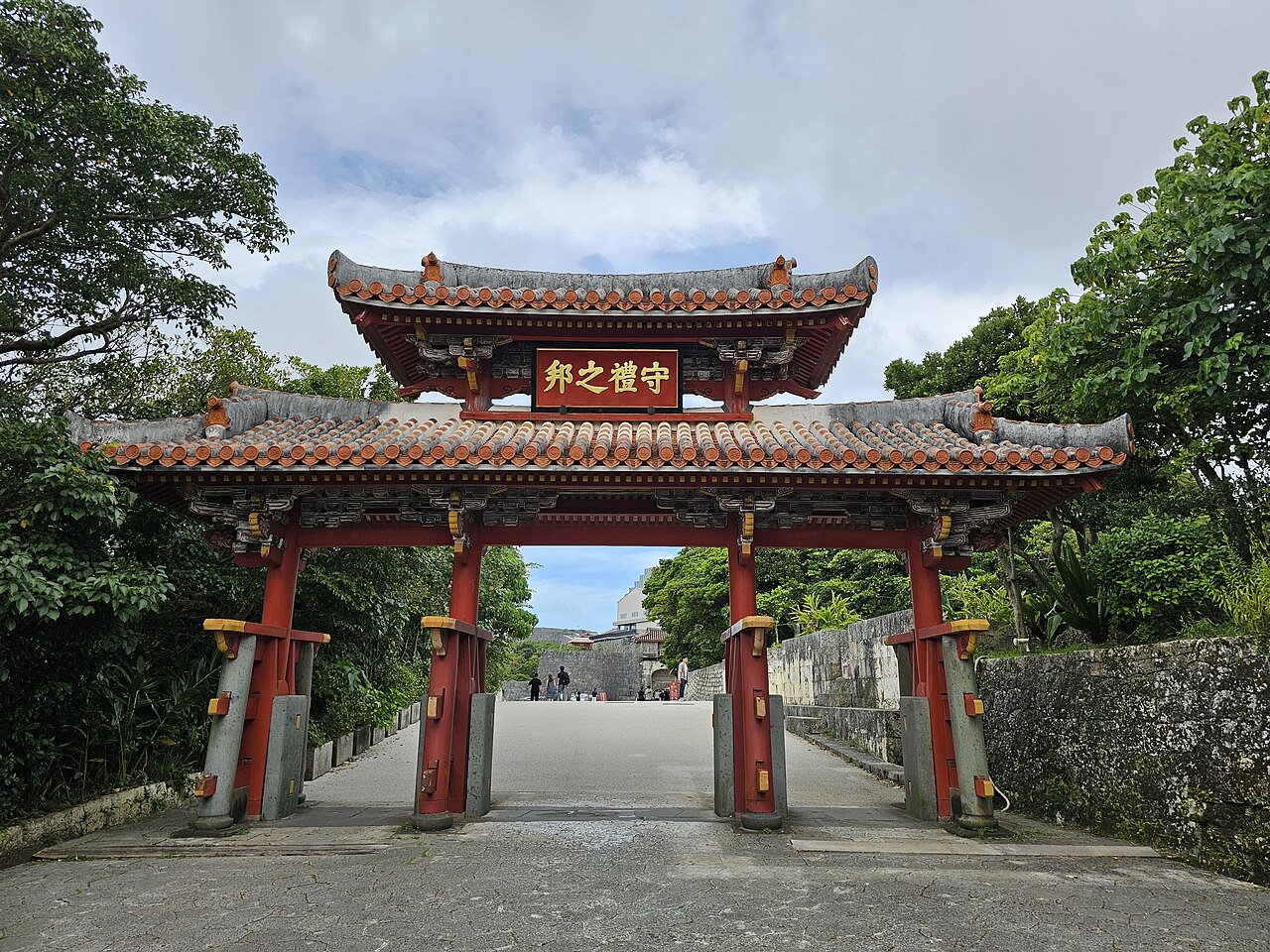
- Leave the monorail at Shuri Station and walk up to Shurei-mon, the red gate on the approach to Shuri Castle.
- Pass through the castle gates and walls, then follow the southern slope of the castle hill down into Kinjocho and its stone-paved lane.
- Continue to Tamaudun, the royal mausoleum, and keep Shikinaen, the royal garden described later in this article, as a separate stop of its own.
The walking legs are short but the lanes climb and turn, so the pace is yours to set. The practical details for the castle park and the monorail are gathered in the table at the end of this article, and the sections between concentrate on what you will actually see.
A Royal Capital's Long History
Shuri was the castle town of the Ryukyu Kingdom. Sho Hashi, king of Chuzan, unified Okinawa's rival kingdoms in fourteen twenty-nine and made Shuri his capital, and it remained the political and cultural heart of the islands for roughly four hundred and fifty years, until the abolition of the domains in eighteen seventy-nine moved the seat of government to Naha.
Shuri became a ward, then a city, and in nineteen fifty-four part of Naha. Its castle was the kings' residence from fourteen twenty-nine until eighteen seventy-nine and the centre of politics, diplomacy and culture; excavations suggest it was raised in the late fourteenth century, and trade with China, Southeast Asia and Japan shaped Ryukyuan crafts such as textiles and lacquerware.
The castle was burned to the ground in the Battle of Okinawa in nineteen forty-five and rebuilt in nineteen ninety-two. In twenty nineteen the main hall burned again. Reconstruction work is now under way, visitors can still see the grounds, and completion is planned for twenty twenty-six, so what you find on the hill depends on when you go.
Shuri Castle Park's Gates and Walls
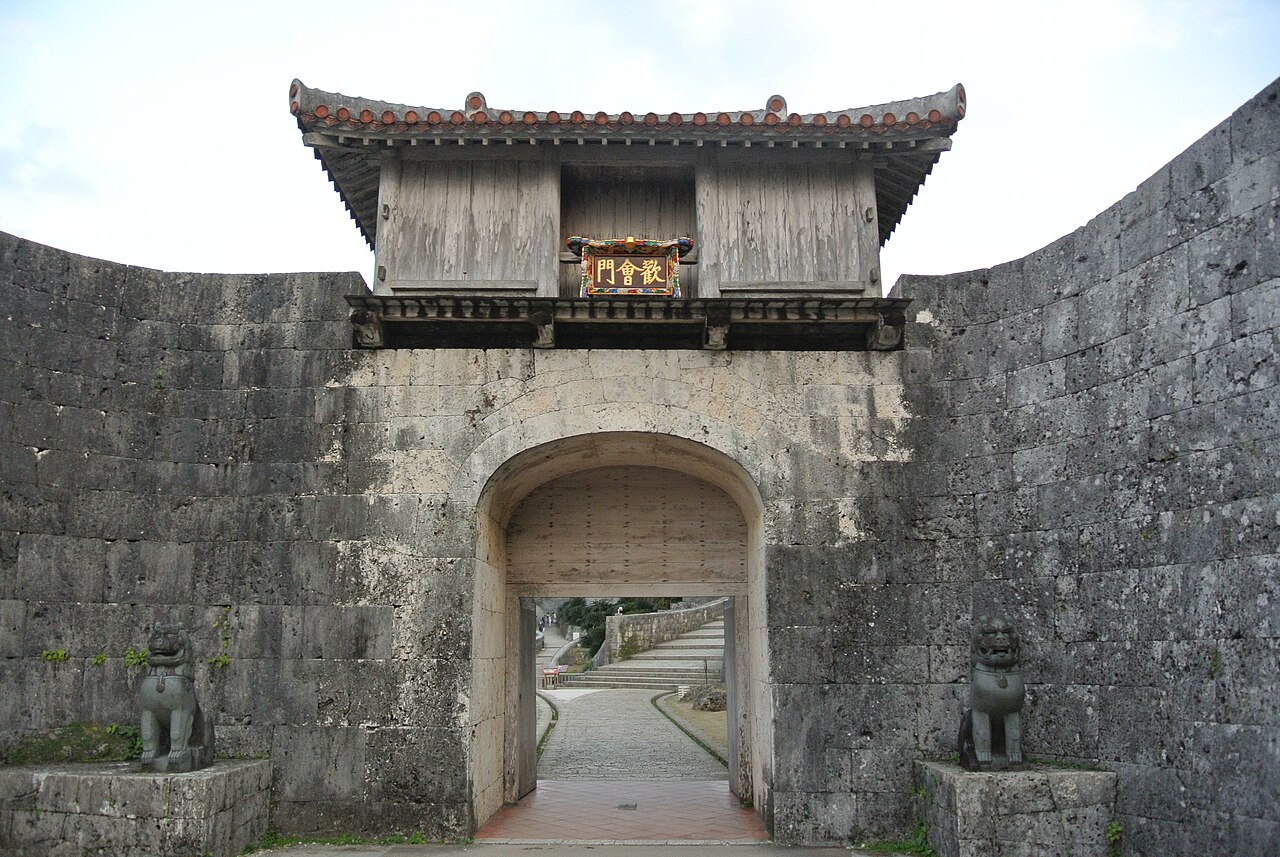
Shuri Castle is the largest castle in Okinawa, and its scale shows in the walls before you reach any building. It is ringed by a double wall: an inner circuit raised in the first half of the fifteenth century, and an outer circuit added between the late fifteenth and early sixteenth centuries, so the approach passes through gate after gate.
The curving walls and the gateways set into them frame the walk up from Shurei-mon, through Kankaimon in the outer wall, and on into the inner grounds. If you would rather have the layers explained as you climb, guided tours of Shuri Castle are available: browse guided tours of Shuri Castle.
Sacred Groves Around the Castle
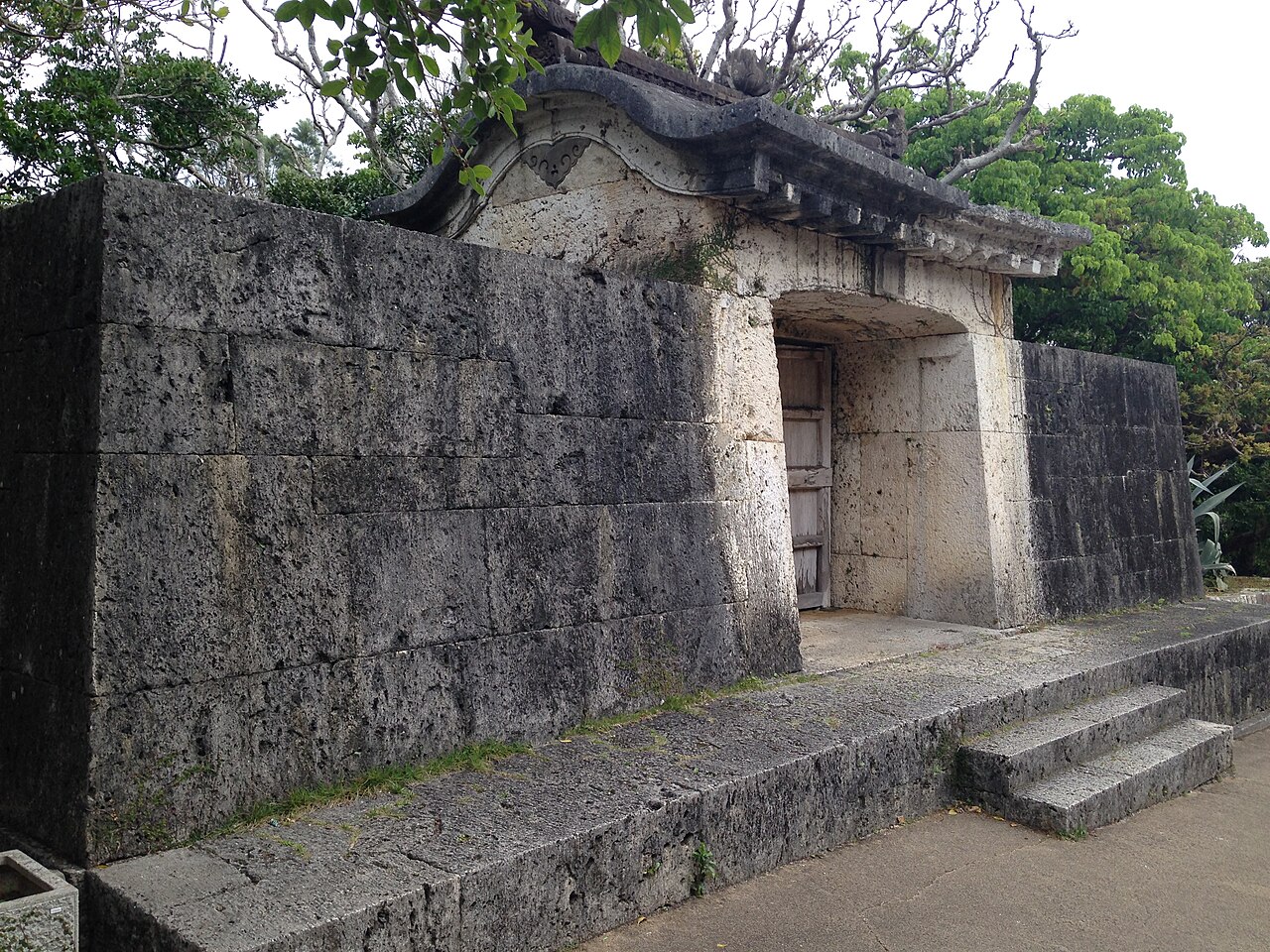
The castle is only part of what the hill holds. Small historic sites and sacred groves, known in Okinawa as utaki, natural places of worship in the Ryukyuan tradition, are scattered all around Shuri Castle, and travelers who want to see them at an easy pace do well to set aside at least half a day for the hill.
According to guidebook accounts, a larger sacred site lies about one kilometre east of the castle. Bengadake, also called Pinnu Utaki, is the highest point in Naha; the whole peak was treated as sacred ground, the kings of Ryukyu came in person to conduct rites there, and it served as a place for paying distant reverence toward Seifa Utaki.
Where to stay
Places to stay near Naha, Okinawa →
Disclosure: This post may contain affiliate links. If you book through them, we may earn a commission at no extra cost to you.
Shuri's Old Stone-Paved Lane
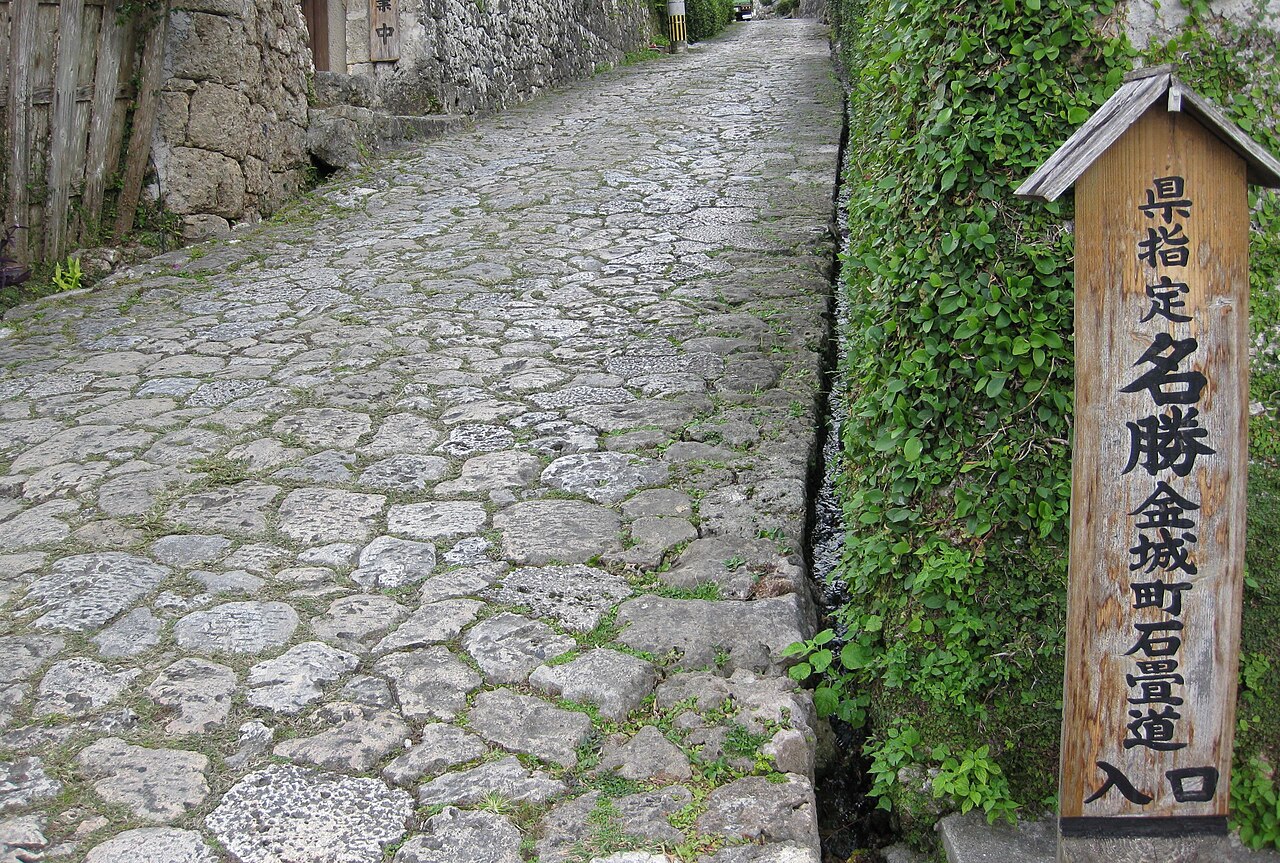
The lane is paved with Ryukyu limestone and was laid in the sixteenth century as the main road from Shuri down to the port of Naha.
South of the castle, the Kinjocho stone-paved lane drops down the hillside. It was laid in the sixteenth century as a main road linking Shuri to the port of Naha and the south of the island, and paved with Ryukyu limestone. Most of the road was destroyed in the Battle of Okinawa, and only a short stretch remains today.
That surviving stretch still keeps the feel of the old castle town. Old houses with red-tiled roofs line both sides of the lane, and the stone walls along it are built in aikata-zumi, a distinctively Okinawan style of dry-stone walling, so the view down the paving looks much as it did in the days of the kingdom.
Walking the lane costs nothing, and there is no parking, so everyone arrives on foot, most naturally from the castle above. The paving is rounded and uneven underfoot, and flat shoes make the descent more pleasant, with pauses at the red-roofed houses along the way.
Tamaudun and Shikinaen: Beyond the Castle Walls
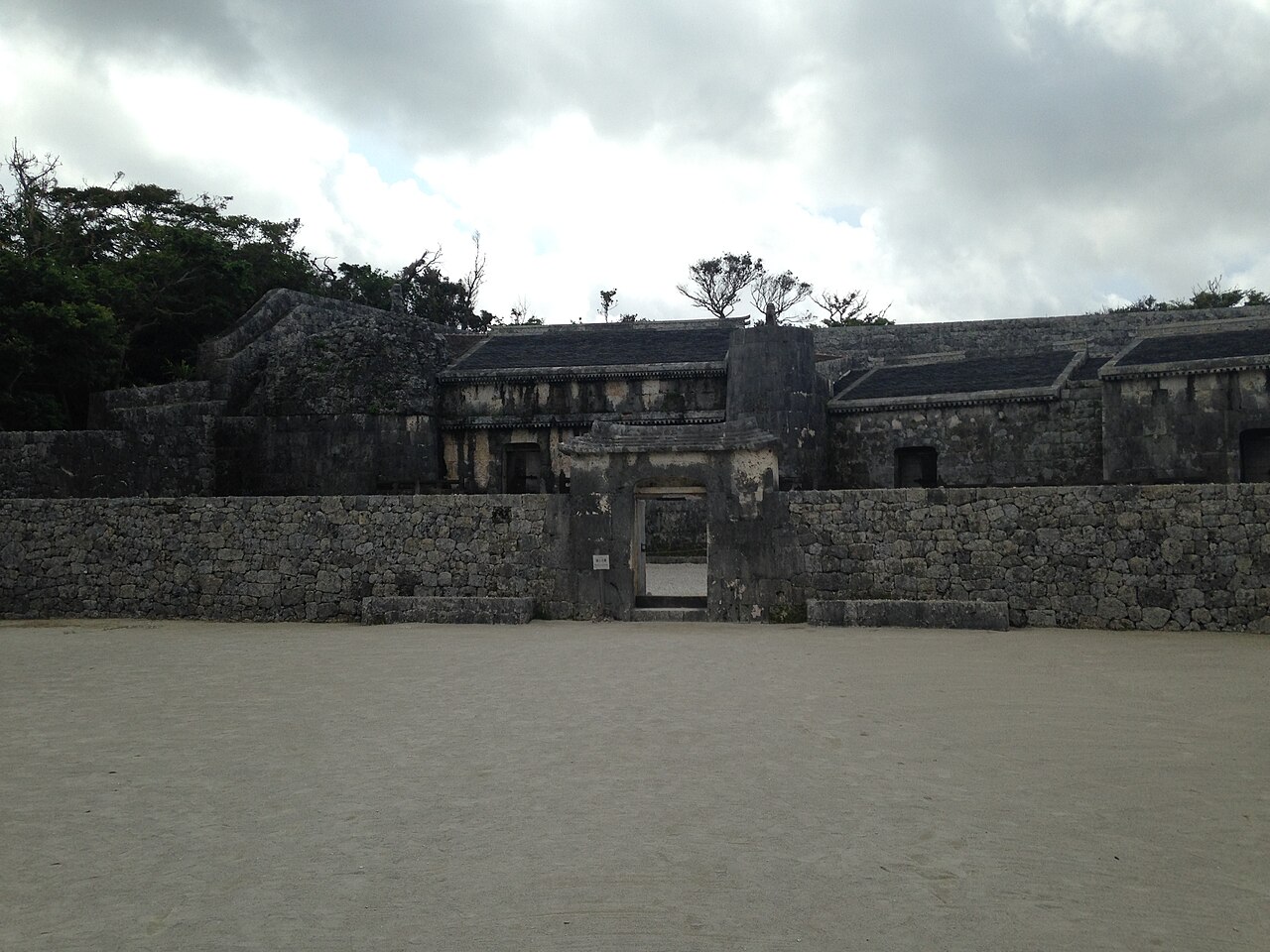
The mausoleum of the Second Sho dynasty is registered with Shuri Castle as a UNESCO World Heritage site.
Tamaudun, the royal mausoleum, was built so that King Sho Shin could rebury the remains of his father, King Sho En, and from then on it received only the kings of the Second Sho dynasty and their families. Together with Shuri Castle, it is registered as a UNESCO World Heritage site.
Its stone structure is said to echo the design of Shuri Castle, and it holds three burial chambers: a middle chamber where a coffin rested until the bones were cleansed, an eastern chamber for kings and queens, and a western chamber for other family members. On the roof sit three shisa, Okinawa's lion-like guardian figures, watching over the tombs.
Shikinaen, completed in seventeen ninety-nine, was the largest villa of the Ryukyu royal family, a strolling garden used both for the household's rest and for entertaining envoys from abroad. Its design mixes Chinese and Ryukyuan styles: arched bridges of different sizes, a hexagonal Chinese-style pavilion on an island in the pond, and Ryukyu limestone set around the water's edge.
Fares, Hours, and Fees at a Glance
Everything in the table refers to Shuri Castle Park, the Yui Rail monorail and the Kinjocho stone-paved lane. The figures are taken from the official websites of Shuri Castle Park and the Yui Rail monorail; check the official information there for the latest details before you go.
| Item | Detail |
|---|---|
| Yui Rail monorail, Naha Airport Station to Shuri Station | about twenty-seven minutes |
| Shuri Castle Park, general adult admission | four hundred yen |
| Shuri Castle Park, high school student admission | three hundred yen |
| Shuri Castle Park, elementary and junior high school student admission | one hundred sixty yen |
| Shuri Castle Park, Okinawa prefectural residents aged seventy and older | admitted free of charge |
| Shuri Castle Park, free area opening hours (April through November) | eight in the morning to half past seven in the evening |
| Shuri Castle Park, paid area opening hours (April through November) | half past eight in the morning to seven in the evening |
| Shuri Castle Park, paid area last admission (April through November) | half past six in the evening |
| Shuri Castle Park, free area opening hours (December through March) | eight in the morning to half past six in the evening |
| Kinjocho stone-paved lane | free to walk; no parking available |
Shuri rewards an unhurried day, and staying down in Naha keeps the monorail ride short in both directions. Browse places to stay in Naha for the night before or after your visit.