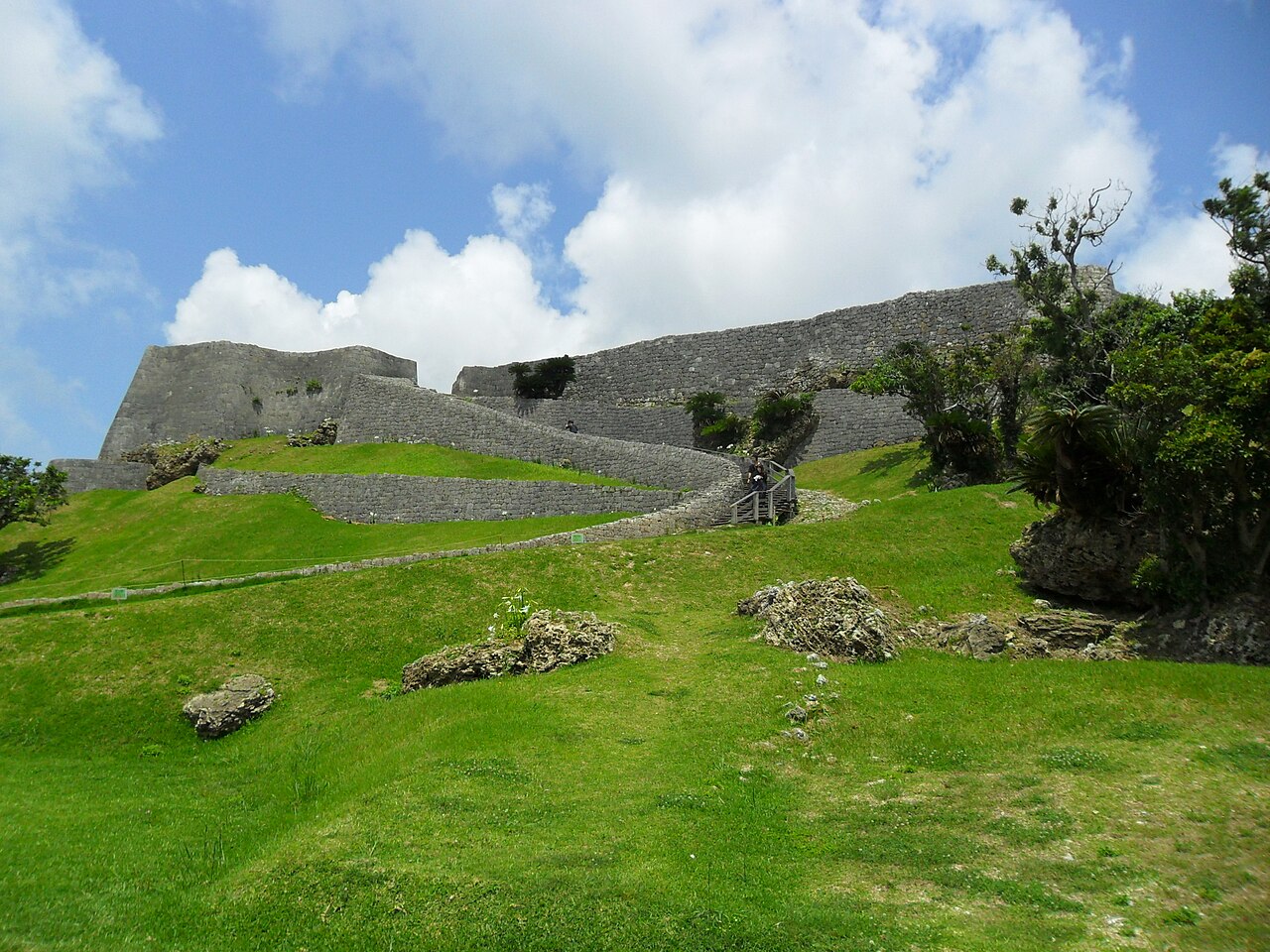
Katsuren Castle Ruins stands on a hill at the base of the Katsuren Peninsula in the central part of Okinawa's main island, a World Heritage gusuku whose limestone walls curve with the natural terrain. From the top, the Pacific Ocean can be seen in full, bright blue and shining in the sun. From the same summit the Kaichu Road can be picked out, a road carried over the sea with cobalt blue on both sides. One way to work through the area is to start at the top of the castle ruins, follow the Kaichu Road across the sea, cross to Hamahiga Island for the torii gate and the one hundred eight stone steps to its sacred cave, and finish with a set meal of Okinawa soba.
Katsuren Castle Ruins: Curved Stone Walls and the Pacific from the Top
Katsuren Castle Ruins is climbed by a stone-paved path that brings the walls into view, curving as they rise. From the top, the Pacific lies bright blue and shining in the sun. The summit takes in the Katsuren Peninsula, Nakagusuku Bay and the Kaichu Road, and from the first bailey Kin Bay lies to the north and Kudaka Island to the south.
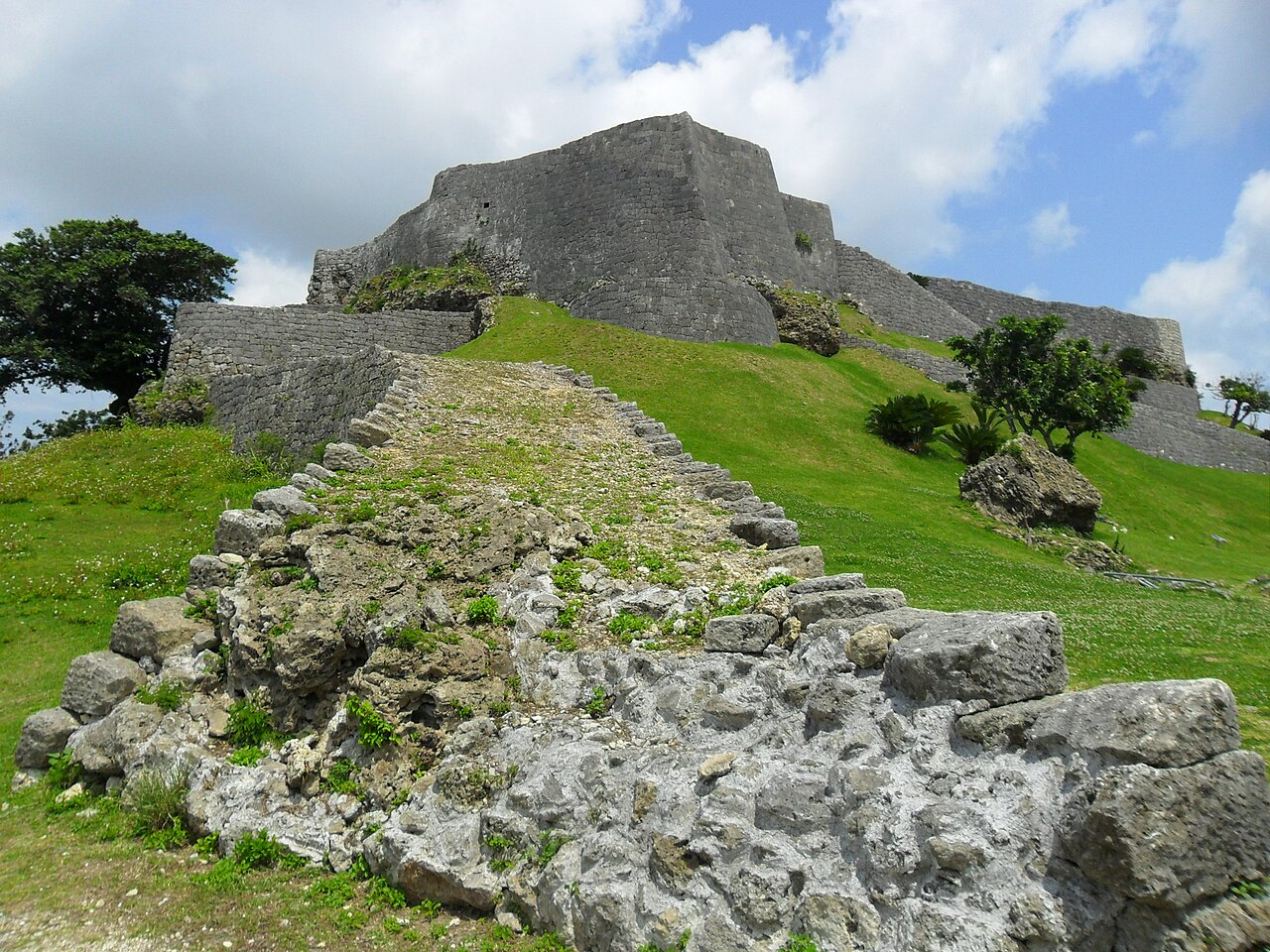
Lined with limestone, the walls follow the natural terrain. Narrow stone steps lead to where the first bailey's gate once stood, and a song in the Omoro Soshi tells of that gate shining in the rising sun.
Amawari, the last lord here, is passed down as a rebel against the Shuri royal government, yet an old songbook compiled by that government calls him noble, and the history and culture hall at the foot of the ruins tells his story in a performance and an anime. Start at the top for the view, then the hall for the story.
The Kaichu Road: A Road across the Sea toward the Islands
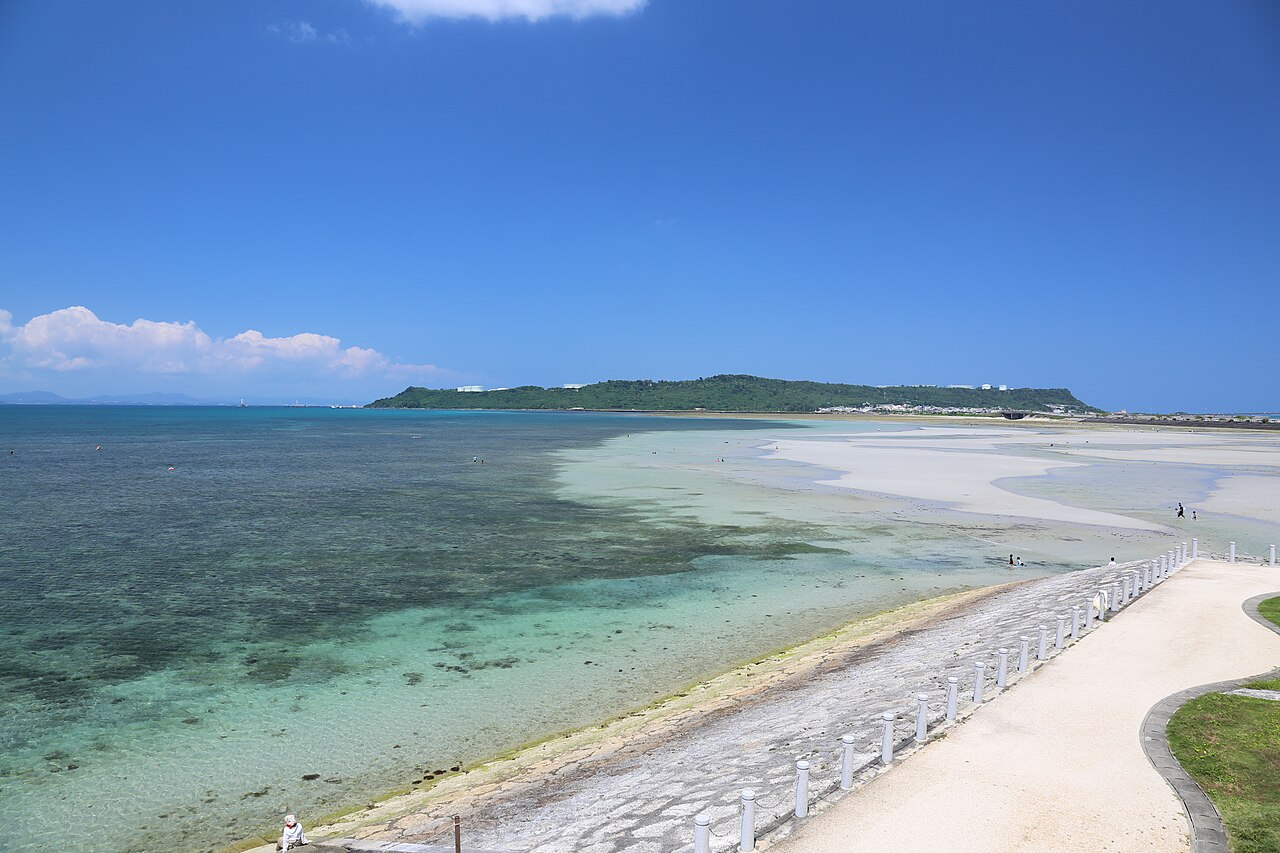
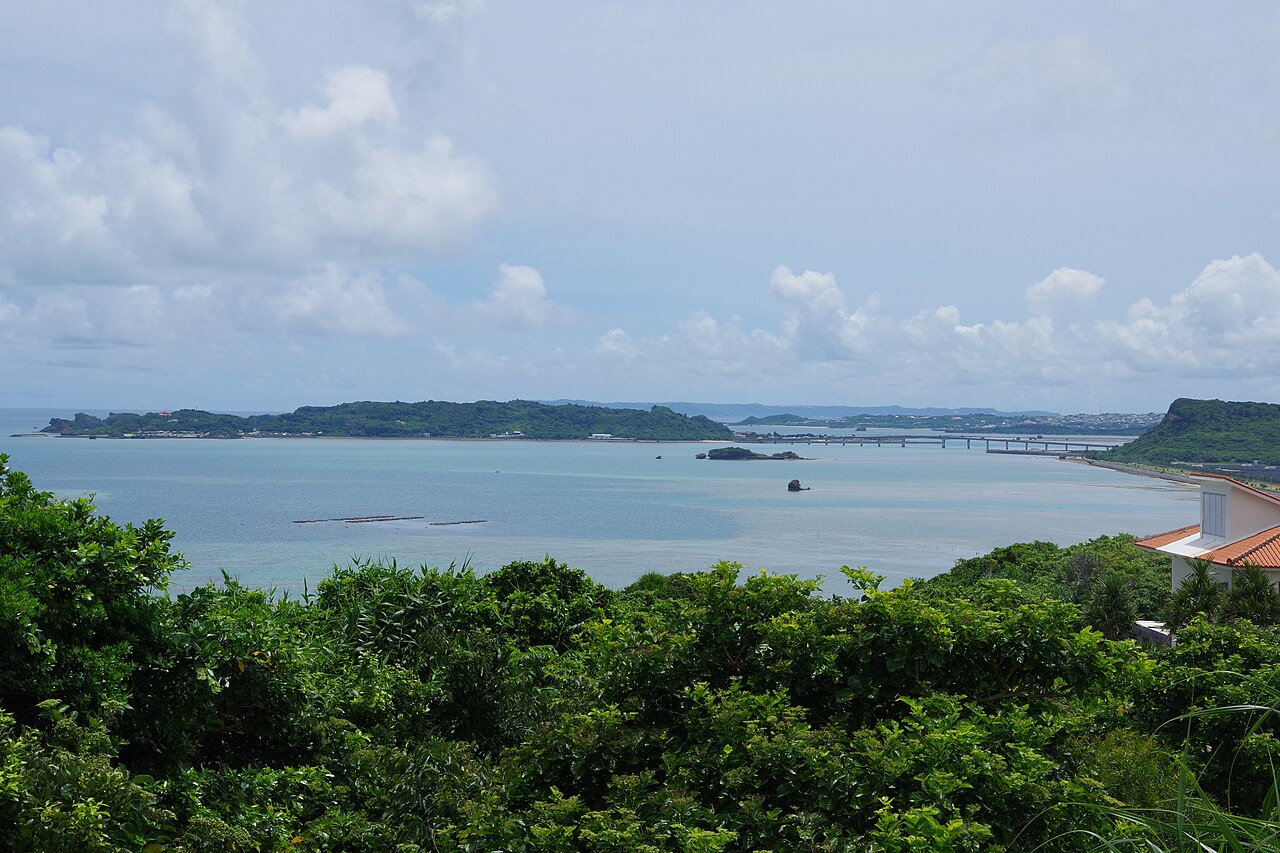
The Kaichu Road has cobalt blue spreading on both sides, and that colour is the point of the crossing. A bridge carries the road out over the sea, with water on all four sides.
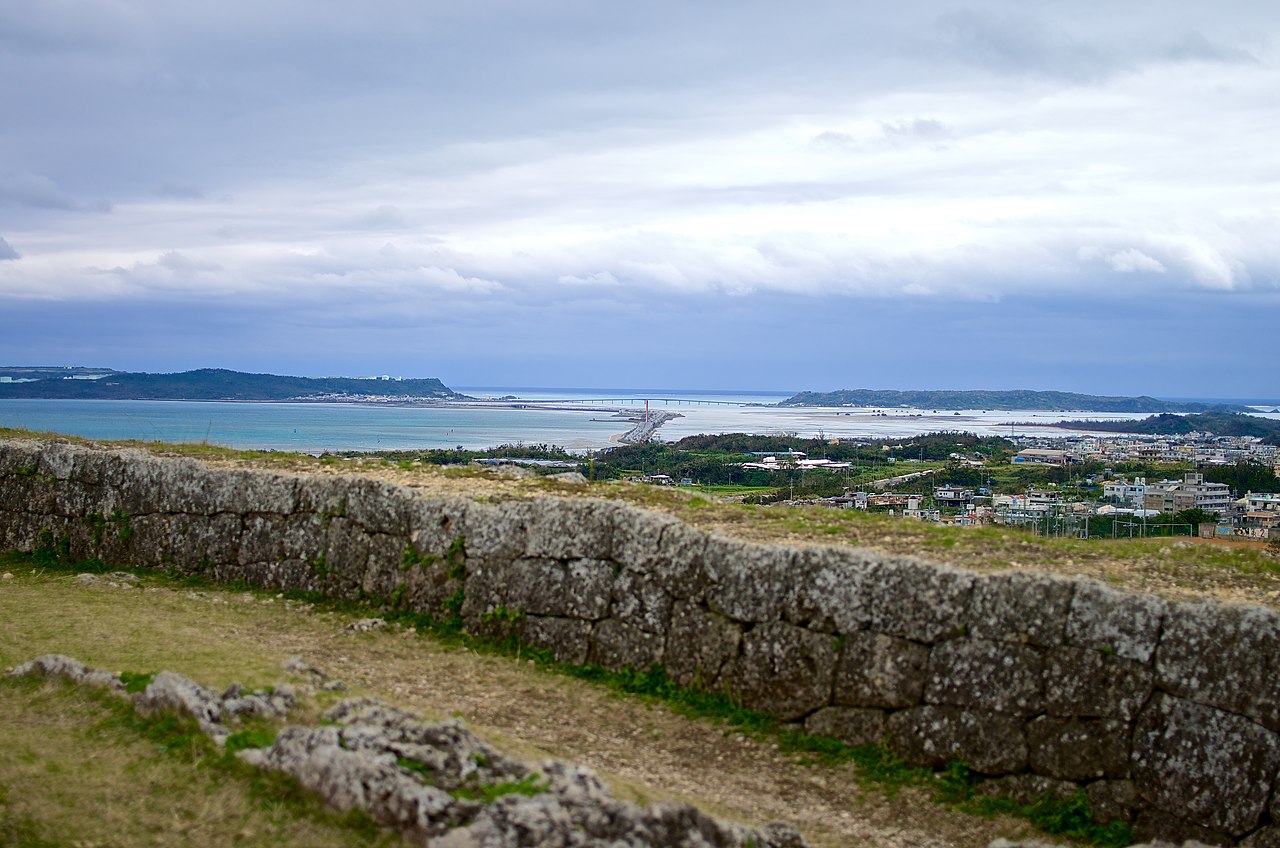
Stone steps lead down from the roadside straight to the water, and a pedestrian bridge gives a view back along the road and a way down to the beach. At its centre, a building shaped like a wooden Maaran ship has the sea in view all the way round.
Local people first built the road by hand, typhoons broke it again and again, and after the war it was rebuilt with the American oil company Gulf, and that is the road you cross. It leads on to four islands, Hamahiga, Henza, Miyagi and Ikei, which can be rounded by car or bicycle, and ends at Henza Island, symbolised by an oil depot. For more than a crossing, get out at the stone steps to the water.
Hamahiga Island: Old Houses and the Caves of the Creator Deities
Hamahiga Island's two villages, Hama and Higa, keep the look of old houses with red-tile roofs and stone walls. Shrines and utaki sacred sites are scattered across the island, which is said to be the home of the Ryukyu creator deities Amamichu and Shirumichu.
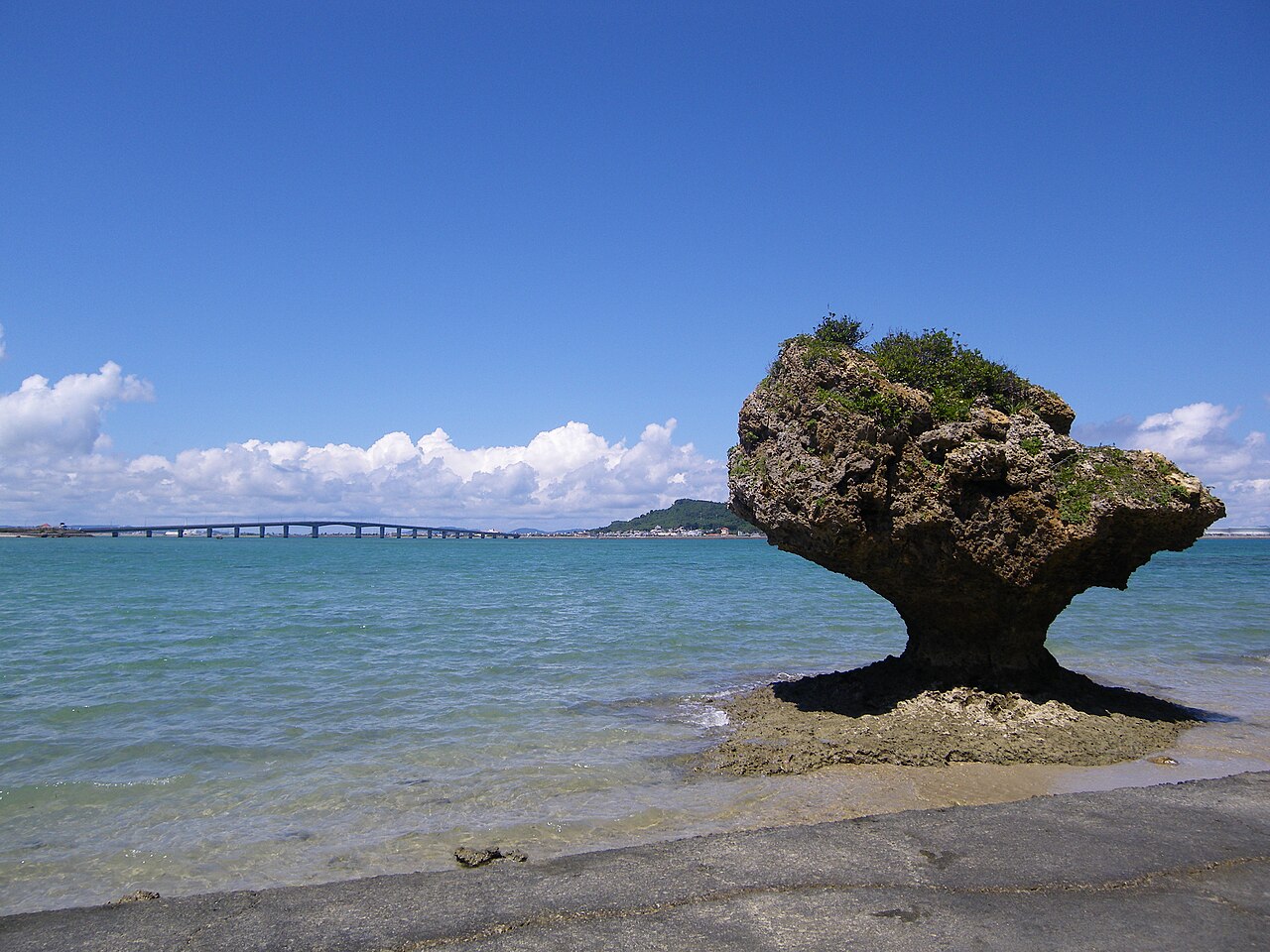
To reach Shirumichu, the cave where the two are said to have lived, you pass through a torii gate and climb one hundred eight stone steps before the cave appears. Inside, a stalactite stone is worshipped as a sacred stone by those hoping for children. The Amamichu tomb, said to enshrine both deities with other gods, sits in an enclosed cave on a small rocky islet off Higa's eastern coast.
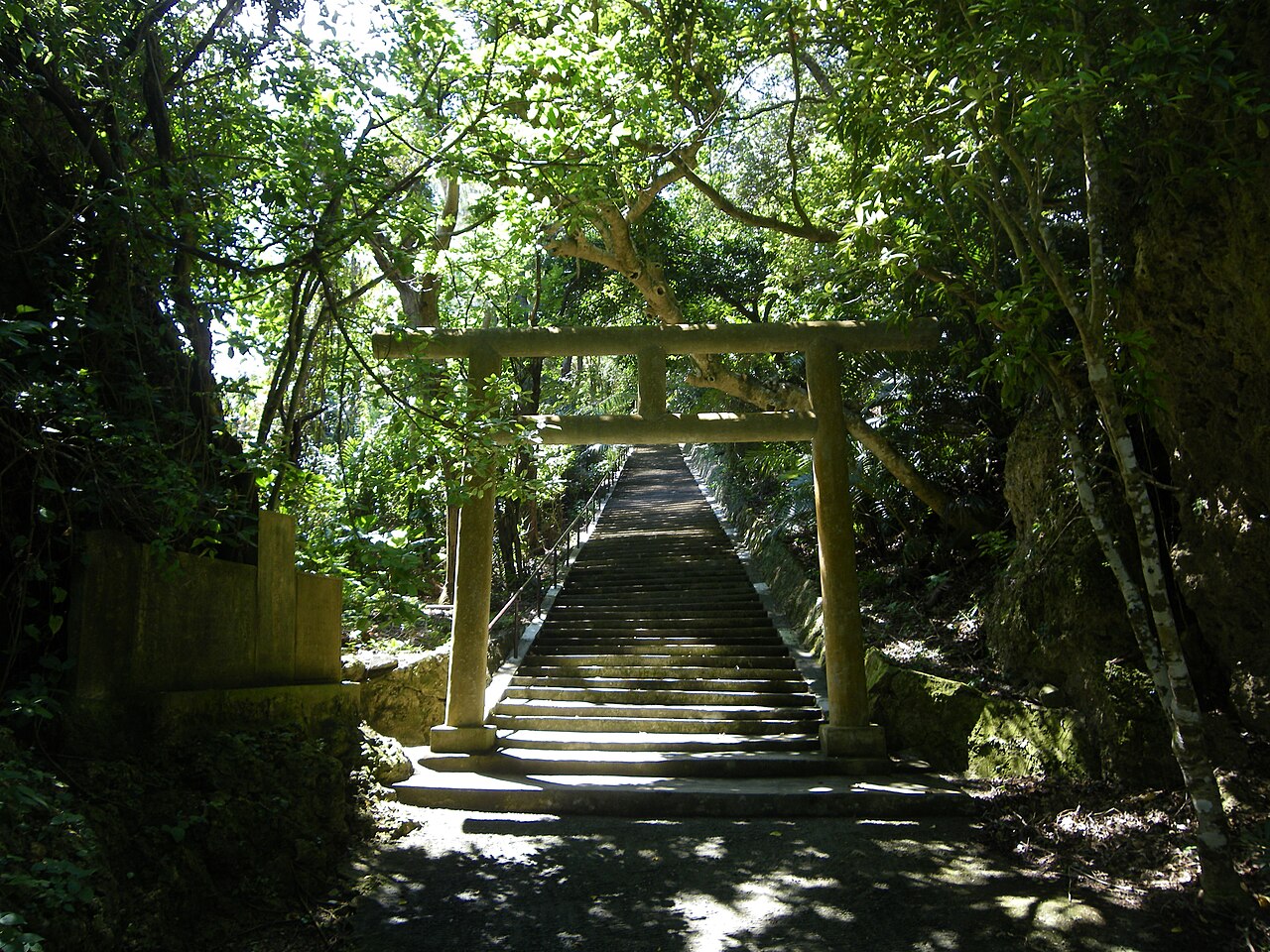
The two sites are said to bring blessings for having children, and many people come to pray for them. If you want old houses and places of worship on the same walk, give Hamahiga time for both the villages and the climb to the cave.
Muruku Beach at Sunrise and the Hamahiga Salt Workshop
Muruku beach is a natural beach directly in front of a resort hotel on the island, and the time to be there is sunrise. What you hear while watching the sun come up is the rhythm of the ripples and the melody of birds. The water has high transparency, and during the day marine activities are available on the same beach.
Salt is the island's other thing to see. At a salt workshop on the island, the traditional flow-down salt-field method can be watched, and in a hands-on session the salt you make goes into an original salt jar to take home. If you want to see how salt is made on the island, pair the sunrise on the beach with the workshop afterwards.
Eating in Uruma: Okinawa Soba, Mozuku and an Old House Restaurant
Cultured mozuku seaweed fishing is carried out on Hamahiga Island, and Uruma mozuku turns up in the food. At a market complex in Uruma, a takoyaki shop uses Uruma brand eggs in the batter and Uruma mozuku in its sauce, with two flavours to choose from, and fried chicken coated with mozuku is among the recommended dishes.
T-Love-E on Hamahiga Island serves in a ninety-year-old house that keeps its family altar, and when a memorial service is held, relatives gather and the restaurant takes the day off. The set meal is Okinawa soba in three kinds, nakami soba, salt soki soba and soy soba, while the restaurant inside the ship-shaped building on the Kaichu Road serves Okinawa soba and a spice curry. If Okinawa soba is on your list, choose among the three kinds at the old house. To take the castle ruins, the Kaichu Road, Hamahiga Island and these meals without hurrying, stay in Uruma and spread them out.
Getting to Katsuren Castle and Hamahiga Island
| Leg | How | Time |
|---|---|---|
| Naha Airport to Katsuren Castle Ruins | By car | About 80 minutes |
| Chatan on the west coast to the Kaichu Road on the east coast | By car | About 35 minutes |
| Okinawa-kita IC on the Okinawa Expressway to Hamahiga Island | By car on general roads | About 40 minutes |
| Naha Bus Terminal to Yakena Bus Terminal | Buses 27, 52 and 80 bound for Yakena Bus Terminal | About 120 minutes |
| Henza Island to Hamahiga Island | Over the Hamahiga Bridge, reachable by car | Not listed |
| Four-island route bus | Adult fare 200 yen | Not listed |
A visit to the castle ruins takes about forty to fifty minutes on average, or about an hour with the permanent exhibition room. The roads in the village on Hamahiga are narrow, so drivers are asked to go slowly.
New to rural buses and one-man trains? See how to ride them, step by step.
Hours and Fees
| Place | What | Hours or fee |
|---|---|---|
| Katsuren Castle Ruins and Amawari Park | Hours | 9:00 to 18:00, last admission 17:30, open all year with no closing days |
| Katsuren Castle Ruins parking lot | Parking | Free; 148 spaces for standard cars and 6 for large buses |
| Salt workshop on Hamahiga Island | Hours | 10:00 to 16:00, salt-making session until 15:00 |
| Salt workshop on Hamahiga Island | Salt-making session | Using concentrated seawater, from 2,300 yen |
| T-Love-E, an old house restaurant on Hamahiga Island | Hours | 11:00 to 16:00, last order 15:30 |
| T-Love-E, an old house restaurant on Hamahiga Island | Closed days and payment | Closed Tuesdays, the 1st Wednesday, the 3rd Sunday and the 5th Wednesday; payment in cash |
There are no restaurants or convenience stores inside Amawari Park.
Where to stay
Places to stay near Uruma, Okinawa, Japan →
Disclosure: This post may contain affiliate links. If you book through them, we may earn a commission at no extra cost to you.