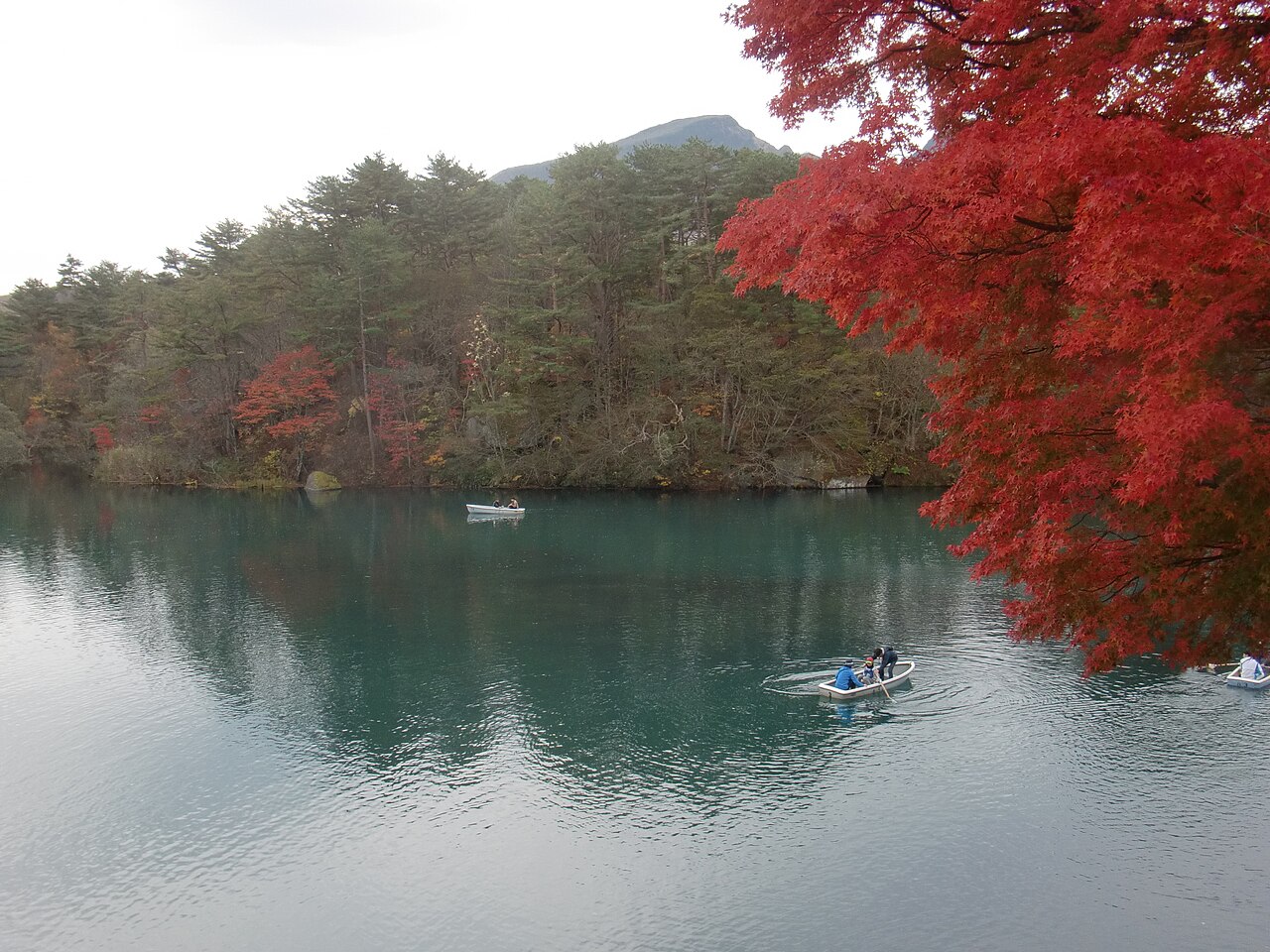
This guide covers the Goshikinuma ponds, the nature trail, Bishamon-numa, the Urabandai Visitor Center, Lake Inawashiro, and the practical details for reaching them from Inawashiro.
The Goshikinuma lakes and marshes are a group of ponds dotted across the area. This guide follows the ponds from the nature trail to the boats on Bishamon-numa, then to the lake at Inawashiro.
Quick Facts
| Item | Detail |
|---|---|
| Goshikinuma lakes and marshes | 20 to 30 |
| Year of the eruption that formed Goshikinuma | 1888 |
| Bishamon-numa boat capacity, adult passengers | Up to 3 adults, junior high school age and older |
The Colors of the Goshikinuma Ponds
The color of the water differs from pond to pond at Goshikinuma, from emerald green and cobalt blue to turquoise blue, emerald blue and pastel blue. The ponds of Goshikinuma also look slightly different in color with the season, the weather and the time of day. The differences in color at Goshikinuma come from the weather, the season, the viewing angle and the volcanic substances in the water.
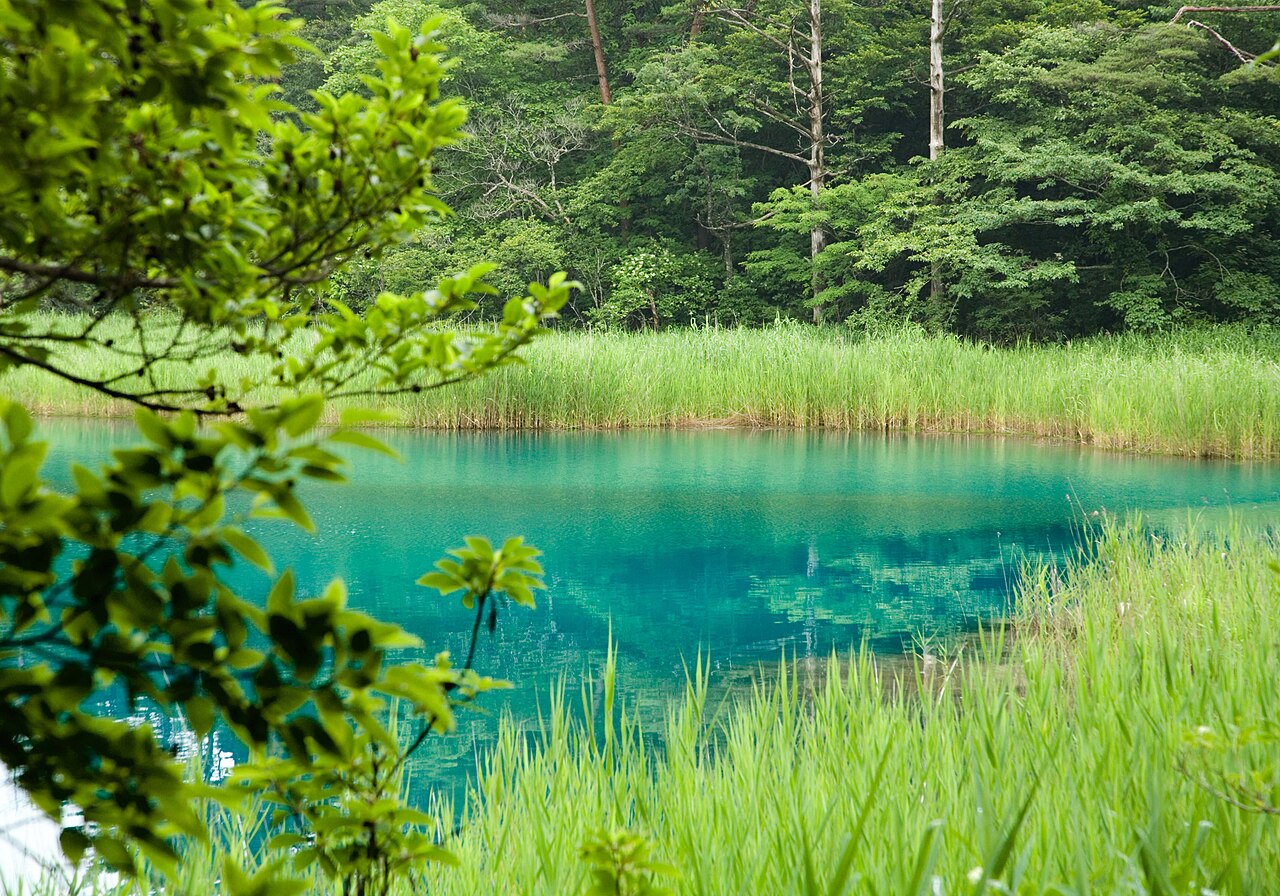
Benten-numa is turquoise blue or cobalt blue. Akanuma changes color with the seasons, green in winter and blue in summer. Many Goshikinuma ponds are acidic and carry large amounts of iron, manganese and aluminum. Blue or red water in some Goshikinuma ponds comes from light scattering by aluminum silicate microparticles in the water and from light reflected by iron oxide on the bottom.
Walking the Goshikinuma Nature Trail
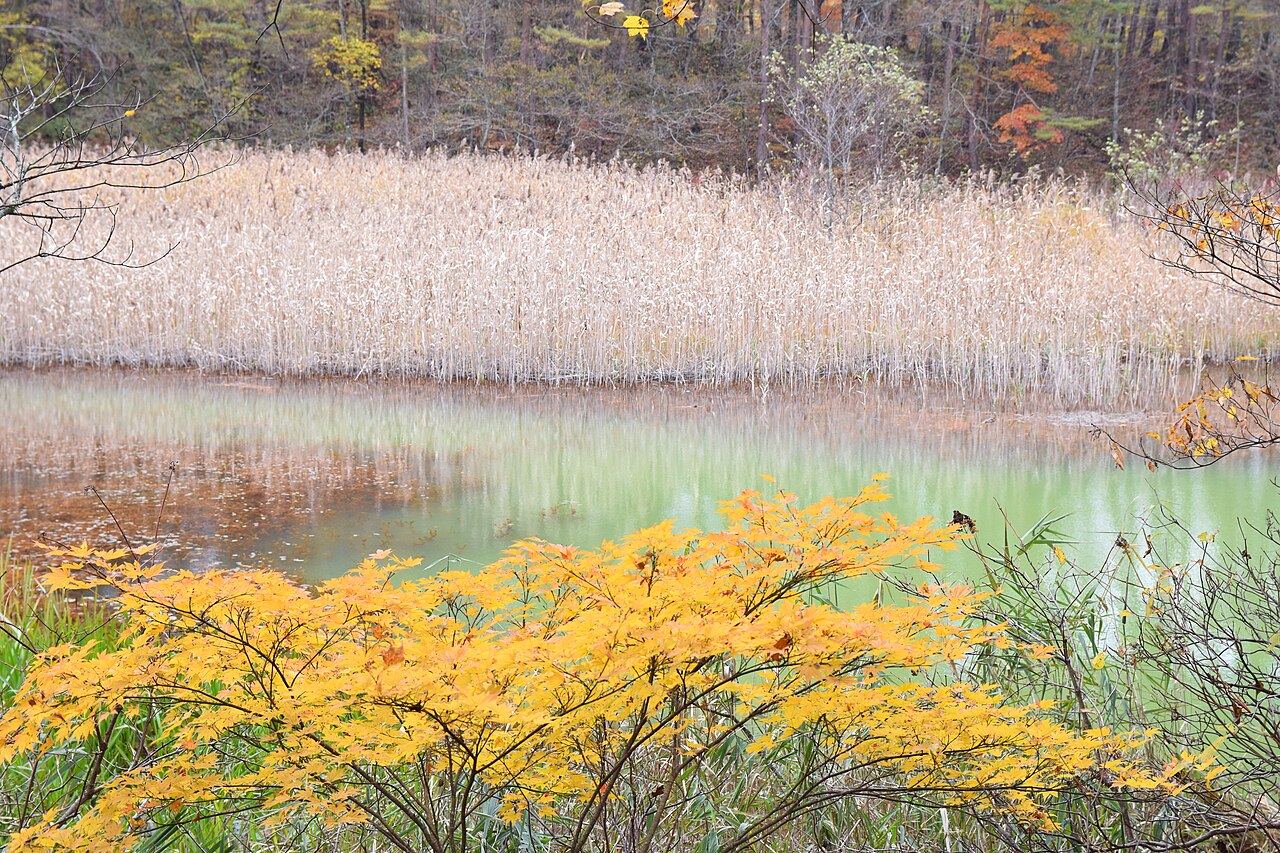
Aonuma comes into view soon after the west entrance of the Goshikinuma Nature Trail. The ponds share a connected water system, fed by groundwater that starts at Dounuma near the crater of Mount Bandai. Collecting of any kind is banned across the Goshikinuma area, which lies in Bandai-Asahi National Park.
The table below lists what the trail involves.
| Item | Detail |
|---|---|
| Goshikinuma Nature Trail, length | About 4 km one way |
| Goshikinuma Nature Trail, walking time | 1 hour 10 minutes to 1 hour 30 minutes one way |
| Aonuma, from the west entrance | About 10 minutes |
Bishamon-numa and the Boats
Bishamon-numa is a short walk from the Urabandai Visitor Center or from the Goshikinuma Iriguchi Kanko Plaza parking lot. The boats on Bishamon-numa carry a limited number of passengers, and the limit depends on how many adults and children are aboard. The boat fee on Bishamon-numa is charged per boat, with a lower price for the shorter ride and a higher price for the longer ride.
How the Ponds Formed and the Eruption Museum
Goshikinuma formed when a debris avalanche from a steam explosion of Mount Bandai dammed the Nagase River and its tributaries. The eruption collapsed part of the north side of the summit of Mount Bandai, including Kobandai, and the debris dammed rivers to form lakes and marshes in the area.
The Bandaisan Funka Kinenkan museum is reached by taking an Aizu Bus to the stop in front of it, then walking a short way.
Lake Inawashiro and Baggage Storage
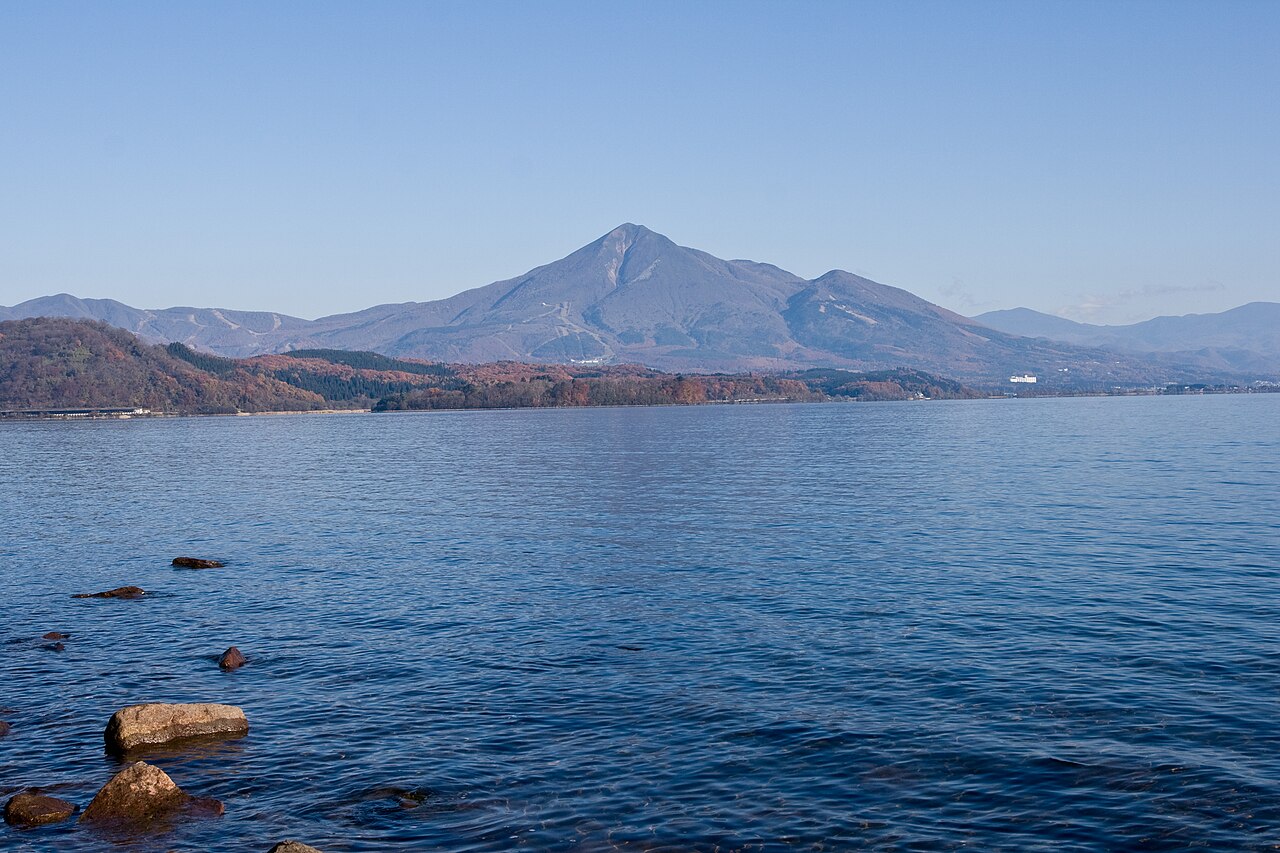
The water of Lake Inawashiro is weakly acidic and low in nutrients, because the Nagase River carries volcanic acidic water into the lake.
Baggage storage is available at the Inawashiro Tourist Association in front of JR Inawashiro Station.
Visitors who want a ready-made plan around Urabandai can browse tours around Urabandai and Goshikinuma.
Costs and Hours
| Item | Price |
|---|---|
| Boat on Bishamon-numa, 30 minutes | 1,000 yen per boat |
| Boat on Bishamon-numa, 1 hour | 1,800 yen per boat |
| Bandaisan Funka Kinenkan, adult | 600 yen |
| Bandaisan Funka Kinenkan, junior high and high school student | 500 yen |
| Bandaisan Funka Kinenkan, elementary school student | 400 yen |
| Kayak rental at Bandai Lakeside Garden, day-use visitor | 2,900 yen per person; free for elementary school children and younger with an adult |
| Boot rental | 500 yen |
| Baggage storage at the Inawashiro Tourist Association | 600 yen per piece, tax included |
| Baggage storage, discount service for bicycle rental users and similar | 300 yen per piece, tax included |
| Item | Hours |
|---|---|
| Bishamon-numa boats | 9:00 to 16:00, normal operating hours |
| Urabandai Visitor Center, April to November | 9:00 to 17:00 |
| Urabandai Visitor Center, December to March | 9:00 to 16:00 |
| Urabandai Visitor Center, closed days | Tuesdays, and over the year-end and New Year period; open on a Tuesday that is a holiday, with the next day closed instead |
| Rental goods at the Urabandai Visitor Center, same-day lending | 9:00 to 16:00, while the visitor center is open |
| Bandaisan Funka Kinenkan, April to November | 8:00 to 17:00, last admission 16:30 |
| Bandaisan Funka Kinenkan, December to March | 9:00 to 16:00, last admission 15:30 |
| 3D World | Open April to November, closed in winter |
| Urabandai Bussankan, summer season | 9:00 to 17:00 |
| Baggage storage at the Inawashiro Tourist Association | 8:30 to 17:00, accepted on the day of use |
Getting to Urabandai and Goshikinuma
This section starts with the rail routes to Inawashiro and ends at the Urabandai Visitor Center.
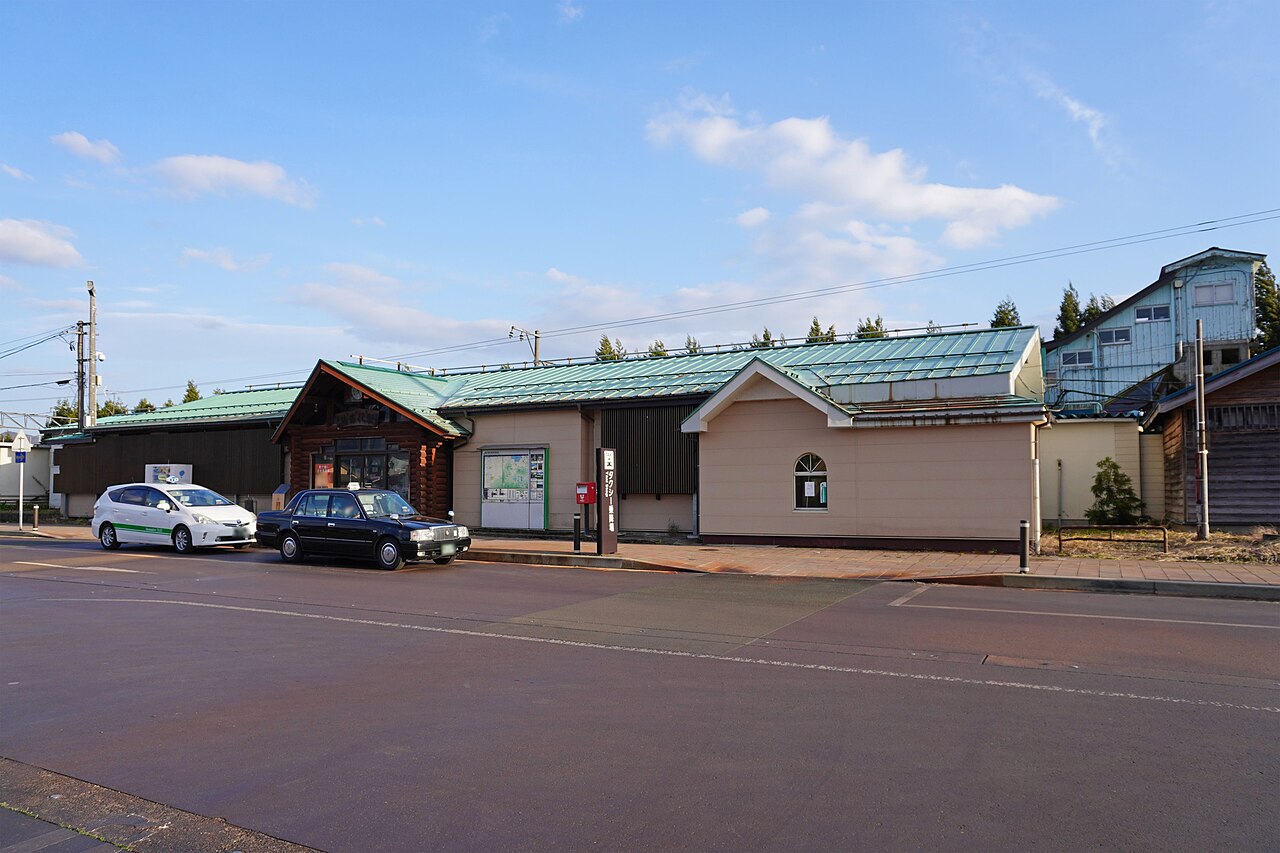
- From Tokyo, ride the Shinkansen to Koriyama for 7,810 yen.
- From Koriyama, ride the train to Inawashiro for 680 yen.
- From the Inawashiro Station bus stop, ride the route bus to the Goshikinuma Iriguchi bus stop, which takes about 35 minutes.
- Walk about 2 minutes from the Goshikinuma Iriguchi bus stop to the Urabandai Visitor Center.
| Route | Detail |
|---|---|
| Train fare, Aizuwakamatsu to Inawashiro | 510 yen |
| Shinkansen fare, Sendai to Koriyama | 4,950 yen |
| Bus fare, Inawashiro to various places in Urabandai | 780 to 910 yen |
| Bus fare between Goshikinuma Iriguchi and Urabandai Kogen Station, adult | 250 yen, as of August 2024 |
| Route bus, Kitakata Station to Goshikinuma Iriguchi | About 70 minutes |
| By car, Aizuwakamatsu Station to the Urabandai Visitor Center via National Route 49 and Inawashiro | About 1 hour |
| By car, Koriyama Station to the Urabandai Visitor Center via National Route 49 and Inawashiro | About 1 hour 20 minutes |
Compare options
See partner pricing and availability →
Disclosure: This post may contain affiliate links. If you book through them, we may earn a commission at no extra cost to you.