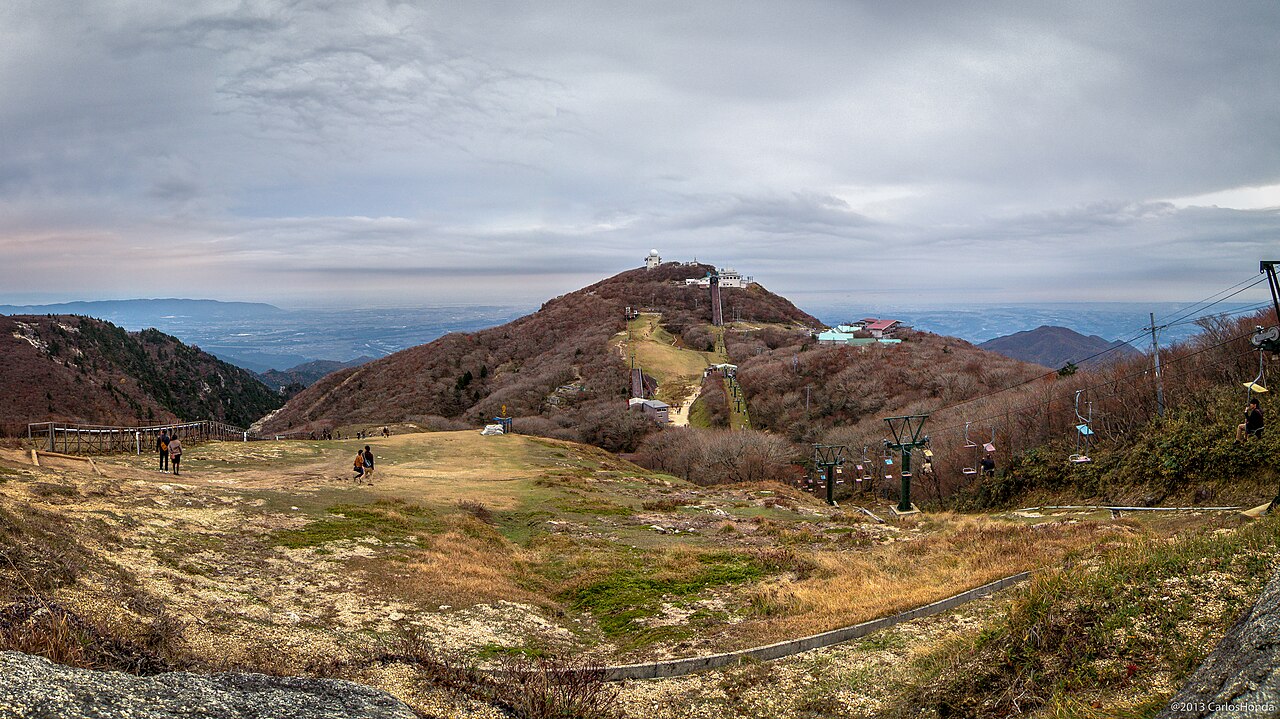
From the Choyodai Hiroba viewpoint on Mount Gozaisho, the view reaches as far as Ise Bay and the Chita Peninsula. A little way beyond the summit, the Boko-dai lookout gives a view of Lake Biwa. In summer, red dragonflies come to Mount Gozaisho to escape the heat.
Riding the Gozaisho Ropeway Past the White Pylon
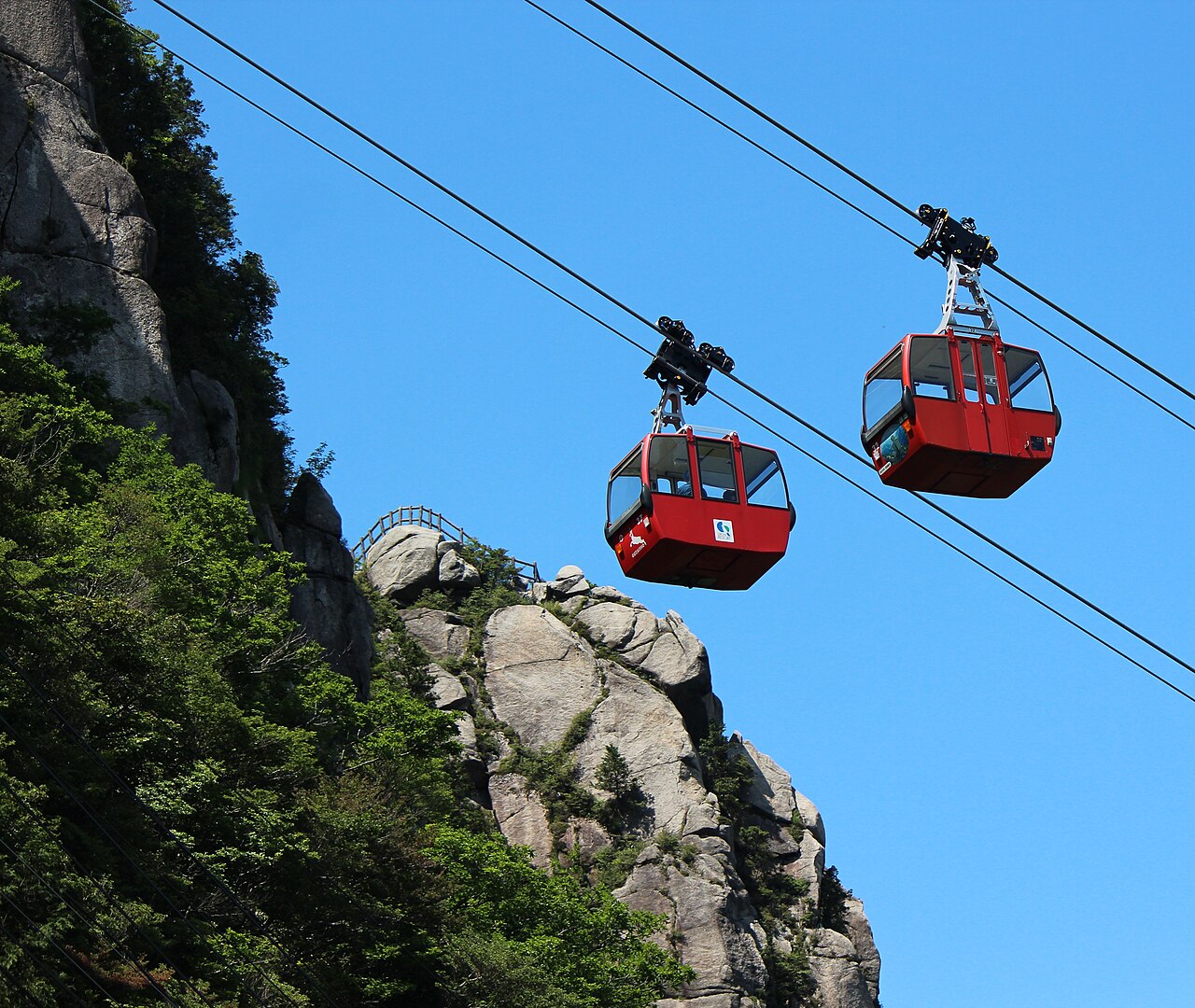
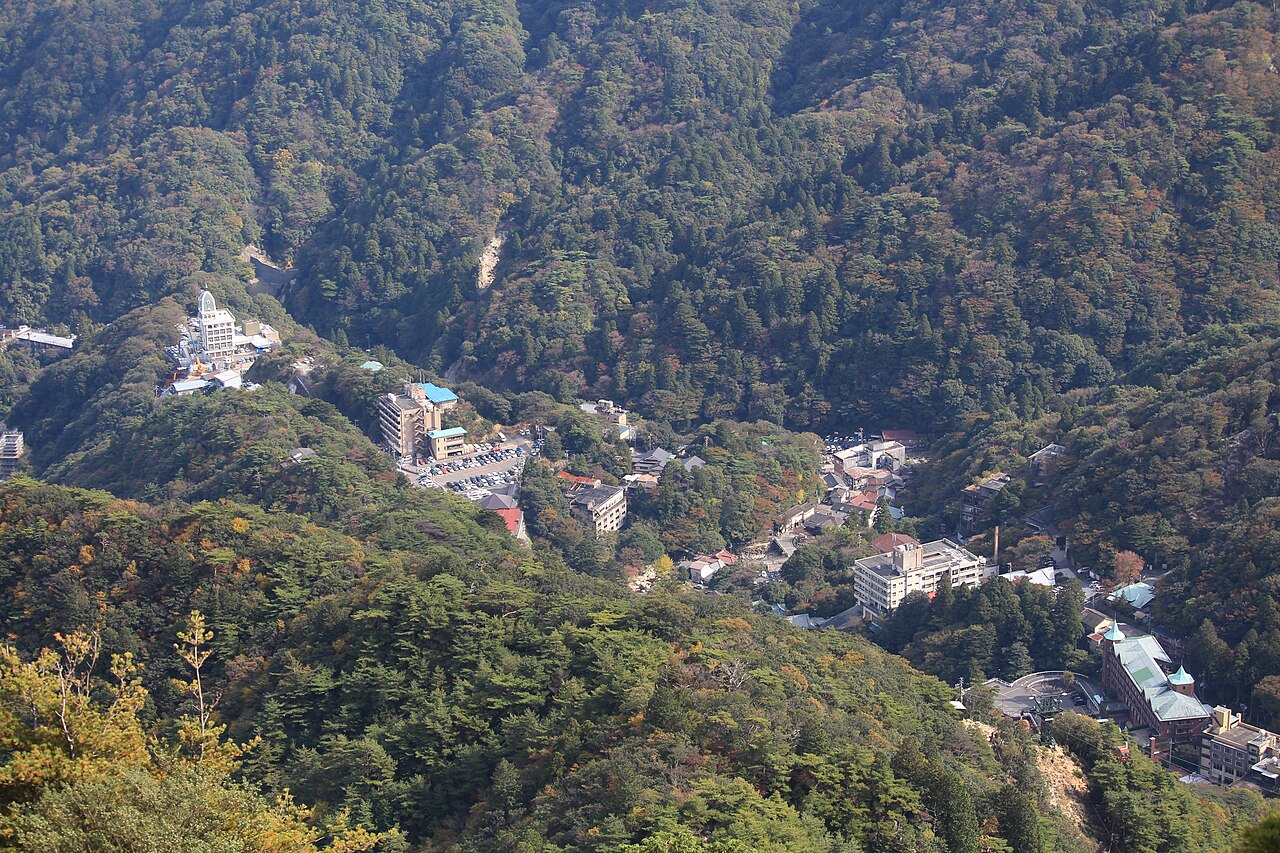
A ride on the Gozaisho Ropeway begins with boarding at the foot station, Yunoyama Onsen Station. The white pylon on the approach to the ropeway is a support of the Gozaisho Ropeway. This white-painted tower can be seen even from as far as the Chita Peninsula. The pylon was green like the other towers when the ropeway opened, and it was repainted white later.
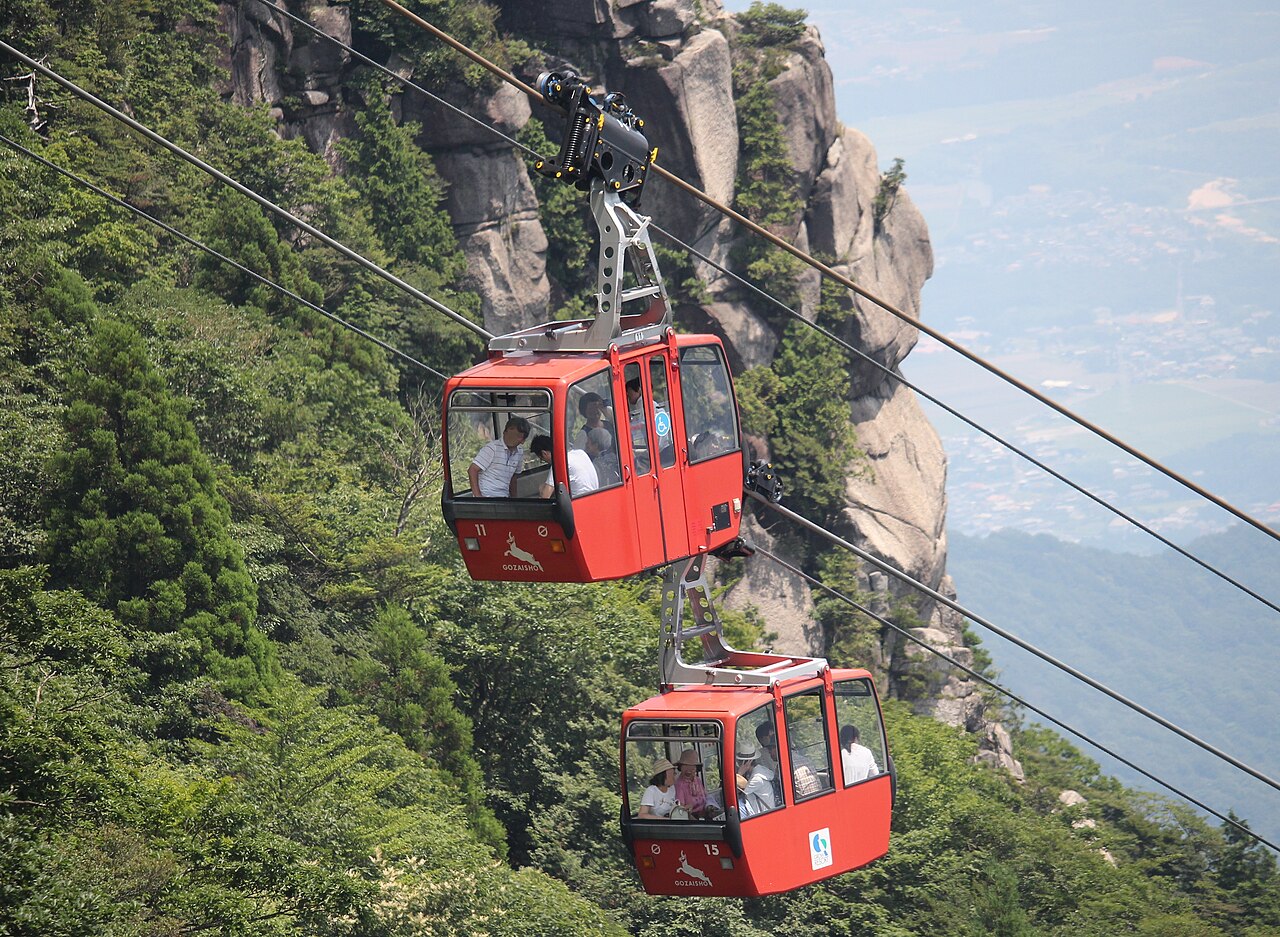
Many flowers bloom from the foot of the mountain toward the summit along the Gozaisho Ropeway. Autumn colour starts at the summit from mid-October and moves down to the Yunoyama onsen town at the foot over about one month. The red of the Ericaceae, the yellow of the Lauraceae and the green of the conifers spread gradually from summit to foot.
The ropeway museum is an exhibition space where the workings and history of ropeways are learned by touching real items. Its displays include things that can rarely be touched, such as the ropes that support the gondola and the anemometer that protects passenger safety.
Rocks, Lookouts and the Flower Terrace in Gozaisho Summit Park
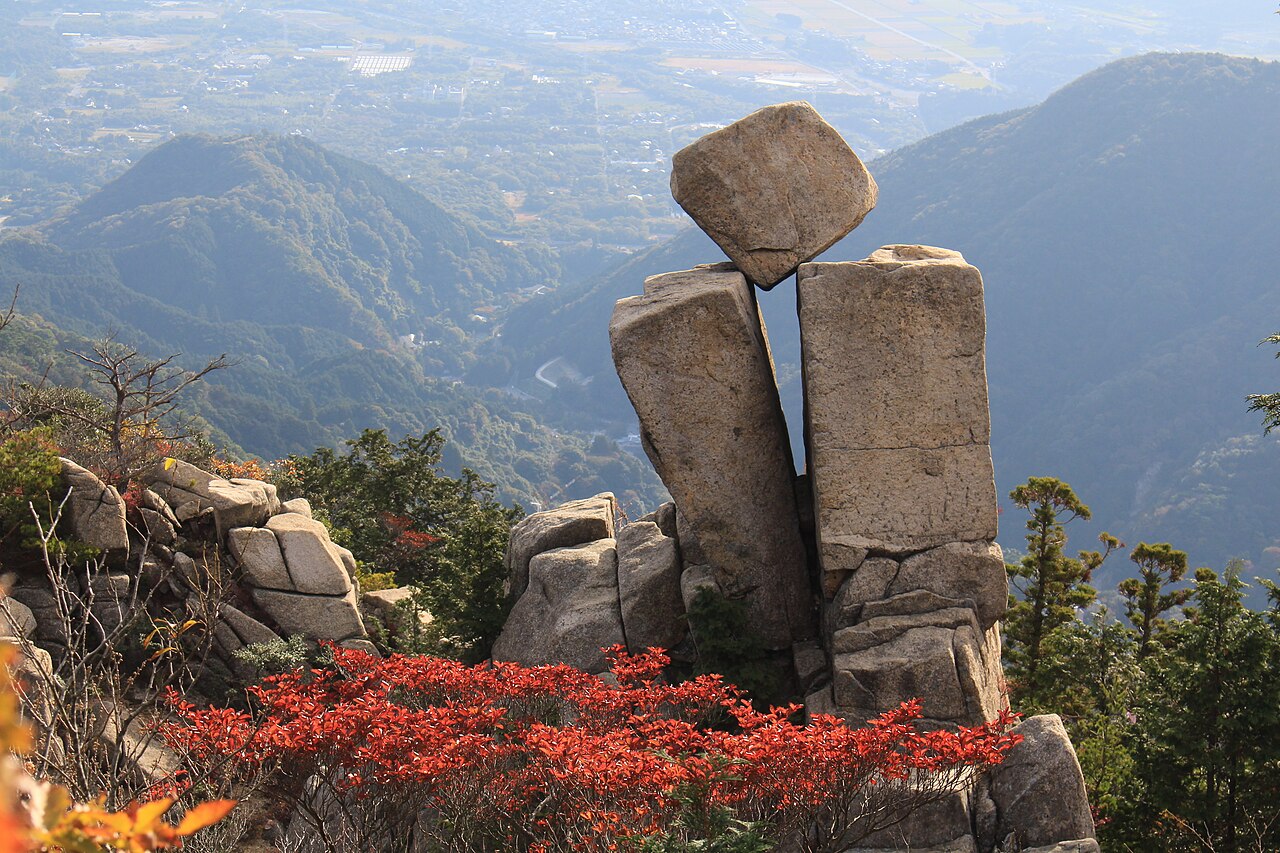
Daikoku-iwa is a large rock that sits on the south side just before the summit park station of the Gozaisho Ropeway. Takami-iwa and Ebisu-iwa are two more rocks on Mount Gozaisho, each with its own name like Daikoku-iwa.
Choyodai Hiroba is an open spot facing east, with a wide view from Ise Bay to the Ise plain. The Fujimi-iwa observation deck is a short way down from Choyodai Hiroba, so the two lookouts pair easily. The deck takes its name from the view of Mt. Fuji on fair-weather days, which appears when there are no clouds and the air is clear.
From Mihara-shidai, Kamagatake, the mountain south of Mount Gozaisho, can be seen straight ahead. Mihara-shidai is a very small lookout on a sheer cliff, with the ropeway seen below. At the summit runs the border between Mie and Shiga prefectures, and many people post photos taken straddling it on social media.
FURURU is an observation terrace modelled on the akayashio, where a slope of about fifteen metres leads to a flower-shaped terrace of about seventy square metres. A photo platform three point six metres high stands on the west side of the FURURU terrace. The name FURURU derives from the French word Fleur, meaning flower, echoing the flower shape of the terrace that visitors walk onto.
Lift, Seasons and Curry Udon on Mount Gozaisho
A one-person sightseeing lift on the mountain gives access to the summit of Mt. Gozaisho. Riders stay seated uphill and downhill and can get off at the middle stop, Kamoshika Station. The sightseeing lift is easier than walking and offers views of its own on the way. The lift passes flowers in spring, green in summer, autumn leaves in autumn and rime ice in winter.
Azalea species named akayashio, shiroyashio, benidoudan and sarasadoudan are among the azaleas that colour the mountain. The shiroyashio is recognised by pure white flowers that come out from beneath its newly opened leaves. Akayashio bloom inside the summit park from late April to early May in a typical year. The akiakane, a red dragonfly, carries an orange and black pattern on its body.
Rime ice on Gozaisho-dake can be seen at one thousand metres and above from late December to early March. From January to February the conditions come together more easily, and it is often seen across the Yunoyama summit park. Choyodai Hiroba and the walking path are places to see it, as is the area near the top of the sightseeing lift. As a natural formation, rime ice cannot be seen unless the weather conditions are met.
Gozaisho curry udon, the local specialty, is also served at the observation restaurant on the mountain. The observation restaurant has a panoramic view that takes in Ise Bay and more, so a meal there comes with a lookout. Alpine Hall mainly offers light meals and takeaway menu items, an alternative to the observation restaurant.
Getting to Gozaisho Ropeway
New to rural buses and one-man trains? See how to ride them, step by step.
| From or item | How | Time or cost |
|---|---|---|
| Komono IC | Car | About ten minutes |
| Foot station car park | Standard car | One thousand yen, all day |
| Ropeway, foot to summit | Aerial ride | About twelve minutes |
To stay overnight in Komono, browse places to stay in Komono.
Hours and Fees
| Item | Round trip or up line | One way or down line |
|---|---|---|
| Ropeway, adult | Two thousand six hundred yen | One thousand five hundred yen |
| Ropeway, child | One thousand three hundred yen | Seven hundred fifty yen |
| Sightseeing lift | Seven hundred yen | Four hundred yen |
| Ropeway, April to November | Nine hundred to seventeen hundred | Nine ten to seventeen twenty |
| Ropeway, December to March | Nine hundred to sixteen hundred | Nine ten to sixteen thirty |
Fees and hours were checked against official sources on 12 November 2026.
Thinking of staying overnight?
Compare places to stay near Komono, Mie, Japan →
Disclosure: This post may contain affiliate links. If you book through them, we may earn a commission at no extra cost to you.