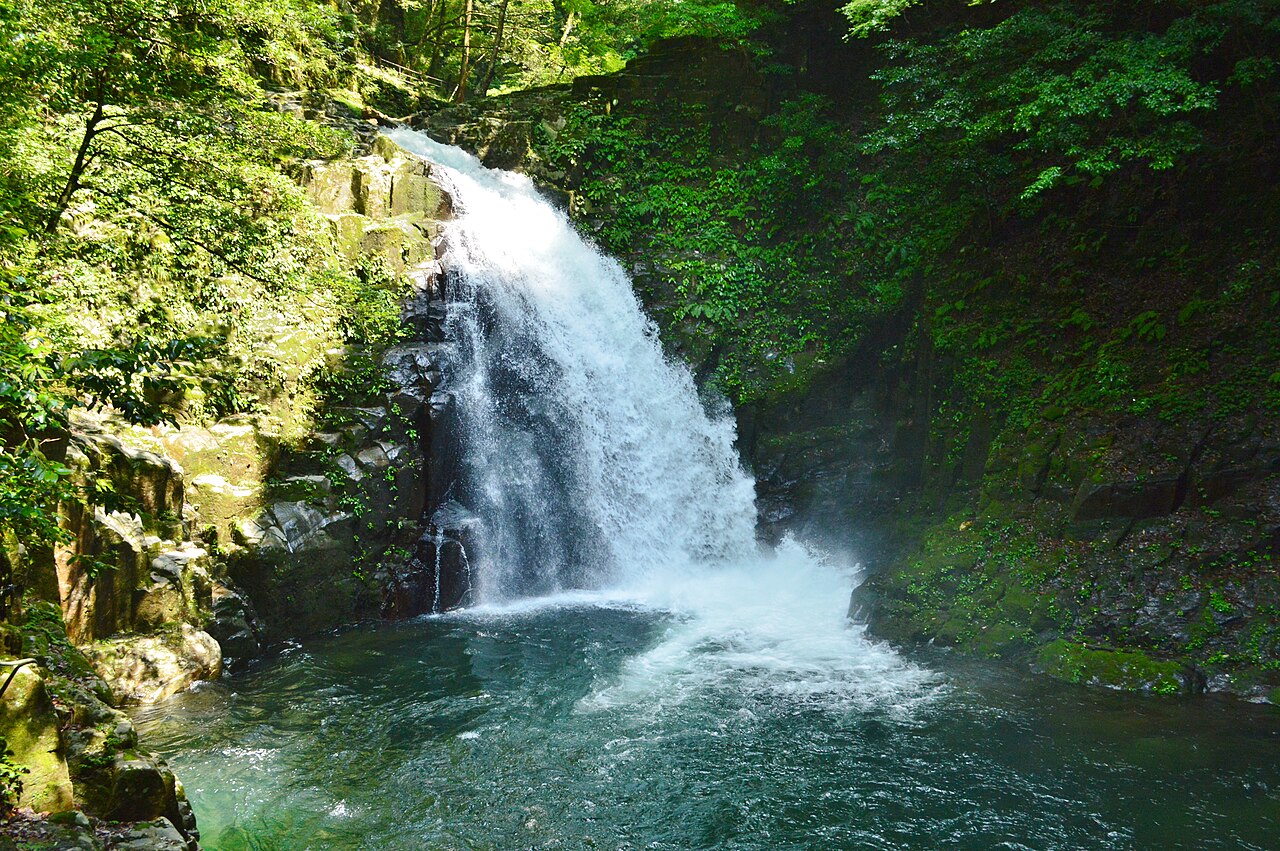
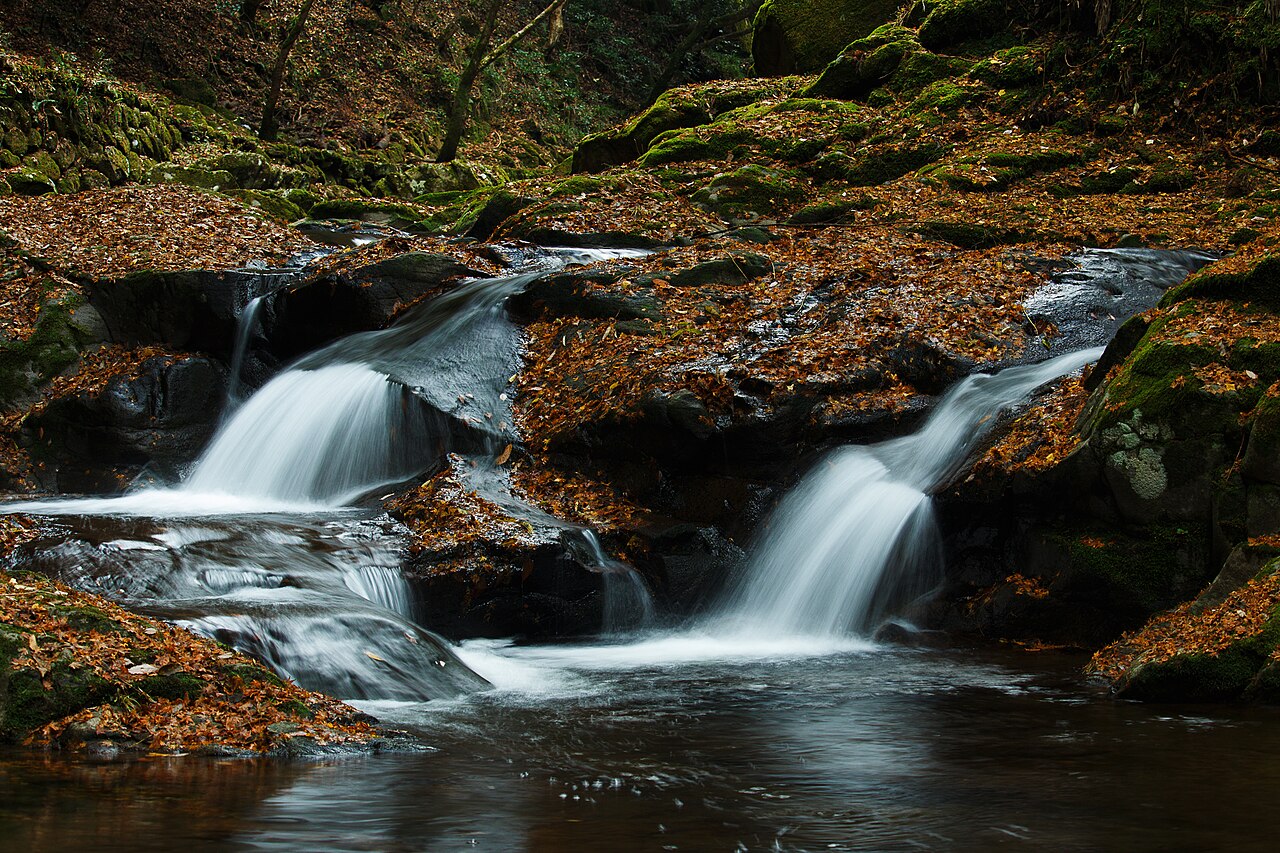
Akame Forty-Eight Waterfalls is a gorge of linked waterfalls in the hills south of Nabari, a city in Mie Prefecture, and it sits close enough to the Osaka side to work as a day trip by Kintetsu rail and a short Mie Kotsu bus ride from Akameguchi Station rather than as an overnight expedition.
This page sets out the route and what it costs, the valley conservation fee and the seasonal pattern of opening times, what a Meiji-era gazetteer recorded about the falls and the temple at their entrance, and the lunch boxes, set meals and ninja training on offer once you arrive at the gorge.
Getting There from Osaka by Kintetsu Rail and Mie Kotsu Bus
Here is how to get to Akame from the Osaka side: the approach has two stages, a Kintetsu limited express from the Osaka direction with a change at Yamato-Yagi Station, then a Mie Kotsu bus from outside Akameguchi Station up to the falls, so the run from the city to the gorge entrance is done entirely by rail and bus.
- From the Osaka direction, take a Kintetsu limited express via Yamato-Yagi Station to Akameguchi Station; the rail leg takes fifty-four minutes.
- At Akameguchi Station-mae, board the Mie Kotsu bus to Akame Falls; the ride takes ten minutes.
- The one-way regular fare for the direct service on the weekday timetable is four hundred and fifty yen, covering the ride from Akameguchi Station-mae to Akametaki.
- At the gorge entrance, pay the valley conservation fee, one thousand yen for an adult, before you start along the stream.
The fare figure applies to the direct service on the weekday timetable, so check current transport schedules for the actual day you travel before fixing which limited express to take, since the bus from Akameguchi Station-mae is the leg that sets your arrival time at the gorge.
Stop names appear in two forms, Akametaki on the fare side and Akame Falls on the timing side, Akametaki being the Japanese reading of the same name, so either is the stop you want at the end of the ten-minute ride from Akameguchi Station-mae and the one to listen for on board.
Valley Conservation Fee and Seasonal Opening Times
Entry to the gorge is charged as a valley conservation fee, paid per person at the entrance, with one rate for adults and a lower rate for children of elementary and junior high school age, so each member of a family is charged individually rather than as a single group.
| Visitor | Amount |
|---|---|
| Adult, individual | 1000 yen |
| Child (elementary and junior high school students), individual | 500 yen |
Opening times follow two seasonal patterns, a summer season running from the second Friday of March to the end of November and a winter season from the start of December to the second Wednesday of March, with the winter pattern starting later in the morning and finishing earlier in the afternoon.
| Season | Times |
|---|---|
| Summer season (second Friday of March to November 30) | 8:30 am to 5:00 pm |
| Winter season (December 1 to the second Wednesday of March) | 9:00 am to 4:30 pm |
| Closed | December 28 to December 31, and every Thursday from December through the second Thursday of March |
Hours shift with the season and the winter pattern adds a weekly closing day on Thursdays, so check official information before visiting, especially if your date lands between December and mid-March, when both the shorter day and the closures apply to the same visit.
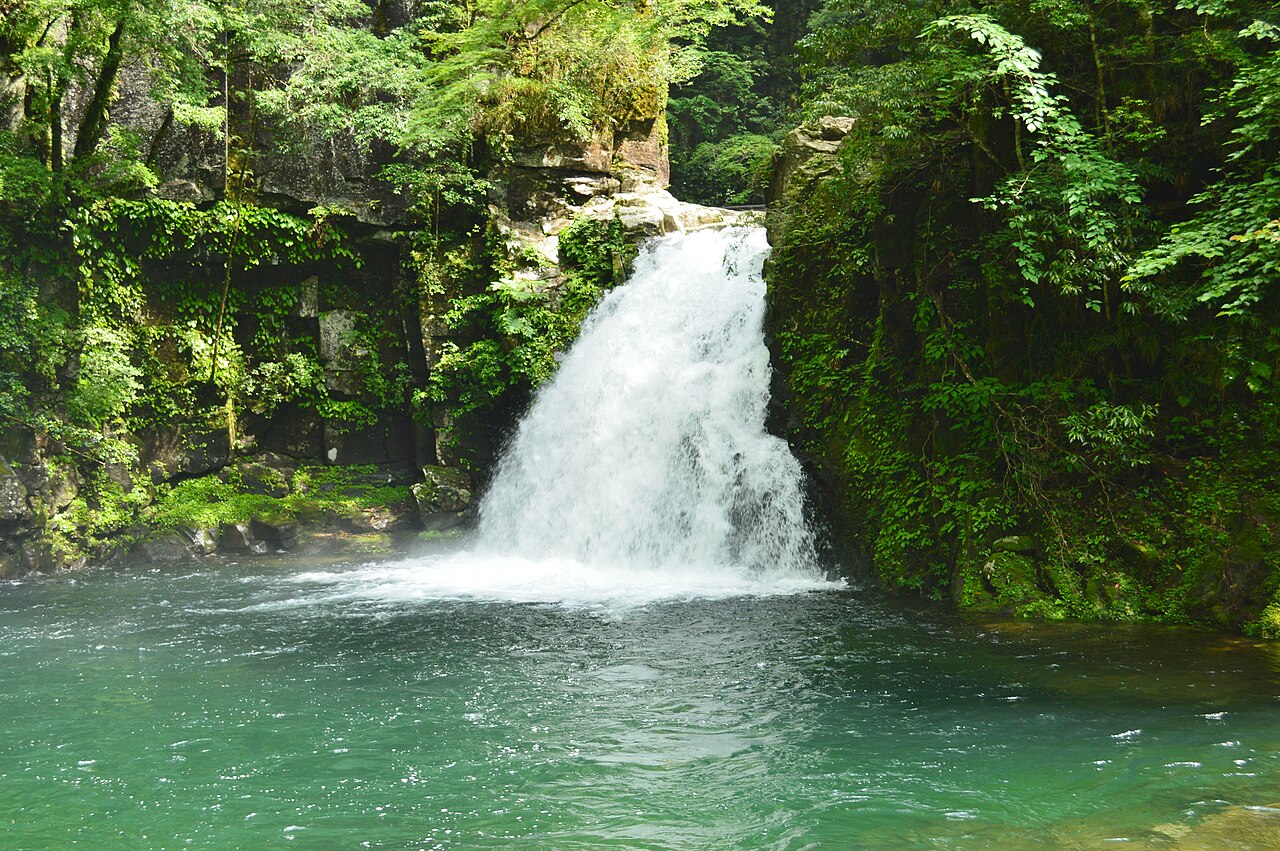
Where to stay
Places to stay near Nabari, Mie, Japan →
Disclosure: This post may contain affiliate links. If you book through them, we may earn a commission at no extra cost to you.
What the Meiji-Era Gazetteer Recorded About the Gorge
A Meiji-era gazetteer places the gorge in the mountains south of the town of Nabari, on the land of what was then a separate village. The same record describes rickshaws reaching Enjuin, the temple at the gorge entrance, with a path along the stream from there to Gyoja Falls, beyond which waterfall follows waterfall deeper into the valley.
The gazetteer lists the falls by name, Fudo, Senju, Nunobiki and Biwa among them, and gives forty-eight in all as the count behind the collective name. The gazetteer describes Nunobiki as the finest waterfall in the gorge, its drop likened to a length of white cloth hung down the rock.
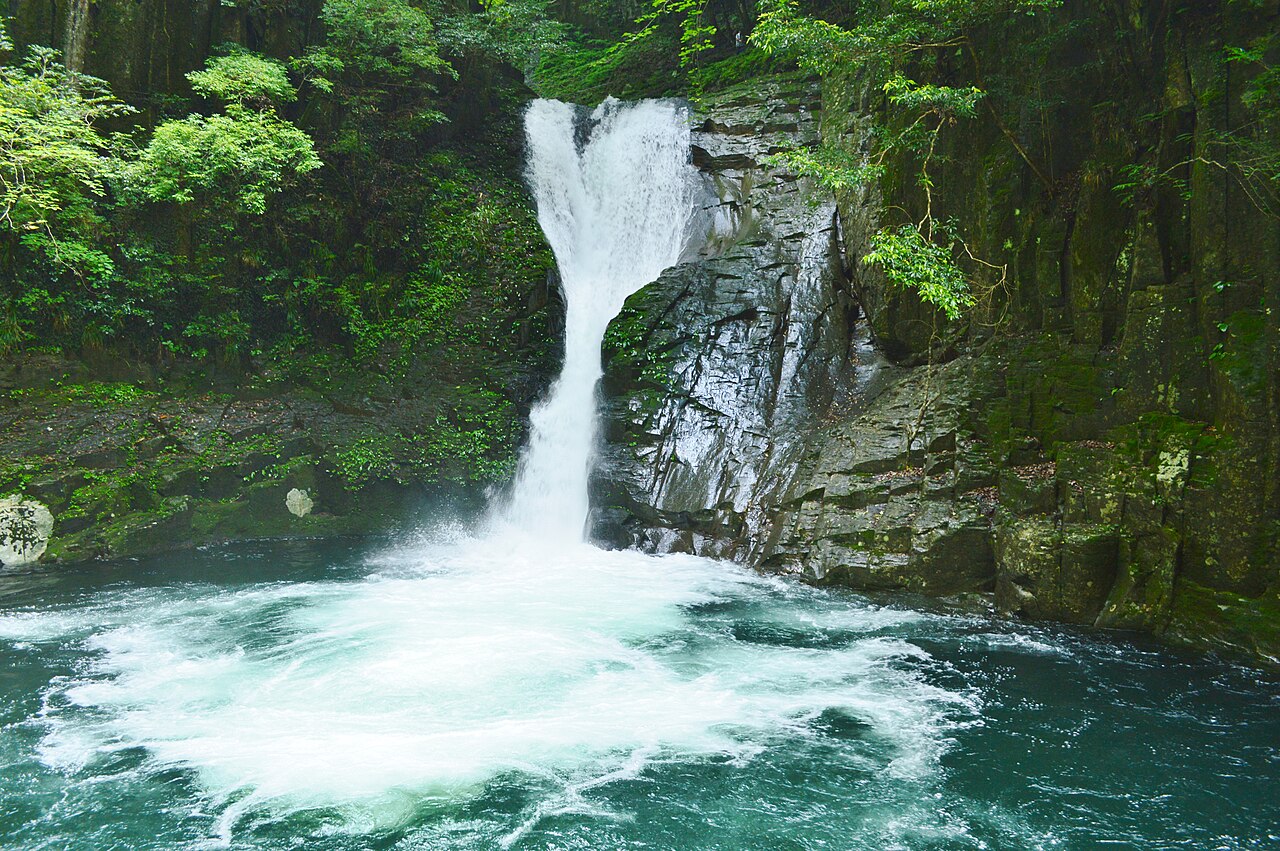
The name Akame is said to come from a legend in which En no Ozunu, the founder of Shugendo, was establishing the mountain when Fudo Myoo appeared on an ox with red eyes. Enjuin is said to trace its founding to the same ascetic, and the Edo-period Sangoku Chishi describes it as the finest secluded Buddhist retreat in Iga.
The record notes that the path into the gorge, once too rough for a horse, was rebuilt in months at the urging of district and village heads, after which visitor traffic rose sharply. The same record states that a visitor leaving Nabari early, with a hired local showing the way, could walk the whole gorge and return the same day.
The Akame Shijuhachi-taki Ninja Training Experience
Alongside the waterfalls, the Akame Shijuhachi-taki ninja training experience is offered as a paid activity, with a price set by age group from adults of high school age and older down to children not yet in elementary school, so a family pays a different amount for each member who takes part.
Prices for the training are per person by age, so it is worth deciding before you arrive who in the group takes part and who only rents a costume, since the costume-only option is priced at one thousand yen on its own and needs no training session attached to it.
| Ninja training experience | Yen |
|---|---|
| Adults (high school students and older) | 3,500 yen |
| Children (elementary and junior high school students) | 3,000 yen |
| Infants (under elementary school age) | 2,200 yen |
| Ninja costume rental only | 1,000 yen |
Takimi Bento and Set Meals at the Falls
Eating at Akame centres on the Takimi bento, lunch boxes sold under a name that means waterfall viewing, with a short list of fillings at different prices, from a Nagomi box at the low end up to a steak box that has to be ordered two to three days in advance of your visit.
Two of the boxes come from named kitchens, the miso-grilled rice ball bento from Dainichiya and the steak bento from Mibaratei, and for a sit-down meal rather than a box, Dainichiya also serves an Iga beef gyuujiru set, a beef-soup meal priced above any of the lunch boxes.
| Takimi bento and meals | Yen |
|---|---|
| Miso-grilled rice ball bento (Dainichiya) | 900 yen |
| Iga pork kakuni-don bento | 900 yen |
| Steak bento (Mibaratei), order 2 to 3 days ahead | 1000 yen |
| Nagomi (Wa) bento | 700 yen |
| Iga beef gyuujiru set meal (Dainichiya) | 1,250 yen |
Making It a Day Trip, or Staying in Nabari
Put end to end, the trip is compact: fifty-four minutes on the Kintetsu limited express from the Osaka direction to Akameguchi Station, with the change at Yamato-Yagi Station, and then the bus up to the falls, before the conservation fee at the entrance and the walk along the stream begin the day proper.
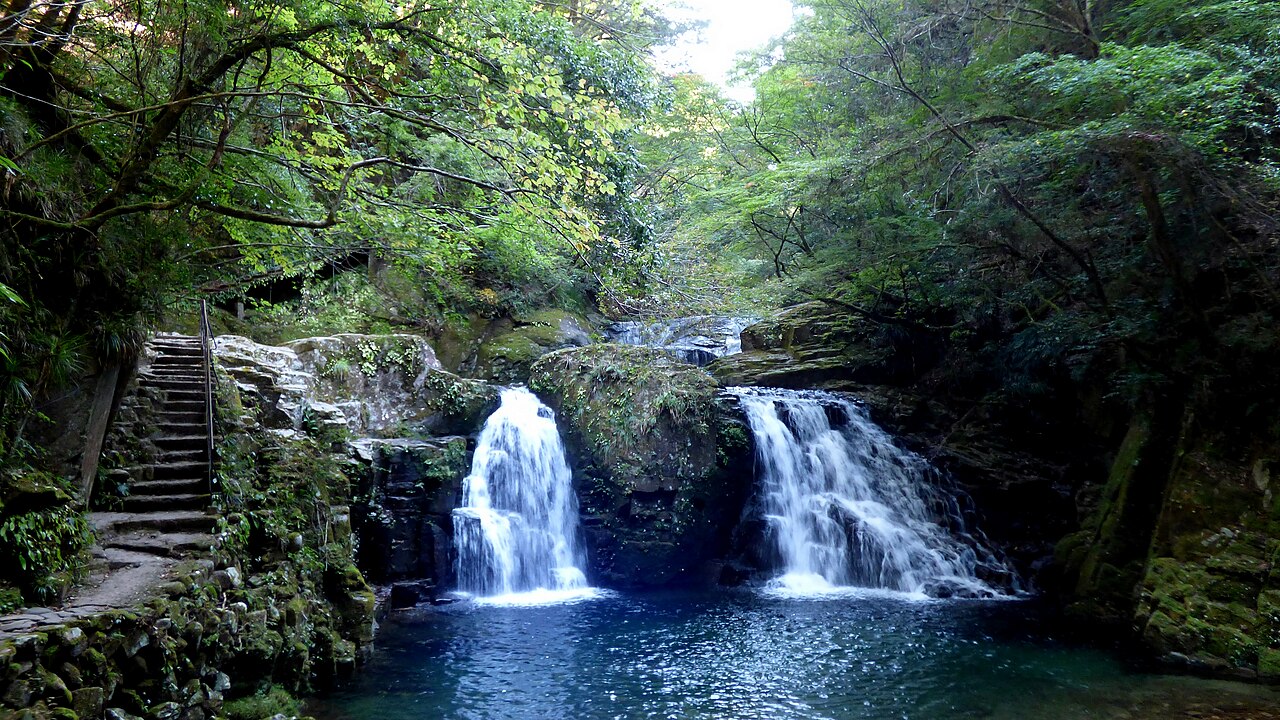
If you would rather not do it as a there-and-back from Osaka, there are places to stay in Nabari, the city the gorge belongs to, and a night there turns the waterfalls into an unhurried first stop the next morning rather than the far end of a long day out.