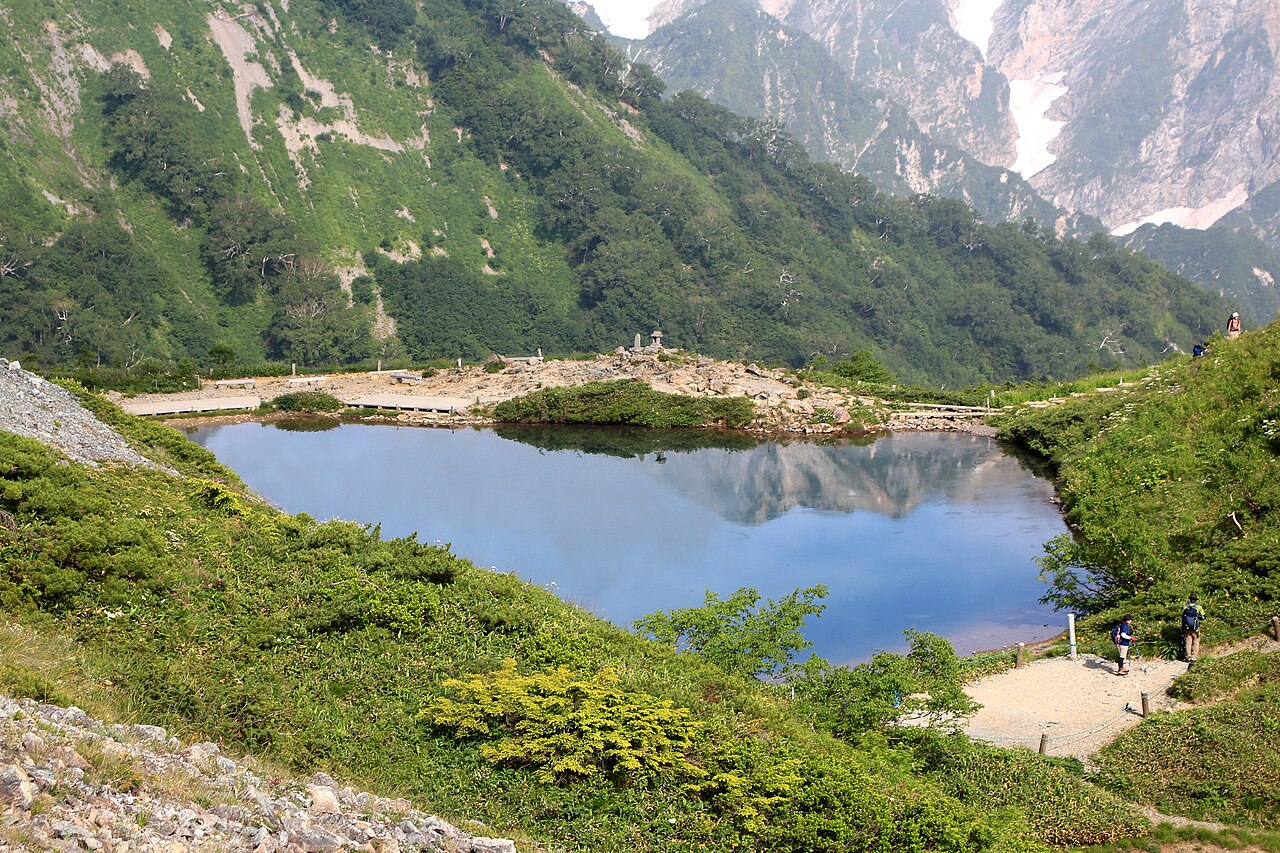
The Iwatake summit gives a three-hundred-sixty-degree view over the Northern Alps, Hakuba Village and the mountains of Hokushin. On Happo-one, the first cairn gives a sight of Mt. Fuji on days with clear air. At Mimizuku-no-Yu, the open-air bath looks toward Hakuba Sanzan with Happo-one in the background. A short gondola ride reaches the outdoor garden at Goryu Alpine Botanical Garden.
For walkers who want a lawn view in summer, autumn foliage around a mountain pond in a typical year and an open-air bath that faces the peaks, Hakuba pairs the Skyark Deck Cafe with the Happo Ike route and Mimizuku-no-Yu.
Happo-one: Happo-ike Pond, Kamaike Marsh and the Cloud-Sea Deck
Happo Ike is reached by a hiking route with a south side on a boardwalk and a north side that is a full mountain trail. The left detour is a little longer, but its boardwalk starts partway and the slope is relatively gentle. Autumn foliage appears around the pond from around late September in a typical year. The pond formed from collected snowmelt and rainwater.
Happo-one grows about three hundred forty-seven species of alpine plants, including endemic species. Ptarmigan, designated as a nationally protected rare wild species, live in its upper part. A cloud-sea deck stands at the end of the Kurobishi Daisan pair lift, and the Goraiko lift, when operating, gives a chance to see the sunrise and a sea of clouds. Six cairns stand along the ridge.
Kamaike Marsh reflects the Hakuba Sanzan mountains in the water that remains on the marsh. A walking path loops around it in about forty minutes. Many plants grow here, and a wooden walkway runs around the marsh.
If the plan in Hakuba is a gentle walk, the boardwalk side on the way to Happo Ike and the loop at Kamaike Marsh fit it, while the north route suits walkers ready for a full mountain trail.
Iwatake Mountain Resort: the Summit, Hitotoki-no-Mori and the Skyark Deck Cafe
Iwatake is climbed by a gondola that takes seven minutes to the summit. A mountain bike course runs from the summit to the foot of the mountain against the backdrop of the mountains. Iwatake Green Park, the lawn area at the summit, overlooks Hakuba Village.
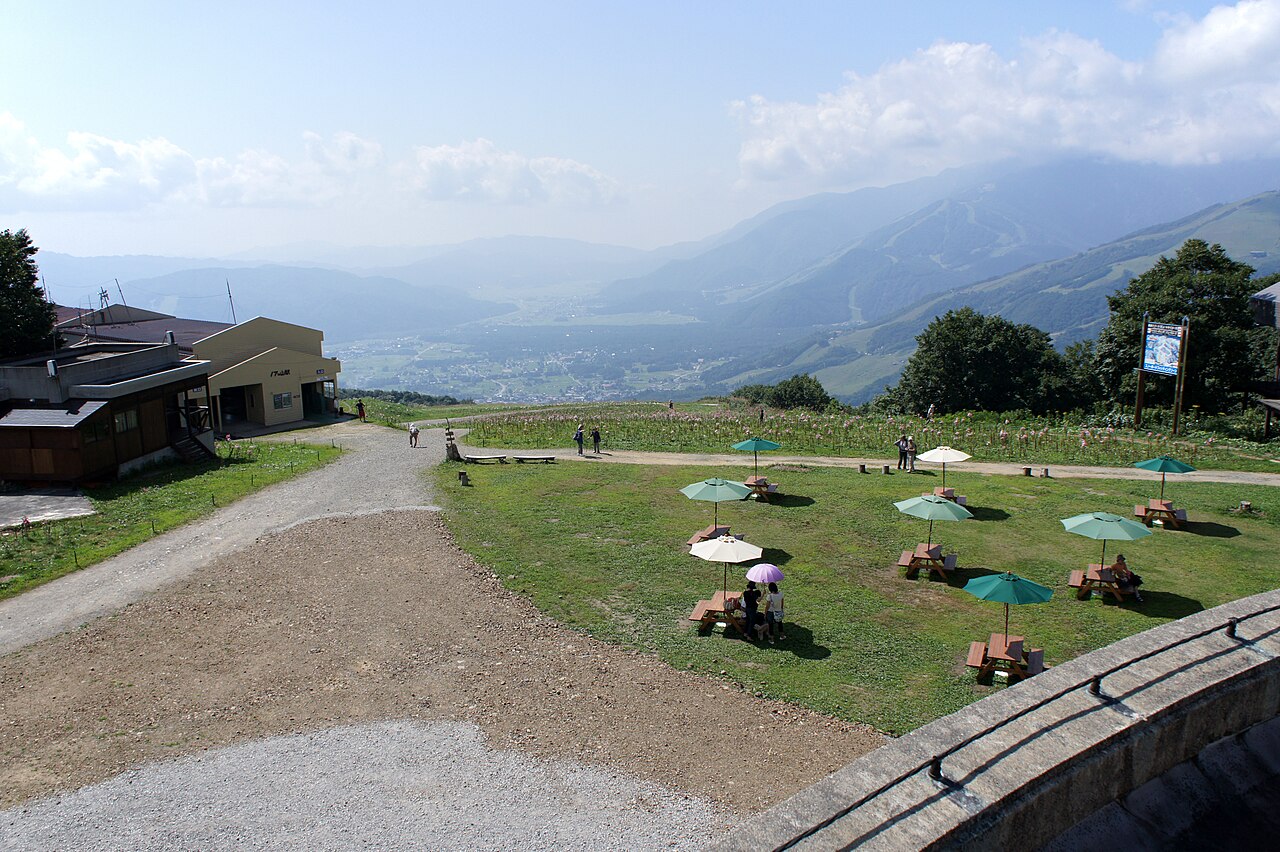
Hakuba Hitotoki-No Mori looks up from its plateau at the Karamatsusawa Glacier and the Northern Alps, with the farmland of the village below. At the Skyark Deck Cafe, a lawn view in summer and a snowfield view in winter spread out in front of the deck. The deck serves drinks and menu items prepared with partner local restaurants.
The two viewpoints differ in direction: Hakuba Hitotoki-No Mori looks up at the glacier, whereas the summit lawn looks out over the village.
Hakuba Happo Onsen: Baths That Face Hakuba Sanzan
Happo-no-Yu stands at the entrance of the Happo hot spring town, and its bath looks out on the Hakuba mountain range, including Hakuba Sanzan. At Mimizuku-no-Yu, bathers can view cherry blossoms at night during the cherry blossom season. The open-air bath at Happo-no-Yu contains natural hydrogen.
Obinata-no-Yu makes use of a huge natural rock for its outdoor bath. Foot baths are scattered within Hakuba Village. Sato-no-Yu, in the center of Happo Onsen Town, has a hexagonal tub in the center of its bathing area.
Paired with a ridge walk, the mountain view from Happo-no-Yu, the night blossoms at Mimizuku-no-Yu and the rock bath at Obinata-no-Yu each add something different to a Hakuba stay.
Tsugaike Nature Park, Goryu Alpine Botanical Garden and Oide Park
Tsugaike Nature Park lays most of its hiking route on a boardwalk, renovated to be easier to walk. Snowshoe walks in the park are possible when the ropeway starts its early-spring operation. The visitor center displays materials on the park's flora, fauna and terrain, and visitors can try bouldering and slacklining there.
The Alps-daira nature trail loops in about thirty minutes above the Goryu Alpine Botanical Garden. Escal Garden is a natural garden where colorful flowers bloom through the four seasons. GORYU MORIMORI ADVENTURE runs buggy tours with two people per buggy and up to fourteen participants on seven buggies per tour.
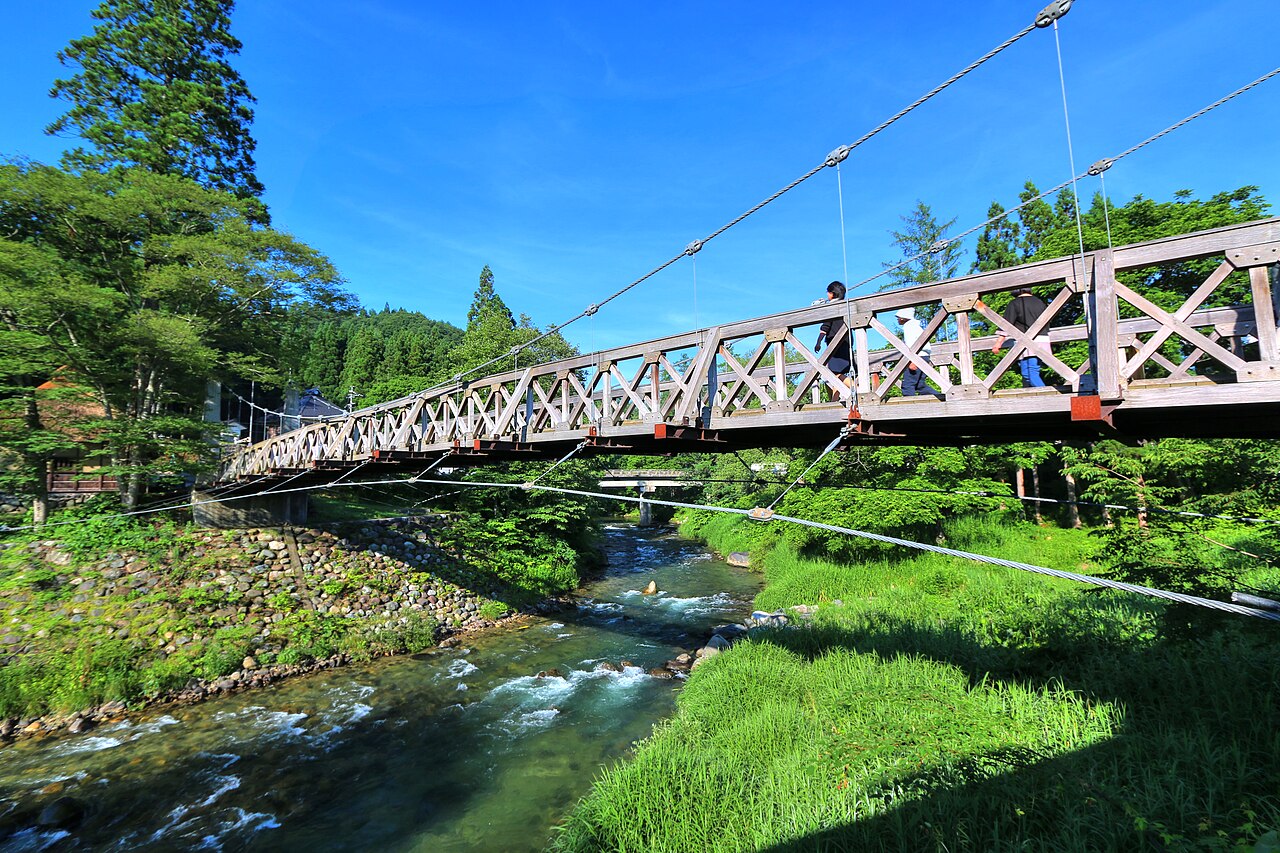
Oide Park holds a thatched-roof house, a water wheel and a suspension bridge, and the three Hakuba peaks can be seen through the bridge. At the Hakuba Ski Jumping Stadium, visitors can ride the lift between the normal hill and the large hill up to the start point. The Japanese ski jumping team won a gold medal there at the Nagano Olympics.
Mt. Karamatsu is typically reached in around four and a half hours by hikers who use the gondola and lifts to access the trailhead. On the Mt. Kotoomi trekking route, foliage across the whole mountain can be seen from late September to late October. Karamatsu-dake is a mountain with a glacier.
Tsugaike has the boardwalk, Goryu the garden reached by gondola, Oide Park the bridge and the thatched-roof house, and Mt. Karamatsu the long climb for hikers in Hakuba.
A Day in Hakuba Village: Happo-ike, Happo Onsen, Iwatake and Tsugaike
One Hakuba day can link four named places: Happo-ike, Hakuba Happo Onsen, the Iwatake summit and Tsugaike Nature Park. The south route to Happo-ike keeps to the boardwalk, and a sea of clouds may appear depending on conditions. The hot spring area lies at the foot of the Happo ridge in the western part of Hakuba Village. Its source water supplies about sixty-five lodgings and three foot baths.
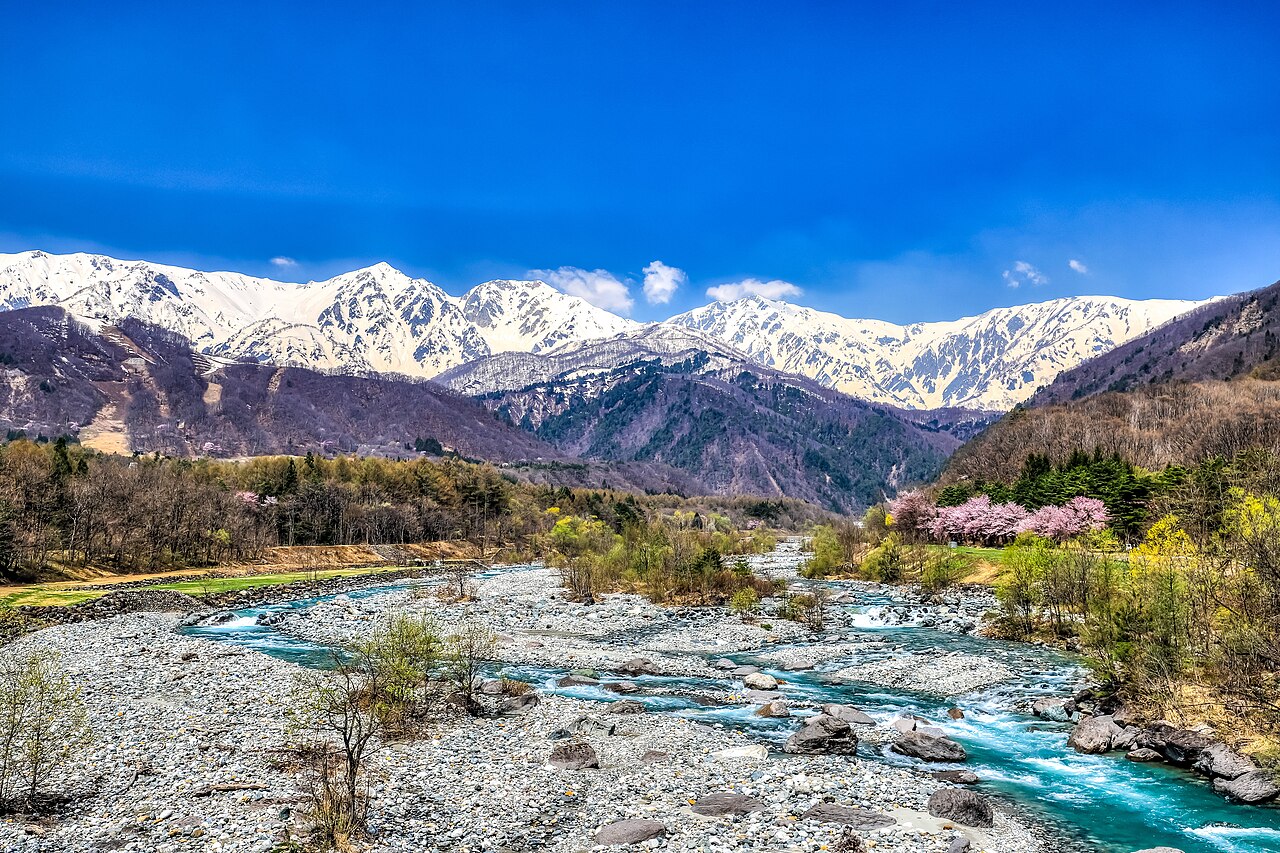
A free shuttle bus runs around Tsugaike Kogen, Hakuba Iwatake and Happo-one. At Iwatake, the gondola takes seven minutes to the summit. At Tsugaike, most of the nature park's hiking route follows the boardwalk. With limited time, the Happo-ike walk and a bath at Hakuba Happo Onsen can form the core, and the other two places can be added as the day allows.
For a longer visit, compare places to stay in Hakuba Village. Guided options appear among the tours listed for the Hakuba area.
Getting to Hakuba, Hours and Fees
New to rural buses and one-man trains? See how to ride them, step by step.
| Item | Details (as listed) |
|---|---|
| Tokyo (as listed) | shortest about two hours fifty minutes, by Hokuriku Shinkansen and limited express bus |
| Shinjuku (as listed) | about three hours forty minutes by Limited Express Azusa; Kanazawa about two hours forty minutes by Hokuriku Shinkansen and JR Oito Line |
| Hakuba Valley shuttle bus Line V (as listed) | adults eight hundred yen, children four hundred yen, paid by online ticket |
| Iwatake gondola, green season (as listed) | eight thirty to four twenty, last descent four fifty |
| Iwatake resort admission (as listed) | adults two thousand nine hundred yen, children sixteen hundred yen; includes round-trip gondola and South Lift rides |
| Tsugaike gondola and ropeway round trip, green season (as listed) | adults four thousand yen with Nature Park admission, three thousand six hundred eighty without |
| Parking (as listed) | Happo gondola lot A one thousand yen a day; Tsugaike central lot five hundred yen a day, second lot free |
The times and prices above are the green-season listings. The Hakuba Valley shuttle ticket is sold online, and cash is not accepted.
Thinking of staying overnight?
Compare places to stay near Hakuba-mura, Nagano, Japan →
Disclosure: This post may contain affiliate links. If you book through them, we may earn a commission at no extra cost to you.