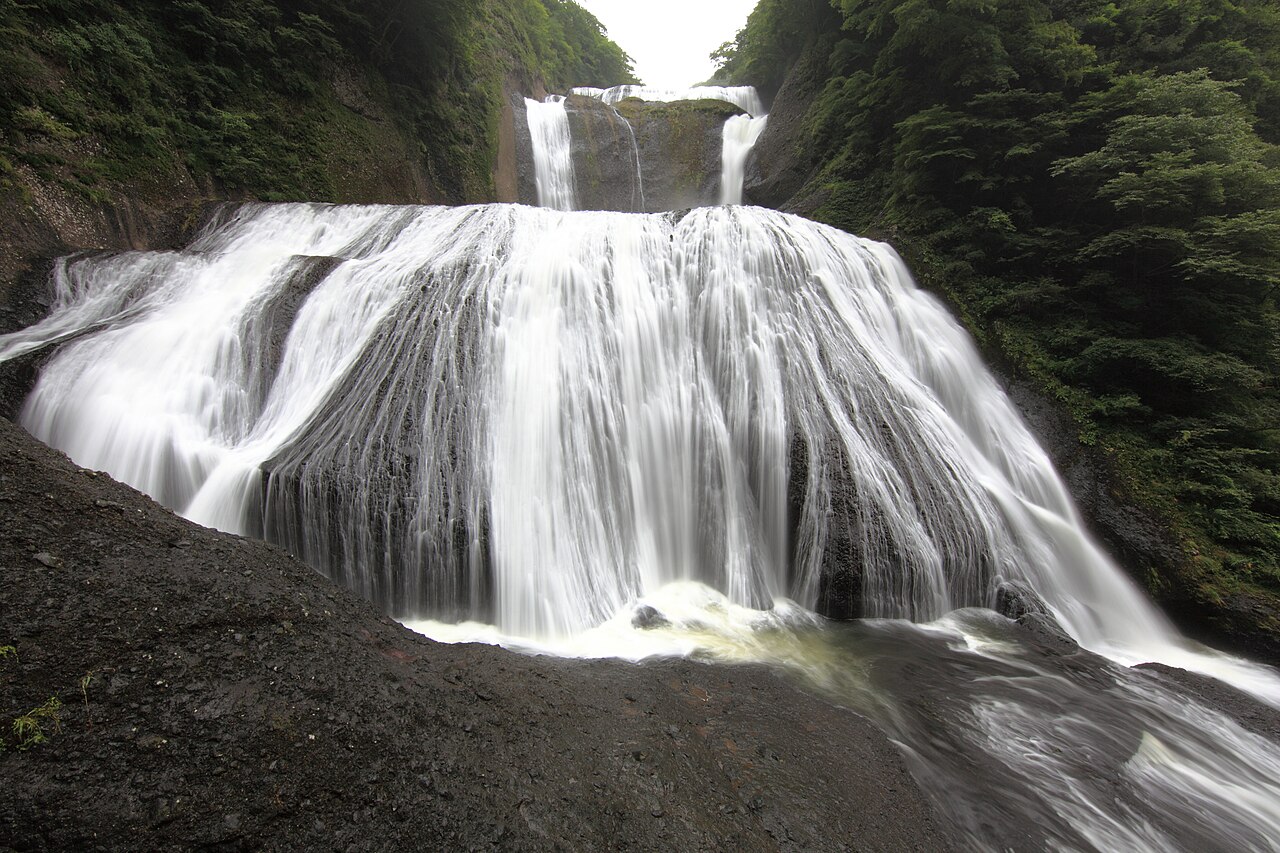
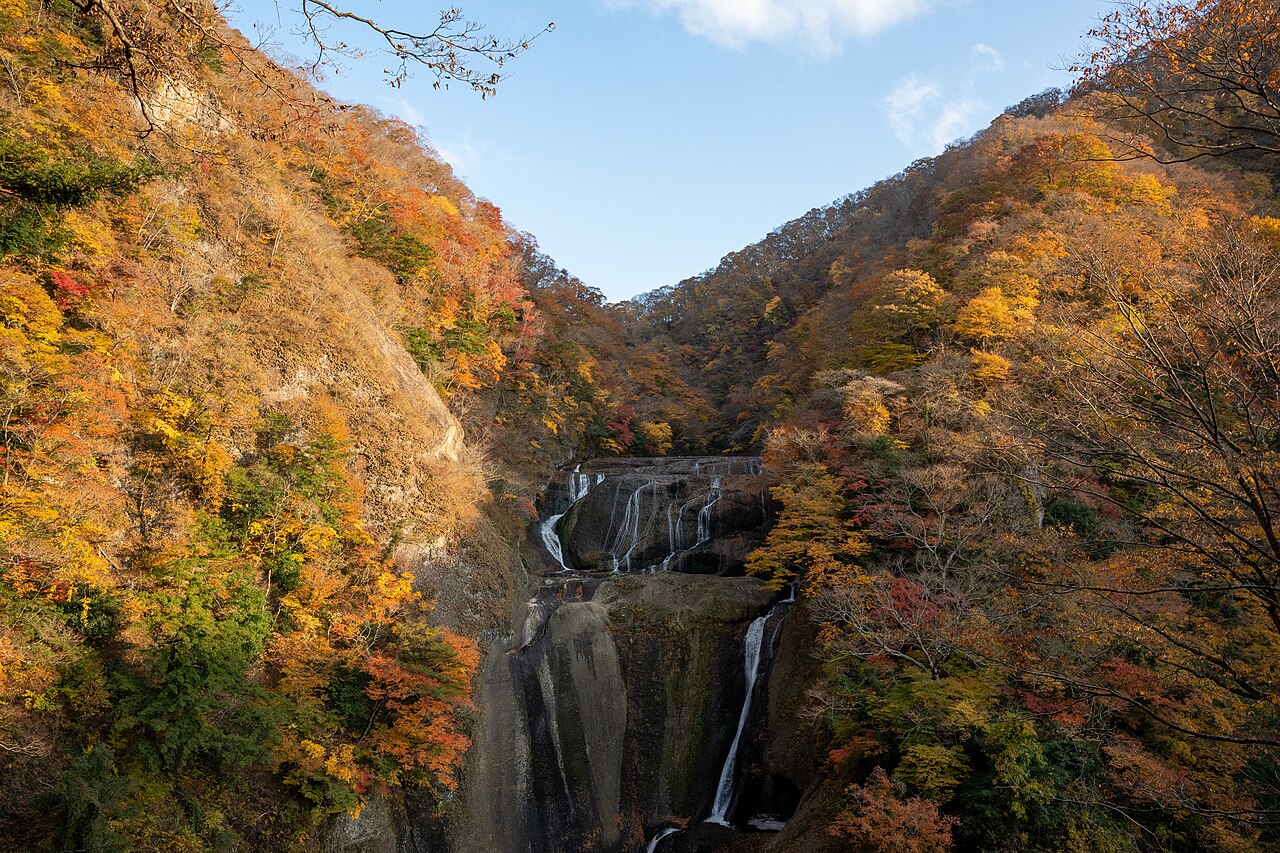
Fukuroda Falls pours down a broad rock face in four tiers, a gentle white line from afar and a ground-pounding force up close. It changes with the season too. In autumn colourful maples set off the pure white of the water, and after dark an illumination lifts the falls and the surrounding leaves out of the darkness. When severe cold continues in winter, the whole waterfall can freeze white into what is called hyobaku.
Four Tiers of White Water: The Fall and Its Name
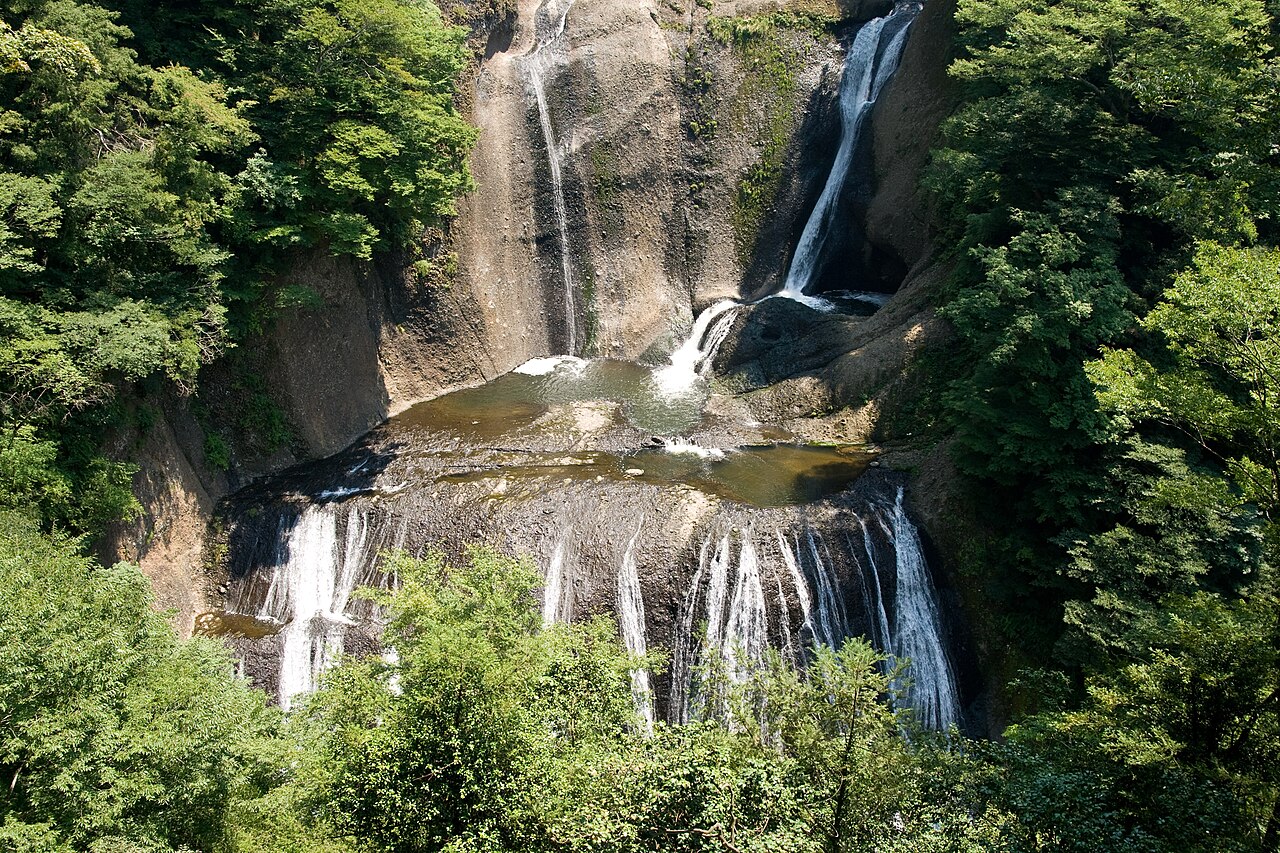
The waterfall stands one hundred and twenty metres high and seventy-three metres wide, and the water descends the great rock face in four stages, which is why it is also known as the four-tiered falls. The line the water draws on those tiers is smooth as white thread one moment and fierce the next, so the view keeps shifting while you stand still.
One account holds that the name goes back to the poet-monk Saigyo Hoshi, said to have visited long ago, praised the falls and declared that one must come once in each season to taste their true charm. He also composed a poem about the falls, and the four-visit idea fits: new green, autumn colour, winter ice and evening light each make a different waterfall.
In early summer fresh green covers the rock face, and a stillness can be sensed even amid the roar of the water. From a distance the waterfall is that gentle white line; close up it pounds the ground, and that difference is the reason to walk in rather than only look from afar.
Through the Tunnel to the Platforms and the Suspension Bridge
The way in is through the tunnel, and the viewing platform at its far end puts you close to the falls, close enough for the ground-pounding force of the water to take over from the white line seen from afar. From that platform a passage also leads out to the suspension bridge.
A second viewing platform rises in three decks, and from there the whole four-tiered waterfall comes into view at once, from the top tier to the bottom. The two platforms give you both versions of the falls: the overwhelming close-up and the complete picture.
Cross the suspension bridge and climb the Tsukiori-yama hiking course for about twenty minutes to reach Namase Falls, designated a national place of scenic beauty together with Fukuroda Falls. The course is laid out around the big waterfall and lets you wander on to a temple hall and a castle ruin, so the gorge can be walked rather than only viewed.
Winter: A Frozen Fall, Ice Climbers and the Daigo Light
When severe cold continues, the whole waterfall, one hundred and twenty metres high and seventy-three metres wide, freezes white into what is called hyobaku. The ice melts as the sun rises, so the cool of the morning is the time to see it, and some visitors can be seen taking on the ice wall with an ice axe in hand.
The Kuji River has a winter spectacle of its own: shiga, a natural phenomenon in which fragments of ice drifting on the surface in midwinter catch the morning sun and sparkle. The air in Daigo is clear and the town is known as a stargazing spot in Ibaraki Prefecture, so a frozen waterfall in the morning and stars after dark can share one winter day.
From November seventh to January thirty-first the Daigo Light shines on the waterfall every day, with the same event running at Michi-no-Eki Okukuji Daigo and in front of Hitachi-Daigo Station at the same time. In autumn the illumination lifts the falls and the surrounding leaves out of the darkness, and with the tunnel of light the whole space turns fantastical.
Behind Tsukimachi Falls, Autumn Leaves and a Cool Summer
Tsukimachi Falls is a smaller waterfall, seventeen metres high and twelve metres wide, on a tributary of the Kuji River, and its particular pleasure is that you can go in behind the water without getting wet. It usually comes down in two strands; when the volume rises a child waterfall appears beside them and it becomes a parent-and-child waterfall. When the cold turns severe it too freezes whole.
Many maples line the road to Tsukimachi Falls, and the Daigo autumn rests on that pairing of colour and white water: at Fukuroda Falls colourful maples set off the pure white of the waterfall, and at a temple in town known as the maple temple the leaves turn bright red across the grounds. From that high-ground temple the whole satoyama landscape in autumn colour comes into view.
Summer has its own side here. Standing behind the water at Tsukimachi Falls is one way to feel cooler, and a leisure facility in town adds a wave pool and a water slide outdoors, with fourteen health baths, a Badehaus and a hot-spring pool indoors.
Shamo, Apples, Tea and a Town of Festivals
The dish to look for is Okukuji shamo, a chicken raised in the countryside of Okukuji Daigo on grain and greens with room enough to exercise, which gives meat that is low in fat, firm, very chewy and deep in flavour. The breed came from Siam, today's Thailand, and the restaurant at Michi-no-Eki Okukuji Daigo serves it as oyakodon, sauce katsu-ju and curry rice.
Okukuji apples ripen fully on the tree, and because such fruit does not go through distribution it never reaches the market; tree-ripened apples are juicier and sweeter than fruit picked early, and at orchards in Daigo you can pick your own and sample several varieties. Okukuji tea grows in fields known as the northern limit of tea growing, where new shoots develop slowly in cool, soft morning mist and become thick-fleshed leaves with a strong flavour; the tea is said to go back about five hundred years to a monk of a temple in Daigo who scattered seeds brought home from Uji.
The river and the orchards set the festival calendar. Salt-grilled sweetfish from the Kuji River is a popular way to eat the local ayu, and an ayu-catching event is held on the first Sunday of August. On August fourteenth the Daigo Jizoson festival brings fireworks and a lantern-floating to the river shore, where countless lanterns, set adrift for the repose of those lost to water accidents, drift slowly on the surface. Autumn brings the Okukuji Daigo Apple Festival, with speed-eating and apple-peeling contests, variety tastings and juice sampling, then the Daigo Town fireworks festival on Saturday, November twenty-first, from six in the evening for about thirty minutes, with the next day in reserve.
Getting to Fukuroda Falls
New to rural buses and one-man trains? See how to ride them, step by step.
| From | To | Time |
|---|---|---|
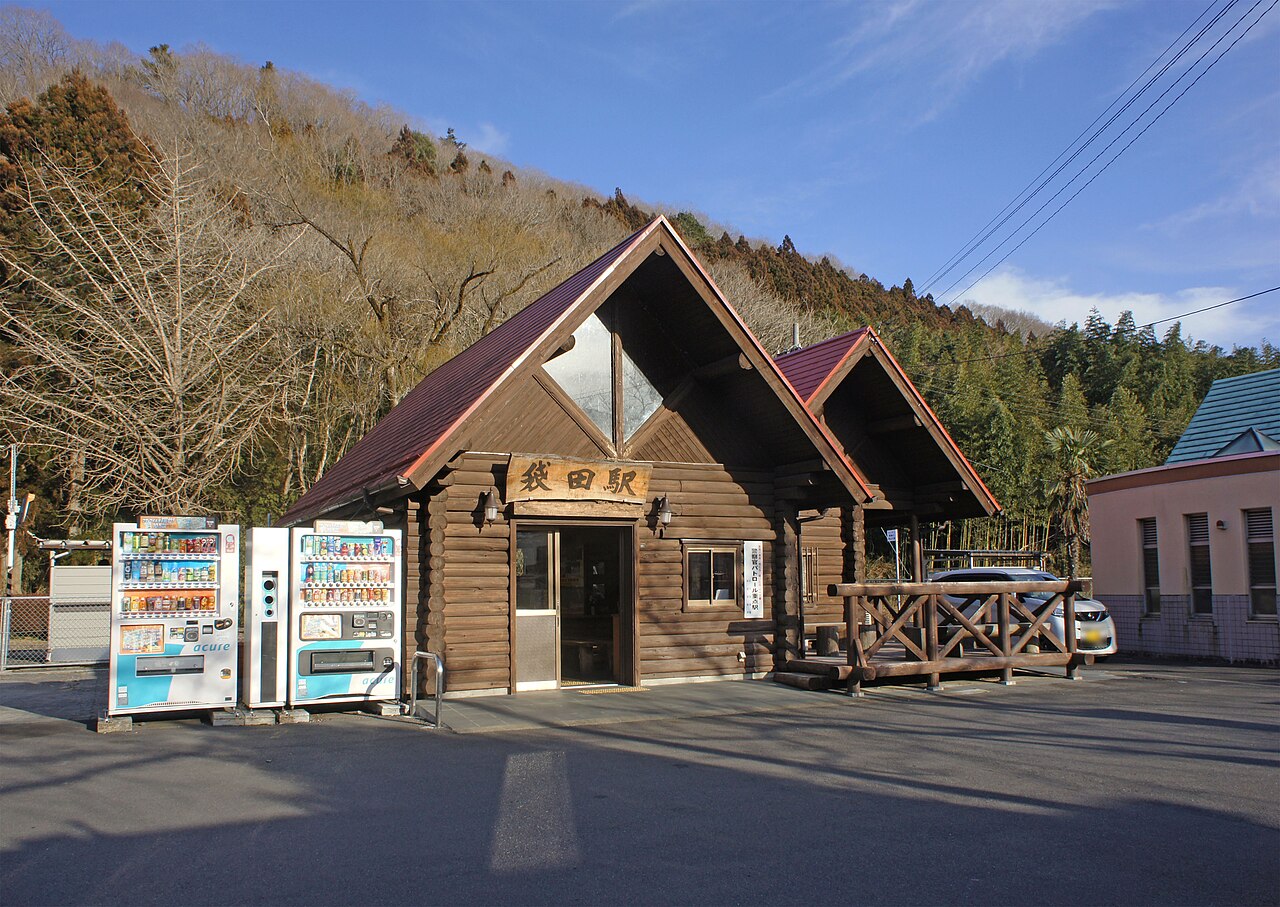
| Fukuroda Station (JR Suigun Line) | Takimoto stop, then the falls | Bus about 10 minutes, then about a 10-minute walk |
| Hitachi-Daigo Station (JR Suigun Line) | Takimoto stop, then the falls | Bus about 15 minutes, then about a 10-minute walk |
| Fukuroda Station | Fukuroda Falls | Taxi about 10 minutes |
| Fukuroda Station | Fukuroda Falls | On foot about 40 minutes |
Hours and Fees
| What | Fare or time | Note |
|---|---|---|
| Fukuroda Falls, May to October | 8:00-18:00 | Opening times |
| Tunnel fee, individual | 500 yen adult, 300 yen child | |
| Tunnel fee, group of 20 or more | 400 yen adult, 200 yen child | |
| Tunnel of light, November 7 to November 30 | 8:00-20:00 | The viewing tunnel at the falls |
| Tunnel of light, December 1 to January 31 | 9:00-19:00 | The viewing tunnel at the falls |
| Falls light-up, November 7 to November 30 | 16:30-20:00 | Daigo Light |
| Falls light-up, December 1 to January 31 | 16:30-19:00 | Daigo Light |
| Town hot-spring health centre | 10:00-20:00 | Reception until 19:30 |
| Town hot-spring health centre, weekdays | 710 yen adult, 350 yen child | |
| Town hot-spring health centre, weekends and holidays | 1,010 yen adult, 500 yen child | |
| Michi-no-Eki Okukuji Daigo hot spring | 11:00-20:00 | Last entry 19:30 |
| Michi-no-Eki Okukuji Daigo hot spring, admission | 500 yen adult, 300 yen child | |
| Michi-no-Eki Okukuji Daigo hot spring, closed days | 1st and 3rd Wednesdays of every month | No closing in August |
| Yamizo Hotel day-use bath | 11:00-16:00 | 600 yen adult, 400 yen child |
| Yamizo Hotel day-use bath | 16:00-20:00 | 400 yen adult, 300 yen child |
| Yamizo Hotel apple bath, September to January | 11:00-16:00 | 800 yen adult, 500 yen child |
| Michi-no-Eki Okukuji Daigo restaurant | 11:00-18:00 | Last order 17:30 |
| Okukuji shamo oyakodon | 1,900 yen | Tax included, Michi-no-Eki Okukuji Daigo restaurant |
| Okukuji shamo sauce katsu-ju | 2,100 yen | Tax included, Michi-no-Eki Okukuji Daigo restaurant |
| Okukuji shamo curry rice | 1,600 yen | Tax included, Michi-no-Eki Okukuji Daigo restaurant |
| Apple picking, entrance | 700 yen adult, 500 yen child | Adults from junior high school; children age 3 to elementary school |
| Apple picking and direct sales | from 600 yen | Tax included |
| Tsukiori-yama hiking course | 1.6 kilometres | Length of the course |
| Bus, Fukuroda Station to Takimoto | 260 yen adult, 130 yen child | |
| Bus, Daigo Station to Takimoto | 420 yen adult, 210 yen child | |
| Fukuroda-Daigo one-day pass | 500 yen | Unlimited rides for one day |
Fees and hours were checked against official sources between 12 October 2026 and 29 October 2026.
For an early start on a winter morning or an evening under the Daigo Light, browse places to stay in Daigo.
Thinking of staying overnight?
Compare places to stay near Daigo, Ibaraki, Japan →
Disclosure: This post may contain affiliate links. If you book through them, we may earn a commission at no extra cost to you.