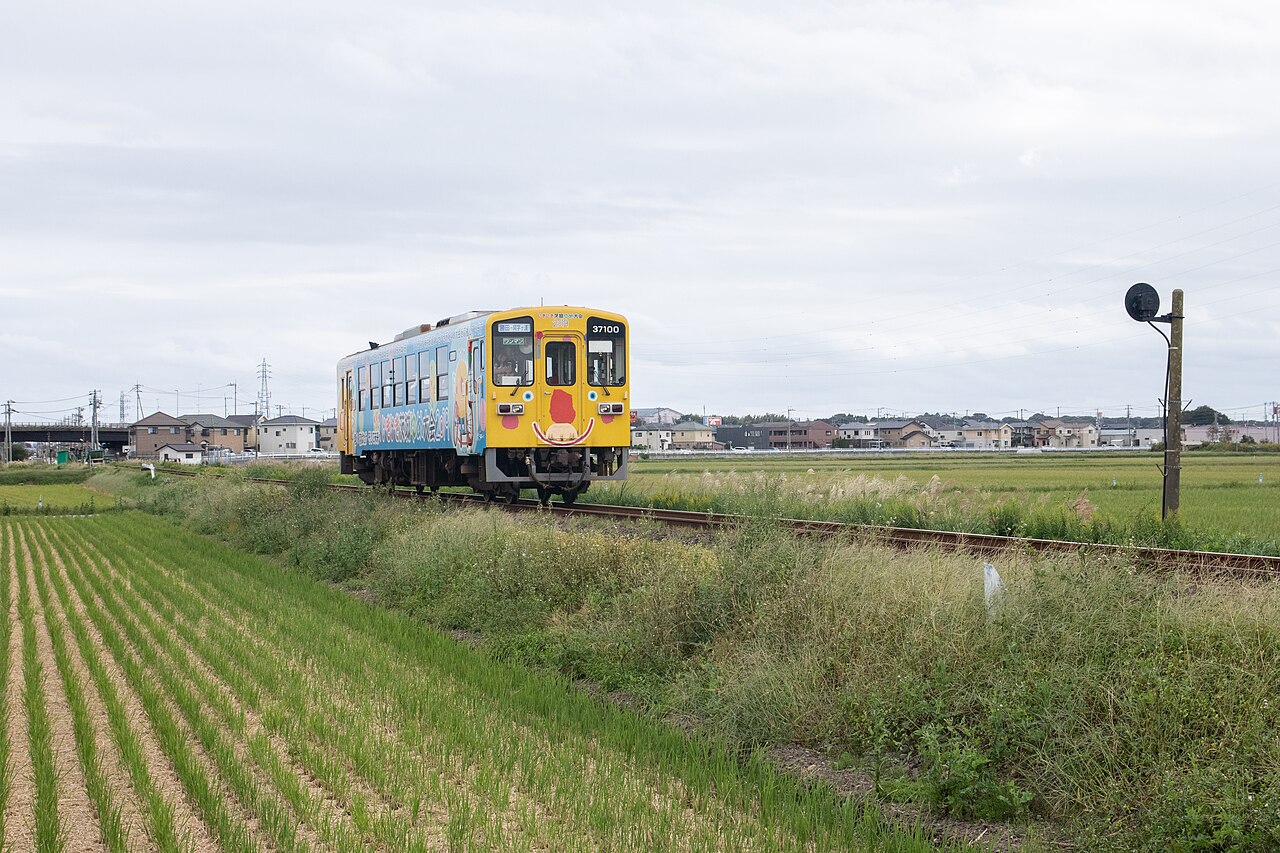
Restaurants stand along the Nakaminato Fish Market, serving sushi with seasonal toppings and seafood bowls full of seafood. Walking through back alleys, two white furnaces come into view on a small hill. One railcar of the Hitachinaka Seaside Railway has had its interior and exterior renewed in a sightseeing style.
This route suits visitors who want seafood bowls at a fish market, a sightseeing-style railcar and a look at the furnaces built to cast cannon, and it is built around the Nakaminato Fish Market.
| Time guide | Place | What you do | Walk or stay |
|---|---|---|---|
| Morning | Katsuta | Arrive from Ueno Station by limited express Hitachi or Tokiwa | About seventy minutes |
| Morning | Katsuta to Nakaminato | Ride the Hitachinaka Seaside Railway | About fifteen minutes |
| Midday | Nakaminato Fish Market | Seafood bowls and set meals | Ten minutes on foot |
| Afternoon | Nakaminato Reverberatory Furnace | Furnaces on a small hill | Seven minutes on foot |
| Afternoon | Ajigaura | Sand beach by the sea | Twenty-eight minutes from Katsuta |
Hitachinaka Seaside Railway Cars and the Nakaminato Morning Market
At Katsuta, the railway's symbol colour, orange, is used, and the railcars and the company logo mark are drawn on it. A ROCK object, symbolising a music town where the Rock in Japan Festival is held, sits in front of the Katsuta stop. One railcar had both its interior and its exterior renewed as a sightseeing-style car.
The area around one stop on the railway is a continuous view of rice paddies. In the rice-planting season, a green carpet spreads around that same stop on the railway. A morning market is held at the Nakaminato stop on the first Sunday of every month, selling vegetables sold directly by JA and JF and dried seafood.
A cat lives at the Nakaminato stop. Electric bicycles can be borrowed at the Nakaminato stop for cycling. The original building from the day the railway opened remains at the Nakaminato stop, the main stop of the railway.
Seafood Bowls and Set Meals at the Nakaminato Fish Market
Salmon harasu sold by weight at one shop is described as having crisp skin and fluffy flesh. One fish restaurant has a calm interior where the sound of a koto plays, and local fish of the season are served. Many restaurants stand along the Nakaminato Fish Market, serving sushi with seasonal toppings and seafood bowls full of seafood.
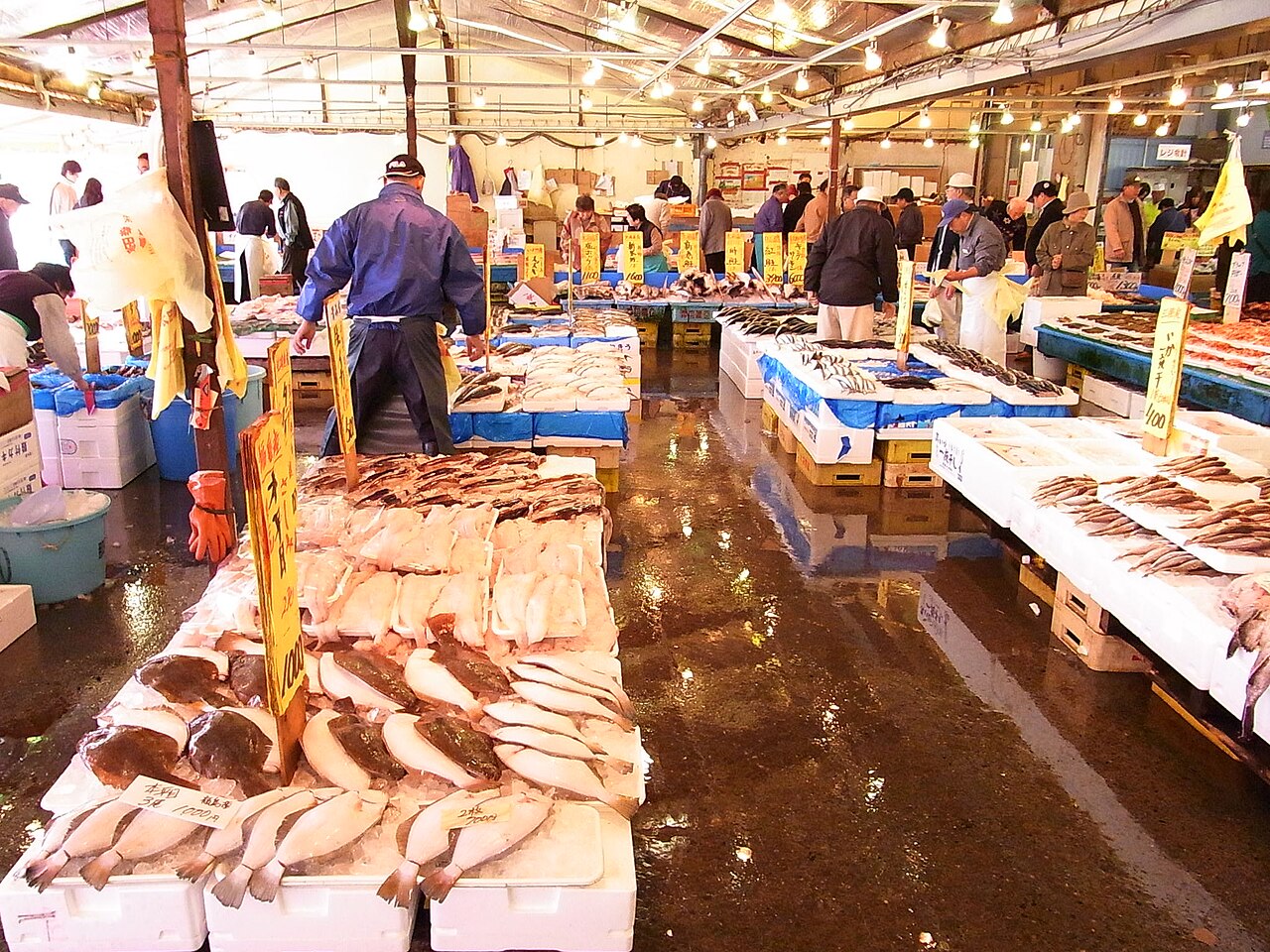
At one restaurant, a seafood bowl is served in a boat-shaped vessel with fresh seafood arranged in it. The bowl has a thick bed of mekabu on the rice, squid sashimi on top of that, and fresh tuna on the top tier. The yokappe chirashi is an assortment of six to seven kinds of fresh sashimi. Another bowl uses monkfish liver landed off Joban.
Seafood grilled on a shichirin in front of the diner is eaten as it cooks at one restaurant. Hamagoya offers seafood bowls as well as set meals of simmered fish and grilled fish. The premium grilled fish set uses fish landed at Nakaminato and Nagasaki, dried in the sun in-house. The premium grilled fish set is grilled slowly, which gives a fluffy texture and flavour.
One sashimi set is made with seasonal fish landed in the three-beach area of Nakaminato, Hiraiso and Oarai Port, laid out in a generous serving. The three-beach bowl is named after the collective name for the three beaches on the Pacific coast: Hiraiso, Nakaminato and Oarai.
Seasonal Fish Landed at Nakaminato
Abalone that barely moves when the middle of the flesh is touched, and is limp, is not a good one to choose. A fresh spiny lobster moves well and curls its tail inward. The bai whelk shell is soft, so the meat can easily be taken out by breaking it.
The hobo has a pale rose-coloured body and large pectoral fins of cobalt blue. The hobo also makes a sound by contracting its swim bladder. Anglerfish partly bury themselves in the sandy-mud bottom and draw prey close to the large mouth by moving a lure-like organ, then swallow it whole. In spring the katsuo is the hatsugatsuo, with little fat and a light mouthfeel.
Bai shellfish sashimi, with the slime removed and the innards carefully prepared, has a good texture and sweetness. The engawa of the flounder has a chewy bite and is fatty. The muscle at the base of the dorsal and anal fins of the flounder is called engawa and is used as a sushi topping.
Nakaminato Reverberatory Furnace and Sanjo-mon Gate
Walking through back alleys, two white furnaces come into view on a small hill. The furnace was built by Tokugawa Nariaki, lord of Mito, to cast iron cannon after foreign ships began appearing off Nakaminato in the late Edo period.
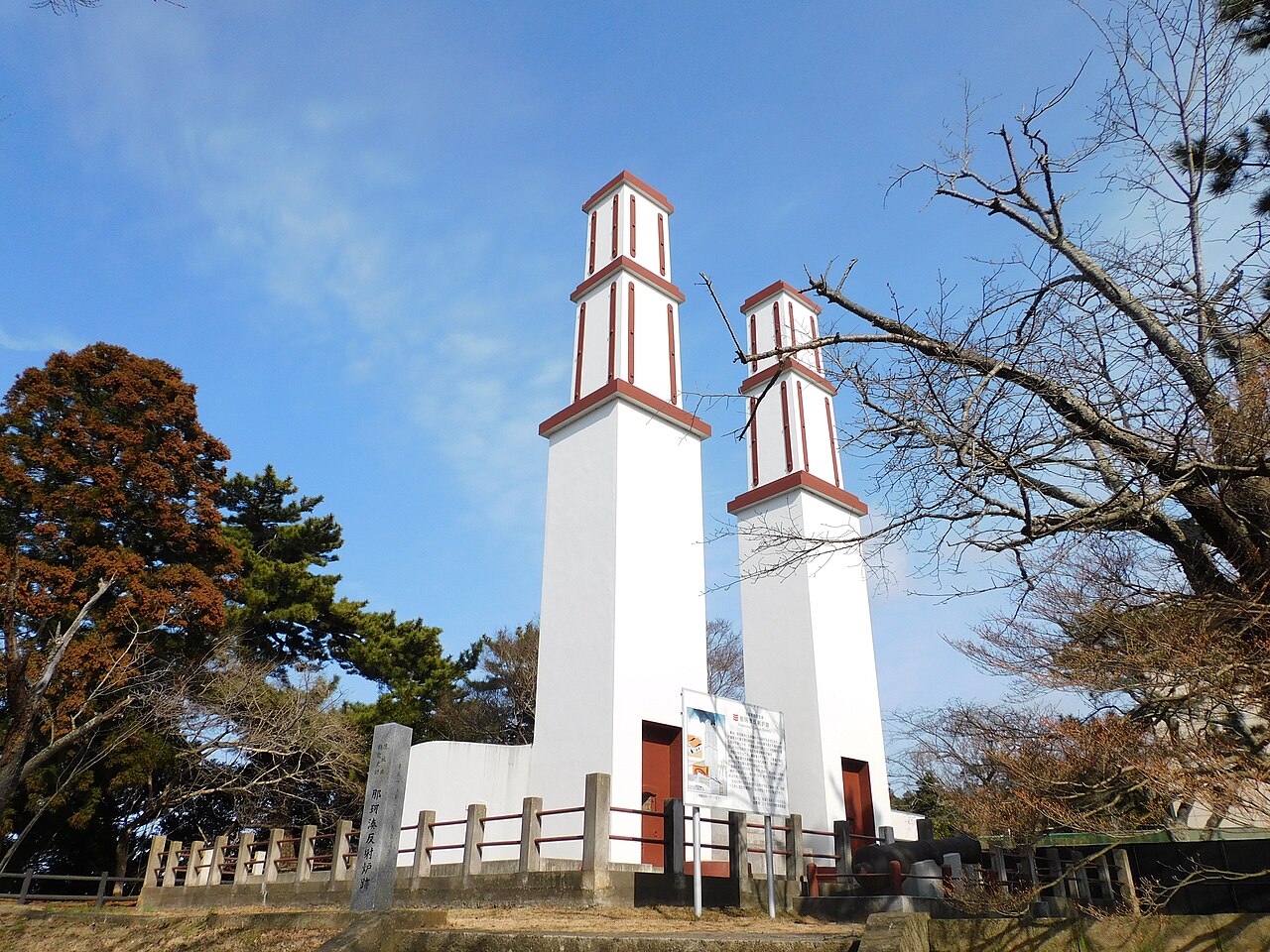
A marble monument inscribed by Nariaki himself stands on high ground with a view of the Pacific Ocean and the Nakaminato fishing port. Visitors to Sanjo-mon can see a gate whose form is yakuimon, which was moved to its present site.
At the stone drinking-water tank at the entrance of Sanjo-mon, water comes out vigorously when the tap is turned. The spring water at the Sanjo-mon entrance is not too cold, has no smell and tastes mellow. The spring water is managed by the town, and members of the public can use it.
Hiraiso and Ajigaura Beaches on the Seaside Railway
At Hiraiso beach the waves are very calm for swimming, and it is a beach popular with families who have small children. The beach at Hiraiso is a swimming beach, and it is surrounded by breakwaters.
Ajigaura beach has a sand beach about one and a half kilometres long and in summer is busy with bathers from inside and outside the prefecture. The sea at Ajigaura beach is described as a shallow beach.
Name plates along the railway carry illustrations inside the kanji that show each stop's specialty or characteristics. The Ajigaura name plate shows a nearby hot spring, a fish hook, seaweed and the anglerfish, described as a typical Ibaraki Prefecture hotpot ingredient. The Ajigaura stop is used for three cars but is laid out for seven, a remnant of a former temporary through service.
Getting to Nakaminato
New to rural buses and one-man trains? See how to ride them, step by step.
| Route | Item | Detail |
|---|---|---|
| Ueno Station, limited express | To Katsuta Station | About seventy minutes |
| Ueno, Hitachi or Tokiwa | Departures | Every thirty minutes |
| Mito Station, JR Joban Line | To Katsuta Station | About six minutes |
| Iwaki Station, limited express | To Katsuta Station | About sixty minutes |
| Katsuta Station, Minato Line | To Nakaminato Station | About fifteen minutes |
| Katsuta Station, Minato Line | Adult fare to Nakaminato | Three hundred fifty yen |
| Katsuta Station, Minato Line | To Ajigaura Station | About twenty-eight minutes |
| Minato Line | Payment | Cash or cashless, no IC |
| From Nakaminato Station | To Nakaminato Fish Market | Ten minutes on foot |
| From Nakaminato Station | To Reverberatory Furnace | Seven minutes on foot |
| Nakaminato Fish Market | Prefectural car park | About six hundred cars |
| Nakaminato Station | Park-and-ride car park | About forty cars |
For an overnight stay nearby, browse places to stay in Hitachinaka.
Hours and Fees
| Place | Item | Time or fee |
|---|---|---|
| Nakaminato Station | Ticket window, weekdays | Seven hundred to nineteen hundred |
| Nakaminato Station | Window, weekends and holidays | Eight thirty to seventeen thirty |
| Nakaminato Station | Morning market, first Sunday | Nine to eleven |
| Nakaminato Station | Electric bicycle, per day | One thousand yen |
| Nakaminato Fish Market | Saturdays, Sundays, holidays | All shops open |
| Nakaminato Fish Market | Year-end, December | Twenty-eighth to thirty-first |
| Hamagoya | Hours, weekdays | Ten hundred to sixteen hundred |
| Hamagoya | Hours, Saturdays and holidays | Eight thirty to fifteen thirty |
| Hamagoya | Closed | Mondays and Tuesdays |
| Hamagoya | Three-beach bowl, tax excluded | Two thousand two hundred yen |
| Hamagoya | Gold bowl, tax excluded | Three thousand seven hundred yen |
| Hamagoya | Grilled fish set, tax excluded | Two thousand yen |
| Fish restaurant with koto | Hours | Eleven hundred to eighteen hundred |
| Fish restaurant with koto | Last order | Seventeen forty-five |
| Fish restaurant with koto | Closed | Tuesdays and Wednesdays |
| Fish restaurant with koto | Sashimi set | Two thousand four hundred eighty yen |
| Fish restaurant with koto | Top monkfish liver bowl | Three thousand one hundred eighty yen |
| Fish restaurant with koto | Simmered fish set | Two thousand four hundred eighty yen |
| Boat-shaped bowl restaurant | Hours, weekdays | Ten hundred to sixteen hundred |
| Boat-shaped bowl restaurant | Hours, weekends and holidays | Nine thirty to seventeen hundred |
| Boat-shaped bowl restaurant | Ripple bowl | Three thousand one hundred yen |
| Boat-shaped bowl restaurant | Yokappe chirashi | Two thousand nine hundred ninety yen |
| Boat-shaped bowl restaurant | Ama-chan bowl | One thousand nine hundred fifty yen |
Fees and hours were checked against official sources on 15 November 2026.
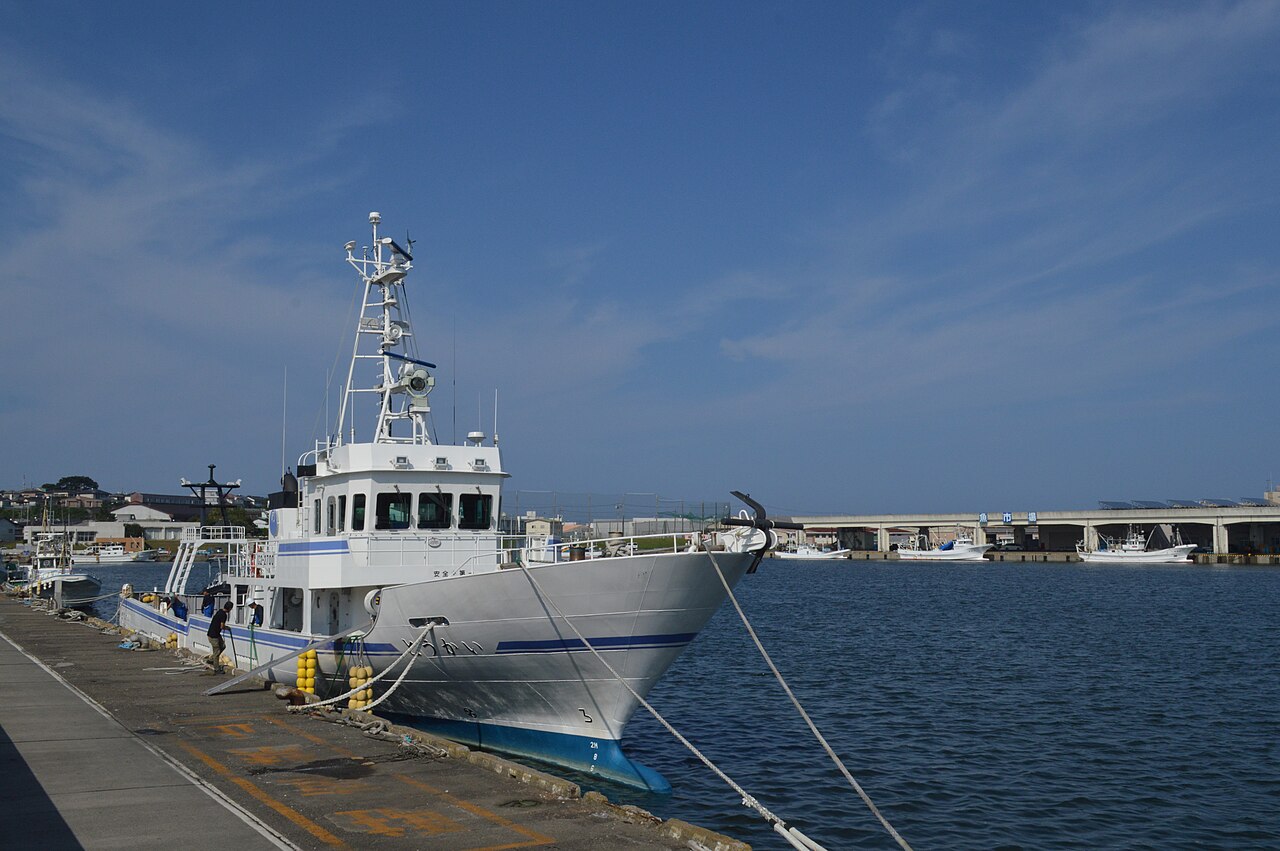
Thinking of staying overnight?
Compare places to stay near Hitachinaka →
Disclosure: This post may contain affiliate links. If you book through them, we may earn a commission at no extra cost to you.