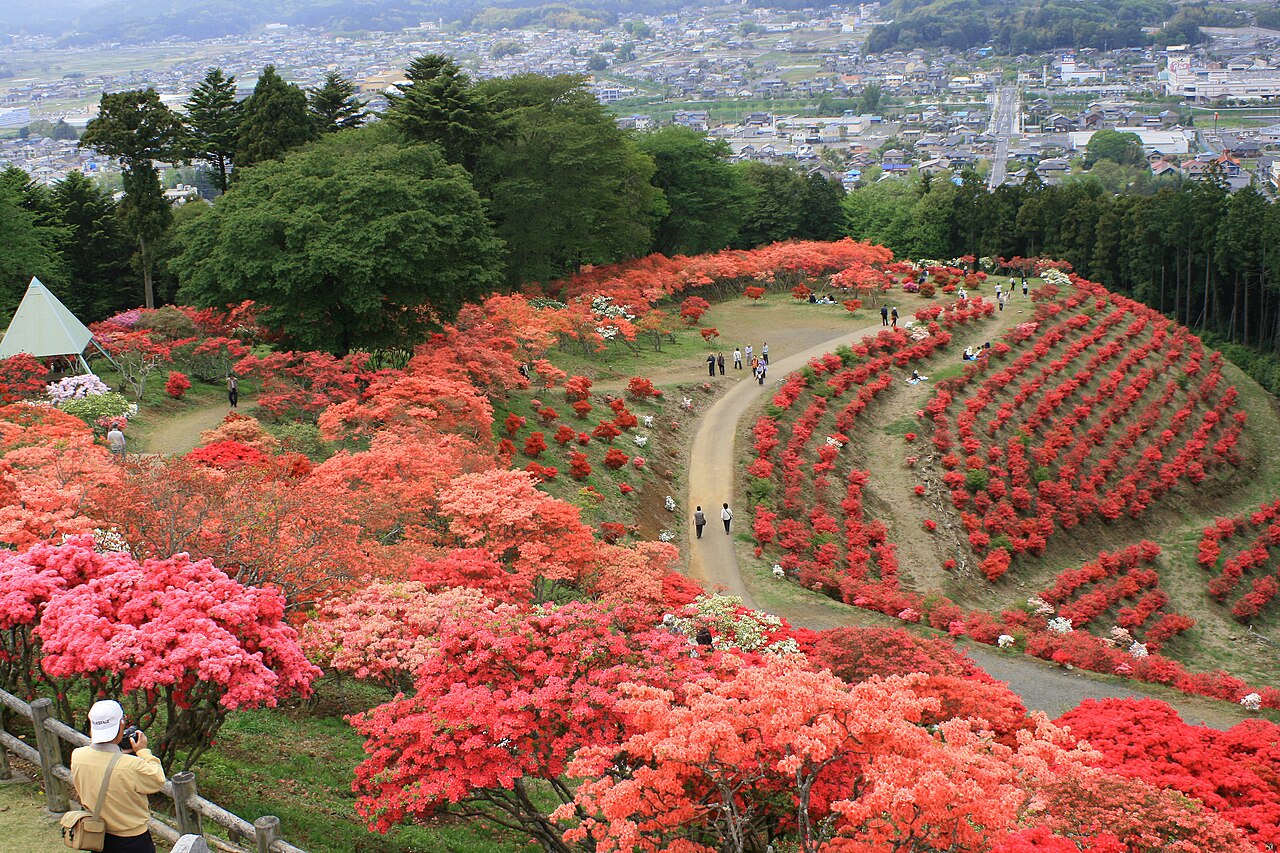
This guide covers the sightseeing loop bus that links the sights in Kasama, the origins of Kasama-yaki pottery, the arts park, ceramic museum and craft studio, the Kasama Nichido Museum of Art, the castle hill and old shrine on Mount Sashiro, Kasama Inari Shrine, and the castle town's recorded past; it does not cover the journey to Kasama itself.
Around Kasama on the Loop Bus
Kasama is a small town in Ibaraki Prefecture, northeast of Tokyo, where a pottery tradition, a much-visited Inari shrine, and a wooded castle hill sit close to one another. Once you are in town, a sightseeing loop bus links the main sights, so the day can be spent walking between stops rather than working out connections.
A one-day unlimited-ride ticket for the Kasama sightseeing loop bus costs three hundred yen on weekdays. On weekends, public holidays, and through the spring and autumn tourist season, including weekdays within that season, the same one-day ticket costs five hundred yen. Buy it in the morning and the pottery quarter, the museums, and the shrine are all within reach.
A Castle Town's Long History
A Meiji-era gazetteer described Kasama as a castle town, once the seat of the Makino clan and later home to the Nishi-Ibaraki district office, its townspeople counted in the thousands. Kasama-yaki is held to be the oldest pottery tradition in Kanto, begun in the Anei years of the mid-Edo period when Kuno Hanemon, trained under Shigaraki-ware potters, opened a kiln.
Kasama Inari Shrine carried the formal old name Kurumi-shita Inari and was popularly called Monzaburo Inari, or simply Kasama Inari. The gazetteer recorded it as one of the region's most popular deities, drawing worshippers from near and far, and noted that on its festival days in February and November the Tokyo railway office laid on extra services for the crowds.
Sashino Shrine, on Mount Sashiro, appears in the Heian-era Engishiki as an established shrine, and the older Shoku Nihongi records its rise to state-recognized rank under Emperor Ninmyo. On Butchozan, northwest of town, a great cedar is said to have stood within Ryogon-ji temple; tradition holds it over a millennium old, and locals have long venerated it as a deity.
Kasama-yaki: A Historic Pottery Town
Kasama-yaki is the town's stoneware, and the current regional guide records that it was designated a national traditional craft in nineteen ninety-two, with more than three hundred potters and kilns active around the town. The name covers a wide range of work rather than a single look, for reasons that begin with the ground under the town itself.
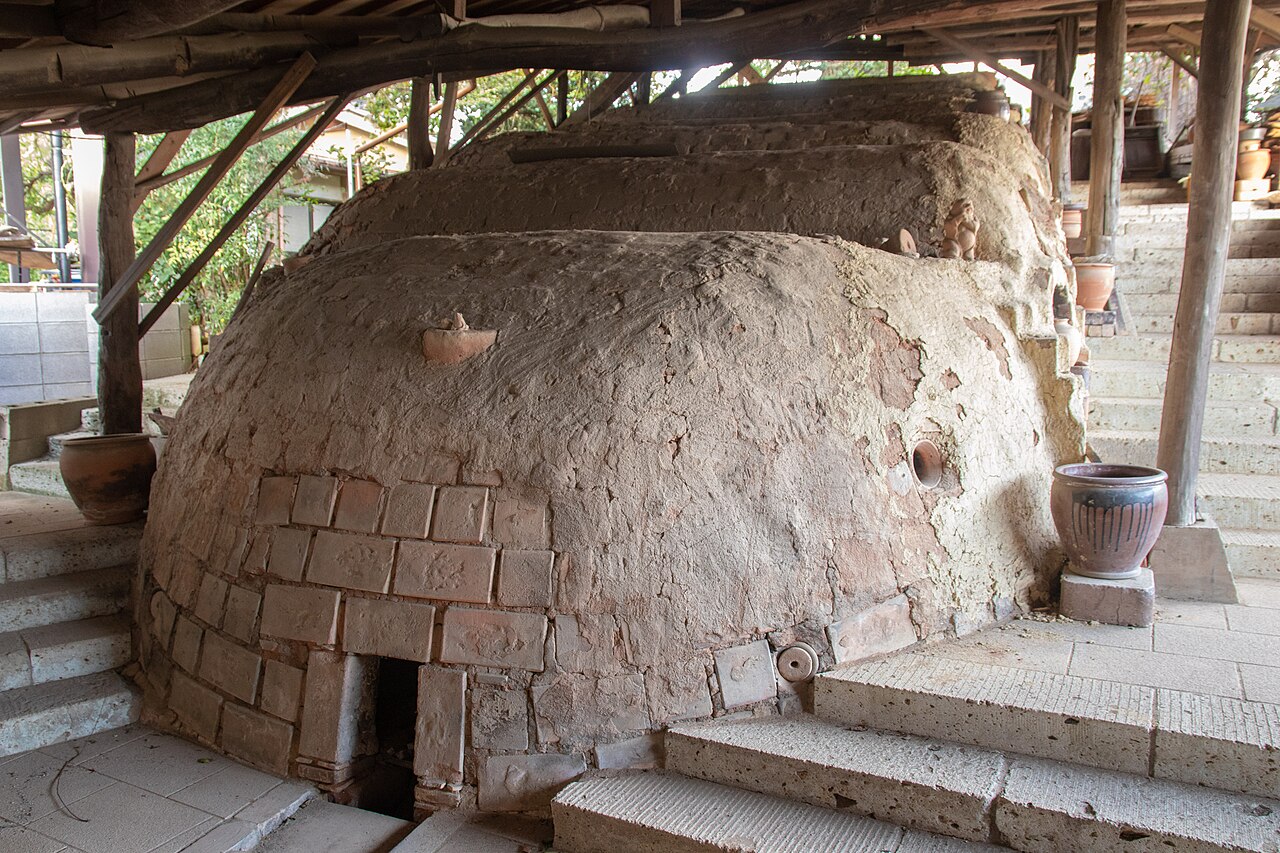
A noborigama, a wood-fired climbing kiln built as a chain of chambers stepping up a slope, in Kasama, where pottery-making is held to go back to a kiln opened in the mid-Edo period.
The local clay is reddish and rich in iron, fine-grained and strongly plastic, and the guide notes that pieces fired from it come out durable and resistant to staining. It also shrinks a great deal in the kiln, which makes it awkward to handle, so some potters blend it with clay from elsewhere or skip it altogether.
Perhaps because of that, Kasama-yaki is described, half in jest, as having no defining feature, and styles vary widely from one maker to the next. A walking route is laid out through town, taking in a street of pottery shops, a lane of workshop outlets, a gallery road, and a gallery plaza, so browsing can be done on foot.
The Ceramic Art Museum, Kogei no Oka, and the Nichido Museum
Kasama Geijutsu no Mori Park puts the town's ceramics outdoors. In its Forest of Ceramics area, outdoor sculptures by local ceramic artists, gathered under a noted artist's direction, stand scattered through a grove of cypress. During the Golden Week holidays, the park's event plaza hosts the Kasama Himatsuri, a pottery fair known as one of the country's leading pottery markets.
The Ibaraki Ceramic Art Museum shows, in its permanent collection, work by Itaya Hazan, regarded as a founder of modern Japanese ceramics, and by Matsui Kosei, a Living National Treasure linked to Kasama. Special and themed exhibitions bring in noted makers from Japan and abroad and current ceramic art; the practical details are in the table at the end.
Kasama Kogei no Oka, a craft center, houses the Fureai Kobo studio, where visitors can try pottery-making by hand, on the electric wheel, painting designs, or fusing, plus a cafe serving on Kasama-yaki tableware. At the wheel, after an instructor's demonstration, you shape as many pieces as your allotted clay will make and pick from a range of glazes.
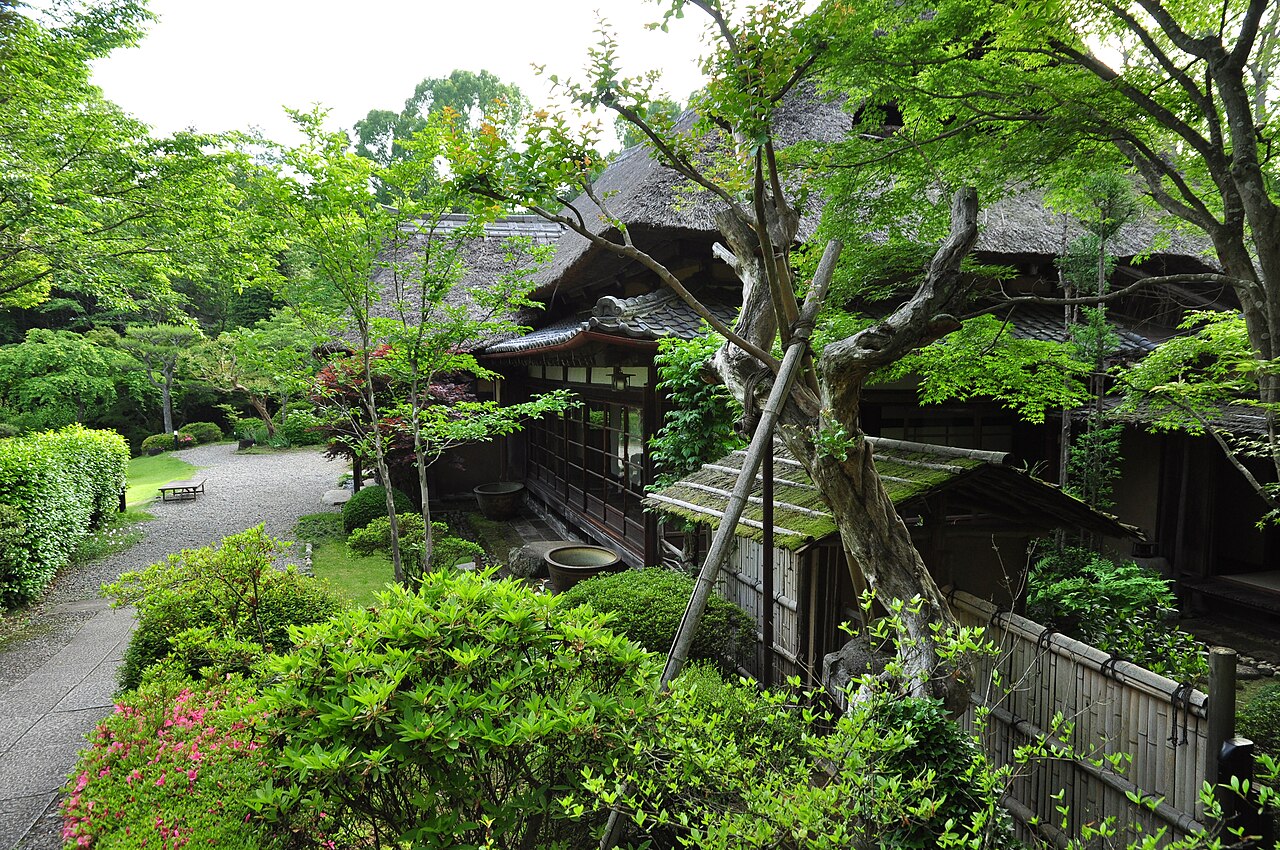
The Kasama Nichido Museum of Art is a separate institution from the prefectural ceramic museum. Junior high school students pay three hundred yen to enter, or one hundred yen each in groups of twenty or more. If you would rather have someone guide the pottery side of the day, there is a pottery-focused guided option in Kasama.
Where to stay
Places to stay near Kasama, Ibaraki →
Disclosure: This post may contain affiliate links. If you book through them, we may earn a commission at no extra cost to you.
Sashiro-yama: The Ruins of Kasama Castle
Mount Sashiro, the wooded hill above the old town, holds the ruins of Kasama Castle, laid out as Castle Hill Park. An old gazetteer described the park as varied in its scenery and planted with many cherry trees, and it noted that the hill itself was called Sashiro-yama, a name it shares with the old shrine described below.
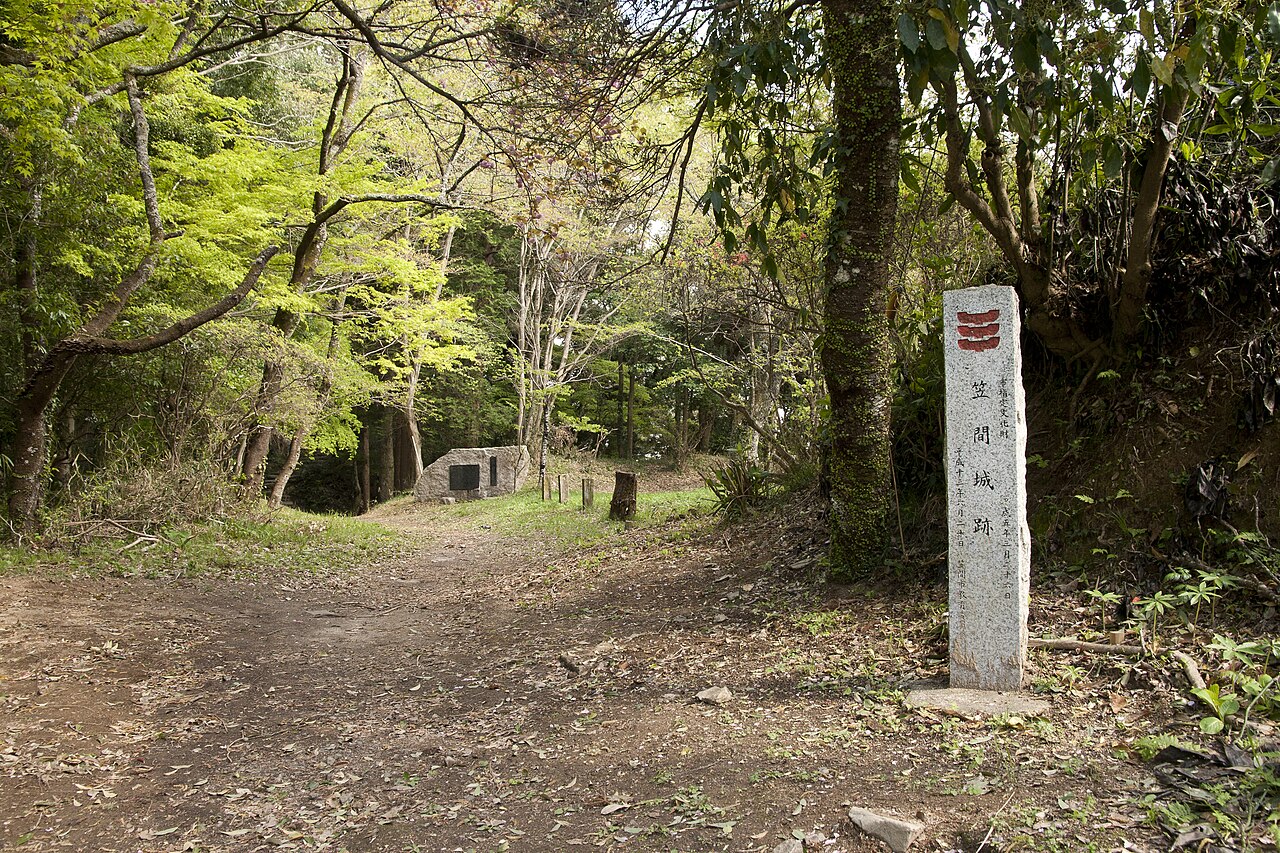
A marker for the Kasama Castle ruins on Mount Sashiro, the hill an old gazetteer described as varied in its scenery and thick with cherry trees.
The same hill is home to Sashino Shrine, whose long history is told in the section above. In the northeast corner of its grounds lies an area called Ishigura, where unusual rocks thrust up among old trees, the two seeming to compete for space, which the gazetteer described as a rare sight.
Kasama Inari Shrine
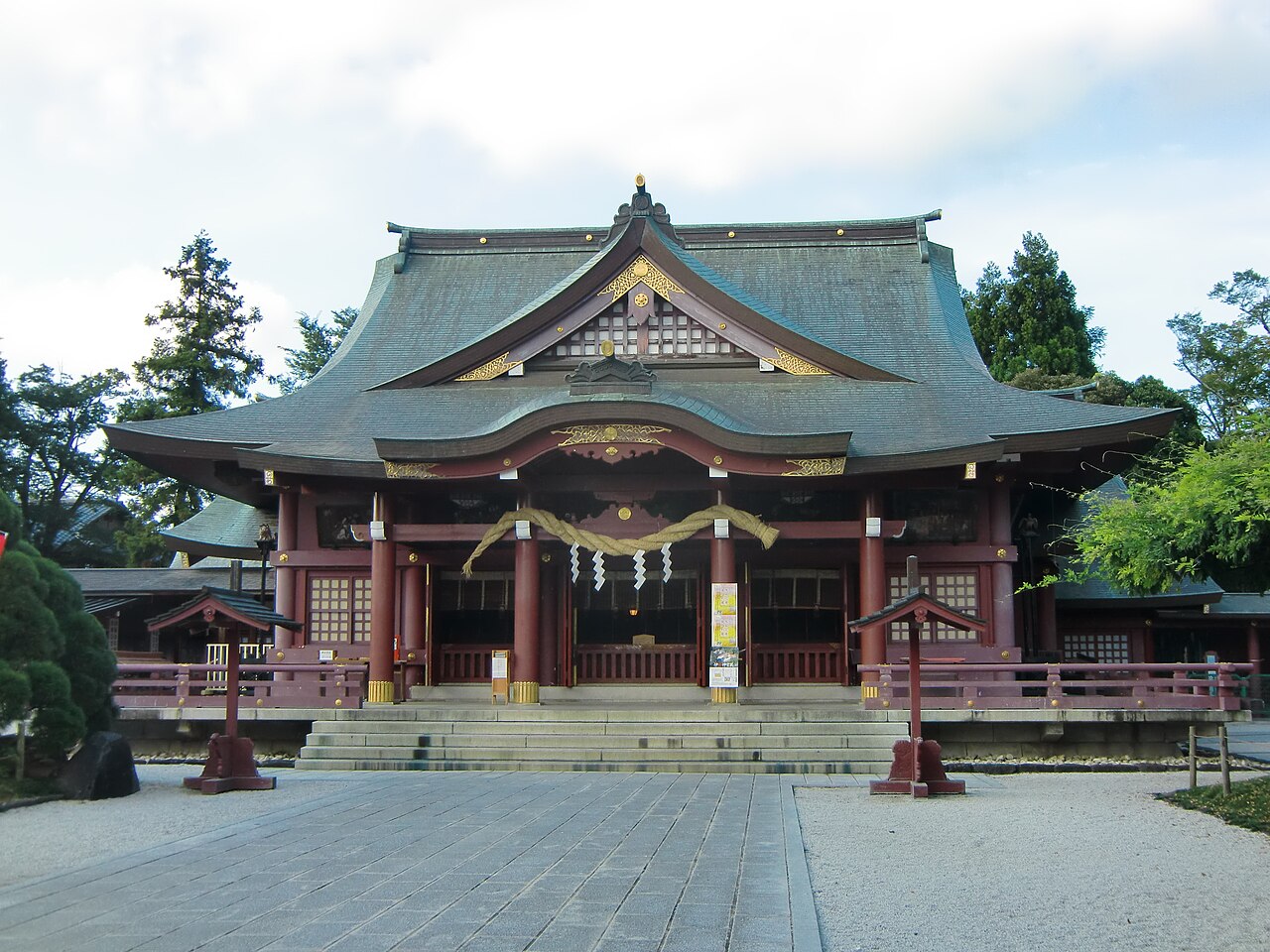
The vermilion worship hall of Kasama Inari Shrine, which an old gazetteer already described as large and well-kept, with grounds of a calm and deep character.
Kasama Inari Shrine has a main hall that is large and well-kept, and its grounds carry a calm, deep atmosphere that the old gazetteer already remarked on. Formal prayers, called goukitou, can be requested here; the times at which requests are taken and the offering, known as hatsuho-ryo, are set out in the table below.
Fares, Hours, and Fees at a Glance
The table gathers the figures that shape a day here: the loop bus pass, the ceramic museum's general admission, hours, and closing days, the closing day at the craft center, the junior high school rate at the Nichido museum, and the prayer desk at Kasama Inari Shrine, where requests are taken on the hour through the day.
| Item | Detail |
|---|---|
| Kasama sightseeing loop bus, one-day pass (weekday) | three hundred yen |
| Kasama sightseeing loop bus, one-day pass (weekend, public holiday, and spring and autumn tourist season) | five hundred yen |
| Ibaraki Ceramic Art Museum, Collection Exhibition and Theme Exhibition only, general adult admission | three hundred sixty yen |
| Ibaraki Ceramic Art Museum, opening hours | half past nine in the morning to five in the afternoon (last admission half past four in the afternoon) |
| Ibaraki Ceramic Art Museum, closed | Mondays (or the following weekday if Monday is a public holiday) and the New Year period from December twenty-ninth to January first |
| Kasama Kogei no Oka, closed | Mondays (or the following weekday if Monday is a public holiday) |
| Kasama Nichido Museum of Art, junior high school student admission | three hundred yen (one hundred yen per person for groups of twenty or more) |
| Kasama Inari Shrine, goukitou (prayer) reception times | eight, nine, ten, and eleven in the morning, noon, and one, two, three, and four in the afternoon |
| Kasama Inari Shrine, standard goukitou offering (hatsuho-ryo) per request | five thousand yen or more |
| Kasama Inari Shrine, offering for family safety and traffic safety, business prosperity, Shichigosan visits, Hatsumiyamairi, and similar prayers | seven thousand yen or more |
If a single day feels short for the pottery quarter, the museums, and the hill, there are places to stay in Kasama.