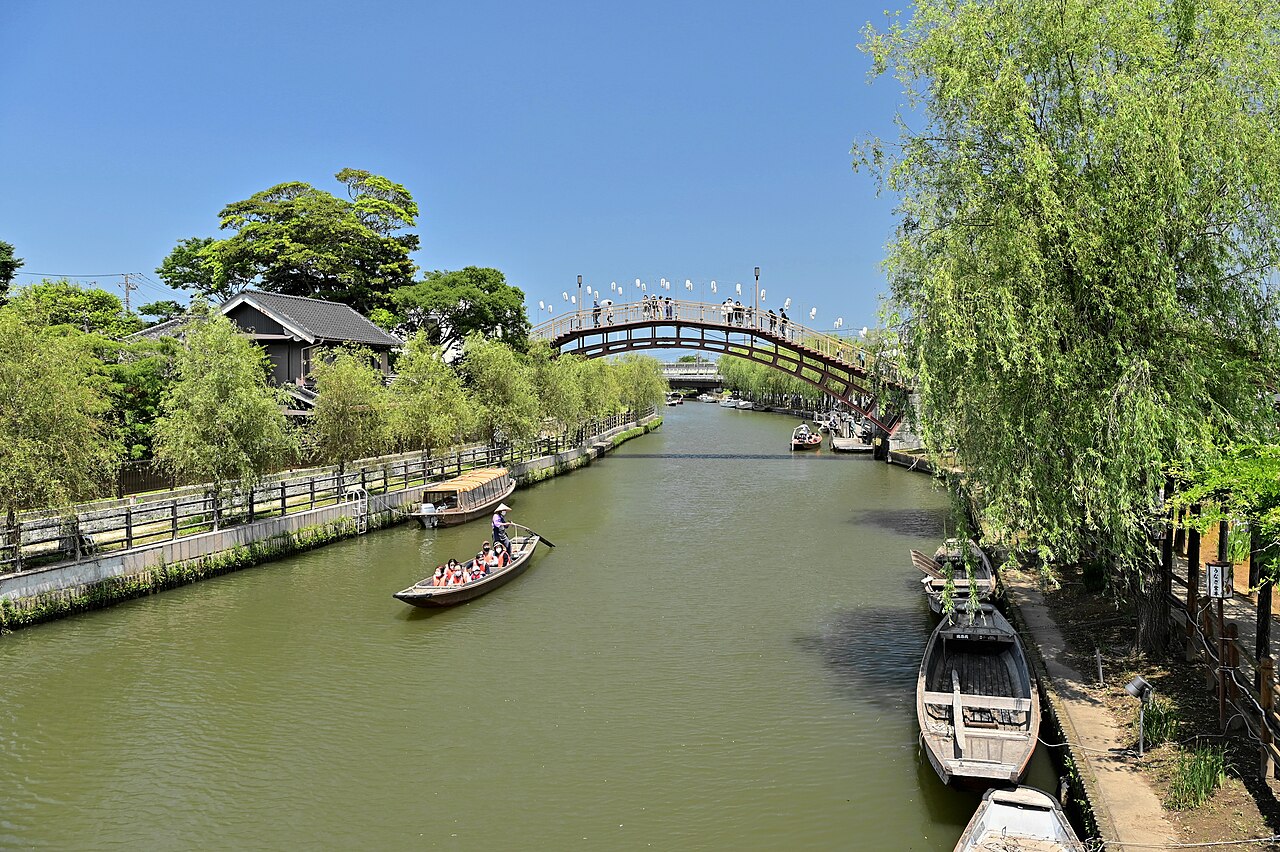
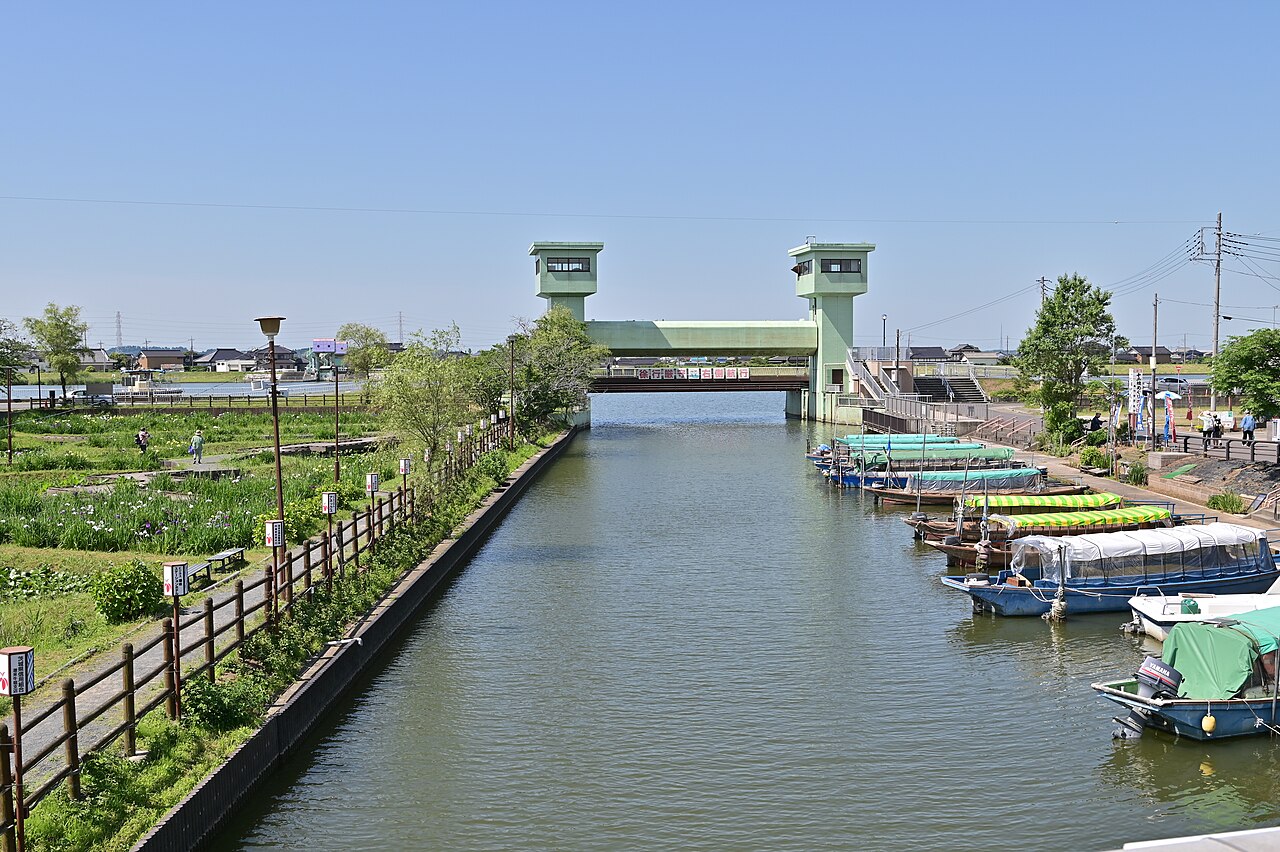
Itako is a water town in Ibaraki where a hand-rowed ro-bune runs on the Maekawa river through the city. The cruise comes with its own background music: the sound of the rowing oar and the sound of the water. Late in the day the sunset reflected on Kasumigaura, the Kita-Tone River and the Maekawa is quiet and still. Afterwards there is eel grilled over charcoal at Kinsui.
The Ro-bune on the Maekawa
A boat rowed with a ro, a scull, is a ro-bune, and around Itako the same boat is also called a sappa-bune. It runs on the Maekawa, the river that flows through the city. If you take one boat ride in Itako, make it this one: the course leaves Tsugaru-gashi-ato plaza, passes the Suigo Itako Iris Garden and returns to the plaza.
On the hand-rowed ro-bune the sound of the oar and the sound of the water act as the background music of the cruise. You can listen to old and new tales of Suigo Itako as the boat goes. You can also listen to the boatman's guidance. The oar's sound is even written out as a rhythmic phrase in Japanese. A trip takes about thirty minutes.
A second route, the twelve bridges tour, follows the river beside the iris garden, rounds the bridges over the Maekawa and makes a U-turn back to the boarding point. Three theories exist for the name sappa-bune, one of them that the boat's shape resembles a bamboo-grass leaf. Local young women once guided tourists in these boats as a source of income, and the role earned them a name of their own.
Irises and Lantern Light by the Water
At the Suigo Itako Iris Garden, start with ayame: you can tell it from other irises by the net-like pattern at the base of the petals. Its colours are white, purple and reddish purple. Ayame grow in well-drained ground, such as beside the garden paths.
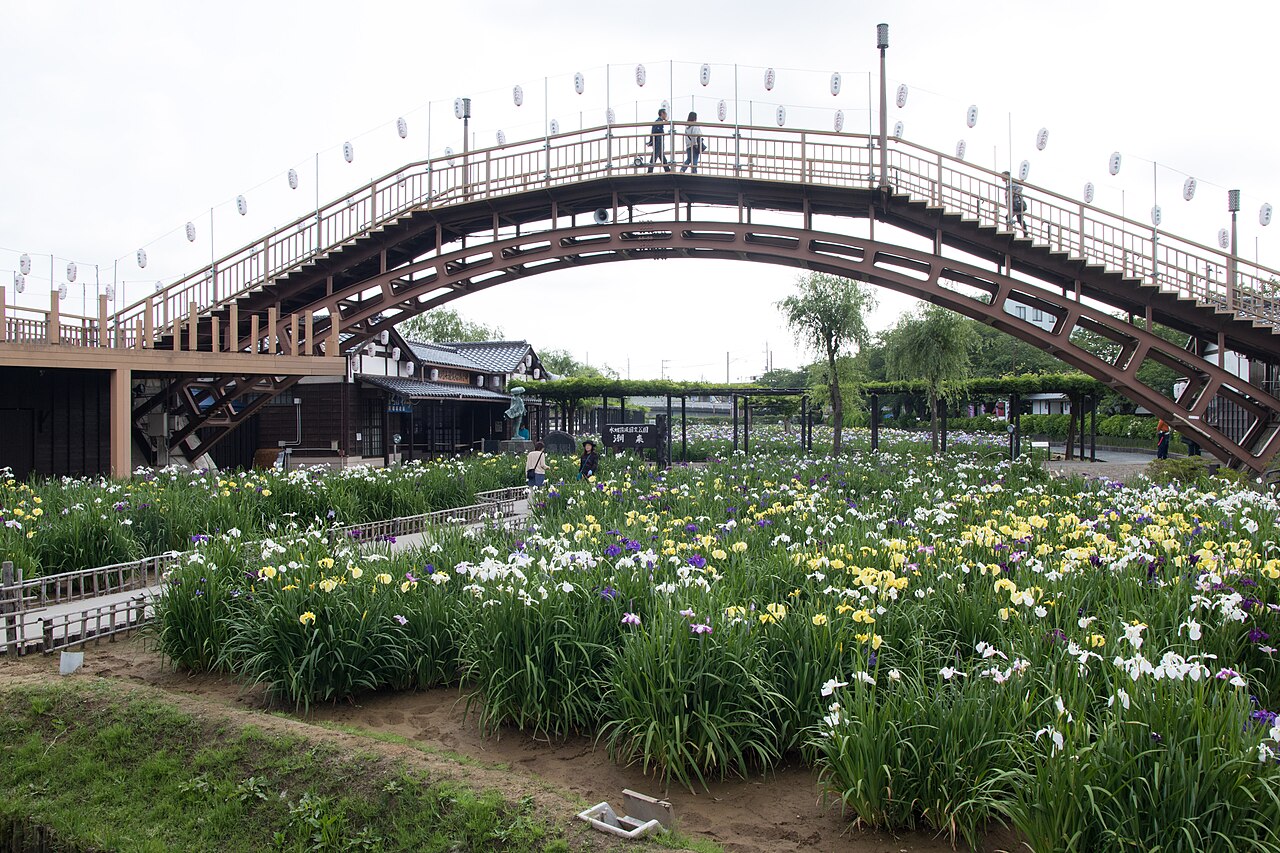
Kakitsubata are medium-sized flowers in purple, reddish purple and white, with three petals, now and then six. They are planted at the water's edge, such as the rim of a pond, and the mark to look for is a single white line at the base of the petals. If you want to match one flower to one place, ayame stand beside the paths and kakitsubata at the water's edge.
Every year the peak comes around June tenth. During the festival period the garden is lit up at night, and you can see the irises looking different from how they look by day. The bridge is lit up as well.
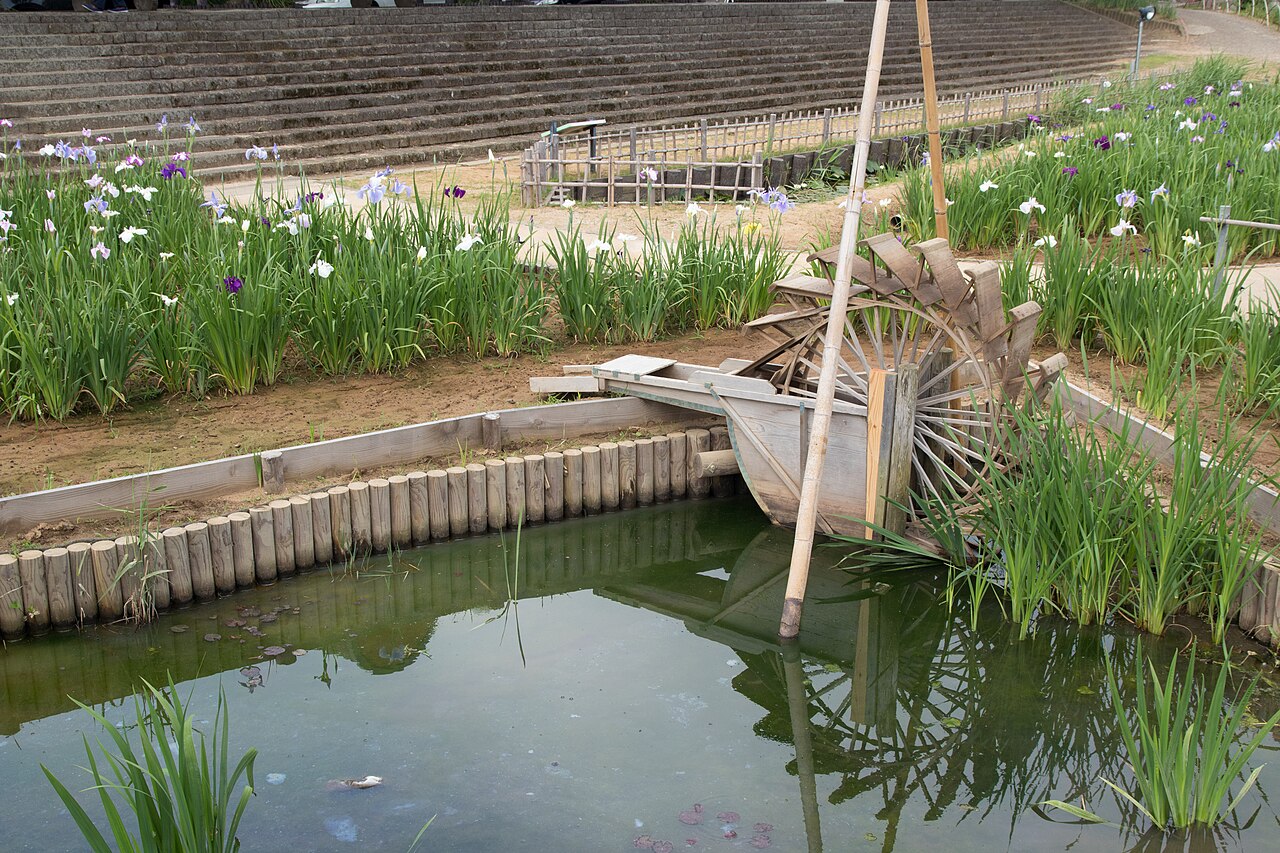
Festival events run to a bridal boat, Itako-bayashi performances, ro-bune cruises, an iris sale and the light-up. It began with iris enthusiasts standing cut flowers in beer bottles.
Sunset Views at Gongenyama and the Hokusai Park
From the observation deck at Gongenyama Park the water country along the Kita-Tone River and Kasumigaura can be seen in full view. The park has about two hundred and fifty cherry trees and azaleas too. You can watch the sunset reflected on the water of Kasumigaura, the Kita-Tone River and the Maekawa, quiet and still, until the sun disappears behind the peaks on the opposite shore.
In the Edo period, large black pines and cherry trees here served as landmarks for boats on the water. One of Katsushika Hokusai's works is said to have been drawn from this spot. For a view of the whole water country, go up to the deck at Gongenyama Park; for a long waterside lawn, walk the Hokusai Park.
Suigo Hokusai Park is a lawn park along the Kita-Tone River that runs on for about a kilometre. It has a pier, and wakeboarding and water skiing are practised here. Every year in mid-August it is the venue for the Suigo Itako fireworks festival, with fireworks launched from the water.
Temples and the Gion Festival of Itako
Choshoji, of the Rinzai sect's Myoshinji school, has a bronze bell designated a national Important Cultural Property. The temple is said to have been founded in eleven eighty-five by Minamoto no Yoritomo, who prayed here for success in war.
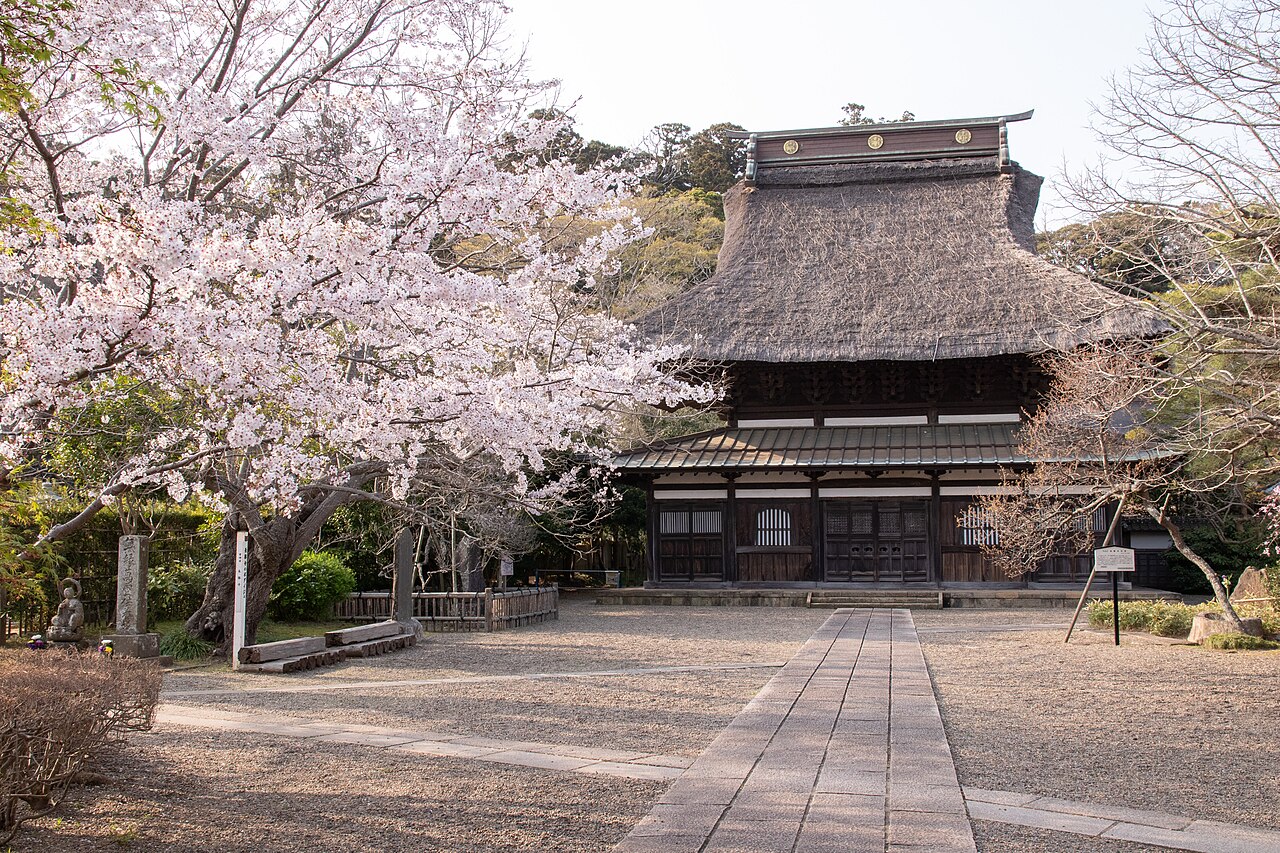
Nihonmatsu-ji is a hydrangea temple: about a hundred varieties and ten thousand plants, in bloom from mid-June to early July each year. It is said to have been founded in eight hundred and twenty-four by Jikaku Daishi Ennin. A walking course of about thirty to forty minutes takes in a maki tree planted by Mito Mitsukuni, the pine Futamoto no Matsu and linden flowers.
The Itako Gion festival is the grand festival of a shrine on Tennozan hill, held every year over three days from the first Friday of August. On the first day two portable shrines set out and the neighbourhood floats gather to welcome them. There is a lion dance, fourteen floats in all, and Itako-bayashi played by musicians riding on the floats; three floats are prefectural cultural properties and the music a prefectural intangible folk cultural property.
On August eleventh and twelfth each year Chooon-ji holds the Mando-e lantern ceremony, and anyone can take part regardless of sect or religion. Time a visit to August for the Gion festival and the Mando-e, or to June for the hydrangeas at Nihonmatsu-ji.
Eel, Soba, Sake and River-Fish Tsukudani
At Kinsui you can eat eel grilled over charcoal, as an upper or a special eel rice box with liver soup, with eel-bone crackers and fin-grilled eel on the side. At Sarashina the soba is made from hand-cut Hitachi-aki buckwheat in the ni-hachi style, and it is made in the shop every morning.
You hear a crisp 'sakusaku' sound as you eat the tempura at Sarashina. Ten-zaru, cold soba with tempura on the side, brings both together, and kamo nanban is on the menu when available.
Individual visitors can walk into Aiyu Shuzo, the brewery that makes the sacred sake for Kashima Shrine, tour it, taste sake and shop. You can buy freshly pressed sake lees there, a product limited to the brewing season, as well as plum wine made with Japanese sake and a sake manju containing sake offered at Kashima Shrine.
Tsukudani here means seasonal catch from Kasumigaura and Kitaura, such as wakasagi, shirauo, hazegoro and shrimp, simmered in an original sauce. You can pick up sweet shrimp, wakasagi and haze kanro-ni at one shop, and eel and carp tsukudani at another. Anyone who wants the water country on a plate can build a short food walk from eel to soba to sake, and finish with tsukudani to take home.
Getting to Itako
| Leg | How | Time and estimate |
|---|---|---|
| Tokyo Station to Itako | Highway bus bound for Kashima Shrine | About 80 minutes, with buses as close as 10 minutes apart |
| Itako Station to Tokyo Station | Highway bus, fare | Listed as 2,100 yen and 1,050 yen |
| Sawara Station to Itako Station | JR Kashima Line | 10 minutes |
| Kashima Shrine Station to Itako Station | JR Kashima Line | 10 minutes |
| Itako Station to Suigo Itako Iris Garden | On foot | About 3 minutes (about 230 m) |
| Tsugaru-gashi-ato plaza to Suigo Itako Iris Garden | Distance | About 600 m |
| Itako Station to Gongenyama Park | By car | About 10 minutes |
| Itako Station to Suigo Hokusai Park | By car | About 10 minutes |
| Suigo Itako Iris Garden to Suigo Sawara Ayame Park | Shuttle boat | About 25 minutes |
| Short model walking course | On foot | About 45 minutes, about 3 km |
| Longer model walking course | On foot | About 60 minutes, about 4 km |
Within the town the pieces sit close together: the iris garden is about three minutes on foot from Itako Station.
New to rural buses and one-man trains? See how to ride them, step by step.
Hours and Fees
| Place | What | Hours or fee |
|---|---|---|
| Ro-bune cruise | Fare, adult | 1,300 yen |
| Ro-bune cruise | Fare, elementary school | 700 yen |
| Ro-bune cruise | Duration | About 30 minutes |
| Ro-bune cruise | Boarding | Tsugaru-gashi-ato plaza; during the Ayame festival period from the iris garden |
| Ro-bune cruise | Closed | Mondays, and Tuesday when Monday is a public holiday |
| Ro-bune cruise | Weather | Cancelled in rain or heavy snow |
| Iris garden light-up | Hours | Every day of the Ayame festival period, 18:30-22:00 |
| Bridal boat | Times | Wednesday 11:00; Saturday 11:00, 14:00, 19:30; Sunday 11:00, 14:00 |
| Shuttle boat | Fare | 1,000 yen for junior high school students and older |
| Nihonmatsu-ji | Entry and worship donation | 400 yen |
| Kinsui | Hours | 11:00-14:30 (until 14:00 from July to September) and 17:00-20:00; may close once sold out |
| Kinsui | Closed | Wednesdays (open for lunch when Wednesday is a public holiday) |
| Kinsui | Upper eel rice box, with liver soup | 3,600 yen |
| Kinsui | Special eel rice box, with liver soup | 4,200 yen |
| Kinsui | Snacks | Eel-bone crackers 400 yen; fin-grilled eel 200 yen |
| Sarashina | Ten-zaru | 1,430 yen (large portion +165 yen) |
| Sarashina | Kamo nanban | 1,320 yen; may not be available |
| Sarashina | Lunch set | Cold tanuki soba and mini tempura rice bowl set 1,485 yen |
| Aiyu Shuzo | Hours | 9:00-17:00, no regular closing day |
For a night in town after the sunset, see places to stay in Itako.
Where to stay
Disclosure: This post may contain affiliate links. If you book through them, we may earn a commission at no extra cost to you.