This is a day in central Tsuruga, a harbour town in Fukui, on foot and by the local circuit routes. It covers Kehi Jingu, the pine shore of Kehi no Matsubara, the hill of Kanegasaki and the red brick harbourfront. Jogu Shrine, Iro-ga-hama, Cape Tateishi, Benten Island and Kumagawa-juku need a boat or a long ride and are left out.
Getting around Tsuruga
Everything in this article lies within the town or along its shore. For moving between the sights, Tsuruga runs a community bus and a sightseeing loop bus called Gurutto Tsuruga, both charging a flat fare, and a one-day pass is valid on either of them. The fares are set out in the table below.
| Ticket | Fare |
|---|---|
| Community bus or Gurutto Tsuruga loop bus, adult, flat fare | 200 yen |
| Community bus or Gurutto Tsuruga loop bus, child, flat fare | 100 yen |
| One-day pass, valid on both buses, adult | 500 yen |
Kehi Jingu: approaching the great torii
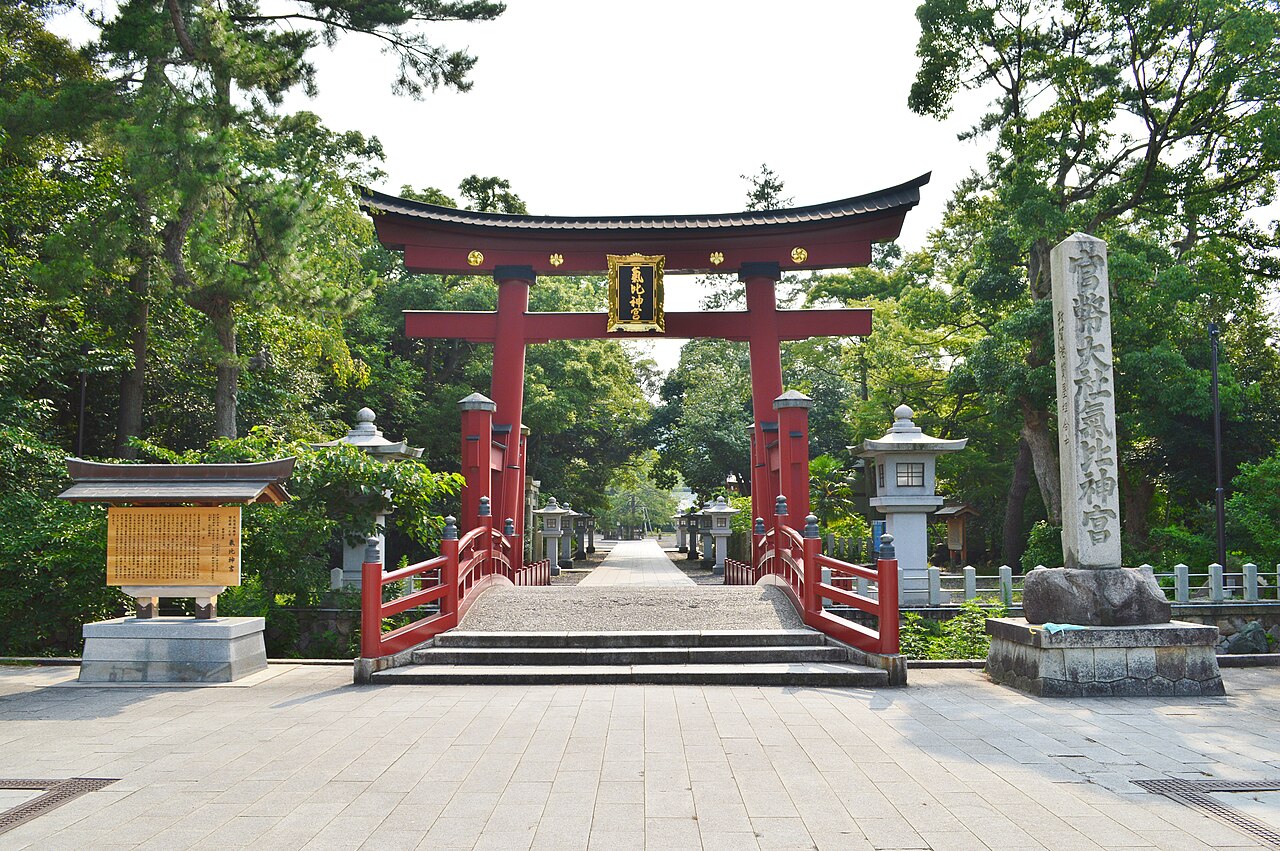
Kehi Jingu has long been counted as the first-ranked shrine of the Hokuriku road, the old highway that runs along this coast, and in the Meiji era it was raised to kanpei taisha, the highest grade among shrines supported by the imperial court. That standing is felt as soon as you see the gate ahead.
Beyond the first torii the grounds unfold in sequence: the small Koita bridge, a hall of votive tablets, a place for worshipping distant shrines, the prayer hall, the mizugaki fence gate and finally the main sanctuary. Around them stand five auxiliary shrines and nine lesser shrines, together with a store for the portable festival shrines and a sacred storehouse.
The vermilion great torii is the shrine's signature. It is said to have been fashioned in the Shoho years of the early Edo period from a single giant tree that drifted across from the island of Sado and came ashore at Tsuruga harbour. Long praised as a masterpiece without equal in the land, it received special protection in nineteen-oh-one.
Inside, small named spots reward a slow circuit: the Doyo pine linked to the monk Kobo Daishi, a plum tied to the scholar Sugawara no Michizane, the Ryuko spring stone and the little Korogi bridge. With places such as Karakuen close by, worshippers come and go all day. Opening times and the window for prayer requests are below.
| Kehi Jingu | Times |
|---|---|
| Gates open, April to September | 5:00 to 17:00 |
| Gates open, October to March | 6:00 to 17:00 |
| Prayer (kito) reception | 9:00 to 16:00 |
A shrine recorded for centuries
Shrine tradition holds that Kehi Jingu was founded in the year seven hundred and two, following a divine oracle received in the reign of Empress Suiko. Two celebrated monks followed: Saicho is said to have come in seven hundred and eighty-five, and Kukai in eight hundred and sixteen, each praying for a successful crossing to Tang China.
The shrine did not come through the age of the warlords untouched. In the early fifteen-seventies Oda Nobunaga burned its halls and wrecked the treasury. With help from Asakura Yoshikage two small sanctuaries were rebuilt, and later Matsudaira Hideyasu, lord of Fukui castle, raised new shrine buildings and endowed the shrine with land.
The best-known visitor came later. Matsuo Basho, on the journey that became Oku no Hosomichi, stayed a night in Tsuruga and went to the shrine by moonlight, and the scene entered one of his haiku. The annual festival is recorded as running from the second to the fifteenth of September, though current dates are worth checking.
Kehi no Matsubara: a pine shore
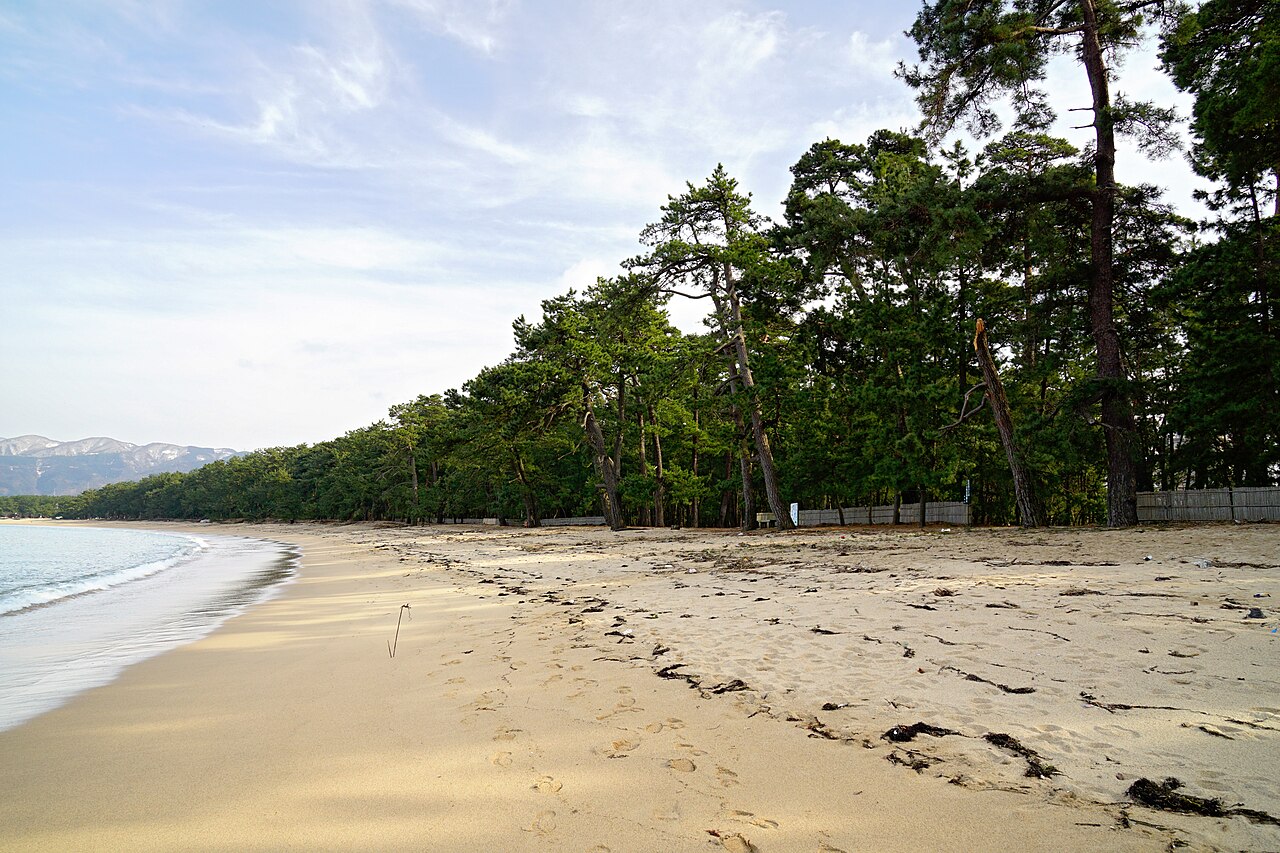
West of the town centre the coast bends into a long run of pines with sand and the sea beyond. This is Kehi no Matsubara, a famous shore that was once part of the sacred lands of Kehi Jingu. From the beach, low mountains show across the water, and the curve of the shoreline draws the eye along the trees.
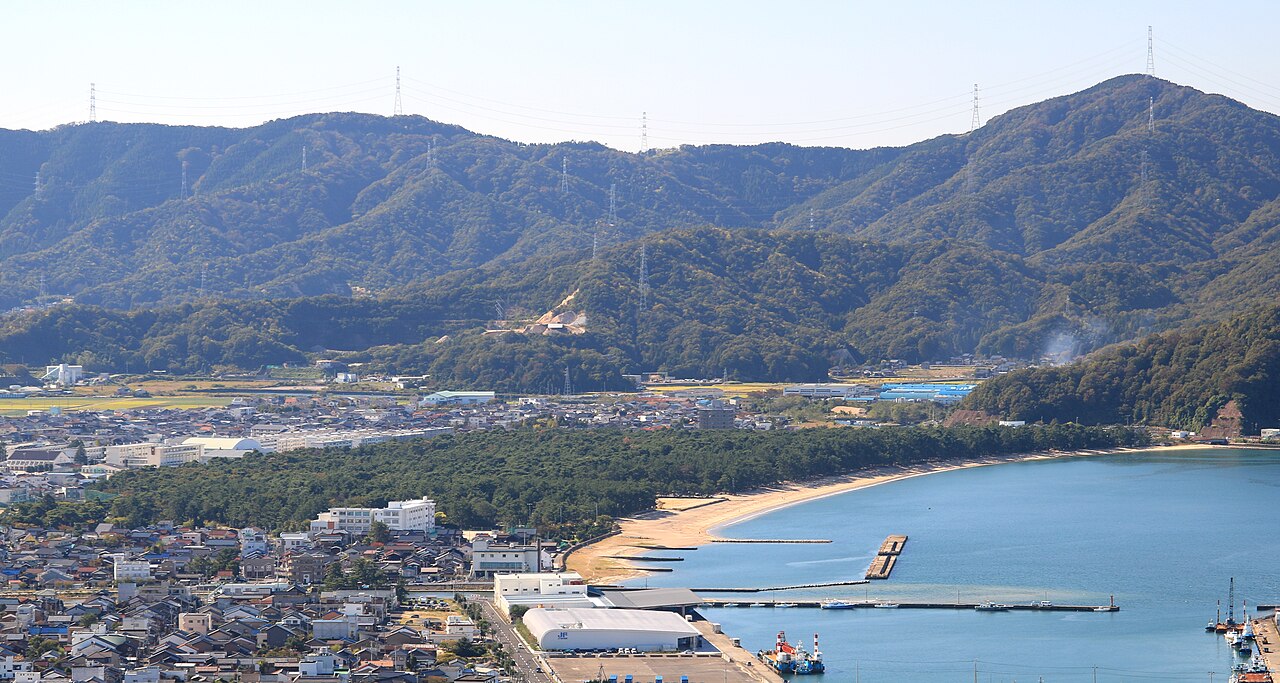
This shore is said to be the setting of a poem by Kakinomoto no Hitomaro in the Man'yoshu, Japan's oldest poetry anthology, and it has been known since ancient times as an utamakura, a place-name poets return to. Old writings hold that a lodging called Seikeiro once stood here for envoys from the kingdom of Balhae, under the shrine's care.
Near the pines stands Matsubara Shrine, which carries a harder story. It enshrines Takeda Kounsai and over three hundred men of the Mito domain who were executed after the turmoil at the end of the Edo period, and a large stone memorial stands in its grounds. It is a sobering pause between the sea and the town.
Where to stay
Places to stay near Tsuruga, Fukui →
Disclosure: This post may contain affiliate links. If you book through them, we may earn a commission at no extra cost to you.
Kanegasaki: a hilltop shrine above the harbour
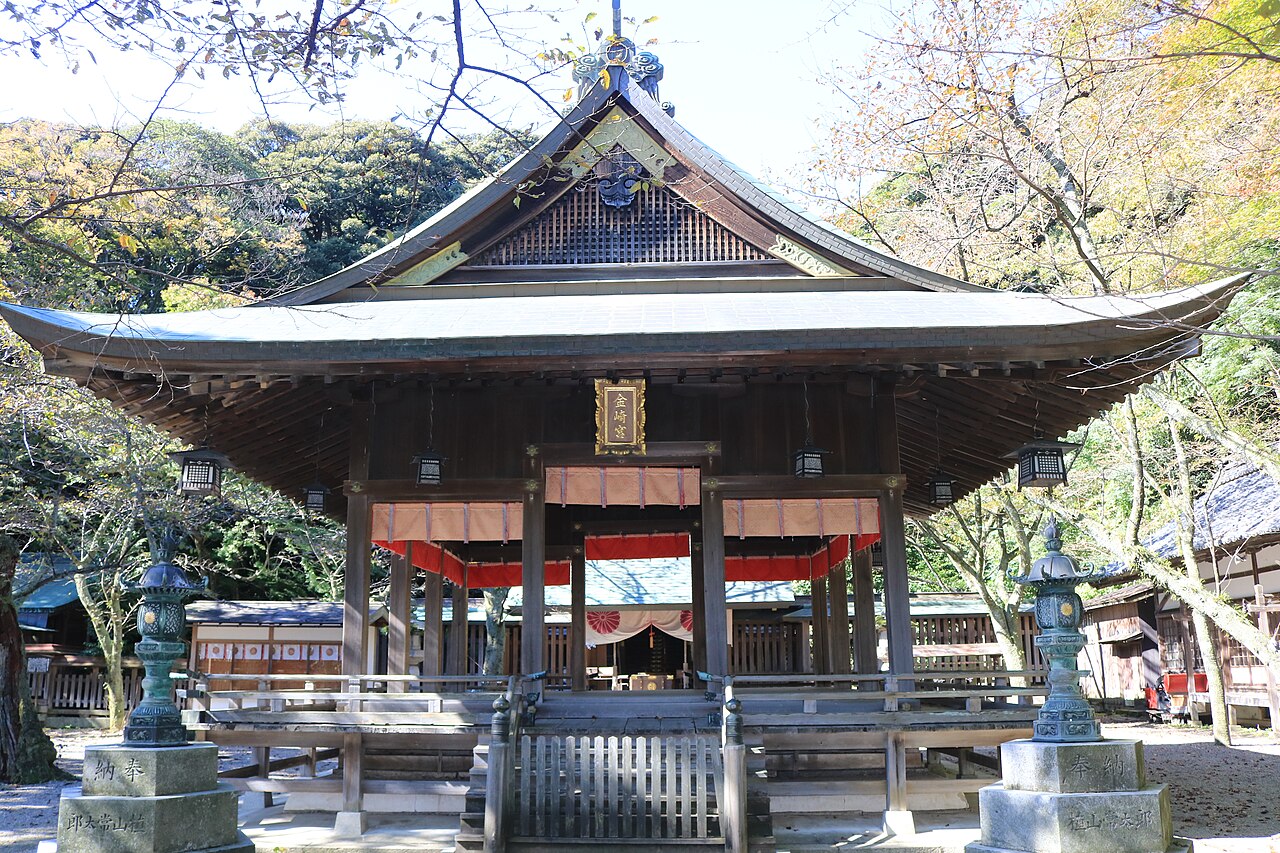
Kanegasaki is a wooded hill beside the harbour, and its story belongs to the wars of the fourteenth century, when two rival imperial courts, northern and southern, fought for the throne. Around thirteen thirty-six the general Nitta Yoshisada brought the princes Tsunenaga and Takanaga here, took up position on the hill and faced the forces of Shiba Takatsune.
The siege ended badly for the defenders. Prince Tsunenaga was captured by the enemy and Prince Takanaga took his own life, and in the fighting here and the struggle that followed Nitta Yoshisada, Nitta Yoshiaki and Hata Tokiyoshi all lost their lives. The hill has carried that memory ever since.
Kanegasaki-gu was founded on the ground where Prince Takanaga died and Prince Tsunenaga was taken, and in eighteen ninety it was listed as a kanpei chusha, a middle-ranked shrine under imperial patronage. The plaque over the first torii, which reads Kanegasaki-gu, is said to be in the hand of Prince Arisugawa Taruhito.
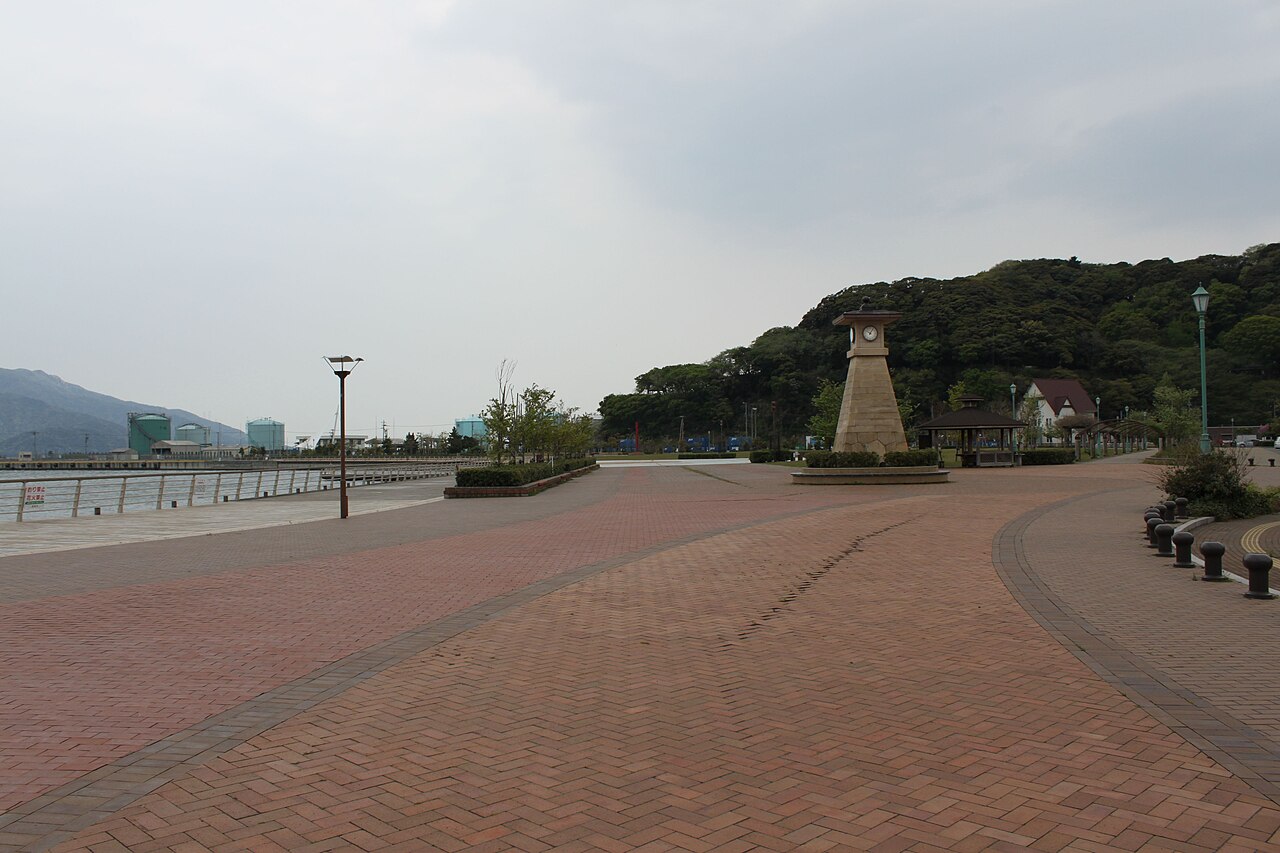
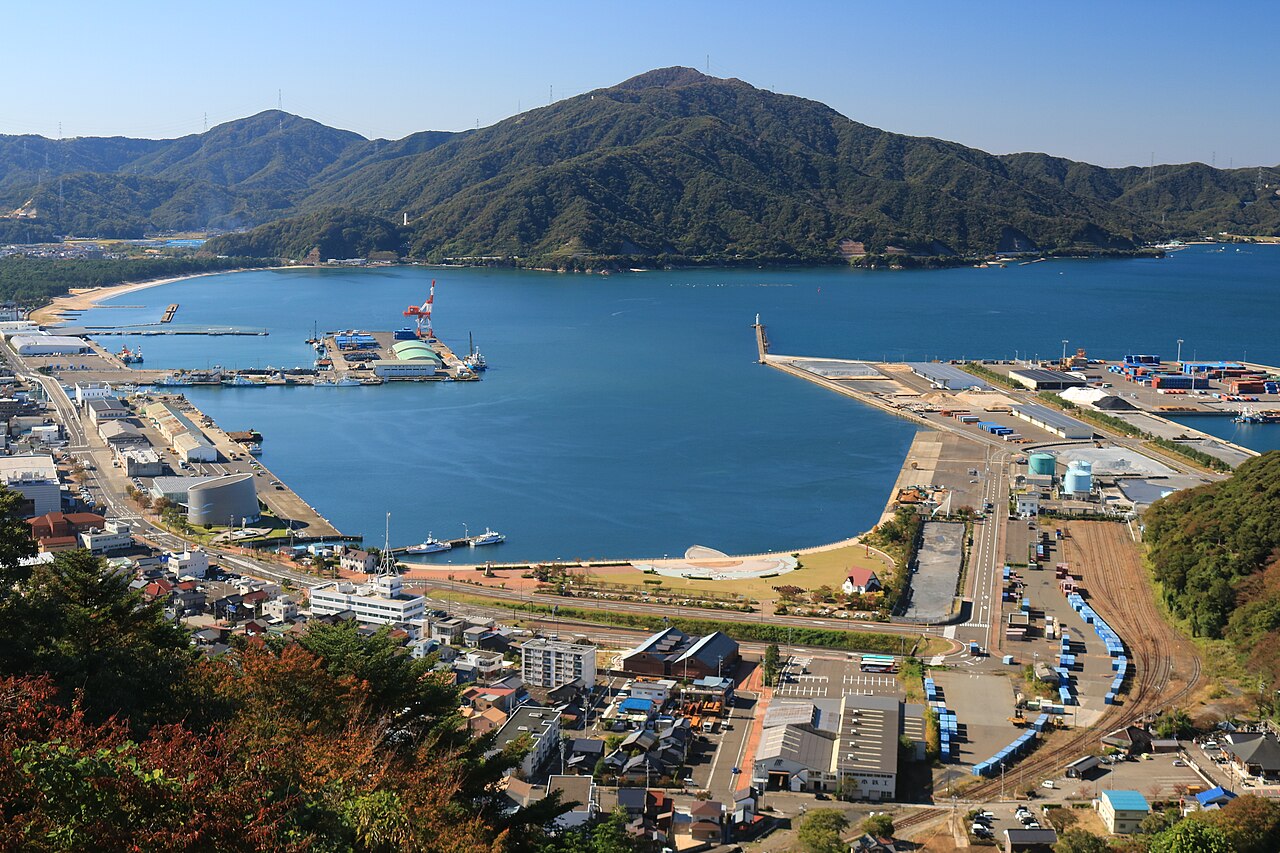
From the hilltop behind the shrine the view takes in the town below, the harbour and the boats moving through it. Down at the waterfront a brick-paved promenade faces the same water. In the shrine grounds a stone marker for the old castle records the fighting between the two courts and the last days of the two princes.
The harbourfront: a red brick warehouse, a museum, and local flavours
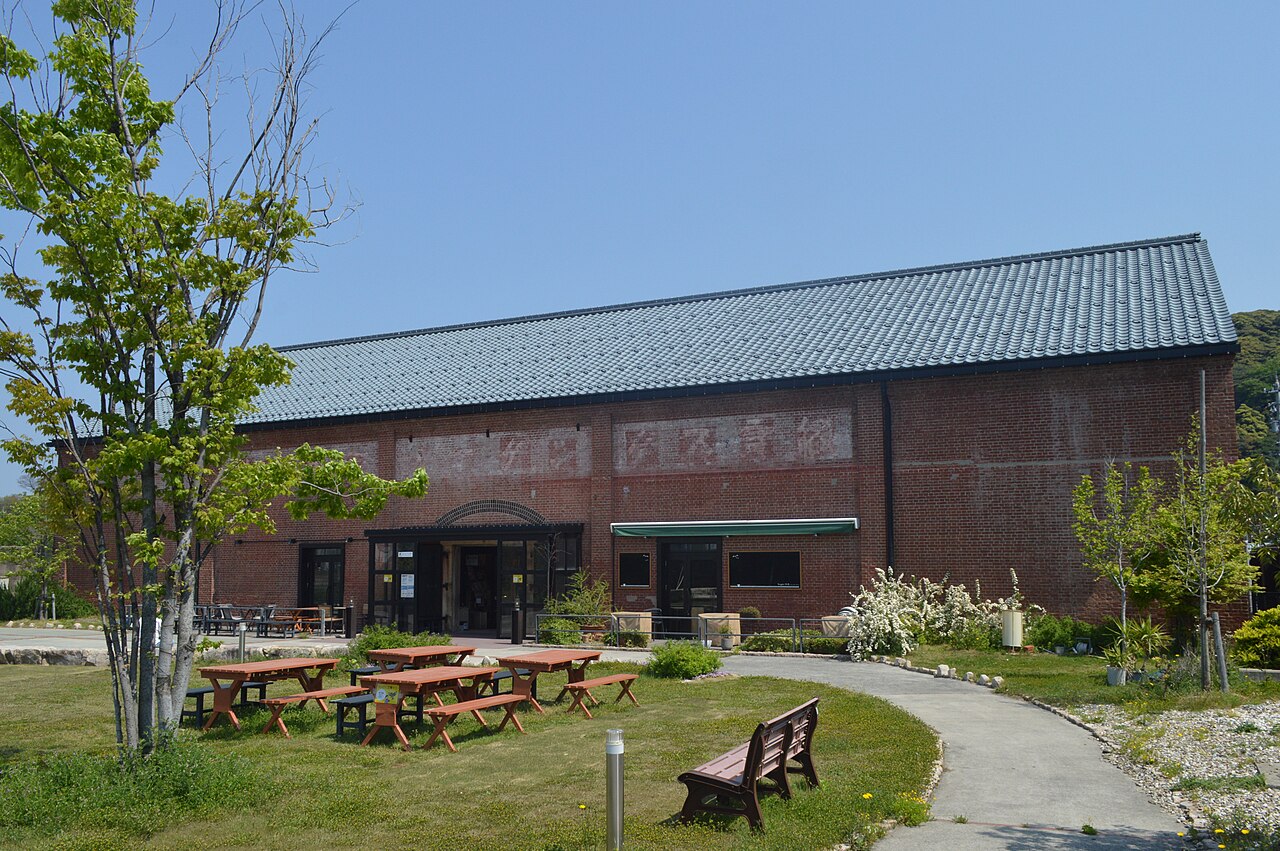
Tsuruga was once a busy port. Ships sailed from here to Vladivostok, Nippon Yusen ran its western circuit through the harbour, Osaka Shosen kept a Sea of Japan route and Tanshu Kisen worked the coast towards Wakasa Obama, Tango Maizuru and Miyazu, with passengers and cargo passing through. The red brick warehouses by the water are where to begin.
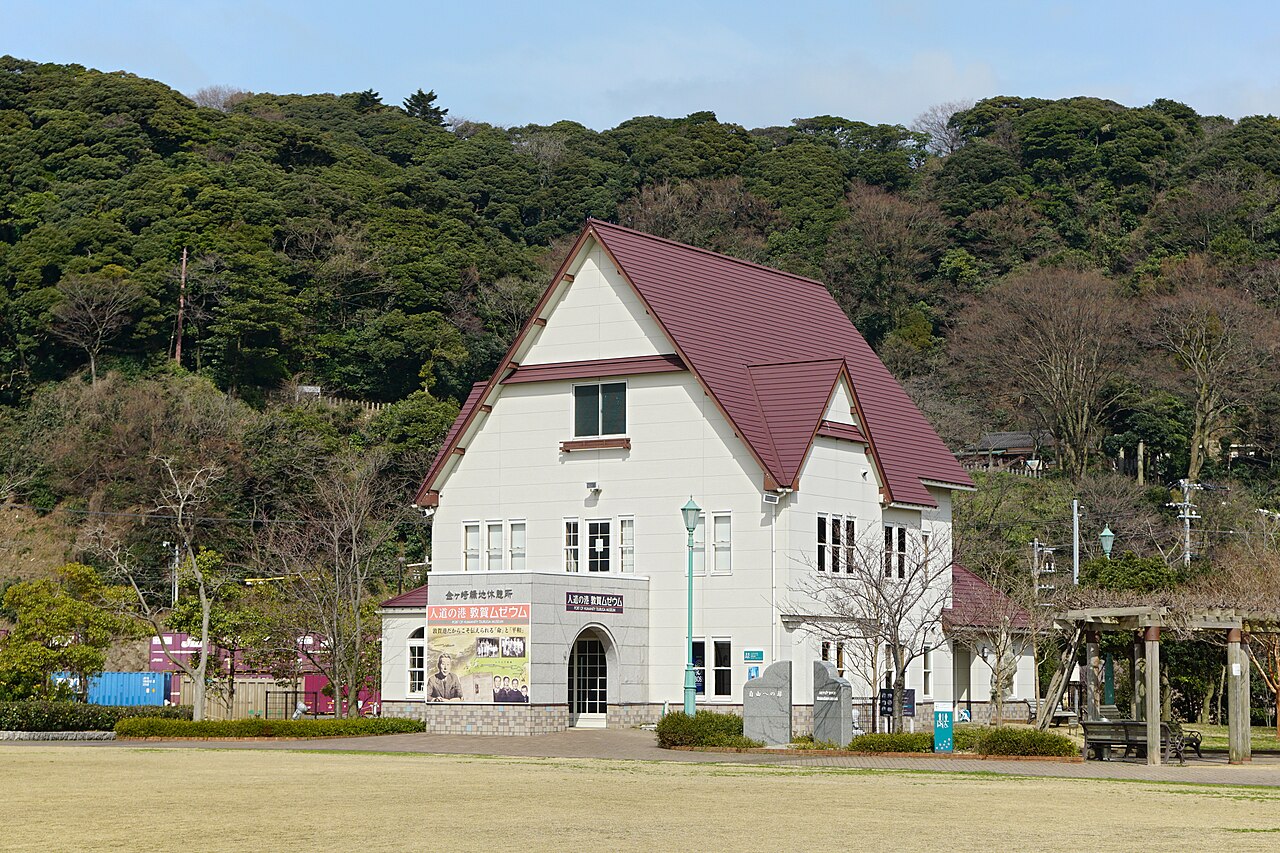
The warehouse buildings now serve as a visitor space, with a diorama hall in the north building, and they close over the New Year. The Port of Humanity Tsuruga Museum, a white building with a dark red gabled roof set against a wooded hillside, charges admission. Opening times, closing days and fees are set out below.
| Place | Hours and fees |
|---|---|
| Tsuruga Red Brick Warehouse, closed | Thirtieth of December to the second of January |
| Tsuruga Red Brick Warehouse, open | 9:30 to 22:00 |
| Diorama hall (north building), open | 9:30 to 17:30, last entry 17:00 |
| Port of Humanity Tsuruga Museum, open | 9:00 to 17:00, last entry 16:30 |
| Museum admission, adult | 500 yen |
| Museum admission, elementary school age and younger | 300 yen |
Tsuruga also feeds you well. Tsuruga ramen grew out of the mobile stalls of the town centre and is known for a soy-sauce soup built on pork bones and chicken. The town is also a major producer of oboro kombu, finely shaved kelp, and most of what is sold across Japan is made here.
From the sea comes Wakasa guji, a red tilefish landed at Tsuruga, Obama and Takahama and counted among Fukui's signature seafood. It suits a slow evening, and if a single day feels too short for the shrine, the pines and the harbour together, there are places to stay in Tsuruga for the night.