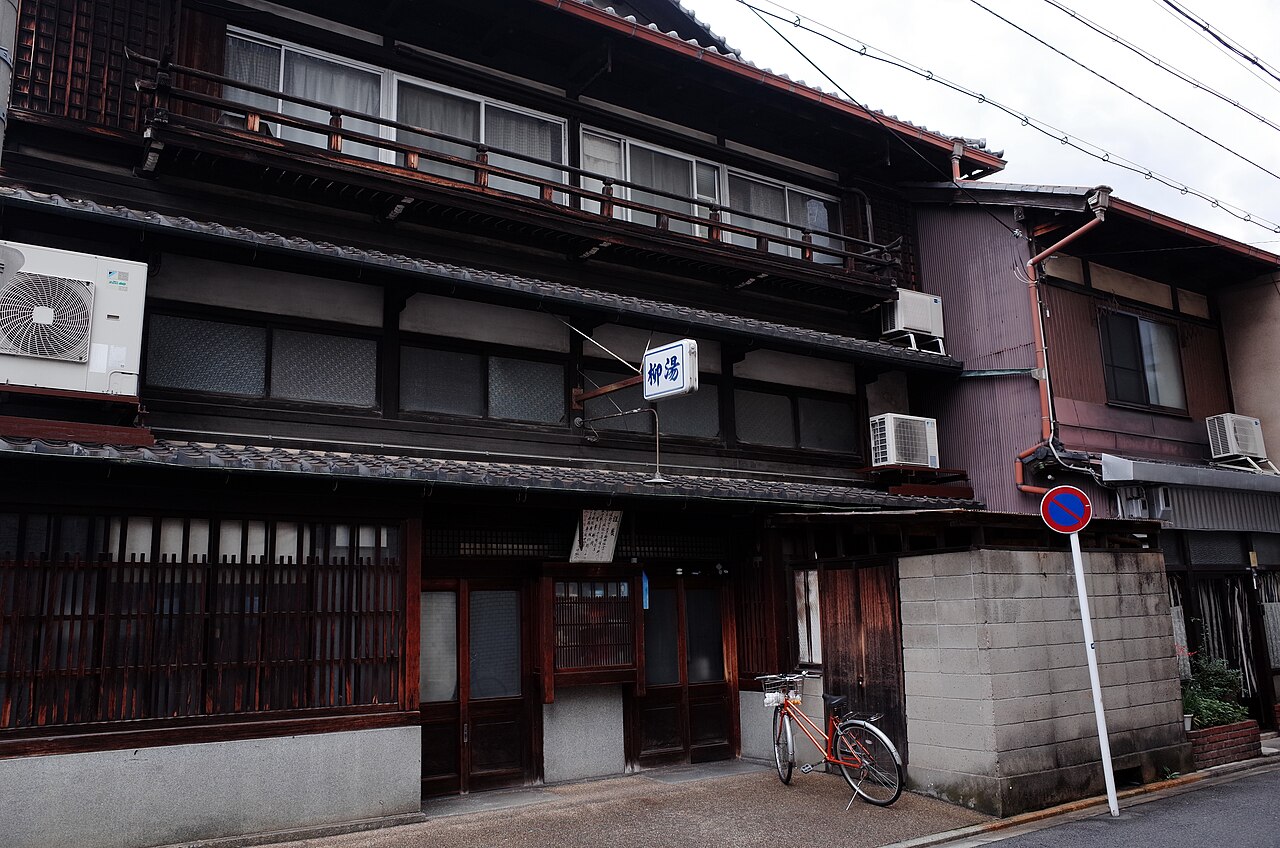
A day-use hot spring or public bath in Japan asks for little: at a sento, visitors first rinse themselves with hot water, and at the public baths of Nozawa Onsen the towel stays out of the bathtub. Carrying some cash helps, since shoe boxes, lockers and hair dryers can be charged separately from the bathing fee. Fees, hours and closing days differ bath by bath, and the ones here are those of the Tsubaki-no-Yu and Asuka-no-Yu at Dogo Onsen in Matsuyama, the public baths of Kinosaki Onsen, Takegawara Onsen in Beppu, the Kin-no-Yu and Gin-no-Yu at Arima Onsen, the public baths of Nozawa Onsen and the sento of Tokyo.
Adults pay six hundred yen at a Tokyo sento. The adult fee at the Kounoyu in Kinosaki Onsen is eight hundred yen. A rental towel at the Tsubaki-no-Yu costs one hundred and ten yen. At Takegawara Onsen, the original towel costs three hundred and fifty yen.
At the public baths of Nozawa Onsen, visitors are asked to wash their bodies before bathing and not to put towels in the bathtub. At the Tsubaki-no-Yu, cash may be needed to use facilities such as shoe boxes and lockers.
| Bath (town) | Admission (adult) | Hours | Closed | Towel |
|---|---|---|---|---|
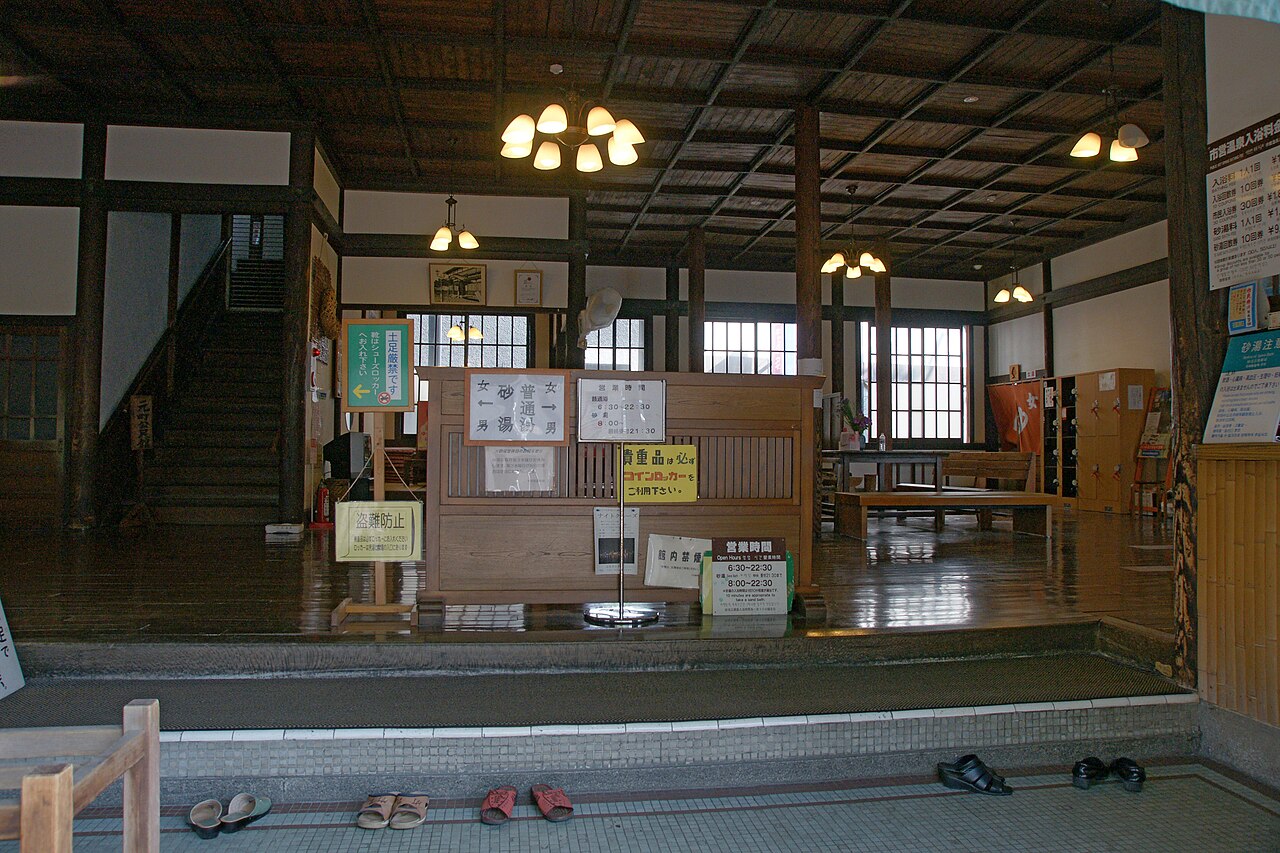
| Takegawara Onsen (Beppu) | Adults pay 300 yen. | Open 6:30 to 22:30 for the ordinary bath. | Closed on the third Wednesday. | Towels sell for 350 yen. |
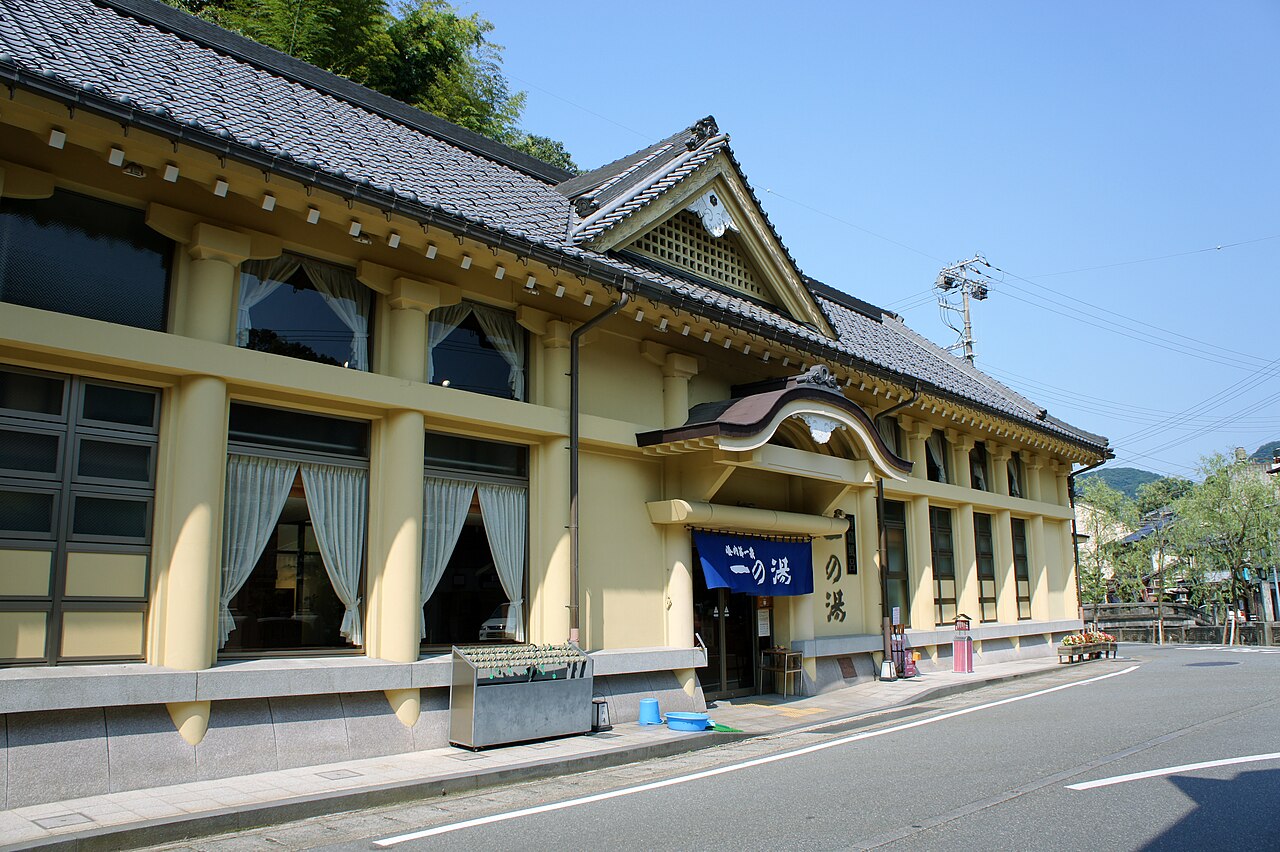
| Kounoyu (Kinosaki) | Adults pay 800 yen. | Open 7:00 to 23:00 with last entry thirty minutes before closing. | Closed on Tuesday. | — |
| Kin-no-Yu (Arima) | Adults pay 800 yen. | Open 8:00 to 22:00 with last entry at 21:30 for the bath. | Closed on the second and fourth Tuesday and on January first. | — |
| Gin-no-Yu (Arima) | Adults pay 700 yen. | Open 9:00 to 21:00 with last entry at 20:30 for the bath. | Closed on the first and third Tuesday and on January first. | — |
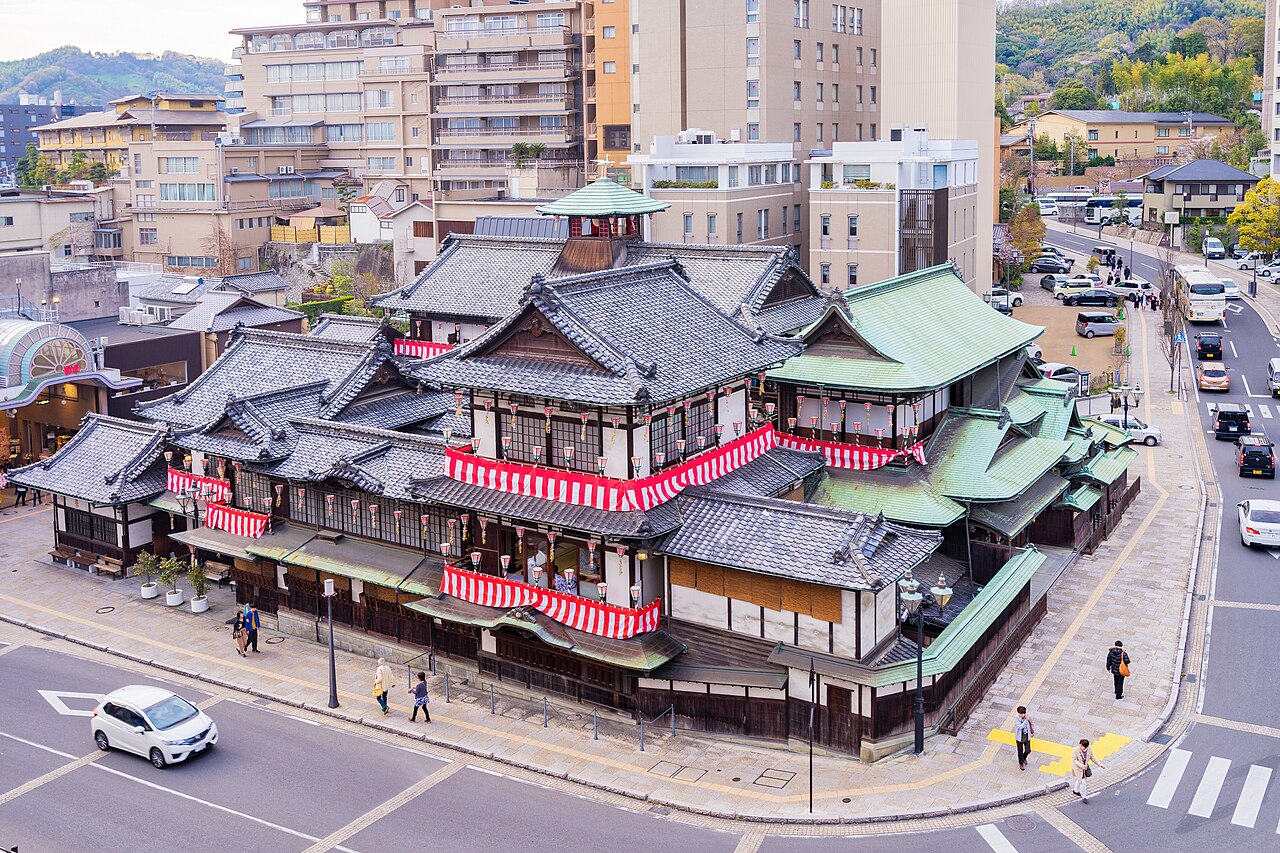
| Tsubaki-no-Yu (Dogo) | Adults pay 500 yen. | Open 6:30 to 23:00 with last entry at 22:30 for the bath. | — | Rental towels cost 110 yen. |
| Tokyo sento | Adults pay 600 yen. | — | — | Towels are on sale at most sento. |
At the door: shoes, tickets and keys
The visit starts with the shoes. At a sento, visitors take off their shoes and put them in the shoe locker. At the Dogo Onsen baths, shoes go in a shoe box with a key, which is a one hundred yen return type. Past the entrance, the changing room is where most sento bathhouses have lockers.
Bring some yen in hand to the Tsubaki-no-Yu, since cash may be needed there for facilities such as shoe boxes and lockers. A locker at the Tsubaki-no-Yu costs ten yen. Hair dryers there cost ten yen for three minutes. Both are charged separately from the bathing fee.
In the bath: wash first, keep the towel out
The manners inside follow one order, and a first-time visitor can hold it in mind as three steps: rinse, wash, then soak. On entering the bathing area at a sento, visitors first rinse themselves with hot water, a step called kakeyu. At the public baths of Nozawa Onsen, visitors are asked to wash their bodies before they get into the tub.
At those Nozawa Onsen baths the towel stays out of the water, because visitors are asked not to put it in the bathtub. Swimsuits and underwear cannot be worn in the bath. One room has a rule of its own: soap cannot be used in the upper-floor bath room of the Asuka-no-Yu.
Towels, soap and what to bring
What to pack depends on the bath, and the two Dogo Onsen baths show the pattern of renting a small towel and a large one separately.
- Tsubaki-no-Yu. A rental bath towel at the Tsubaki-no-Yu costs three hundred and twenty yen. Shampoo, rinse and body soap are not provided at the Tsubaki-no-Yu, so bring your own if you want them.
- Asuka-no-Yu. At the Asuka-no-Yu, a rental towel costs one hundred and ten yen. The rental bath towel at the Asuka-no-Yu costs three hundred and twenty yen.
- Takegawara Onsen. At Takegawara Onsen, the original bath towel is twelve hundred yen. The shampoo, conditioner and soap set at Takegawara Onsen is one hundred yen.
A sento asks for less planning. Most sento sell mini soap, mini shampoo, mini conditioner and towels, so a visitor can go without bringing anything.
Free baths, passes and ticket books
The public baths of Nozawa Onsen work differently from the ticketed baths, as a small donation is requested there as a contribution to the bath association. The direct bus from Iiyama Station to Nozawa Onsen takes about twenty-five minutes.
Elsewhere, ticket books and combined tickets suit a visitor who plans more than one bath in the same town, and they are the items to compare with a single entry.
- Tokyo sento. A Tokyo-wide adult bath ticket book of ten tickets is sold for five thousand four hundred yen including tax.
- Takegawara Onsen. The ten-ticket bathing coupon book for an adult is two thousand seven hundred yen. The same coupon book for a child is nine hundred yen.
- Sand bath. The sand bath at Takegawara Onsen is fifteen hundred yen, and bathing is possible from age six. A sand bath coupon book of ten tickets is thirteen thousand five hundred yen.
- Arima Onsen. The combined ticket for the Kin-no-Yu and Gin-no-Yu costs twelve hundred yen, and a towel is included on weekdays.
At a Tokyo sento, a child under six pays one hundred yen including tax. A child of six to under twelve pays two hundred yen at a Tokyo sento.
Closing days and hours differ by bath
Tuesday and Wednesday are the days to look at before setting out, and neighbouring baths in one town do not rest on the same day. In Kinosaki Onsen, the Kounoyu takes Tuesday as its closed day. The Mandara-yu is closed on Wednesday. The Mandara-yu opens from three in the afternoon. At Arima Onsen, the Kin-no-Yu closes on the second and fourth Tuesday and on January first. The Gin-no-Yu closes on the first and third Tuesday and on January first.
Takegawara Onsen takes the third Wednesday as its closed day, and the following day if that day is a holiday. Night-time bathing is not possible at the public baths of Nozawa Onsen for security reasons, so plan a bath there for the daytime. Check official information before visiting.
Related guides
For Dogo Onsen, see Dogo Onsen. For Kinosaki Onsen, see Kinosaki Onsen. For Nozawa Onsen, see Nozawa Onsen. For tattoo rules, see the guide to tattoo-friendly baths near Tokyo. If you are planning a visit to Kinosaki Onsen, you can browse places to stay in Kinosaki Onsen.