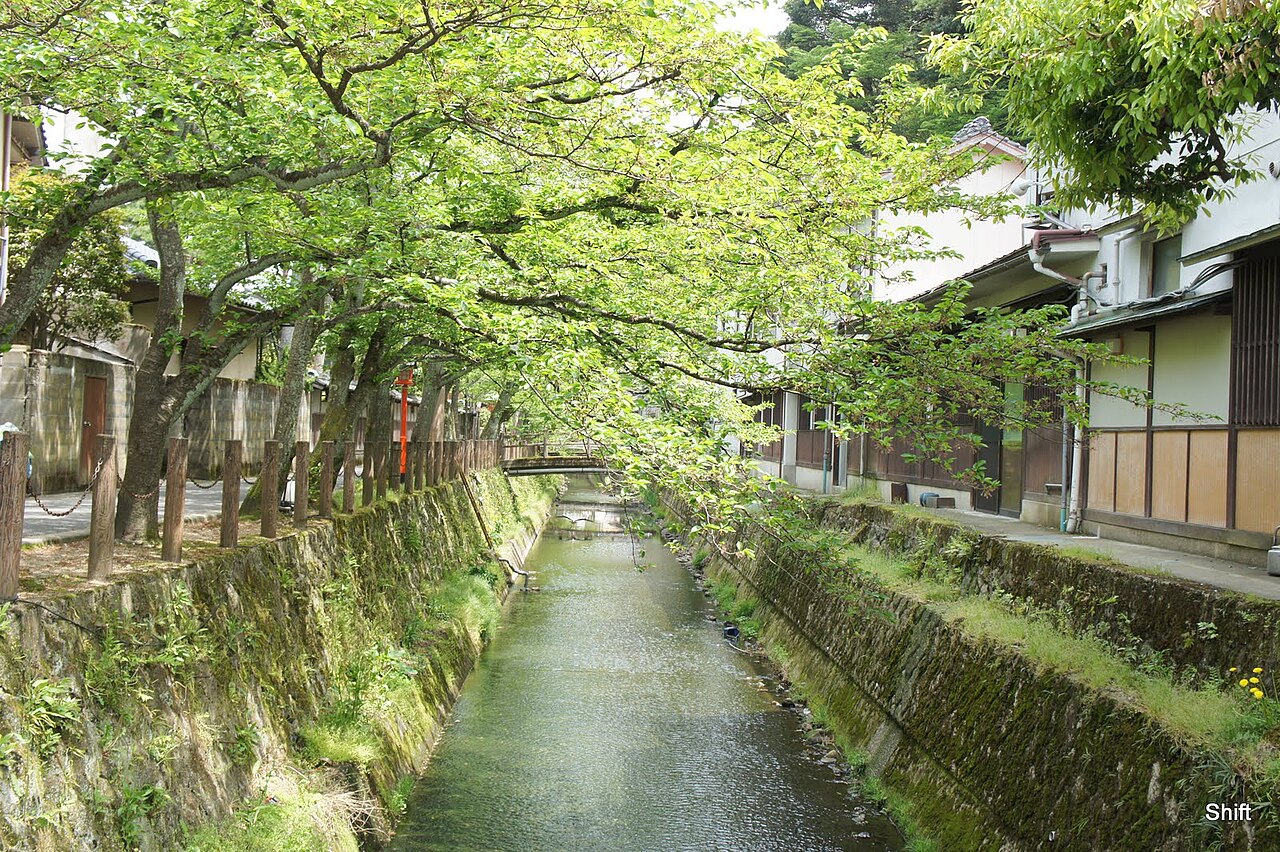
Kinosaki wears its fame lightly: a canal town of willows and wooden inns where guests pad between public bathhouses in cotton robes. This guide is about its earliest hour — the first soak of the day, taken before the lanes stir — and about Genbudo, a gorge of basalt columns a little way outside town.
The Town That Wakes Early
The town's own story begins with patience. A monk named Dochi is said to have chanted a sutra for a thousand days until, in the Yoro era, a hot spring broke ground where he prayed; he went on to found Onsenji temple to watch over the waters. Kinosaki has since marked thirteen hundred years from that first spring.
Much of what you walk through is a rebuilt town. A great earthquake and the fires after it flattened Kinosaki late in the Taisho years, and it chose to rebuild around its public baths; the streetscape took its present shape a decade on. The water is a clear chloride spring, gentle on skin and slow to let you chill.
Writers kept coming back, too. Monuments tied to Naoya Shiga's story about the town, and to other writers after him, stand at twenty-three points along the lanes; walking the circuit that strings them together takes an hour or two at a stroll.
Which Baths Are Awake Early
The heart of the town is its six public bathhouses — the sotoyu — strung along the canal and the lanes behind it. They do not keep identical opening times, and that is the early riser's advantage; the difference decides where you walk first while the town is still waking.
- Konoyu, Gosho no Yu, Ichi no Yu, and Jizoyu admit bathers from seven in the morning until eleven at night, with last entry half an hour before closing.
- Mandarayu and Yanagiyu begin at three in the afternoon and run until eleven at night, again with last entry half an hour before closing.
- Every one of the six charges eight hundred yen for an adult and four hundred yen for a child.
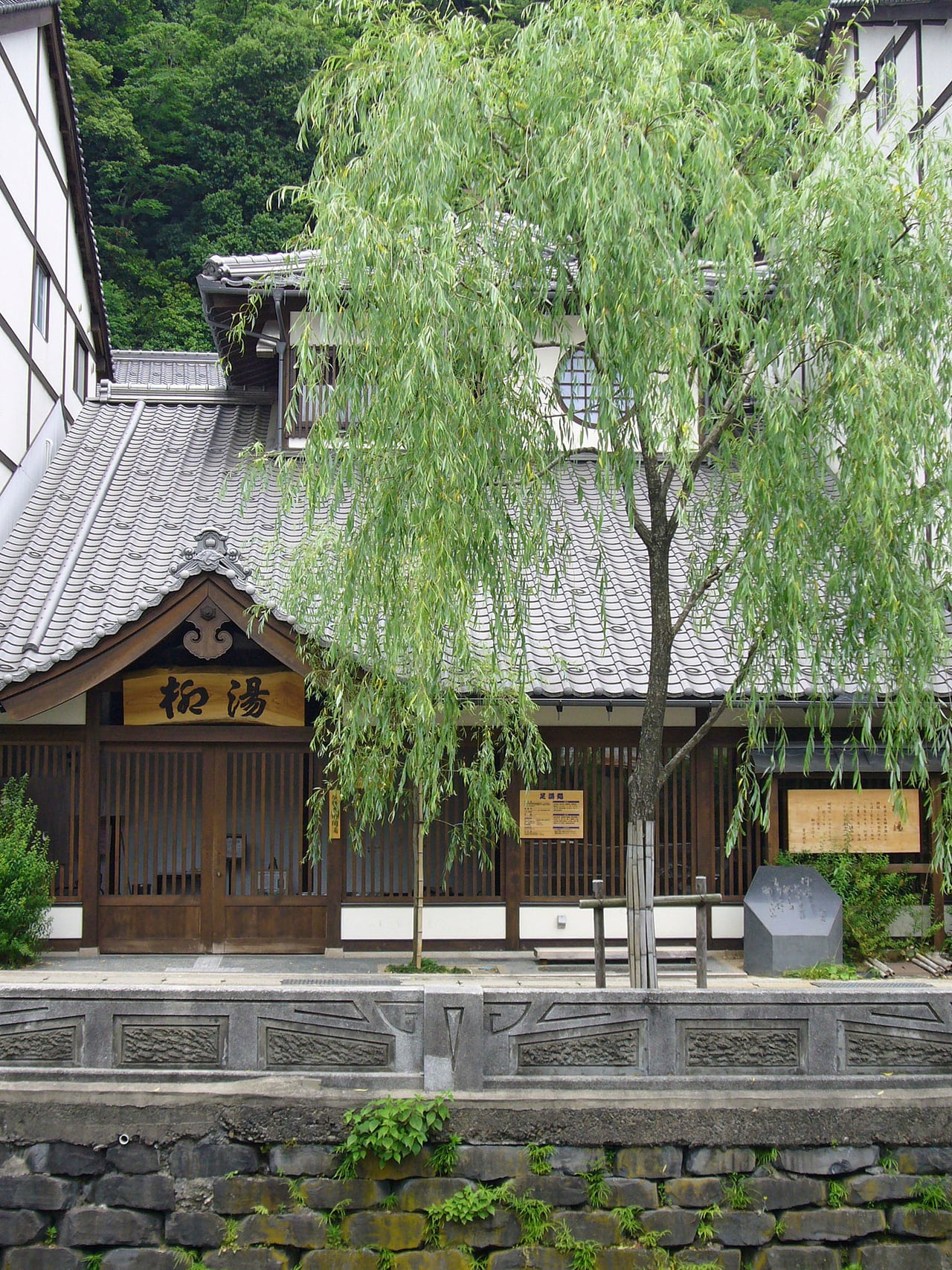
Ichi no Yu, behind its Momoyama-style facade — the town's emblem — keeps a bathing grotto cut into natural rock; an Edo-period physician praised it as the finest bath in the land, which named the place. Gosho no Yu bathes entirely outdoors against a wooded hillside; its courtly name comes from an imperial bather recorded in the chronicle Masukagami.
Jizoyu, once called the villagers' bath, keeps a small parent-and-child tub at a gentler warmth. Mandarayu stands where the founding prayer is said to have been answered, and Yanagiyu, smallest of the six, grew from a legend of water rising beneath a willow carried over from China's West Lake.
Konoyu, the last bath up the valley — about eighteen minutes on foot from where the trains arrive — spreads into a broad garden bath under the trees and claims the town's other founding legend for itself. It makes the right goal for a first-morning walk, out at the calm end of the town.
A Handbook from the Taisho Years
A guide to Kinosaki printed in the early Taisho years still reads well, and holding it against today's brochures is a pleasure of its own. It already calls Ichi no Yu the busiest of the baths, and traces that name to an Edo-era medical treatise that ranked Kinosaki first among the country's hot springs.
It lingers on Onsenji, the temple founded by the monk Dochi in the Yoro era and later granted its formal name by imperial order, noting that its thousand-armed Kannon already stood ranked as a national treasure. And it records an older Jizoyu built close along the river, storing water that welled up through the riverbed itself.
Its idea of leisure holds up well: boating on the Maruyama River — willows in spring, the moon in autumn, a line trailed for fish — and the small hill of Higashiyama Park at the town's edge, looking out over the Sea of Japan and the fishing boats working it.
It also tells how Genbudo got its name: a Confucian scholar of the Bunka era, admiring the rock, took up his brush on the spot and named the cave himself. The handbook sets Genbudo beside Britain's Fingal's Cave as twin wonders of East and West, its thousands of six-sided pillars stacked through three chambers.
Where to stay
Places to stay near Kinosaki Onsen →
Disclosure: This post may contain affiliate links. If you book through them, we may earn a commission at no extra cost to you.
Out to the Basalt at Genbudo
The caves the scholar named are now a riverside park of raw geology. When magma from an ancient eruption cooled and hardened here, it split into columns with such regular joints that the rock face looks stacked by hand; the pattern is called columnar jointing, and the whole park is arranged around it.
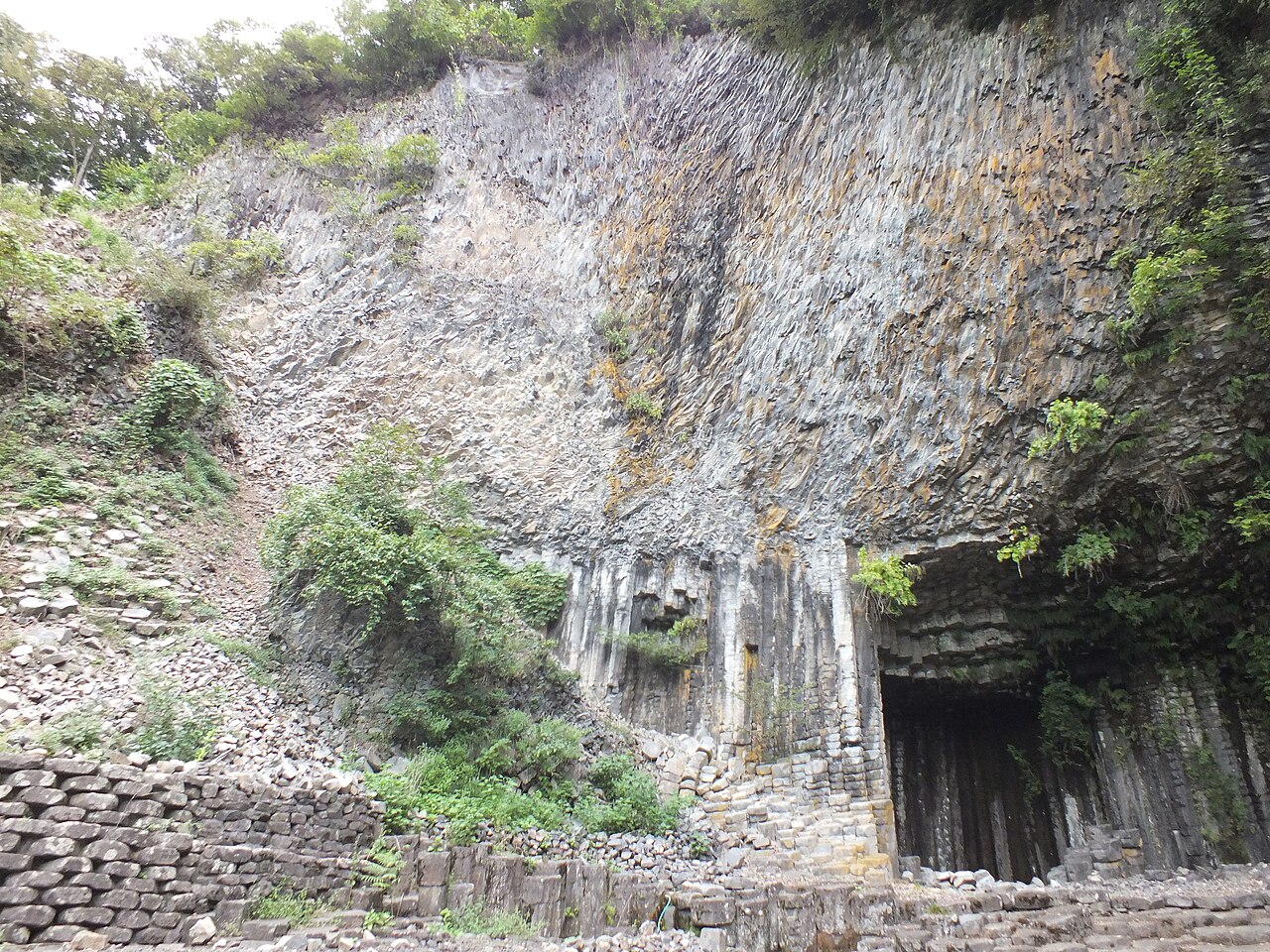
Five caves face the walking paths. Two of them — Genbudo itself and the Blue Dragon cave, Seiryudo — carry protection as national natural monuments, and even within the park Seiryudo is singled out for how fully its columns have formed.
The site sits inside the San'in Kaigan UNESCO Global Geopark and appears among a hundred selected geological heritage sites of the world. If you would rather have the outing arranged than plot it yourself, you can browse bookable tours around Kinosaki before you go.
The Practical Morning
Kinosaki rewards arriving the evening before: check in, eat, walk the canal after dinner, and be at a bathhouse door for the earliest admission. Getting to the town in the first place is the easy part, with direct limited-express runs from Kyoto, Osaka, and Sannomiya, and a highway bus besides.
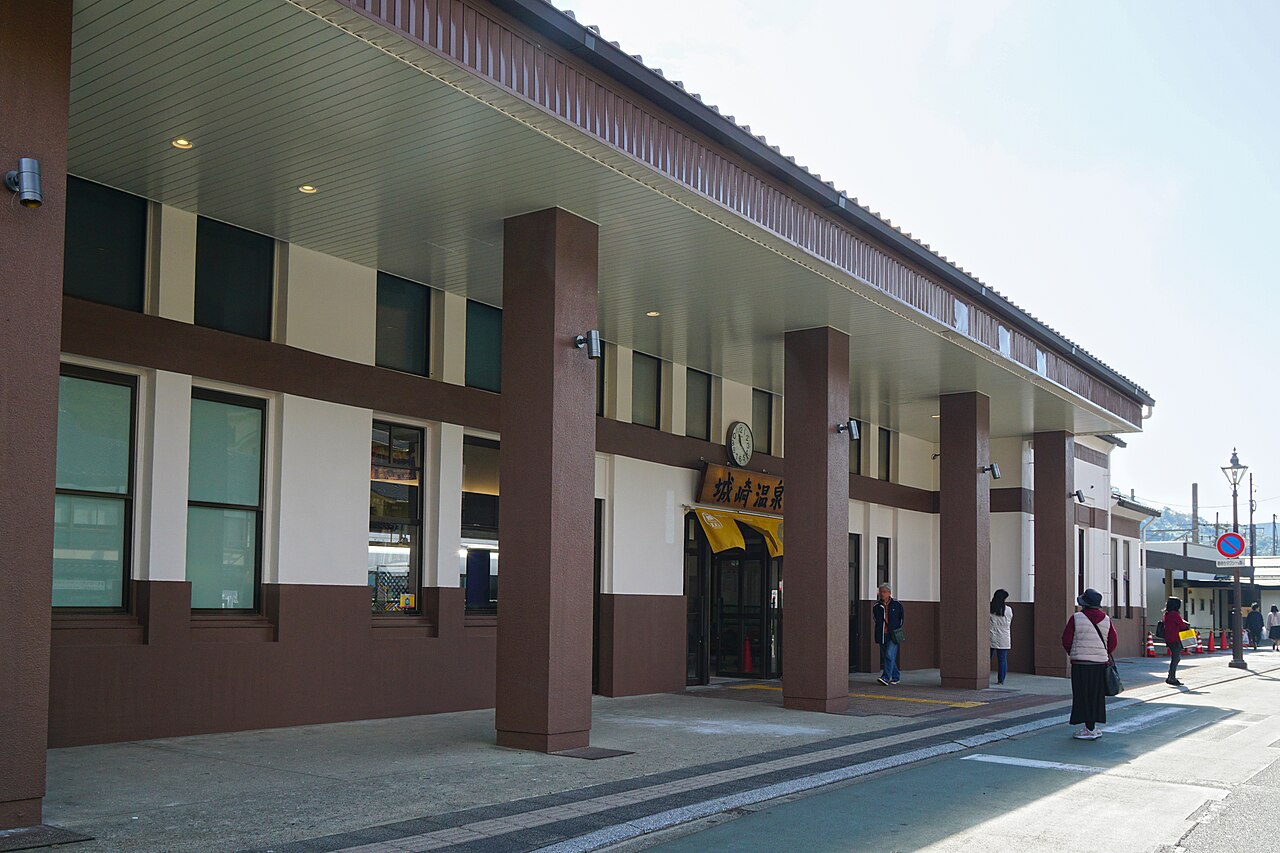
- The Limited Express Kinosaki runs from JR Kyoto Station to JR Kinosaki Onsen Station in about two hours and twenty minutes.
- The Limited Express Kounotori covers JR Osaka Station to JR Kinosaki Onsen Station in about two hours and forty minutes.
- The Limited Express Hamakaze links JR Sannomiya Station to JR Kinosaki Onsen Station in about two hours and thirty minutes.
- From the west, the San'in Main Line connects JR Tottori Station to JR Kinosaki Onsen Station in about two hours.
- A highway bus from Osaka reaches Kinosaki Onsen Station for four thousand one hundred yen one way.
For the caves, the gates set your schedule, so it pays to plan the ride out around them, take the morning in its natural order, and leave yourself slack rather than doubling back for a second attempt later in the day. Details change, so check official information before visiting.
- Genbudo Park welcomes visitors from nine in the morning to five in the afternoon, with entry ending at half past four; it rests from the twenty-ninth of December to the third of January.
- Park admission is five hundred yen for an adult and three hundred yen for a student.
- Genbudo Museum keeps the same nine-to-five day; an adult pays eight hundred yen, an elementary-age child five hundred yen, and a younger child four hundred yen with a guardian along.
- The museum shop stores baggage at one hundred yen per item, and free of charge for visitors using the exhibits.
Bathe at seven when admission begins, take breakfast while the shutters are still down, be at the basalt for the park's nine o'clock start, and return to the canal by early afternoon. The morning belongs to whoever shows up for it. If you would rather book the moving parts together, you can compare bookable tours around Kinosaki before you travel.