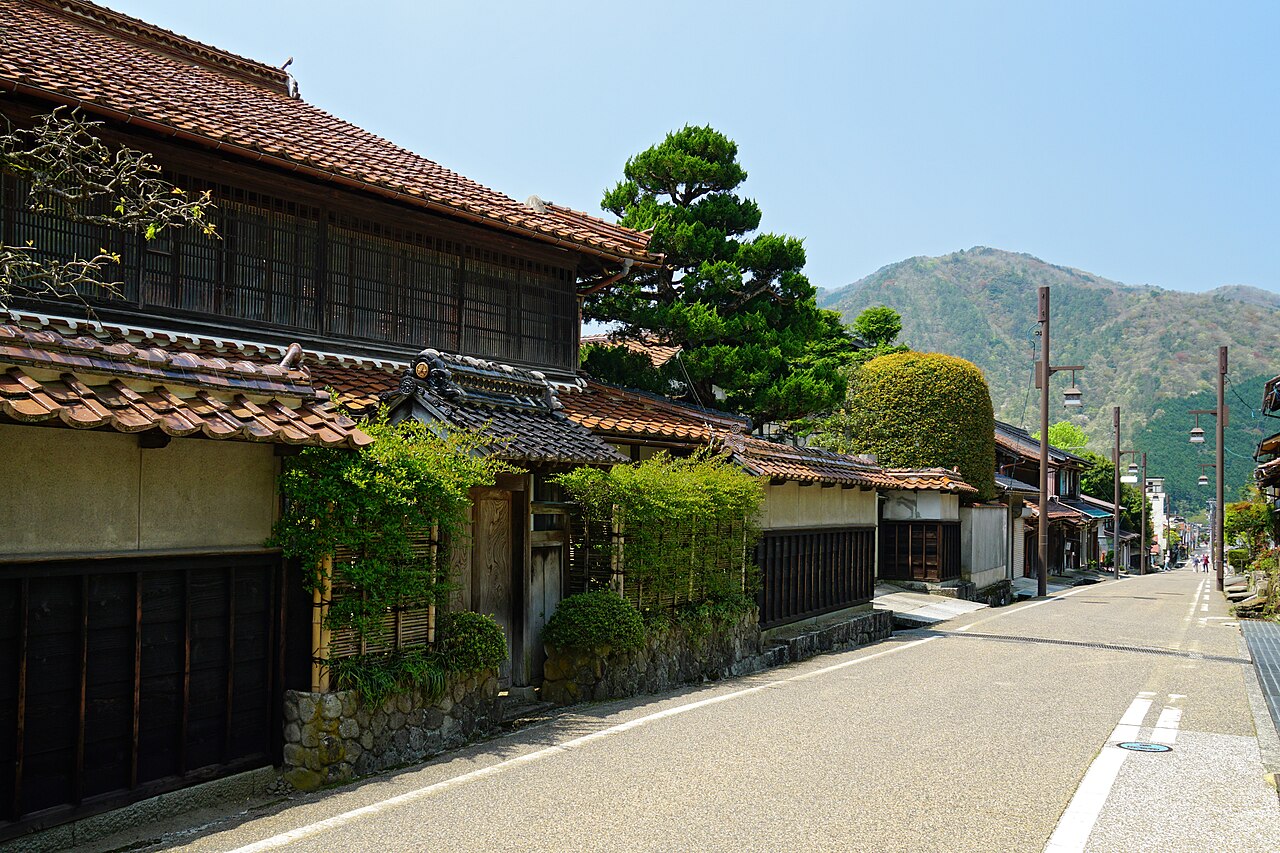
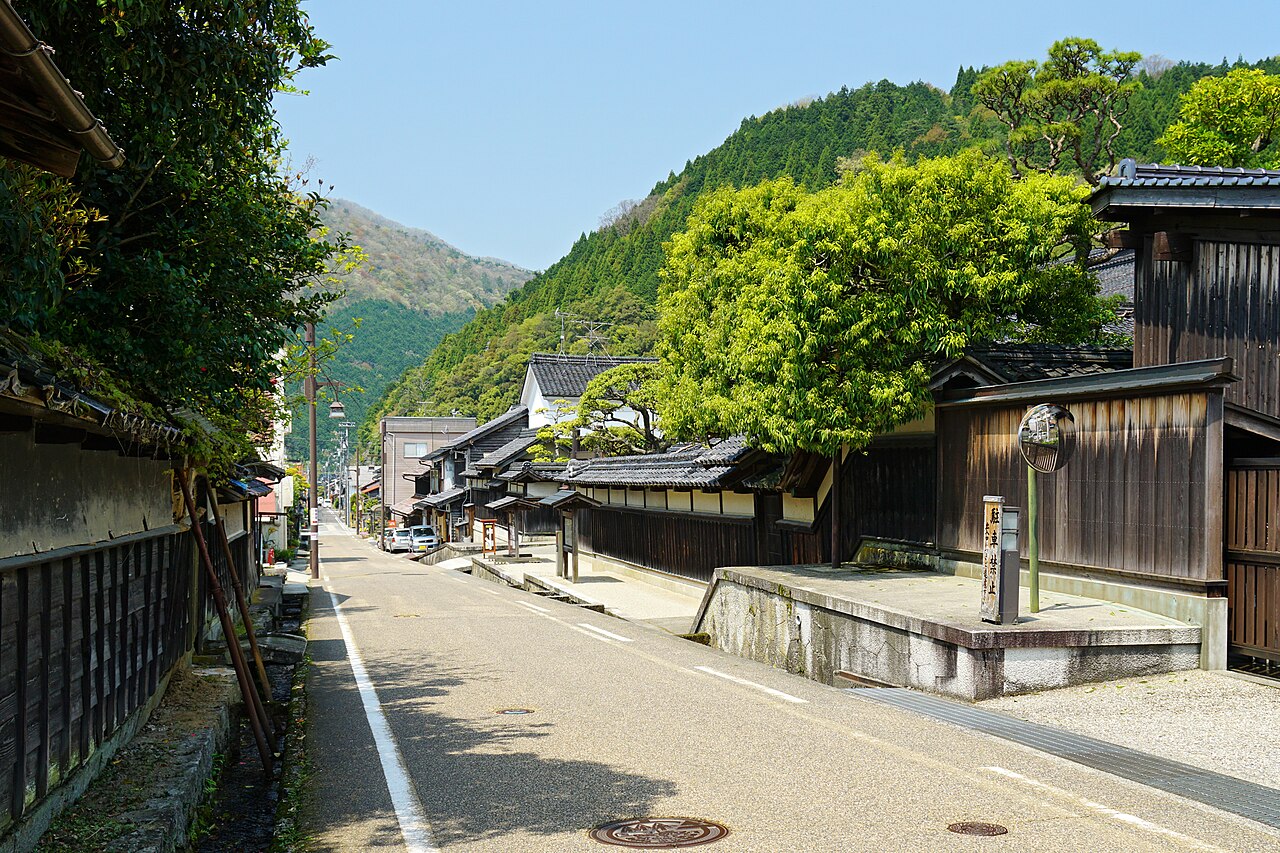
A day in Chizu moves between an old house, a post-town street and the forest that covers ninety-three percent of the town and hosts its forest therapy. At Ishitani House, giant beams stand exposed above the earthen-floor doma, and in the tea house the only sounds are a waterfall and carp leaping. Along the street of Chizu-juku, cedar balls hang from the houses.
Ishitani Residence: Earthen Floor, Tea House and Pond Garden
Inside Ishitani House you enter the doma, an earthen floor whose ceiling, high overhead, is left bare to giant pine-log beams. At the right rear a kamado stove and a water tank mark the old family kitchen, and a sunken fireplace sits in the raised floor on the doma.
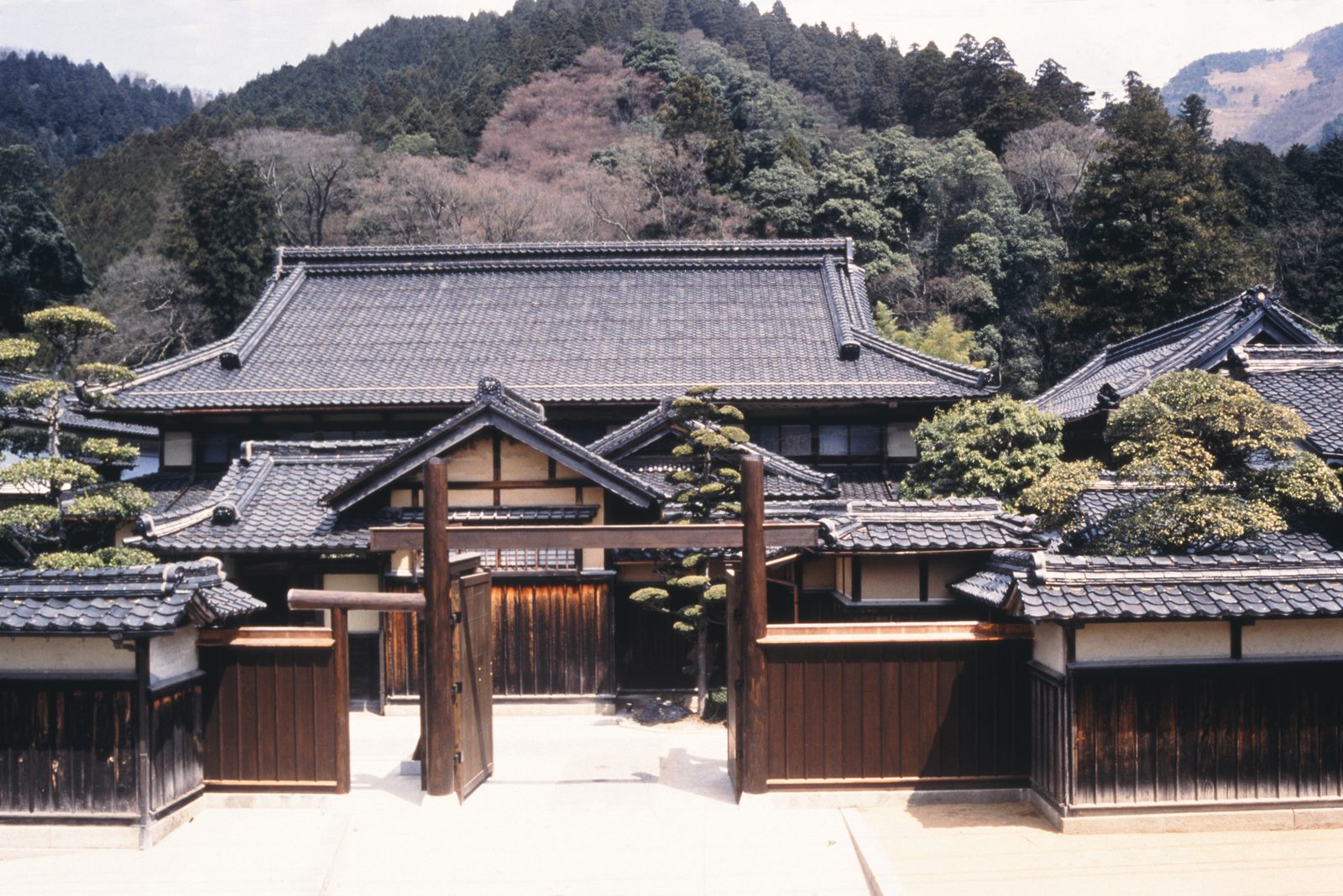
One zashiki is painted all over with soot, its shoji windows casting shadows from their fine work; another has a ceiling of Kasugasugi cedar from Nara, an alcove post of Yakusugi cedar and a tokonoma backed with washi paper. One of the two staircases upstairs is a Western spiral staircase with an arched bridge across its stairwell.
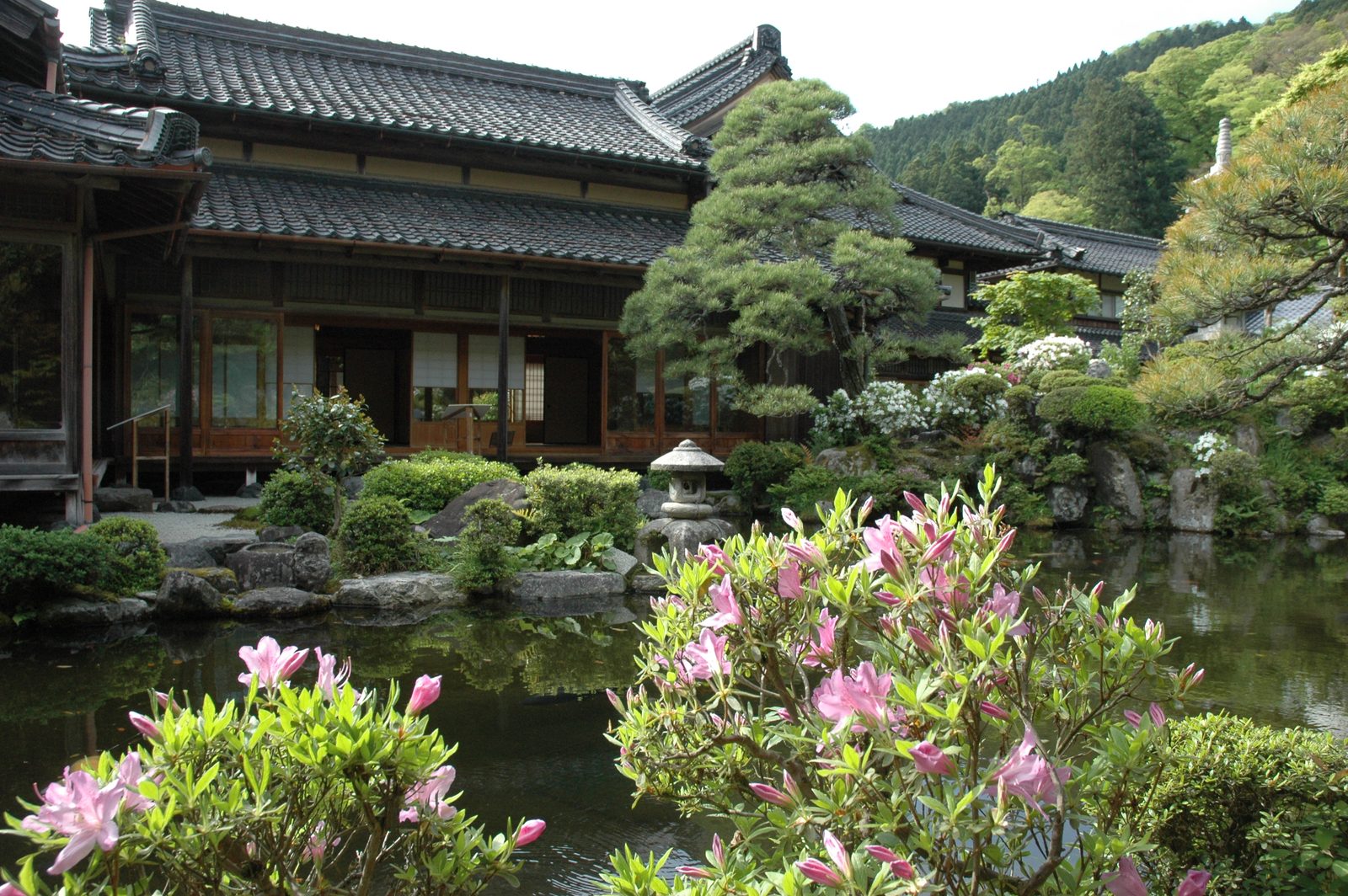
The sukiya-style tea house is attached to the upper side of the old zashiki, half of it projecting over the garden pond. Inside, you hear nothing but the waterfall and carp leaping. Its ceiling is woven cedar hegi in an ajiro pattern with soot-stained bamboo rods.
From every zashiki you look out on the garden and its pond. The pond garden was laid out as one with the zashiki it faces; a dry landscape garden faces the upper part of the main building, and a lawn garden faces the annex. Except during the autumn special garden event period, you cannot go down into it.
Chizu-juku: Cedar Balls, a Shrine and a Film Memorial Hall
Chizu-juku is a post town on the main road toward the Kamigata region. It served as the Tottori domain's lodging stop at the start of its alternate-attendance journey.
Walk the street and you see cedar balls hung on the houses. Townhouses and signposts from the post-town era still line the road, among them Ishitani House, the Nishikawa Katsumi film memorial hall and Suwa Shrine.
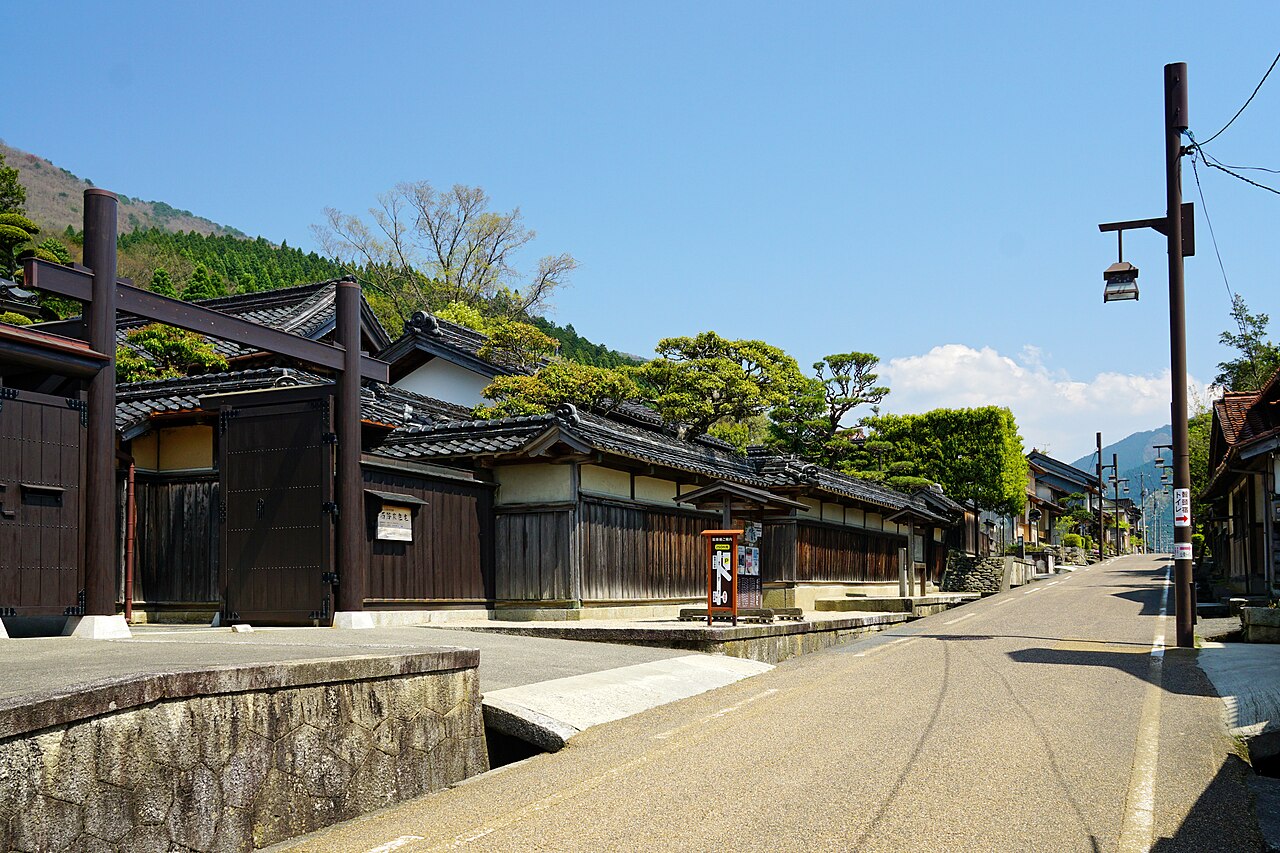
Many maples grow among large zelkova trees in the grounds of Suwa Shrine. At the film memorial hall you look over posters, scripts, still photographs and letters from many actors and film people, and one film by director Nishikawa Katsumi was shot on location in Chizu.
You can stroll Chizu-juku in a rented kimono, and a volunteer guide can show you around the post town.
A Cedar-Shaped Tower, a Jizo Statue and an Old School
At one shrine the object of worship is a tall white concrete tower shaped like a cedar. Its torii is two stone pillars with a shimenawa rope stretched between them, and beyond the approach path you find the Ryutani waterfall.
Gokurakuji, a Shingon-sect temple, is said to have been opened as a mountain temple by a founder who built twelve monks' quarters. A Jizo statue with a thoughtful face and expression has become familiar to children in particular, and you can try sutra copying at the temple.
The former Yamagata primary school is a wooden schoolhouse built with Chizu timber, with a long corridor running through it. No longer a school, it is a nationally registered tangible cultural property. Outdoors you see a forest railway locomotive, trolley cars and overhead cable on display.
Itaibara: A Hamlet on a Footpath
Itaibara lies about three kilometres northeast of the centre of Chizu, in a small valley surrounded by mountains. Until a tunnel opened, no cars came in, and a footpath was the one road to the hamlet. It keeps the old mountain-village scenery as it was, and it has been designated a prefectural preservation district for groups of traditional buildings.
As you walk through, you pass a thatched-roof house, a group of old houses more than fifty years old, a community hall, a shrine, a water mill hut and a charcoal-burning hut, with farm tools, baskets, straw mats, barrels and other old folk implements still left about the hamlet.
Forest, Gorge and Mountain Trails
The town runs forest therapy in groups of up to six, and participants are served a therapy meal made with local ingredients and planned for nutritional balance. Ashizu, where much natural forest remains, is where forest therapy began; its course follows a deep gorge and shows bright fresh greenery from spring to summer and leaf colour in autumn.
The Ashizu gorge, a quasi-national park, covers the source area of the Sendai River. The Chugoku Nature Trail there follows the gorge with few ups and downs, walkable by children and adults alike, with cliffs set against the forest; on the course around Mitaki Dam, in the autumn colour season you see autumn leaves reflected in the dam lake.
On Mount Kago, the standard Kago course passes through a switchback forest road and then follows a ridge trail with good views; Karo port fishermen once used the mountain as a landmark when returning to port. For a night nearby, browse places to stay in Chizu.
Getting to Chizu
New to rural buses and one-man trains? See how to ride them, step by step.
| Leg | How | Time or fare |
|---|---|---|
| Osaka to Chizu Station | Limited Express Super Hakuto, Chizu line | About 2 hours |
| Kyoto to Chizu Station | Limited Express Super Hakuto, Chizu line | About 2 hours 30 minutes |
| Okayama to Chizu Station | Limited Express Super Inaba, Chizu line | About 1 hour 20 minutes |
| Tottori to Chizu Station | Limited Express Super Hakuto or Super Inaba, Inbi line | About 30 minutes |
| Chizu Station to Chizu-juku | On foot | About 10 minutes |
Limited express trains reach Chizu Station from Osaka, Kyoto, Okayama and Tottori, and Chizu-juku is about ten minutes on foot from the station.
Hours and Fees
| What | Hours | Fee or note |
|---|---|---|
| Ishitani House | 10:00 to 17:00; last admission 16:30; closed Wednesdays (the next day if Wednesday is a public holiday). | Adults 600 yen; high school students 500 yen; elementary and junior high school students 400 yen. Tea room: matcha tea set with a sweet 800 yen. Cake set 1,000 yen |
| Information center of the Chizu Town Tourism Association | Reception 9:00 to 18:00; no regular closing day apart from the year-end and New Year holidays. | Rental electric-assist bicycle 1,000 yen per day (tax included). Bicycle use hours 9:00 to 18:00 |
| Forest therapy | After the May holidays to around mid-November; advance booking required, 10 days ahead. | Half-day course 8,800 yen; full-day course 14,300 yen; per group, tax included. Half-day course 2 to 3 hours; full-day course about 7 hours |
Fees and hours were checked against official sources between 9 October 2026 and 6 November 2026.
Ishitani House is closed on Wednesdays, or on the following day when the Wednesday is a public holiday, and forest therapy needs booking ahead and runs from after the May holidays to around mid-November.
Thinking of staying overnight?
Compare places to stay near Chizu, Tottori, Japan →
Disclosure: This post may contain affiliate links. If you book through them, we may earn a commission at no extra cost to you.