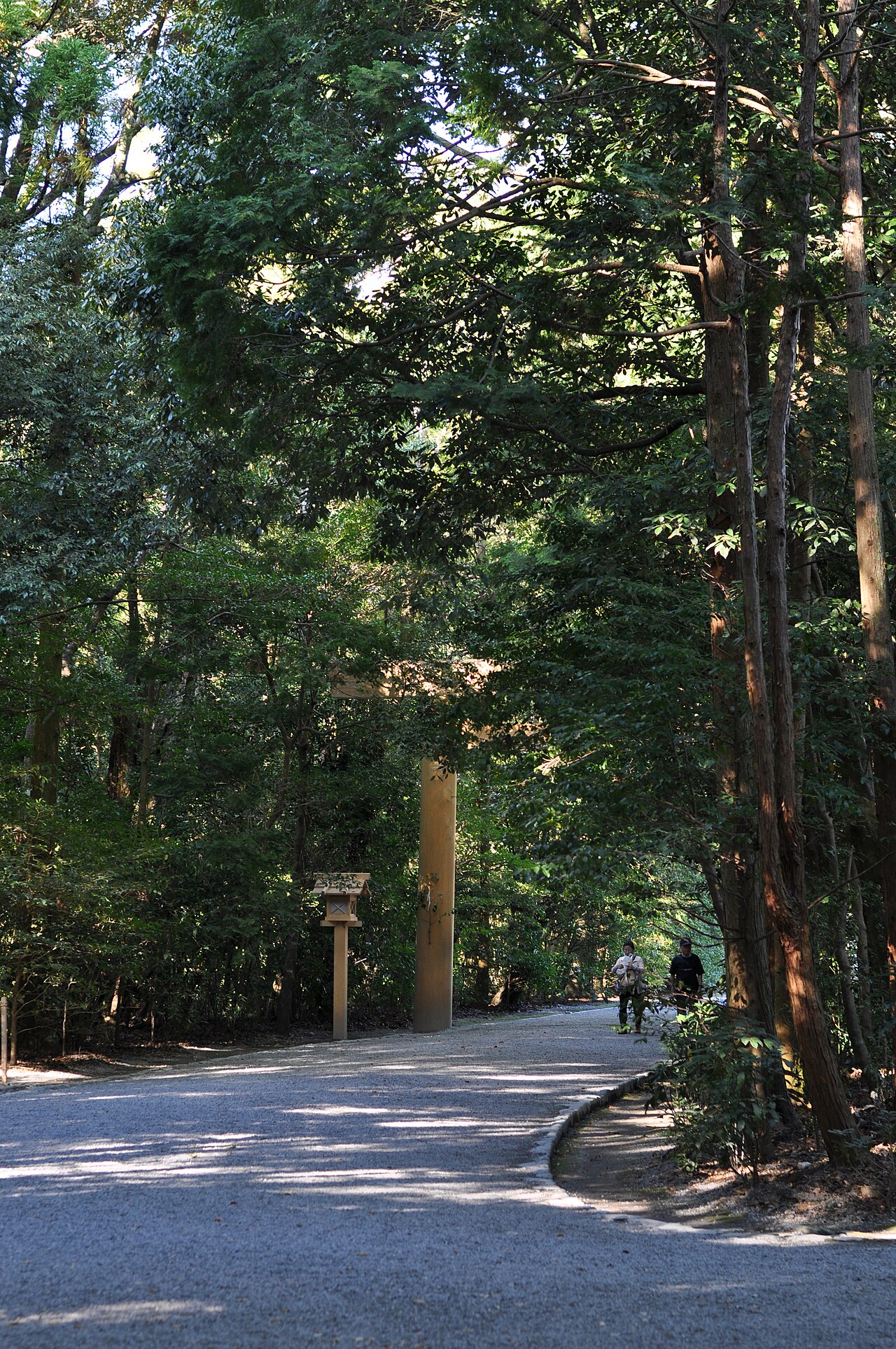
The pilgrim custom of Ise is blunt about the order of things: greet the Outer Shrine first, and only then go on to the Inner. Most modern itineraries run the route backwards, or skip the first half altogether, which is exactly why the old order still feels like a discovery. Begin where tradition says to begin and your morning starts on raked gravel under tall cedars, a short stroll from the arriving trains, in a forest sanctuary that asks nothing of you but quiet.
Why the Outer Shrine comes first
What everyone calls Ise Jingu is, formally, simply "Jingu" — a single great sanctuary made up of one hundred and twenty-five shrines scattered across the region. Its two hearts are the Inner Shrine, home of the sun goddess Amaterasu, and the Outer Shrine, the town-side half of the pair. The old rule of the pilgrimage is called geku-sendo, "Outer Shrine first": you begin here, keeping to the left of the path, and save the Inner Shrine — where custom moves you to the right — for the second half of the day.
The Outer Shrine is the younger of the pair, and that is saying something. Tradition places its founding in the late fifth century, roughly five hundred years after the Inner Shrine's. In the Edo period the whole country dreamed of coming here at least once — "once in a lifetime, an Ise pilgrimage," as the saying went — and the approach you walk today is the same errand, minus the months on foot.
From the ticket gates to the first torii
The practical part of the old order is almost embarrassingly easy, because the Outer Shrine sits in the middle of town.
- The shrine is about 5 minutes on foot from Ise-shi Station, the shared JR and Kintetsu gateway.
- If you would rather ride, the bus from Ise-shi Station-mae to Geku-mae takes 2 minutes.
- A one-way adult fare on that short hop is 200 yen.
- Children pay 100 yen.
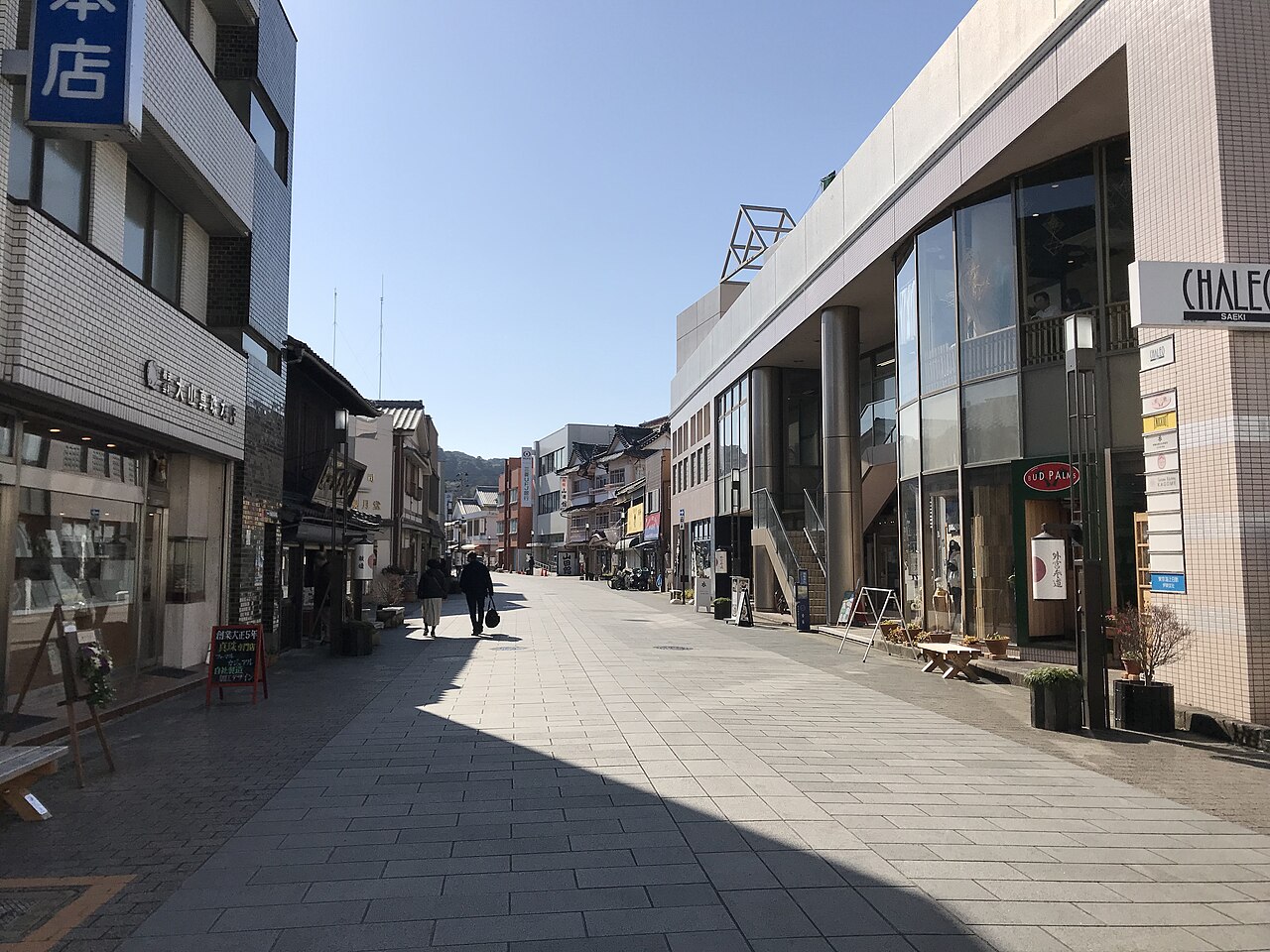
The approach street between the arriving trains and the first torii — the Geku sando — makes a natural first pause before the trees close overhead.
The shrine day, season by season
The sanctuary keeps farmer's time, not shopkeeper's time. Stepping inside to pray costs nothing at all; the gates simply follow the sun.
- From January to April, and again in September, the Inner and Outer Shrines are open for worship from 5am to 6pm.
- From May to August the day runs longest, with gates open from 5am to 7pm.
- From October to December the gates are open from 5am to 5pm.
- The general information desk, Omiyageya, is staffed from 9:30 to 17:00, with seasonal variation.
Those early openings are the quiet traveller's whole opportunity: the first stretch of the day belongs to birdsong and the sound of your own steps on gravel.
The meal offered twice a day
The Outer Shrine belongs to Toyouke, the deity who watches over food, harvests and industry — and fittingly, its daily work is a meal. Every morning and every evening, in a rite said to have continued without a break for some fifteen centuries, priests present food to the deities — the most important of the shrine's daily observances, in a sanctuary that counts some fifteen hundred ceremonies in its ritual year. The offerings are prepared over a sacred fire kindled fresh for the purpose, known as imibi, and the meal itself runs to nine dishes.
The stage for all this is a building the Inner Shrine does not have: the Mikeden, a hall that exists solely to receive the twice-daily meal, with the priests carrying the offerings in as they have for as long as anyone can count. A sanctuary that cooks for its gods morning and evening runs on its own ancient clock, and you can feel it in the pace of the place.
Where to stay
Disclosure: This post may contain affiliate links. If you book through them, we may earn a commission at no extra cost to you.
Crossing to the Inner Shrine
When the Outer Shrine has had its due, the pilgrimage continues inland, and the direct buses make the crossing simple.
- A direct bus from Geku-mae to Naiku-mae is 520 yen one way for an adult.
- The child fare on the same run is 260 yen.
The destination is formally the Kotaijingu, the shrine of Amaterasu herself. As at the Outer Shrine, stepping in to pray costs nothing.
At the Inner Shrine
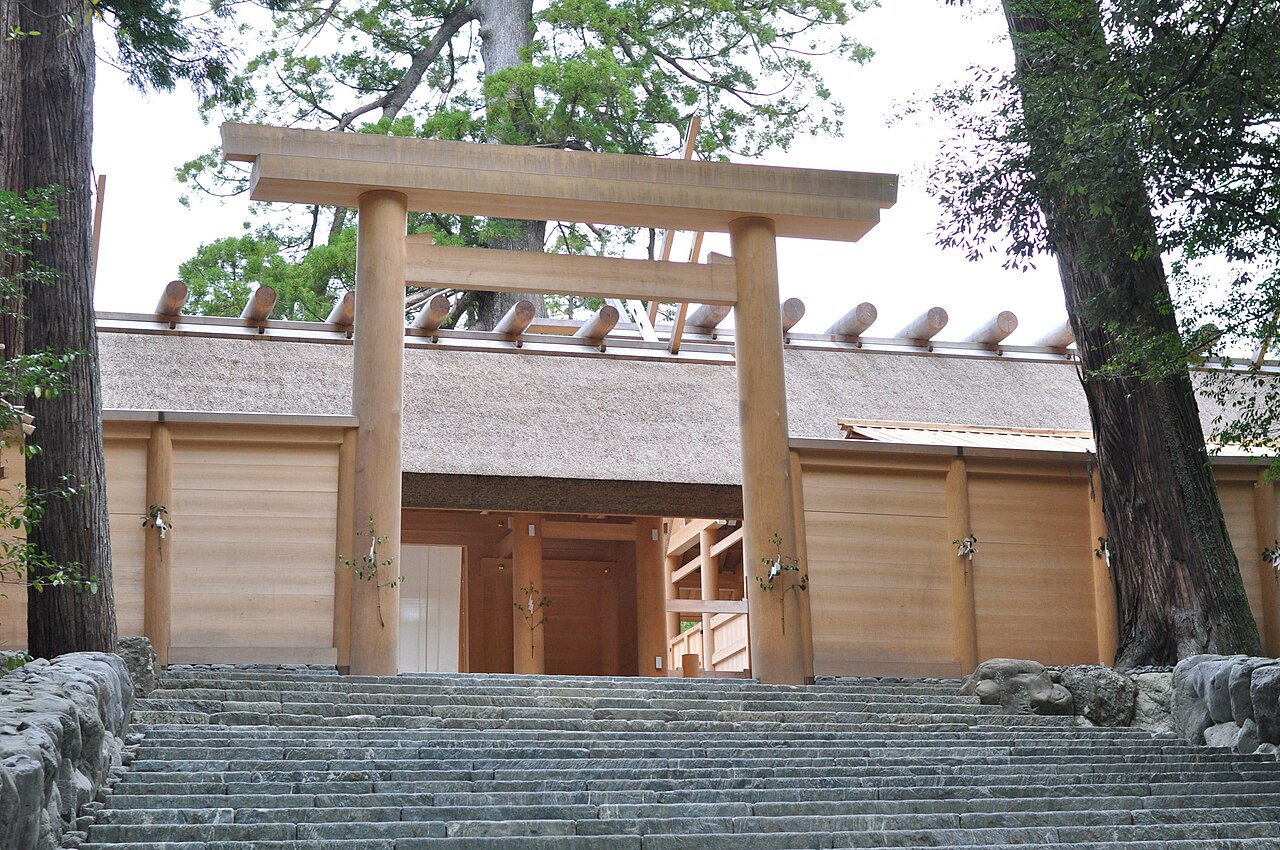
The Inner Shrine claims some twenty centuries of continuity, and its treasure is the Yata no Kagami, the sacred mirror held to embody Amaterasu. Down at the Isuzu river, worshippers still rinse their hands at a stone-paved terrace on the bank; tradition credits the paving to Keishoin, mother of a Tokugawa shogun. If your visit lands in the weeks around the winter solstice, come at dawn: for about a month the sun rises squarely through the great torii by the Uji bridge.
Formal prayers are received at the Kaguraden, the ceremonial hall along the main path; the counter for amulets sits just to its left. Beyond the shrine precincts, the lanes of Okage Yokocho wait for the walk's end.
If the afternoon stretches: museums, lockers, prayers
Ise rewards travellers who stay past the two great sanctuaries, and the practical numbers are modest.
- A combined adult ticket to all three of the shrine's museum facilities is 700 yen.
- Elementary and junior-high students pay 200 yen for the same combined ticket.
- An adult ticket covering just the Chokokan history museum and the Agricultural Museum is 500 yen.
- Booking the Mike prayer rite costs 5,000 yen or more, and admits up to 5 people to the hall.
- The fuller Omike rite is 8,000 yen or more, for up to 8 people.
- The most elaborate form, the Betsu-omike, is 10,000 yen or more, for up to 10 people.
Luggage is just as tidy:
- A small coin locker is 300 yen.
- A medium locker is 400 yen.
- A large locker is 500 yen.
- Leaving a carry bag or suitcase at the staffed counter costs 800 yen per item.
- Inside Okage Yokocho itself there are 12 coin lockers at 500 yen per use, paid with a single 500-yen coin.
If you would rather not plan the connections
A guided day makes the old order effortless: the Outer Shrine, the crossing and the Inner Shrine handled in sequence, often with an English-speaking guide to unpack the rites you will be watching.
Compare tours and experiences around Ise
Disclosure: This site may earn a commission if you book through the link above, at no extra cost to you.
Before you go
- The worship day shortens as the year darkens: gates that stay apart into the summer evening shut at nightfall in the last months of the year, so plan the Outer Shrine for first light and you lose nothing.
- The meal rite belongs to the morning and the evening, which is one more argument for giving the Outer Shrine the start of your day rather than the end of it.