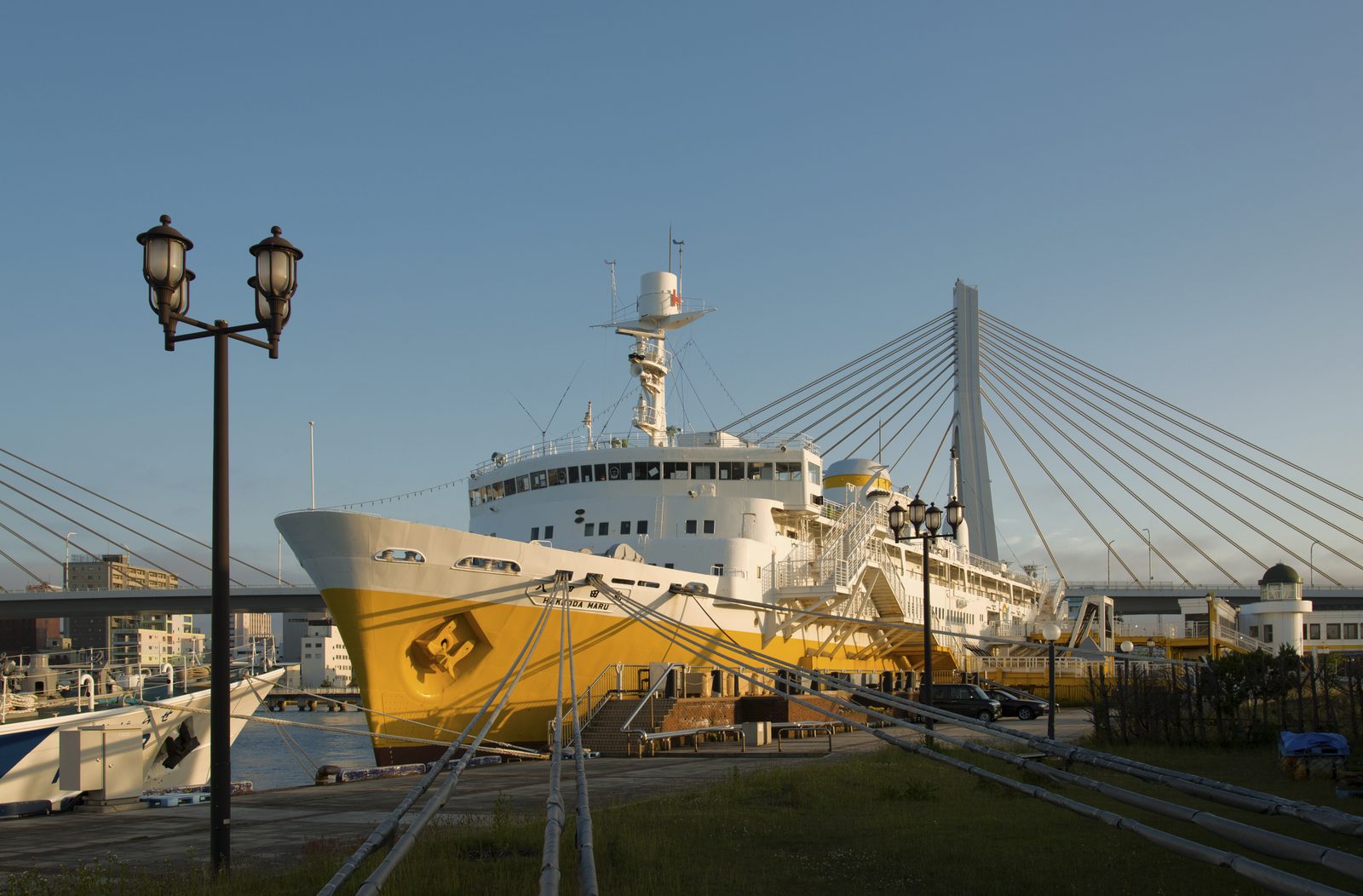
At Furukawa Market, visitors choose toppings from about thirty shops along three streets and build their own rice bowl. Nebuta Museum Wa Rasse keeps large nebuta floats that took part in the festival on permanent display, together with touchable nebuta parts and nebuta masks that show the character of their makers. On the bridge of Hakkoda Maru, visitors can see and touch the actual wheel and communication equipment.
Building Your Own Nokkedon Bowl at Furukawa Market
A Nokkedon bowl starts at the information counter, where meal tickets are bought. The rice comes first: a shop with a red signboard hands over a bowl of rice, and there are five rice shops in the market. Everything after that is a matter of choosing what goes on top of the rice.
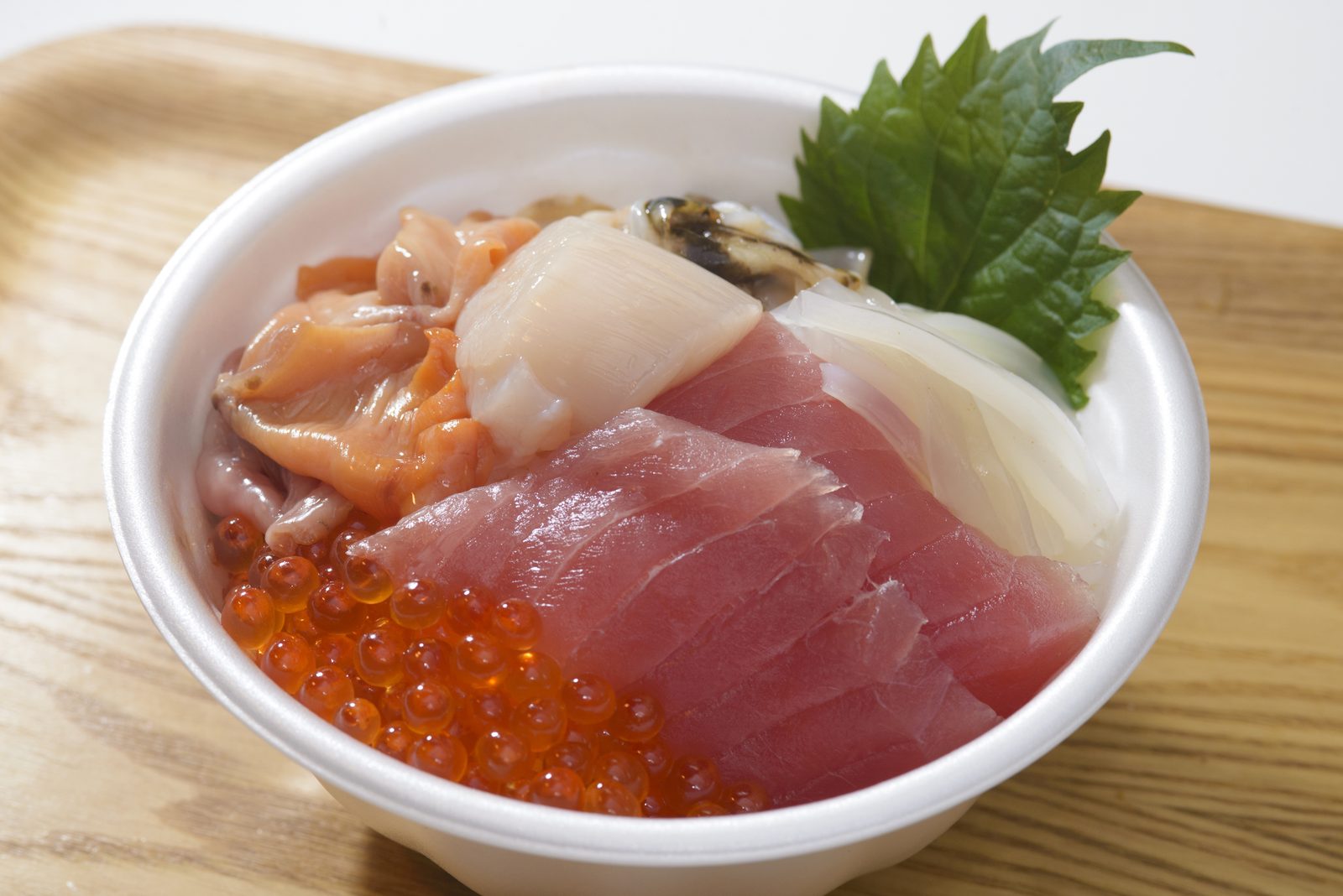
Nokke-don literally means a rice bowl with toppings, and the name describes the whole method. Visitors walk around the market, pick toppings from the wide selection at the shops they like, and place them on the rice in the amount they prefer. Each shop handles different toppings for the rice, and the way of cutting and preparing them also differs.
Sashimi is one choice among several for the rice. At the butcher's shop the meat is grilled in front of the visitor and put on the bowl. Miso soup, pickles and prepared deli dishes are also available, so one meal can bring together sashimi, side dishes and grilled meat.
The finished rice bowl is eaten in the rest areas marked on the market map, and the rest area on the second floor has one hundred twenty seats, with its stair entrance outside. Nokkedon itself cannot be taken out, but the fish shops inside the market sell sashimi.
Walking Among Real Nebuta at Wa Rasse
Inside Wa Rasse, visitors walk surrounded by real nebuta while the sound of shamisen, flute and nebuta-bayashi music plays in the building. Nebuta Hall displays four nebuta that took part in the festival, and visitors can try haneto dancing in front of a real nebuta and take part in bayashi performances.
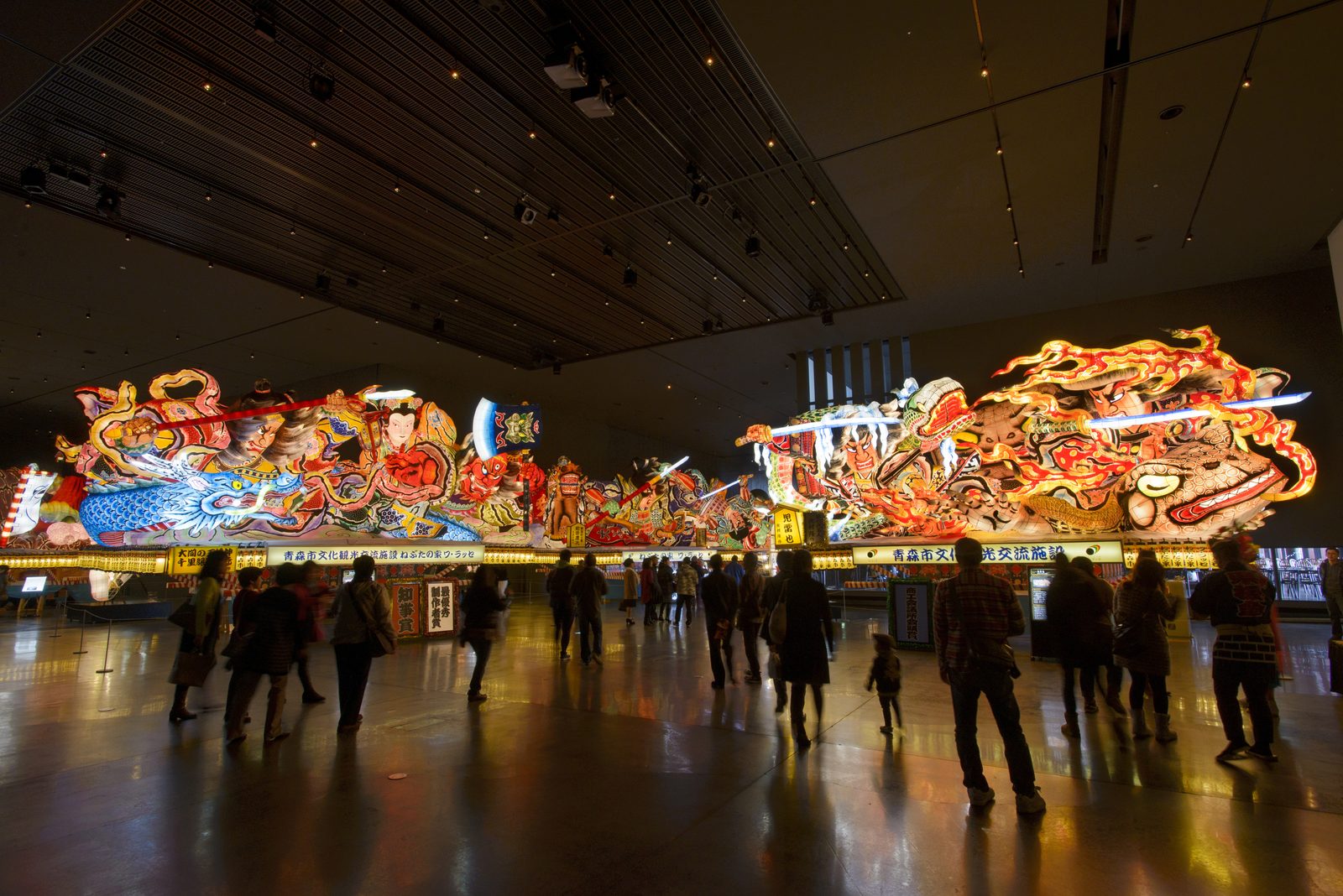
The first-floor museum and hall form the main part of the facility, a wide space rising through to the second floor. Live festival-music performances are held four times a day in Nebuta Hall. Nebuta-bayashi, the festival music band, consists of drums, flutes and hand cymbals. At the festival the nebuta are paraded down the car lanes, and visitors can see them from the pedestrian walk.
A nebuta is built in a studio from wood and wire, and the wire structure is covered on the inside with traditional Japanese paper. Creators of the large festival floats are called Nebutashi, or nebuta masters. Children's nebuta are small-sized floats built by local council members and children's associations, and a learning room runs classes in bayashi practice, nebuta mask making and goldfish nebuta making.
The restaurant on the sea side faces Aomori harbour, and its dishes are made with Aomori ingredients. Lobbies on the first and second floors look out at the sea. The shop sells nebuta goods as well as Aomori crafts and local products, and an event hall with one hundred eighty seats hosts performances of local arts such as shamisen.
Aboard the Hakkoda Maru
Boarding on the second deck, visitors climb the stairs to the third deck and follow the red tape on the floor and the signs on the walls. The third deck was used as the green-class cabin, where visitors can see the passenger seats, the berth room, the captain's room and the purser's room.
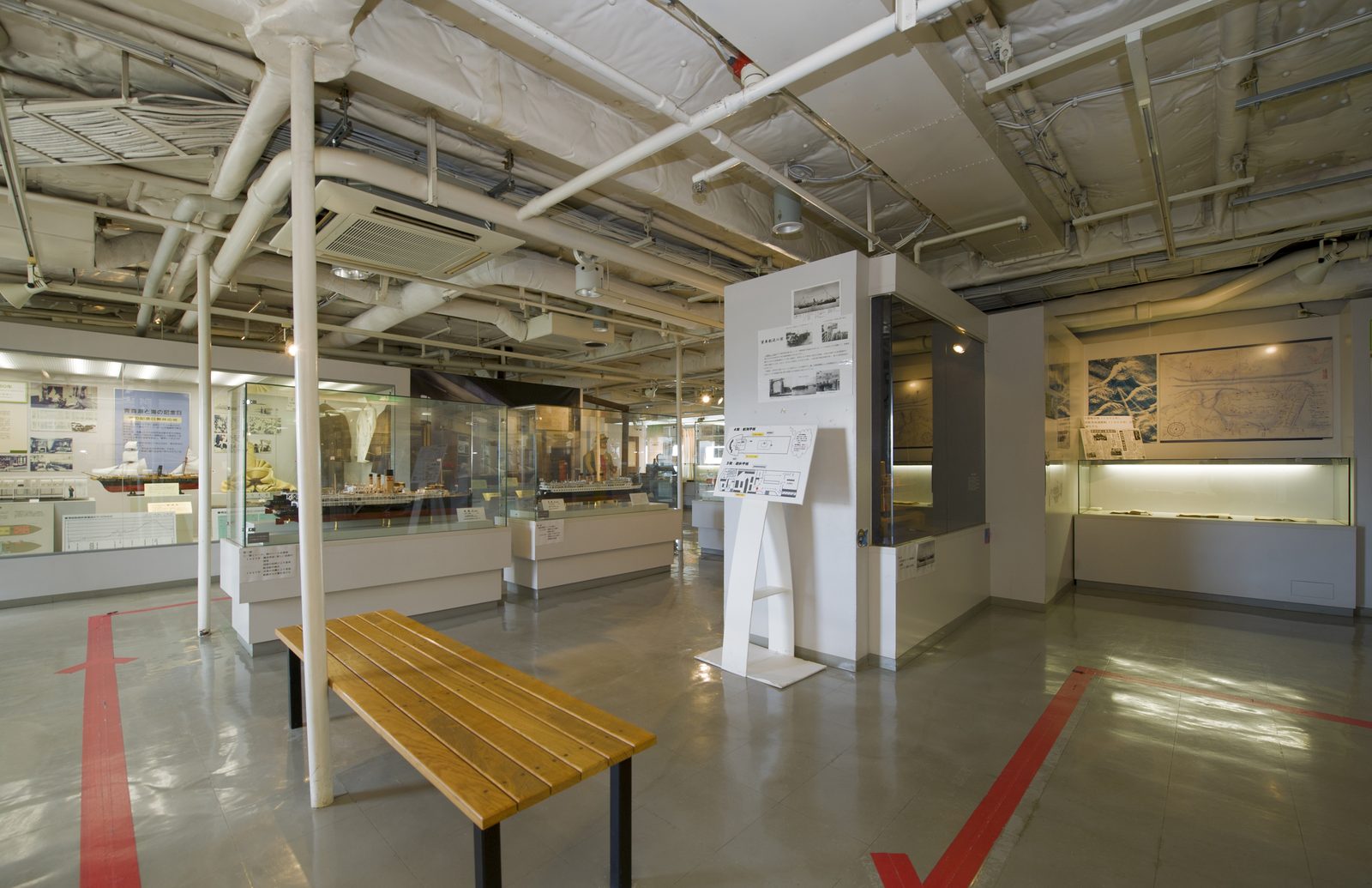
On the vehicle deck visitors see a retired mail car and a diesel railcar. The movable door, once indispensable for moving freight cars in and out, is on view but stays shut. The Seikan route linked Aomori port and Hakodate port for eighty years of history, carrying passengers and cargo. In Seikan World, a diorama reproduces the apple market and the Seikan ferry waiting room.
The basement deck lies below sea level and holds the engine room, a control room and the generator room; visitors see the first main engine room. The recommended route ends with viewing that engine room, then going up to the exit on the second floor. Out on deck, the funnel section is an observation platform with a panoramic view through three hundred sixty degrees.
The Breakwater, A-FACTORY and Aspam
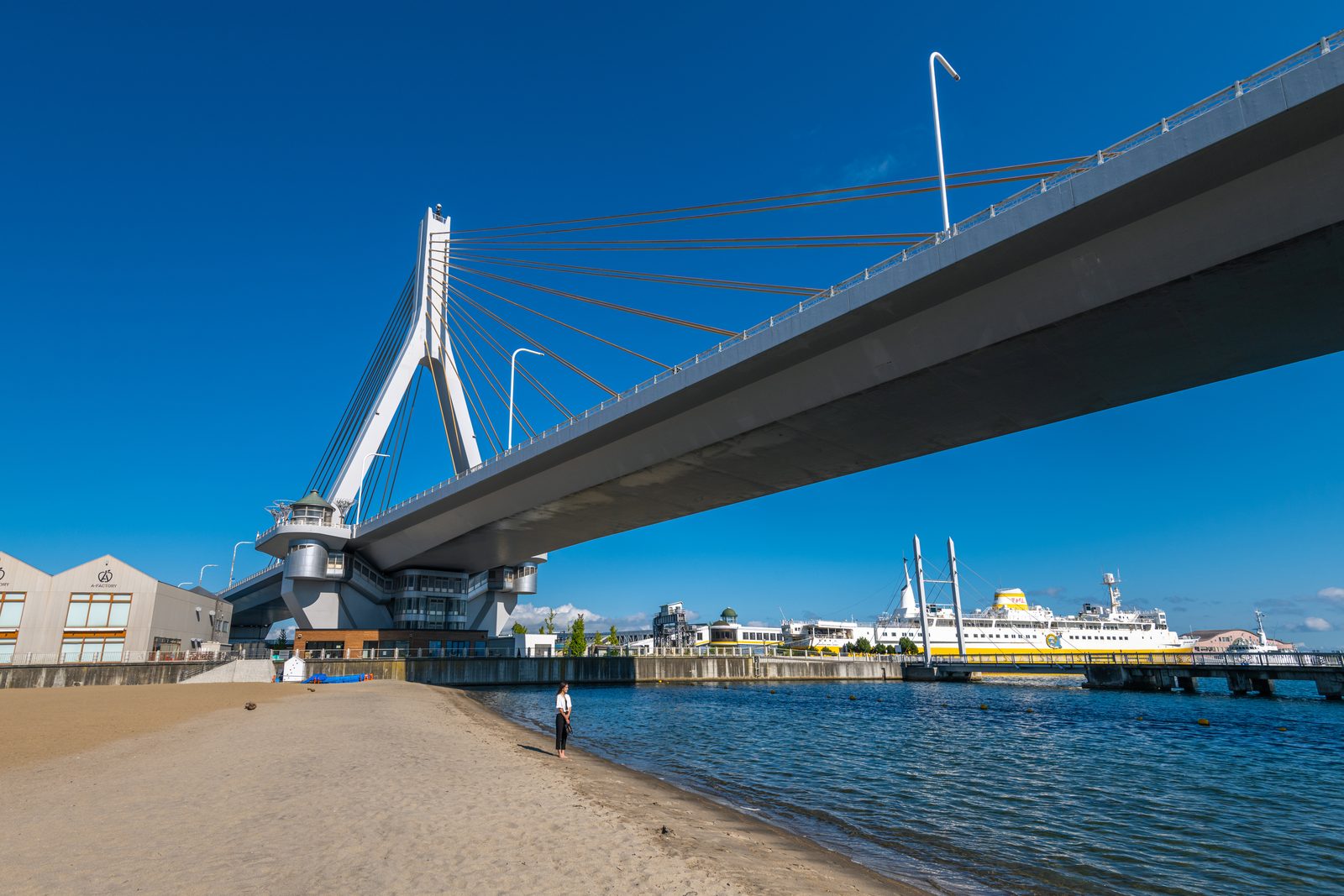
The breakwater promenade has benches and a gazebo, and visitors can stroll slowly while looking at Aomori Bay. Three hundred ten metres long in total, the breakwater leads to a cone-shaped lighthouse seen beyond the pier where large passenger ships berth. At a song monument, a person standing in front can hear the melody, played by an automatic sensor.
In the square in front of Hakkoda Maru, visitors can see a clock tower monument and a propeller that was actually used on the ship. Residents of Aomori City know the bay area from the pier to Hakkoda Maru as a familiar route for a stroll.
A-FACTORY, a building with a row of triangular roofs standing against Mutsu Bay, has a cider workshop where visitors can watch the brewing process through glass. In the second-floor lounge, a prepaid tasting card lets a machine pour cider for the amount on the card. Aomori-grown apples, scallops and corn appear there as sweets, spices and snacks with new designs.
By the sea, the Aspam building is shaped as an equilateral triangle modelled on the letter A of Aomori and can be seen lit up at night. From its observation deck, fifty-one metres above ground, visitors can look out over Aomori city, the harbour and the Hakkoda mountains through three hundred sixty degrees.
To stay overnight in Aomori, browse places to stay in Aomori.
Getting to Furukawa Market, Wa Rasse and Hakkoda Maru
New to rural buses and one-man trains? See how to ride them, step by step.
| From | How | Time |
|---|---|---|
| JR Aomori Station to Furukawa Market | On foot | About five minutes |
| JR Aomori Station to Wa Rasse | On foot | About one minute |
| JR Aomori Station to Hakkoda Maru | On foot | About five minutes |
| JR Aomori Station to A-FACTORY | On foot | About one minute |
| Aomori Airport to Aomori city | Airport line bus | About thirty-five minutes |
| Aomori Chuo IC to Furukawa Market | By car | About fifteen minutes |
| JR Shin-Aomori Station to Hakkoda Maru | By car | About twenty minutes |
| Hakkoda Maru parking | Free lot | About twenty cars |
Hours and Fees
| Place | Item | Time or fee |
|---|---|---|
| Furukawa Market | Hours | Seven hundred to sixteen hundred |
| Furukawa Market | Closed | Every Tuesday |
| Wa Rasse | May to August | Nine hundred to nineteen hundred |
| Wa Rasse | September to April | Nine hundred to eighteen hundred |
| Wa Rasse | High school student | Four hundred sixty yen |
| Hakkoda Maru | April to October | Nine hundred to nineteen hundred |
| Hakkoda Maru | November to March | Nine hundred to seventeen hundred |
| Hakkoda Maru | Closed | Mondays, November to March |
| Hakkoda Maru | Adult | Five hundred ten yen |
Fees and hours were checked against official sources on 13 November 2026.
Thinking of staying overnight?
Compare places to stay near Aomori, Aomori, Japan →
Disclosure: This post may contain affiliate links. If you book through them, we may earn a commission at no extra cost to you.