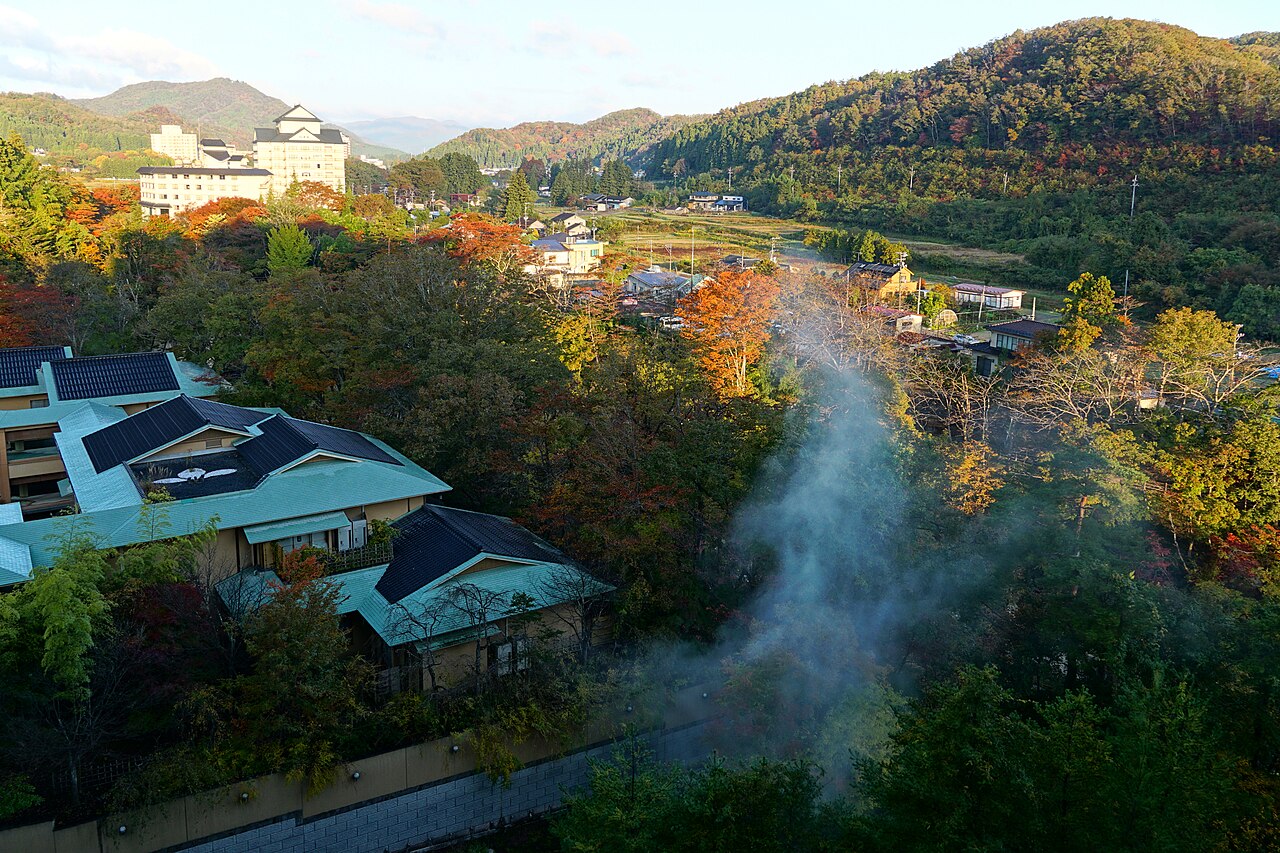
At Akiu Otaki the water comes down with a roar, and spray lands on the cheeks of visitors on the riverside path. Behind the Sato Center, a path through Rairaikyo gorge runs beside the Natori River and carries the sound of the stream through the seasons. In the hot-spring town, an inn's open-air bath is lit by bonfires from dusk. At the craft village, visitors choose a white-wood kokeshi blank, paint it and take it home the same day.
Akiu Otaki Waterfall: Walking Down to the Roar and the Spray
Akiu Otaki is a straight waterfall, a nationally designated site, reached by a path that starts beside Fudotaki Bridge.
Standing at the viewing platform puts visitors in front of water that comes down with a roar. Around the basin, the spray of that water turns into mist. The platform gives the view of the whole waterfall, and the basin adds the mist.
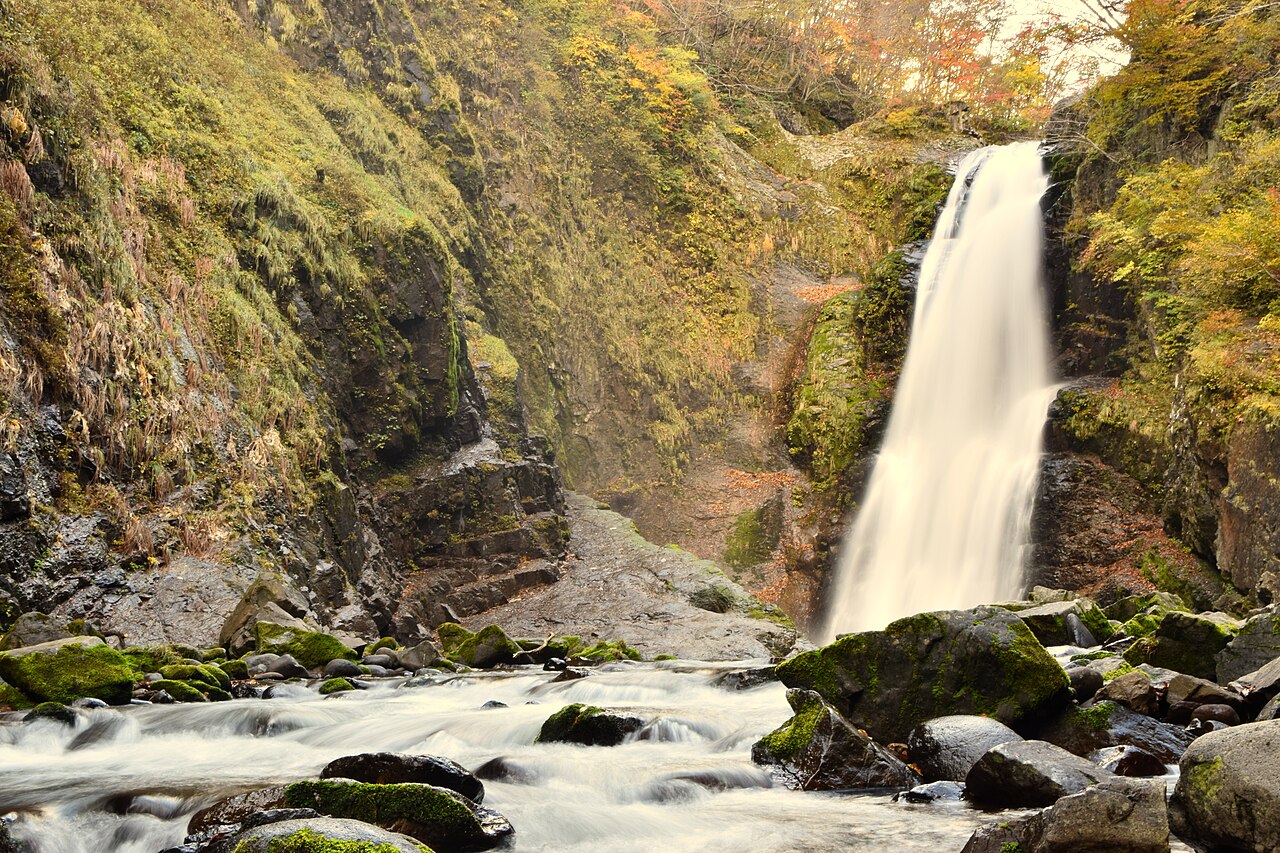
Descending to the basin begins beside Fudotaki Bridge, where a walking path leads down to the base of the waterfall. Along the path by the river, spray lands on the cheeks. A cool breeze reaches the cheeks too, on the way to a close view of the falls.
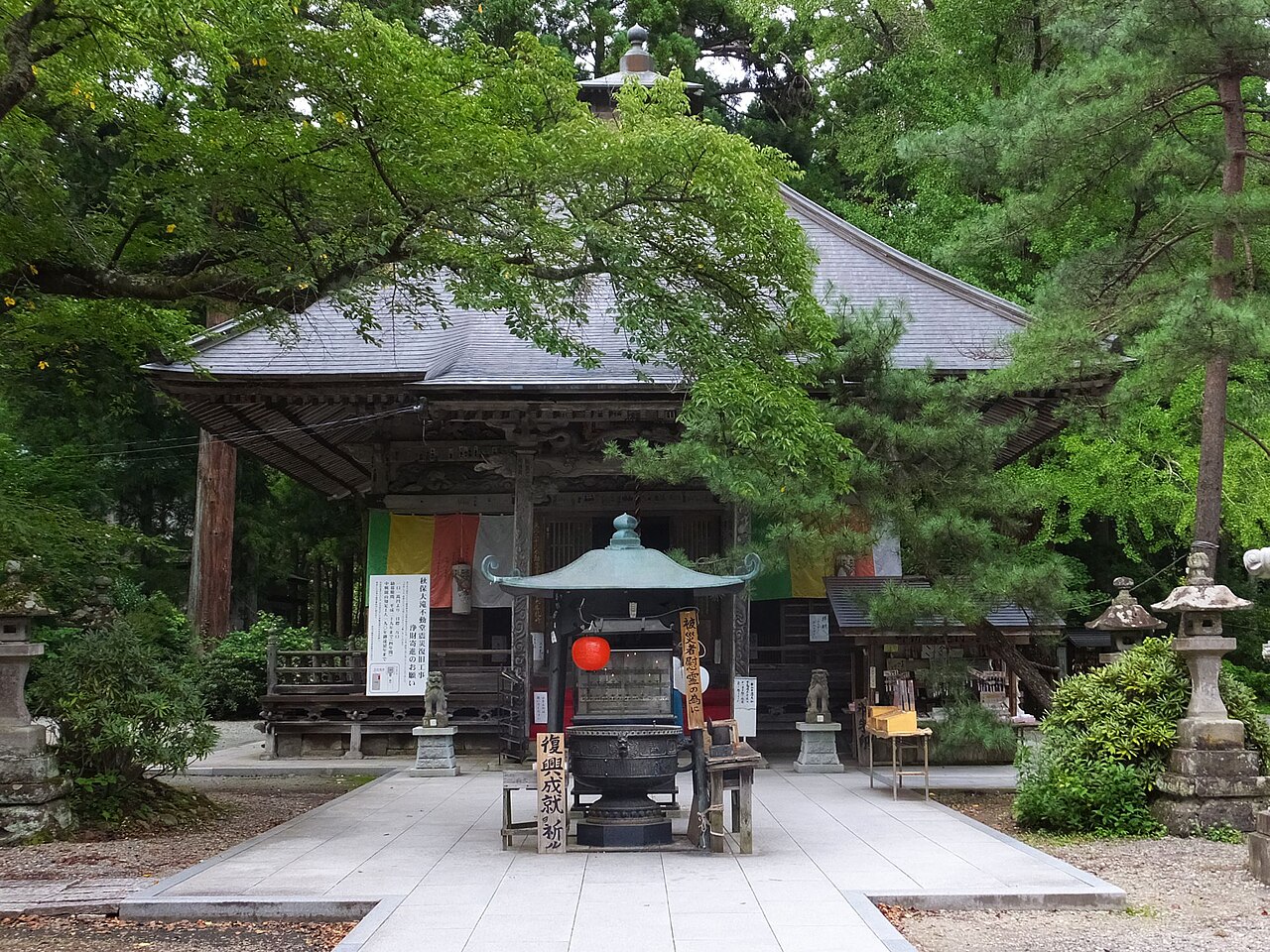
Looking around the waterfall, visitors see maple and oak trees covering the surroundings. The usual peak for autumn colour around Akiu Otaki is listed as late October to early November. For the coming season, the views on offer here are autumn leaf colour and then winter snow scenery.
Choosing between the platform and the basin depends on what a visitor comes for. The platform suits a visit with limited time, and its walk is timed in the table at the end. The path below it is for those who want the spray on the cheeks and the mist around the basin.
Rairaikyo Gorge: A Riverside Path Behind the Sato Center
Rairaikyo is a river gorge where a path runs behind the Sato Center along the Natori River.
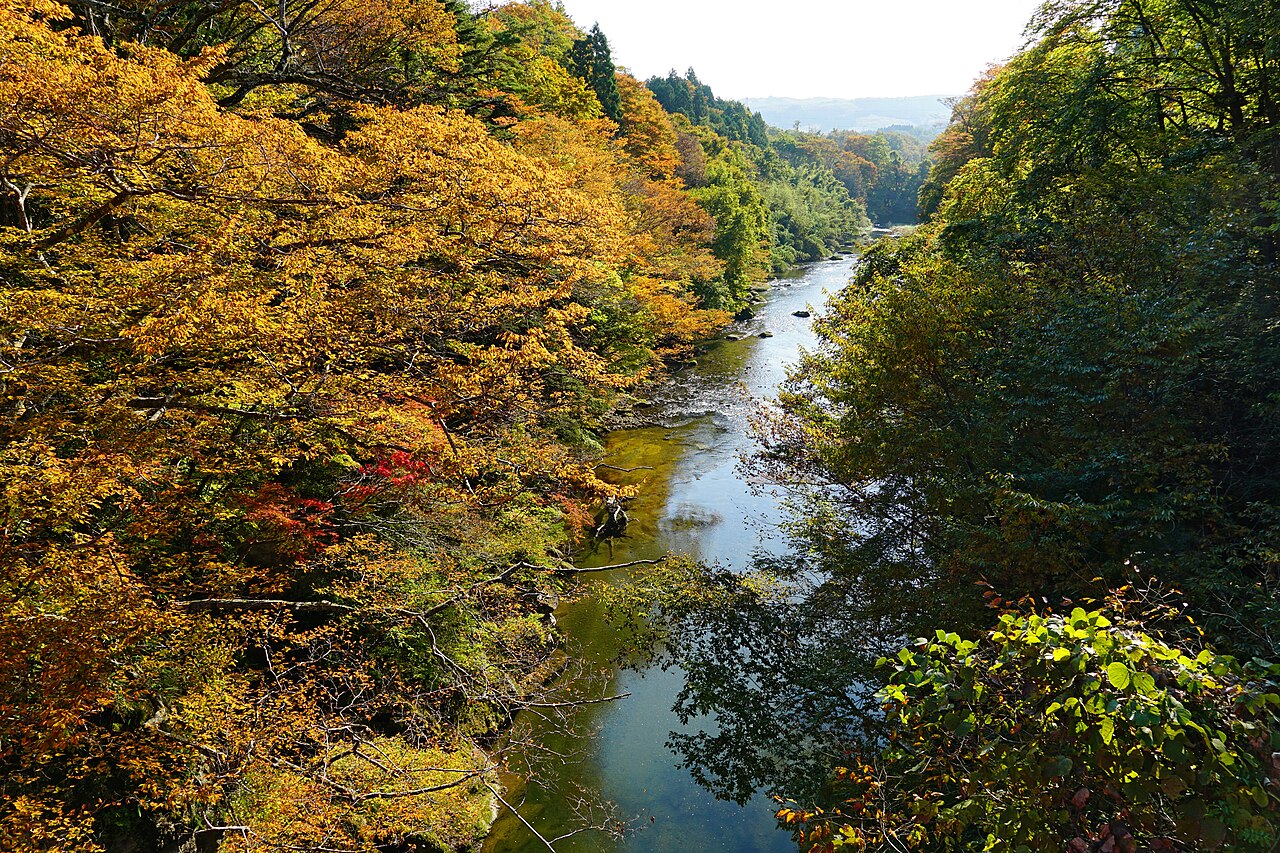
Walking the path behind the Sato Center brings the flow of the Natori River close. The river runs between rock walls on both banks, and huge boulders shaped by the current overhang the gorge. Downstream of Nozoki Bridge the walking path follows the gorge, keeping the rocks and the water within easy view.
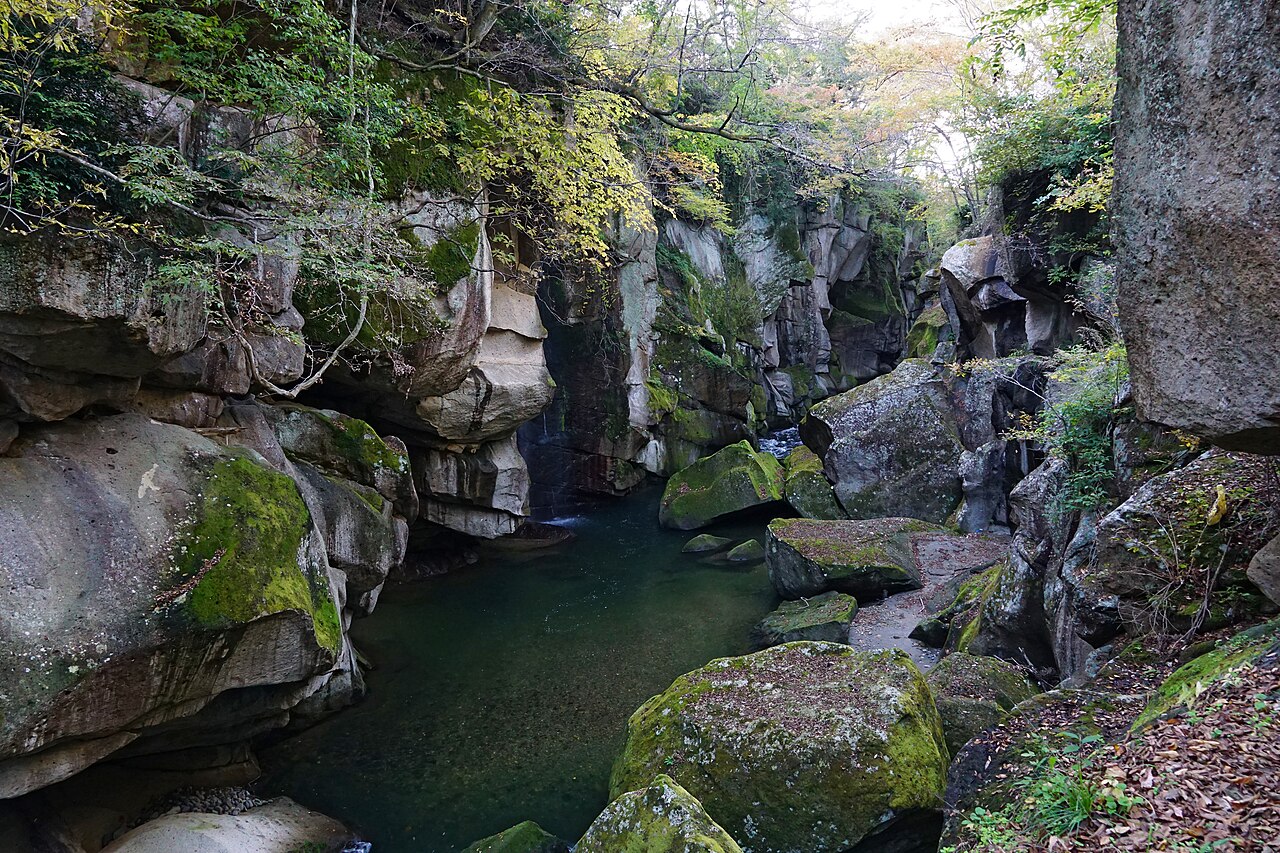
Listening belongs to this walk: from the path, fresh greenery, autumn leaves and the sound of the clear stream can be seen and heard through the seasons. The leaf colour of Rairaikyo is listed as peaking from early November in a usual year. From mid-to-late December until mid-January, the Sato Center shows the winning works of a photo contest on the illuminated gorge path.
Looking down from Nozoki Bridge shows a naturally formed heart-shaped hollow in the rock. A rumor says that throwing a pebble into the hollow brings success in love. People gather at the bridge for that reason.
Following the river upstream leads to Futaguchi gorge, where a nature path with sunlight filtering through the trees is walked to the murmur of the river. A rock wall in that gorge turns the colour of the sunset. From the start of December the forest road to the gorge is shut for the winter, so this walk belongs to a later season.
Akiu Onsen Baths: The Feel of the Water, Bonfires and River Sounds
The hot springs of Akiu Onsen are described by the touch of their water on the skin, and an inn's open-air bath is lit by bonfires from dusk.
Soaking in Akiu water has an imperial story attached: Emperor Kinmei, troubled by a skin ailment, is said to have bathed in water brought from Akiu and been cured. Since then Akiu has been called Nihon San-Miyu, a title it holds together with hot springs elsewhere in Japan. A hotel in the town describes its large public bath as having abundant hot-spring water.
Choosing a bath by its water starts with the spring type. Chloride springs contain salt similar to that of seawater; the salt stays on the skin after bathing, slows the evaporation of sweat and keeps the body from chilling quickly afterwards. Simple springs are colourless, transparent, tasteless and odourless, and cause little irritation to the skin.
Listening to the river is part of the bath at an inn beside it, where the open-air bath is described as a place to hear the murmur of the water. Inns in the town describe their water as having a gentle touch on the skin. At another inn the open-air bath spreads across spacious grounds, and bonfires are lit there from dusk.
Staying overnight is the way to bathe by those bonfires, because they are lit from dusk, after the day-bath window in the table below has ended. Snow-view baths are offered in winter. For a base, compare places to stay in Sendai.
Akiu Crafts and Local Food: Kokeshi, Dyeing, New Soba and Wine
Akiu Handicraft Village is where visitors paint kokeshi dolls, dye cloth and cut shapes with a scroll saw.
Trying handwork is the point of the craft village, where households of craftspeople both live and work. Closing days differ from workshop to workshop, and some offer hands-on sessions on limited days. If a hands-on stop matters, settle on a workshop before travelling.
Painting a kokeshi begins with choosing a white-wood blank from various shapes and sizes. The finished doll is given a lacquer finish and can be taken home the same day. Sendai kokeshi in the Naruko-line style are painted in just red and black on a waisted blank.
Cutting a shape with a scroll saw at a woodworking workshop ends with a key holder, and puzzles and wall hangings can be made as well. Dyeing, coaster making and weaving sessions are offered on request, by reservation, at a dyeing and weaving workshop. The workshop dyes silk, cotton, wool and linen with colours taken from flowers, trees and leaves, then weaves them.
Joining a hand-making class at the Sato Center is an option this winter. A class in January makes colourful aroma bath salts. Local storytellers tell folk tales mixed with dialect.
Tasting new soba is possible on weekends until early December at a cafe in Nojiri. The noodles are made with soba flour harvested this autumn in Akiu. The fair menu lists a dish of Nojiri, and orders of tensaru soba or zaru soba come with a seasonal side dish.
Buying wine and cider takes visitors to a winery at the entrance of the hot-spring village, which brews both itself. The winery handles grape growing, brewing, sales and a restaurant as a single operation. At a brewery with a restaurant attached, visitors can look into the factory through a window.
Getting to Akiu Onsen: Hours, Access and Winter Closures
New to rural buses and one-man trains? See how to ride them, step by step.
Details below follow the official guides. Check official information before visiting.
| Item | Details |
|---|---|
| Akiu Sato Center | nine to six all year; nine to five from December thirty-first to January third |
| From Sendai Station | Miyagi Kotsu bus about fifty minutes; Takeya Kotsu Sendai Seibu Liner from bay sixty-three about forty minutes; by car about thirty minutes |
| Akiu Otaki | five to ten minutes on foot from the large car park to the viewing platform; weekend and holiday circuit bus until the end of February; winter express from Sendai Station keeps running |
| Winter closures | Futaguchi forest road fully closed from December first; Banji car park to prefectural border closed since October twenty-sixth for bridge work; visitor center closed December first to March thirty-first |
| Rairaikyo gorge walk | about twenty minutes on foot from the Sato Center to a named rock along the gorge path |
| Kokeshi painting | one thousand five hundred yen; reservation needed; nine to four thirty, closed Tuesdays |
| Day baths | bonfire open-air bath inn eleven to three, last entry two; river-side inn ten thirty to two thirty |
Naruko Onsen is another hot-spring town in Miyagi; see Naruko Onsen.
Thinking of staying overnight?
Compare places to stay near Akiu Onsen, Sendai, Miyagi, Japan →
Disclosure: This post may contain affiliate links. If you book through them, we may earn a commission at no extra cost to you.