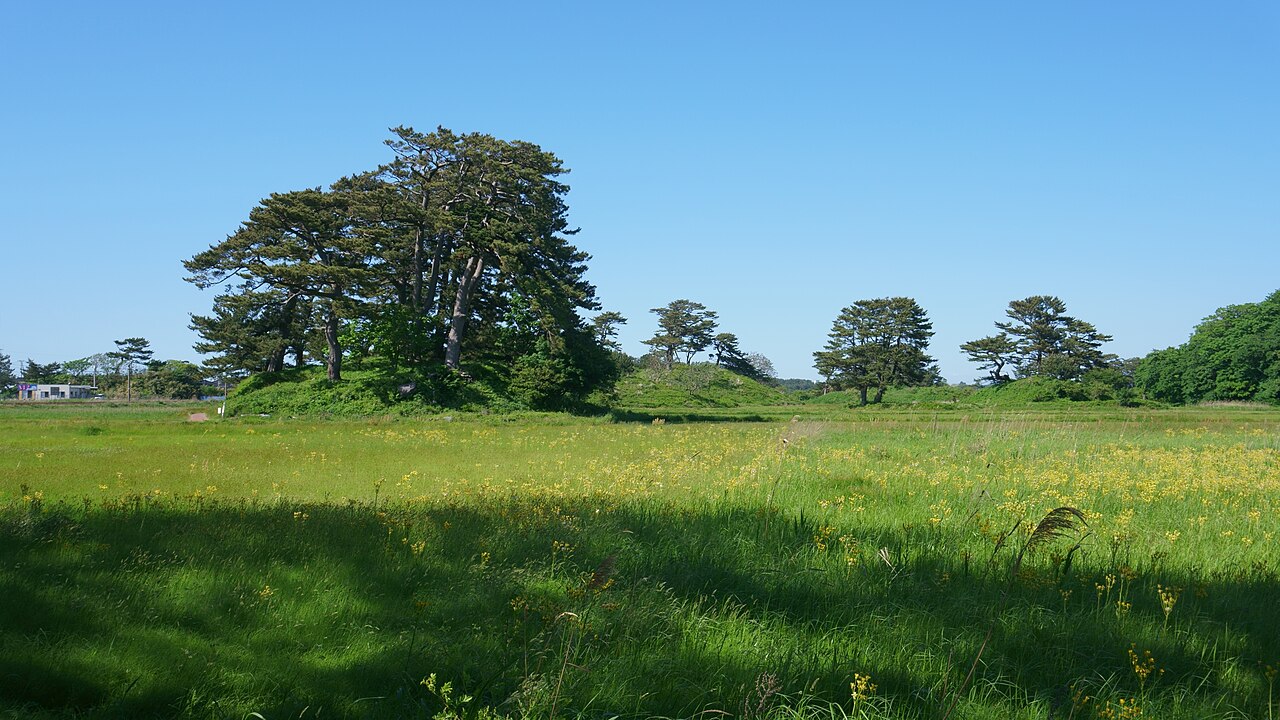
This guide covers the way into Kisakata, the walk to Kanmanji, the islands of Kujukushima and the practical details for a day out.
The islands of Kujukushima stand scattered at the foot of Chokai and look as if they are floating in farmland. The sections below follow the route, the temple, the islands and the times for the day.
Getting to Kisakata
The steps below begin on foot and end with departures for the way back, and the tables that follow add the short drives for those arriving by car.
- From Kisakata Station, the walk to Kanmanji takes 15 minutes.
- On weekdays, an ordinary train toward Akita leaves Kisakata Station at 17.09 and a limited express Inaho at 17.32.
- On weekdays, a limited express Inaho toward Sakata and Tsuruoka leaves Kisakata Station at 17.44.
| From | Route or operator | Time |
|---|---|---|
| Kisakata Station to Kanmanji | On foot | About 15 minutes |
| Nemunooka to Kanmanji | By car | About 2 minutes |
| Konoura IC to Kanmanji | Nihonkai-Tohoku Expressway | About 5 minutes |
| Kanmanji to the Kisakata local history museum | By car | About 5 minutes |
| Direction | Train | Weekday departure |
|---|---|---|
| Toward Akita | Limited express Inaho | 11.04 |
| Toward Akita | Ordinary train | 17.09 |
| Toward Akita | Limited express Inaho | 17.32 |
| Toward Sakata and Tsuruoka | Limited express Inaho | 11.38 |
| Toward Sakata and Tsuruoka | Limited express Inaho | 17.44 |
Kanmanji, the Temple Beside the Old Lagoon
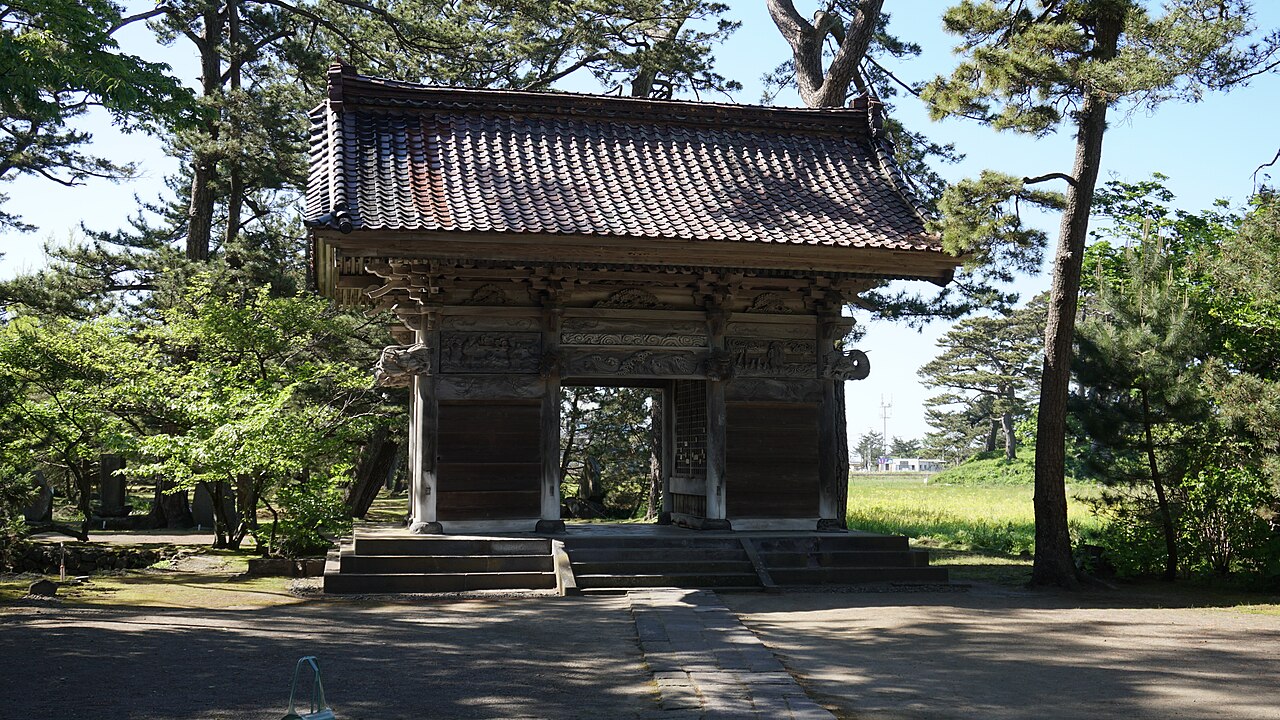
Kanmanji stands on land that was a lagoon with countless small islands. After a major earthquake the bed of the lagoon rose and became land. Matsuo Basho visited Kisakata and composed a haiku there.
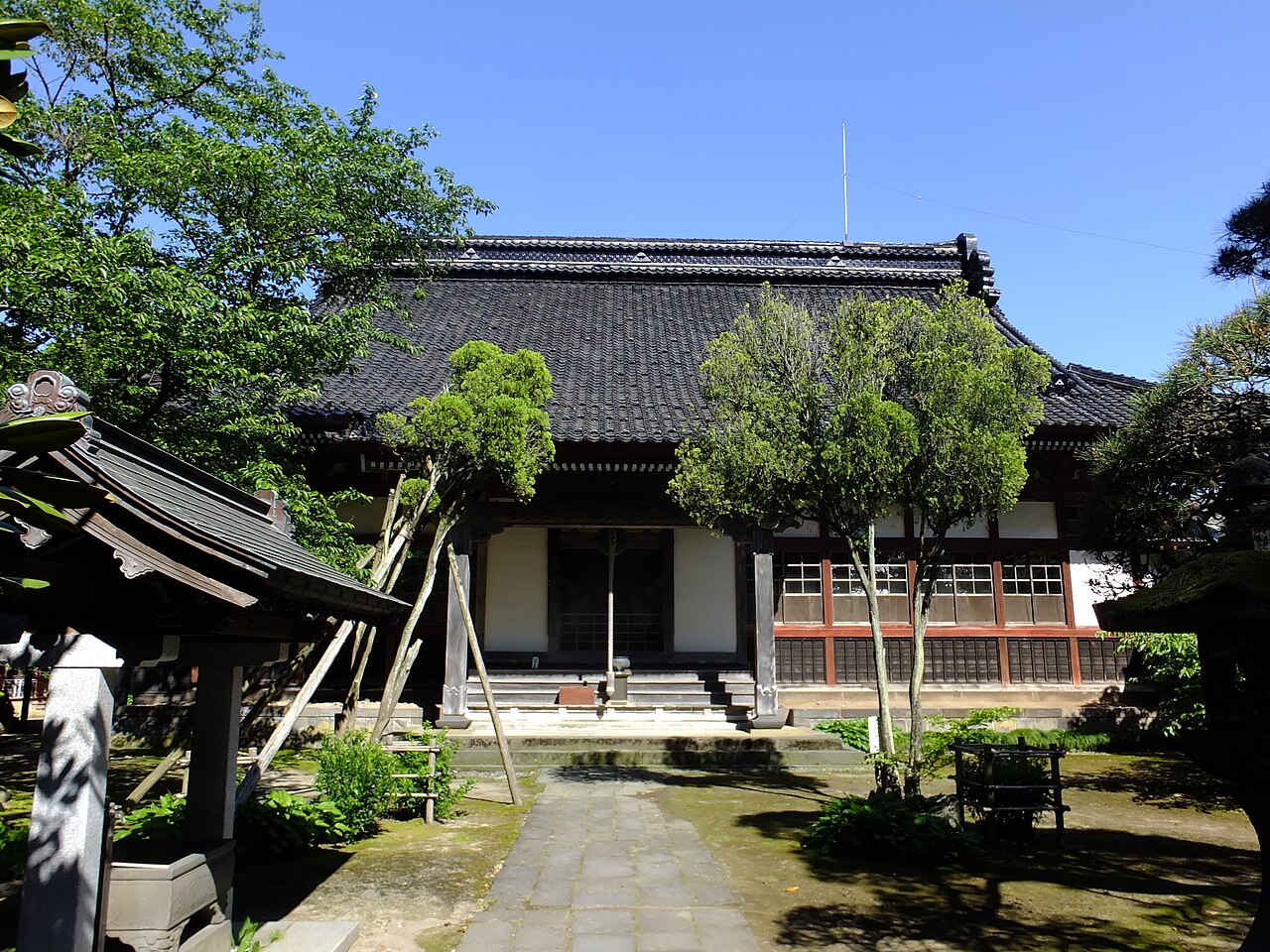
There is a wide parking lot in front of the temple, and public toilets are provided. Across the wide grounds, cats can be seen chasing each other and basking in the sun. The dates behind the lagoon and the temple are set out below.
| Year | What happened at Kisakata |
|---|---|
| 466 BC | The summit area of Chokai collapsed, and the debris formed the origin of Kujukushima |
| 853 | Ennin, the head of the Tendai sect, founded Kanmanji |
| 1804 | A great earthquake lifted the land by about 2 m, and the lagoon became dry land |
Kujukushima, the Islands in the Paddies
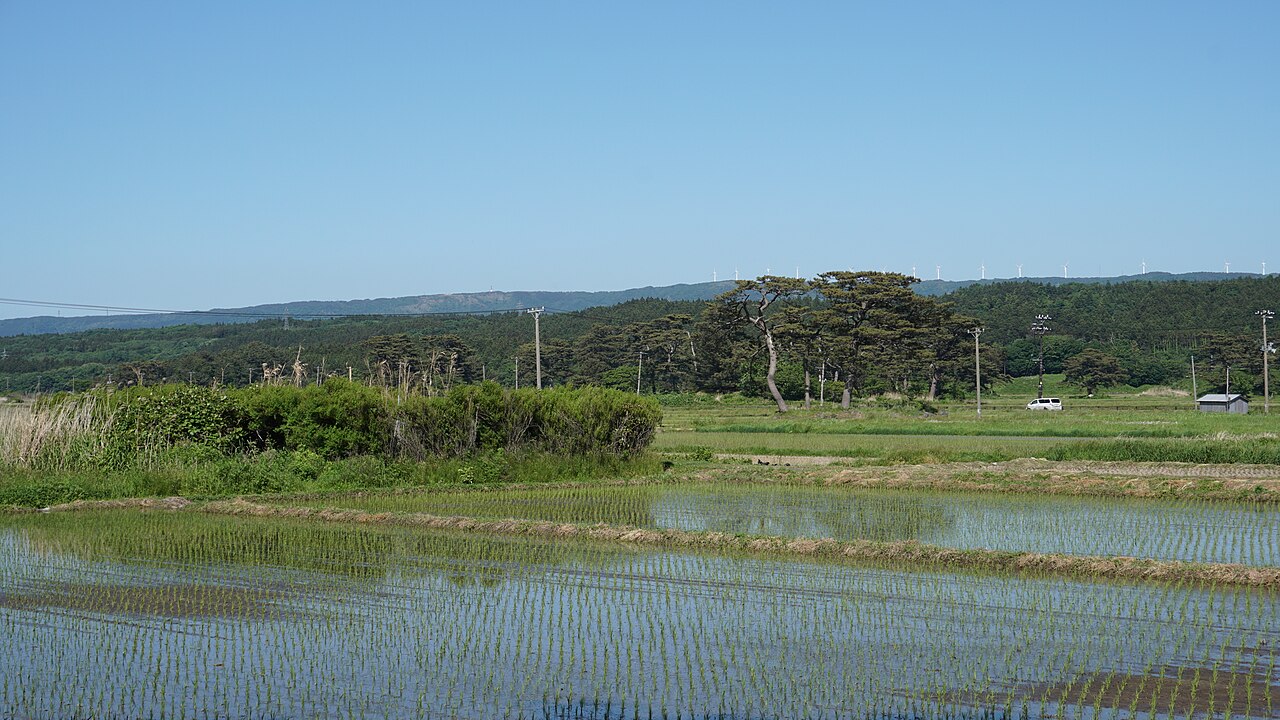
In spring the flooded paddies turn sky blue, in summer the growing rice turns green, in autumn the ripe ears turn golden, and in winter snow turns the scene silver. The islands can be seen from the grounds of Kanmanji and from the tower at Nemunooka.
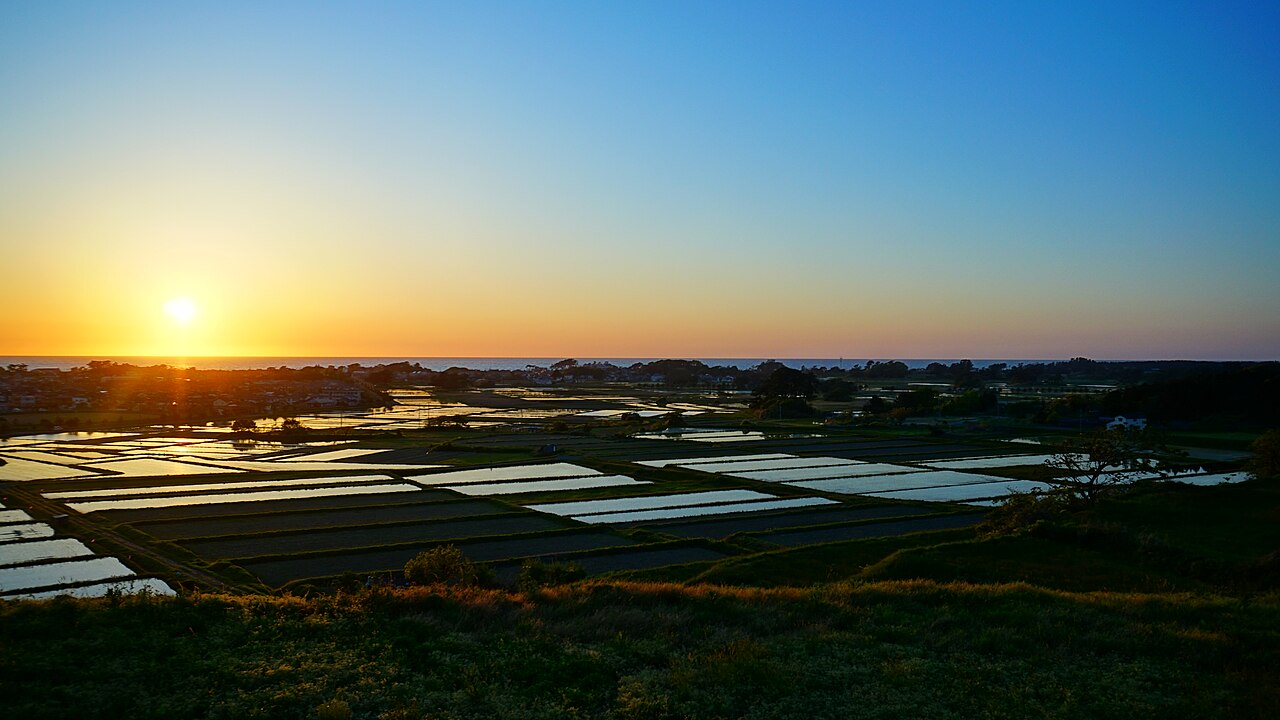
The Kisakata area is a nationally designated natural monument. The tower at Nemunooka looks over the whole of Kujukushima. If you would rather leave the planning to someone else, tours around Kisakata and Kujukushima are available.
Hours and Fees, and Planning the Day
The plan below runs from the walk at the start to the way back, and the opening times and the fees sit beneath it.
| Part of the day | Stop or leg | Duration or hours |
|---|---|---|
| Arrive | Kisakata Station to Kanmanji, on foot | About 15 minutes |
| Visit | Kanmanji | About 40 minutes |
| Visit | The tower at Nemunooka | About 15 minutes |
| Head back | Ordinary train toward Akita from Kisakata Station | 17.09 |
| Head back | Limited express Inaho toward Sakata and Tsuruoka from Kisakata Station | 17.44 |
| Item | Detail |
|---|---|
| Kanmanji hours | 8:30 to 17:00 |
| Kanmanji admission | 300 yen |
| Kisakata local history museum hours | 9:00 to 16:30, admission until 16:00 |
| Kisakata local history museum admission | 150 yen |
| Nemunooka hours | 9:00 AM to 9:00 PM |
| Community bus single ride | 200 yen |
Compare options
See partner pricing and availability →
Disclosure: This post may contain affiliate links. If you book through them, we may earn a commission at no extra cost to you.