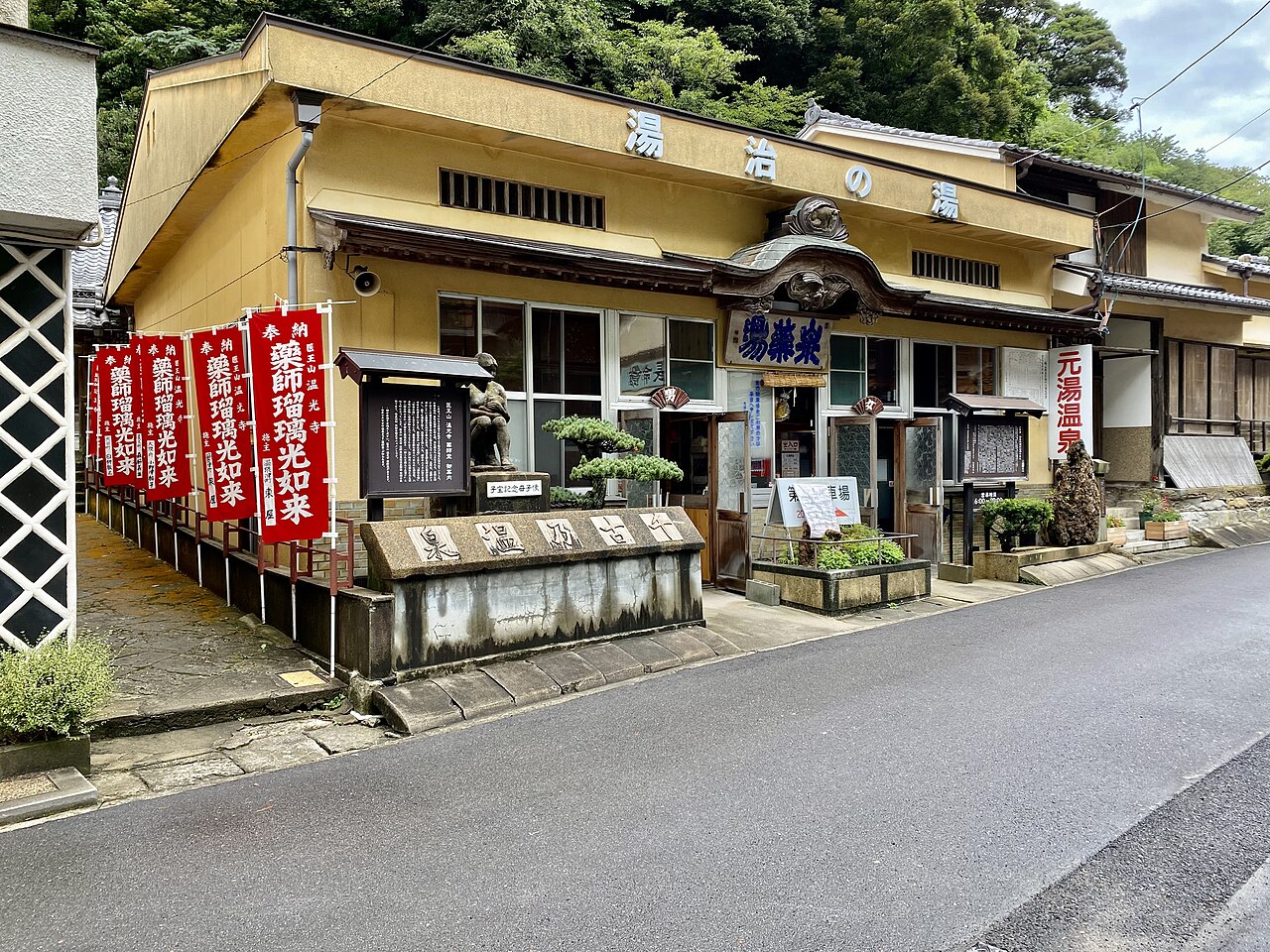
Yunotsu is a hot-spring town where eaves and roofs overlap in narrow, tight spaces along a winding mountainside, a townscape rare even nationwide. Its town layout has stayed almost unchanged since the Edo period. After dark, Iwami Kagura brings gods, demons and a writhing great serpent to a real shrine, close enough to touch.
Motoyu and the Spring Beneath the Jizo Hall
Motoyu's source lies beneath the Jizo hall, and anyone who listens closely can hear hot water bubbling up. On the rock face behind the Yakushi hall a trace of an older source remains, and the spring is said to have been found there by a raccoon dog.
Marks in its cracks are thought to show where hot water flowed in ancient times. In front of the bath sits a tatami-sized rock of yunohana, the spring's mineral deposits, with traces of leaves and insects mixed in.
A dragon-shaped drinking tower, its body of blue granite from Portugal, coils with a jewel held in its tail and lifts it high; when a button is pressed, hot spring water comes from the dragon's mouth.
Yakushi-yu: A Wooden Western-Style Bathhouse
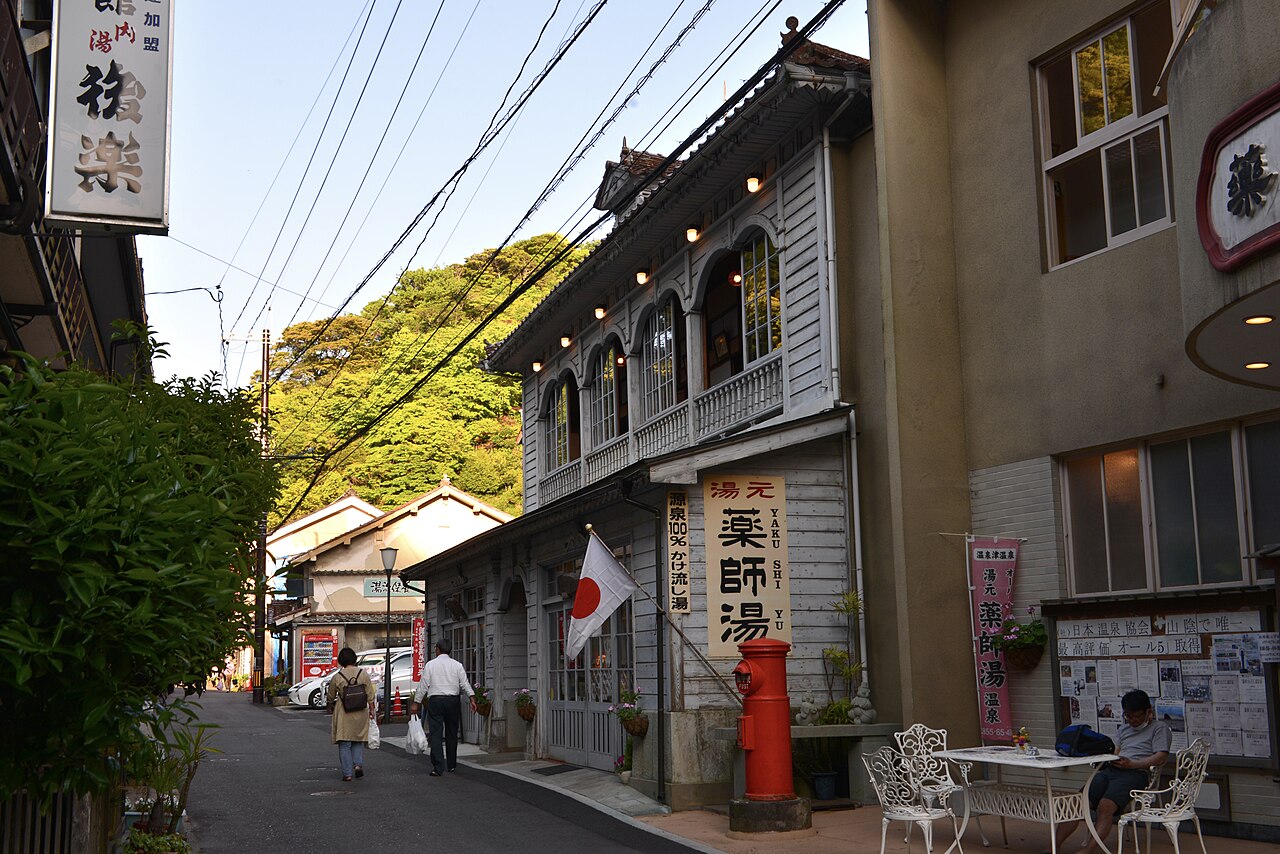
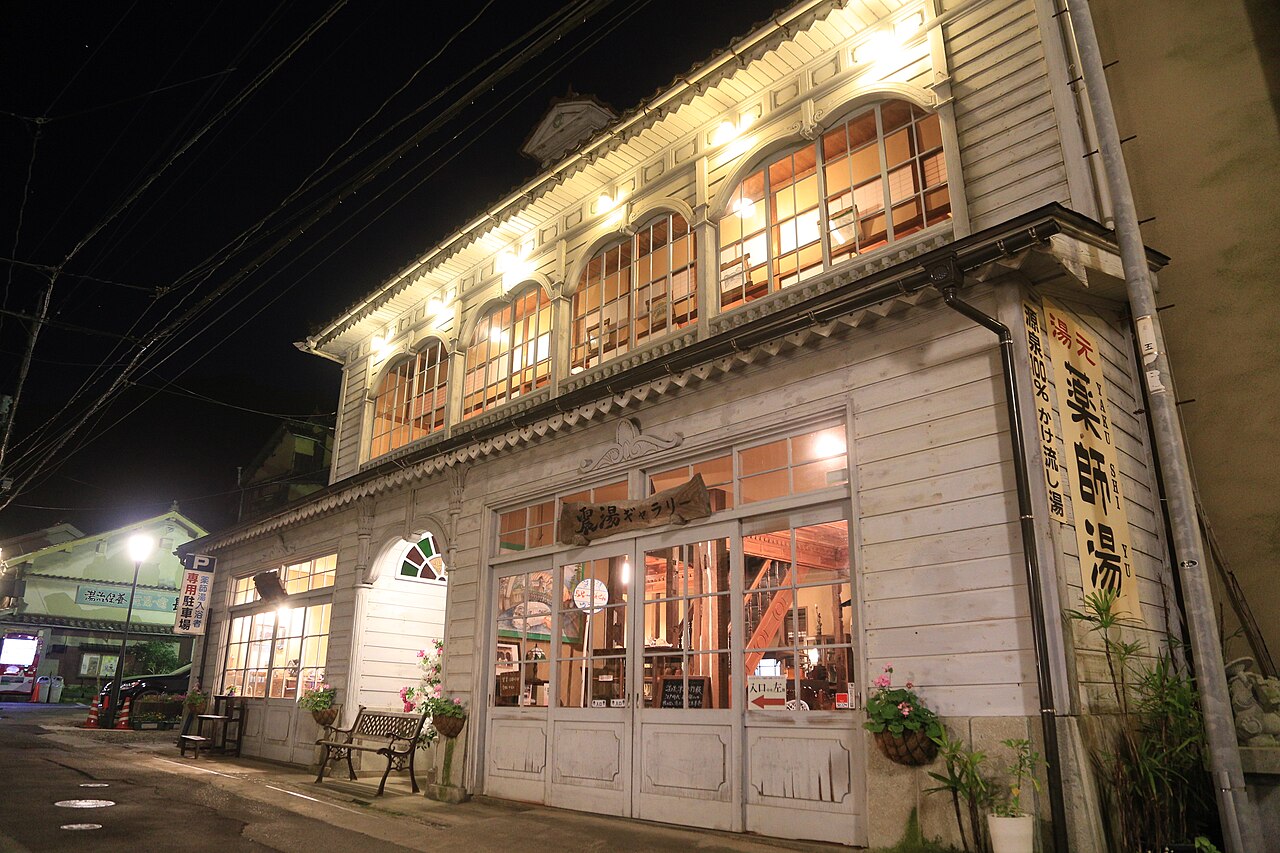
Shin-yu, the old building of Yakushi-yu, is a wooden Western-style bathhouse with a pointed roof from the early Taisho era, built from local materials by a local carpenter sent to Kobe to study.
Seen from the front, the gallery on the right was once the women's bath and the café on the left was the changing room of the men's bath.
The roof carries steam outlets and pointed poles, and from the rooftop you see the retro old building and the town's red-tiled roofs, a view chosen as one of the new hundred views of Iwami Ginzan.
The source water, about forty-six degrees, rises directly behind the building and is poured into the tub without any treatment.
The Harbour Town: Lanes, Mooring Rocks and Mount Atago
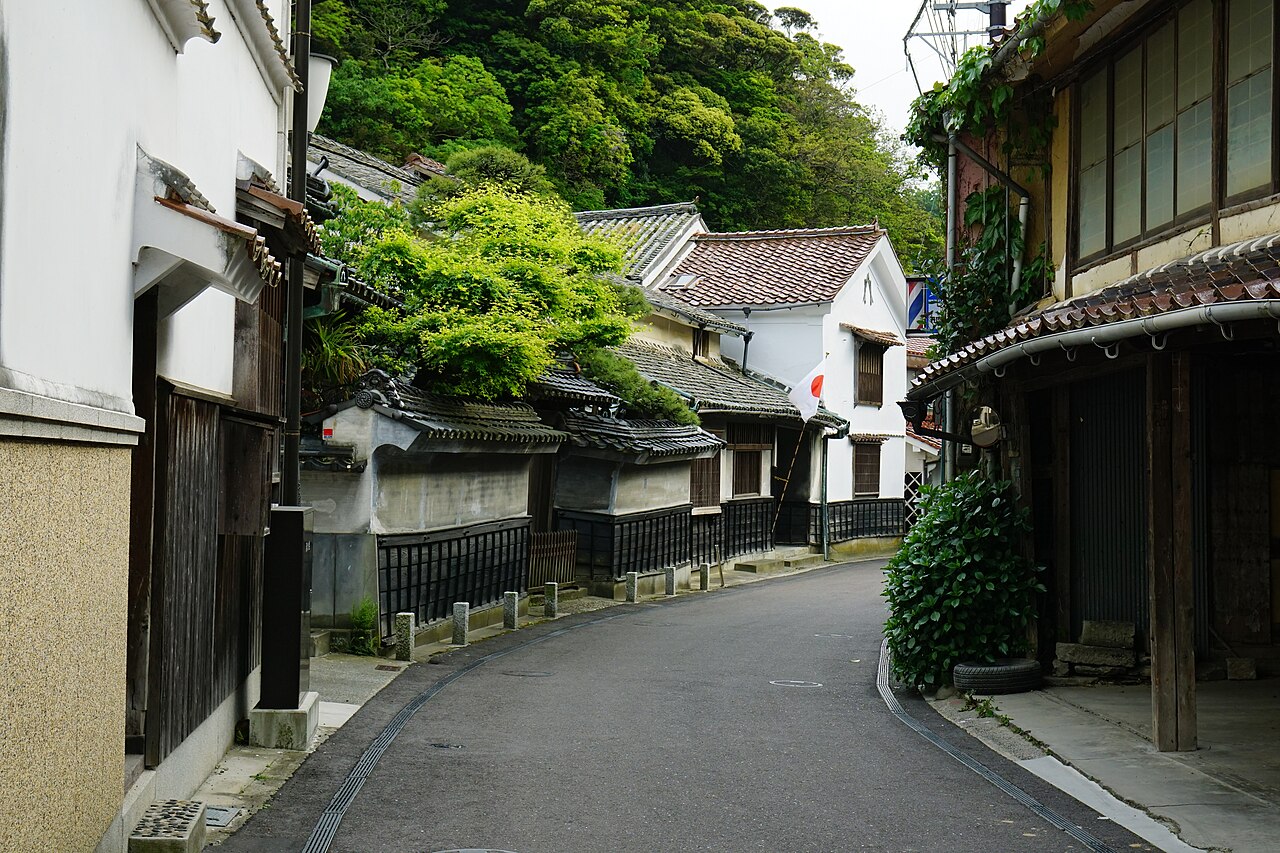
The red roof tiles are a local specialty, and uneven tiles fired in climbing kilns mix with evenly fired modern ones. Since the early modern period a town of wholesalers, merchant houses and inns has grown around Yunotsu, and the townscape still keeps traces of it in many places.
Okidomari is the port that shipped Iwami Ginzan silver from the end of the medieval period, about four hundred years ago. It served as a Mori naval base in the Sengoku period, a landing port for mine supplies in early Edo, and a port of call for Kitamae-bune ships from mid-Edo to Meiji.
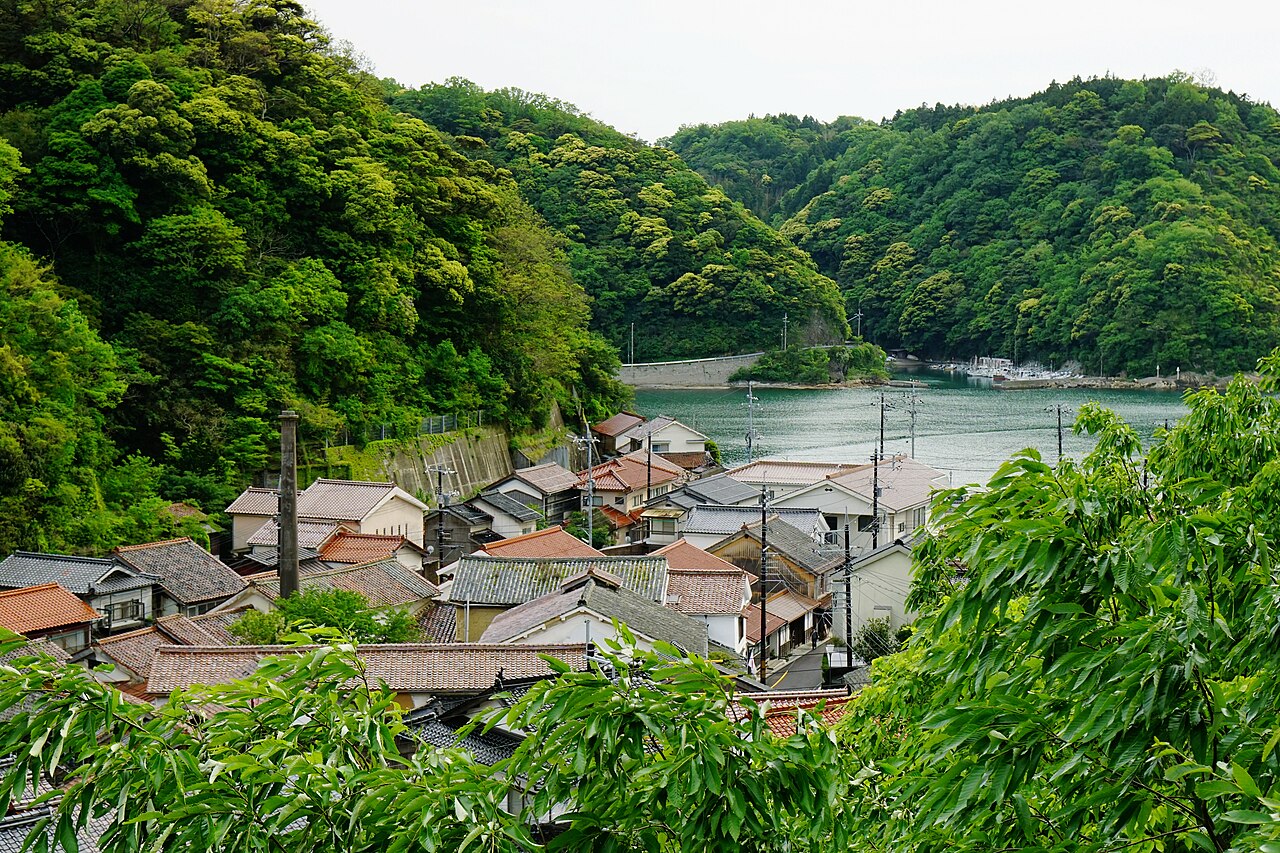
In the bay of Okidomari you can see many hanaguri-iwa, mooring rocks for tying up ships. A hanaguri is a cow's nose ring, and the moorings range from holed rocks to stakes, rods and mortar-stone shapes.
From Mount Atago you look out over the waves of Yunotsu bay and the red-tiled townscape.
A bell in Yunotsu is said to have come from Genpuku-ji on Mount Katsuta in Ama town, Oki district, surrendered during Toyotomi Hideyoshi's Korean campaign and carried here by mistake when it was returned. It sounds its tone on New Year's Eve.
Tatsunogozen Shrine and the Night Kagura
Tatsunogozen Shrine has been worshipped as the guardian deity of the Kitamae-bune ships that used Yunotsu port in the heyday of Iwami Ginzan, and stone lanterns donated by ship owners and ship votive tablets remain in its grounds.
The shrine stands on a rocky hill overlooking the hot-spring town, and the huge rock behind it looks as if a dragon has opened its mouth wide; it is thought to have been worshipped originally as an iwakura, a place where a god descends.
Iwami Kagura tells stories drawn from Japanese mythology in dance offered to the gods. The dancers dress in costumes of gold, silver and bright Japanese colours. Its main theme is the battle of gods against demons: gods defeat the demons that torment people, and brave warriors face legendary monsters.
The flute, bell and drum start slowly, gather speed and break into a fast beat, the moment the battle begins. The performers are not professionals but townspeople with ordinary daily lives.
Visitors take off their shoes and sit in the worship hall; photographs are allowed within the range of the body, but shots beyond that and video are prohibited.
Climbing Kilns and the Stone Quarry
Yunotsu ware is said to have begun with three kilns in the Edo period, and its main products were hando water jars in amber Kimachi glaze with a black drip pattern, mortars and everyday pottery. Typified by the hando, the ware went out from Yunotsu port to all parts of the country.
A climbing kiln is a chain of chambers in steps, each with a small window called a yokoguchi for throwing in firewood. Two of them, each twenty metres long with ten steps, stand preserved and restored at Yakimono-no-sato; at the peak more than ten stood under smoke from burning split pine.
Visitors can view the kiln and try clay shaping and painting at Yakimono-kan; one week before the Yakimono festival, held twice a year, flames enter the kiln.
The Fukumitsu-ishi quarry has been worked since the Muromachi period and still cuts stone. Inside it is dim and cool, and further in a huge space dug deep underground appears; bats can sometimes be seen in a small stone hole in the upper part.
Fukumitsu-ishi is a light green, absorbent rock that turns blue-green when wet, used for Buddhist statues and gravestones such as the Gohyaku Rakan of Iwami Ginzan. Visits are guided, require advance reservation, and a helmet is put on for the tour.
Getting to Yunotsu
New to rural buses and one-man trains? See how to ride them, step by step.
| From | How | Time or fare |
|---|---|---|
| JR Yunotsu Station | Oda City life bus to Motoyu | About 5 minutes |
| JR Yunotsu Station | On foot to Tatsunogozen Shrine | 11 minutes (900 m) |
| Yunotsu | JR and bus option to Iwami Ginzan | Departs 7:31, arrives 8:55, 790 yen |
| Yunotsu, each ryokan | Shared taxi to Iwami Ginzan, once a day | Departs 8:30 |
| Yunotsu | Shared taxi to Iwami Ginzan, 1 person | 4,200 yen |
| Yunotsu | Shared taxi to Iwami Ginzan, 2 people | 2,100 yen per person |
| Yunotsu | Shared taxi to Iwami Ginzan, 3 to 4 people | 1,400 yen per person |
Motoyu is a short ride from JR Yunotsu and the shrine a walk away; both onward routes lead to Iwami Ginzan.
Hours and Fees
| What | Hours or fee | Note |
|---|---|---|
| Motoyu, March to November | 6:00–20:00 | Last entry 19:30 |
| Motoyu, December to February | 6:00–19:00 | Last entry 18:30 |
| Motoyu, Mondays and Thursdays | General use 6:00–8:00 | Last entry 7:30; later times are for reserved members |
| Motoyu adult (junior high school age and up) | 500 yen | |
| Motoyu child (age 1 to elementary school age) | 250 yen | |
| Motoyu book of 10 tickets | 4,000 yen | |
| Night Iwami Kagura seat | 2,000 yen per seat | Cash only, paid at Tatsunogozen Shrine |
| Night Iwami Kagura performance | 20:00–21:30 | |
| Yunotsu tourist information centre | 8:45–17:30 from March to November; 9:15–16:30 from December to February |
Fees and hours were checked against official sources between 11 October 2026 and 9 November 2026.
Motoyu opens early in the morning year round, closing earlier in winter; the kagura seat is paid in cash at the shrine.
To fit both the evening performance and the early bath, browse places to stay in Yunotsu.
Thinking of staying overnight?
Compare places to stay near Yunotsu, Shimane, Japan →
Disclosure: This post may contain affiliate links. If you book through them, we may earn a commission at no extra cost to you.