This guide covers one unhurried day in Tsuwano, a castle town in the hills of Shimane: arriving by steam train, getting around, the Tonomachi lane, Taikodani Inari and its gates, and the castle hill with its park and temple. It does not cover the wider San'in coast or travel beyond the town.
Tsuwano is often called the Little Kyoto of San'in, and the name is earned by how much of the old castle town still stands: white walls, dark lattice and a clear canal beside the main lane. It is a place to walk slowly, and a single day is enough to see why.
A Castle Town in the San'in Hills
Tsuwano belongs to Kanoashi District in Shimane Prefecture and sits in a mountain valley on the upper reaches of the Tsuwano River, a tributary of the Takatsu. Mount Aono rises to the north, and the clear stream runs through the town from north to south, so water is never far from whichever lane you are walking.
What survives is less a single monument than the whole shape of a castle town: the castle hill to the west, the old lane with its canal, and the shrine on the hillside above the river. A day spent walking between the three is a full one.
Arriving by Steam Train
The SL Yamaguchi is the way to arrive if the timetable allows. The steam service runs between Shin-Yamaguchi Station and Tsuwano Station in about two hours each way, crossing the prefectural border and calling at Yamaguchi, Chomonkyo and Jifuku on its way through the mountains, with Tsuwano as the end of the line.
Two locomotives, nicknamed Degoichi and the Lady, share the duty. The first car is the green car, modelled on a prewar coach, with red sofas and an observation deck; the second to fourth cars have seats in facing boxes; and the fifth has a wood-heavy prewar interior. A counter in the third car sells souvenirs.
In twenty twenty-four the service marked the forty-fifth anniversary of its revival. The ride has a handful of moments worth staying awake for, and most of them happen at the smaller stops rather than at either end of the line:
- Yuda Onsen: the station has a foot bath where you can watch the engine arrive and leave while soaking; regulars wave the train off.
- Niho: the line climbs hard between Niho and Shinome, and guidebooks describe a stop of seven minutes here while the engine takes on coal. Go up onto the station footbridge to watch from close by.
- Shinome: the departure whistle echoes around the hills, and in the station yard stands a water tower built in nineteen twenty-two, about eight and a half metres tall, once used to water steam engines and now retired.
- Chomonkyo: just before the station, spectators gather at the Chomonkyo roadside station to watch the train pass and wave.
- Jifuku: while the train stands here you can look closely at the cab, and the retro station building is a photo spot.
Getting Around Once You Arrive
Tsuwano is walkable from the moment you step off. Tsuwano Station is on the JR Yamaguchi Line, and Tonomachi street, the heart of the old town, is a ten-minute walk from it. If you want to spare your legs at any point, the town bus works on one flat fare, paid per ride.
- Adult, one ride: two hundred yen, flat.
- Elementary-school child: one hundred yen, half the adult fare.
- Infant with an accompanying adult: the first infant rides free; from the second infant onward a fare is charged.
A workable order for the day, all on foot from the station:
- Station to Tonomachi street: a ten-minute walk.
- Tonomachi to Taikodani Inari: follow the lane toward the river; the red gates on the hillside show you where you are heading.
- Taikodani Inari to Yomei-ji: both are in the Ushiroda district, so take them together.
- Yomei-ji to the castle hill and Washibara Park, then back to the station: the castle hill is on the western side of town, so leave it for the last leg.
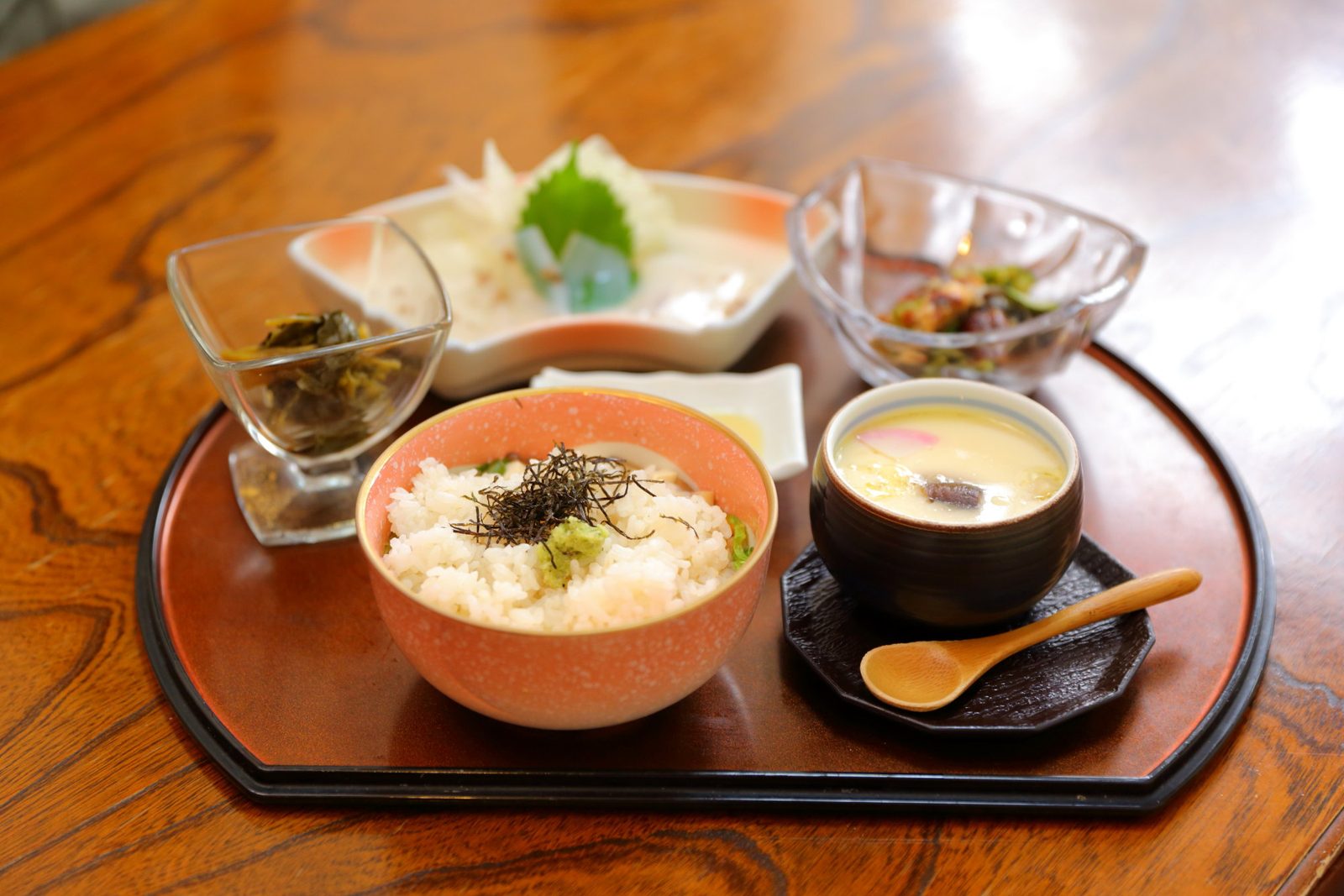
If you break for lunch, uzume-meshi, rice topped with shredded nori and wasabi with a cup of savoury egg custard alongside, is the Tsuwano set to look for. A small selection of guided tours around Tsuwano is listed if you would rather walk with company.
Where to stay
Disclosure: This post may contain affiliate links. If you book through them, we may earn a commission at no extra cost to you.
Walking Tonomachi
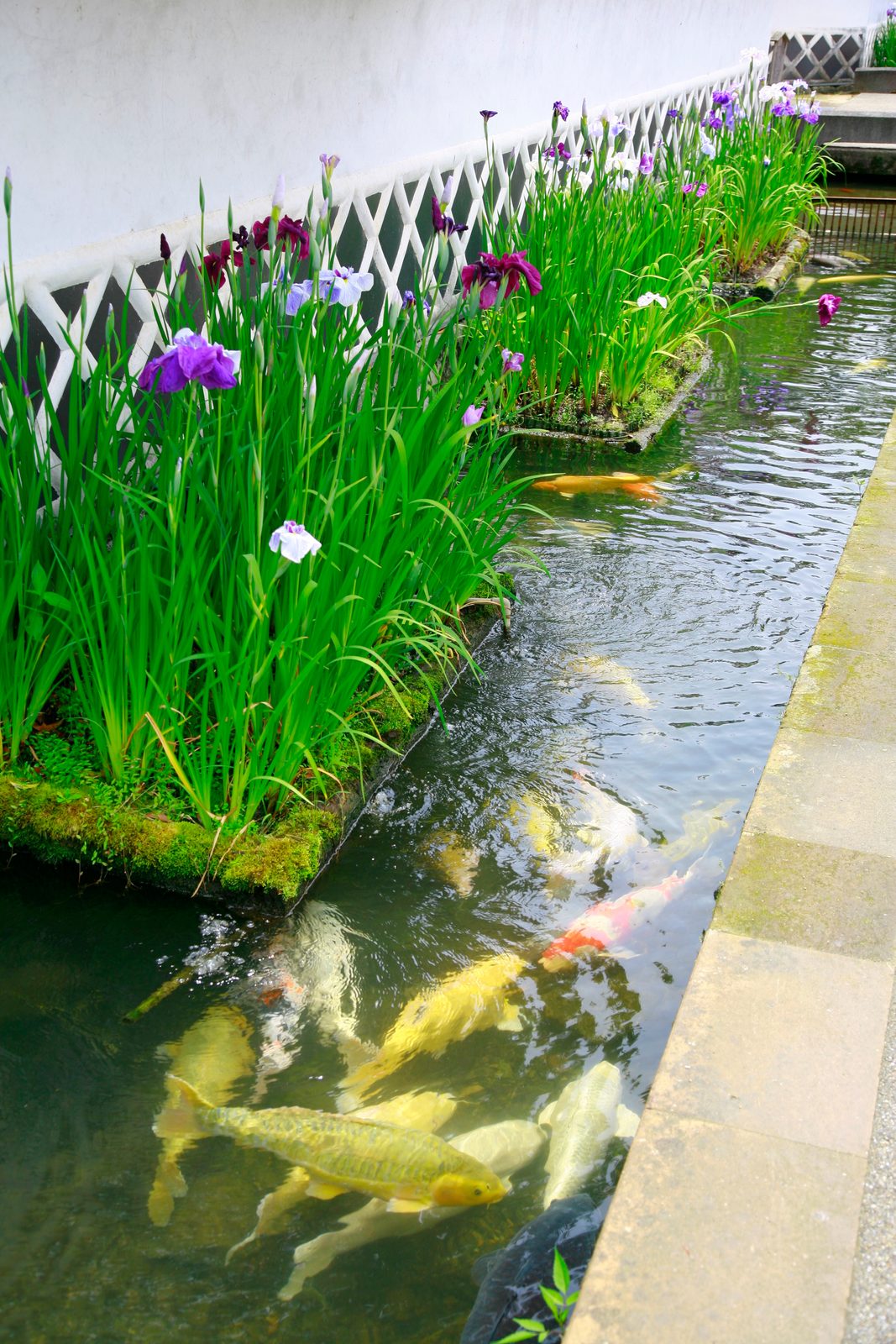
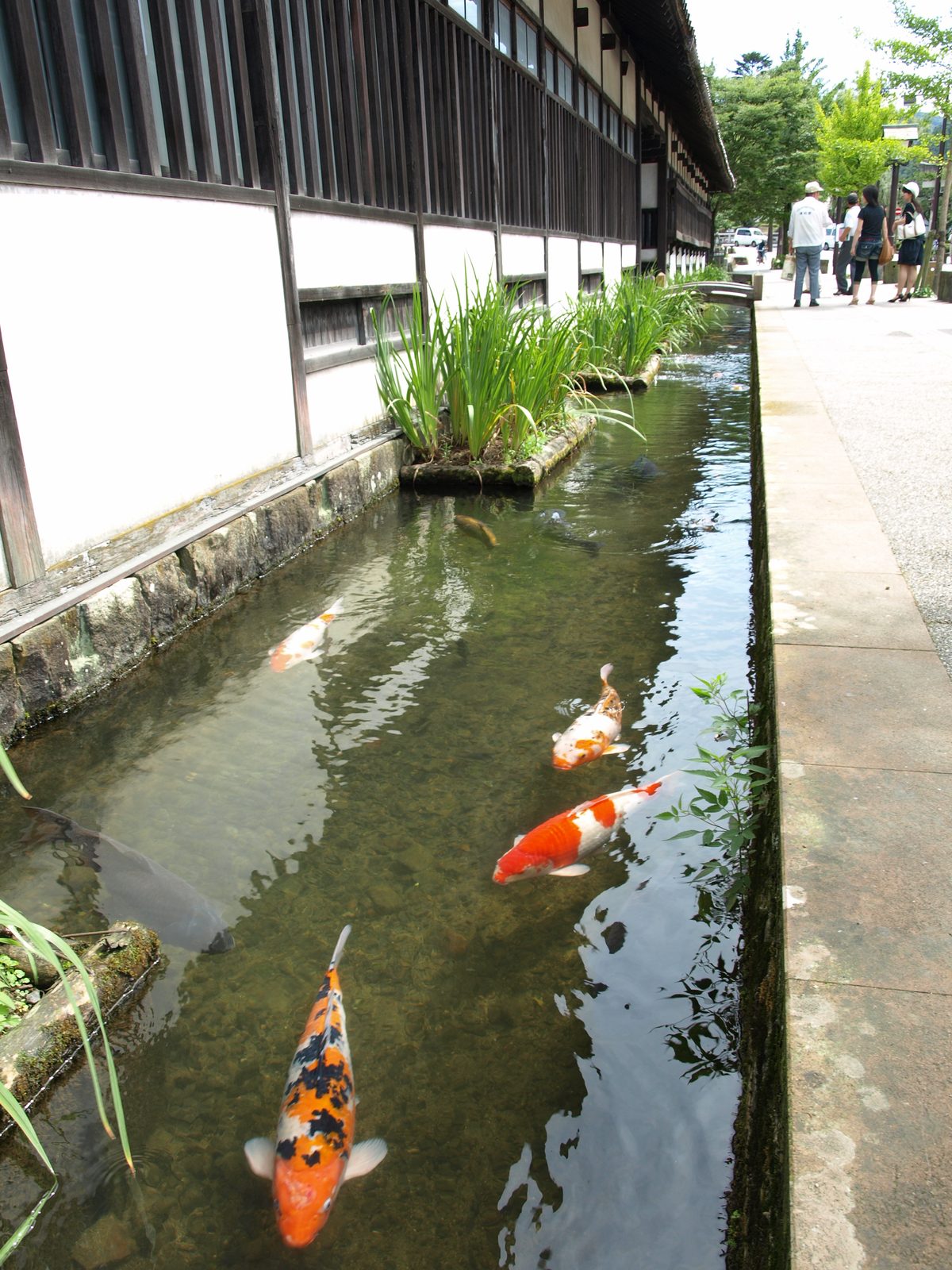
Tonomachi is the lane that gives Tsuwano its castle-town air, and it asks for nothing more than a slow pace. A canal runs along the side of the street, clear enough to count the koi in it, and long white-walled buildings with dark wooden lattice form the backdrop for most of the walk.
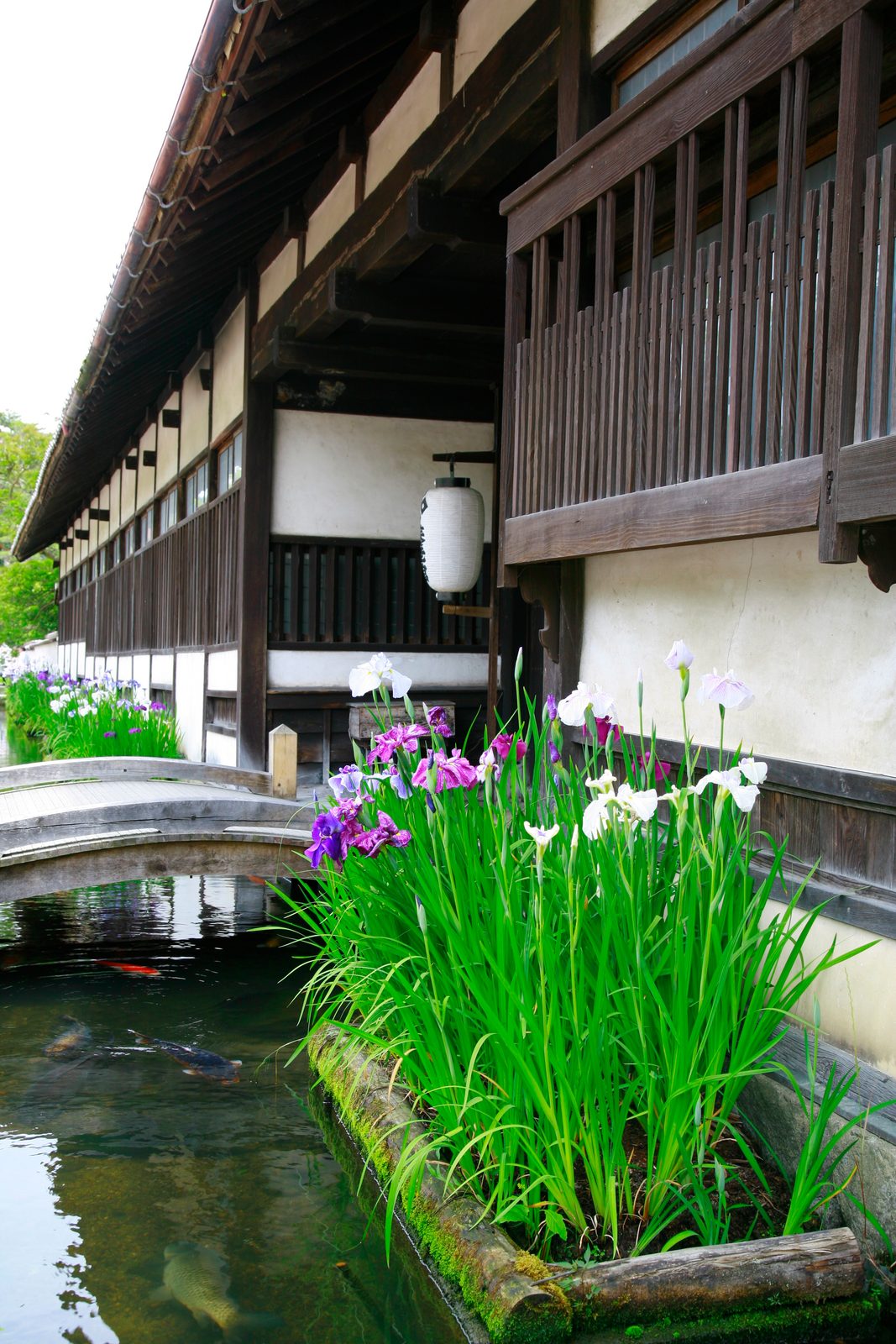
Small footbridges cross the water at intervals, and when the irises are in bloom, purple and white flowers stand along the edge with their leaves in the water where the koi gather. Walk the full length rather than turning back at the first bridge; the pleasure is in the whole lane.
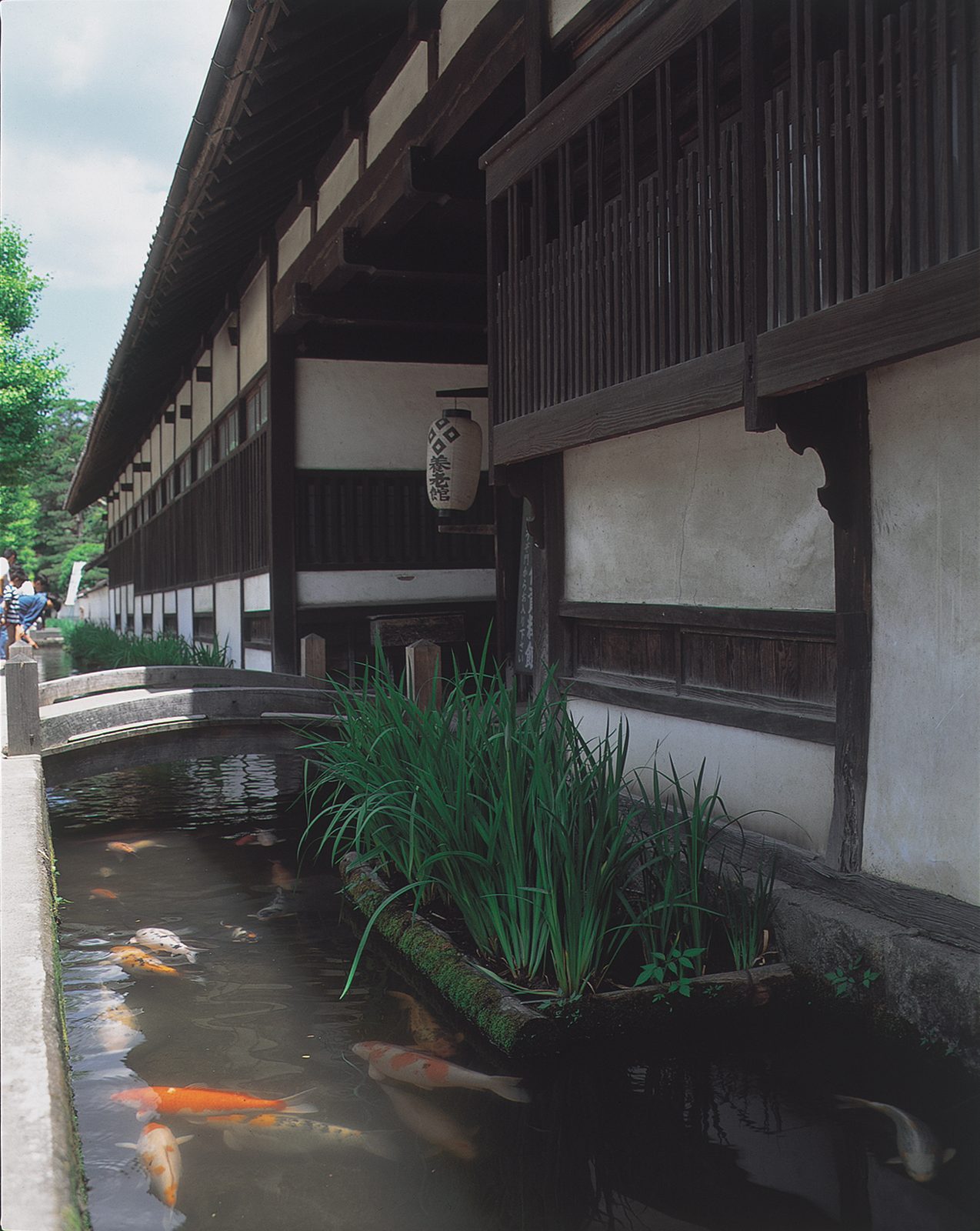
A lantern marked Yorokan hangs near one of the footbridges. Beyond the end of the lane, along the Tsuwano River, you can look up to the hillside where a line of red gates climbs the slope: that is Taikodani Inari, the natural next step of the day.
Taikodani Inari and the Thousand Gates
Taikodani Inari is counted among the five great Inari shrines of Japan, and it is unusual in one visible way: it is the only shrine in the country to write Inari with the character for attainment rather than the usual one, a spelling said to carry the meaning of great wishes fulfilled.
Vermilion gates run up the front path for some two hundred and sixty metres in an unbroken tunnel, and the shrine holds that around a thousand have actually been dedicated. It was founded in seventeen seventy-three, and its main hall is built in the nagare-zukuri style.
From its founding until the Meiji era, only the successive lords of the domain were permitted to have prayers offered here. Visiting is not tied to set times, so you can enter the grounds whenever you arrive, and from the top the whole town lies spread across its basin below.
Go early if you can. In the morning the light comes from the east and throws the shadows of the gates across the stone steps, and on deep-fog days the shrine can be wrapped in a sea of cloud. If the train timetable rules out an early start, places to stay in Tsuwano make that morning climb possible.
The Four-Place Circuit
The shrine keeps its own way of praying for a large wish, called the four-place visit. Rather than stopping at the main hall alone, you go round four points in a fixed order and at each one offer a piece of fried tofu and a candle while making your request:
- Motomiya, the original shrine, first.
- Myobu-sha, the hall of the fox attendants, second.
- The main hall, third.
- The worship place behind the main hall, last.
The rear worship place is the one most visitors would walk past. By tradition the foxes, Inari's messengers, come and go from behind the main hall, which is why the small spot at the back counts as one of the four. Myobu-sha enshrines a pair of white foxes, husband and wife, and is held to bring good matches.
Alongside prosperity in business and the warding off of misfortune, the shrine is also said to help with finding things that have been lost. Fried tofu and candles are sold on the grounds, at a shop near the car park and at another beside the basin where you rinse your hands.
The Castle Ruin, Washibara and Yomei-ji
The hill on the western side of town carries the ruin of Sanbonmatsu Castle, better known as Tsuwano Castle. Yoshimi Masachika built it in thirteen ninety-one, Sakazaki Narimasa held it later, and in sixteen nineteen the Kamei family arrived from Inaba as lords of forty-three thousand koku and kept the domain until the Meiji Restoration.
At the foot of the castle hill, Washibara Park lies within the grounds of Washibara Hachimangu, said to have been founded by Yoshimi Masayori, a descendant of Minamoto no Noriyori, on the model of Tsurugaoka Hachimangu in Kamakura. Old cedars and pines shade it, and cherry trees along the horseback-archery course draw crowds in spring.
Yomei-ji shares the Ushiroda district with Taikodani Inari, so pair the two. Its mountain name is Kakuozan; it was founded in fourteen hundred with Yoshimi Yorihiro, styled Mikawa-no-kami, as patron and the priest Getsuin Shosho as first abbot, and later became the family temple of the Kamei, whose mausoleum stands in the grounds.
Fitting these in is a matter of order rather than distance. Come down from the gates and take Yomei-ji while you are on the Ushiroda side, then cross back through town to the western hill for Washibara Park and the castle ruin, and finish by walking back to the station along the lane you started on.