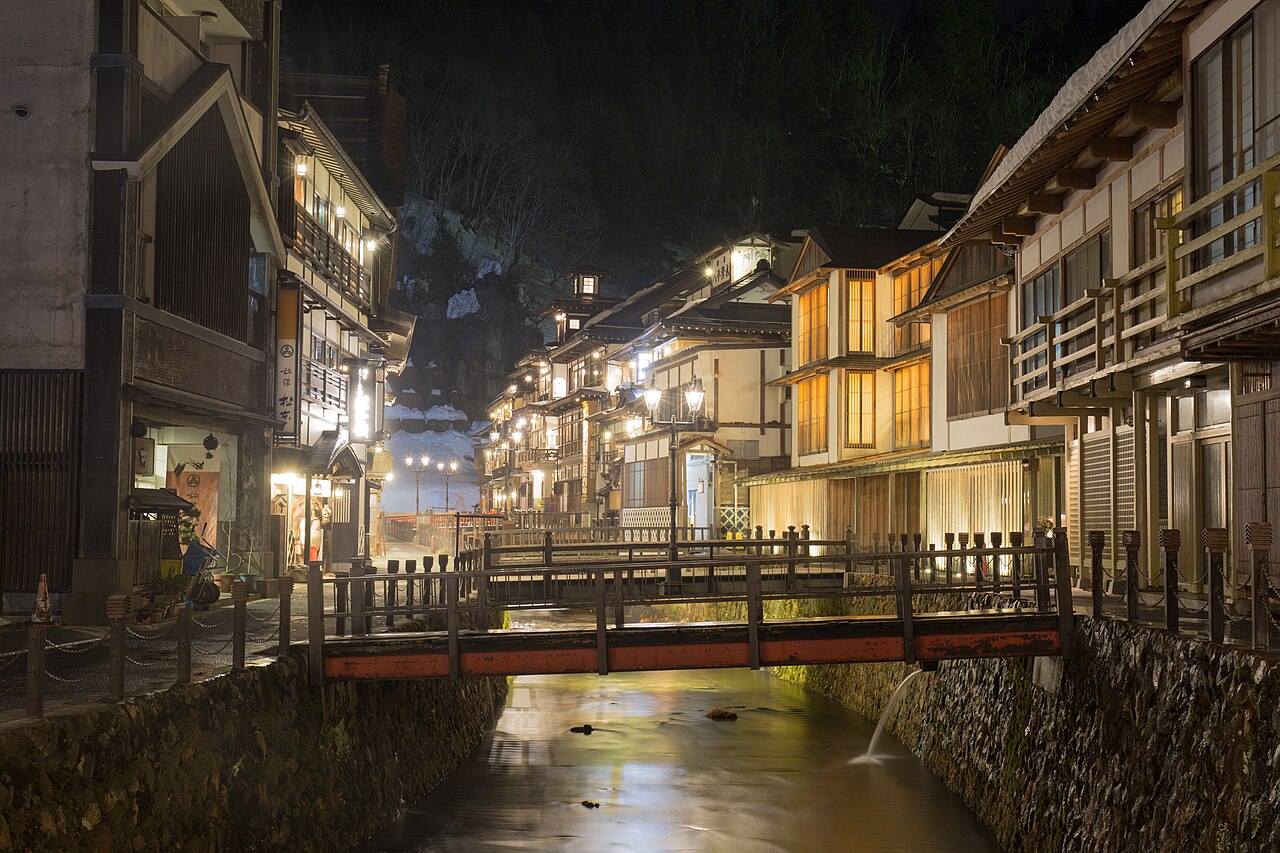
This guide covers a day trip to Ginzan Onsen in Yamagata Prefecture: how to get there from Oishida and how to shape the visit around the ride back. It walks you along the river between the wooden inns, waits for the gas lamps at dusk, takes in the public bath, foot baths and waterfall, and ends with the silver mine past and the temple Yosen-ji.
Getting to Ginzan Onsen by Bus from Oishida Station
From Oishida Station, the way into Ginzan Onsen is the Ginzan Onsen bus, and the same bus is the way back out. The fare is paid before boarding in both directions, and children pay half price. The adult amount is in the table below.
The bus makes five round trips a day, so plan the visit around its departures. A shuttle bus also runs from Taisho Roman-kan to the entrance of the hot spring town. The admission for the Shirogane-yu public bath and the hours of the Waraku foot bath are in the same table.
| Ginzan Onsen day trip: fares, fees and hours | Detail |
|---|---|
| Bus from Oishida Station to Ginzan Onsen, adult one way, prepaid | 1,000 yen (children half price) |
| Bus from Ginzan Onsen to Oishida Station, adult one way, prepaid | 1,000 yen |
| Ginzan Onsen line bus, number of runs | 5 round trips a day |
| Shuttle bus from Taisho Roman-kan to the entrance of the hot spring town | 500 yen per day |
| Shirogane-yu public bath, admission for adults | 500 yen |
| Shirogane-yu public bath, admission for elementary school children and younger | 200 yen |
| Waraku foot bath, hours | open from 6:00 to 22:00 |
Walking the Town of Wooden Inns
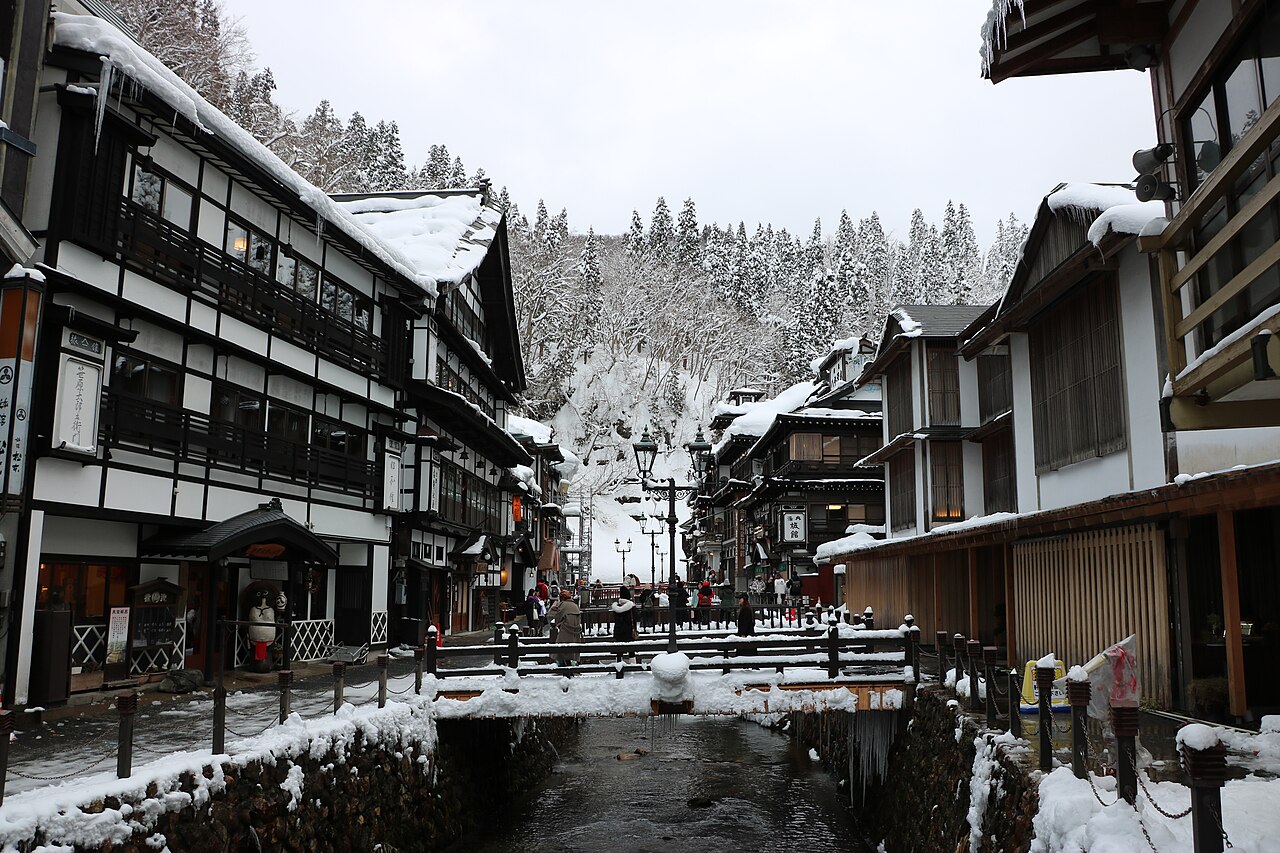
Ginzan Onsen stands on the Ginzan River in Obanazawa, Yamagata Prefecture, with wooden inns on both banks. They are multi-storey buildings from Japan's late Taisho and early Showa eras, and the street is known for keeping the mood of that time. Walk the riverside, looking down at the clear water and up to the green hills.
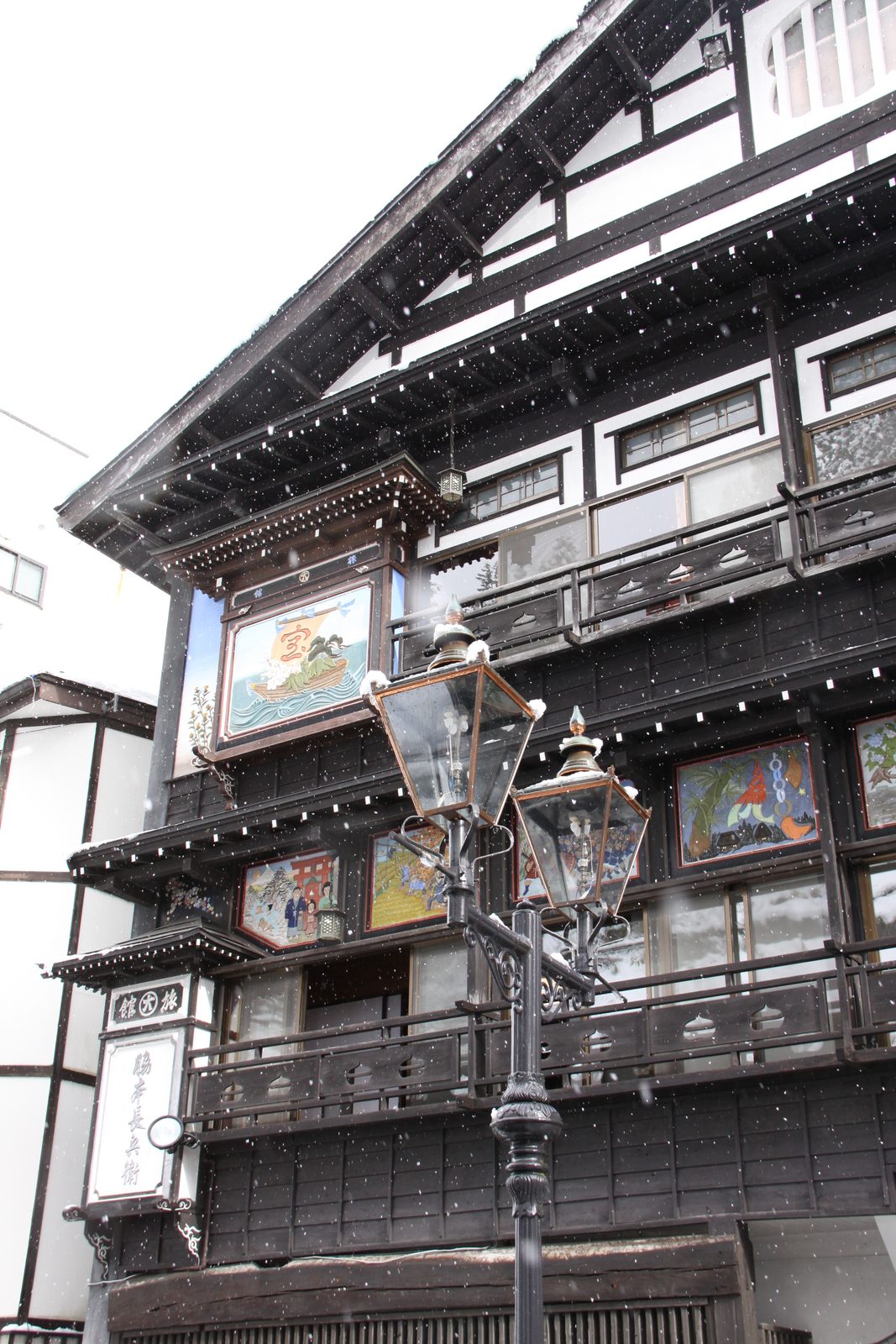
Look at the shutter boxes on the inn fronts: some carry colourful plaster reliefs, known as kote-e, showing the inn's name or a scene from the seasons. Underfoot, patches of bright tile are set into the lanes. The wooden fronts are well known as a spot for photographs, so allow time on the bridges.
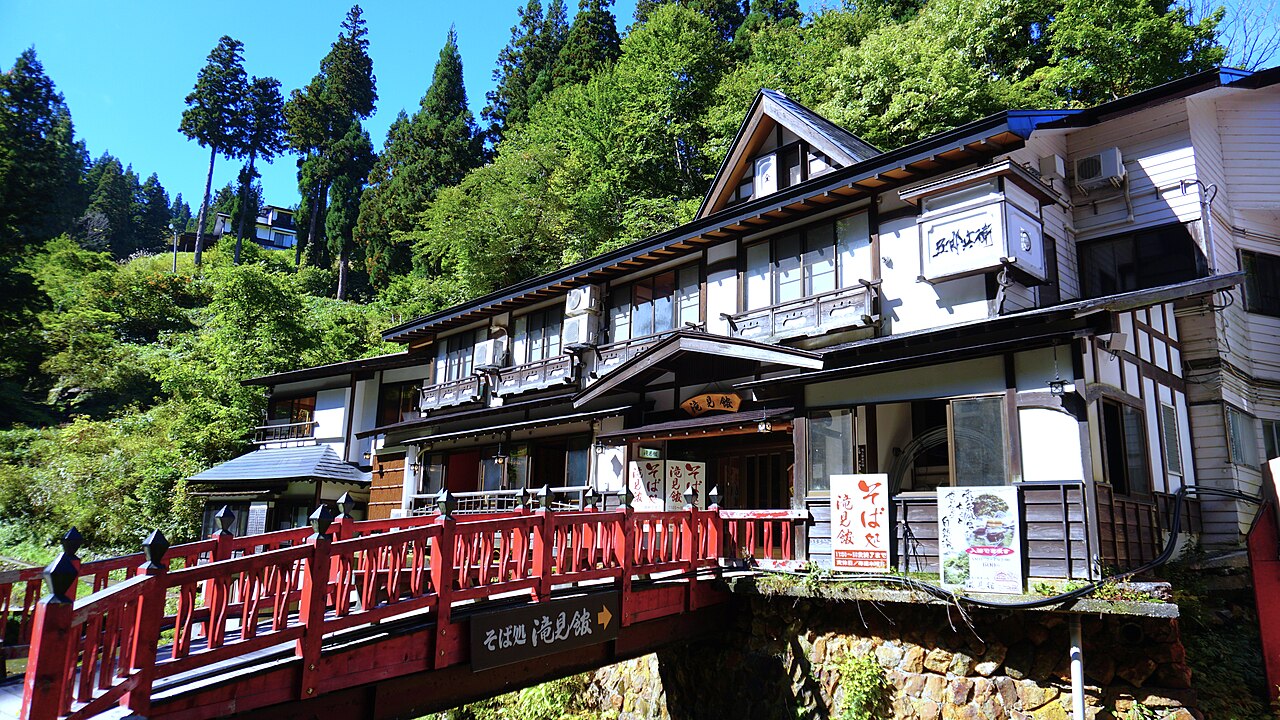
Old tofu shops and modern cafes sit between the inns and add to the retro feel of the street, so stop at a counter when you want a break. If the view seems familiar, the town is known as a setting for Oshin, the NHK serial television drama.
Where to stay
Places to stay near Ginzan Onsen →
Disclosure: This post may contain affiliate links. If you book through them, we may earn a commission at no extra cost to you.
Gas Lamps and Evening Light
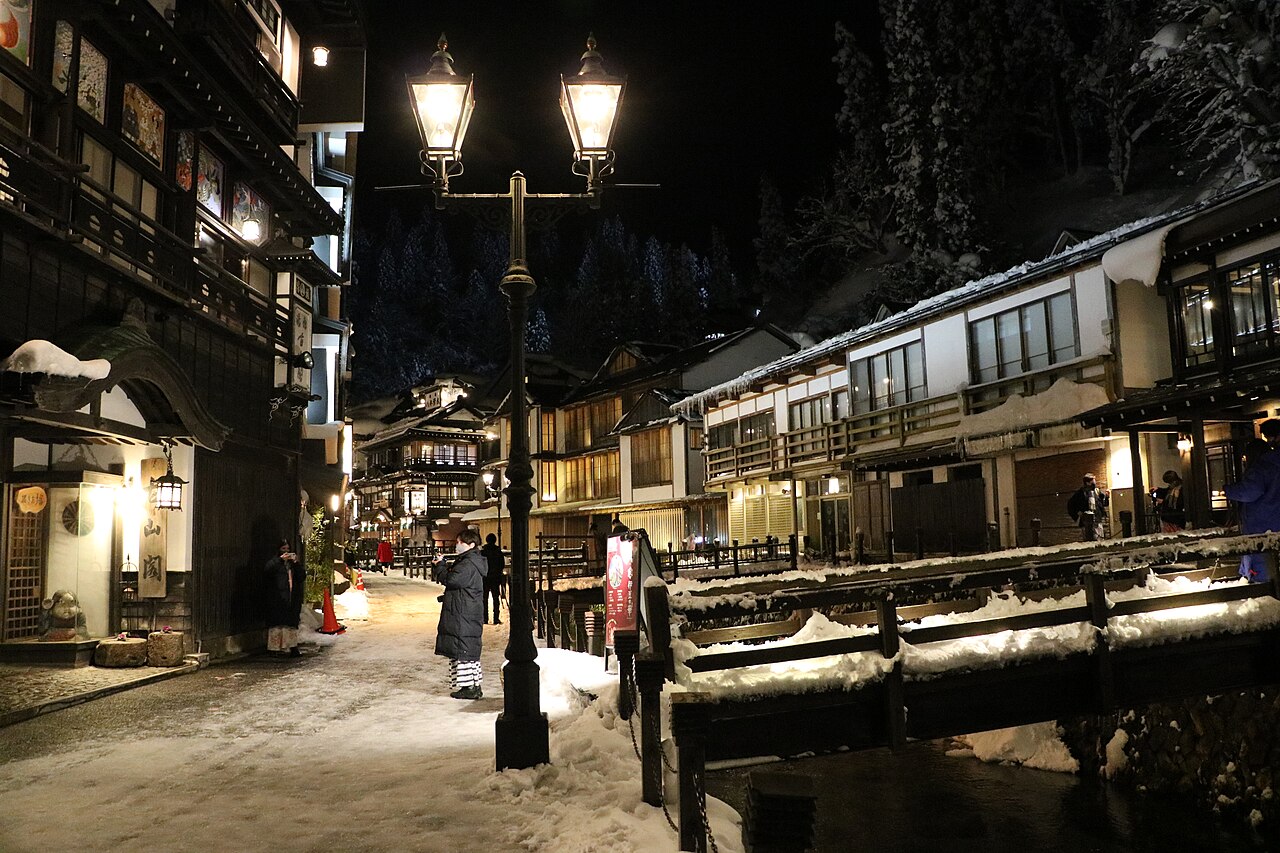
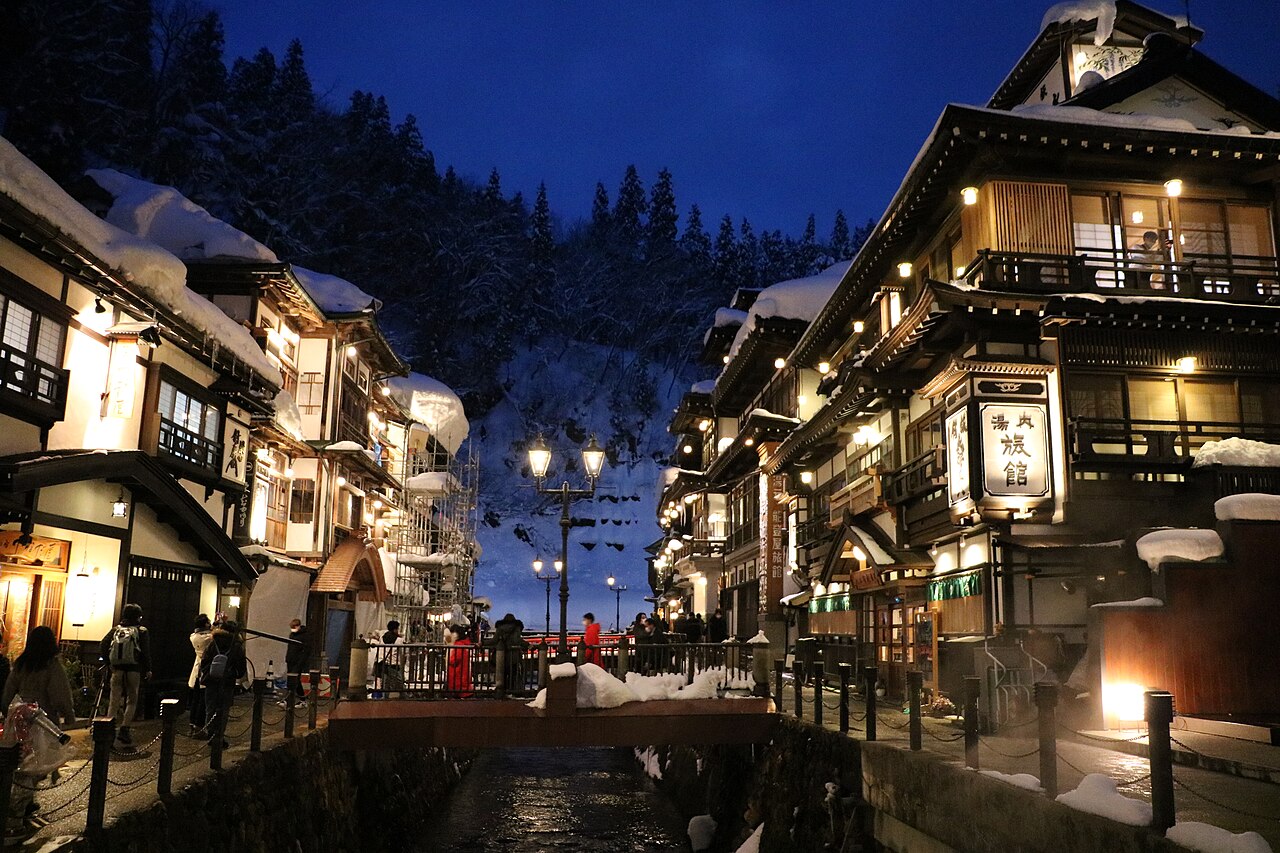
Gas lamps stand beside the bridges, and towards evening they are lit. Guidebooks describe their soft glow wrapping the street and the wooden inns along the river taking on a dreamlike look after dark. Stay for the moment the lamps come on, then walk the river again.
The Waraku foot bath draws its water straight from the hot spring source and is free to use; guidebooks say it is in service through the year, and that after dark you can sit in it under the gas lamps. Its times are in the table at the top of this page.
To see the lamps at night and still take the early foot bath the next morning, compare places to stay in Ginzan Onsen.
Shirogane-yu, Foot Baths and the Waterfall
Shirogane-yu is the public bath in the hot spring town, with an exterior by the architect Kengo Kuma and a triangular tub on the upper floor. The water flows straight from the source, and the men's and women's bathrooms change over from day to day. Check the price in the table at the top and go in.
Foot baths fed by the same flowing spring water are set along the hot spring town, so you can sit with your feet in the water partway through the walk and carry on afterwards. Treat them as pauses rather than a stop of their own.
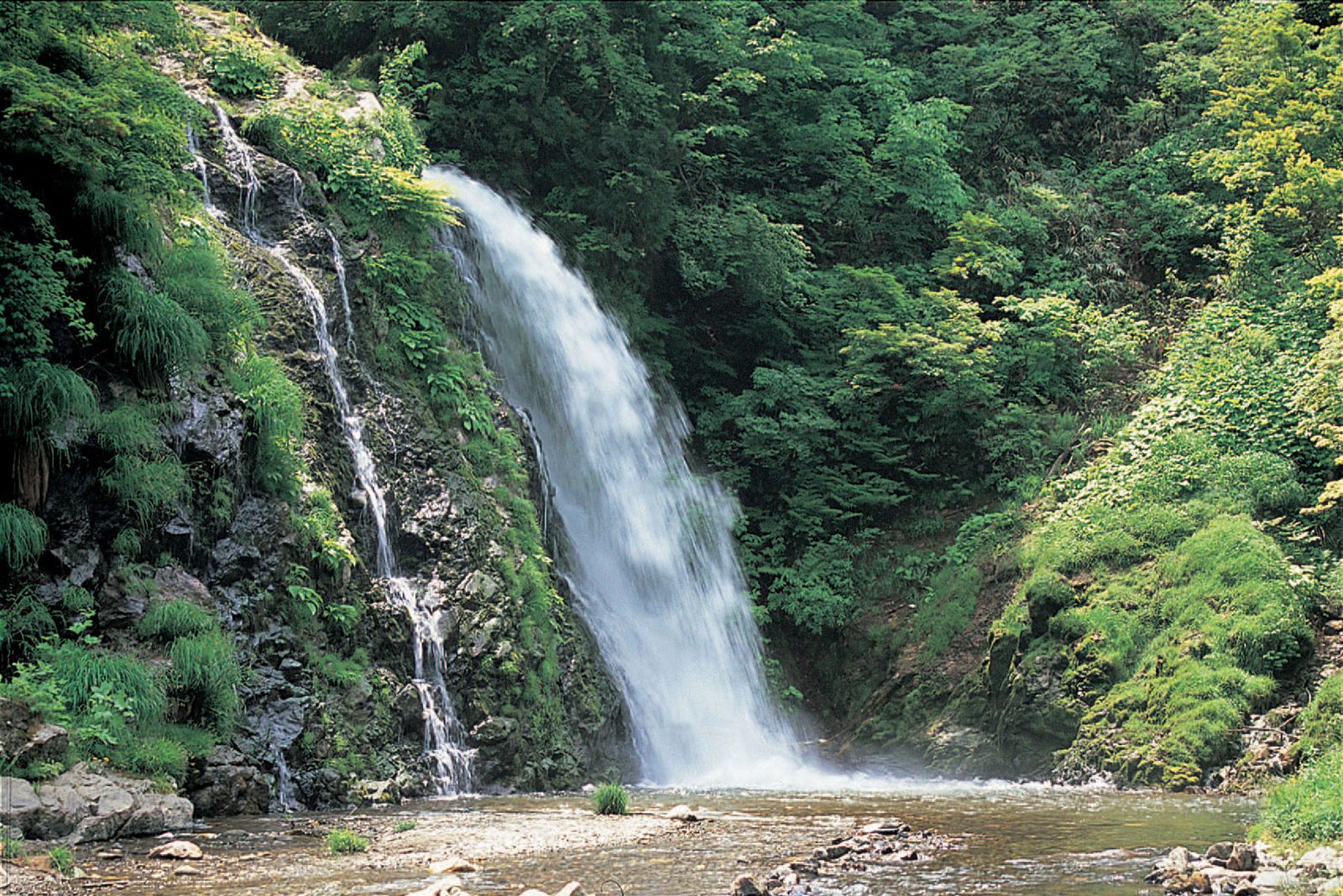
At the far end of the street, where the hot spring town stops, Shirogane Park holds the Shirogane Falls. A footpath in the park leads right up to the waterfall, near enough to feel the spray guidebooks describe as spectacular. Keep walking past the last of the inns to reach it.
The Silver Mine Past: Ginzan Kodo and Yosen-ji
The hot spring is said to have been found in the early Edo period by miners working the Nobesawa silver mine, and after mining came to an end the town lived on as a place for long therapeutic stays. Keep that order in mind as you look at the inn fronts.
The tunnels of that mine, known as Ginzan Kodo, are the remains of what was a large silver mine in the early Edo period, and today they are a national historic site. Carry the name with you as you walk the street rather than looking for the mine itself.
Yosen-ji is an old temple said to have been founded by the priest Jikaku Daishi. It is known as the place where Matsuo Basho stayed longest on the journey of Oku no Hosomichi, The Narrow Road to the Deep North, and a stone in the grounds carries a haiku composed there. Read the stone if your day has room.
Fitting It Into One Day
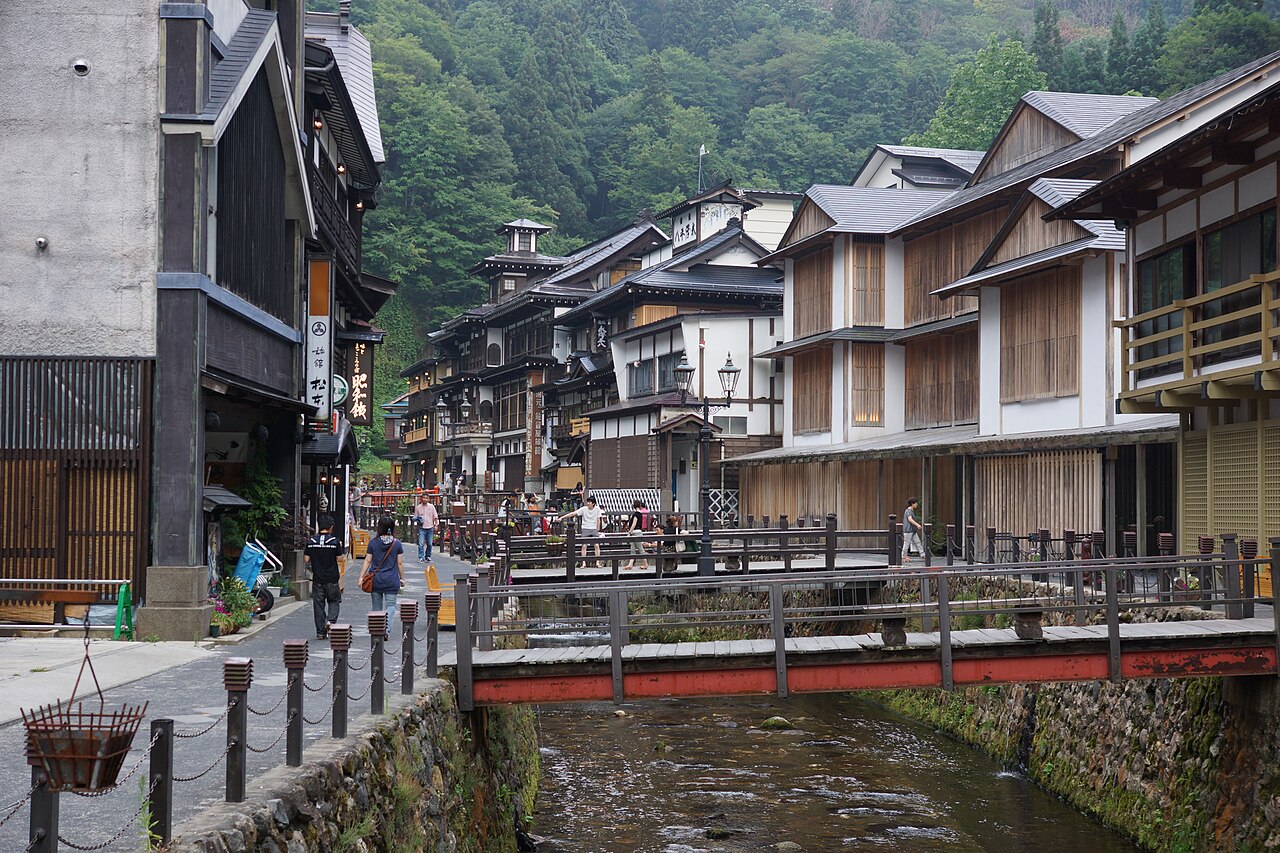
Take the bus in, walk the full length of the street, then come back to the foot baths and Shirogane-yu, and finish at the waterfall where the buildings end. To see the gas lamps lit, check the return runs in the table at the top and pick the latest that gets you back to Oishida.
Along a stretch of the riverbank the air is said to stay cool even at the height of summer, and the town has long been regarded as a summer retreat. In autumn, guidebooks describe the whole mountainside coloured by turning leaves, like a spread of brocade. Choose the season before you choose the day.
With the day set around the return runs, browse guided tours around Ginzan Onsen for those dates.