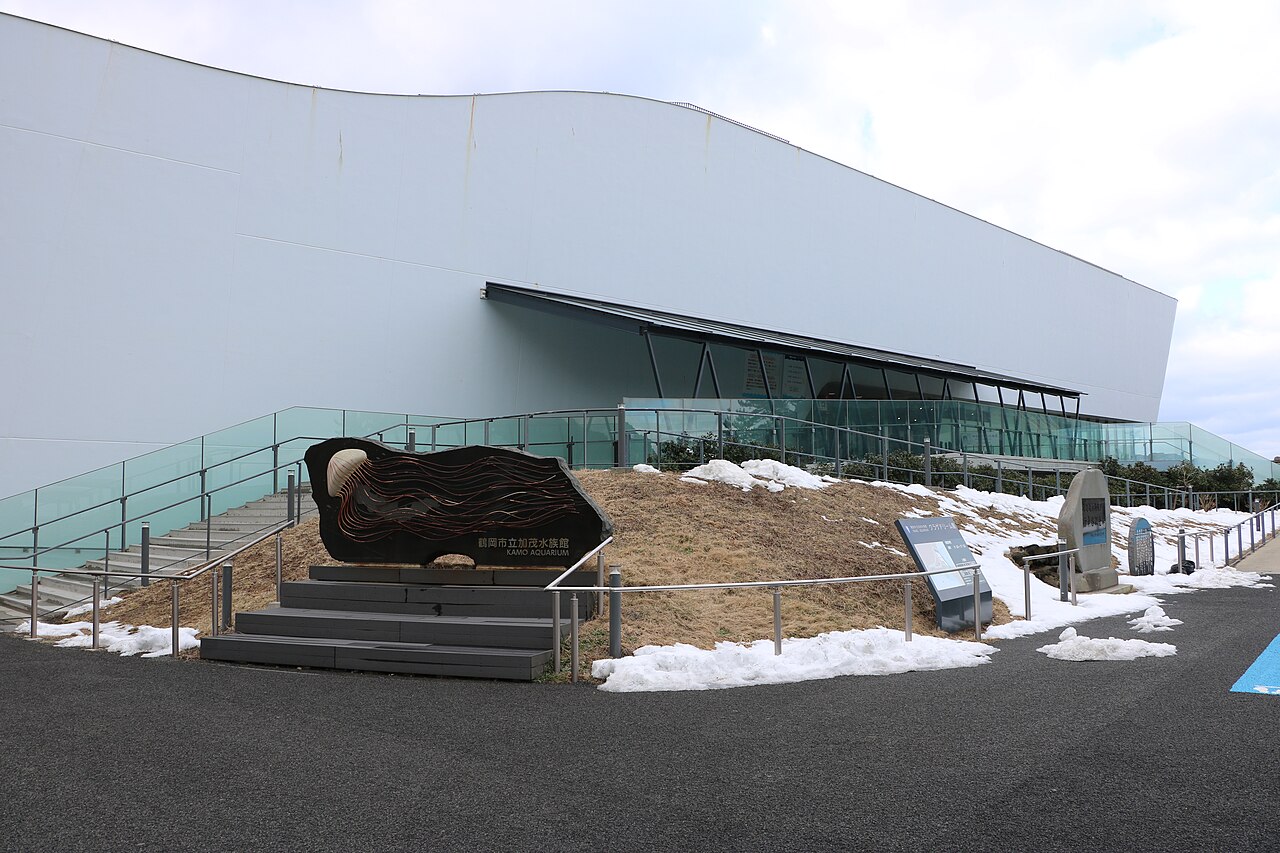
On the far side of Yamagata's mountains, the prefecture meets the Sea of Japan along a stretch of shoreline known as the Shonai coast. The best-known reason to come here is a building full of jellyfish. Tsuruoka City Kamo Aquarium — its full name is long enough to include a corporate sponsor, though everyone shortens it to Kamosui — sits where the hills meet the water in the Imaizumi area of Tsuruoka. Its signature room, the Kurage Dream Theater, is dominated by a vast circular tank in which schools of moon jellyfish drift in slow circles. There are benches in front of it, and people stay seated for a long while. Pair the aquarium with the onsen town of Yunohama a little further along the shore, and you have one of the gentlest full days in Tohoku.
Getting to the Shonai coast
Tsuruoka is further from Tokyo than it looks on the map, but the route is simple. From Tokyo Station, the Joetsu Shinkansen and the Uetsu Main Line bring you to Tsuruoka Station in about four hours. Guides to the region suggest making Tsuruoka or Sakata your base for exploring Shonai. From Tsuruoka Station, take the Shonai Kotsu bus bound for Yunohama Onsen via Kamo. Get off at the aquarium's own stop, and the entrance is right there. If you stay on to the end of the route, the one-way fare from Tsuruoka Station to Yunohama Onsen is one thousand yen. The bus ride from the station out to the Yunohama Onsen stop takes about forty minutes. Neither leg asks much of you, which sets the tone for the day. Coming from elsewhere in Tohoku, the guides' advice still holds: make Tsuruoka your base.
The jellyfish halls
Kamosui nearly did not survive long enough to become famous. In the late nineteen nineties, the number of visitors sank to around ninety thousand a year. At the end of that decade the aquarium turned seriously to jellyfish, and the jellyfish saved it. That history explains the atmosphere here: this is not a big-city aquarium with a bit of everything, but a small institution that chose one animal and went all in. One long gallery gathers around eighty kinds of jellyfish from the seas of the world, including species from the Shonai shore just outside. Cylindrical tanks let you watch the same animals change expression as you move around them. Jellyfish reward patience in a way that fish do not. The moon jellyfish, the pale species most people picture first, lives for only about six months. Owan jellyfish glow green under ultraviolet light. In the waters off Shonai they appear from spring into early summer. Deep-sea comb jellies flash in rainbow colours as they catch the light. Spotted jellies drift past in polka dots. The northern moon jellyfish announces itself with the brown edge of its umbrella.
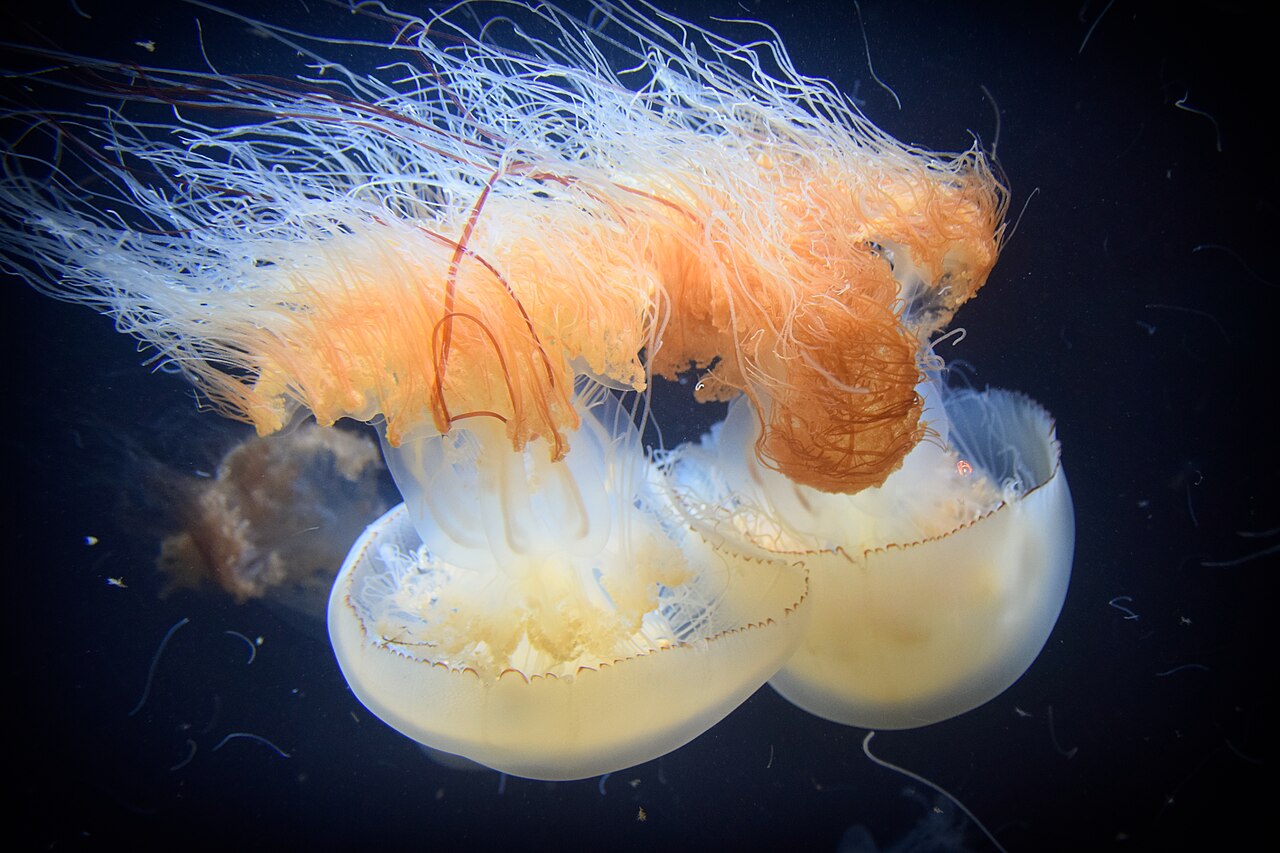
Then comes the Kurage Dream Theater. The circular tank fills your whole field of view, and the moon jellies inside move like slow weather. Sitting down in front of it is not a concession to tired legs; it is the intended way to watch. Admission is fifteen hundred yen for adults and five hundred yen for elementary and junior-high-school children. For what is effectively the region's main sight, that feels modest. If you would rather have the day arranged for you, a few guided tours in and around Tsuruoka combine the aquarium with the rest of the coast.
Where to stay
Places to stay near Yunohama Onsen →
Disclosure: This post may contain affiliate links. If you book through them, we may earn a commission at no extra cost to you.
Along the Yunohama shore
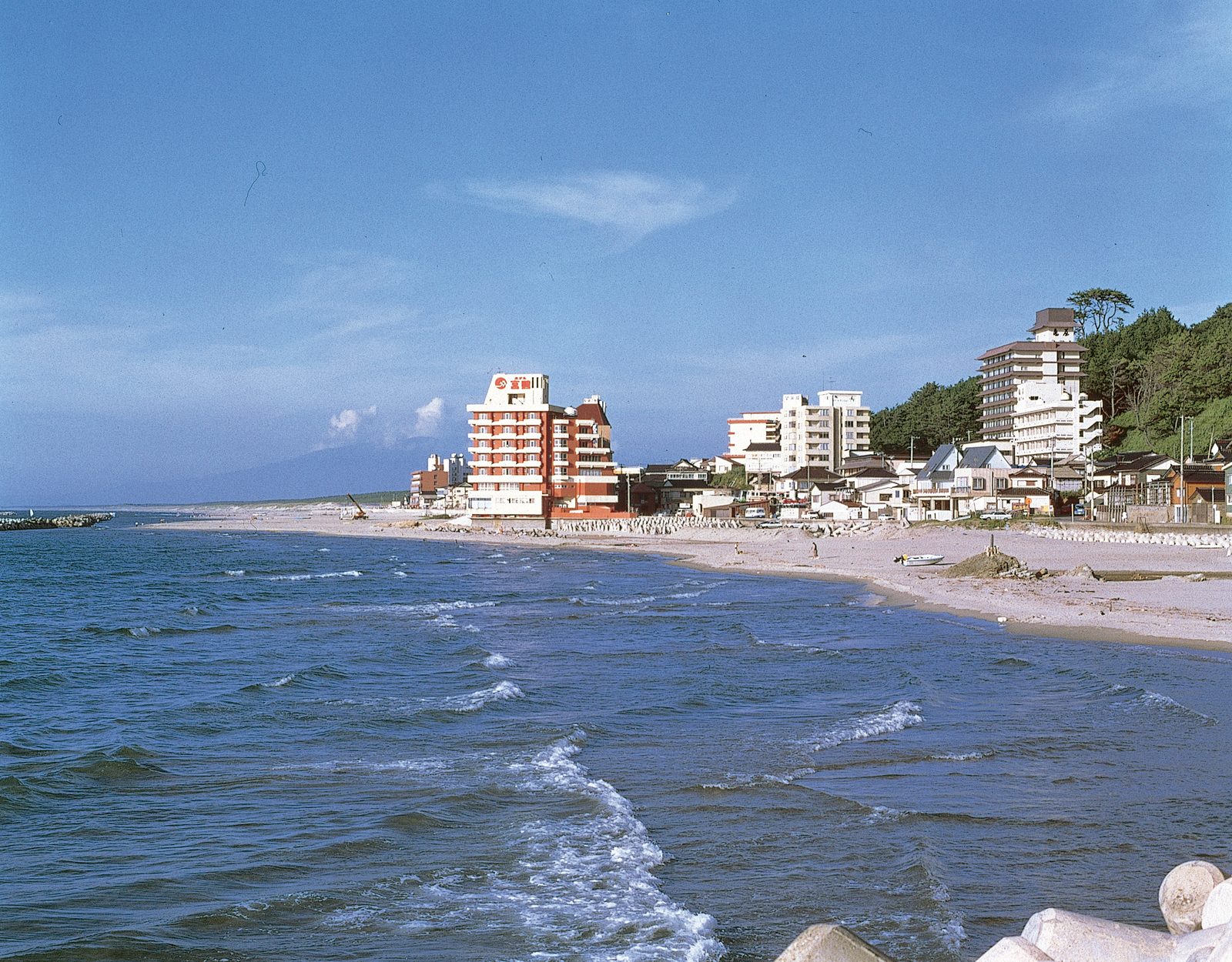
The same road ends at Yunohama, an onsen town strung along the shoreline. The springs here are said to have been in use for around a thousand years. The town keeps the fixtures of an old bathing resort: communal baths, inns, and a morning market. Its founding legend is set in the Tenki era, nearly a thousand years ago, when a wounded turtle was seen healing itself in the spring water. The beach itself is a calm stretch of sand with long views over the sea. Yunohama faces west, and the town is proudest of its sunsets. From some of the baths you can watch the sun go down to the horizon without leaving the water. Yukaitei Miyajima, the inn closest to the shore, keeps a rooftop bath for exactly this purpose. KAMEYA HOTEL, a little further along, has been in business since the early eighteen hundreds. Yunohama is also sometimes described as one of the birthplaces of surfing in Japan. On a still morning, that claim is easy to believe and easy to ignore at the same time. Out of season, an onsen town by the sea keeps its own unhurried pace. Nothing in Yunohama asks to be rushed.
Yura and the wider shore
With more time, the shoreline continues to Yura. Yura's landmark is Hakusan Island, which earns the area its nickname: the Enoshima of Tohoku. The water is shallow a long way out, the waves stay gentle, and the clarity is striking. In summer the beach fills with swimmers. From spring through late autumn it is better known as a fishing spot. Even then, quiet is the default rather than the exception. A day built around Kamosui and Yunohama does not sound dramatic on paper. That is rather the point. You watch jellyfish until your sense of time softens, then soak in hot water while the sun goes down into the sea. Few places make slowing down feel this literal.