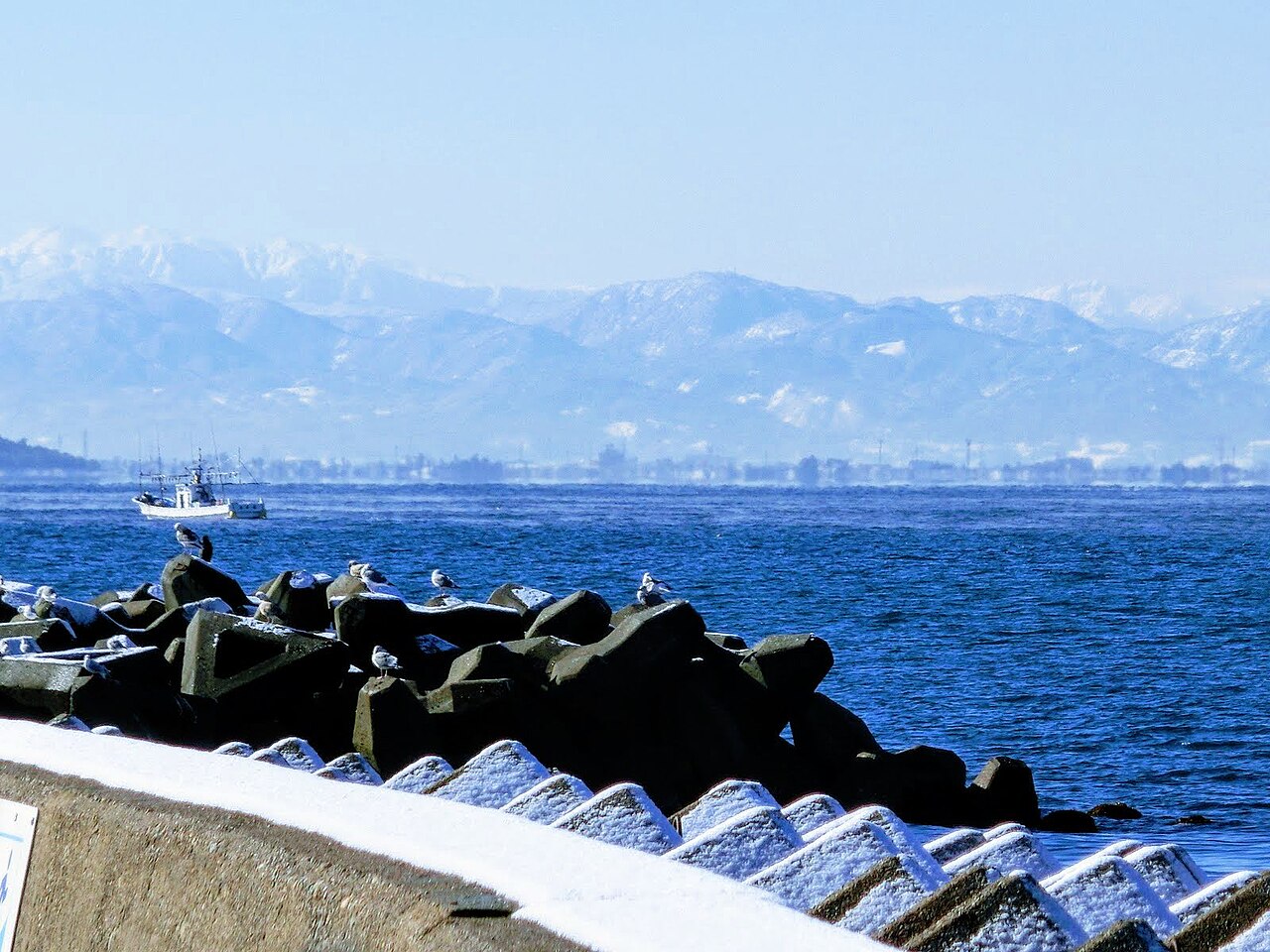
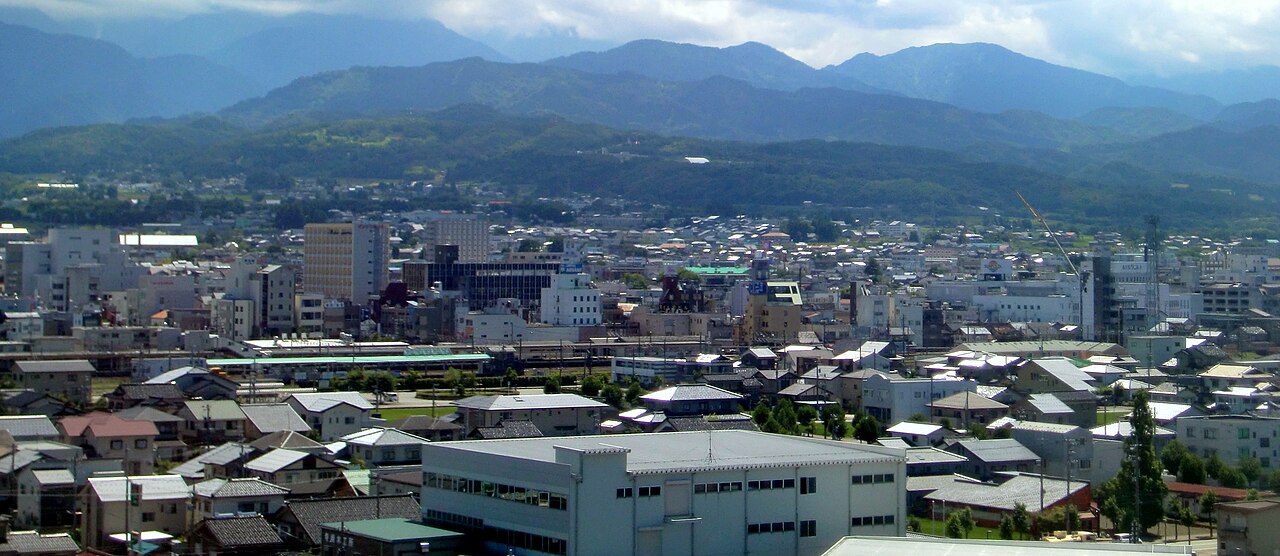
Uozu sits on Toyama Bay where the coast and the Tateyama range lie about twenty-five kilometres apart in a straight line, so mountain, river and sea sit close together. At the Uozu Buried Forest Museum, a cedar forest covered by flood and sea can be seen where it stood and, in the dry hall, touched directly. On summer nights, seven boat-shaped lantern floats are hauled toward Suwa Shrine, and in between there is the harbour's red snow crab, sweet in the meat and rich in the crab miso.
Harbour Mornings and the Red Snow Crab
Fishermen of Uozu leave port in the middle of the night and come back in the early morning, and the waterfront runs on that rhythm. At the port, Umi-no-Eki Shinkirou brings together a fresh-fish counter, places to eat and shops with Uozu specialities, and the morning market of Uozu is held in its event space.
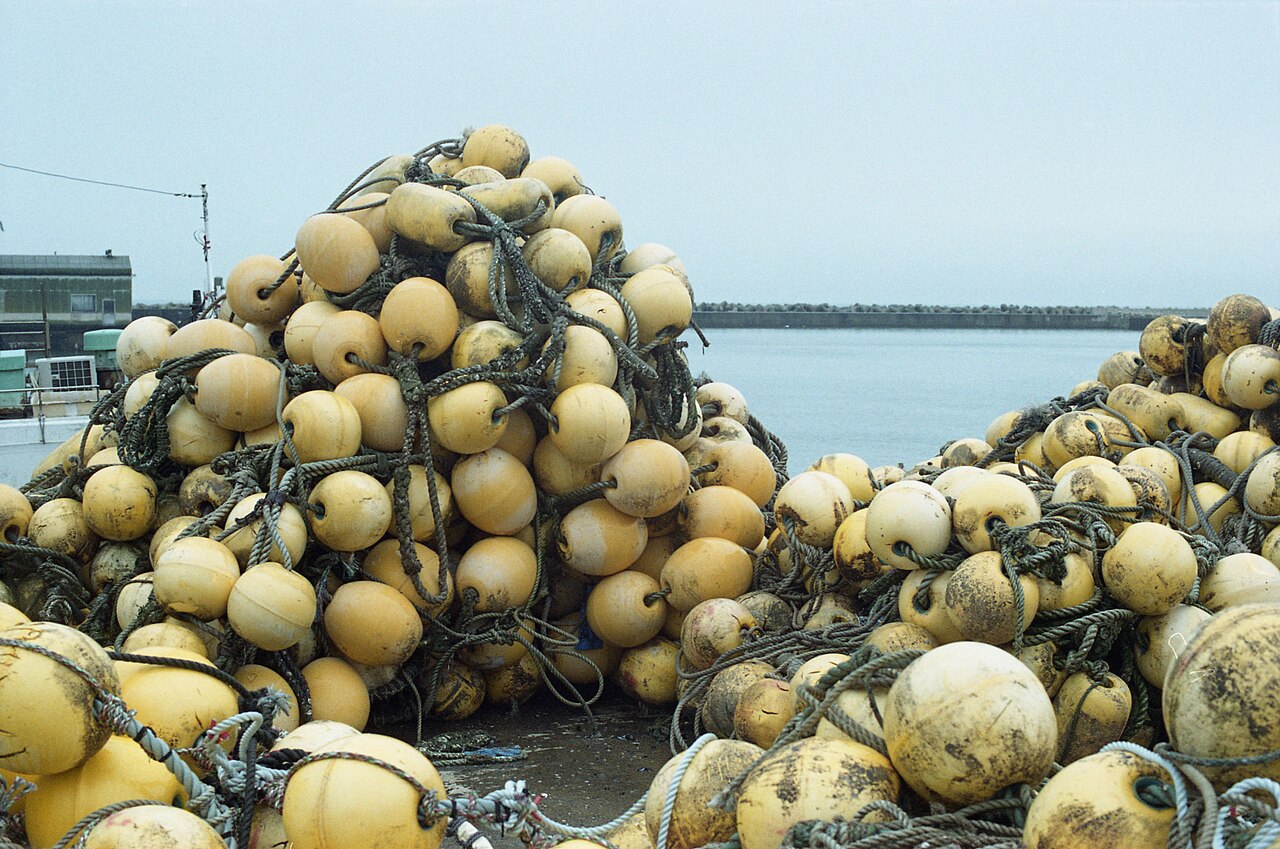
Baimeshi began in fishermen's own kitchens, cooked by the men who catch the bai, and today it is still rice cooked in a stock from simmering the shellfish in their shells, one of Uozu's local dishes. Red snow crab comes from deeper water than snow crab does, with sweet meat and a rich crab miso.
Crab is ordinary food here: elementary school lunches in Uozu give each pupil a crab, so the harbour's food is a direct way into how the town lives. The auction itself can be watched through a viewing programme or through lodging plans from local accommodation operators, and because the boats come back in the early morning, a night at places to stay in Uozu is a way to be in town when they do.
A Forest Buried by the Sea and Cedars on Boulders
At the Uozu Buried Forest Museum, the forest is thought to date from a Katakai River flood that buried a stand of cedars in sediment, after which the sea rose over it, and the excavated trees can be seen where they stood in the underwater hall, while in the dry hall you can touch them directly.
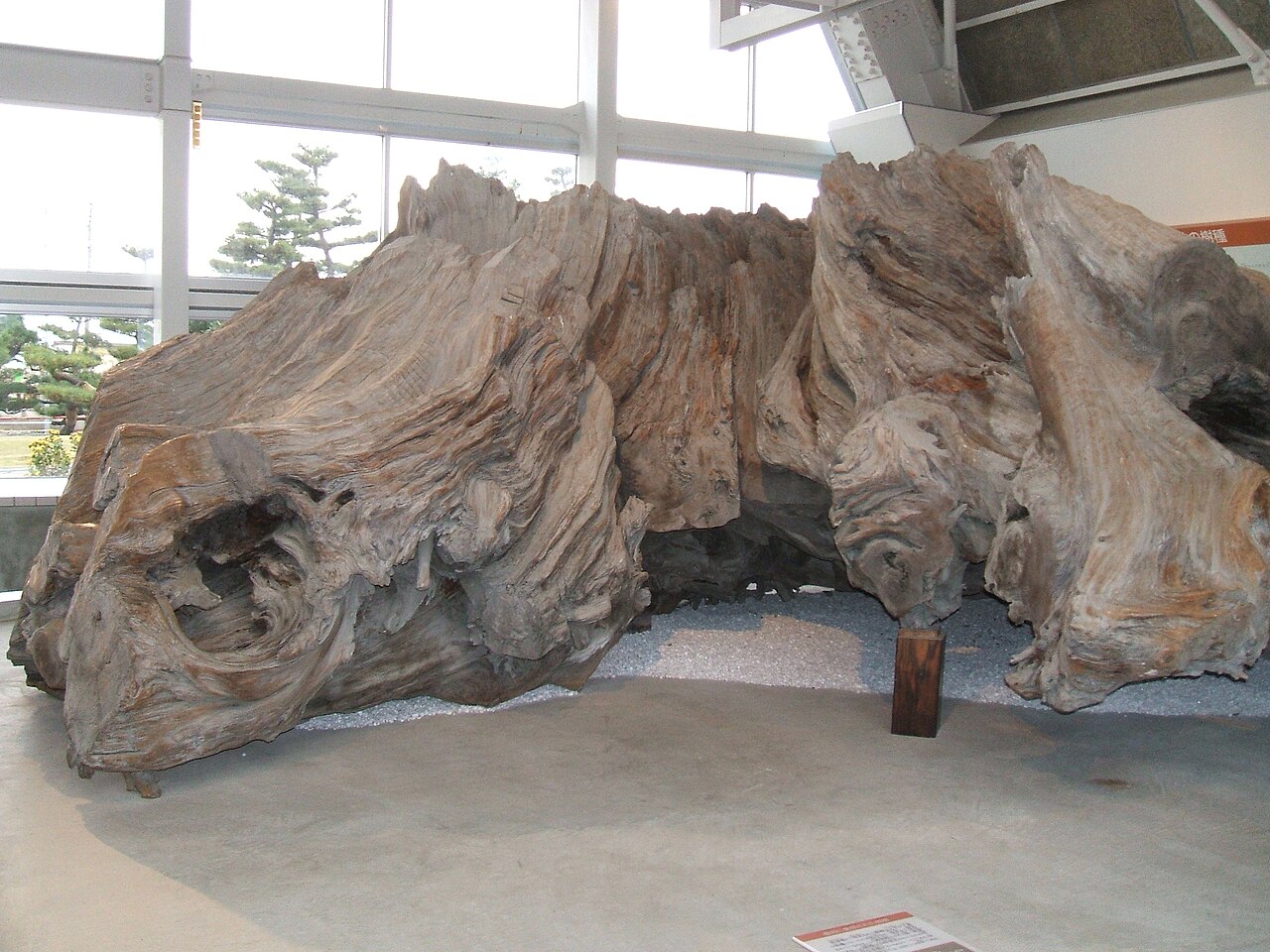
The Dosugi, Tateyama cedars living in the mountains of eastern Toyama, grow among boulders of granite that the rapids of the Katakai River carried down, and seeds that sprout on top of the boulders send roots down along the stone, drawing moisture from between the rock and the moss on it.
Together the Dosugi are big trees gripping huge rocks with their roots, a natural cedar forest spreading little noticed through Uozu's mountains, clustered along one side valley. Elsewhere in these mountains, an old-growth forest of horse chestnuts, kept as protection against avalanches, stands around a waterfall.
Seven Lantern Floats Hauled Toward Suwa Shrine
The Tatemon are boat-shaped lantern floats on sled bases, each a ten-metre-long, roughly five-tonne structure pulled along by about eighty people, and they move on sleds rather than wheels at the festival of Suwa Shrine. Seven of these sixteen-metre-high floats make their way to Suwa Shrine, which is the fishermen's shrine, on summer nights.
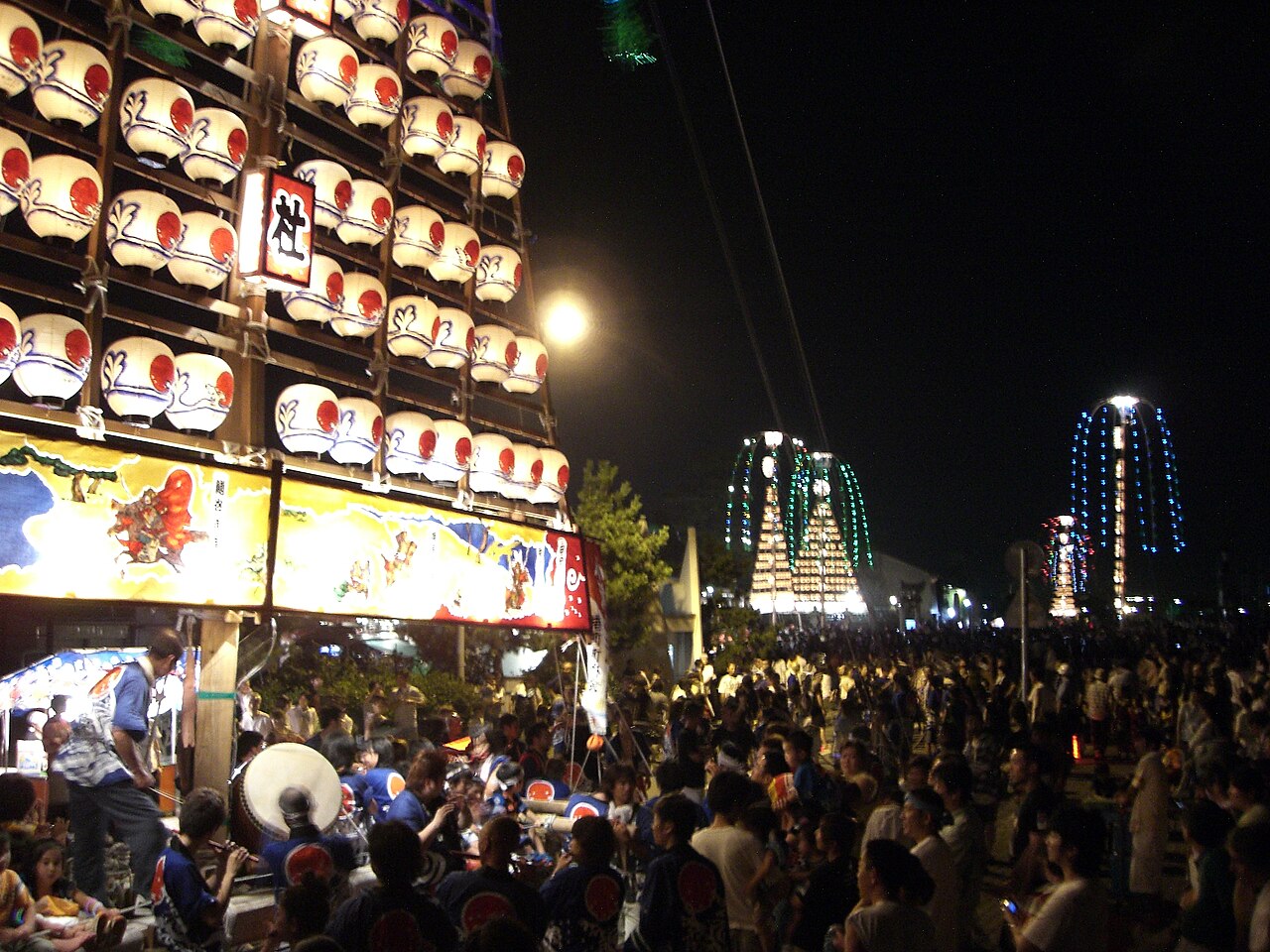
The festival goes back about three hundred years, to prayers by the shrine's parishioners for a big catch and for safety on the water, and that wish is still what you hear in the big drums, the flutes and the spirited shouting of the young men who haul them. The shape is said to come from offerings heaped mountain-high on three sides in front of the deity, or from a fishing craft with the sail up, and both fit the float as it is hauled along.
The seven Tatemon come out of the neighbourhoods of Suwa Shrine's parishioners during the Jantokoi Uozu Festival. Uozu Shrine has a festival of its own: in the days before electric wires ran overhead it was known as the float festival or the yashi festival, and today part of the Chuo-dori shopping street, together with the prefectural road, turns into a pedestrian zone lined with stalls on either side.
Mountain Water on Its Way to Toyama Bay
Rain and snow that land on the Tateyama range, which rises two thousand four hundred or more metres above the sea within a twenty-five-kilometre straight line from the coast, travel by river and groundwater over the alluvial fan into Toyama Bay, and that fan is the plain of rice paddies, apple and pear orchards and semiconductor factories drawing on the same plentiful groundwater. To follow the water, take it in the order it takes itself: mountains, then plain, then bay.
Upstream, the Katakai River cuts a gorge through its middle and upper reaches, with check dams against the sediment it carries, and its bed is largely big boulders, with willows and other deciduous trees scattered along it. The water runs highly transparent, part of the Katakai's clear stream, and on one tributary Don Falls, chosen as one of the waterfalls of Toyama, stays cool in the green all around, summer included.
At nine full metres and twelve centimetres across, the Higashiyama cylindrical water divider gives each channel as much water as its stretch of the circumference allows, so the sound of water pouring in bulk over the circular structure, splashing like a waterfall, is that division being done out loud. Its water comes off the Katakai River's left bank through a tunnel, the ground around it is firm underfoot, and it is one of two in Uozu out of five in Toyama Prefecture.
Rice Bales, a Castle Site and a Poet's Verse
The rice warehouse of the old Juni Bank, now Hokuriku Bank, is the building that first opened to visitors on the anniversary of the rice riot and later stood in as a film location. In the rice-riot story, women dock workers carried sixty-kilogram bales of rice on their backs across swaying planks, and in a park nearby a monument with rice bales on a ship's bow stands beside benches and a drinking fountain.
The castle site was a flatland castle, traditionally said to date from thirteen thirty-five, and what survives is a stone monument, a pine and a poem monument; the pine there today is a second-generation tree put in the ground in nineteen sixty-seven, the first being said to have been planted by hand. One of five poem monuments in the city carries a verse Otomo no Yakamochi is said to have made riding across the Hayatsuki River, its translation telling of a river so swollen that the water reached his horse's stirrups.
Chuo-dori was laid out as a fire-prevention zone in nineteen fifty-nine, after a fire took every shop, and the result is what you walk today: a five-hundred-and-sixty-metre straight run of fifteen-metre-wide road with a three-metre arcade along each side. On Shinjuku-dori, the arches and the arcade are modelled on the neighbouring shrine, which is said to have been built as a prayer for a rich harvest of all five grains.
Getting to Uozu
| Leg | How | Time and estimate |
|---|---|---|
| Toyama to Shin-Uozu Station | Ordinary train on the Toyama Chiho Railway | 56 minutes; adults 900 yen, children 450 yen |
| Hokuriku Shinkansen station to stops in Uozu | Shared taxi | About a quarter to half an hour; 1,000 yen one way per person |
| Within Uozu | City bus | A 200-yen fare per ride (preschool children free); one-day ticket 500 yen, or 300 yen for high school students and younger |
| Uozu Station to the Uozu Buried Forest Museum | Taxi | About 5 minutes |
| Uozu IC to the Uozu Buried Forest Museum | Car | About 10 minutes (3 km); free car park for 100 cars |
| Uozu Buried Forest Museum to the aquarium | Car | About 5 minutes (3 km) |
| Uozu Station to Umi-no-Eki Shinkirou | Car | About 5 minutes |
| Uozu Station South car park | Car park, a short walk from the station | 310 yen per 24 hours; 205 spaces, open 24 hours every day of the year |
New to rural buses and one-man trains? See how to ride them, step by step.
Hours and Fees
| Place | What | Hours or fee |
|---|---|---|
| Uozu Buried Forest Museum | Hours and closing days | 9:00-17:00, last admission 16:30; closed on Thursdays from December 1 to March 15 (open if the Thursday is a public holiday) and from December 29 to January 1; no closing day from March 16 to November 30 |
| Uozu Buried Forest Museum | Admission | Adults (high school and older): 640 yen |
| Umi-no-Eki Shinkirou | Hours and closing day | 9:00-18:00 (winter hours may be shorter); closed on the second Wednesday of every month |
| Morning market at Umi-no-Eki Shinkirou | Schedule | Fourth Sunday of every month (once a month since July 2025); morning-market set meal 6:30-9:30 |
| Crab-season dining event | Dates and voucher | October 1 to November 30, 2026; dining voucher 5,000 yen for a set of six 1,000-yen tickets |
| Tatemon festival | The 2026 festival | August 7 and 8, from 20:30 |
| Old Juni Bank rice warehouse | Visits | By telephone application at least one week before the desired date, through the tourist information office |
| Fish auction viewing | Programme | Viewing programme for groups of five or more, booking in advance; also offered in lodging plans from local accommodation operators |
Where to stay
Places to stay near Uozu, Toyama, Japan →
Disclosure: This post may contain affiliate links. If you book through them, we may earn a commission at no extra cost to you.