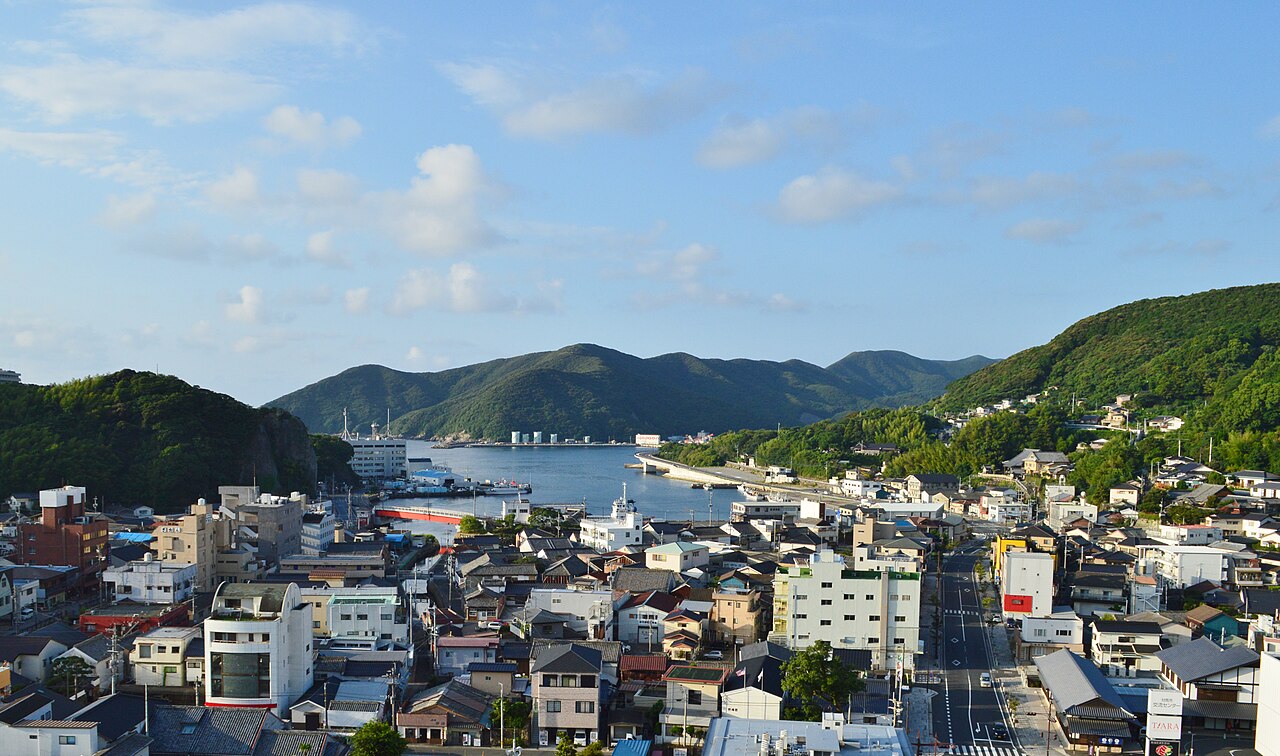
This guide covers a day around Izuhara, the old castle town at the heart of Tsushima island. It explains the boat from Hakata and how to move around once you land, the two museums in town, a walk past temples, shrines and stone walls, a short history, where to eat, and what lies beyond the town.
Getting to Izuhara from Hakata and the Airport
Hakata Port and Izuhara Port are linked by ferries and by jetfoils, the high-speed boats of Kyushu Yusen and other operators. If you are working out how to get there for a Tsushima day trip, the jetfoil calls at Iki on the way. Fares and the crossing time are in the table below.
Tsushima is a long, thin island, and guidebooks stress that moving between its parts eats up time, so a loose schedule matters. A day built around Izuhara keeps that in check, since the port, museums and castle-town lanes sit within walking distance of each other. Leave slack for anything farther away.
If you fly in instead, a Tsushima Kotsu bus runs from Tsushima Airport to the Tsushima Museum in Izuhara. The timetable is not matched to flight arrivals, so look up departure times before you land rather than counting on a waiting bus. The journey time is in the table below.
| Hakata and the airport: fares and times | Detail |
|---|---|
| Hakata to Izuhara by jetfoil, one way, tax included | 10,870 yen |
| Hakata to Izuhara in second class, one way, tax included | 6,280 yen |
| Jetfoil from Hakata Port to Izuhara Port, one way | 2 hours 15 minutes, via Iki |
| Bus from Tsushima Airport to the Tsushima Museum | about 35 minutes |
Getting Around Izuhara by Bus, Bike and on Foot
Local buses across the island are run by Tsushima Kotsu, and checking their routes before you arrive makes the day easier to plan. For hopping on and off, a one-day pass gives unlimited rides, and a fixed-amount pass covers a whole month. Both prices are in the table below.
From Izuhara Port, the Tsushima Museum is a short bus ride or an easy walk, so skip the wait if a bus is not due. Walking takes you straight into the castle-town lanes, where most of the things to do in Izuhara are found. Both times are in the table below.
The tourist information center, Fureaidokoro Tsushima, hands out maps, leaflets and news of island events and seasonal sights, so start there if you are undecided. It is also the rental-bicycle base for Izuhara. Rental cars remain the main way around the island, and some firms let you collect at the airport and return at the port.
| Getting around Izuhara | Detail |
|---|---|
| Tsushima Kotsu bus, one-day pass | 1,040 yen |
| Tsushima Kotsu bus, fixed-amount pass for one month | 5,230 yen |
| Bus from Izuhara Port to the Tsushima Museum | about 6 minutes |
| Walk from Izuhara Port to the Tsushima Museum | about 10 minutes |
Tsushima Museum and the Korean Envoys History Museum
The Tsushima Museum in Izuhara is the place to start for the island's story. Guidebooks describe it as the essential stop for Tsushima's history and culture, and its permanent exhibition is what the admission prices in the table below refer to. See it first and let it shape your walk.
The Tsushima Chosen Tsushinshi History Museum covers the Korean envoys, the diplomatic missions sent from Korea to Japan in the Edo period, and their ties with Tsushima. Four zones of original objects, models and film tell the story, a corner lets you try on period costume, and the thread runs on to diplomacy today.
Admission prices and times for both museums are in the table below, so compare them when you set the order of your day. The Tsushima Museum is closed one day a week, noted in the table, so check your date before you build the day around it.
| Museum | Detail |
|---|---|
| Tsushima Museum, permanent exhibition, general adult | 550 yen |
| Tsushima Museum, permanent exhibition, high school or university student | 330 yen |
| Tsushima Museum, permanent exhibition, elementary or junior high school student | 220 yen |
| Tsushima Museum, hours | 9:30 to 17:00, last entry 16:30, closed Thursdays |
| Tsushima Korean Envoys History Museum, general visitor or university student | 220 yen |
| Tsushima Korean Envoys History Museum, high school student or younger | 110 yen |
| Tsushima Korean Envoys History Museum, hours | 9:30 to 17:00, admission until 16:30 |
Where to stay
Places to stay near Tsushima →
Disclosure: This post may contain affiliate links. If you book through them, we may earn a commission at no extra cost to you.
Walking the Castle Town: Banshoin, Hachimangu and the Old Walls
Banshoin is a temple whose grounds hold the graves of the Sō lords, reached by a long flight of one hundred thirty-two stone steps known as the Hyakuganki. At the top, rows of tombs fill what guidebooks call a solemn space, counted among the three great graveyards of Japan. Take the steps slowly.
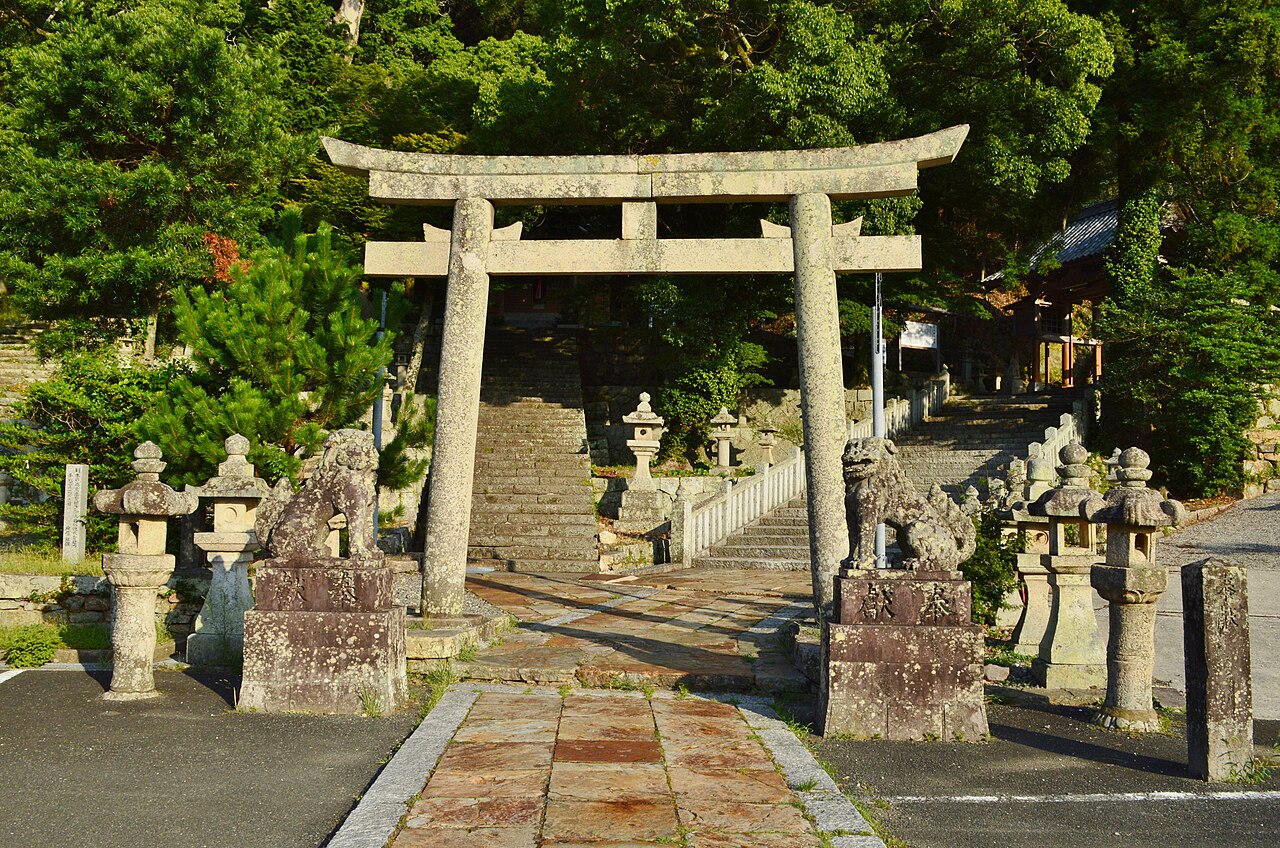
Izuhara Hachimangu shrine, below Shimizuyama, is said to trace its origins to Empress Jingū, who according to tradition prayed on the hill for the land's protection on her return from a campaign overseas and had a hall built below. Look for the stone torii gate and the guardian lions by the stairs.
Nearby, a memorial hall stands on the birthplace of Nakarai Tōsui, the Meiji-era journalist and novelist remembered as the teacher of Higuchi Ichiyō. Also here, the garden of the former Kaneishi Castle, a national place of scenic beauty, lay buried for years until excavation revealed its rare structure. Pass both on your way to the walls.
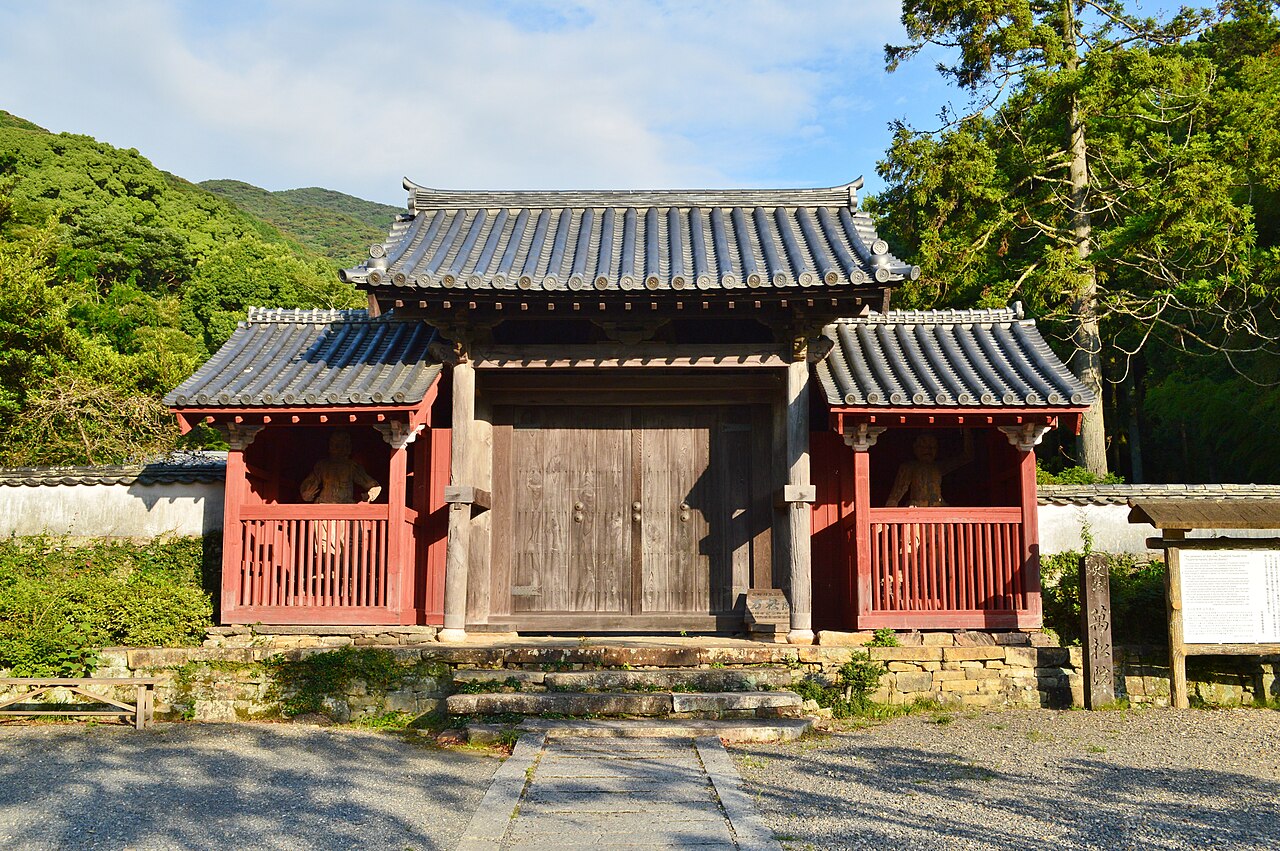
Stone walls of the old castle town line lanes across Izuhara, so wander at will. The present gate of Kokubunji temple, a four-pillared gate described as the island's finest, is a designated cultural property. A ridge trail joins the three baileys of Shimizuyama Castle, and the third bailey looks over the town and Izuhara Port.
The Sō Clan and the Korean Envoys: A Short History
Izuhara has been the center of Tsushima since ancient times, when the provincial government was placed here, and until the Meiji Restoration the town was known as Fuchū, the seat of the province. Walk its lanes with that in mind and the stone walls read as the remains of an administrative and cultural capital.
Banshoin was founded in memory of Sō Yoshitoshi and became the family temple of the Sō lords. Ordered by Tokugawa Ieyasu to restore relations with Korea, Yoshitoshi is said to have forged state letters, an apology in Ieyasu's name among them, and to have been denounced to the shogunate. Look for the seals and papers at the Tsushima Museum.
Once the Korean envoys began traveling to Japan as diplomatic missions, Izuhara grew wealthy on trade with Korea, and the townscape laid out to receive them is said to have been breathtaking. The envoys' history museum picks up this thread, so pair it with a walk along the stone walls to see what remains.
Eating in Izuhara
Tsushima's own dishes deserve one proper meal in Izuhara. Ishiyaki is grilling on a slab of quartz porphyry, with local turban shells, abalone and squid on the hot stone, a style guidebooks describe as unique to the island. Iriyaki is a hot pot built on chicken or fish and packed with ingredients, the island's signature dish.
Tonchan is Tsushima's version of offal cooking, using pork innards and chicken skin, and you can order it beside skewers of wild boar at izakaya, pub-style eateries that also serve local fish such as conger eel, yellowtail and rockfish. On the town's outskirts, taishū soba, Tsushima's buckwheat noodles, comes with a broth of local chicken and island shiitake.
Some of these dishes have to be booked ahead. Iriyaki needs booking in advance, and one restaurant known for ishiyaki serves only on days when it has bookings, so a phone call before you travel is part of the plan. Decide which dish matters most, book it, and build the rest of the day around that meal.
Beyond Izuhara: A Sea Torii and a Mountain Fortress
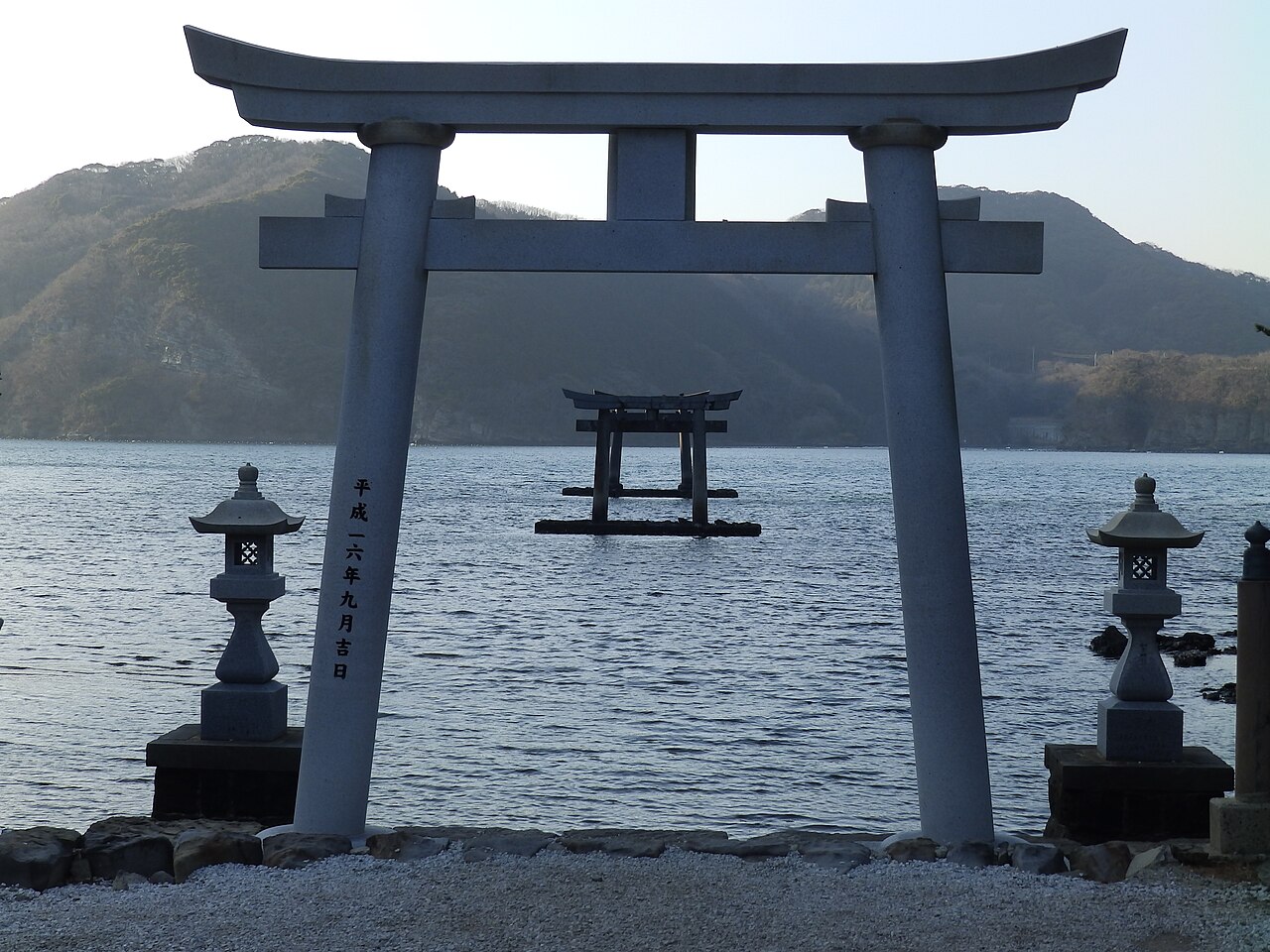
Watatsumi Shrine sits in primeval forest with a line of five torii, the gates that mark a shrine's approach, running down toward the sea, and two of them stand in the water itself. Jōyama, the site of Kaneda Castle, is a mountain fortress whose surviving stone ramparts are the thing to see. Give either its own day.
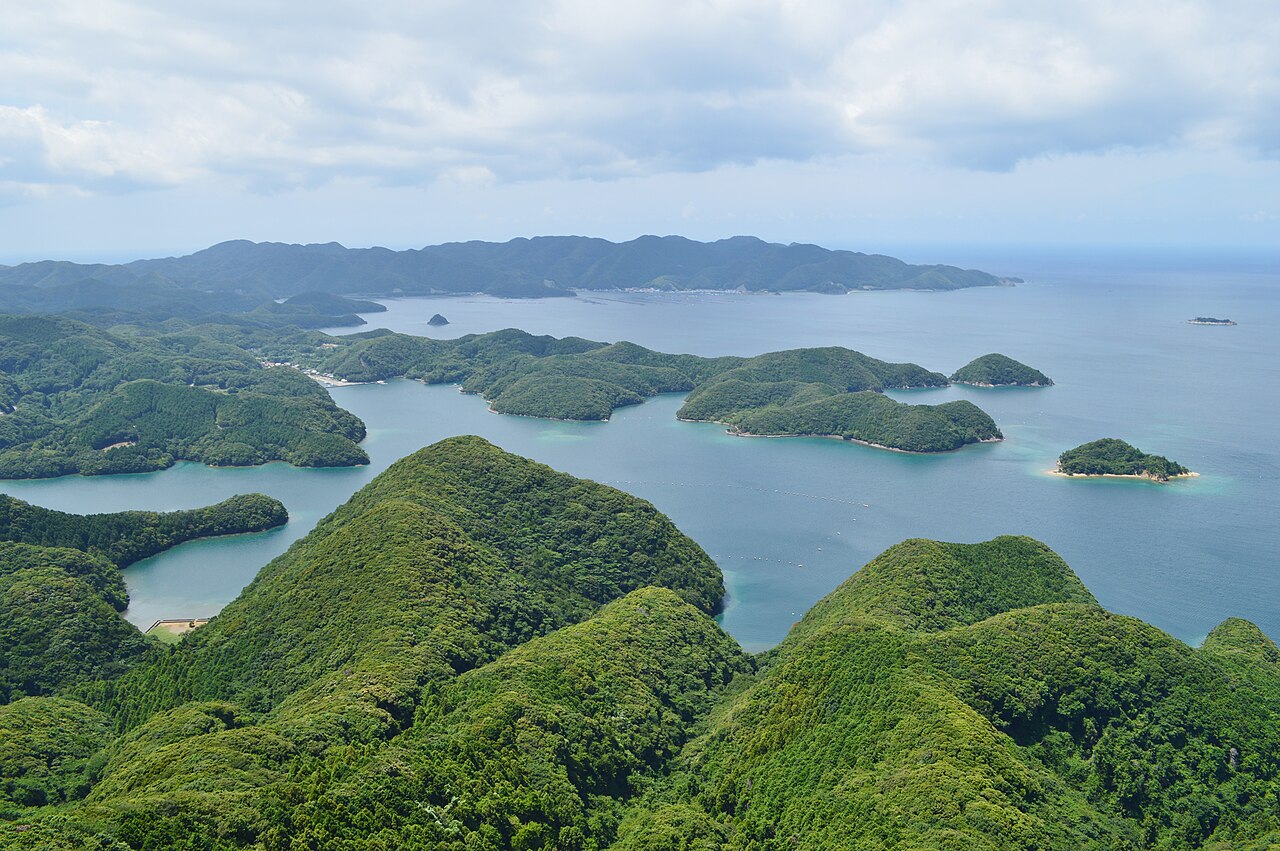
Shiratake, revered as a sacred mountain and called the island's symbol, offers a full circle of views from its summit. Near the island's northern tip, the Korea viewpoint is where on a clear day the city of Busan can be seen with the naked eye. Close to nine-tenths of Tsushima is forest, so plan for green roads between them.
For general sightseeing, guidebooks rate April and May, and September to November, as the months that are not too hot, while trekking works all year, with the fresh green of early May and the autumn colors as the favored seasons. Because the island is long and travel between its parts takes time, keep the north for another day.
If you plan to take in the north of the island as well, places to stay in Tsushima are worth sorting out before you board the boat.