Iki is an island in Nagasaki Prefecture, reached by sea from Hakata Port in Fukuoka. This guide covers the crossing and the ways of getting around once ashore, the Iki City Museum and the Harunotsuji site it overlooks, burial mounds with stone chambers you can walk into, the sunset behind Saruiwa, the tidal approach to Kojima Shrine, and what the island offers in season.
Getting to Iki From Hakata
Boats from Hakata Port in Fukuoka sail to either Gonoura Port or Ashibe Port on Iki, with the choice of a jetfoil or a car ferry, and there is also an air route by way of Nagasaki. Gonoura lies about seventy-six kilometers from Hakata and Ashibe about sixty-six kilometers, and a high-speed boat makes the crossing in about one hour.
- Jetfoil. Underwater wings lift the hull clear of the water, so the ride is smooth with little rolling. Every seat faces forward and is assigned, passengers remain seated while under way, and seatbelts are worn.
- Ferry. The basic cabins offer either shared floor space to stretch out on or rows of seats, and the ship has a lounge and a game corner. Because you can bring your own car, it is popular with families.
- Bringing a vehicle. Cars boarding at Hakata Port complete the formalities fifty minutes before departure, and at Karatsu-Higashi Port thirty minutes before. Motorbikes and bicycles need to apply fifty minutes ahead at either port.
- Jetfoil luggage. Each passenger may carry up to two pieces, with the three dimensions of all pieces together adding up to no more than two meters and a combined weight of no more than thirty kilograms.
Getting Around the Island
The island's main road is National Route three hundred eighty-two, which runs the length of Iki, and with a rental car every area is easy to reach. A rental car is described as the best way to get around, while bicycles are suggested for travelers with plenty of stamina.
Local buses start from Gonoura and run in clockwise and counter-clockwise loops linking Katsumoto, Ashibe and Indoji, taking in most of the main sights, and in summer there are extra services to the swimming beaches plus an airport link. Electric-assist rental bicycles called Iki Chari can be hired at the tourist information offices at Gonoura, Ashibe and Indoji ports.
If you would rather have someone else handle the logistics, you can browse guided tours on Iki.
The Iki City Museum and Harunotsuji
The Iki City Museum of Iki Koku, the island's flagship attraction, stands on a hill above Harunotsuji, the Yayoi-period capital of the Iki kingdom recorded in the Chinese chronicle Gishi Wajinden and a national Special Historic Site. The late architect Kisho Kurokawa gave the building a curving roof planted with grass that blends into the surrounding hills, with a viewing plaza on top.
Inside, the permanent galleries display pottery and ironware dug from sites across the island, telling the story backwards from modern times to the Yayoi period, alongside large-screen video and a reconstructed wooden ancient ship. A corner where you can pick up genuine Yayoi pottery and stone tools to sense their texture and weight is described as rare in Japan.
| Iki City Museum of Iki Koku | Detail |
|---|---|
| Permanent exhibition, general adult | four hundred ten yen |
| Permanent exhibition, high school student | three hundred ten yen |
| Permanent exhibition, elementary and junior high school student | two hundred ten yen |
| Permanent exhibition, group of twenty or more, general | three hundred thirty yen |
| Annual passport | one thousand yen |
| Opening hours | eight forty-five in the morning to half past five in the afternoon |
| Last admission | five in the afternoon |
| Closed | every Monday (the next day when Monday is a public holiday), except in Golden Week and the summer vacation; also from the twenty-ninth to the thirty-first of December |
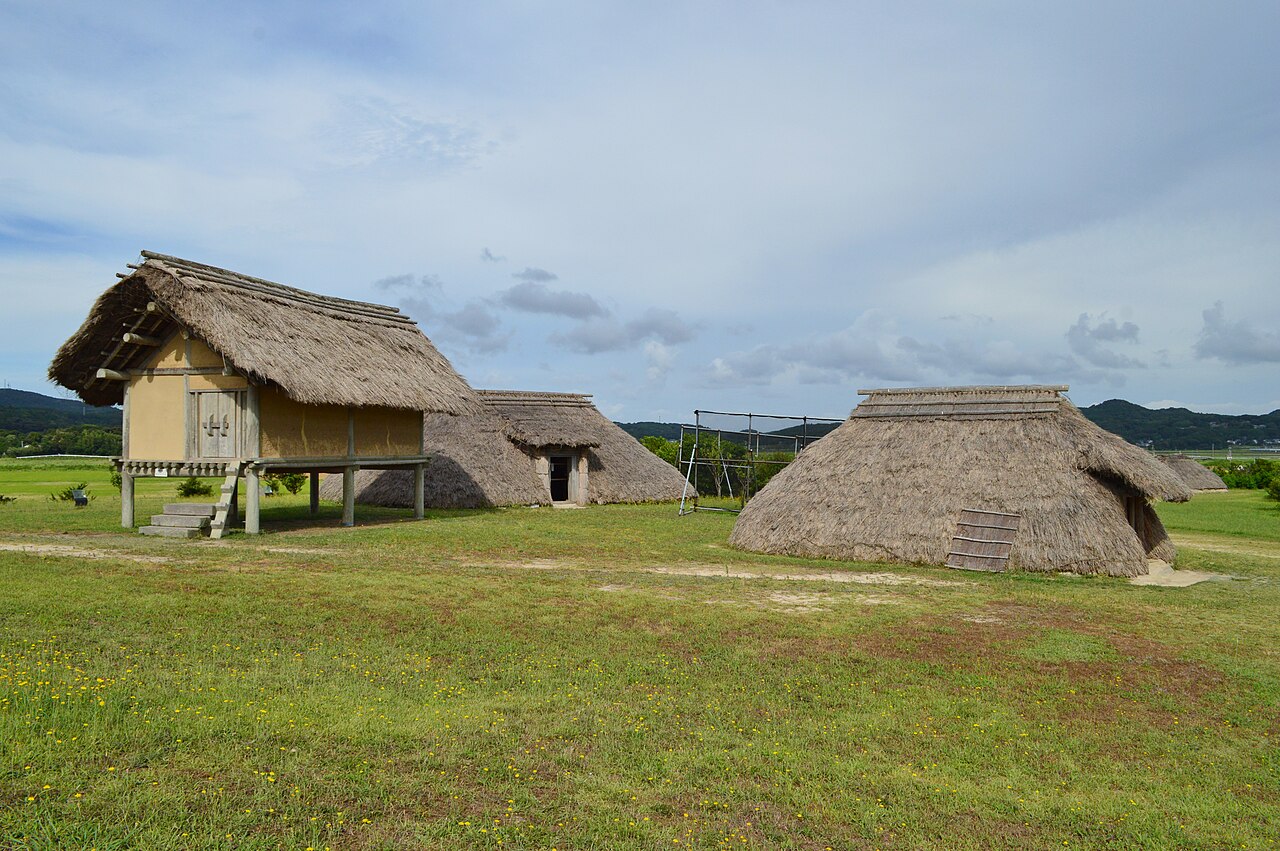
From the observation room there is an all-round view over Harunotsuji and the surrounding plain, and down on the site itself the Yayoi capital is recreated as a historic park, with raised-floor storehouses and other buildings reconstructed on a broad expanse of ground ringed by farmland. Rice paddies spread around the remains of the moated settlement and carry something of its atmosphere.
Where to stay
Places to stay near Iki, Nagasaki, Japan →
Disclosure: This post may contain affiliate links. If you book through them, we may earn a commission at no extra cost to you.
Burial Mounds You Can Step Into
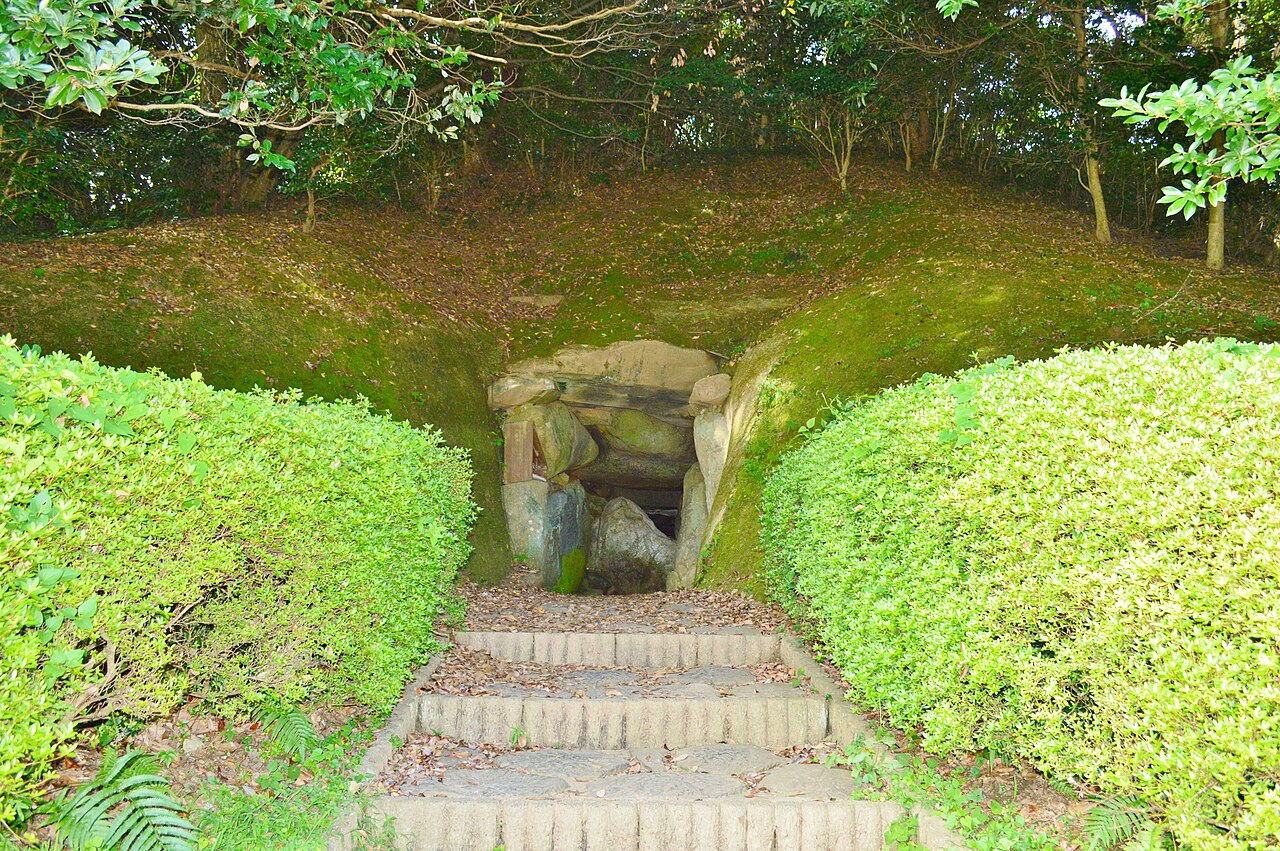
More than two hundred eighty kofun, or burial mounds, survive on Iki, said to be the majority of those in Nagasaki Prefecture, most of them thought to date from the sixth and seventh centuries. The usual form is a horizontal-entry chamber of stacked stones, with a passage leading through front and middle rooms to the rear chamber, and some hold a stone coffin.
Oni-no-iwaya, a round mound, has a chamber said to be the longest in Nagasaki Prefecture and among the largest in Kyushu, with lighting inside for visitors. Kakegi, a round mound with parking beside it, lets you step inside to see a house-shaped coffin hollowed from solid stone, rare in Japan. Soroku, the prefecture's largest keyhole-shaped mound, is viewed from outside.
The chambers stay cool inside even in summer, so a flashlight is recommended. Entry to the mound groups around Yuribata, Soroku and Oni-no-iwaya is said to be free. Islanders are said to have seen these stone piles as homes of oni, or ogres, naming them oni-no-iwaya and oni-ya, a belief tied to local ogre-slaying tales and thought to lie behind the Onigashima legend.
Saruiwa and the West Coast Sunset
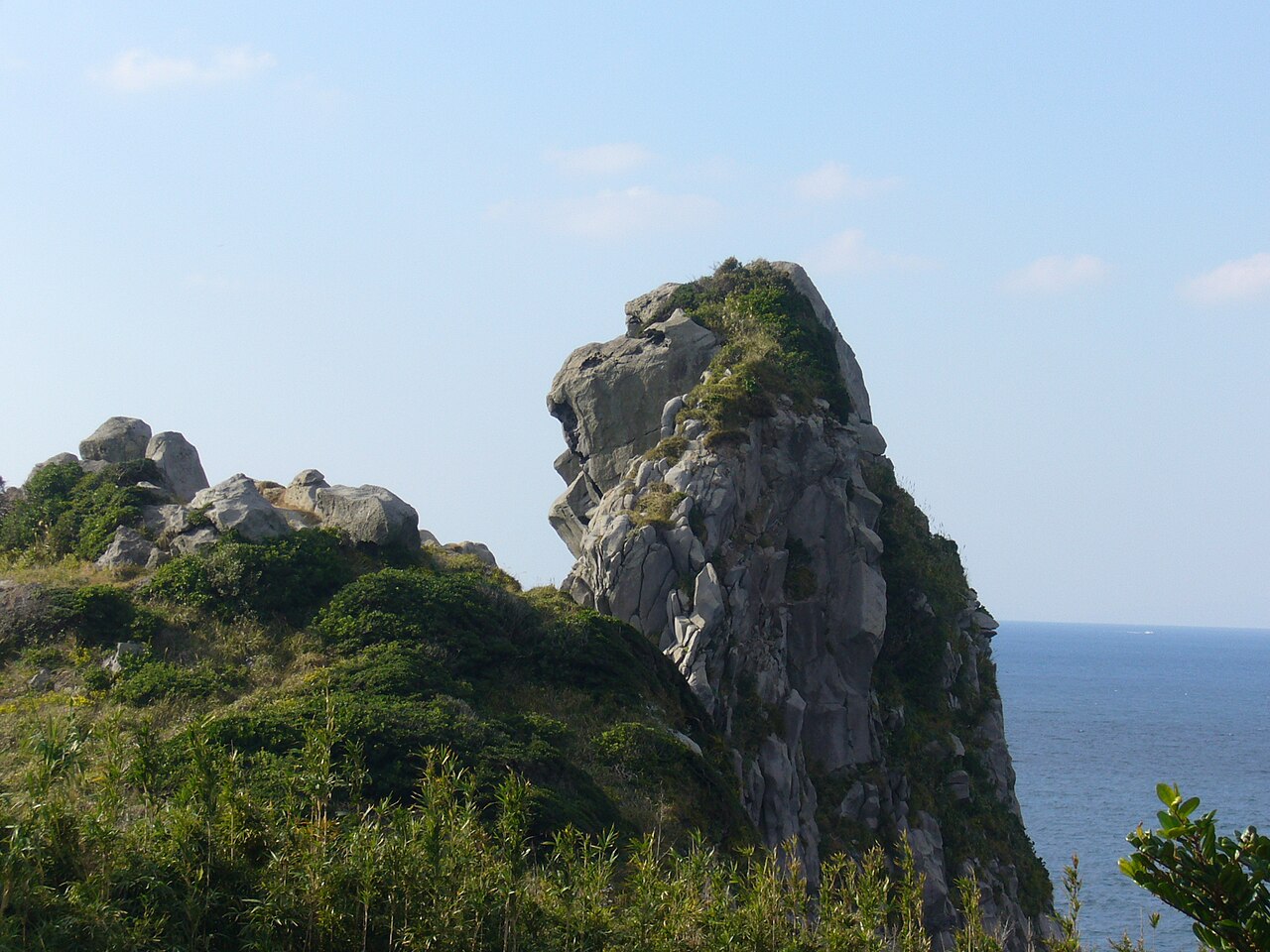
Saruiwa, the Monkey Rock, is a tall column of basalt standing on the Kurosaki Peninsula on the island's west coast. Seen from the side, its outline resembles a monkey's face, and that resemblance has made it the landmark of Iki.
The west coast is also where the island's sunsets are watched: from the shore, the sun sinks toward the horizon with Saruiwa in silhouette against it. The lookout on Takenotsuji, the highest point on Iki, is named alongside it as a place to take in the view at the end of the day.
Kojima Shrine, the Tide and a Summer Beach
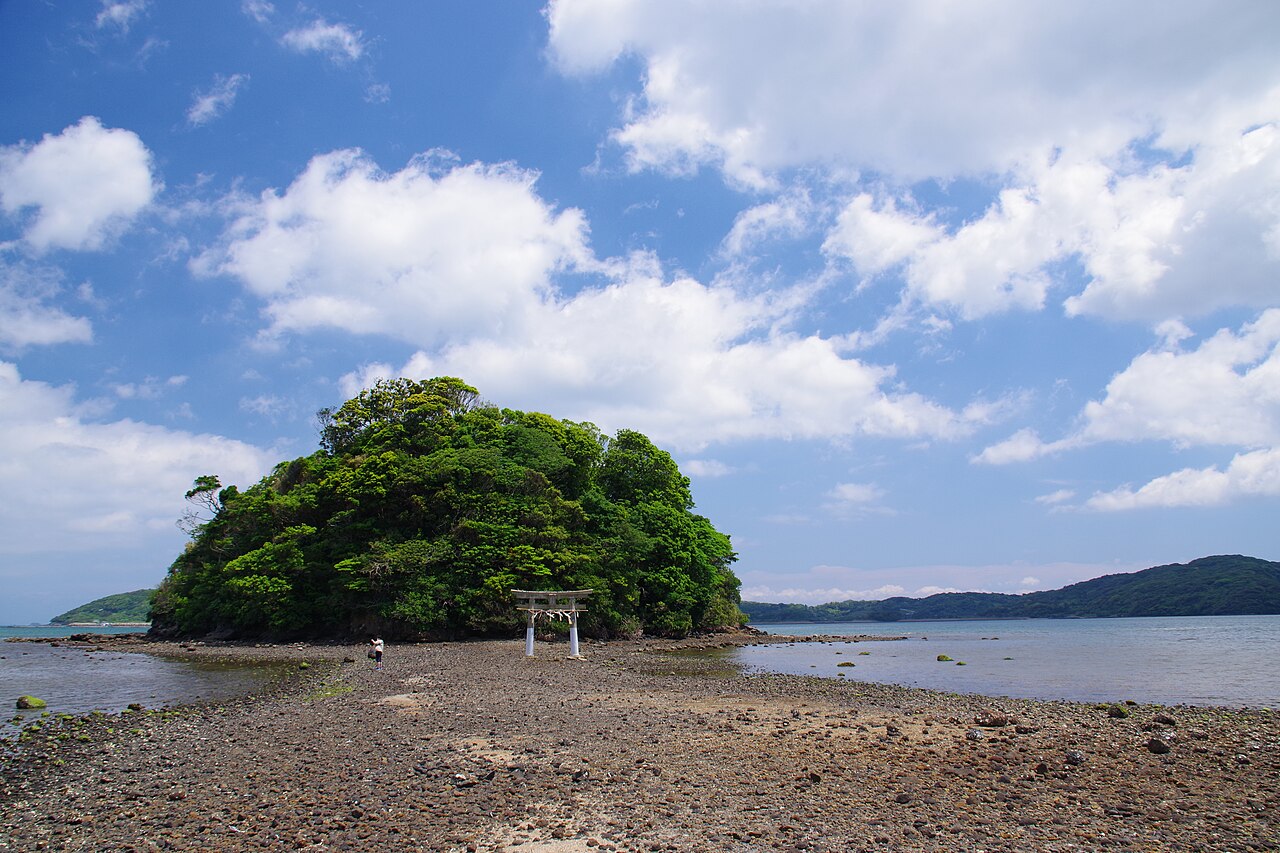
Kojima Shrine sits on a small islet, and a sandy path to it appears only at low tide, which has earned it comparisons with Mont-Saint-Michel in France. It is known as a power spot, the Japanese term for a place believed to hold spiritual energy, and anyone planning to visit needs to look up the low-tide times in advance.
Nishikihama, on the east coast, is the island's summer beach. It fills with swimmers in the hottest weeks of the year, and facilities offering marine activities stand beside the sand, so it is the natural place to head if the shrine visit leaves you wanting the water.
Fireflies and Sea Urchin in Season
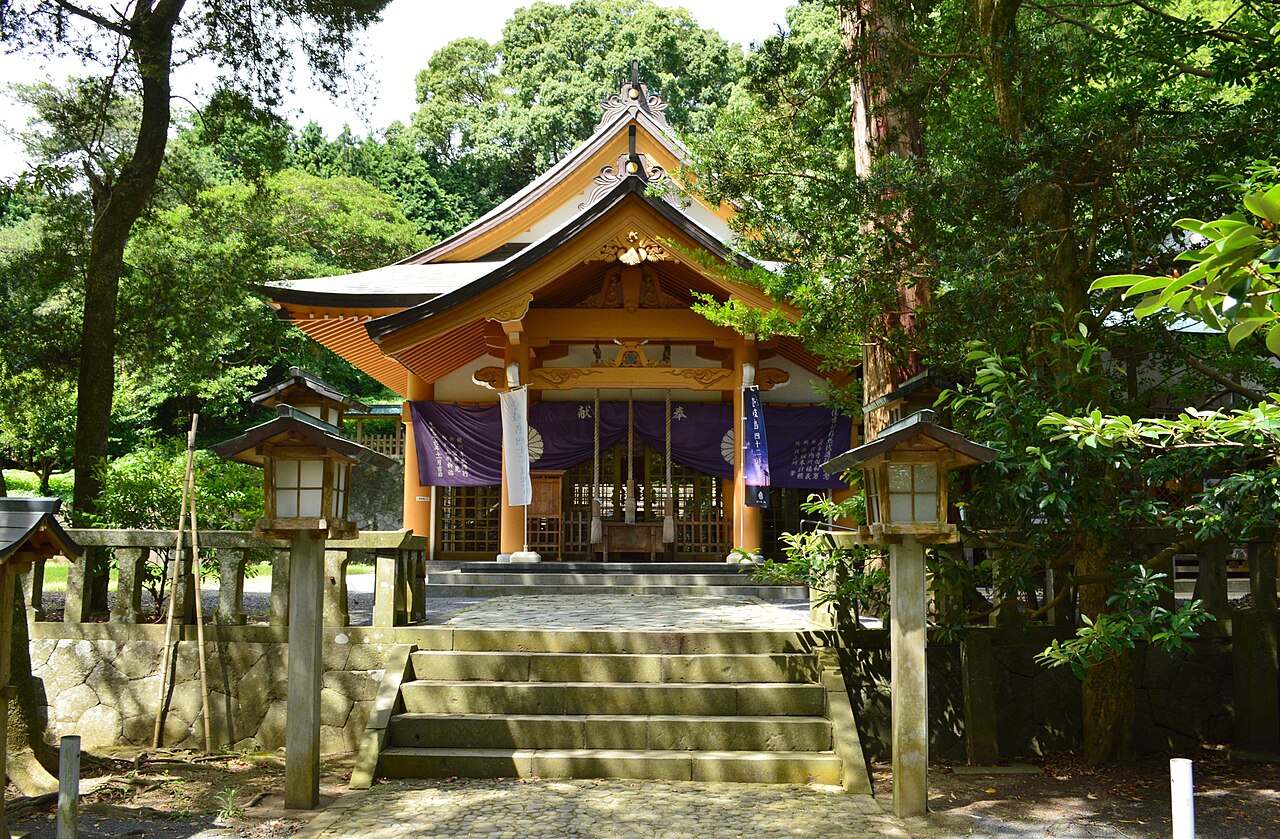
Fireflies can be seen along the stream above Shimizu Bridge, and the best time to watch them in a typical year is given as late May into early June. Arriving in that window lets you add an evening by the water to a day spent among mounds and coast.
In Katsumoto-ura, bowls of rice topped with fresh raw sea urchin are served as a seasonal dish from spring through summer, so a visit in late spring can take in both the fireflies and the urchin. An overnight stay makes it easier to fit in the sunset as well; see places to stay on Iki.