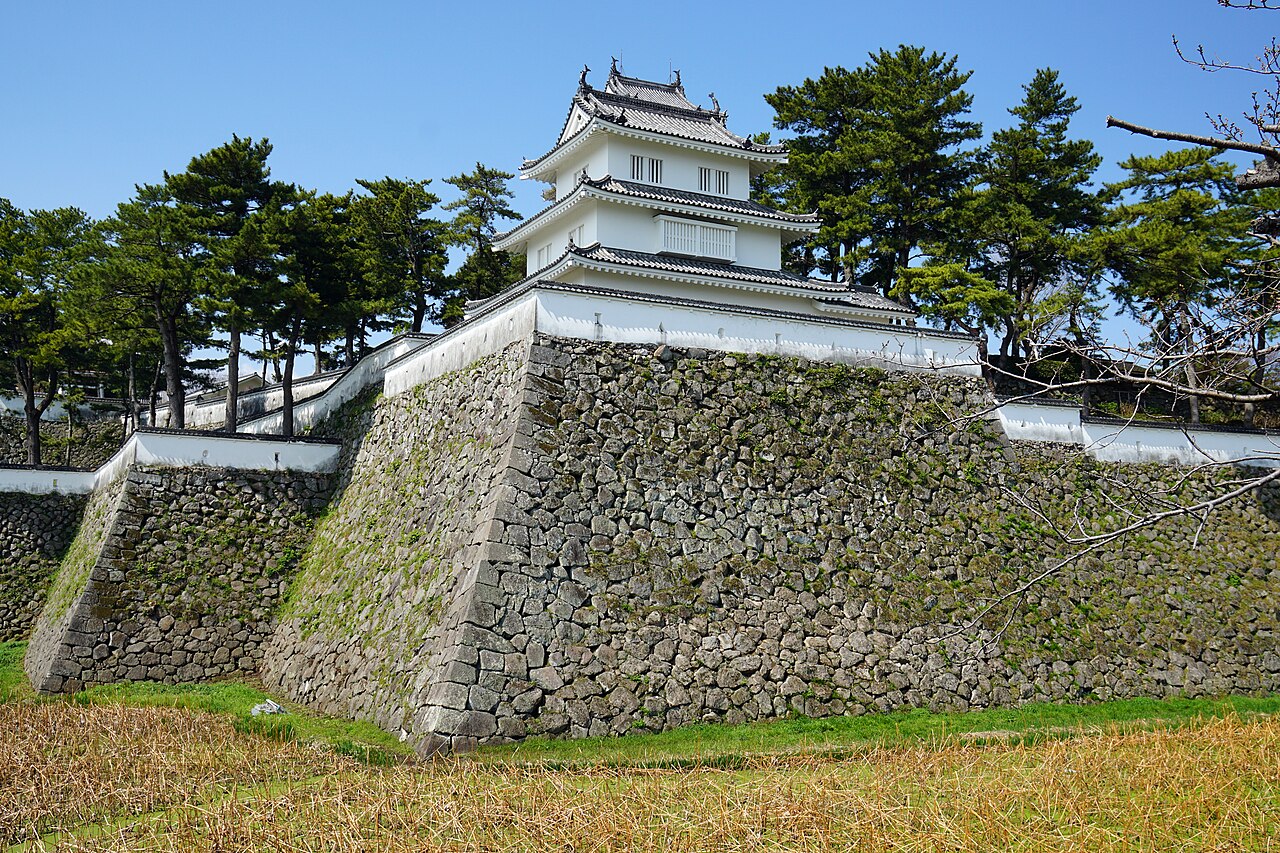
This guide covers a slow day around Shimabara Castle on the Shimabara Peninsula in Nagasaki Prefecture: how to reach it by train or bus from Isahaya, what it costs to go inside, and the short walks to the samurai residence district, the carp streets and the spring-water garden Shimeisō. It does not cover Mount Unzen, its hot springs, or hiking.
Getting to Shimabara Castle from Isahaya
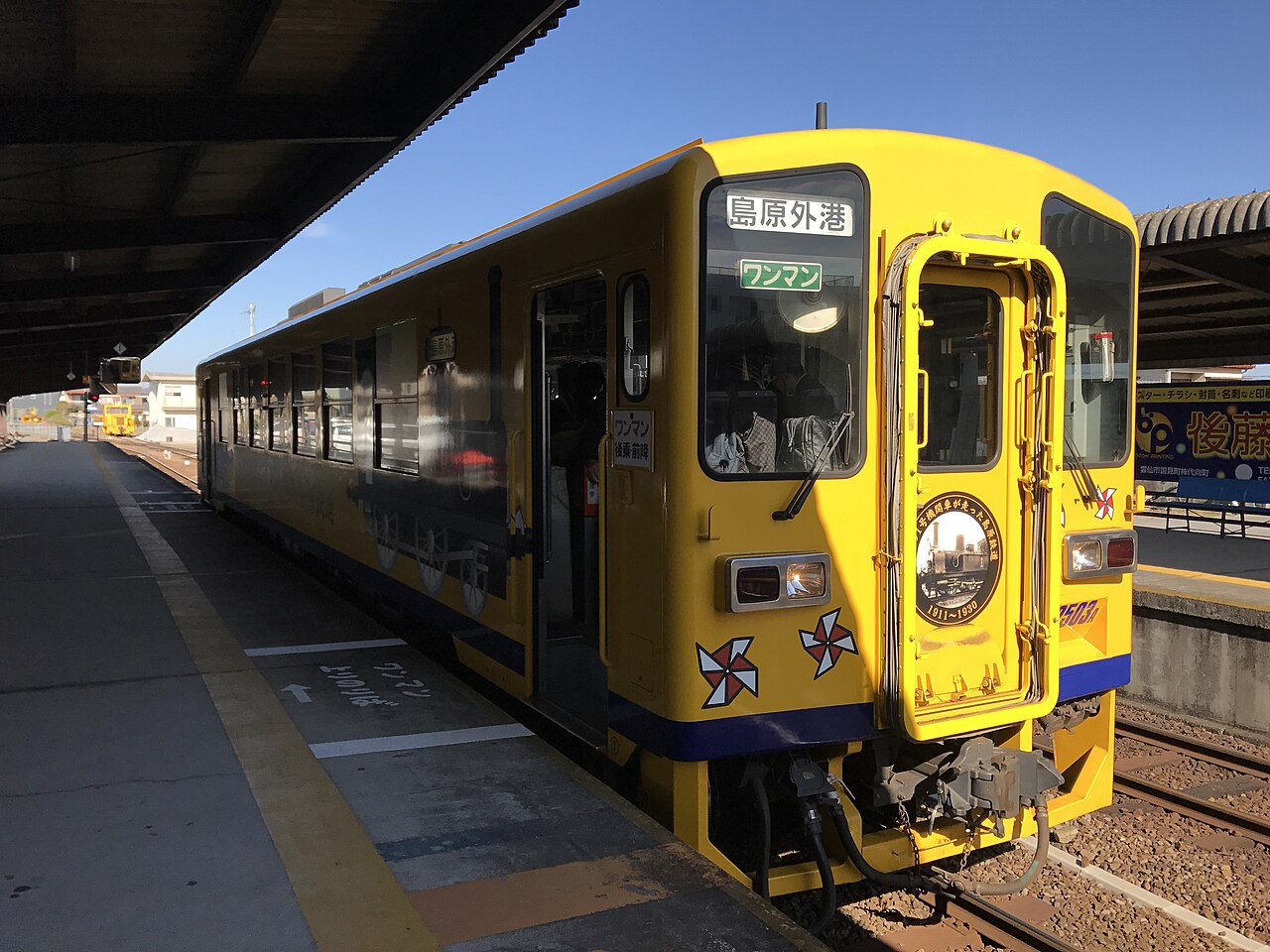
Isahaya is the starting point of the Shimabara Railway, the local line that runs down the peninsula to Shimabara Station. If you are arriving from elsewhere in Kyushu, Isahaya is where you change. There are two ways to make the trip: the train, or a bus between the two stations. The castle is an easy walk from Shimabara Station.
| From | To | How | Time |
|---|---|---|---|
| Isahaya Station | Shimabara Station | Shimabara Railway | about 1 hour 10 minutes (about 50 minutes by the rapid, kyūkō, service) |
| Isahaya Station | Shimabara Station | bus | about 1 hour 20 minutes |
| Shimabara Station | Shimabara Castle | walk | about 10 minutes, about 550 meters |
A castle built to be unconquerable
A guidebook to the Shimabara Peninsula published in nineteen twelve describes the castle as the work of a single lord, its builder, and gives its circumference as roughly twenty-four to twenty-five chō around, in the old Japanese units of the day. It was, the book says, so solidly made that in an age before modern weapons it was considered impregnable.
The same book passes on a darker story about that lord. He is said to have wanted to lead an expedition to Taiwan, to have earned the dislike of the shogunate's officials for it, and to have been summoned to Nagasaki and poisoned there, dying at the hot-spring baths of Obama. The book tells it as tradition, not as record.
After the domain was abolished, the book goes on, the grand keep inside the walls and the old trees of more than a hundred years were all cleared away. By the time the guidebook was written, the one thing at the castle site that had not changed, it says, was the lotus that still bloomed in the moat every year.
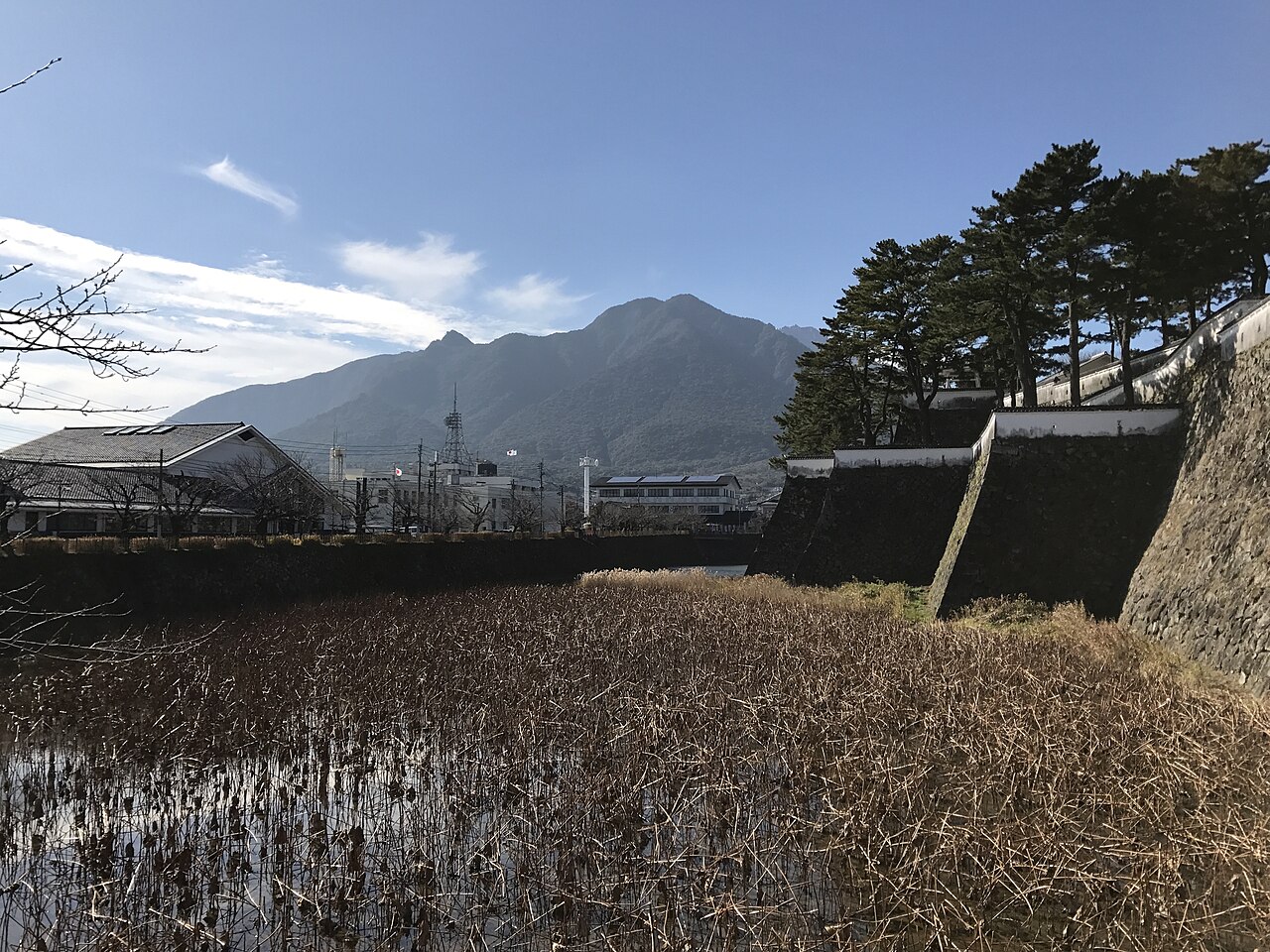
That is the picture from a century ago. The castle as it stands now, with its white tower and corner turrets open to visitors and the moat still in front of them, is a different sight, and the practical details for going in are in the next section.
Visiting the keep and turrets today
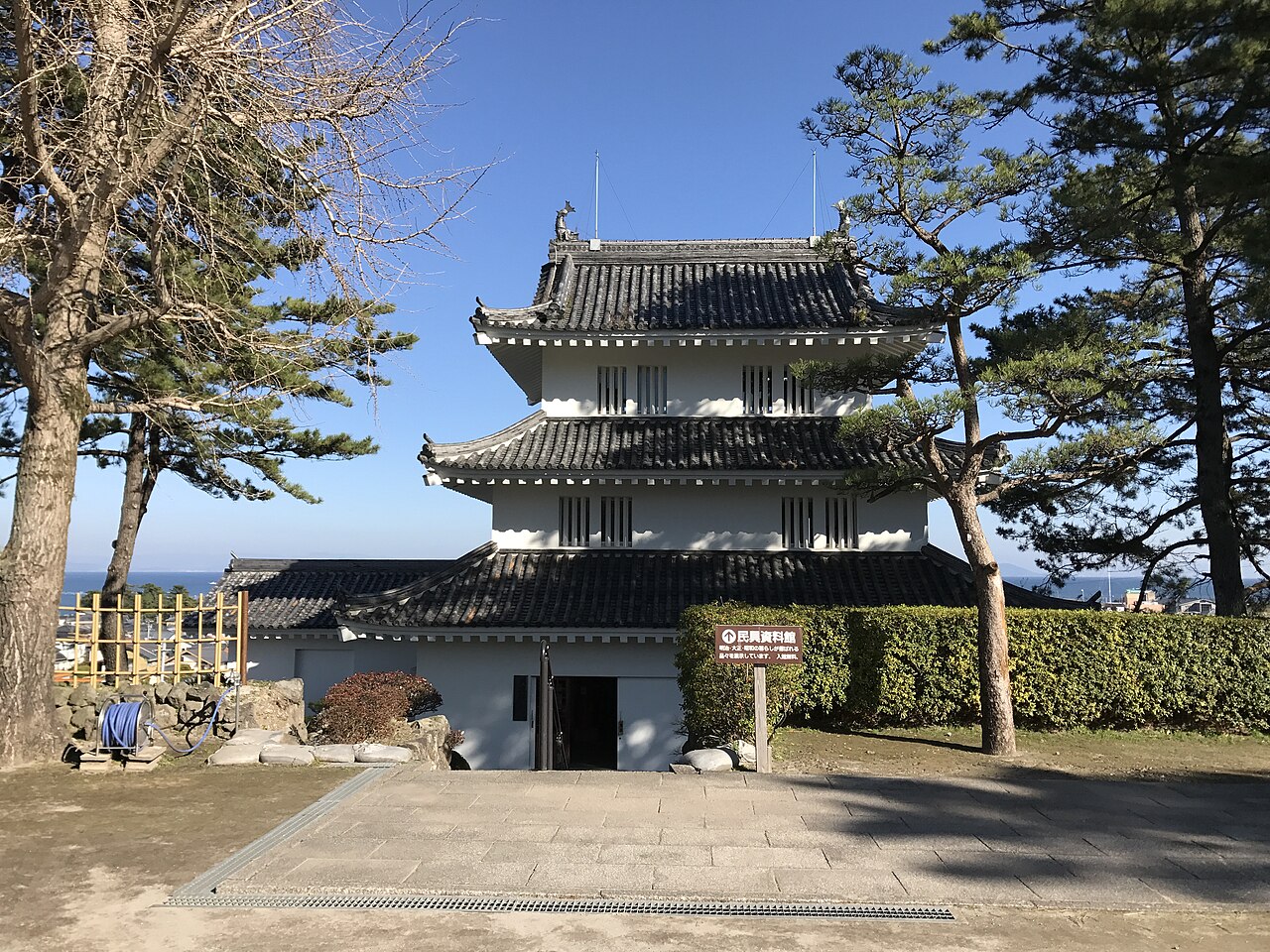
Whatever the old guidebook found, the castle today is still a place you can walk into. The main tower and the corner turrets are what you come for, and the northeast turret is worth a closer look on its own.
The castle is open through the day, with separate admission for adults and for students and a group rate for larger parties; admission ends before closing time, so allow for that. Hours and prices do change, so check official information before visiting.
- Opening hours: 9:00 to 17:30 (admission until 17:00)
- Adults: 700 yen
- Elementary, junior high and high school students: 350 yen
- Group rate (15 or more people), adults: 560 yen
- Group rate (15 or more people), elementary through high school students: 280 yen
Where to stay
Places to stay near Shimabara, Nagasaki →
Disclosure: This post may contain affiliate links. If you book through them, we may earn a commission at no extra cost to you.
Bukeyashiki: the samurai street with running water
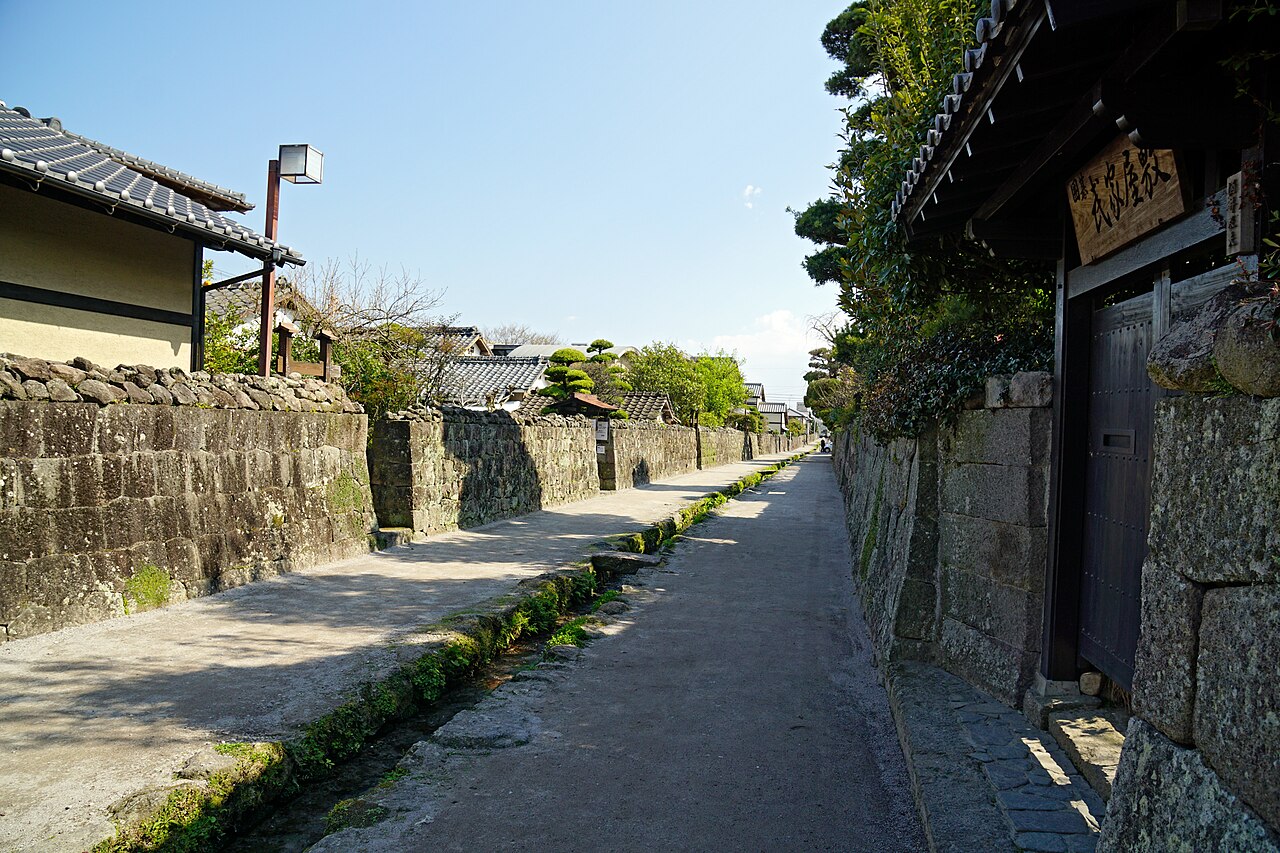
An easy walk from Shimabara Station brings you to Bukeyashiki, the old samurai residence district. Each house here sits behind its own stone wall, and the guidebook of nineteen twelve remarked that the effect was of a small fortress town in itself, a street that kept the look of the old shogunate days untouched. That is still the first impression.
A channel of running water runs down the middle of the lane, which is what gives the street its name in this guide. The district is reached on foot from Shimabara Station, and inside it the Kanshusho-ato (a former private school site) keeps its own opening hours, listed below.
- Shimabara Station to the Bukeyashiki samurai residences: about 15 minutes on foot, about 1 kilometer
- Kanshusho-ato (former private school site): open nine to five (morning to late afternoon)
The port town of a century ago
The same guidebook is at its liveliest when it turns to the harbor. Shimabara's port, it explains, is also called Yanagiura Bay, and its tangled shoreline is not old. A great collapse of Mt. Mayuyama in the Kansei era threw up countless islets in the water, and the intricate coast took its present shape from that.
Ships made good use of that shape. The harbor was deep and had four entrances, each threading between islands, so the book describes it as a calm, sheltered anchorage even in rough weather. Sailing ships stood in it like a forest, and the book ranked it as the busiest port on the peninsula.
A local folk song is said to have gone, "Shimabara's port is a great port; thirty-five tan tie up side by side, side by side." Reaching it was harder. The railway had not yet arrived when the book was written, so people and goods moved by steamer and sailing ship by sea, and by horse, cart and rickshaw by land.
A line from the Isahaya side down the peninsula to Shimabara had been planned, though, with full opening expected around the summer of nineteen thirteen. The announcement alone, the book says, had brought a quick return of energy to a town that had been fading. Its brewers, the book adds, drew on good water and took prizes for their sake.
Carp streets and the spring-water garden
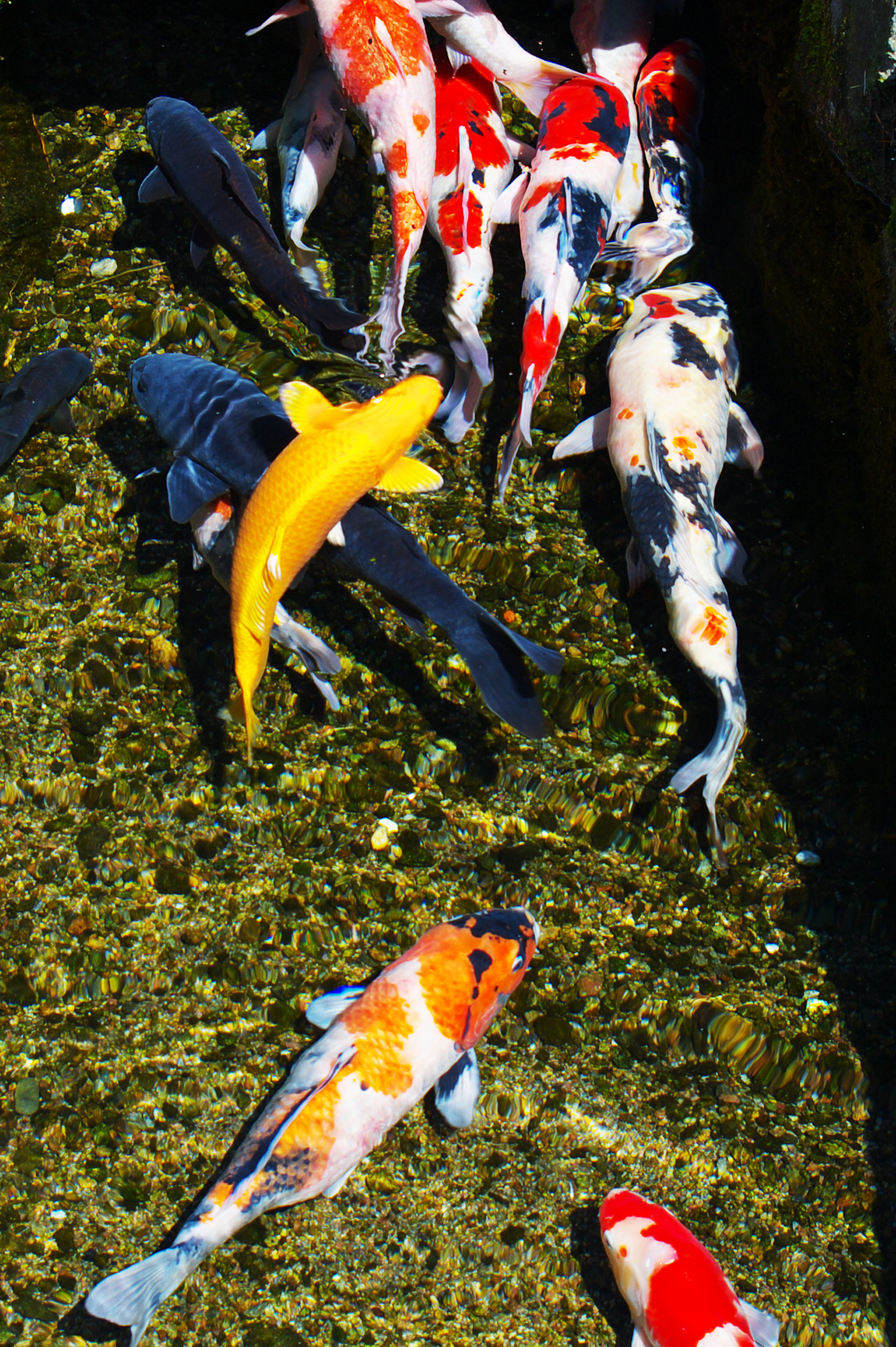
Shimabara sits on spring water, and makes a feature of it. In the Koi no Oyogu Machi, the "town where carp swim," carp drift through channels of spring water along the lanes. Near it is Yusui Garden Shimeisō, a spring-water garden with its own opening hours and admission, and the whole area is an easy walk from Shimabara Station.
- Shimabara Station to the Koi no Oyogu Machi area around Shimeisō: about 15 minutes on foot, about 800 meters
- Yusui Garden Shimeisō opening hours: nine to six (morning to early evening)
- Adults (age 18 and over, excluding high school students): 400 yen
- Children (elementary through high school students): 200 yen
If one day feels too short, and the walks here reward a slow pace, it is worth looking at places to stay in Shimabara and giving the castle town an evening as well, with the samurai street and the carp lanes to come back to in the morning.