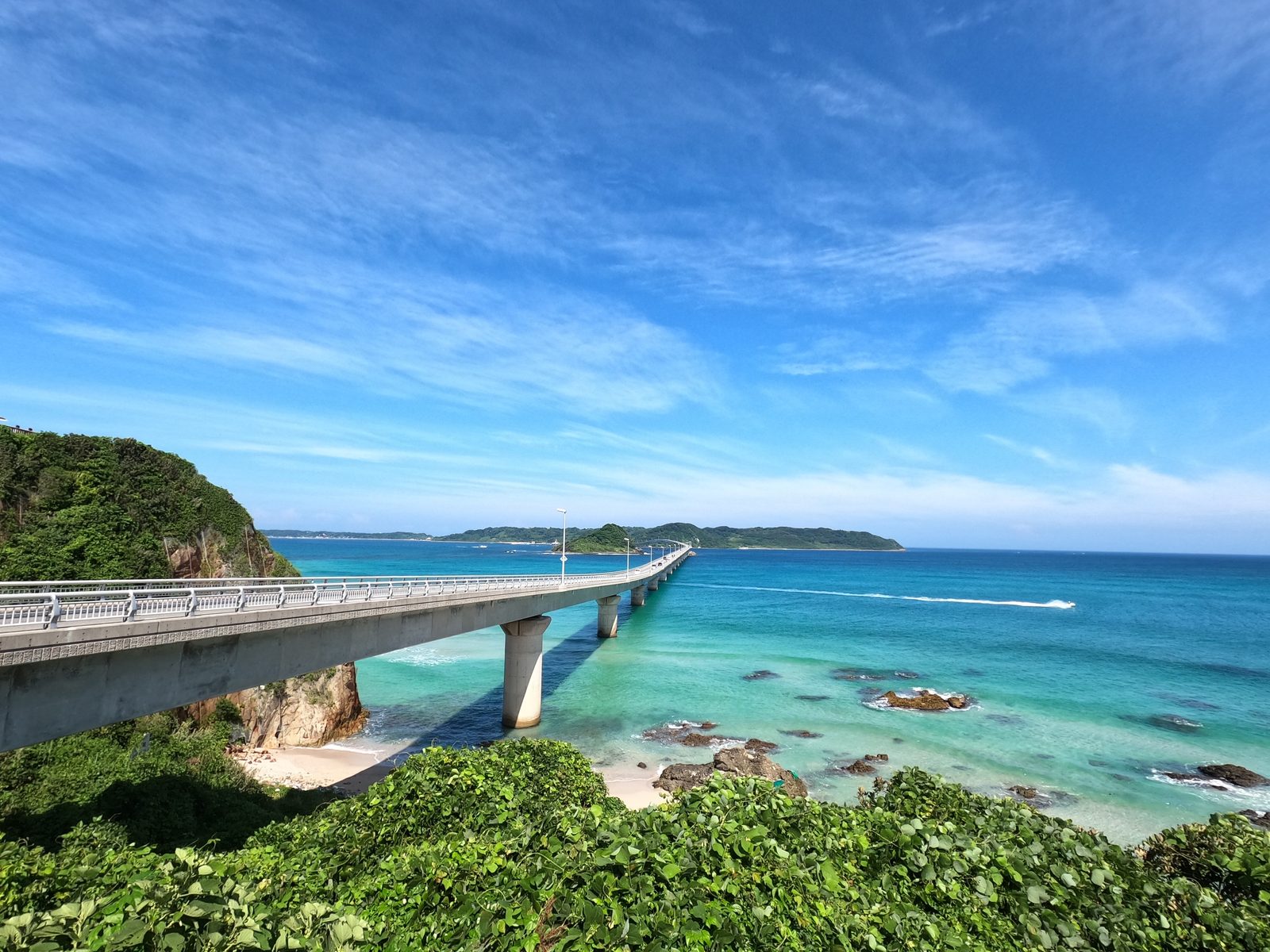
Tsunoshima is an island on the Sea of Japan side of Yamaguchi, reached by a bridge that can be crossed on foot or by bicycle. Once over, the island offers a granite lighthouse with a spiral staircase to climb, a walking path around the cape at Makizaki, and the clear cobalt blue water of Ohama beach. A seafood bowl called Tsunoshima don is served at the shop and dining complex in the central part of the island, so the meal is part of the plan rather than an afterthought.
Tsunoshima Bridge: Crossing the Turquoise Water
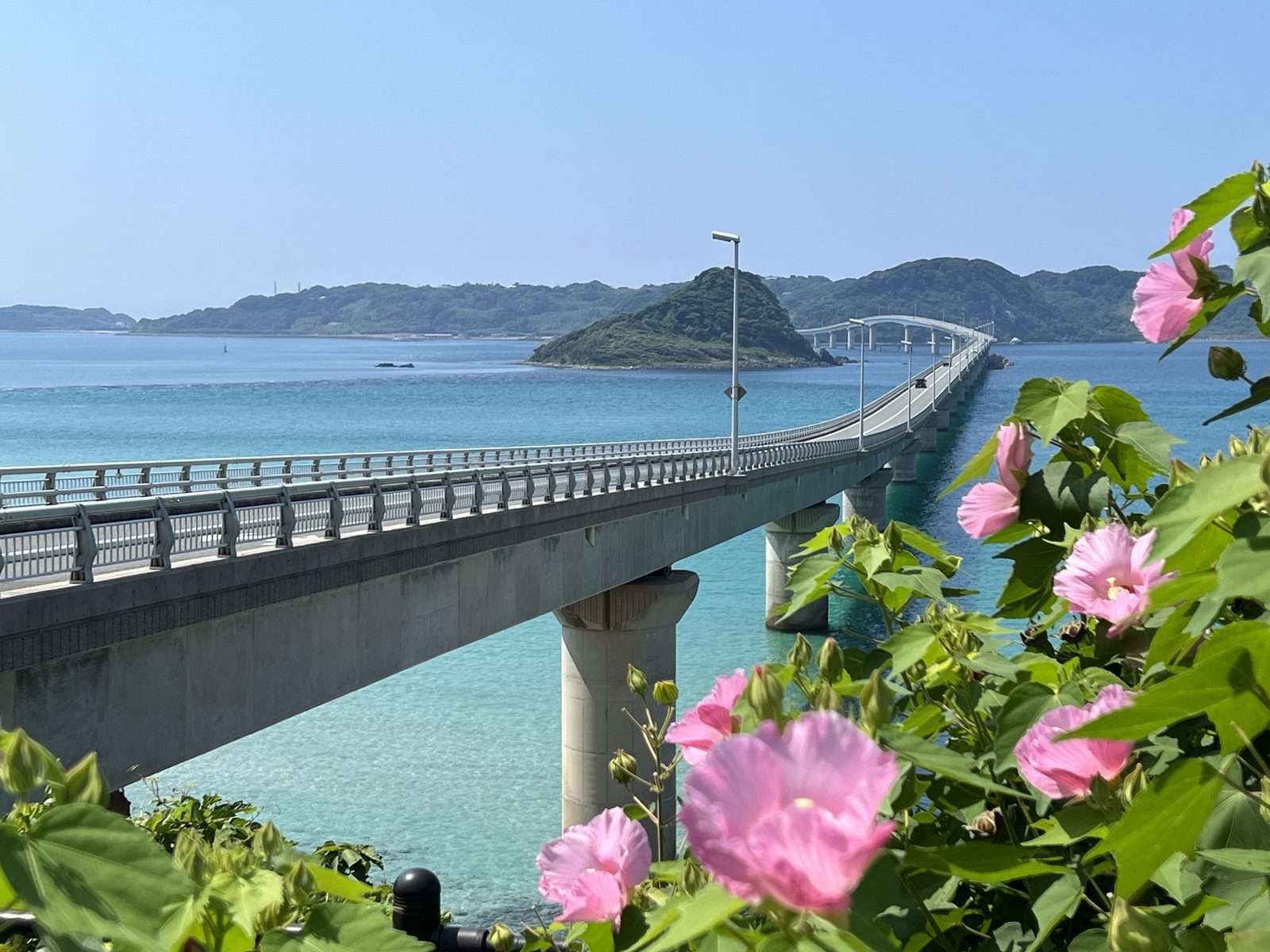
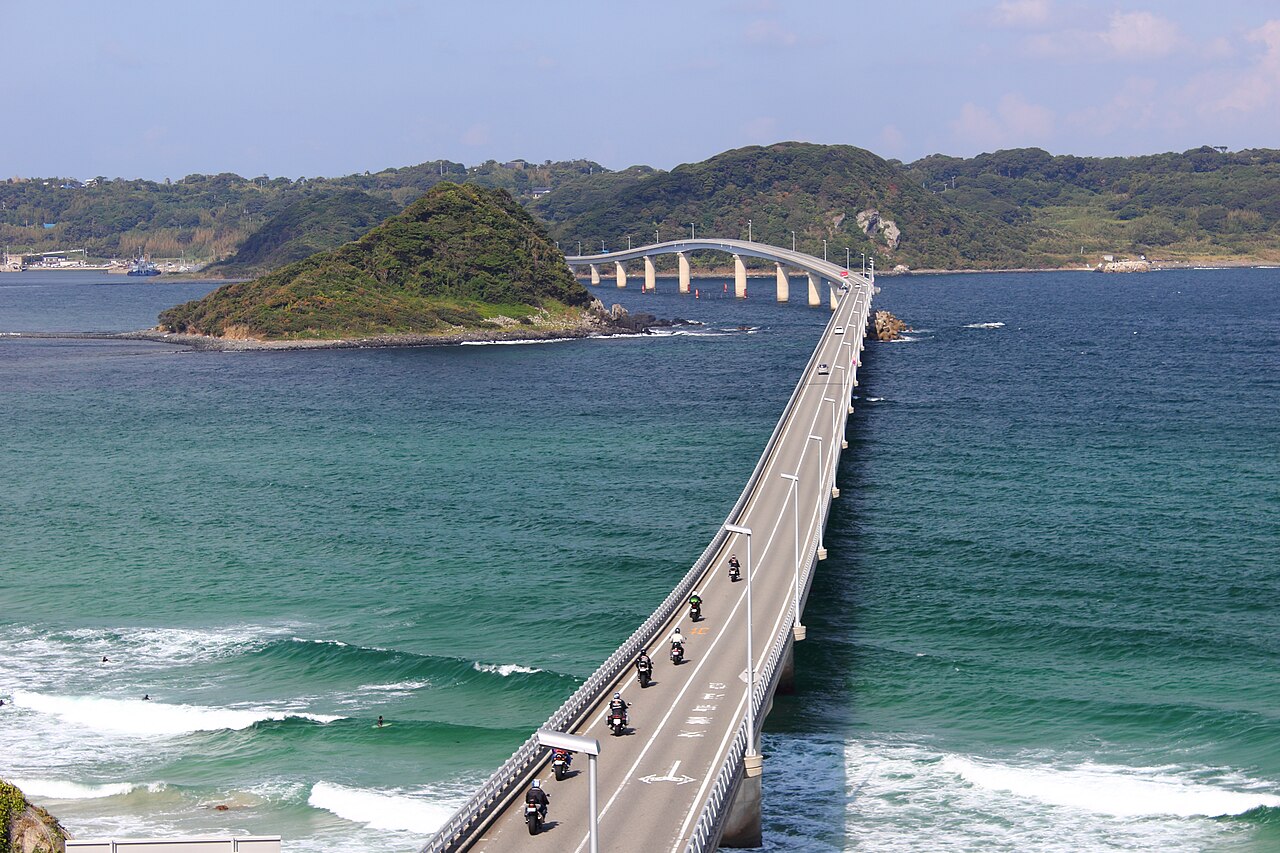
Tsunoshima Bridge can be crossed on foot or by bicycle, with the blue sea in view and the sea breeze the whole way. Before the bridge existed, reaching the island meant taking a ferry, which makes the slow crossing on foot or by bicycle its own kind of arrival.
On sunny summer days the blue of the sea, the white of the road and the green of the island stand in contrast. The bridge changes its appearance many times a day as it leads across the emerald green sea, a reason to cross more than once when the day allows.
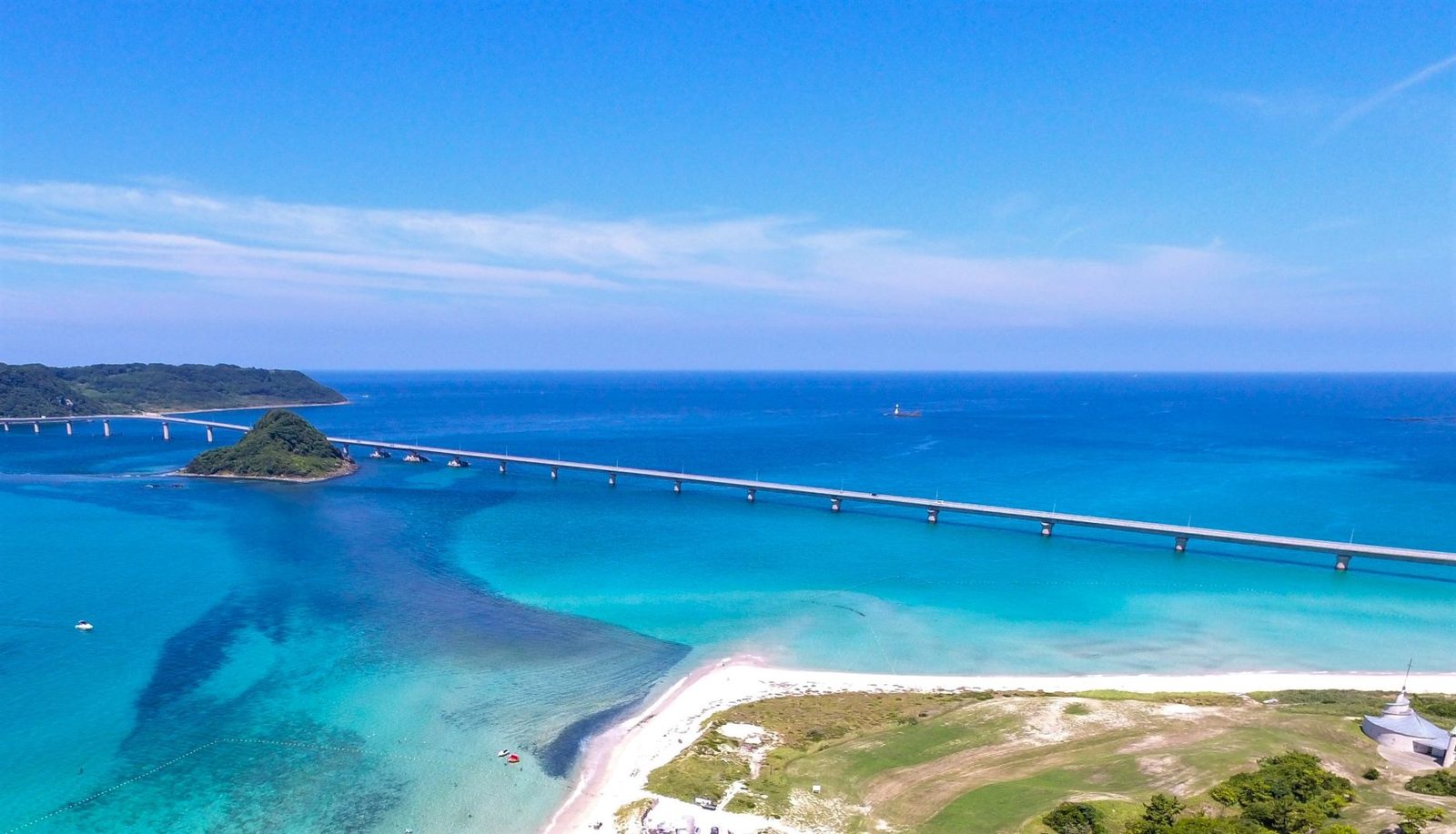
The car park in front of the bridge is free at any time of day. If you have time for one pass at the bridge, make it a morning one to avoid congestion, then walk or cycle across to watch the colour of the water change.
Tsunoshima Lighthouse: Granite Tower and Spiral Stairs
Tsunoshima Lighthouse was designed by the British engineer R. H. Brunton, and it is a Western-style lighthouse built entirely of granite that is still in service, so the stone you climb belongs to a working tower.
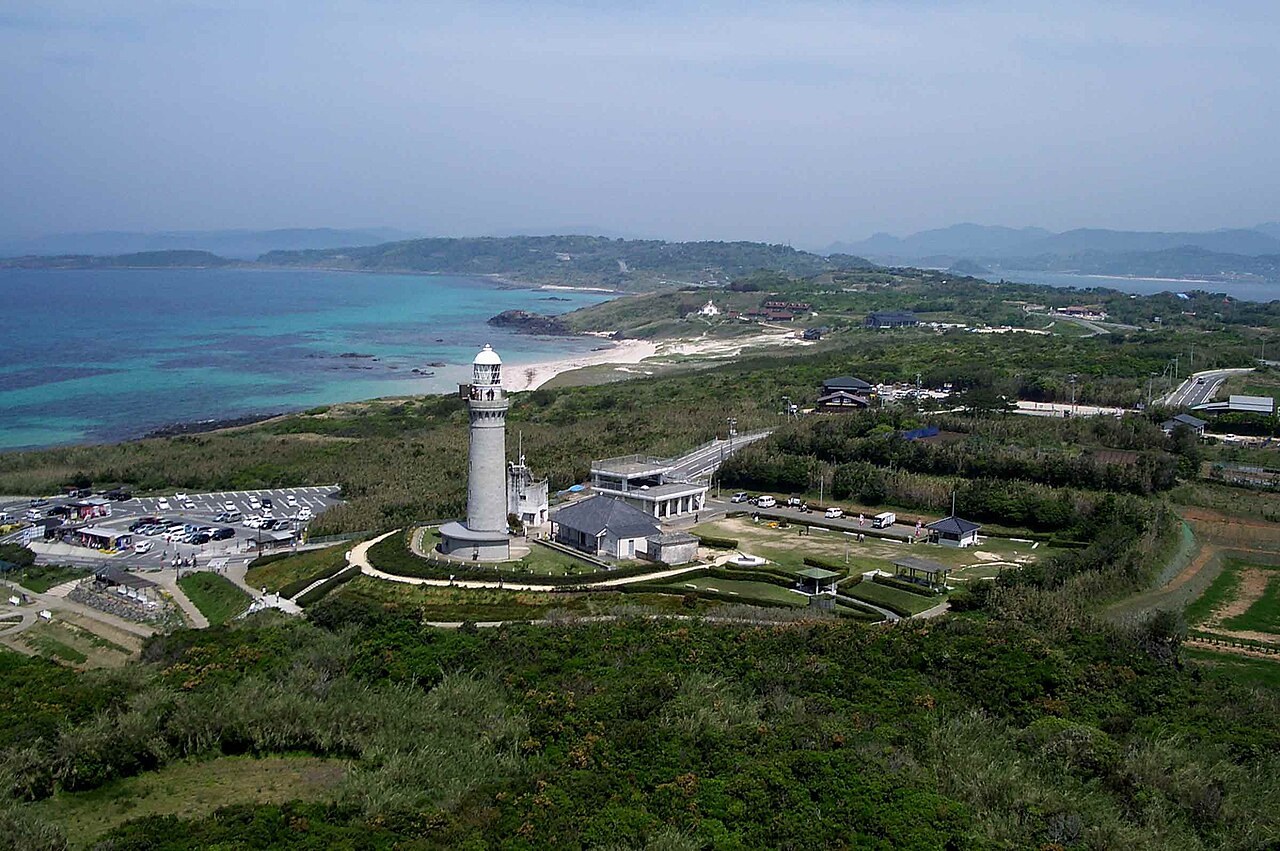
The narcissus around the lighthouse are in season from late January to mid-February. White narcissus sway in the sea breeze with the lighthouse behind them, and a faint, sweet scent drifts around the tower as you walk the surrounding ground.
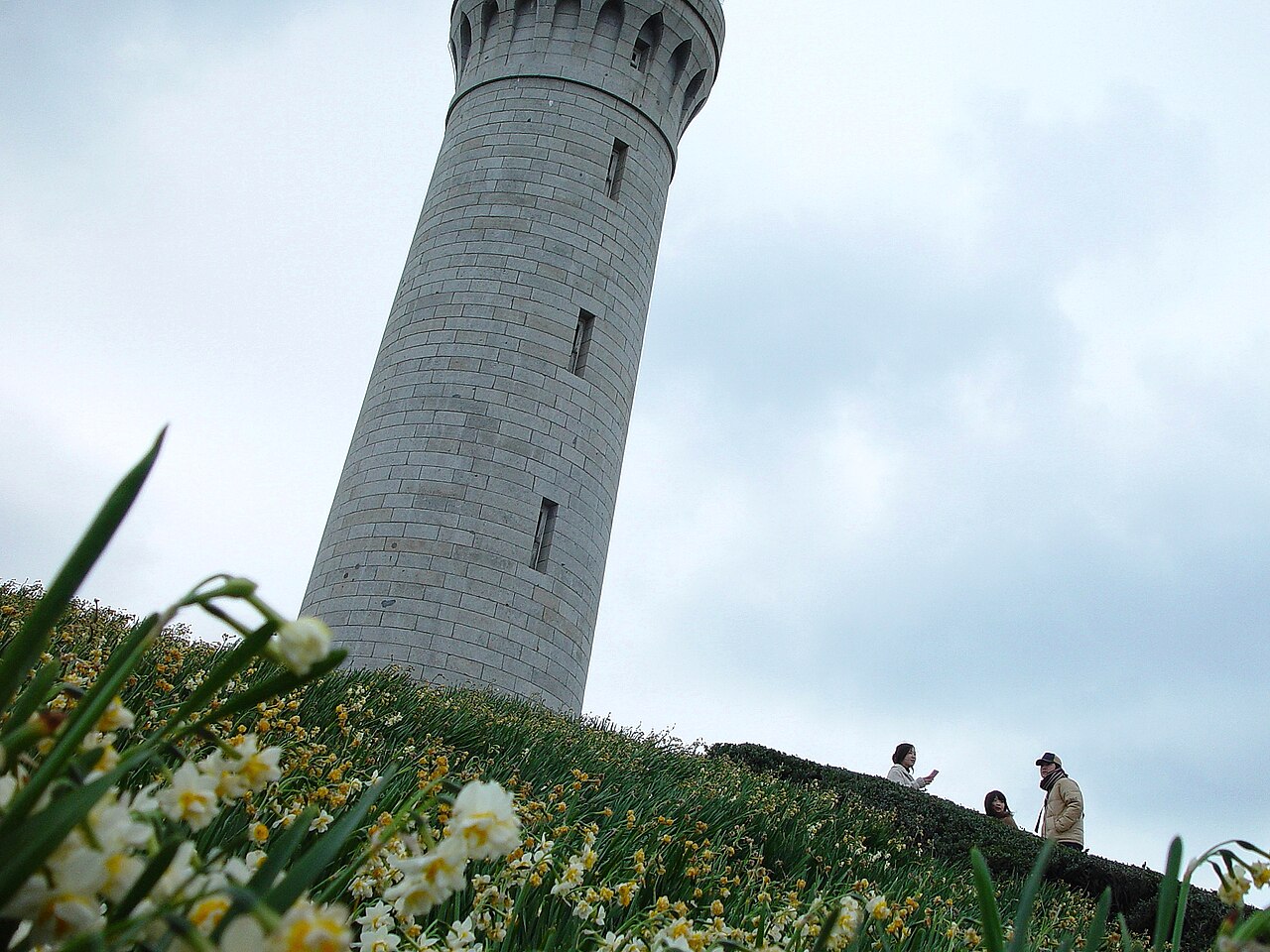
Inside, the tower is also granite cut stone, with a spiral staircase of one hundred and five steps built together with the outer wall. The climb finishes with a ladder, and the observation deck gives a three hundred and sixty degree panorama of the Sea of Japan.
Entry to the tower is accepted up to twenty minutes before the end of visiting time, so the climb cannot be left to the very end. Visitors comfortable with one hundred and five steps and a ladder get the panorama from the top; those who would rather stay on the ground can still see the tower rising behind the narcissus in their season.
Makizaki, Yumezaki and Ohama Beach
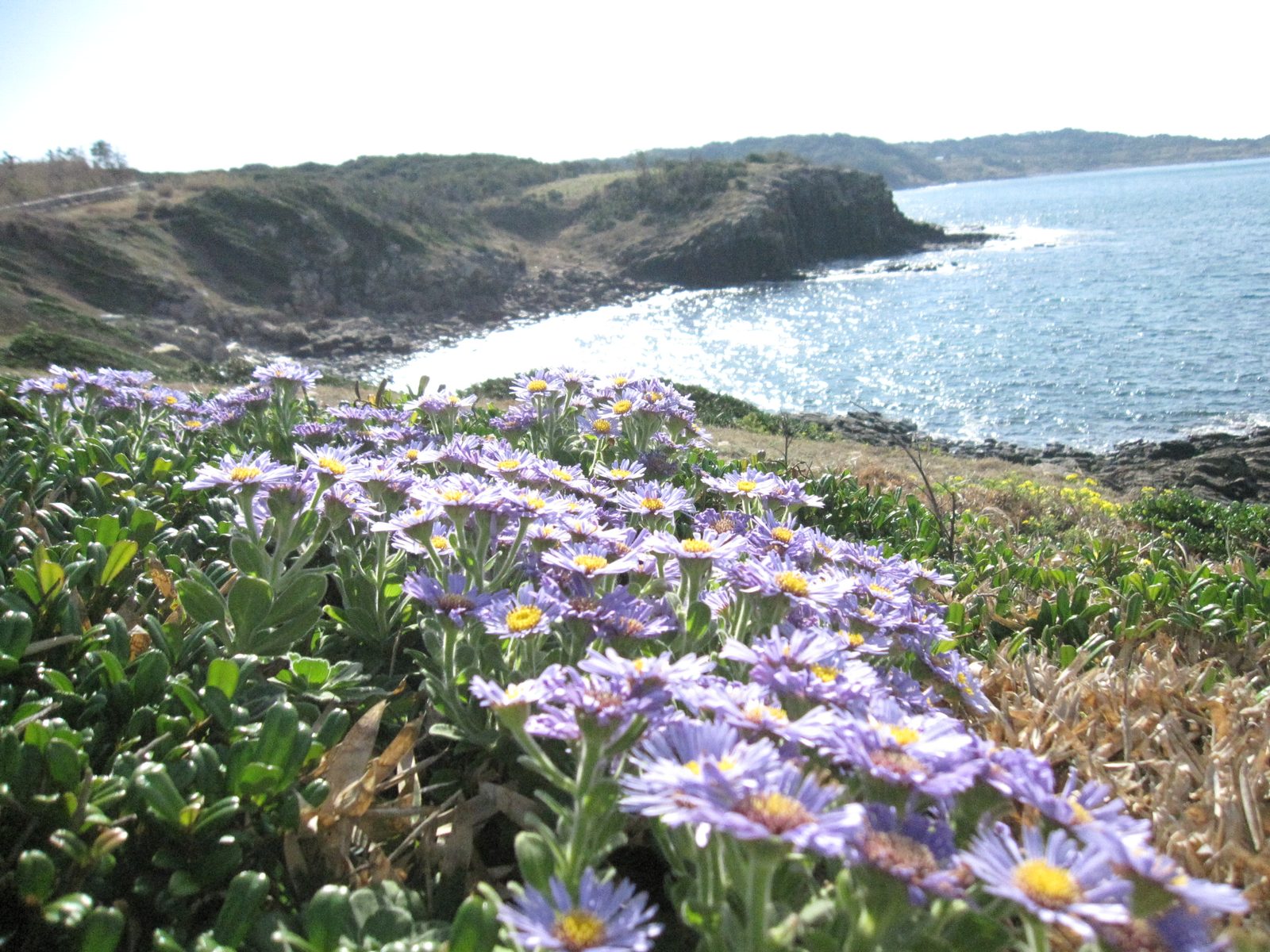
Tsunoshima takes its name from its two capes, Makizaki and Yumezaki, jutting out like the horns of an ox. Around them are parks suited to strolling, and a walking path at Makizaki Kaze Park circles the cape.
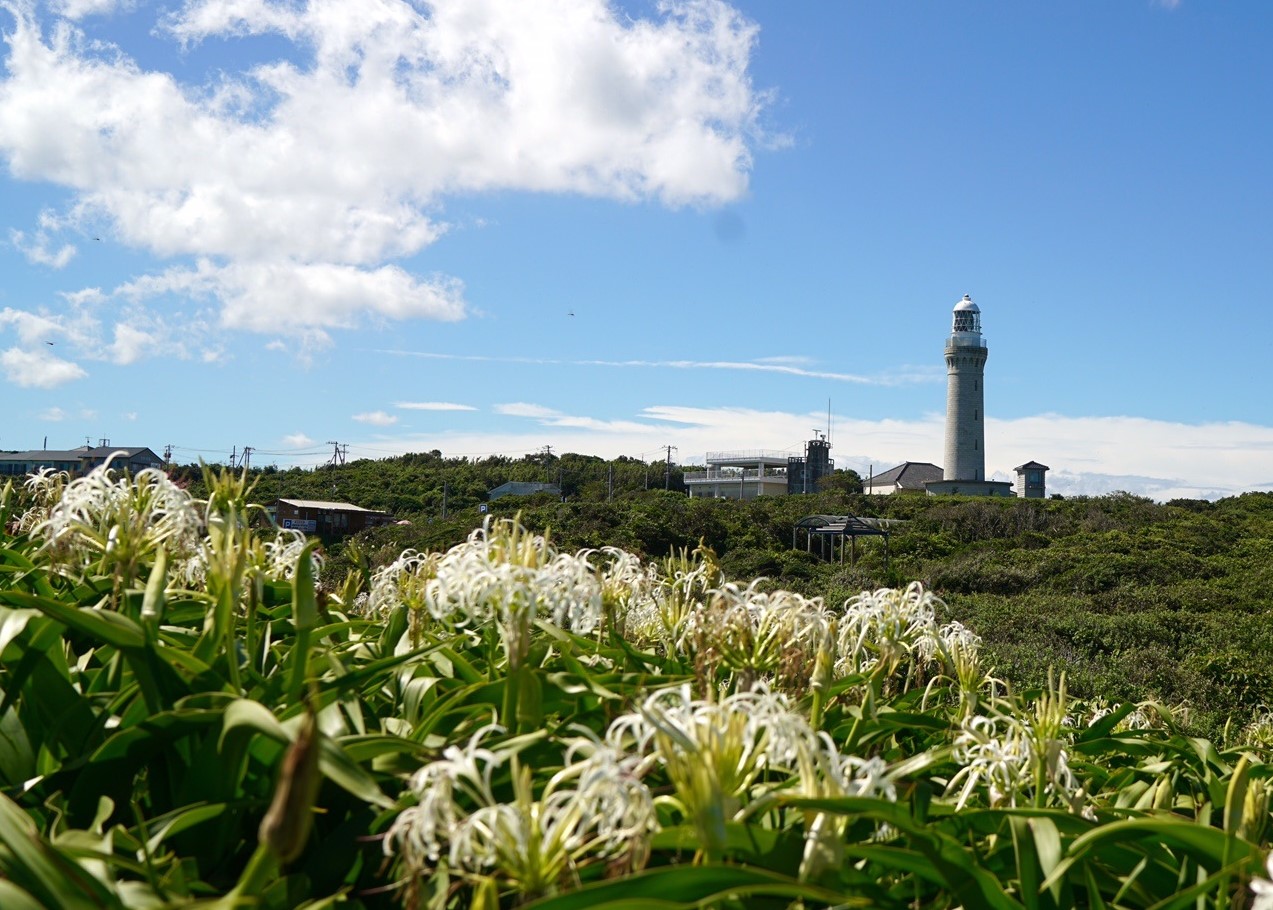
One park has flower beds made to suggest waves, where native hamayu, daruma-giku, narcissus and hamahirugao bloom through the year, and daruma-giku grows wild at Makizaki Kaze Park. Hamayu is in bloom from mid-July to early August, its white, highly fragrant flowers coming out against the deep blue sea.
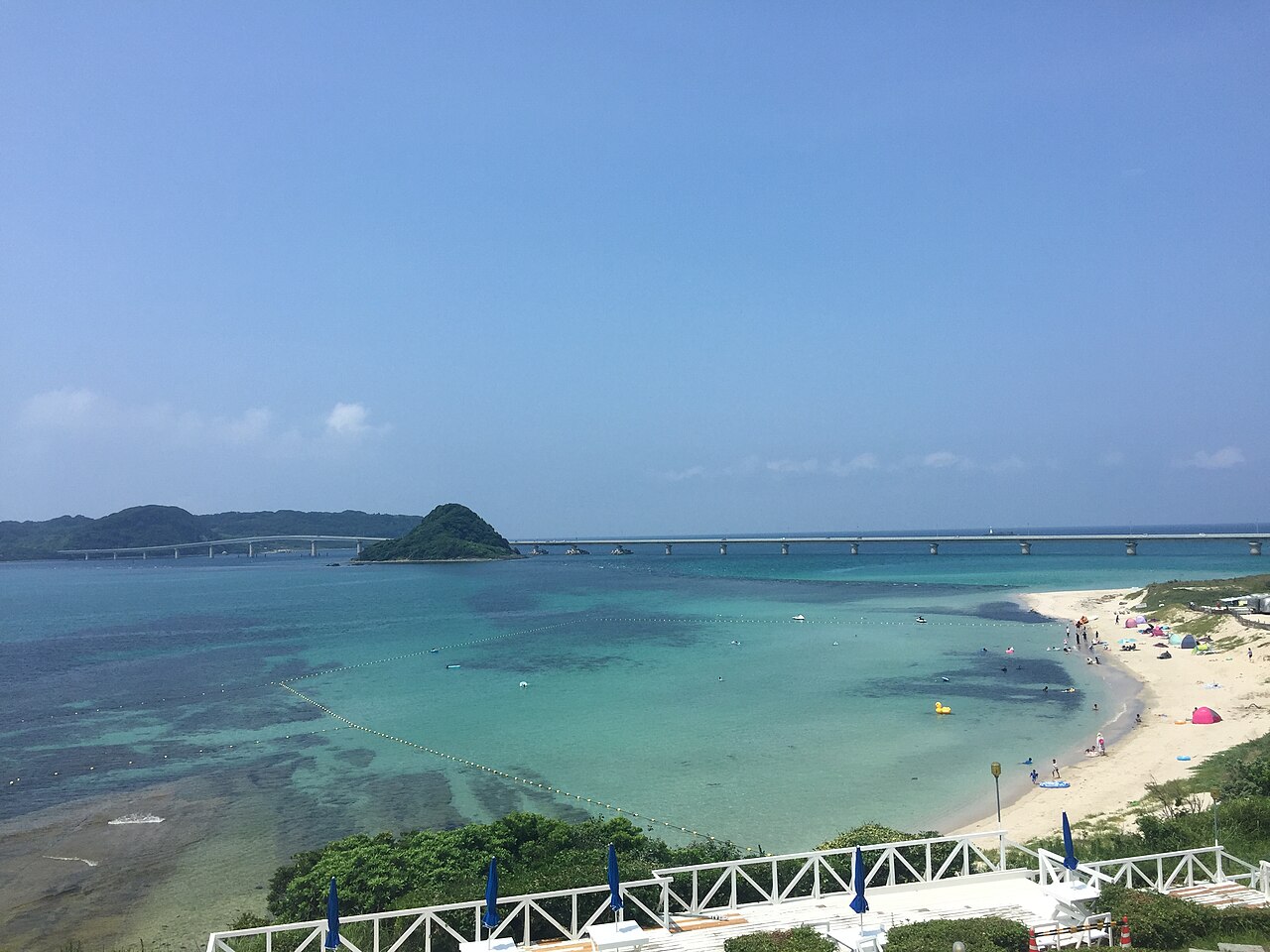
Ohama has clear cobalt blue water and white sand made of small shells, fine and smooth; waves can be heard and the sea wind blows across the beach. The sunset over the Sea of Japan can be seen from the beach, and the camp site there allows barbecue.
Crossing the island by car from one end to the other takes about ten minutes. So a short visit can still pair the walking path at Makizaki with the sunset at Ohama; with more time, cycles and a tuktuk drive are slower ways around. Guided outings in and around Tsunoshima are listed under experiences around Tsunoshima.
Seafood Bowls and Souvenirs at Shiokaze no Sato
Shiokaze no Sato has a dining area looking over the Sea of Japan under bare round log beams, and its Shiokaze set meal brings sashimi, a simmered dish, miso soup, rice, a side dish and pickles.
The Tsunoshima don is the seafood bowl, the sazae turban-shell rice set pairs sazae takikomi rice with isomidori udon, and the Musashi don combines fugu tempura and kalbi, plus a fugu tempura bowl and a sashimi assortment.
The souvenir hall sells Tsunoshima imo shochu from island-grown sweet potatoes, bottled sea urchin landed in Hohoku town, aonori yokan from Awano River aonori, and island-grown vegetables. Grilled seafood is on offer mainly on Saturdays, Sundays, public holidays and during the summer holidays.
The dining area takes orders until three in the afternoon. With no convenience store on the island, anyone staying for Ohama's sunset should eat here beforehand and buy shochu, sea urchin or yokan at the same stop. If you would rather stay overnight, places to stay around Tsunoshima is a place to start.
Getting to Tsunoshima
| Leg | How | Time or fare |
|---|---|---|
| Takibe Station to Oyama Ikoi-no-ie | Blue Line Kotsu bus fare | 630 yen |
| Kottoi Station to Oyama Ikoi-no-ie | Blue Line Kotsu bus fare | 470 yen |
| Within Tsunoshima | Blue Line Kotsu bus fare | 160 yen flat |
| Takibe Station to the lighthouse park stop | Bus | About 40 minutes |
| Kottoi Station to the lighthouse park stop | Bus | About 25 minutes |
| Shimonoseki IC to Tsunoshima | Car | About 70 minutes |
| Ozuki IC to Tsunoshima | Car | About 60 minutes |
| Tsunoshima Bridge to the lighthouse area | Car | About 5 minutes |
| Shimonoseki Station to Tsunoshima Bridge | Car | About 1 hour 20 minutes |
| Driving back toward Honshu on long holidays and in the summer vacation | Car | Often congested; guide peak 13:30 to 15:00 |
Children pay half the adult fare. Transport IC cards cannot be used on Blue Line Kotsu buses.
New to rural buses and one-man trains? See how to ride them, step by step.
Hours and Fees
| Place | What | Hours or fee |
|---|---|---|
| Tsunoshima Lighthouse | Hours, March to September | 9:00 to 17:00 |
| Tsunoshima Lighthouse | Hours, October to February | 9:00 to 16:30 |
| Tsunoshima Lighthouse | Admission, junior high school and older | 300 yen |
| Tsunoshima Lighthouse | Last entry | 20 minutes before closing |
| Tsunoshima Nature Centre | Hours | 9:00 to 16:30 |
| Tsunoshima Nature Centre | Closing day | Tuesdays |
| Tsunoshima Nature Centre | Entrance donation | 200 yen |
| Shiokaze no Sato dining area | Hours | 10:00 to 15:30, last order 15:00 |
| Shiokaze no Sato dining area | Closing day | Wednesdays |
| Electric-assist cycle | Hire, up to 2 hours | 410 yen |
| Tuktuk drive | One hour, per vehicle | 4,180 yen |
Where to stay
Places to stay near Tsunoshima, Yamaguchi, Japan →
Disclosure: This post may contain affiliate links. If you book through them, we may earn a commission at no extra cost to you.