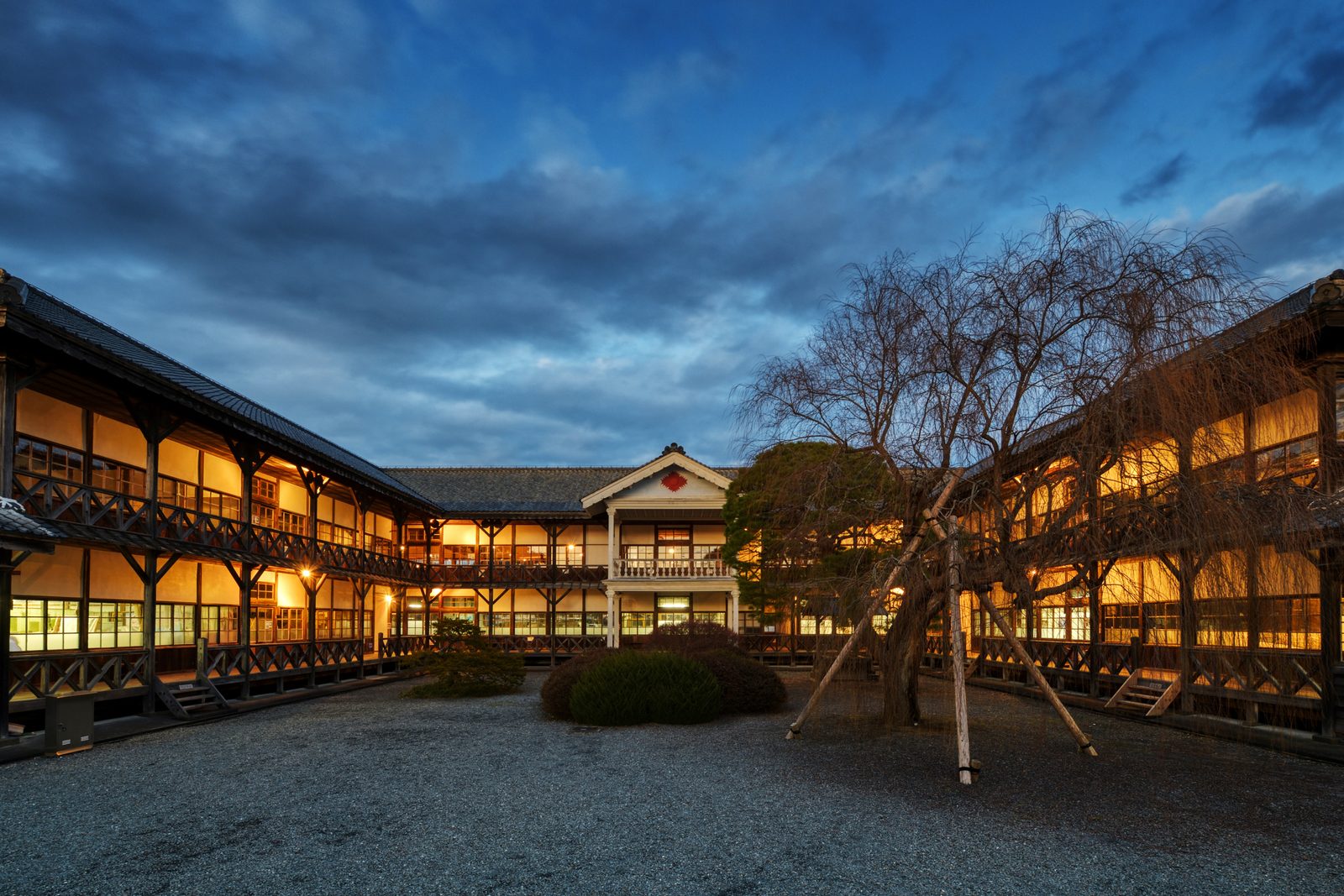
This guide covers one slow day in Toyoma, a district of Tome City in northern Miyagi Prefecture: the train from Sendai Station to four stations on the JR Tohoku Main Line, the community bus fare for the last stretch, the three Meiji-era halls that open at nine in the morning, and the walk that links them through the Teraike district.
The former school building at dusk: two wooden stories, a white balcony and a gravel courtyard.
Getting there from Sendai
Toyoma is reached by rail and then by bus. The JR Tohoku Main Line runs from Sendai Station to four stations that serve this trip, and the journey times sit close enough together that you can take whichever train leaves first. None is a long ride, so an early start still leaves a full day.
| From Sendai Station | Journey time |
|---|---|
| Semine Station | sixty-five minutes |
| Umegasawa Station | seventy minutes |
| Nitta Station | seventy-five minutes |
| Ishikoshi Station | eighty minutes |
The Tome City community bus is the local service in this part of Miyagi, and the stop for the museums is called Toyoma Meiji Mura. Match your train to a bus time before you leave Sendai, and note the return times as well, because that connection decides when your day ends. The fare is paid per ride:
- Junior high school students through age seventy-four: two hundred yen per ride
- Age seventy-five and over: one hundred yen per ride
If lining up trains and buses in both directions feels tight for a single day, there are places to stay around Tome, and an overnight turns the same plan into two unhurried halves: the halls one afternoon, the streets the next morning.
The school that became a museum
The first door to try is the Education Museum, the former Toyoma higher elementary school. The building was completed in eighteen eighty-eight after about two and a half years of work, in a style that mixes Japanese and Western elements, and it is regarded as a rare survivor of Meiji-period school architecture. Today it is open as a museum.
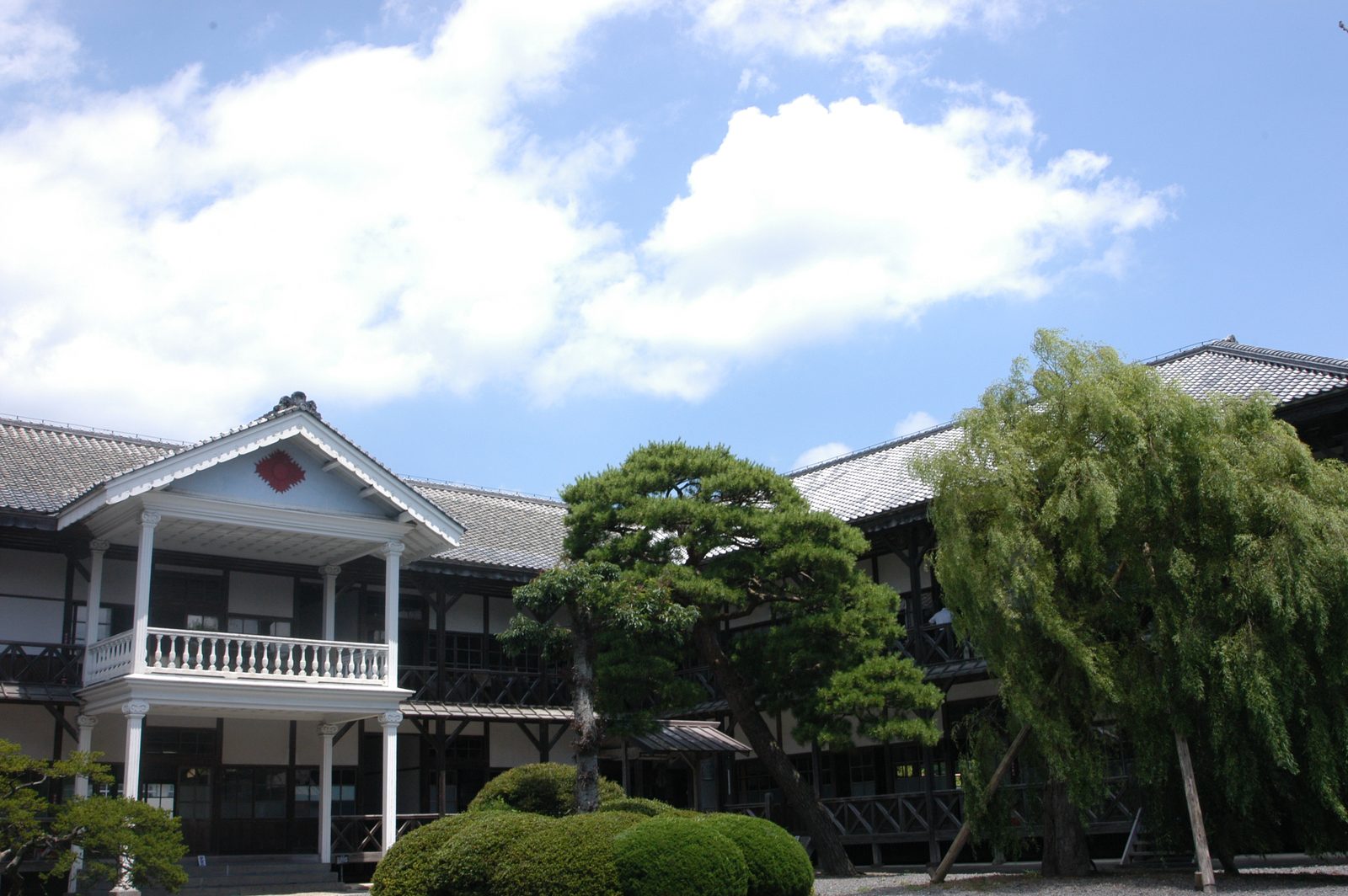
The courtyard of the former school: a white columned balcony, with a pine and a willow under a blue sky.
- Open: nine in the morning to half past four in the afternoon
Arriving close to nine gives you the courtyard and the balcony in morning light, and it leaves the rest of the day free for the two other halls and the streets between them. Give the building more time than you expect; the other two halls open at the same hour, so there is nothing to hurry toward.
The white building at the corner
Within the same cluster stands the Police Museum, a Western-style building with white outer walls that you can pick out from some distance. It began in eighteen eighty-nine as the Toyoma police station and was later converted for visitors. The designer was the same person who worked on the school, and this building also carries a balcony at its center.
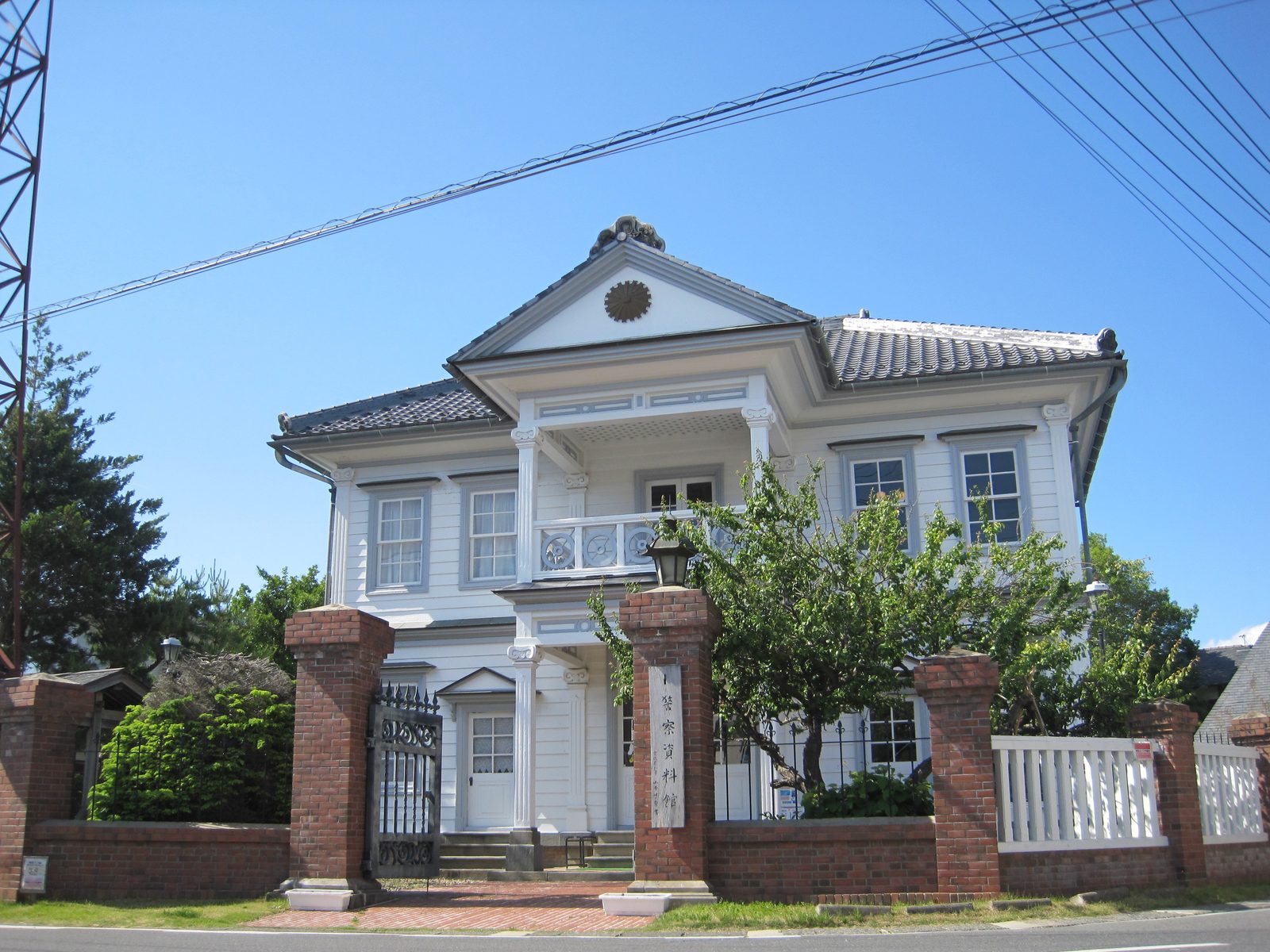
The white two-story former police station, seen past its brick gate posts and a sign.
- Open: nine in the morning to half past four in the afternoon
Because the school and the police station keep the same hours, you can take them in either order without watching the clock. If you started at the school, the white front and brick gate posts make a clean contrast with the timber and gravel you just left, and the two balconies invite a side-by-side comparison of one designer's hand.
Where to stay
Disclosure: This post may contain affiliate links. If you book through them, we may earn a commission at no extra cost to you.
The prefectural office that never moved on
The third hall is the Mizusawa Prefectural Office Memorial Hall. It keeps exactly the same hours as the school and the police station, which is what makes a three-hall day workable at a gentle pace: none of the doors opens later or shuts earlier than the others, so the order you walk them in is entirely yours.
- Open: nine in the morning to half past four in the afternoon
A sensible rhythm is to give the morning to the school, take the police station around midday, and arrive here with an hour or more in hand before half past four. Then walk back through the district while the halls are still open behind you, rather than racing the closing time with the bus in mind.
Walking the Teraike district
All three halls sit in the Teraike district of Toyoma, close enough that the bus stop named Toyoma Meiji Mura works as the start and end of a loop on foot. This is the area called Miyagi no Meiji Mura, and it is small enough to cover by walking, with no need to reboard the bus between doors.
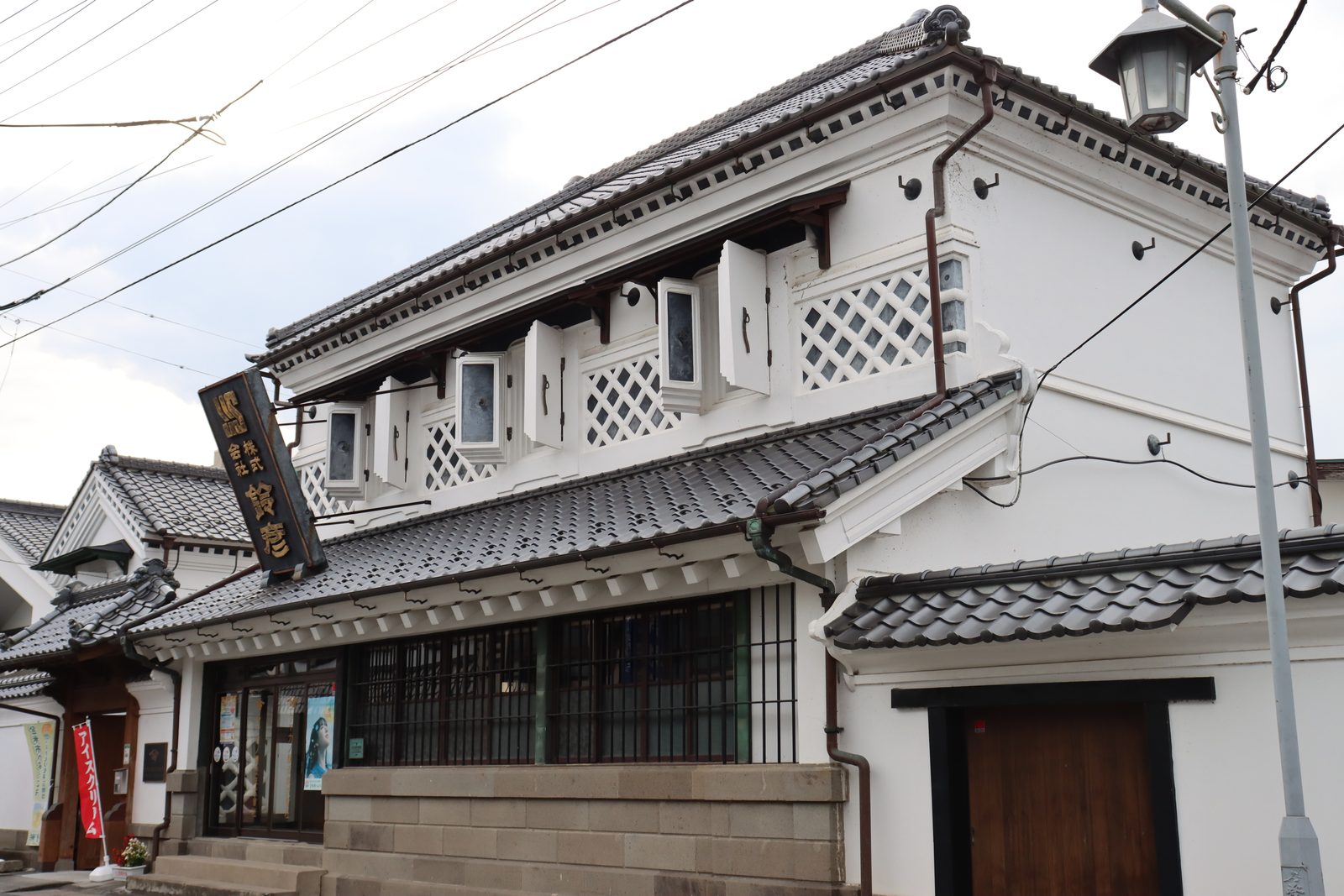
Lattice windows on a grey-plastered, two-story merchant building along a traditional street.
Between the halls, keep to a walking pace. The district also holds older buildings that are not museums at all, such as a grey-plastered merchant house with lattice windows, and the pleasure of Toyoma is in noticing them on the way from one door to the next rather than hurrying past them.
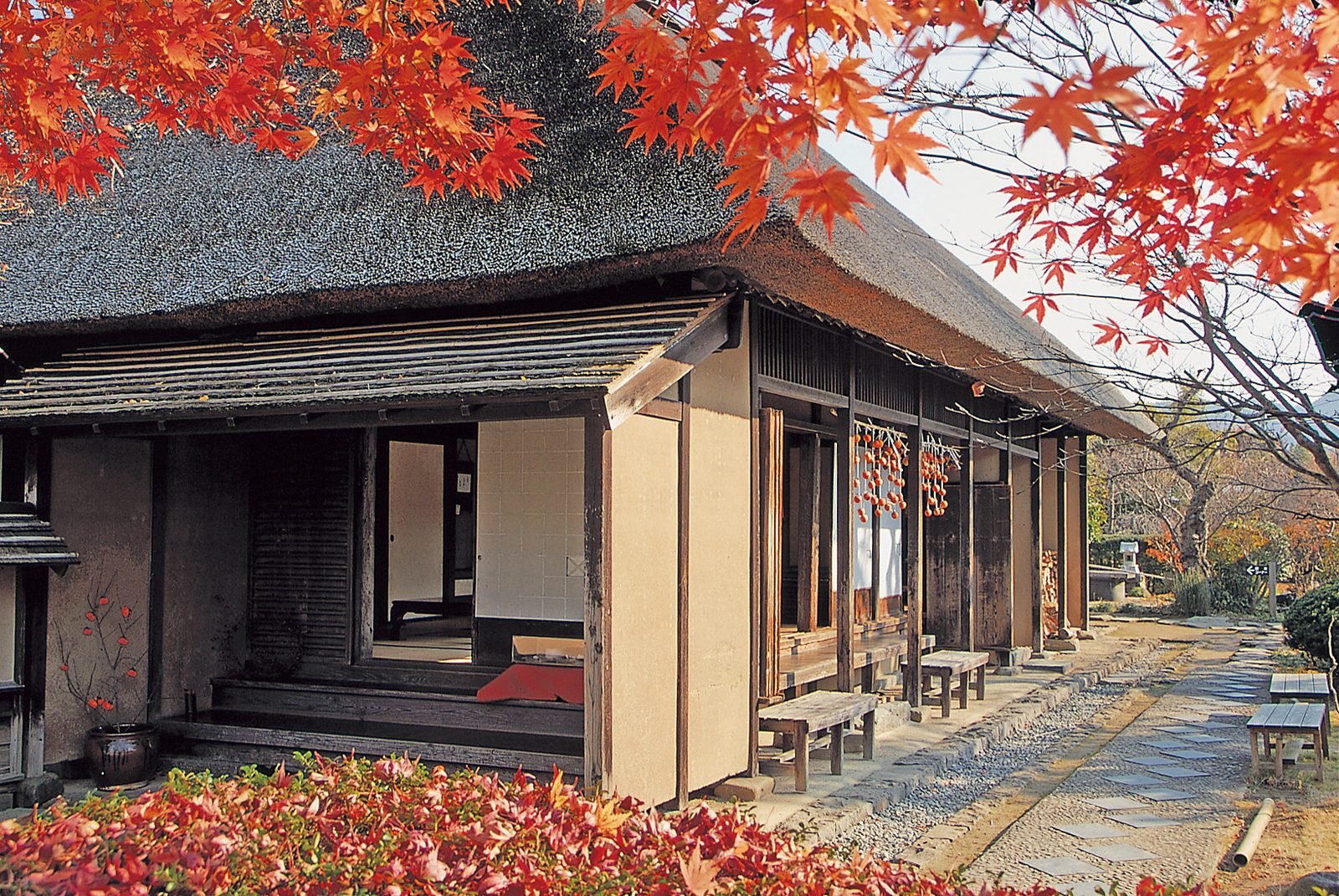
A veranda beneath a thatched roof, with autumn maple leaves and persimmons hung to dry under the eaves.
In autumn the district adds a thatched roof with persimmons drying under the eaves and maple leaves at the edge of a veranda, which is reason enough to walk the loop twice, once on the way in and once on the way back to the bus stop. Leave the map in your pocket for a stretch; the cluster is compact.
Practical notes for a slow day
The costs here are few and easy to list. The community bus is paid per ride, a guide can be arranged for a set fee, and students staying in the area for longer have a pass. Nothing else on this page needs an advance decision, so the main thing to settle early is your train and bus pairing.
- Local guide: three thousand yen for one guide, tax included
- Community bus, per ride: two hundred yen for junior high school students through age seventy-four; one hundred yen from age seventy-five
- Student pass, one month: six thousand four hundred yen
- Student pass, three months: eighteen thousand yen
A guide is worth considering if you would rather have the buildings explained than simply seen. Otherwise the day runs itself: arrive by nine, walk the three halls in whatever order the light suggests, and be back at the bus stop with time to spare, since the bus and not the museums sets the end of your afternoon.
If you would rather not fold the whole loop into one return trip from Sendai, an evening nearby is the simplest fix. Look at places to stay around Tome, and let a second morning give you the school courtyard at nine again, with the bus timetable no longer setting the pace of your afternoon.