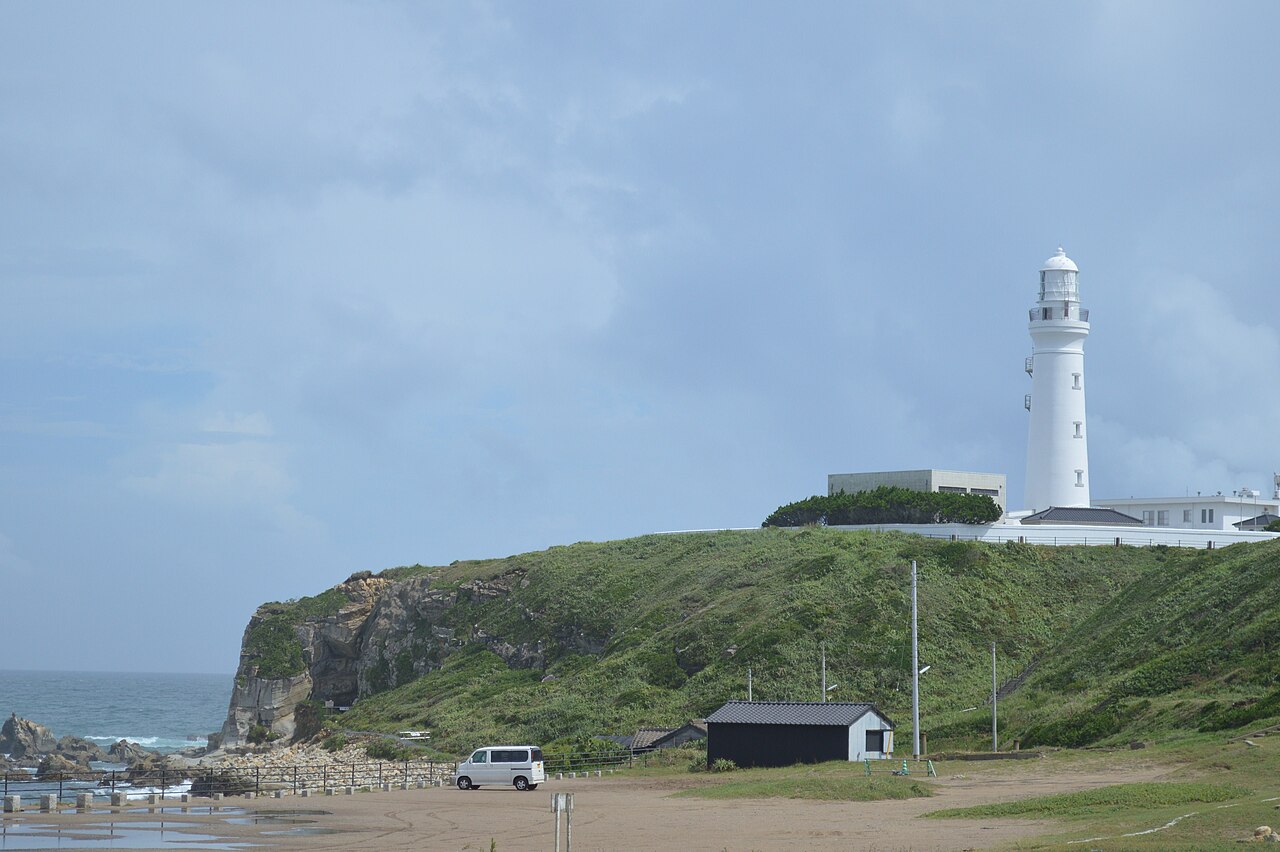
Inubosaki Lighthouse is built of brick as a tapering double cylinder, its outer and inner walls joined across a hollow space by eight radiating brick walls. Choshi's port lands mackerel, sardine and saury, bonito and tuna, alfonsino and flounder, about two hundred kinds of seafood from the sea off Choshi. At the Choshi Electric Railway's head-office station, the nostalgic station building and the depot can be seen.
Inubosaki Lighthouse: Brick Tower, Lens and Spiral Stairs
The lighthouse was built under the design and supervision of the British engineer Richard Henry Brunton. Its light began with a French-made first-order eight-panel flashing lens; part of it was damaged in the Pacific War, and a first-order four-panel flashing lens serves in its place.
You can see the damaged lens, partly restored, in the lighthouse museum. Inside the tower a spiral staircase of ninety-nine steps takes its number from Kujukuri, and from the top the view takes in the Pacific Ocean.
Byobugaura, Inuiwa and the Tide Pools
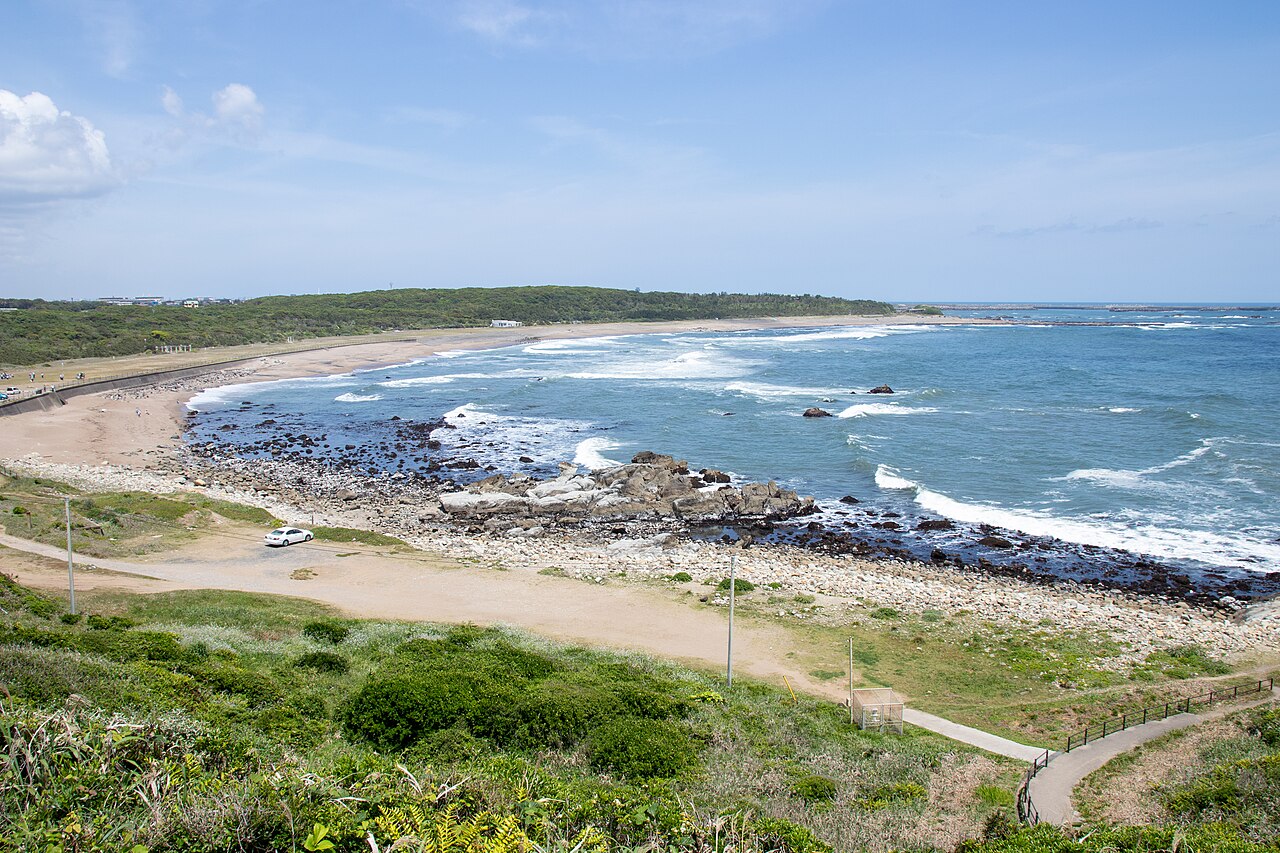
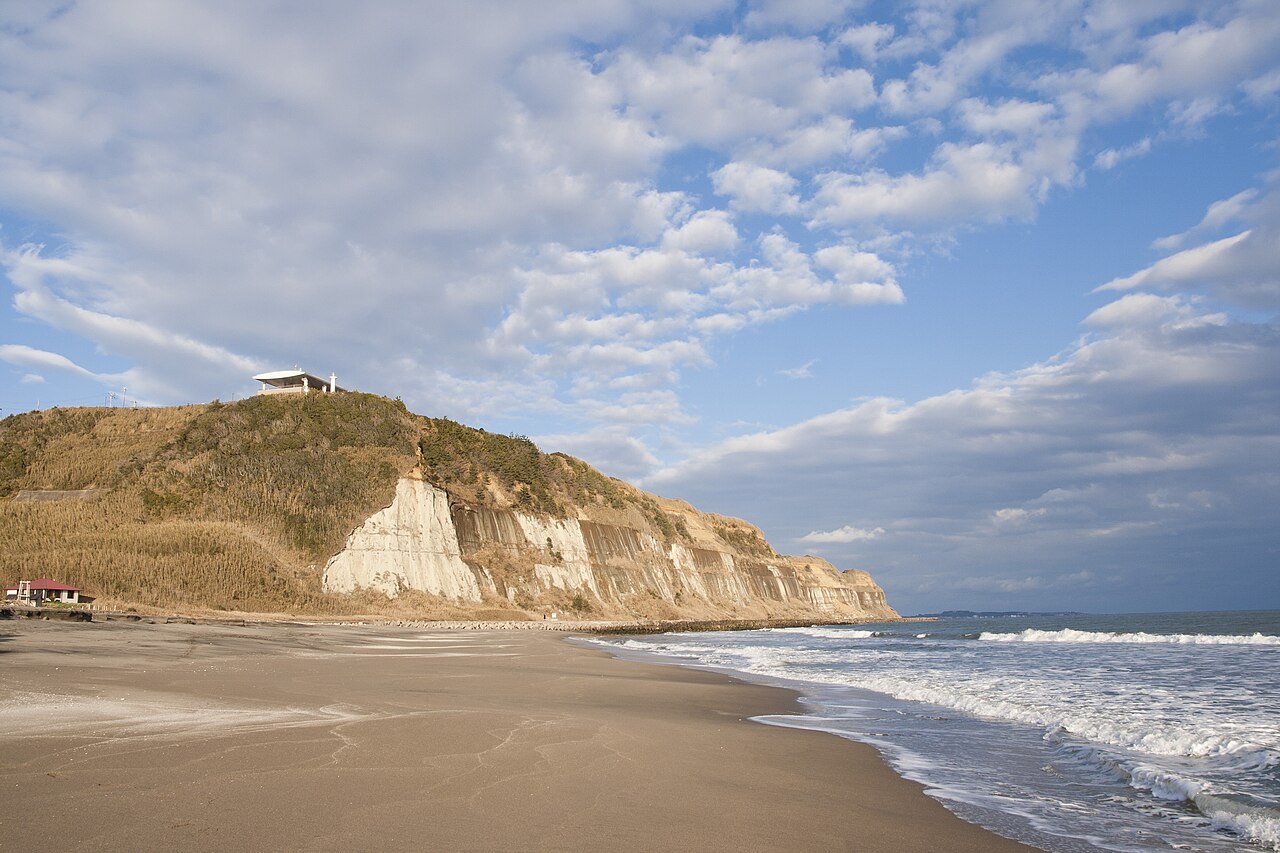
Byobugaura runs along the shore as a roughly ten-kilometre sea wall of rock twenty to sixty metres high. Walking the promenade that runs along it from a beach at the Choshi marina, you see the rock wall at close range. The top includes private land, and visitors are asked not to enter it.
Inuiwa is a strange rock shaped like a dog with ears pricked up; struck by rough waves, it looks like a dog from behind. The story handed down is that Minamoto no Yoshitsune's beloved dog, left behind when he fled to Oshu, cried for seven days and seven nights and turned into the rock on the eighth day.
In spring, autumn and winter the evening sun colours the scenery vermilion as it sinks into the sea; in summer it sinks into Byobugaura. At low tide, pools form and strand marine creatures that visitors can observe closely, among them a white sea slug with a pure white body and a black and yellow pattern.
The Choshi Electric Railway: Depot, Station and Terminus
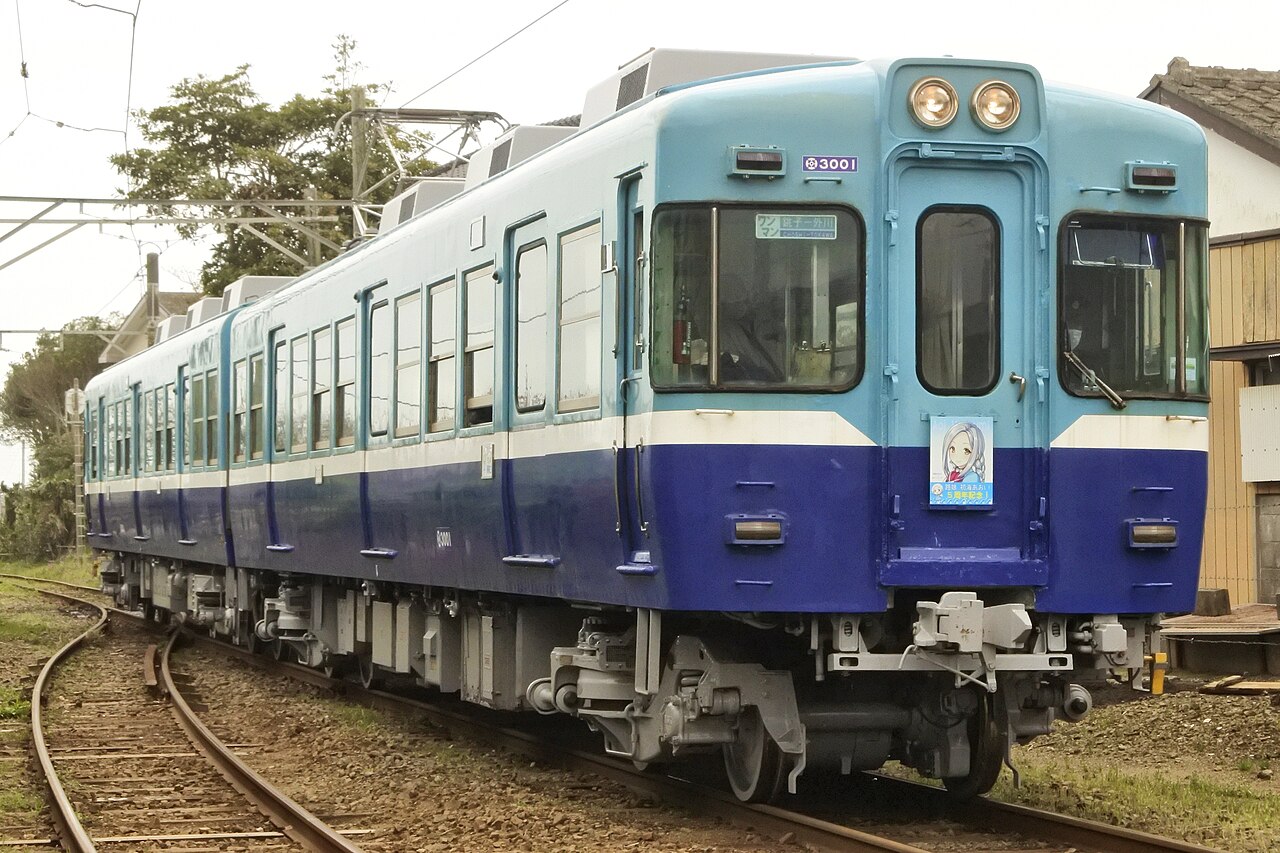
The Choshi Electric Railway opened in the Taisho era. You can view the depot at the head office, though viewing may not be possible depending on inspection status. Event runs such as a live-music car and a pro-wrestling car have rolled along the line.
The shop at the head office sells railway goods, pass-the-exam tickets and wet rice crackers, and students of a prefectural high school raised funds by crowdfunding to repair that building.
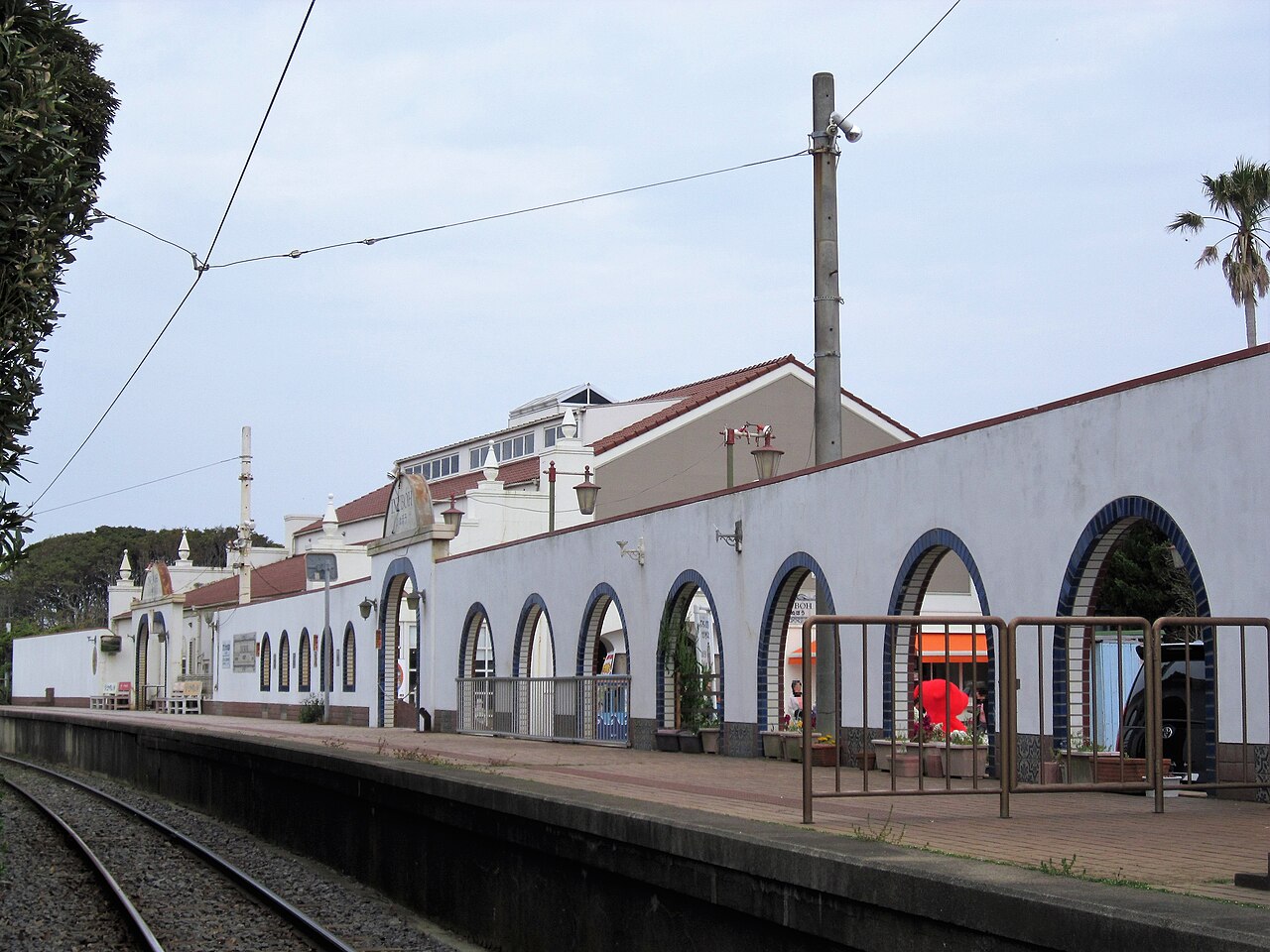
At the Choshi end of the line, the terminal building was built anew in the image of a Dutch windmill house. The line runs six point four kilometres from Choshi to Togawa with ten stops, about twenty minutes one way.
Togawa, a Shrine Forest and the Camellia Temple
In Togawa, a small local history museum created by volunteers who love the town displays materials and exhibits that tell the story of Togawa. On the slope that continues from the port, the breath and warmth of the people who lived there still linger strongly.
A shrine for a large catch and protection on sea crossings was first founded to calm the Choshi peninsula and moved to another site after a tsunami. Its grove is a climax forest, developed gradually from a start such as pine woods to its final form over a long span of years, with dozens of tree species.
Six thousand camellias are planted in the grounds of a temple called the camellia temple, and from the upper level of its golden pagoda the view takes in the Pacific Ocean. The temple is about ten minutes on foot from Inubo Station.
Choshi Port, the Tone River Mouth and Sennin-zuka
Off Choshi the Kuroshio, the Oyashio and the Tone River's inflow meet to form a good fishing ground, and all tuna landed at the port is fresh, not frozen. Choshi's fishery is said to have developed greatly when fishermen from Kishu, about three hundred fifty years ago, chased fish, built Togawa fishing port and settled there.
Landed fish are traded at three wholesale markets at the mouth of the Tone River. The first mainly handles tuna, where landed tuna and marlin can be viewed; at the second, schooling fish such as mackerel and sardine are bid on while they sit on the truck after unloading from the boat.
When landings are under way, they can be seen from the observation room of Choshi Port Tower, and seafood-bowl restaurants cluster around the first wholesale market. From the Sennin-zuka you see the mouth of the Tone River and Ibaraki Prefecture beyond it, and a memorial tower for drowned fishermen stands on top of the mound.
Getting to Choshi
New to rural buses and one-man trains? See how to ride them, step by step.
| From | How | Time or fare |
|---|---|---|
| Tokyo → Choshi | JR Sobu Main Line limited express Shiosai | about 1 hour 50 minutes |
| Tokyo Yamanote Line area → Choshi | JR Sobu Line limited express Shiosai, one way | 2,310 yen ticket plus 1,580 yen limited express ticket (reserved seat) |
| Choshi → Inubo | Choshi Electric Railway | about 16 minutes |
| Inubo Station → Inubosaki Lighthouse | On foot | about 10 minutes |
| Inubo Station → Chikyu no Marukumieru Oka Observatory | On foot | about 15 minutes |
| Bus Terminal Tokyo Yaesu → Inubosaki bus stop | Keisei Bus / Chiba Kotsu Bus | about 2 hours 30 minutes, then about 5 minutes on foot |
| Choshi → Togawa | Choshi Electric Railway, one way | 350 yen |
| Choshi Station ↔ Togawa Station | Kokoro Tegata one-day pass, unlimited rides | 700 yen adults, 350 yen children |
The limited express Shiosai covers Tokyo to Choshi, and the Choshi Electric Railway covers Choshi to Inubo and Togawa.
Hours and Fees
| What | Hours or fee | Note |
|---|---|---|
| Inubosaki Lighthouse visit donation | 300 yen, junior high school students and older | |
| Inubosaki Lighthouse, March to September | 8:30–17:00 | |
| Inubosaki Lighthouse, October to February | 8:30–16:00 | |
| Inubosaki Lighthouse, Golden Week and 8/10–8/19 | 8:30–17:30 | |
| Chikyu no Marukumieru Oka Observatory, April to September | 9:00–18:30 | |
| Chikyu no Marukumieru Oka Observatory, October to March | 9:00–17:30 | |
| Chikyu no Marukumieru Oka Observatory admission | 420 yen adults, 200 yen elementary and junior high school students | |
| Choshi Port Tower | 9:00–17:30 | |
| Choshi Port Tower admission | 420 yen adults, 200 yen elementary and junior high school students | |
| Choshi Port Tower, weekly closing day | Thursday | |
| Fish market visit (viewing information) | 9:00–11:30 |
Fees and hours were checked against official sources between 14 October 2026 and 9 November 2026.
Choshi Port Tower closes every Thursday, and the lighthouse asks a donation from junior high school students and older.
If you would like to stay overnight, browse places to stay in Choshi.
Thinking of staying overnight?
Compare places to stay near Choshi, Chiba, Japan →
Disclosure: This post may contain affiliate links. If you book through them, we may earn a commission at no extra cost to you.