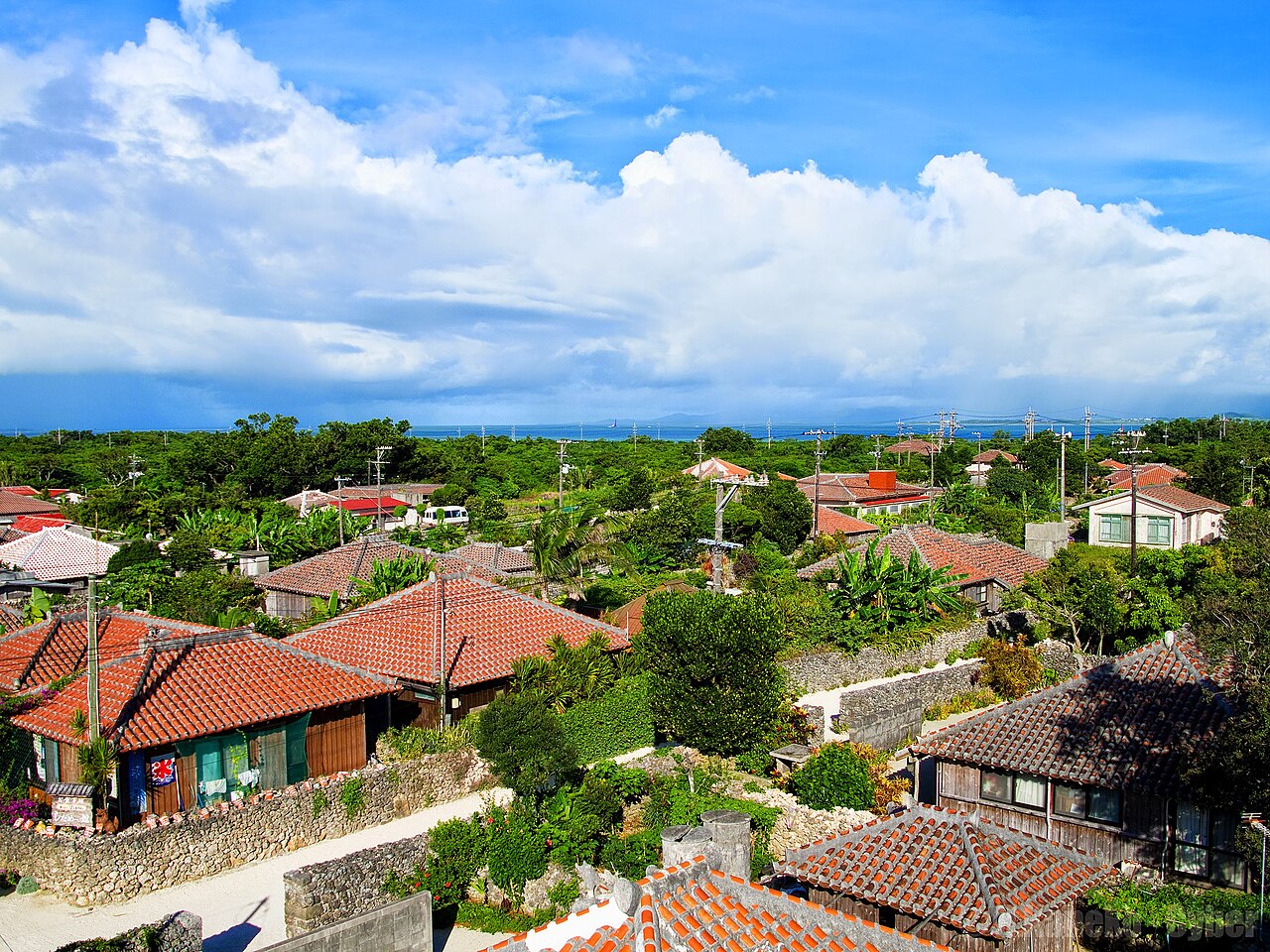
A short boat ride from Ishigaki's harbour lies an island where the lanes are white sand, the roofs are red tile, and the loudest regular sound is a cart wheel turning behind a water buffalo. Taketomi is small enough to know in a day and calm enough to slow one down: you move on foot, by bicycle, or not much at all, and the village asks nothing of you but unhurried attention. For travellers based on Ishigaki, it is the easiest quiet in the Yaeyama islands — close, legible, and shaped by its own rules rather than by tourism's.
Why Taketomi stays quiet
The island guards its shape on purpose. Houses stay low, roofs stay tiled, and the sand lanes are raked by the people who live along them. Day visitors come across from Ishigaki in a steady rhythm and go back before evening, so early mornings and late afternoons return the village to itself. There is no strip of amusements to hurry through, and nothing on the island requires a queue: the pleasures are a lane, a lookout, a shoreline, and the pace of a walking animal.
Getting there from Ishigaki
All boats to Taketomi leave from the remote-islands ferry terminal beside Ishigaki's town centre, and the crossing is one of the shortest in the Yaeyamas.
- The crossing between Ishigaki and Taketomi takes about 15 to 20 minutes.
- A one-way ticket for adults is 970 yen.
- An adult round trip is 1,880 yen.
- Children ride one way for 510 yen.
- A child's round trip is 990 yen.
- The discount fare for holders of a disability certificate is 670 yen one way.
- The discounted round trip is 1,340 yen.
- Plan to be at the ticket counter about 30 minutes before your boat leaves.
- The first and last sailings of the day are described as the busy ones; the middle of the timetable is calmer.
- In the crowded seasons, the boat companies are said to recommend buying electronic tickets on their websites ahead of the trip.
- The timetable is said to shift with the seasons, so look up the current one before you travel.
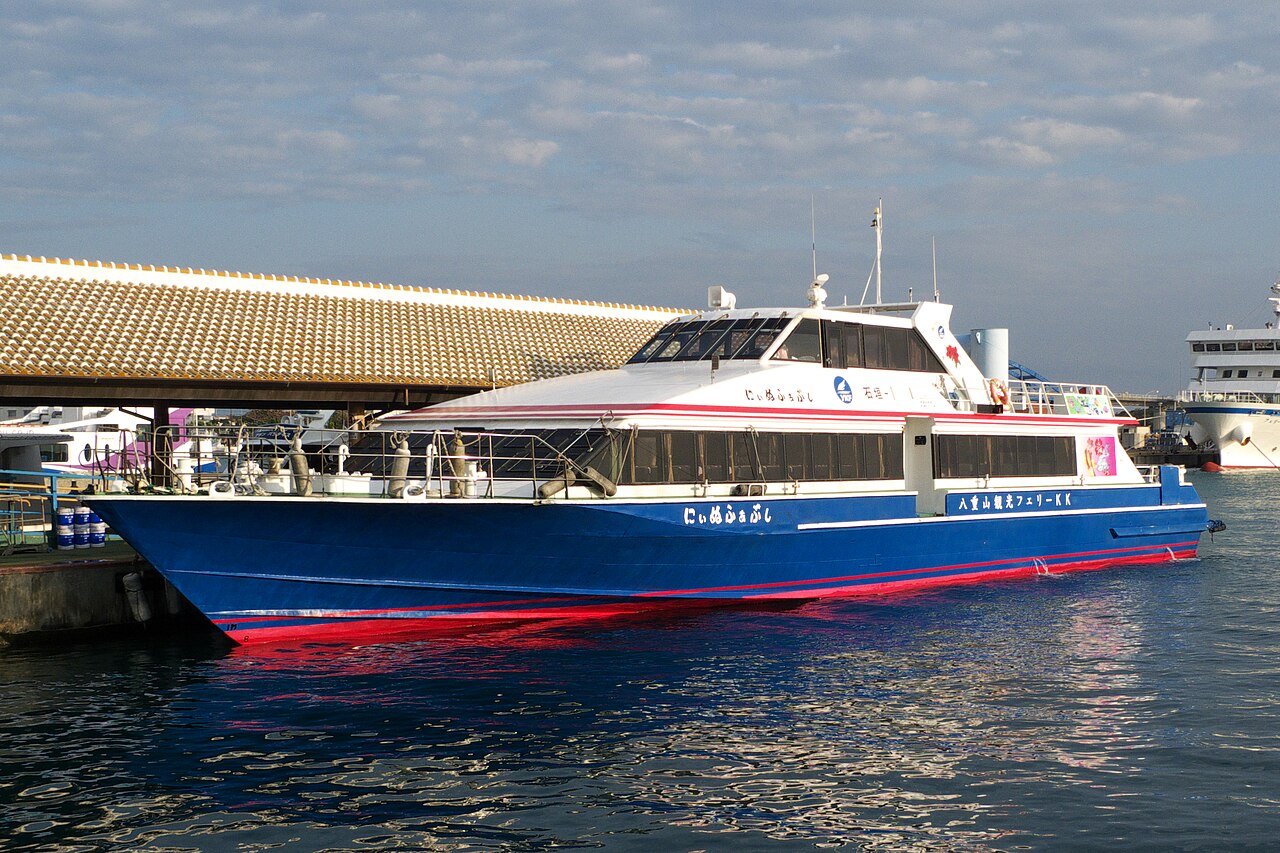
Once ashore, the village is a short ride inland, and rental bicycle shops are said to send cars to meet the boats at the port. Between two feet and two wheels, the whole island is within reach; no other machinery is needed.
Book a guided day around Taketomi and Ishigaki
If you would rather have the crossing, the cart and the timings handled for you, guided day tours out of Ishigaki bundle the boat and the village into one arranged outing, often with hotel pickup on the Ishigaki side.
Compare Taketomi and Ishigaki day tours
Disclosure: This site may earn a commission if you book through the link above, at no extra cost to you.
Fares and fees at a glance
- A water-buffalo cart ride is 3,300 yen for adults in the regular season.
- Children ride the cart for 2,200 yen.
- Small children from age three pay 1,600 yen.
- The youngest passengers, up to age two, ride free — one per paying guest.
- In the peak seasons the adult cart fare is 3,900 yen.
- The peak-season fare for children is 2,900 yen.
- The peak-season fare for the smallest riders is 1,900 yen.
- The cart operator's counter in the village is staffed from 8:45 to 16:35.
- Telephone bookings for the cart are taken until 18:00 on the day before.
- Rental bicycles must be back by 16:30.
- The cart operator will keep a large bag for 500 yen.
- A small bag can be left for 300 yen.
Where to stay
Places to stay near Taketomi Island →
Disclosure: This post may contain affiliate links. If you book through them, we may earn a commission at no extra cost to you.
The village lanes
The village is the island's heart, and its details repay slow walking. On the roof ridges sit the island's guardian lions — and here, unlike on the Okinawan main island where they come in pairs, a single shisa stands watch over each house. One lane holds the birthplace of Kuyama, the beauty celebrated in the old Yaeyama song Asadoya Yunta: the song's verses are worked into the gateposts, and her descendants are still the family of the house. Nearby stands the Old Yonaguni House, an Important Cultural Property raised in the early nineteen-tens and viewed from the outside only, its garden and stone walls speaking for a century of island housekeeping. And by the shore road sits a small outdoor children's library, the Koboshi Bunko, given to the island's children in the nineteen-seventies by the essayist Okabe Itsuko — a shelf of books under the sky, still tended.
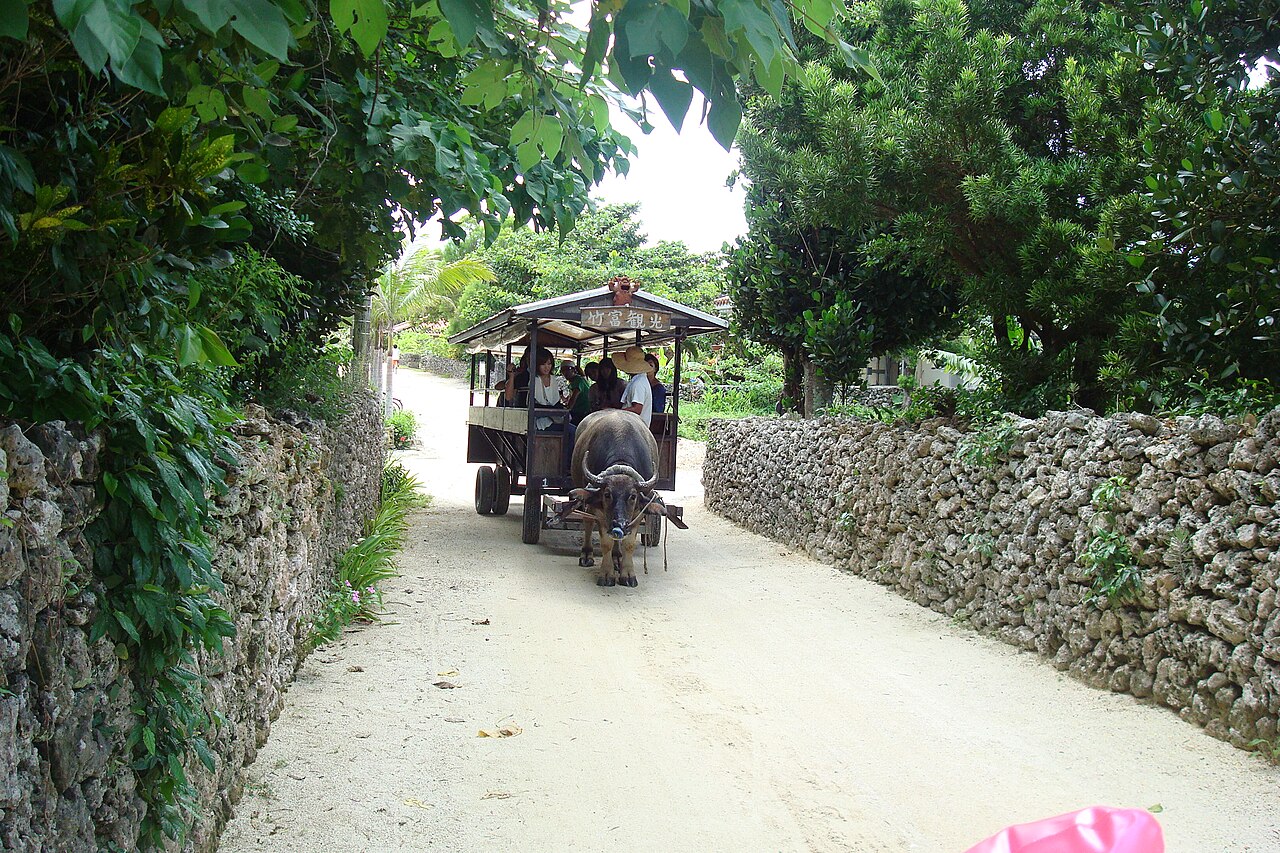
The water-buffalo carts belong to this scene as much as the roofs do. The classic way to take in the red tile, the white sand and the coral stone walls is said to be from the bench of a slow cart, with the driver singing as the animal sets the pace.
Lookouts, the pier and the western beach
The famous view over the rooftops comes from the middle of the village. Nagomi Tower stands in Akayama Park, a ride of ten minutes or so by bicycle from the port. Behind it waits the Akayama lookout deck, a minute's walk away, whose top floor gives the sweeping view of red roofs running down to the sea. A few lanes south lies Yomochi Utaki, the sacred grove at the centre of the island's Tanadui festival, about three minutes onward by bicycle — a place to pass respectfully rather than to enter.
West of the village the island softens into shoreline. Kondoi Beach is the swimming beach: shallow far out, with toilets and showers at hand, no lockers, and a reputation as the place to watch the sun go down. At low tide the sea is described as pulling back until bare sandbars stand above the water, close enough to walk toward. And at the old West Pier — said to be the jetty from which islanders once set out to farm their fields on Iriomote — the evening light draws the day's last photographs long after the beach crowd has thinned.
Museums and quiet corners
The little tower in Akayama Park, counted a nationally registered tangible cultural property, can no longer be climbed — the lookout deck behind it now does that work. For the island's story, the collection hall of Kihōin, the temple spoken of as Japan's southernmost, keeps some four thousand everyday objects, among them the knotted straw records called warazan by which islanders once kept accounts without writing. And on the walk in from the eastern port stands the Yugafu-kan, the island's visitor centre, which lays out the village's customs and festivals before you reach the first lane — a sensible first stop if you want the island explained before it surrounds you.
A day that fits together
- Morning: take an early boat, leave your bag at the cart operator's counter, and walk the lanes while the sand is freshly raked and the village is at its emptiest.
- Late morning: the lookout deck for the rooftop view, then the slow circuit behind a water buffalo.
- Midday: lunch in the village — early, before the day-trip tide peaks.
- Afternoon: cycle west for Kondoi Beach and the West Pier, saving the pier for the softening light.
- Before the last boats: return the bicycle, collect your bag, and ride back to Ishigaki with the crowds already gone.
Eating and staying
The village kitchens are few and small, and that is part of the deal. Lunchtime is described as the crowded hour in the island's eateries, and for the evening, tables are said to be worth reserving ahead. The handful of inns fills quickly in the high season, and guidebooks describe booking well ahead as the only reliable way to sleep on the island — which, for those who manage it, means having the lanes to themselves once the last boat has taken the day visitors home.
Before you go
- The island rewards the edges of the day; the middle belongs to the day-trip crowds.
- Carry cash for the small counters, and carry your rubbish back with you.
- The lanes pass working homes: look, photograph gently, and leave gates and gardens to their owners.
- If you want the whole outing arranged in one booking, you can compare Taketomi and Ishigaki day tours before you travel.