A castle town that turned to craft
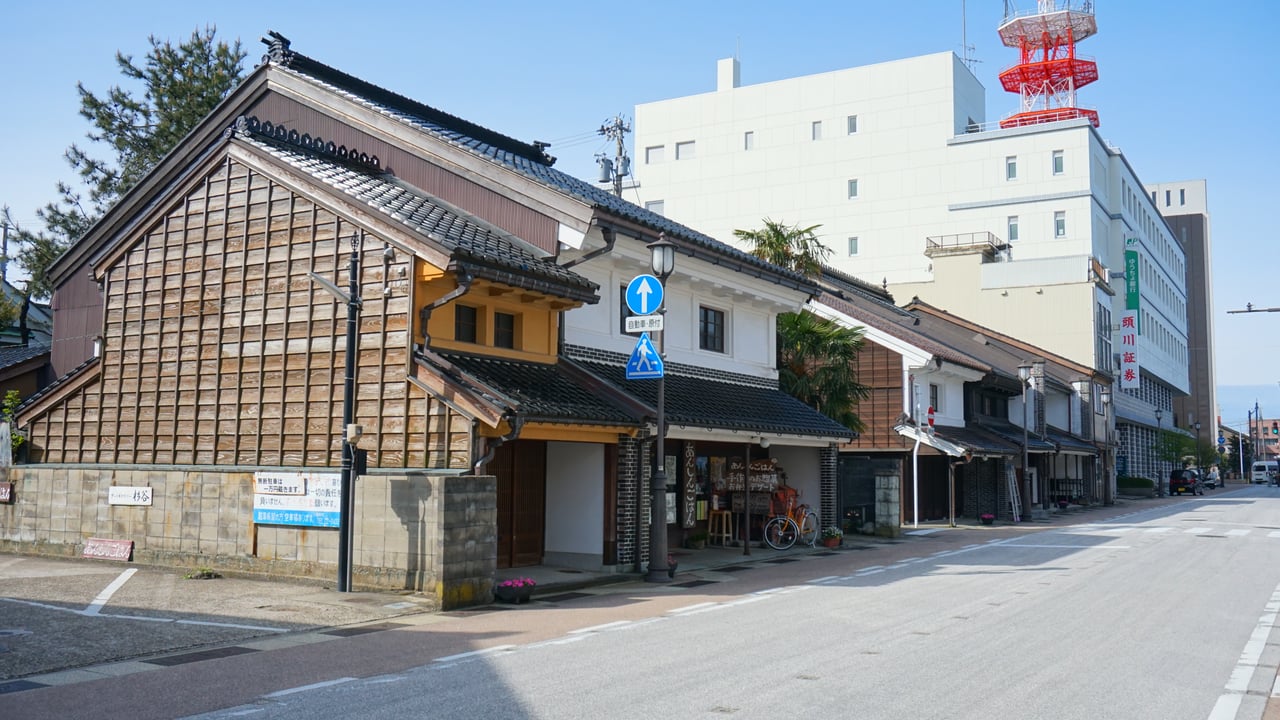
Takaoka is the kind of town most travellers ride straight past, which is exactly why it rewards the ones who step off. The place was once called Sekino; in the Keicho era, Maeda Toshinaga, having handed the family headship to his heir, moved here and raised a castle, and the merchants and craftsmen who gathered under it made Takaoka the chief town of western Etchu even after the castle came down. The old records rank its industries in order — bronze first, then lacquer, then iron — and say the bronze ware, made for everyday use, was shipped abroad in quantity. The castle grounds survive as Takaoka Park, where deep moats and old trees still give the garden its air.
Getting here is simple: the shinkansen calls at Shin-Takaoka on the southern edge of town, and the coastal railway through Hokuriku links Takaoka with Kanazawa to the west and Toyama to the east. This is not a place to rush in and out of — the two great temples face each other across the city, with a mountain of poetry between them, and they are worth a slow full day or an unhurried night.
Zuiryu-ji: the Maeda memorial in timber and stone
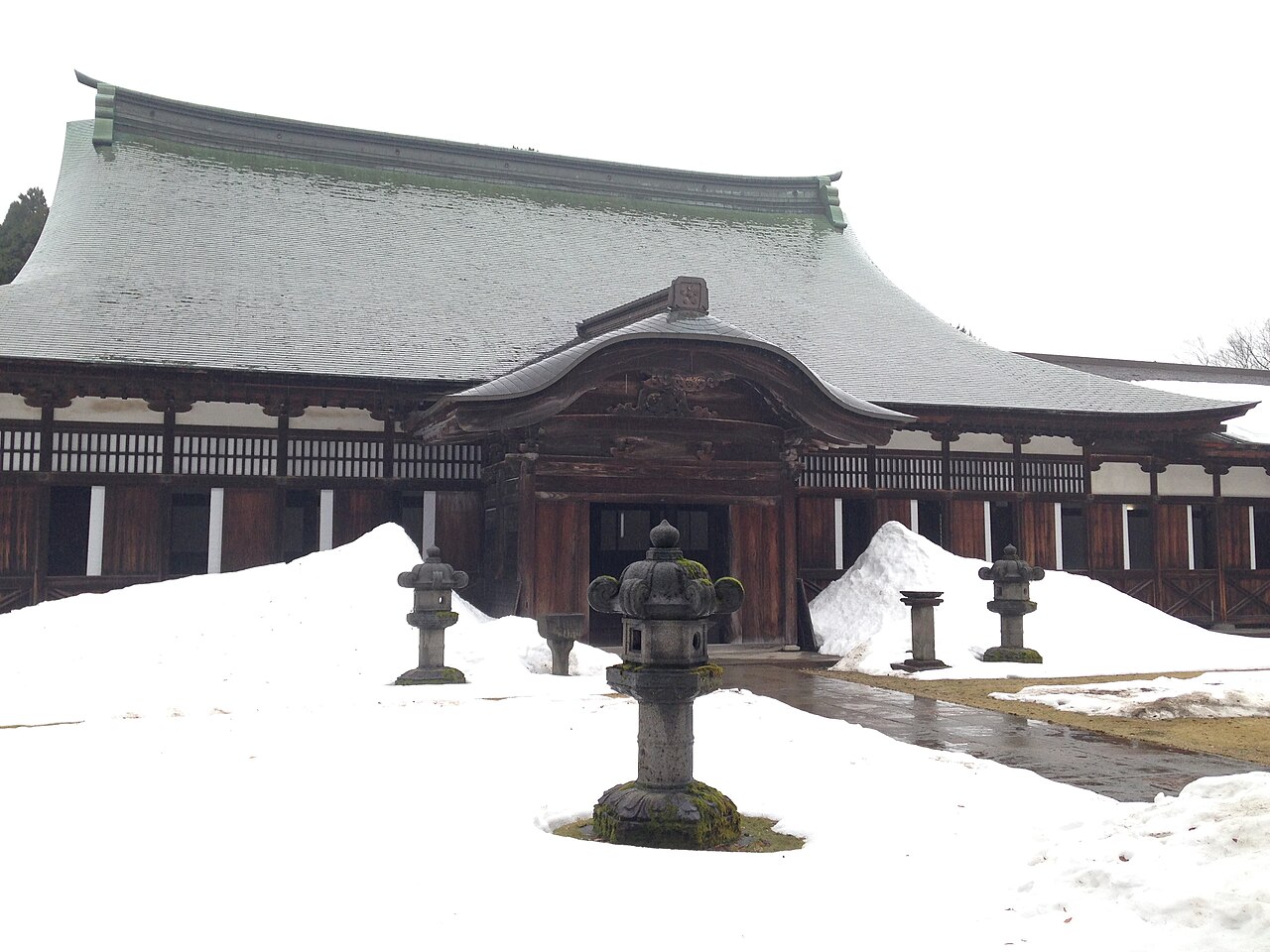
Zuiryu-ji stands at the southern end of Takaoka, a Soto Zen temple raised by Maeda Toshitsune, lord of Kaga, to honour the memory of his predecessor Toshinaga, and the work was begun and brought to completion in the middle years of the sixteen-fifties. The design looked across the sea for its model: the compound was patterned on the Wanshou temple of Hangzhou, its seven halls laid out by the master builder Yamagami Yoshihiro, and until the Meiji era the Maeda house sent craftsmen every year to keep it in repair. The treasury holds gifts worthy of that patronage — images of the thirteen Buddhas presented by Toshitsune, letters in the hands of Oda Nobunaga and Toyotomi Hideyoshi, and paintings by Kano Tanyu among them. Climb the gate and you meet the view the old guide lingers over: rivers threading the wide plain down to the port of Fushiki, boats working the sea of Ariso beyond, and eastward the peaks of Tateyama and Tsurugi standing white in every season.
The gazetteer's compilers also measured the approach: Zuiryu-ji is described as standing about fifteen cho from Takaoka's station, near enough that the roofs of its halls could be made out from the platform. Maeda Toshinaga's own grave lies close by at the temple of Hankyu-ji, and the old guide notes it could once be glimpsed from the passing railway.
Compare options and book a guided day in and around Toyama if you would rather have the logistics handled for you.
Where to stay
Disclosure: This post may contain affiliate links. If you book through them, we may earn a commission at no extra cost to you.
Across the city: Shoko-ji and the poets' hill
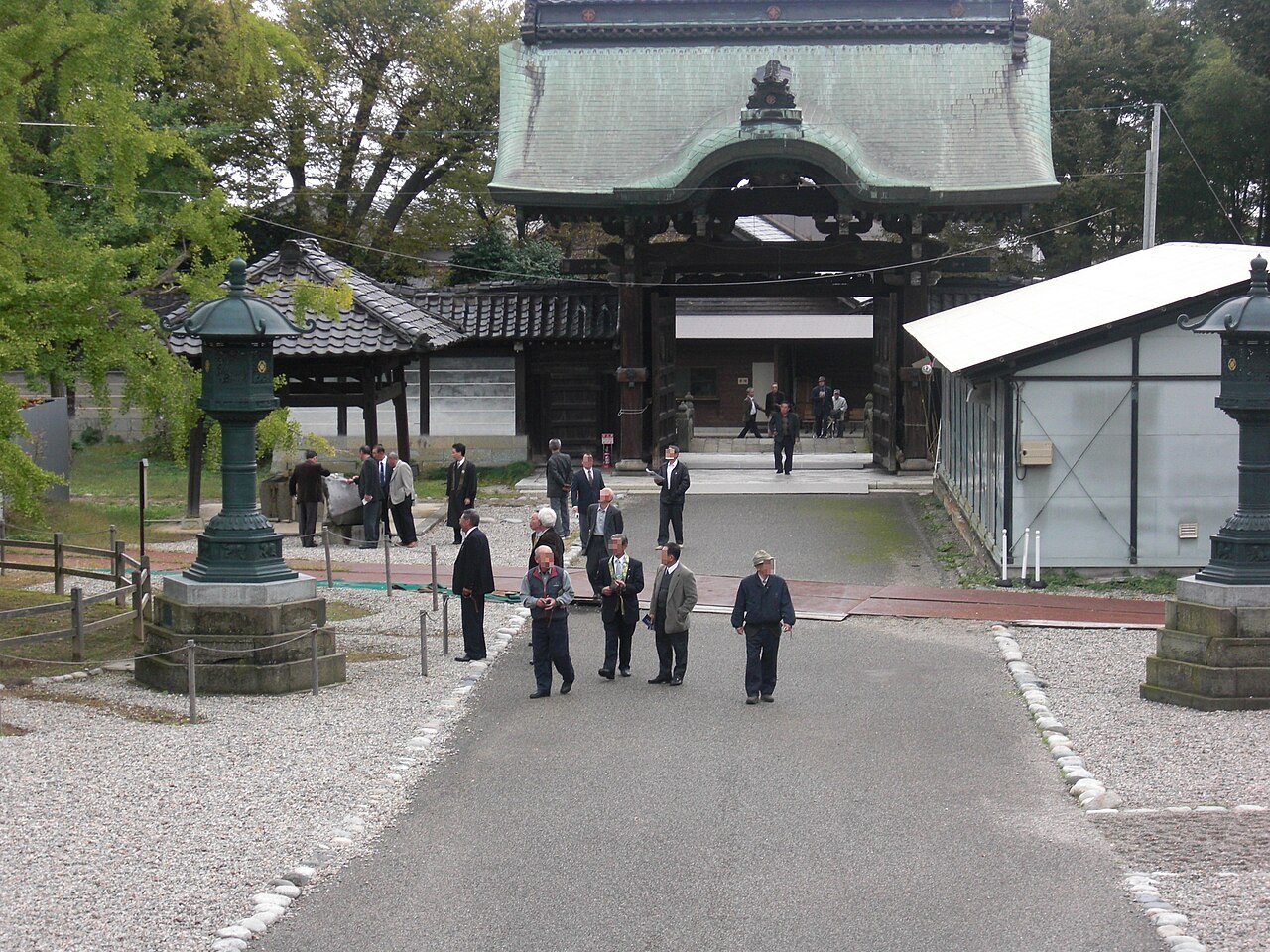
North of the centre, where the rivers meet the sea at Fushiki, the great temple of Shoko-ji spreads across high ground above the port. It belongs to the Hongan-ji branch of Jodo Shinshu; its origins are traced to the twelve-twenties, when a prince, a son of Emperor Juntoku, founded its forerunner on the island of Sado, and it was re-established on the present site in the Tensho era. Before the Meiji era it held rank equal to a head temple, and some forty buildings — halls, drawing rooms, gates, a belfry and a drum tower — still stand within its broad compound. Tradition holds that the grounds take in the site of the old provincial seat of Etchu, where the poet Otomo no Yakamochi is said to have lived during his years as governor, and traces of a double moat are still pointed out around the temple. The old guide calls the outlook one of the finest in the region: Futagami-yama rises at the temple's back, the Tateyama range floats far to the southeast, and the whole of Toyama bay opens out in front, beyond the harbour. In the shop you can pick up the commemorative photo book of the temple's National Treasure designation for three thousand yen.
Futagami-yama and the sea of Ariso
Between the two temples rises Futagami-yama, the mountain Yakamochi could not stop writing about. The old records call it the first of Etchu's poetic places, famed since antiquity for moonlight and autumn leaves and sung again and again in the Manyoshu. From the summit, they wrote, you look out to the island of Sado far across the water, with the towns of Fushiki and Shinminato spread below. On the mountain's eastern skirts stands Keta Shrine, founded in the early years of the eighth century and honoured as the first shrine of Etchu province. The record books say its worshippers have never ceased in any season, and the grove keeps its hush even so. Follow the shore northwest of Fushiki and you come to the sea of Ariso, where rocky headlands push into the water and the hills of Noto show across the bay. Basho passed this way on his narrow road north and left a verse on the scent of early rice at the water's edge.
A quiet circuit arranges itself:
- The cloistered courtyard of Zuiryu-ji at first light, before the town is up.
- Toshinaga's grave at Hankyu-ji, a short stroll away.
- The karamon gate and great halls of Shoko-ji above the port of Fushiki.
- The grove of Keta Shrine and, if your legs agree, the summit of Futagami-yama.
- The rocky shore of Ariso to close the day, with Noto across the water.
What it costs
At Zuiryu-ji, regular admission for an adult is five hundred yen. A junior-high or high-school student pays two hundred yen. An elementary-school child pays one hundred yen. Groups of thirty or more pay four hundred yen for each adult. A paid volunteer guide can be requested through the Takaoka City Tourism Association for a transportation fee of one thousand yen. At Shoko-ji, an individual adult's cultural-properties cooperation fee is five hundred yen. An audio guide rents for five hundred yen. A session of the special sutra-copying experience is offered at two thousand five hundred yen for each person.
Zuiryu-ji in the early morning, Fushiki in the afternoon, the mountain of the poets in between — it makes one of the quietest full days in the north country, and autumn, when the leaves turn on Futagami-yama, is the season the old poets would have chosen. If this kind of unhurried travel is what you are after, you can browse bookable quiet tours around Toyama for more ideas. Prices and opening arrangements shift with the seasons, so check official information before visiting.