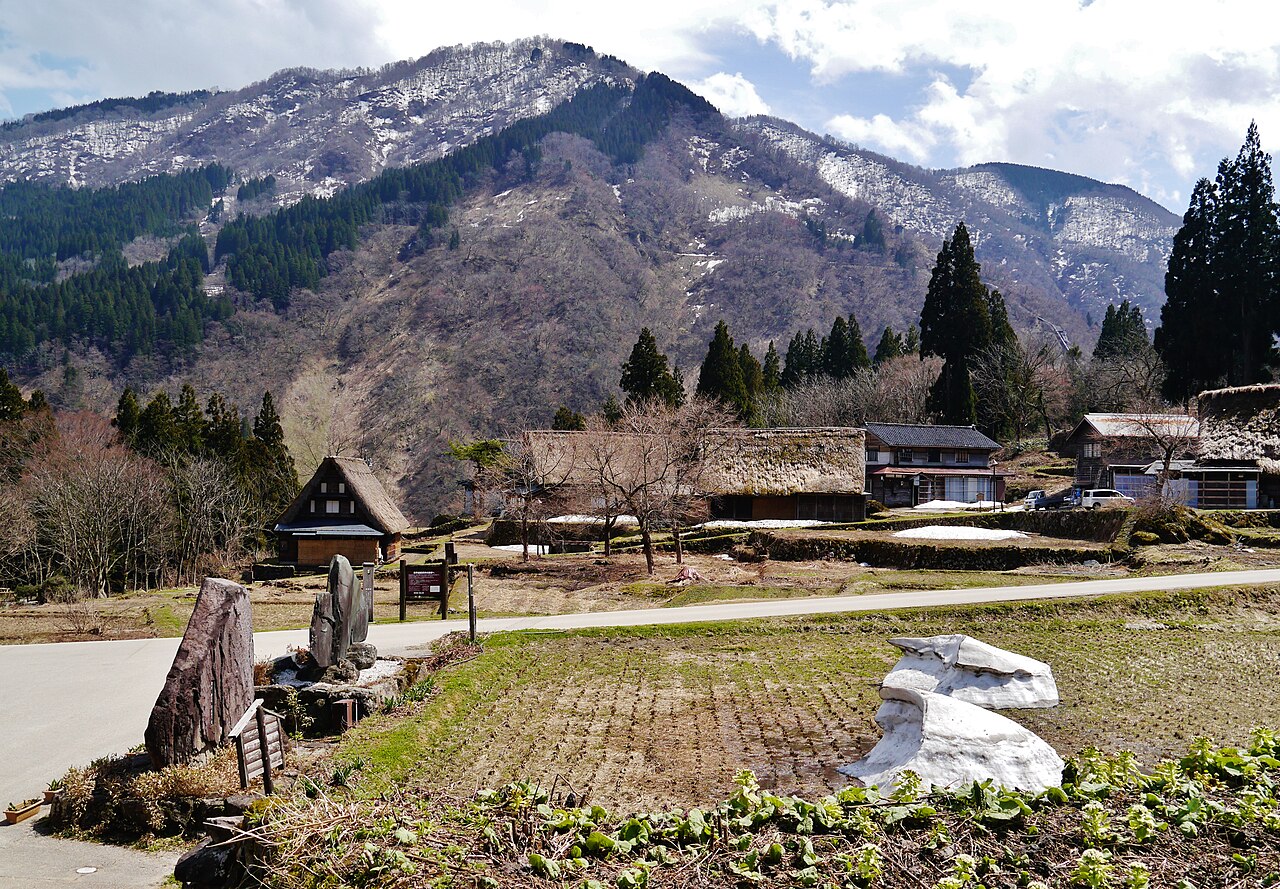
This guide covers a bus-and-foot day in Gokayama, in Toyama Prefecture, where the gassho-zukuri villages of Ainokura and Suganuma stand under their thatched roofs. It gives the bus times from Takaoka, the opening hours and fees at Suganuma, and a little about the paper, the carving, and the temple food that belong to these villages. It does not cover Shirakawa-go.
Getting to Gokayama from Takaoka
Everything here moves by bus, and the table below gives times from both Takaoka Station and Johana Station. The World Heritage bus runs from Takaoka Station to the Ainokura-guchi bus stop, which is the stop for Ainokura. The same World Heritage bus also serves Johana Station, and from there the ride to Ainokura-guchi is far shorter.
Suganuma is served from Johana Station by the bus bound for Gokayama. Decide before you leave whether Ainokura or Suganuma comes first, since the timings differ. The free-use ticket listed below covers travel between Takaoka Station-mae or Shin-Takaoka Station and Gokayama, so either of those stations works as the starting point for the day.
| From | To | Bus time |
|---|---|---|
| Takaoka Station | Ainokura-guchi bus stop | 1 hour 15 minutes |
| Johana Station | Ainokura-guchi bus stop | 25 minutes |
| Johana Station | Suganuma | 40 minutes |
- Two-day free-use ticket between Takaoka Station-mae/Shin-Takaoka Station and Sasarakan-mae (Gokayama): 2,800 yen for an adult
- Two-day free-use ticket between Takaoka Station-mae/Shin-Takaoka Station and Shirakawa-go: 4,000 yen for an adult
Ainokura: the village at the end of the bus ride
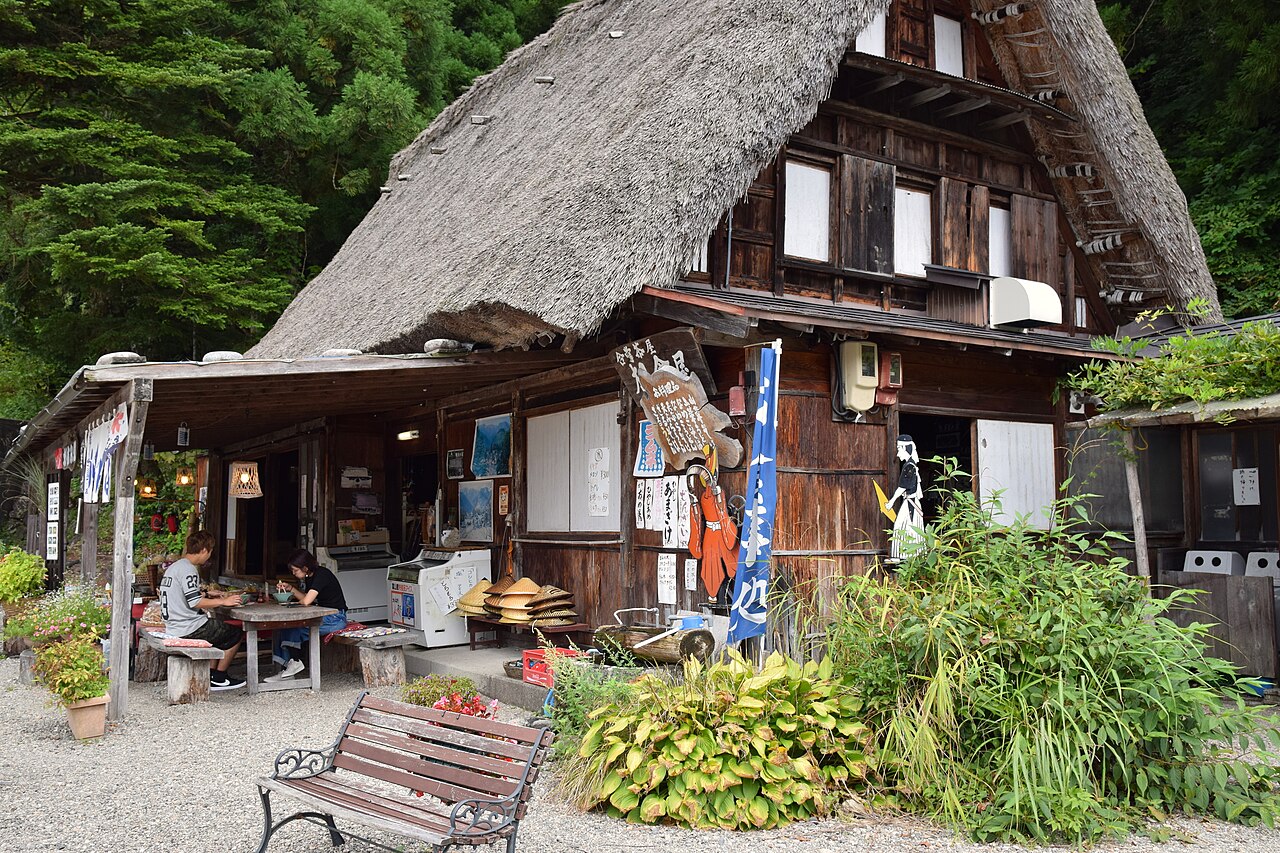
Get off at the Ainokura-guchi bus stop and Ainokura Gassho-zukuri Village is a five-minute walk away. That short walk is where the bus ride ends and the village begins, so let it be slow. Arrive, look up at the thatch, and then start noticing the smaller things that the houses hold.
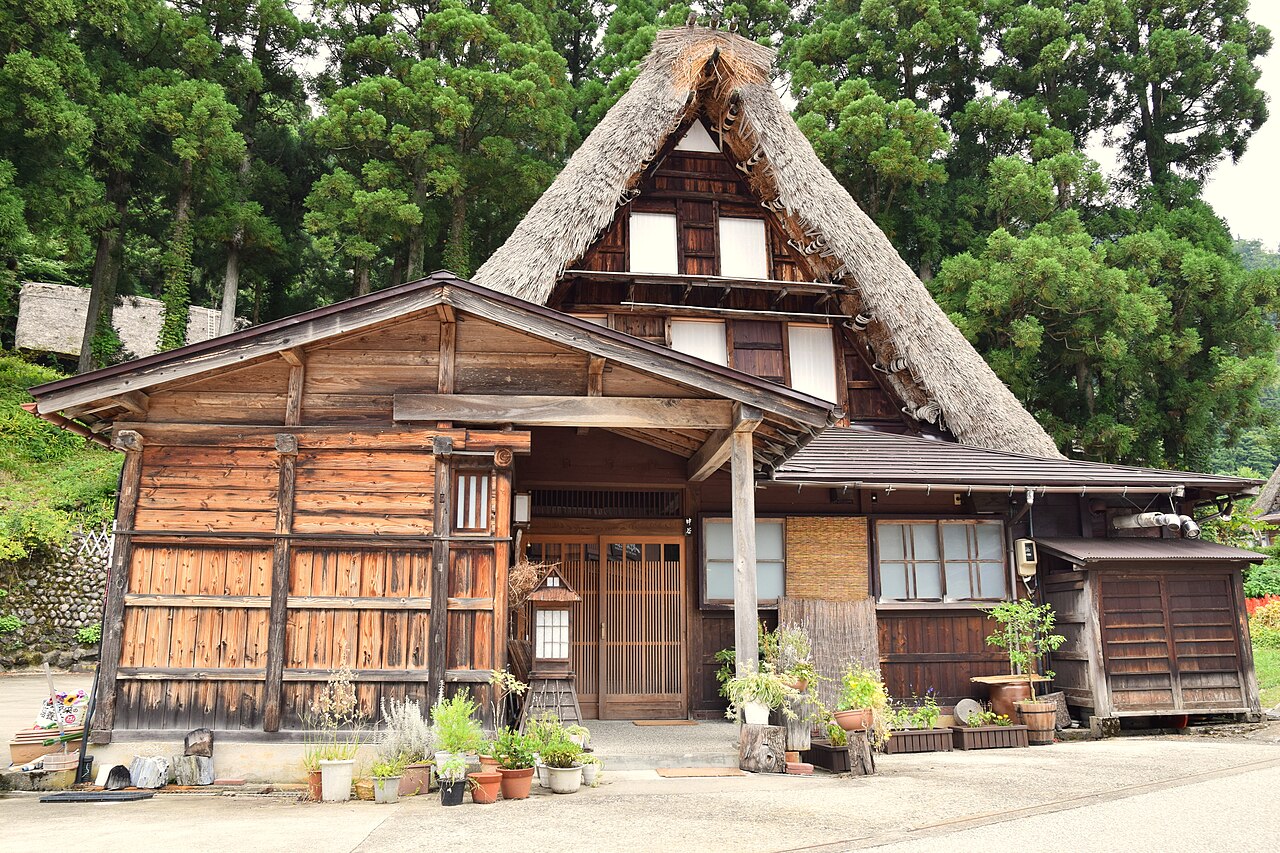
The homes of Gokayama's gassho-zukuri villages carry Inami carving inside them. Ranma, the carved transom panels, are fitted into private houses, and figures of Tenjin-sama or shishigashira lion heads are kept as ornaments. This is Inami carving handed down in a form rooted in the residents' everyday life.
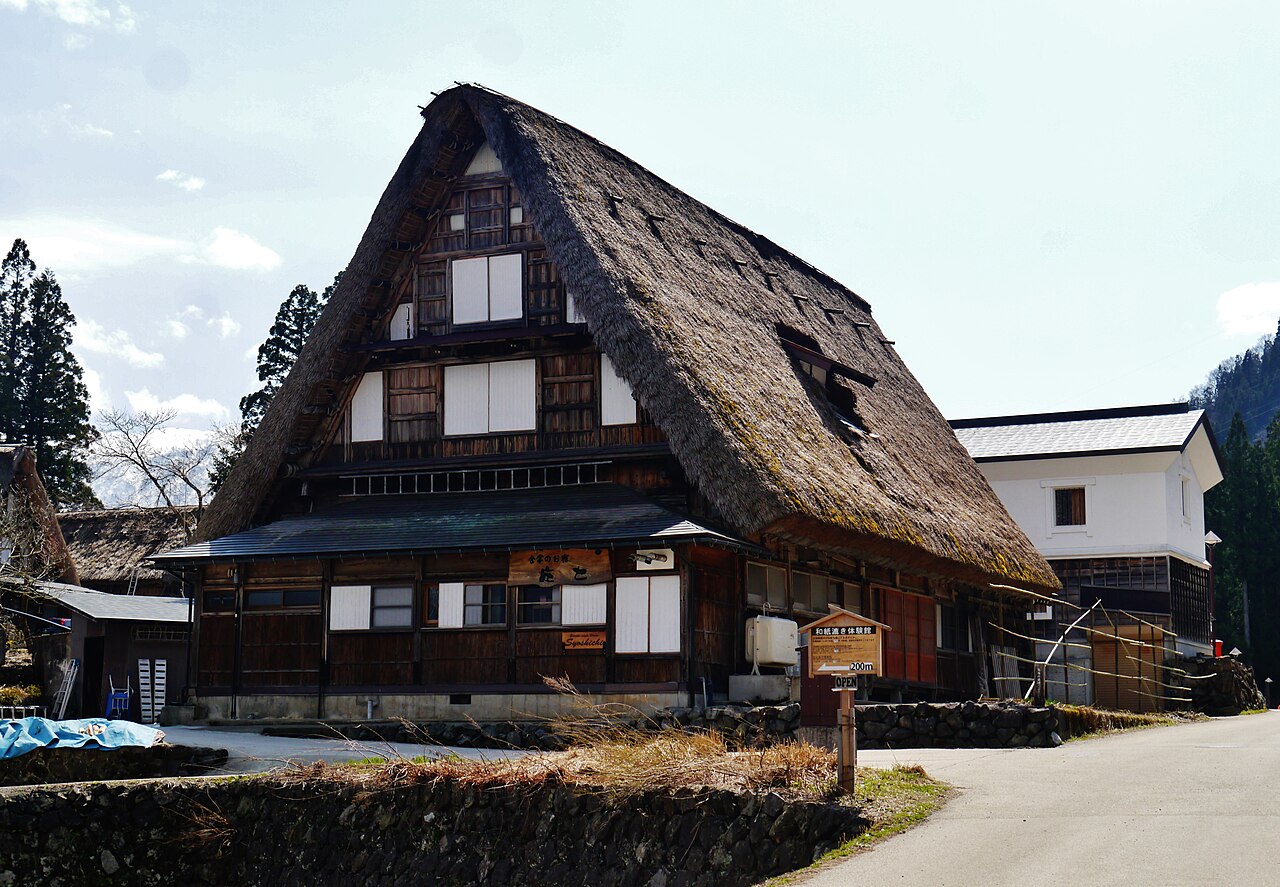
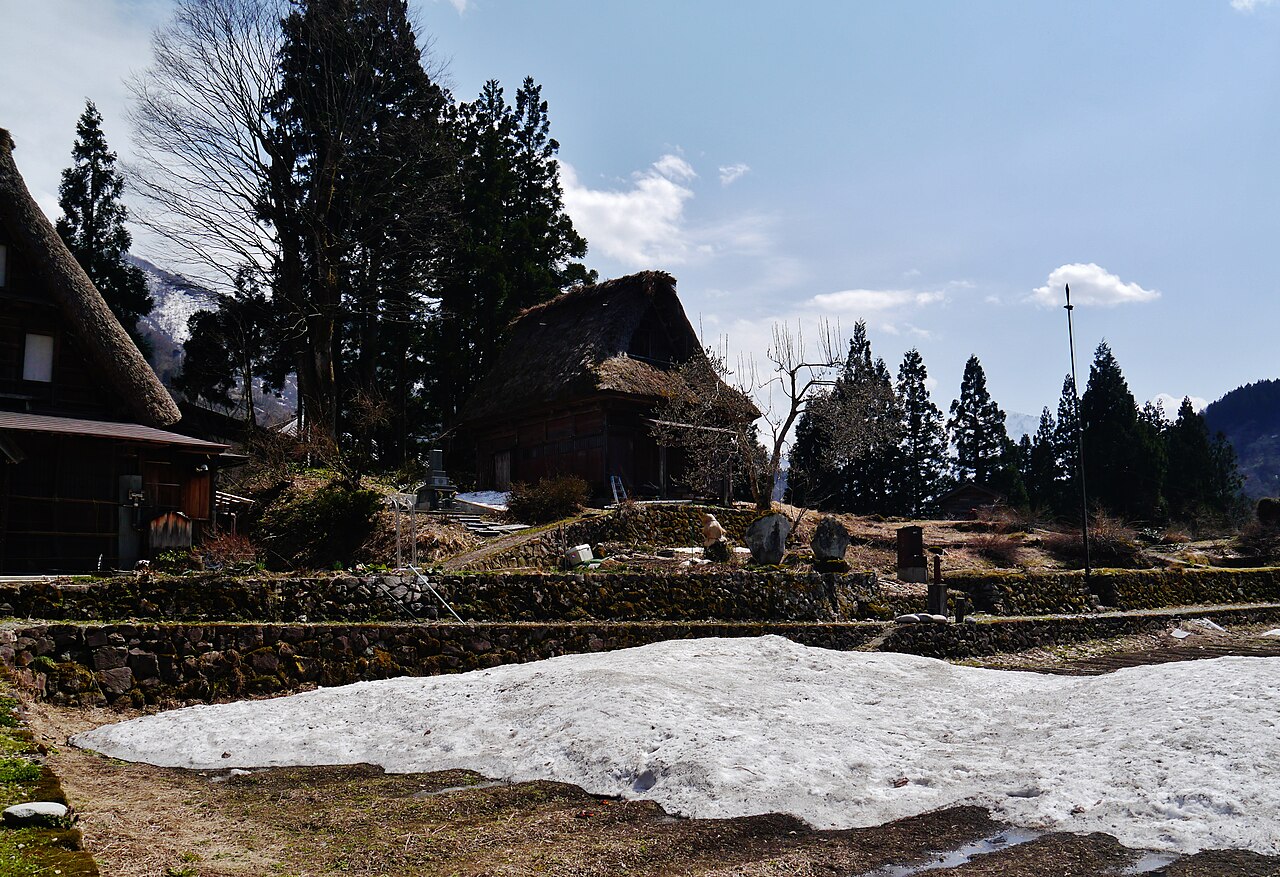
If the quiet makes you want more than an afternoon, look at places to stay in Gokayama. Staying overnight turns the walk from the bus stop into something you do only on arrival, and leaves the next day free for the other village without watching the clock.
Where to stay
Places to stay near Gokayama, Toyama →
Disclosure: This post may contain affiliate links. If you book through them, we may earn a commission at no extra cost to you.
Suganuma and the Gokayama Folk Museum
Suganuma is the other village, and it comes with a museum beside the bus stop. From the Suganuma bus stop, the Gokayama Folk Museum is about a minute on foot, so it makes sense to go in first and then walk through Suganuma Gassho-zukuri Village with some context for what you are looking at.
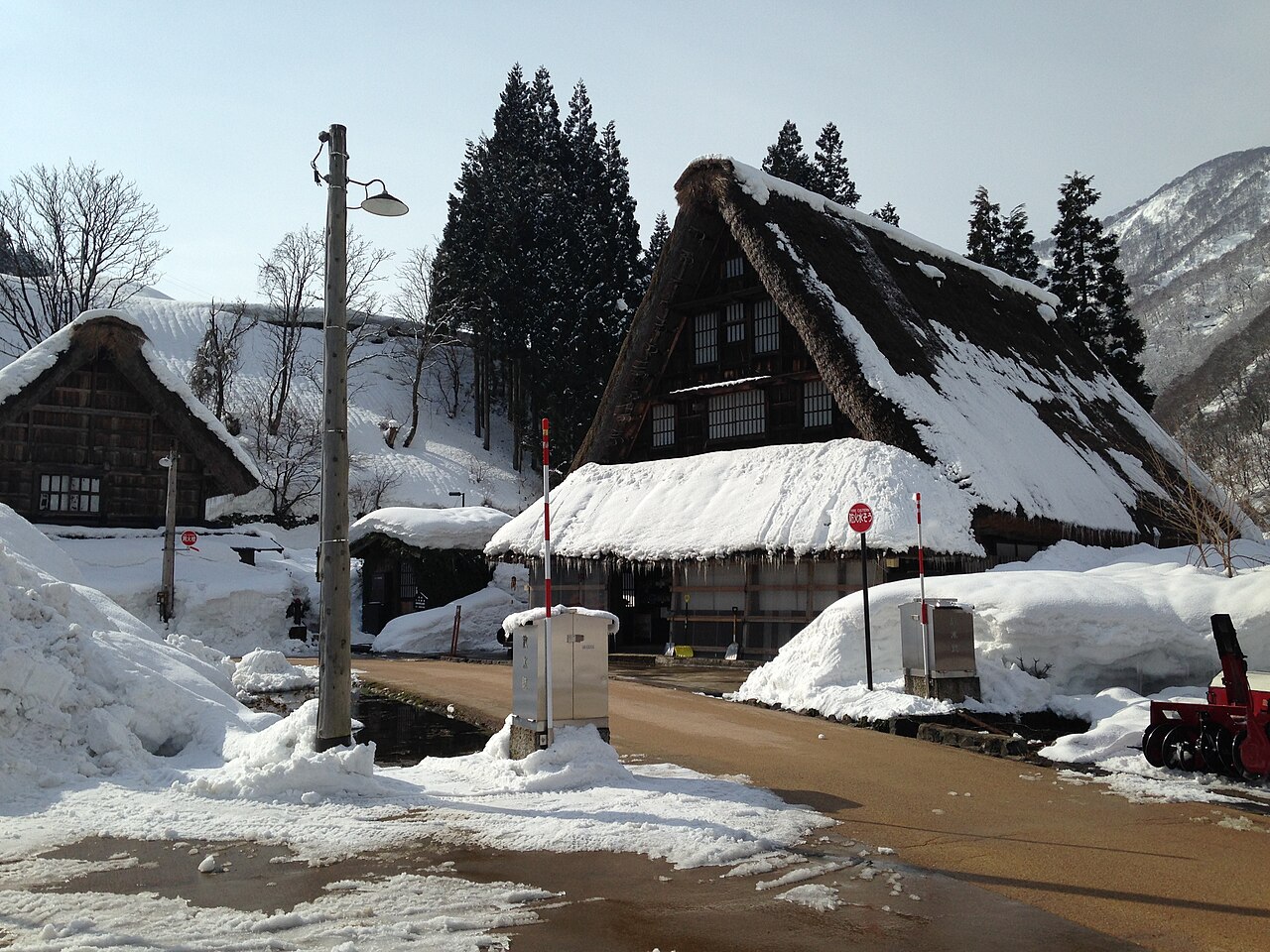
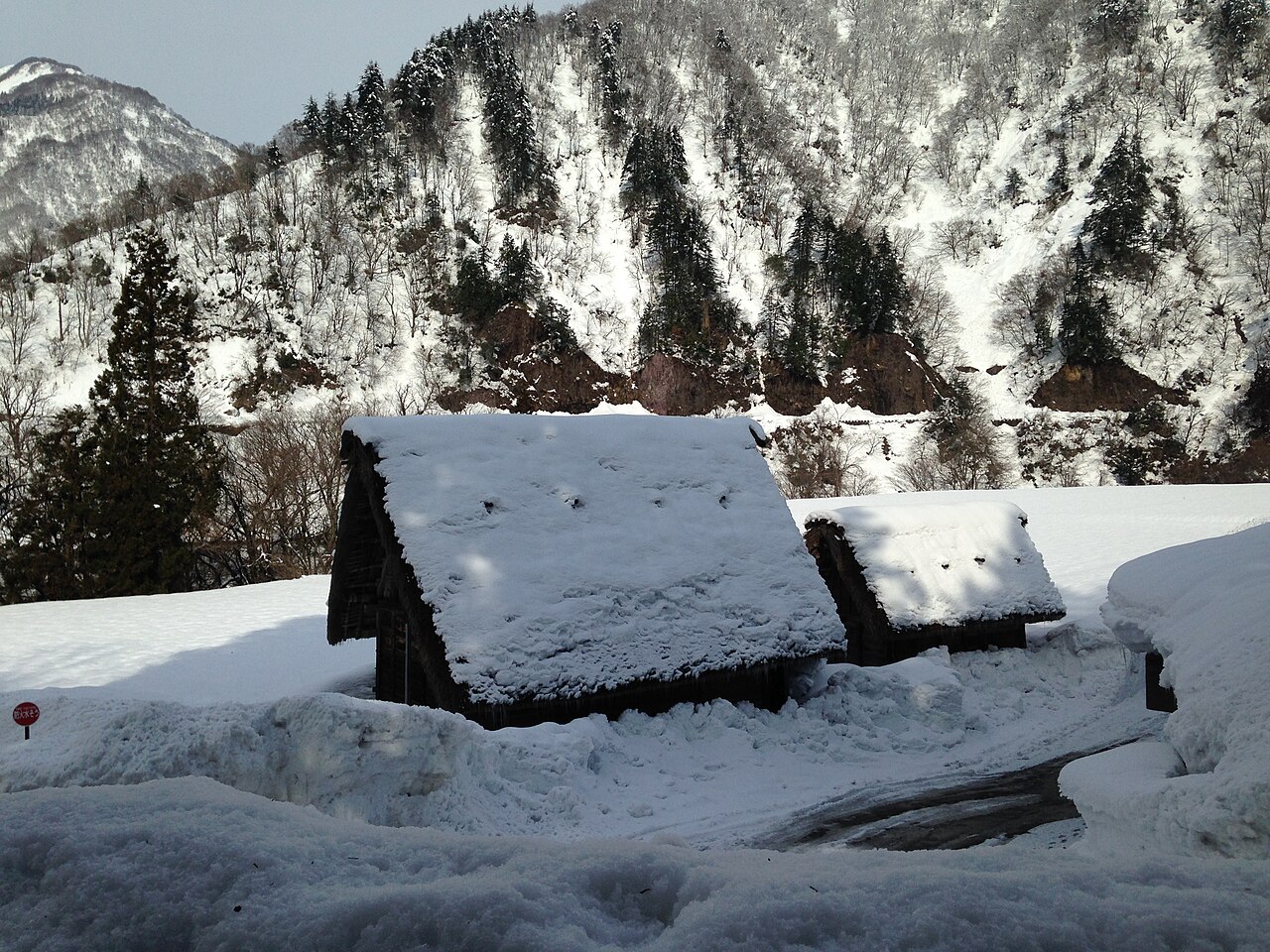
The village and the museum keep separate hours, and both are shorter from December to March, when snow lies in the lanes. A common ticket covers both the museum and the Ensho-no-Yakata. If you come by car, the Suganuma Observation Plaza parking lot charges a fee and stops accepting entry in the late afternoon.
- Suganuma Gassho-zukuri Village: open from 8:00 to 17:00, April to November
- Suganuma Gassho-zukuri Village: open from 9:00 to 17:00, December to March
- Gokayama Folk Museum: open from 9:00 to 16:30, April to November
- Gokayama Folk Museum: open from 9:00 to 16:00, December to March
- Common ticket for the Gokayama Folk Museum and the Ensho-no-Yakata: 400 yen for an adult
- Common ticket for the Gokayama Folk Museum and the Ensho-no-Yakata: 200 yen for an elementary or junior high school student
- Suganuma Observation Plaza parking lot: 1,000 yen for a regular car or kei (light) car
- Parking lot entry at Suganuma: accepted only until four in the afternoon
Gokayama washi at Michi-no-Eki Taira
The place to meet Gokayama's own paper is Gokayama Washi no Sato at Michi-no-Eki Taira. Gokayama washi is made from kozo, paper mulberry grown on the facility's own grounds. In the Edo period it was a high-quality paper offered as tribute to the Kaga domain; today it is designated, as part of Etchu washi, a nationally recognized traditional craft.
Inside, the Washi Kogeikan, the paper craft hall, sells many kinds of washi products, and it is worth slowing down at the exhibits as well. They cover the history of Gokayama washi and show how the paper is made, which makes the sheets on the shelves easier to understand and easier to choose between.
Step back outside afterwards. Kozo is planted around the building itself, so you can look at the raw material up close before or after you look at the paper. The experience hall, the craft hall, and the local specialty shop all close over the New Year holidays, so a midwinter visit needs to be planned around that.
Carvings and lion heads from Inami
The carving you noticed in Ainokura has a name and a home. Inami, in Nanto city, lies on the far side of the mountain, and the shishigashira lion heads used in Gokayama's lion dances are made with Inami carving techniques. In those heads the district's performing tradition and its craftwork come together in a single object.
The same craft is worked into the religious buildings. In Gokayama's temples and shrines, Inami carving is cut into partition panels and into tebasami, the bracket carvings, bringing simple and powerful decoration into the architecture. It is the same Inami carving as in the homes, put to a different use.
Geography explains the connection. Behind Zuisenji, the temple in Inami, rises Mount Yaotome, and crossing it by the mountain road leads on to the gassho-zukuri villages of Gokayama. Inami and Gokayama are linked by that crossing, which is why a craft from the town appears so naturally in the houses of the villages.
Hōonkō: the autumn temple feast
Toyama Prefecture is called the Shinshu Okoku, the Jodo Shinshu kingdom, for how strongly the Jodo Shinshu faith is practiced here. Hōonkō is the memorial service held to mark the death anniversary of Shinran Shōnin, the founder of Jodo Shinshu, and the food served at that service is called hōonkō-ryōri.
This is annual-event food, not a menu. It is eaten around the twenty-eighth of November, at Hōonkō services held in temples and in homes that invite a priest, by the people who gather around the vermilion-lacquered trays. It belongs to that occasion rather than to everyday dining, which is the reason to know the date before you plan.
In the Gokayama district the dishes are arranged on vivid vermilion-lacquered trays: rice, soup, a vinegared dish, a simmered dish, and a tsubo, a small dish. Whatever will not fit on the tray, such as pickled red turnip, is served in tiered boxes or large bowls, so the whole table fills out around the trays.