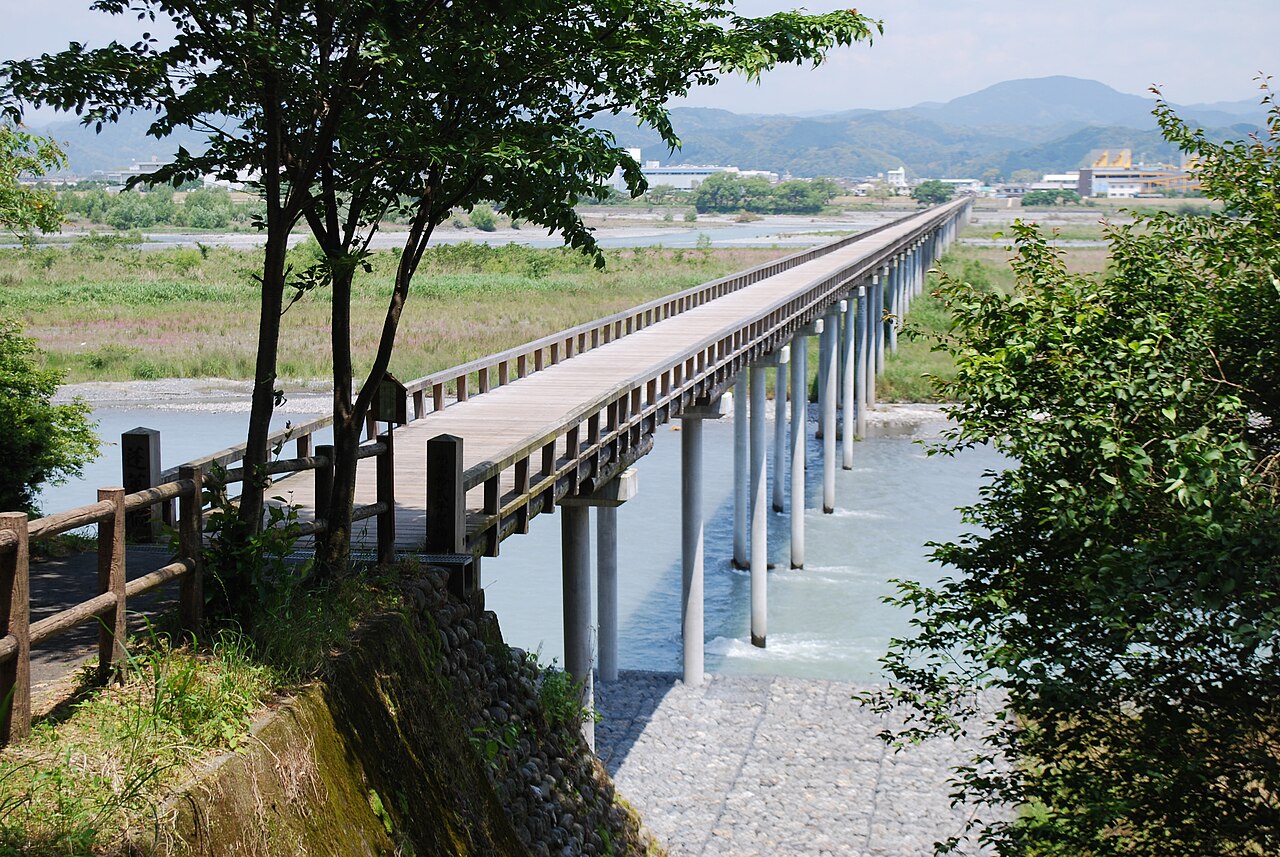
Shimada in Shizuoka pairs a bridge that settlers of the Makinohara plateau funded as an agricultural bridge with a post town where travelers once crossed the Oi River on a porter's shoulders. Start on the Shimada side with Horai Bridge and the Oigawa Kawagoshi ruins, then move to the Kanaya side for the stone-paved slope, the Suwahara castle ruins and the park where the tea fields spread out below Mt. Fuji. Beyond that core, a rose park with about five hundred varieties, a green-tea complex where the Oigawa Railway rolls past the restaurant, and temple paths beneath cedars said to be eight hundred to a thousand years old fill a longer stay.
Horai Bridge and the Tea House at Its Foot
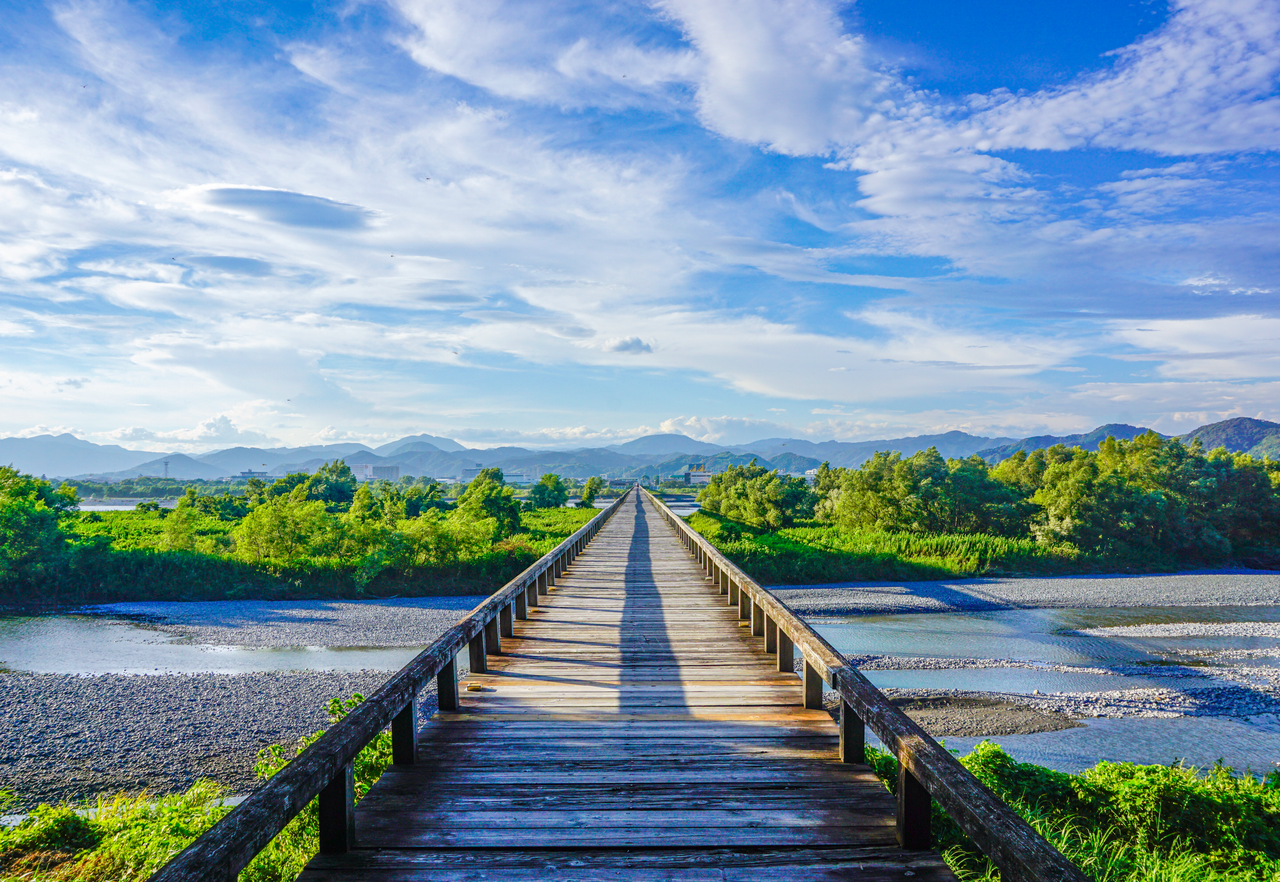
Horai Bridge was built in the Meiji era as an agricultural bridge, with joint funding from the settlers of the Makinohara plateau, and at its foot a tea house takes its name from a number wordplay on the length of the bridge, read as yakunashi, with tatami benches outside where you can rest after crossing. The benches are where the crossing turns into a pause.
The tea house serves oshiruko, the sweet bean soup, either on its own or as a set with tea. There is also a sencha soft serve, so the pause on the benches can be sweet, green or both.
At the Bonbori Festival the bridge is hung with bonbori lanterns that are lit at night, stage events with songs and dances fill the plaza, and shamisen is played on the bridge itself. Cross first and take the benches and a bowl of oshiruko before heading for the Kawagoshi ruins, since the tea house is the natural pause between the bridge and the post town.
Oigawa Kawagoshi Ruins and the Shimada City Museum
In the Edo period travelers crossed the Oi River on a porter's shoulders or on a renday, a platform carried by porters, and the Oigawa Kawagoshi ruins recreate the scenery of the river-crossing office and the porters' waiting houses. The porters went in bare-bodied, with a patterned cloth around the waist in a wave-and-plover or cloud-and-dragon design.
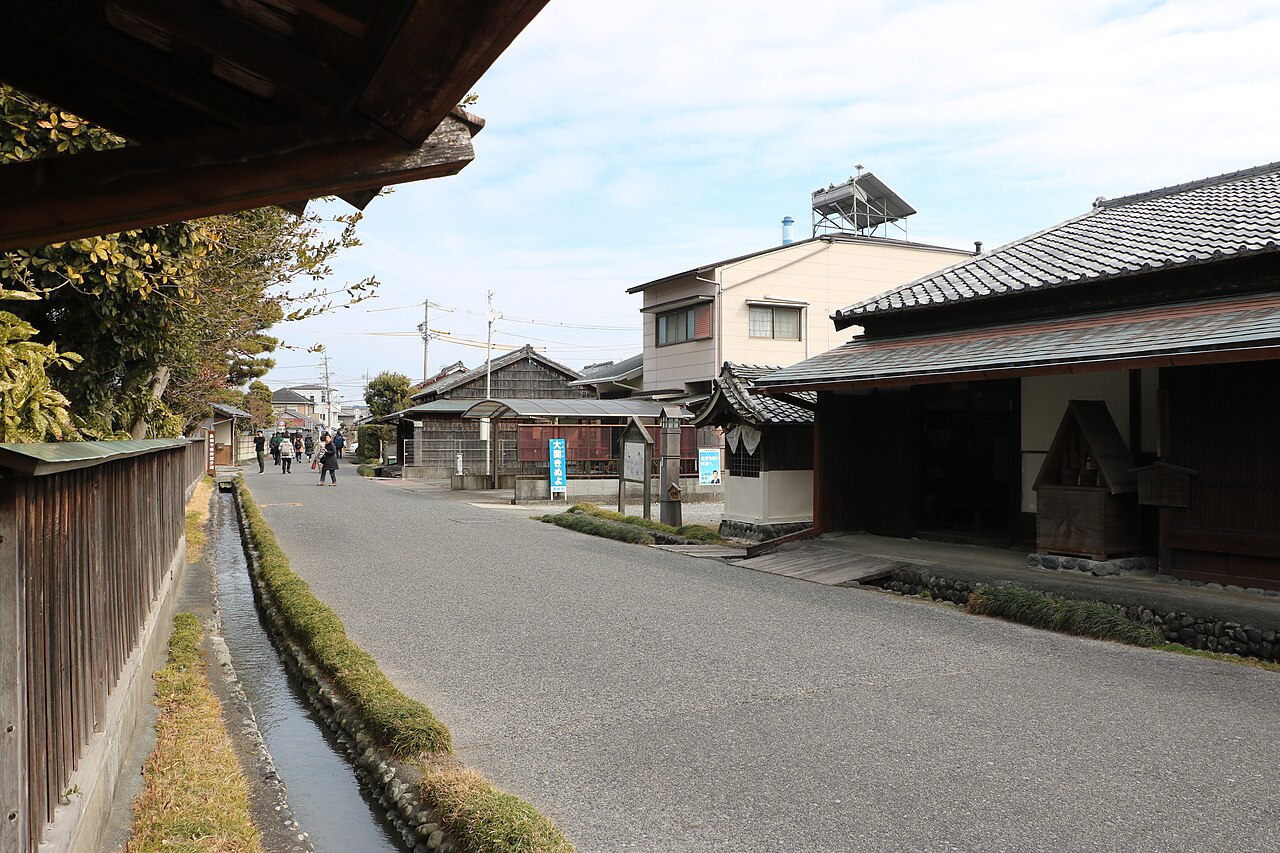
The ruins are a national historic site, and the Shimada City Museum shows the river crossing of the Oi River at Shimada-juku in the Edo period in its permanent exhibition, alongside special exhibitions. A three-dimensional video diorama lets you see the scene of Shimada-juku as a whole, which places the recreated office and waiting houses in the larger post town.
Basho verse monuments and other monuments are scattered around the museum, so a slow loop of the grounds adds a few more stops. Walk the recreated office and waiting houses first, then go into the museum for the diorama, so that the buildings you have just seen take their place in the wider post town.
Kanaya Stone-Paved Slope and Suwahara Castle
The Kanaya slope has an exposed clay layer that turned to mud in rain and troubled daimyo processions and travelers, and in the late Edo period a stone pavement was laid on it with mountain stones, which are rougher underfoot than the river stones of the Oi River today. Halfway along the pavement a hexagonal hall enshrines a Jizo statue, a natural place to pause on the climb.
At the Suwahara castle ruins, the visitor center lays out the history and structure of the castle in panel displays, together with Japanese castles in general, castle terms, a timeline and a reconstruction drawing, and pottery and musket balls excavated from the site sit in its display cases.
Mt. Fuji can be seen from the castle ruins. Walk the stone pavement before the castle, so that the panels and the musket balls in the visitor center land on ground you have already climbed, and let the view of Mt. Fuji from the ruins close the Kanaya side of the day before the tea fields.
Makinohara Park, Tea Fields and Mt. Fuji
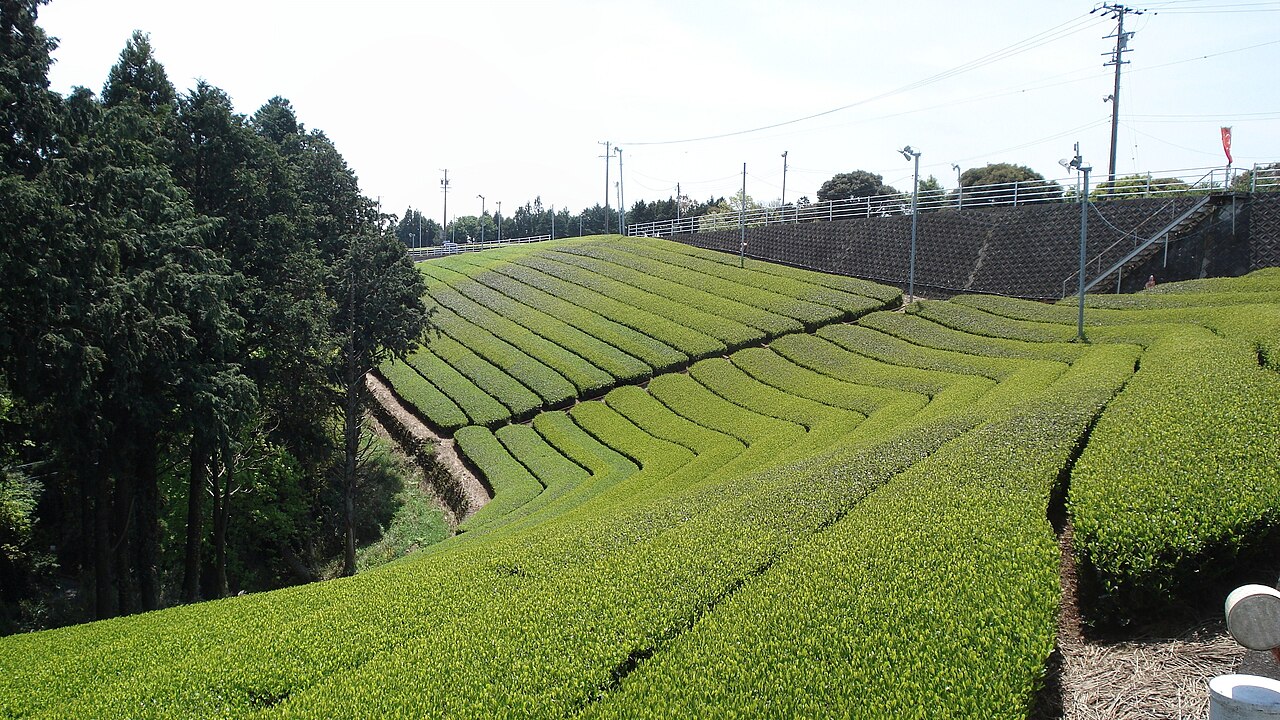
Makinohara Park holds a statue of Eisai Zenji, the founder of tea and a symbol of the tea town Kanaya, erected by a group of local volunteers to mark one hundred years of Japanese tea export, and from the park the Shimada townscape and Mt. Fuji come into view. On the Shimada side, a hilltop park with a statue looks down on the tea fields spreading below, with the Oi River and Mt. Fuji beyond.
The night view from Makinohara Park is registered as a Japan Night View Heritage, with the lights of the town and the light and dark of the Oi River and tea fields spread out, and the silhouettes of Mt. Fuji and Suruga Bay.
Mt. Fuji shows to the east from the high spots within Shimada, and on days without clouds radiative cooling makes it cold and the air tends to be clear. Choose a cloudless day for the park if Mt. Fuji is the aim, and take the view in from beside the statue, where the town below and the mountain line up.
Rose Hill and Green Tea at KADODE OOIGAWA
Bara no Oka grows about five hundred rose varieties, and the outdoor garden lets you see many up close while walking the promenade. In the large greenhouse you walk slowly among more varieties while a sweet rose scent spreads, and one variety carries a fruit-like, gentle scent. Rose-scented beans are the thing to take home.
KADODE OOIGAWA is divided into three buildings: a marche building, a cafe building and a restaurant building across the road. Visitors can compare four kinds of green tea that differ in steaming time and firing strength, the food court serves food made with green tea, and at the brewing corner you pour hot water, wait and shake the bag slowly. Diners at the restaurant watch the Oigawa Railway rolling past beside them while they eat.
Give the greenhouse the longer time if roses are the point, and the four-tea comparison if tea is. Anyone who wants both the five hundred varieties of Bara no Oka and the four-tea comparison at the three buildings of KADODE OOIGAWA can look at places to stay in Shimada.
Temple Paths and Castle Hill Climbs
Chimanji is a Tendai-sect temple in the mountains of Mt. Chiba, where the main hall, the Yakushi hall, the Niomon gate and the middle gate are important cultural properties of the nation and the prefecture, and around it stand the Jippon-sugi, giant cedars, a national natural monument said to be eight hundred to a thousand years old.
From the Hakuganji summit a hiking course climbs north up and down three peaks, Jizoyama, Kanayazawayama and Hachimanyama, and at the Hachiman Panorama-dai viewpoint the mountains reach as far as the Southern Alps while birdsong carries. Hakuganji keeps a hanging scroll of a ghost with dishevelled hair standing on a lakeshore, said to be brushed by Maruyama Okyo.
At another temple, the approach from the sanmon gate runs as a tunnel of sazanka camellia trees. At Noda no Joyama, three castle-climbing courses with signboards lead up past a moat cut, belt-shaped terraces and a cut slope. These suit a second day or anyone who prefers a climb to a museum: Chimanji for the cedars, Hakuganji for the three peaks and the birdsong.
Getting to Shimada
| Leg | How | Time and estimate |
|---|---|---|
| JR Shimada Station to Horai Bridge | On foot | About 20 minutes |
| JR Kanaya Station to the Kanaya stone-paved slope | On foot | About 10 minutes |
| JR Kanaya Station to the Suwahara castle ruins | On foot | About 25 minutes |
| JR Kanaya Station to Makinohara Park | On foot | About 25 minutes |
| JR Shimada Station north exit to the Oigawa Kawagoshi ruins and the Shimada City Museum | Route bus or community bus to the stop for the ruins, then on foot | About 10 minutes on foot from the stop |
| JR Kanaya Station to KADODE OOIGAWA | Community bus from the front of the station | About 20 minutes |
The route bus to the stop for the ruins runs on weekdays, and the community bus runs on weekends and holidays as well.
New to rural buses and one-man trains? See how to ride them, step by step.
Hours and Fees
| Place | What | Hours or fee |
|---|---|---|
| Horai Bridge | Crossing fee, adults (junior high school age and older) | 100 yen |
| Shimada City Museum | Hours | 9:00 to 17:00, admission until 16:30 |
| Shimada City Museum and its branch | Admission | 300 yen (group 240 yen) |
| Suwahara castle ruins visitor center | Hours | 10:00 to 16:00 |
| Bara no Oka rose park | Hours, May to November | 9:00 to 17:00 |
| KADODE OOIGAWA | Hours | 9:00 to 18:00; some areas have different business hours |
Children of elementary school age pay ten yen to cross Horai Bridge. The Shimada City Museum and the Suwahara castle ruins visitor center are closed on Mondays and Bara no Oka on Tuesdays, with the closing day shifted when it lands on a holiday; all three close over the year-end and New Year period, and Bara no Oka closes an hour earlier from December to April.
Where to stay
Places to stay near Shimada, Shizuoka, Japan →
Disclosure: This post may contain affiliate links. If you book through them, we may earn a commission at no extra cost to you.