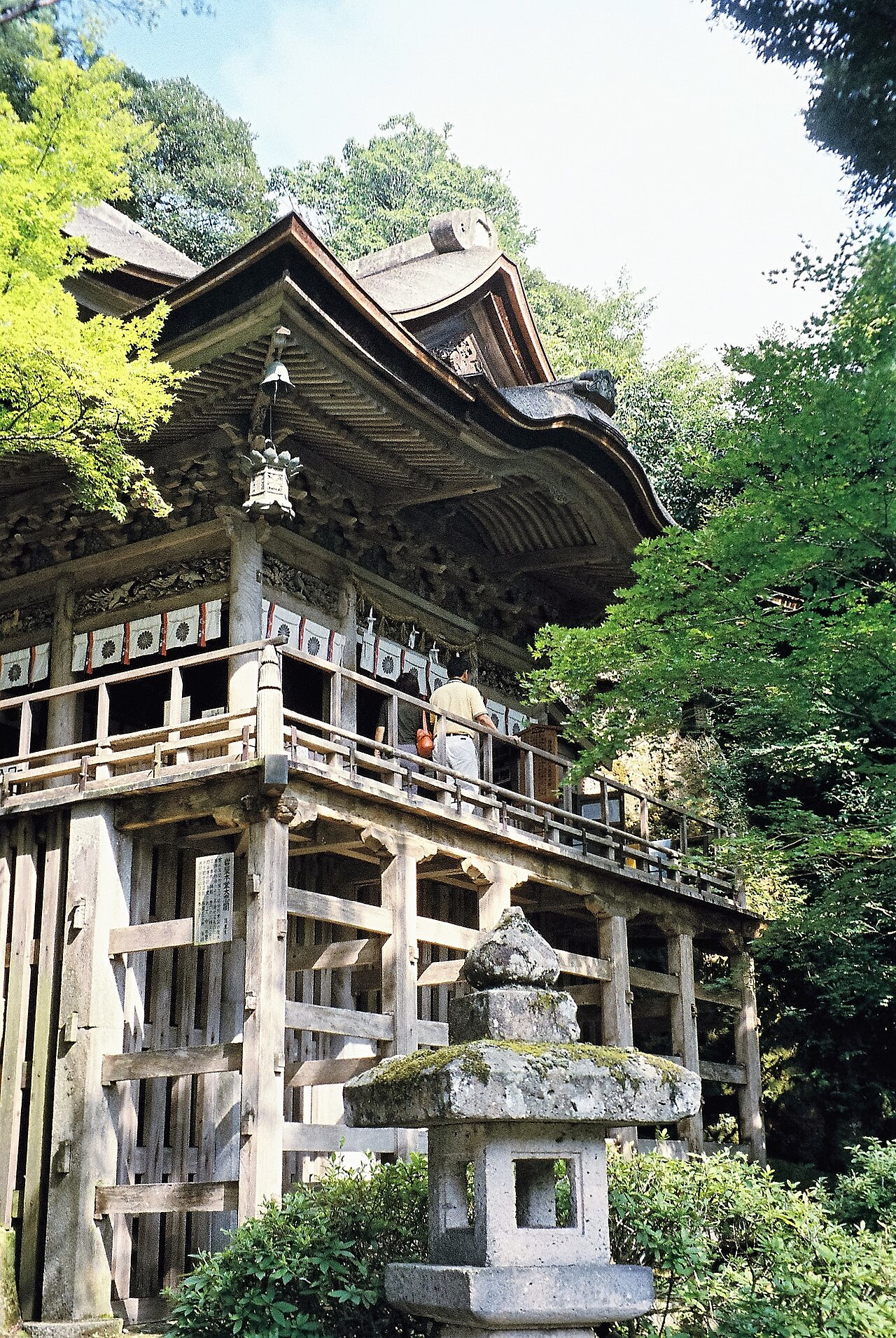
A hall set into the crags
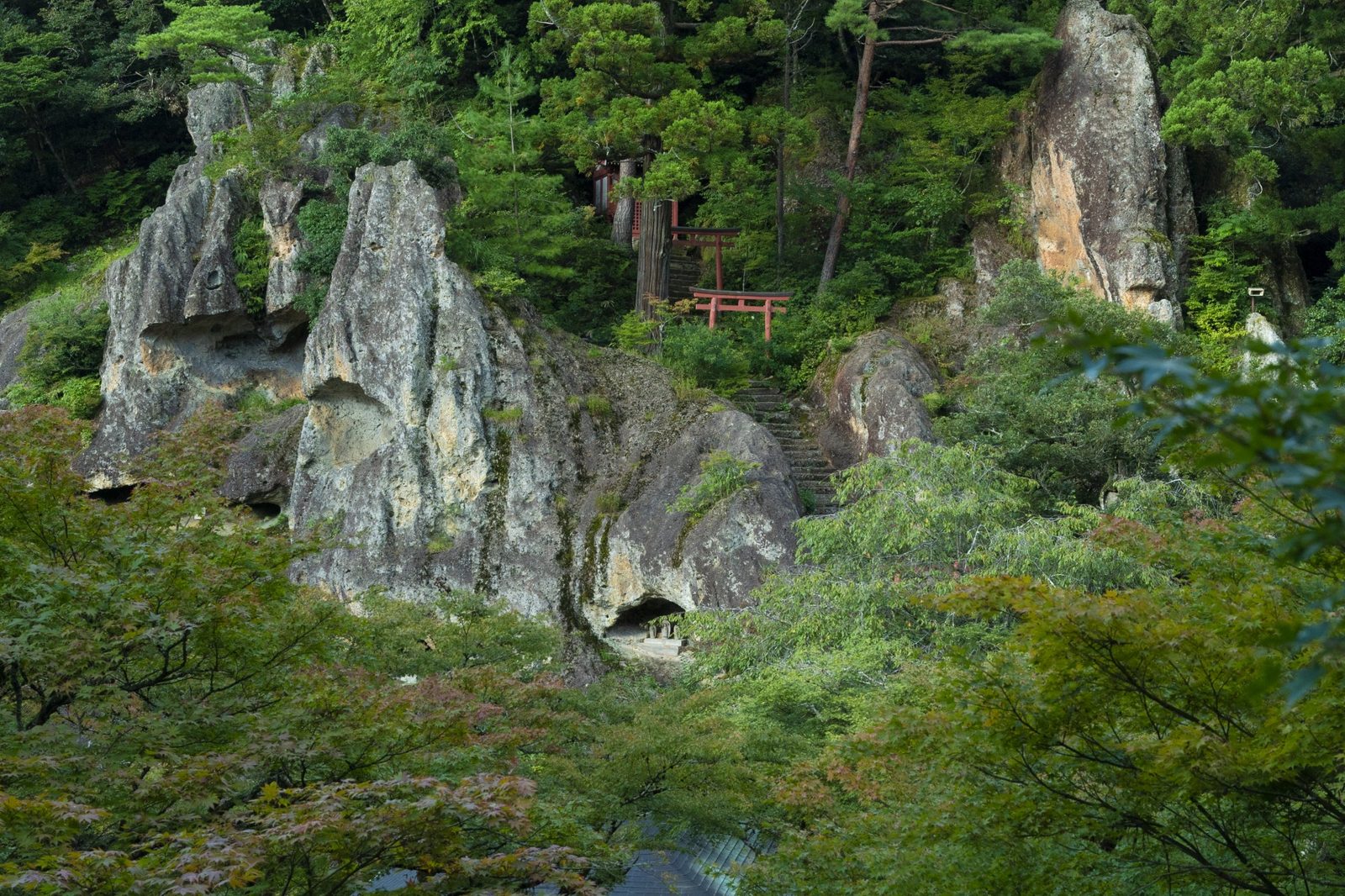
Natadera stands at Nata, in the old Enuma district of Kaga — today part of Komatsu in Ishikawa — and has long been counted among the great Shingon temples of the north country. The hillside itself is the architecture: a run of strange, weathered crags, hollowed and pierced, with a Kannon hall five ken square set into a cave partway up and a thousand-armed Kannon enshrined within; on the rise before it stand a goma hall, a three-storeyed pagoda, and a belfry, and the old compilers thought the whole scene grand enough to set beside the famous rock cave of Hiraizumi in the far northeast. Bashō came this way on the journey he wrote up as the Narrow Road, took note of how the temple got its name when a retired emperor enshrined a Kannon here, and left a verse on the whiteness of the rock face, with its old pines on the crags and a small thatched hall perched on the stone. The grounds are thick with maples, and travellers of the Meiji years wrote that late autumn spreads the precinct with brocade, praising the place as quiet and full of feeling.
Fire, patronage, and a borrowed name
Tradition holds that the temple began in the opening year of the Yōrō era, when the priest Taichō, following a vision, placed a thousand-armed Kannon in a cave on this mountain. The name is said to have come later, when the retired emperor Kazan, on a progress through the north, joined the first characters of Nachi and Tanigumi — two mountains of the western pilgrimage — into one and dedicated his own Nyoirin Kannon here. What the record states more firmly is the fire: in the Tenshō era every hall burned in war, and it was Maeda Toshitsune, lord of Kaga, who spent his own treasure in the Kan'ei era to rebuild the main hall, the goma hall, and the pagoda, endowed the temple with land, and made it the domain's place of prayer.
Where to stay
Places to stay near Yamanaka Onsen →
Disclosure: This post may contain affiliate links. If you book through them, we may earn a commission at no extra cost to you.
Yamanaka Onsen and the Kakusenkei gorge
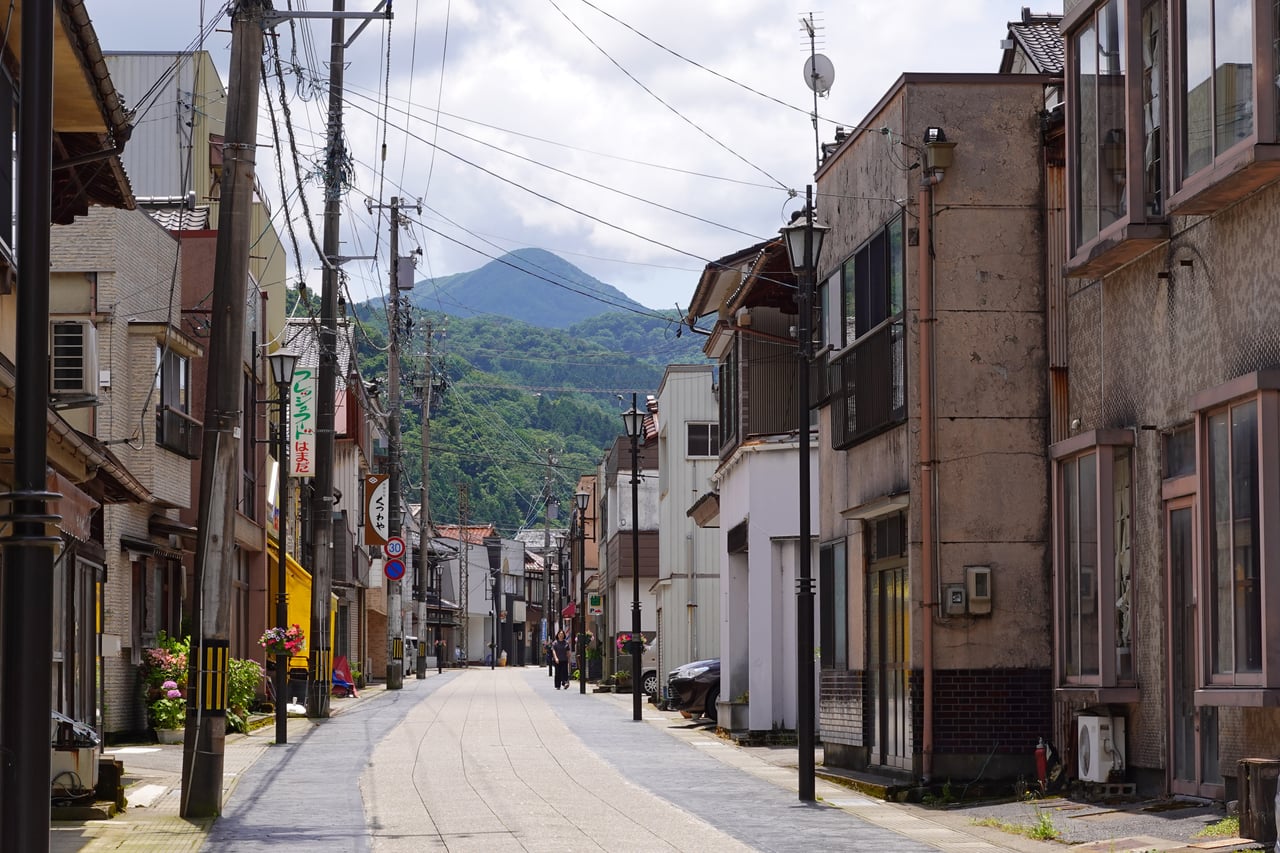
An easy hop south lies Yamanaka, the innermost of the Kaga spa towns. Tradition traces the spring to the priest Gyōki in the reign of Emperor Shōmu, and tells how, after the place had fallen to ruin, a retainer named Hasebe Nobutsura found it again in the Bunji era when he saw a wounded white eagle washing its leg in the water, cleared the wild ground, and set his men to guard the baths. The town sits a little back from the river, but the mountains press in on both sides, and mornings and evenings are said to be cool even in high summer. It was never a lonely place: in Meiji times the spa street was lined with shops selling lacquerware and Kutani porcelain, with even a post office to serve the visitors. The local lacquer had earned that trade — Yamanaka ware, turned on the lathe into fine thread-lined bowls, was prized for its graceful shape and the luster of its finish, and in those years its exports led every lacquer district in the country.
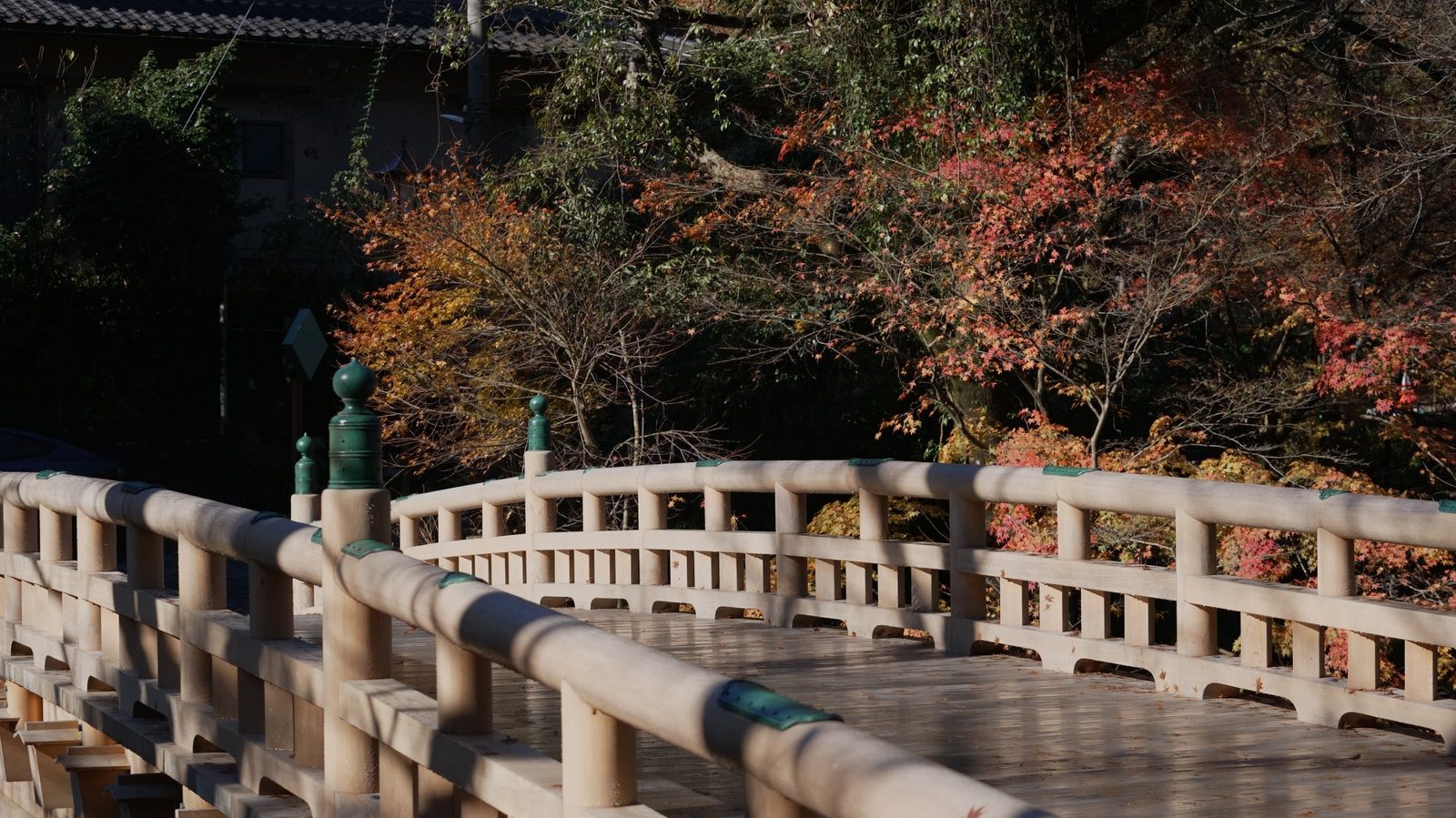
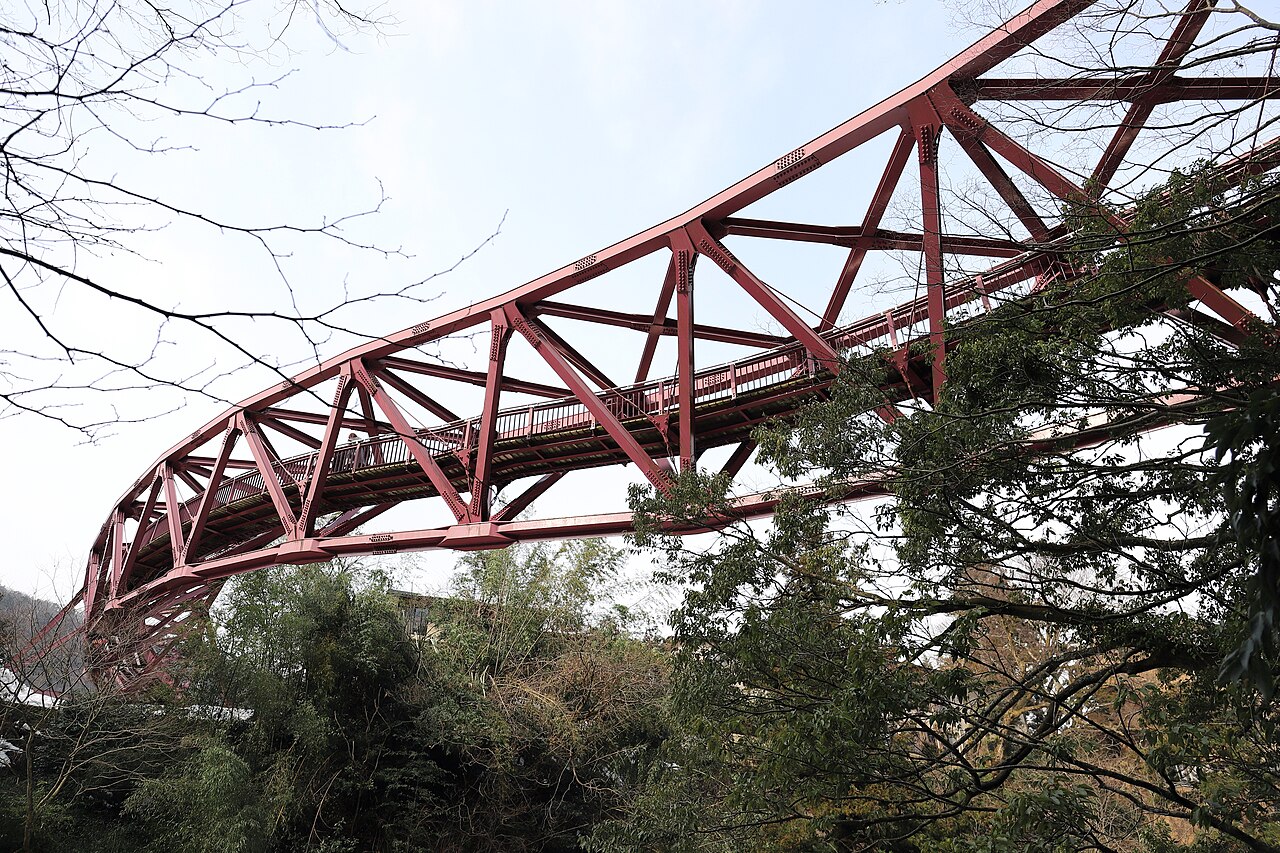
The quiet is in the gorge below. Kōrogi-bashi, the Cricket Bridge, crosses the Daishōji river where both banks drop away in sheer rock, the deck hanging well above the water, and in summer the ravine sings with the insects that give the bridge its name. Half a ri from the town, at the edge of Kayano village, a pair of great cryptomerias measure thirty shaku and more around the trunk — the compiler of the old guide put his arms to one and made it six spans. The compilers reckoned the neighborhood rich enough — temples, shrines, pools, and named rocks — that a visitor could stay four or five days without running out of walks, and the wider spa country of Katayamazu, Yamashiro, and Yamanaka offers the prospect known as the Three Lakes, taken in from the lookout above. Bashō soaked here too, on the same northern journey: he praised the smell of the waters in a verse about not needing to pick chrysanthemums, parted from his companion Sora at this town, and lodged at the house of the boy Kumenosuke.
Getting there and what it costs
The Kaga Loop Bus known as CANVAS leaves from JR Kaga-Onsen Station, and its Yama-mawari line brings you to Natadera in about thirty-five minutes. A taxi from Kaga-Onsen Station reaches the temple in about twenty minutes. From Awazu Station a taxi takes about ten minutes. From Komatsu Station the ride is about thirty minutes. From Kanazawa Station, count on about sixty-five minutes by taxi. Regular admission for an adult — anyone of middle-school age and above — is one thousand yen. An elementary-school child pays three hundred yen. Visitors who present a disability handbook are admitted for five hundred yen, a rate that also covers one accompanying person each. The temple receives visitors from a quarter past nine in the morning until four in the afternoon during the summer season, which runs from the first of March to the thirtieth of November. In the winter season, from the first of December to the end of February, the hours are the same. Go in the morning if you want the cave hall and the maples to yourself. A day that begins under the crags at Natadera and ends in the steam at Yamanaka makes one of the quietest circuits on this side of Japan, and if this kind of travel is what you are after, you can browse bookable quiet day trips for more ideas. Prices and timetables shift with the seasons, so check official information before visiting.