Nakanojo is a township of mountains in the northwest of Gunma. Nearly all of it stands high, and its villages and spa hamlets thread the valleys of three rivers — the Shima, the Kamisawatari and the Shirasuna — on their way down to the Agatsuma. Local tradition offers two beginnings for the waters of Shima: one story has the great general Sakanoue no Tamuramaro bathing here in the age of Emperor Kanmu; another tells of the retainer Usui Sadamitsu, who toward the end of the tenth century was led by a divine message to a spring welling out of the mountainside.
Shima is what a hot-spring town looks like when nobody is performing for anybody. The lodging houses run along one river for some four kilometres, the water upstream carries an implausible blue, and the evening entertainment is a round of smart-ball. Give it a night, or at least a whole day, and let the valley set the pace.
One river, five neighbourhoods
The town strings itself along the Shima river in five named quarters — Onsenguchi at the entrance, then Yamaguchi, Arayu, Yuzuriha and finally Hinatami at the head of the valley. Walking the whole length, end to end, is described as a stroll of about an hour, which is the correct unit of ambition here.
The centre of gravity is Ochiai-dori in the Arayu quarter, a short main street of eateries and souvenir shops where the amusements have stayed put since the Showa years: smart-ball parlours, shooting galleries, and the particular hush of a spa town after dinner.
The inn on the red bridge
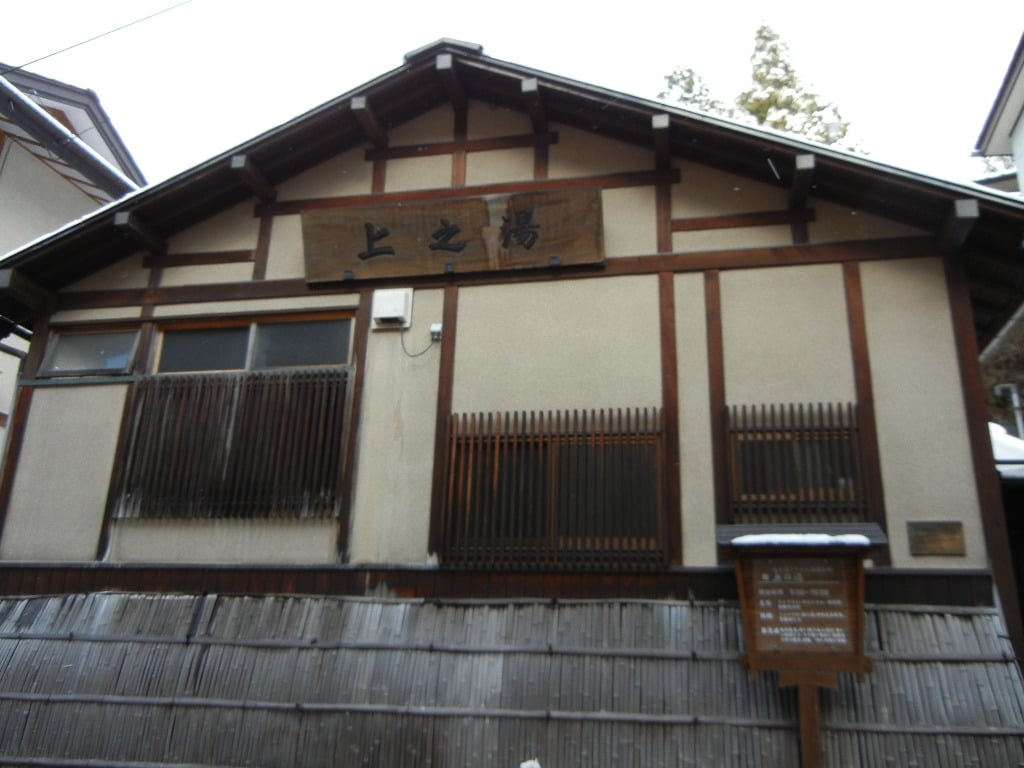
The grand name of the valley is Sekizenkan, an inn founded in the year sixteen ninety-four, whose Genroku-no-yu bathhouse — all Taisho-era romance, arched windows above the river — can be visited on a day call as well as by overnight guests. The red bridge that leads to its door, with the old wings rising behind, is the town's favourite spot for a photograph, and the picture rewards a short wait for a clear moment.
Next door, a herbal-cuisine cafe occupies a building listed as an Important Cultural Property, a purely Japanese frontage looking across the water to Sekizenkan. As for the whisper that the inn inspired the bathhouse in "Spirited Away" — it is a rumour, and the film's makers have never announced that it is true.
If you would rather give the valley a night as well, you can compare places to stay in Shima Onsen before you go.
The blue water upstream
The Shima runs beside the town the whole way, with a blue cast to the water that comes down from the lake above, and a walk along its banks is part of the evening ritual of the spa town. The lake itself, Oku-Shima, lies about a kilometre beyond Hinatami at the top of the valley, and the vividness of its surface has earned a name of its own: Shima Blue.
Getting there, without a car
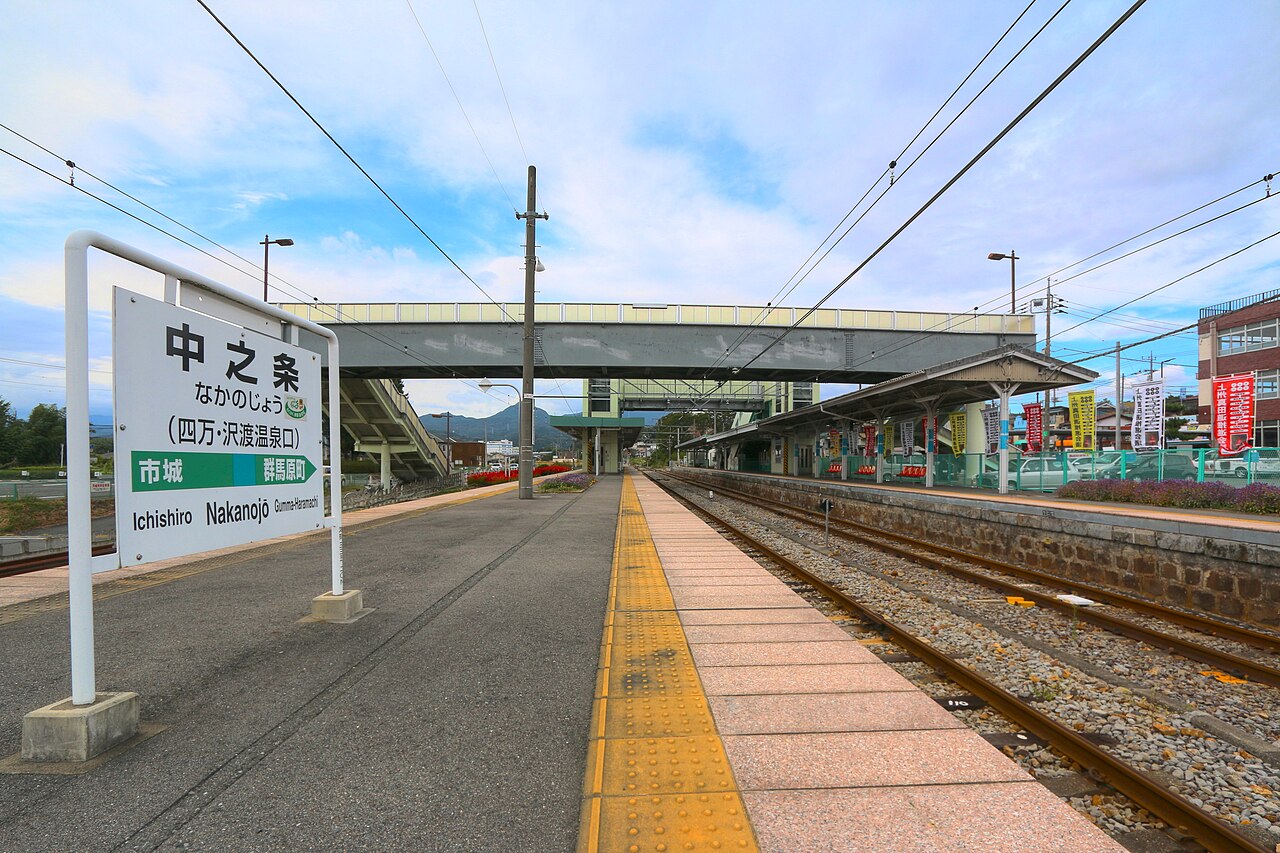
The way in is by rail to Nakanojo, a small stop on the JR Agatsuma Line that is described as the valley's front door — its name-board carries the subtitle "Shima and Sawatari hot-spring gateway", and buses for both leave from outside.
The pieces of the journey, each a short one:
- The Joetsu Shinkansen runs from Tokyo to Takasaki in about fifty minutes.
- From Takasaki, the Joetsu Line reaches Shibukawa in about twenty-five minutes. The Agatsuma Line then carries on from Shibukawa to Nakanojo in about thirty minutes more.
- From Nakanojo Station, the bus to the Shima Onsen terminal stop costs one thousand one hundred and fifty yen each way.
- One-seat options: the Limited Express Kusatsu-Shima runs from Ueno to Nakanojo in about two hours. The direct Shima Onsen-go coach leaves the Yaesu side of Tokyo Station in the morning and reaches the valley around midday, about three and a half hours en route. The coach fare is six thousand yen return for adults and three thousand three hundred and fifty yen one way.
- From Haneda Airport a through coach takes just over five hours; from Busta Shinjuku, the Joshu Yumeguri-go bus reaches Nakanojo Station in about an hour and three quarters.
- Coming along the Japan Sea side: Niigata to Nagaoka is about twenty-five minutes by Shinkansen. Nagaoka to Jomo-Kogen is about forty-three minutes more. The Hokuriku limited express links Kanazawa to Nagaoka in just over three hours.
Once at Nakanojo, buses bound for Shima call at hamlets such as Yamaguchi and Kirinokidaira on the way up, and the terminal stop is described as standing close to the centre of the spa town.
Where to stay
Places to stay near Shima Onsen →
Disclosure: This post may contain affiliate links. If you book through them, we may earn a commission at no extra cost to you.
The rest of the township
For once, the town is not the whole story. North of Nakanojo's little grid, the Isama district spreads rice terraces along its hills; the area belongs to the association of Japan's most beautiful villages, and the terraced fields are described as its particular glory. Farther west, in the Kuni district, the hamlet of Akaiwa keeps a whole village of silk-farming houses much as they stood, protected as an Important Preservation District for Groups of Traditional Buildings.
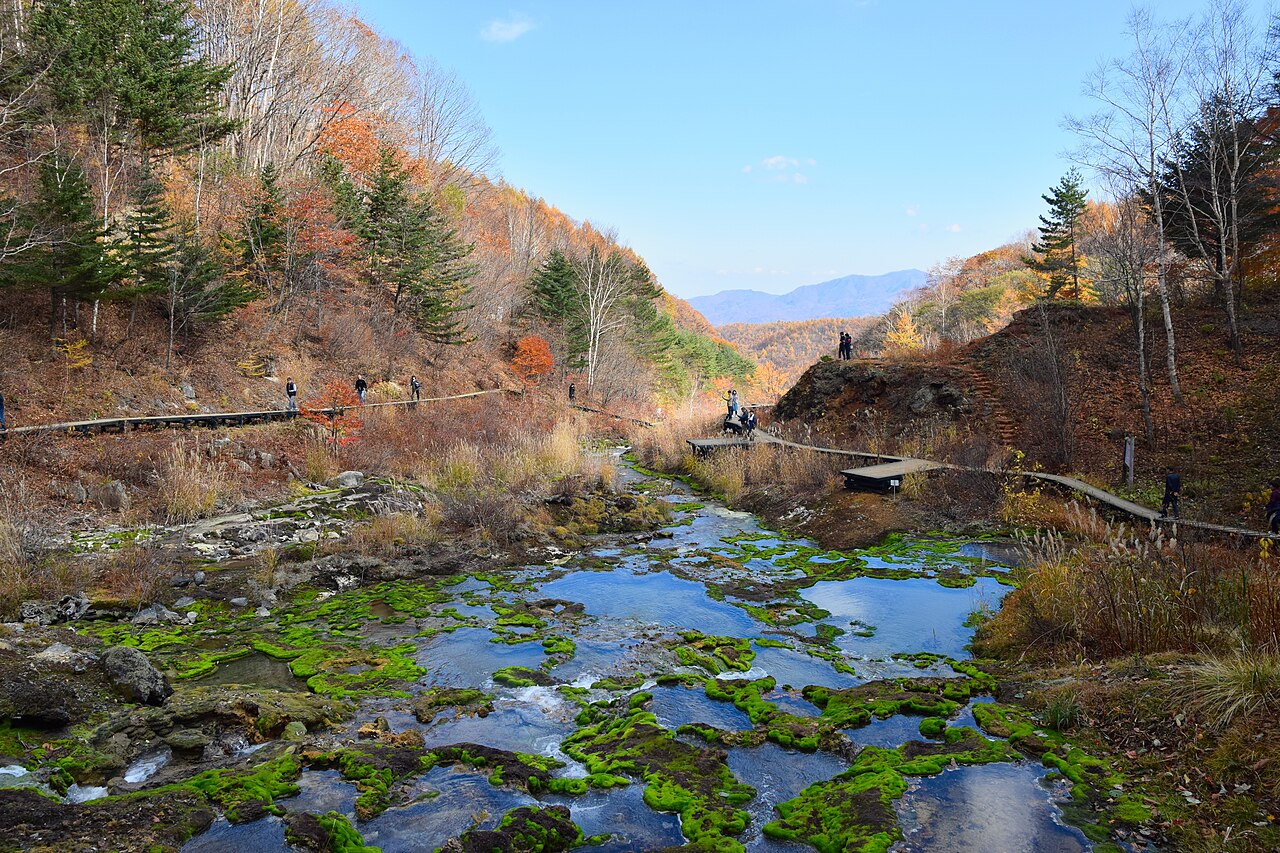
The outlier is Chatsubomigoke Park, out in the same western highlands, where boardwalks cross shallow pools floored with luminous green moss. It is described as reachable only by car, with no public transport serving it — worth knowing before you plan around it. For the other western corners, the river pools of Shiriyaki Onsen and Lake Nozori among them, the practical base is described as Naganohara-Kusatsuguchi, one town over, rather than Nakanojo itself. Sawatari, the second name on the gateway's sign, is served by buses from Nakanojo too, though they are described as few; the guidebook's preferred route runs over the Kuresaka pass, where a wayside stone carries a poem by the wandering poet Wakayama Bokusui.
The shape of a Shima day
Arrive around midday, drop your bag, and walk the river road up through the five quarters until the lodgings run out. Take the day bath at Sekizenkan, give the evening to Ochiai-dori and its smart-ball, and keep the lake for the last of the light. If one day does not feel like enough, find a place to stay in Shima Onsen — the valley's best argument is made at walking speed.
Prices and opening arrangements shift with the seasons, so check official information before visiting.