Sakata is a port town on the Sea of Japan side of Yamagata Prefecture. Its sights are the kind that reward an unhurried day rather than a checklist: a row of black wooden rice storehouses under zelkova trees, the former residence of the Homma family and the art museum that carries their name, a museum built around the photographer Ken Domon, and a park with an old wooden lighthouse and a sailing ship on a pond. This guide sticks to the practical side of that day: the rail and air routes from Tokyo, the short ride from the railway to the warehouses, what the museums charge and when they shut, where to find seafood near the port, and which dates the town hands over to its festivals.
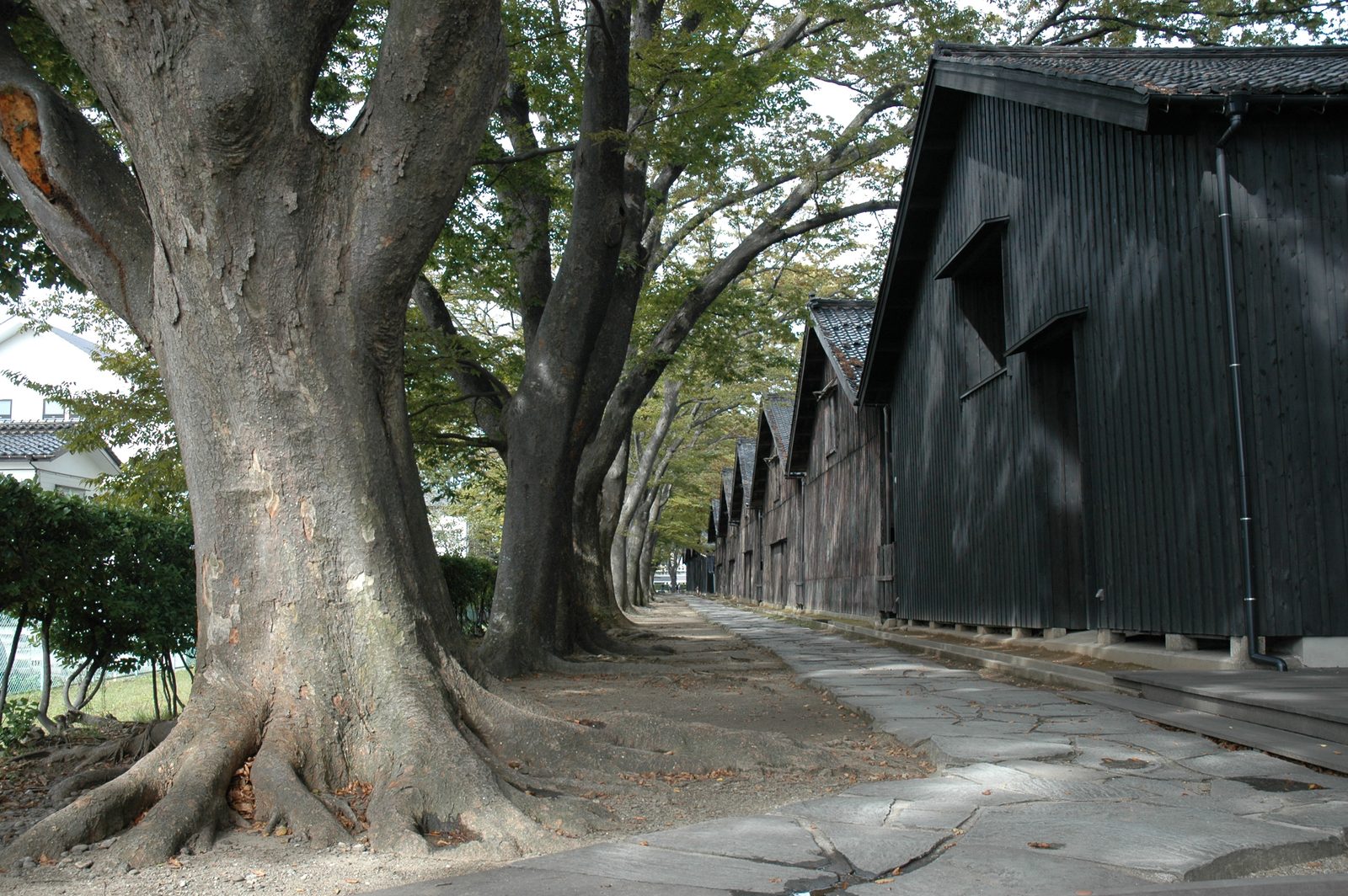
The storehouses of Sankyo Soko, with the zelkova lane running along their side.
Getting to Sakata from Tokyo
By rail, the route is the Joetsu Shinkansen to Niigata and then the Limited Express Inaho. The Joetsu Shinkansen from Tokyo Station to Niigata Station takes about two hours. The Limited Express Inaho then takes about two hours and twenty minutes from Niigata Station to Sakata Station. Taken together, the rail journey from Tokyo Station to Sakata Station via the Joetsu Shinkansen and the Limited Express Inaho is about four hours and twenty minutes.
Flying is the other way in. The flight from Haneda to Shonai Airport takes about an hour with ANA. From Shonai Airport, the airport limousine bus to Sakata Station takes about thirty-five minutes.
The last leg: from Sakata Station to the warehouses
The warehouses make a natural first stop. From Sakata Station, the city-operated Runrun bus on the Sakata Station University line takes nine minutes to the Sankyo Soko-mae stop, or fifteen minutes on some services. The fare is two hundred yen per ride. Elementary, junior high and high school students, and anyone who shows a student ID, pay one hundred yen. The stop name, 山居倉庫前, simply means "in front of Sankyo Soko", which tells you where you are when you step off.
Sankyo Soko: the rice warehouses
Sankyo Soko is a line of black-boarded wooden storehouses, with a stone-paved lane along one side shaded by a row of thick zelkova trees. The lane and the storehouses are what you have come for, so give them time rather than treating them as a single photograph. The information center at the warehouses is open from nine in the morning to half past four in the afternoon. It is closed from the twenty-ninth of December to the third of January.
The Homma family: the former residence and the art museum
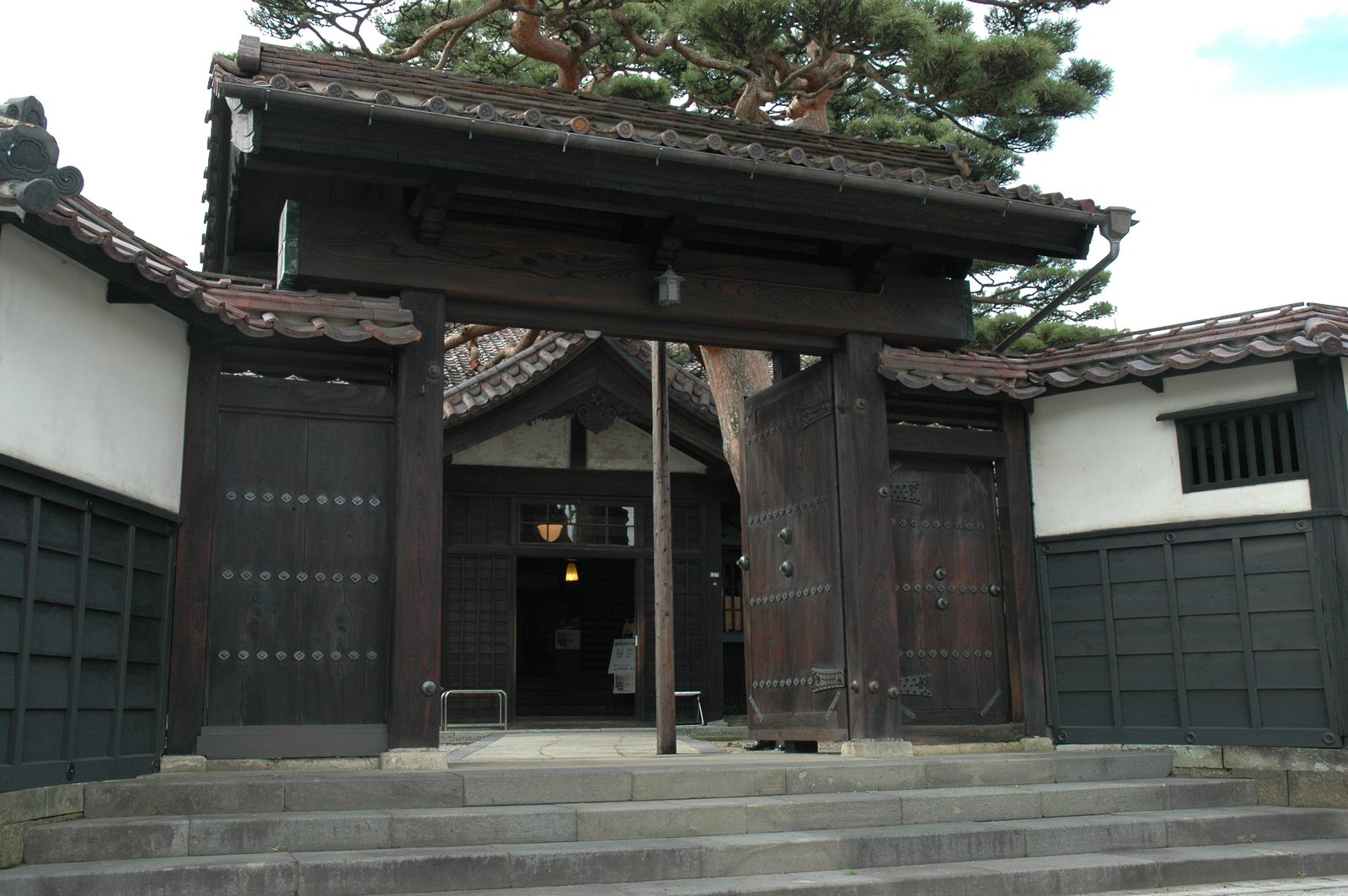
The gate of the former Homma family residence.
The former residence and the Homma Museum of Art can be visited on a combined ticket. The combined ticket for the former Homma family residence and the Homma Museum of Art, covering both facilities, is two thousand yen including tax.
The museum's times shift with the season. From April to October the Homma Museum of Art is open from nine in the morning to five in the afternoon, with entry until half past four. From November to March it is open from nine in the morning to half past four in the afternoon, with entry until four.
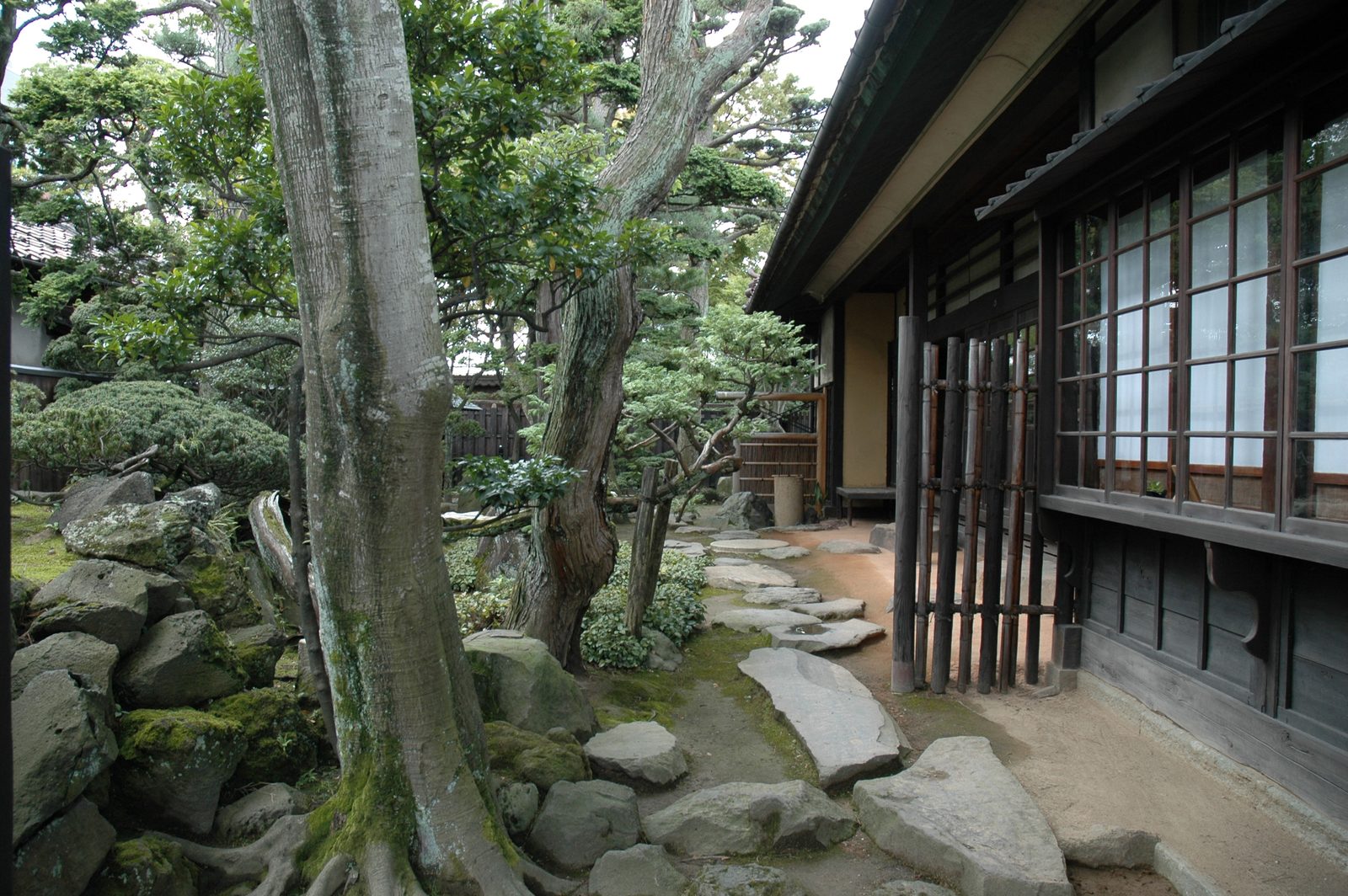
Inside the walls: pines, stepping stones and a veranda behind latticed doors.
The residence itself shows a wooden gate set into a wall of white plaster and black boarding, and behind it a garden of pines and stepping stones leading to a veranda with latticed doors. It rewards a slow look at the gate and the garden rather than a hurried pass.
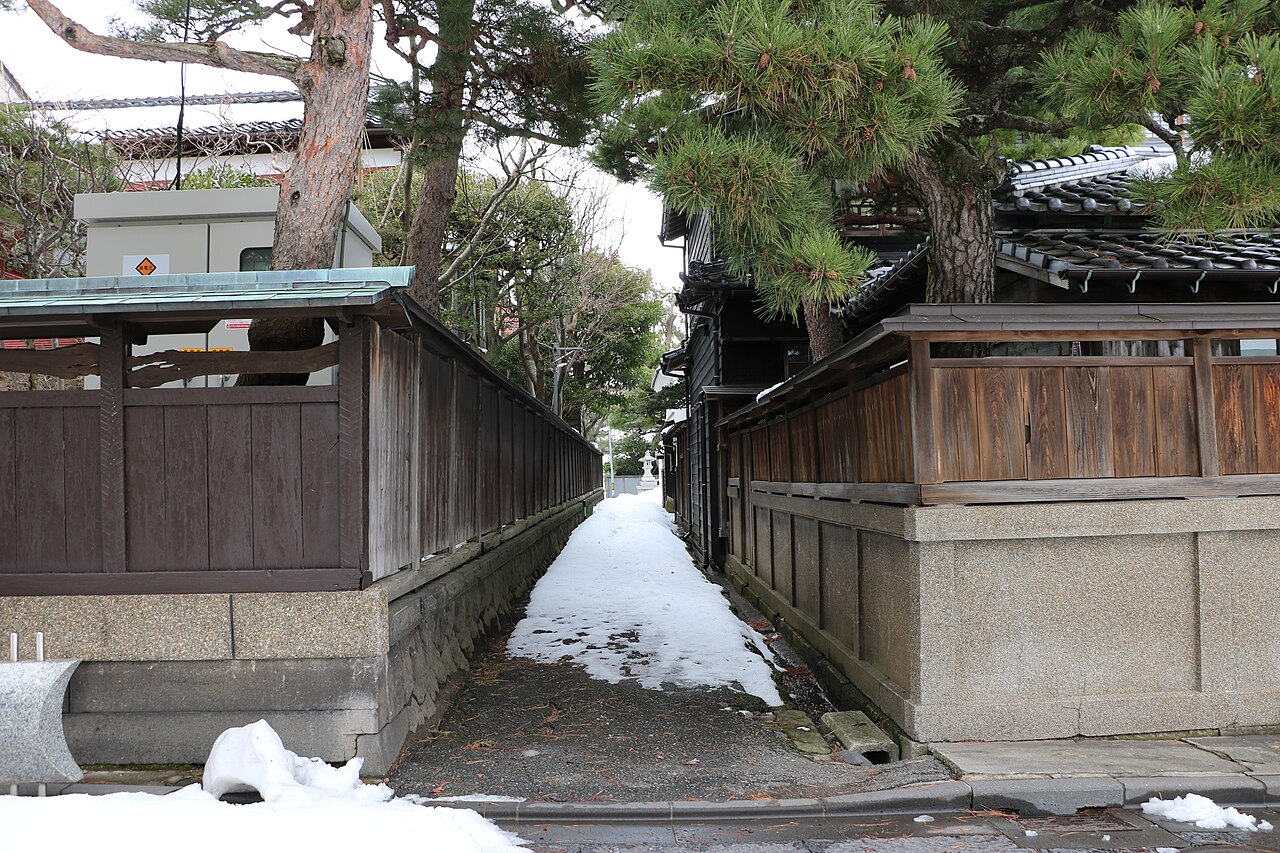
Where to stay
Places to stay near Sakata, Yamagata →
Disclosure: This post may contain affiliate links. If you book through them, we may earn a commission at no extra cost to you.
Hiyoriyama Park: the old lighthouse and the sailing ship
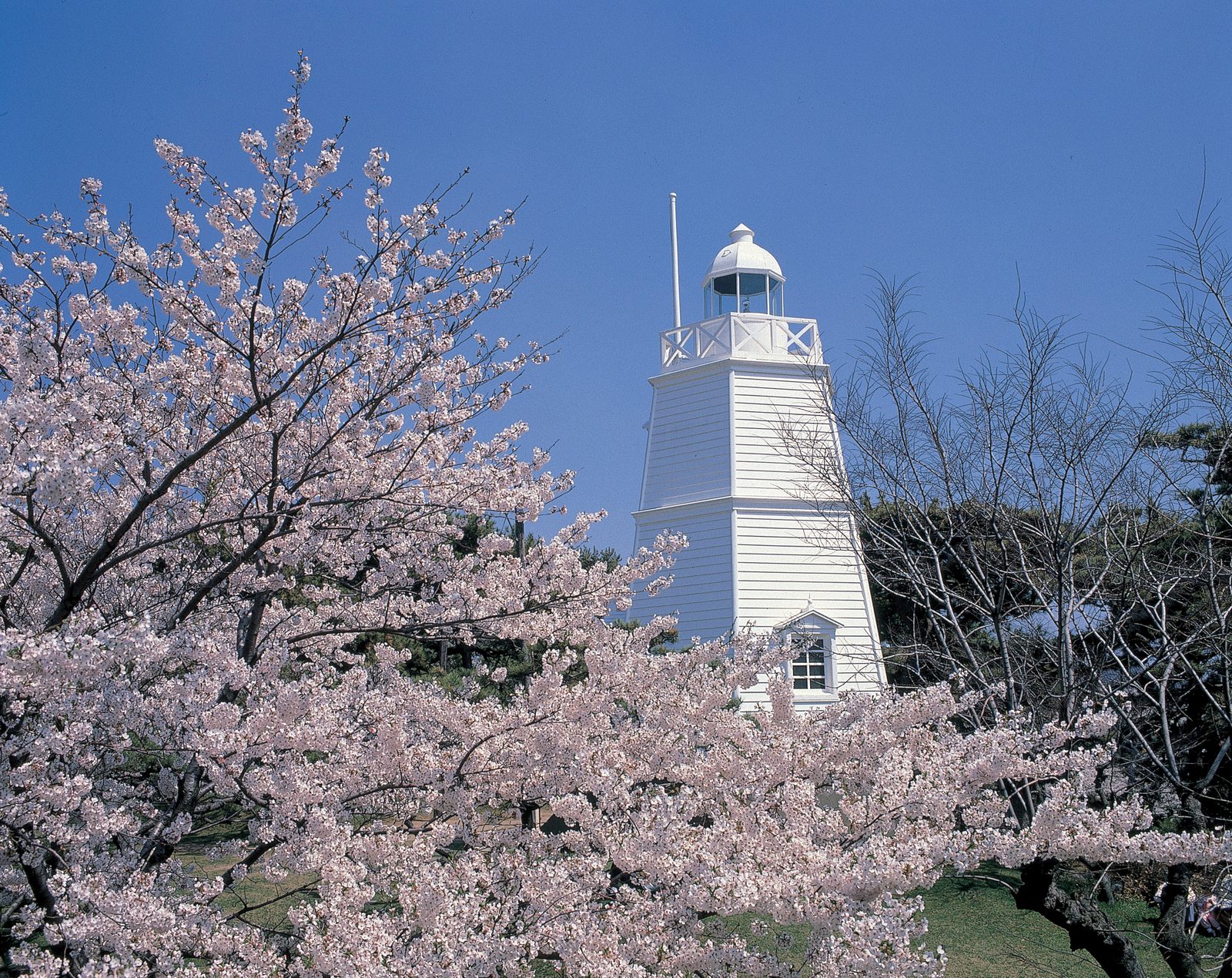
The old lighthouse at Hiyoriyama with the cherry trees in bloom.
Hiyoriyama Park keeps two landmarks from Sakata's seafaring side: a white, six-sided wooden former lighthouse, and a wooden sailing ship of the sengokubune type with white sails, floating on a pond.
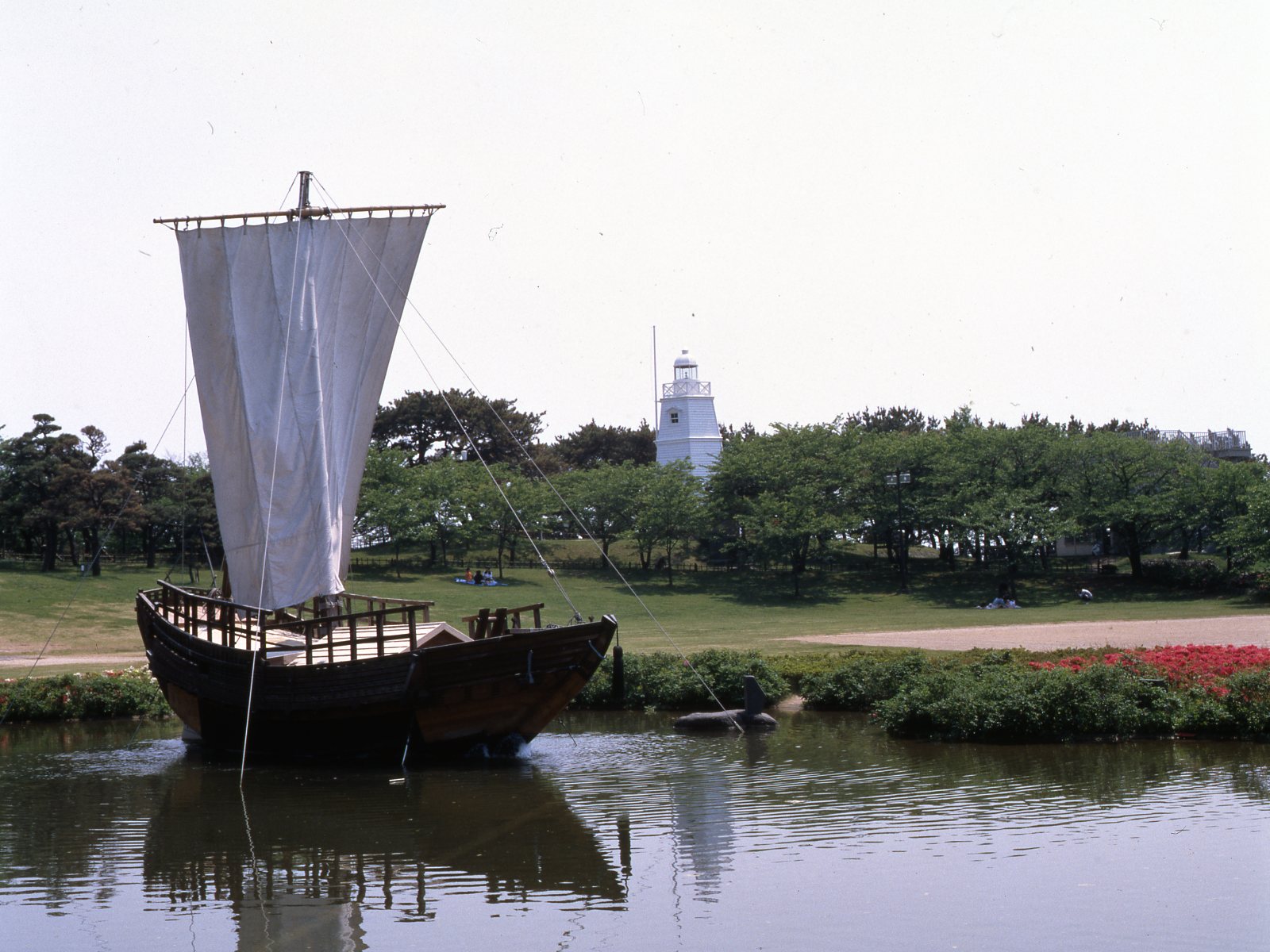
The sengokubune on the pond, with the lighthouse behind.
The park also gives its name to a cherry blossom festival. In the spring of twenty twenty-six, the Sakata Hiyoriyama Cherry Blossom Festival ran from the tenth of April to the twenty-third. During the festival, the bonbori lanterns were lit from half past six to nine in the evening. The sengokubune ship was lit over the same evening hours. Outside that fortnight the park is simply a park.
Ken Domon Museum of Photography
The Ken Domon Museum of Photography is the other museum to build the day around. The Ken Domon Museum of Photography is open from nine in the morning to five in the afternoon, with admission until half past four. If Sakata is somewhere you expect to come back to, the museum also sells annual tickets. A regular annual ticket is three thousand yen and admits up to three people. A special annual ticket is fifteen thousand yen and admits up to ten people.
Seafood near the port
For a meal, the port side of town is where the seafood is. Sakata Port is about seven minutes by car from JR Sakata Station. The market みなと市場, whose name means "port market", is open from nine in the morning to six in the evening, with times that vary by shop. It is closed every Wednesday and on the first of January. The seafood restaurant 海鮮どんや とびしま serves from seven to half past nine in the morning and again from eleven to six. That early start makes it a candidate for a first meal before the warehouses rather than a late lunch after them.
Festival days and ordinary days
Sakata's calendar has a few points when the town hands itself over to a festival, and these are the dates to check if what you want is an ordinary day. The Sakata Festival began with its eve celebration at five in the afternoon on the nineteenth of May. The main procession started at one in the afternoon. The Sakata oiran procession started at half past three. Paid viewing seats for the Sakata Festival were all reserved seats at three thousand yen.
The Sakata fireworks festival ran from seven to eight in the evening. Gates for the fireworks were scheduled to open at four in the afternoon.
Putting the day together
A workable order is the warehouses first, then the Homma residence and museum, then the photography museum, with the park and the port fitted around a meal. If you would rather hand the logistics to someone else, compare tours in Sakata before you go. If one day feels short for all of this, look at places to stay in Sakata and give the museums a second morning. The rail journey from Tokyo Station to Sakata Station is about four hours and twenty minutes; decide on the return before you decide on the order of the sights.